Book Review: The Encyclopedia of Science Fiction Movies by Phil Hardy


Oh, how I love Half-Price Books!

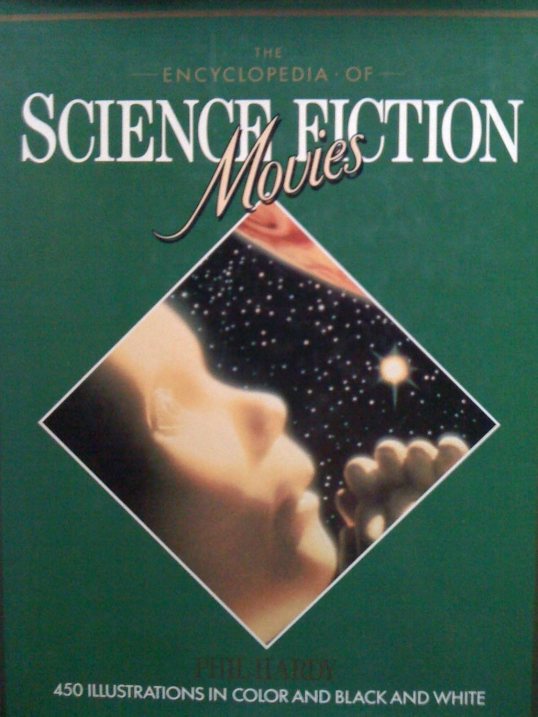
Whenever I browse through Half-Price Books (and yes, you can order from the store online, but a used bookstore really is someplace you should visit in person), I always hit the Film, TV, Music aisle immediately after checking out the American History section. That was where I found The Encyclopedia of Science Fiction Movies. I purchased it. I can’t remember how much it cost, but I didn’t care. It was an encyclopedia of movies. I had to have a copy.

It’s a great collection of reviews. The films are listed by year, so you can actually chart how the genre developed, and flipping through this book definitely helped me develop a better understanding and appreciation of science fiction movies. (And, of course, quite a few of the films reviewed were also horror films that happened to have science fiction elements.) Now, of course, I should mention that this book was published in 1986 and, as a result, it ends with the year 1985. But you know what? I don’t really need a guide to recent films. I’ve either seen or heard about most of the recent science fiction films. What I do need is a guide to the films that were made before I was even born. This book has introduced me to films that I otherwise would never have heard about. That’s the most important thing that a film guide can do!

The reviews are short, well-written, and opinionated. Because the book was published in the UK, a lot of American films that were made for television are reviewed as feature films, because that’s what they were in Europe. It’s an entertaining book, one that you can happily flip through with the knowledge that you’ll find something worth examining on each page.

This book can be ordered from all the usual suspects. I’ve seen it going for as little as $4. Don’t look for it at Half-Price Books. I grabbed the last copy.
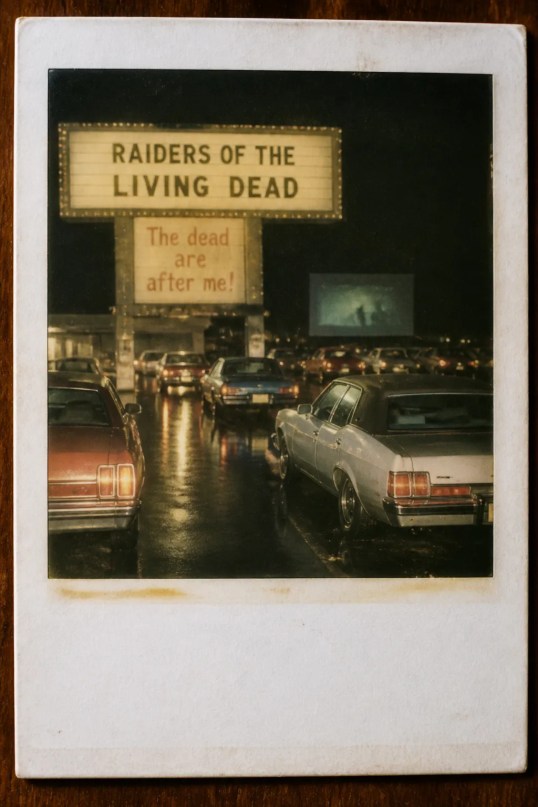
Horror on the Lens: Raiders of the Living Dead (dir by Samuel M. Sherman and Brett Piper)


Hi there and welcome to October!  This is our favorite time of the year here at the Shattered Lens because October is horror month.  For the past three years, we have celebrated every October by reviewing and showing some of our favorite horror movies, shows, books, and music.  That’s a tradition that I’m looking forward to helping to continue this year.

Today, we’ve got the 1986 zombie/sci-fi/action epic, Raiders of the Living Dead!

It’s the story of a creepy boy, a laser gun, a reporter, and a bunch of zombies.  There’s a mad scientist involved, too.  There always is.  The movie opens with a truck being hijacked and then the action shifts to a power plant and, honestly, I have no idea what any of it means.  If nothing else, it’s a film that you watch and you can’t help but admire the fact that it somehow got made and went on to find a small but kind of appreciative cult audience.  It’s just a very strange film and one that simply most be watched in October.

Enjoy!

Horror Song of the Day: The Dead Are After Me by George Edward Lott


The dead!  Are after me!

The 1986 film, Raiders of the Living Dead, features what may be the greatest song ever written about zombies.  For your listening pleasure, here is George Edward Lott’s The Dead Are After Me!

Horror Scenes That I Love: Dr. Loomis Inspects The Classroom In Halloween 2


Today’s scene that I love comes from the 1981 sequel, Halloween II.

In this creepy scene, Dr. Loomis (Donald Pleasence) and the police take a look at a classroom that Michael Myers has turned into his own personal art studio.  On the front board, written in blood, is SAMHAIN.  Loomis’s inspection is interrupted by the arrival of Nurse Chambers, who has been sent to get Loomis out of Haddonfield.

(People need to remember what David Gordon Green and his stupid reboot took away from us.  Shame on you, David Gordon Green!)

As far as I’m concerned, Laurie and Michael will always be siblings and Dr. Loomis will always be the fractured heart of the series.

4 Shots From 4 Horror Films: October 6th


4 Or More Shots From 4 Or More Films is just what it says it is, 4 shots from 4 of our favorite films. As opposed to the reviews and recaps that we usually post, 4 Shots From 4 Films lets the visuals do the talking!

4 Shots From 4 Horror Films

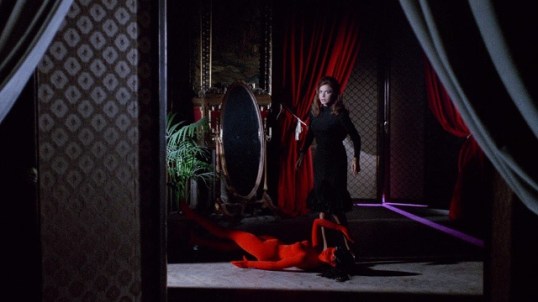
Blood and Black Lace (1964, dir by Mario Bava, DP: Ubaldo Terzano)

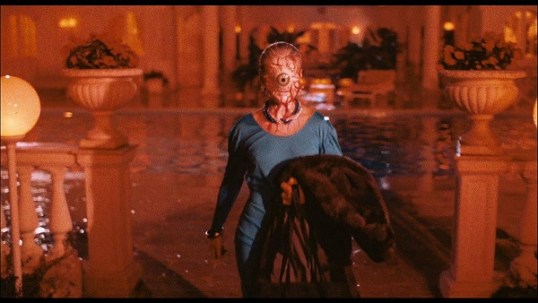
Delirium (1987, dir by Lamberto Bava, DP: Gianlorenzo Battaglia)

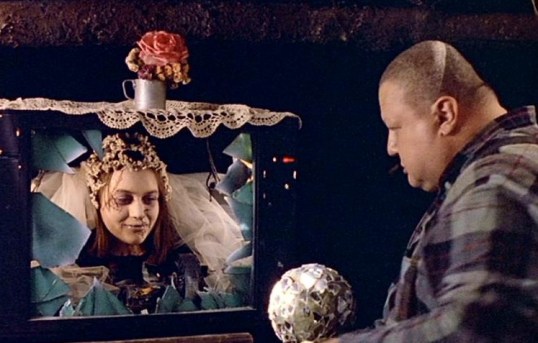
Dellamorte Dellamore (1994, dir by Michele Soavi, DP: Mauro Marchetti)

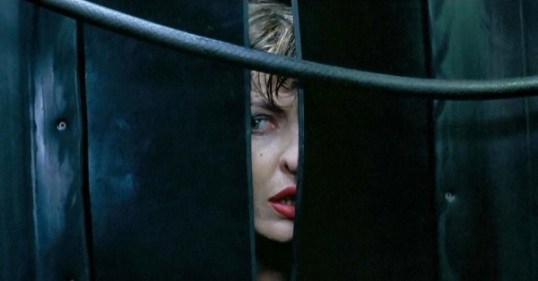
Sleepless (2001, dir by Dario Argento, DP: Ronnie Taylor)


October Positivity: Beauty and the Atheist (dir by Donald James Parker)


In 2026’s Beauty and the Atheist, Beau Davidson plays Trey Crawford.  Trey is one of the country’s most popular atheist podcasters.  He spends his entire show making fun of creationists and the makers of Christian movies.  When he discovers that Douglas Connors (Donald James Parker), the star of Gramps Goes to College, is living nearby, Trey decides to invite him on the podcast for a debate.

Now, already, this is just a smidgen more interesting than the usual Douglas James Parker film.  Parker is essentially playing himself but he’s calling himself Douglas Connors.  This film seems to acknowledge that Gramps Goes To College has a certain Room-like reputation.  Could this be a Donald James Parker film that actually has a sense of humor about itself?

Douglas reluctantly goes on Trey’s podcast, expecting to get ambushed by a slick podcaster who hides his own bitterness and personal failings behind a bunch of scientific terms.  And that’s exactly what happens.  Douglas is earnest and polite.  Trey is snarky and angry.  Even Douglas admits that he lost the debate.

Meanwhile, Trey has fallen for Jeweli (Tara Massey), a woman who he keeps spotting in his local coffeehouse.  (It wouldn’t be a Donald James Parker film without a coffeehouse.)  What Trey doesn’t know is that Jeweli is the daughter of Douglas Connors!  And she’s a believer.  Soon, the Atheist has fallen for the beautiful Christian which …. actually, I knew quite a few couples where one partner is religious and the other is not.  It’s not really that unusual of a thing.

Beauty and the Atheist is a smidgen better than the usual Donald James Parker film, largely because Beau Davidson and Tara Massey are better performers than usually appear in Parker’s films.  As well, the scenes set in Davidson’s podcast studio actually require Parker to make some lighting and design choices as opposed to just turning on the camera.  Interestingly enough, despite the film’s premise, Beauty and the Atheist is not quite as aggressive as some of Parker’s other films.  There’s one rather lengthy scenes in which Douglas explains all of the tricks that Trey supposedly used to make him lose the debate but otherwise, this film is far less angry than something like Operation Unite or, for that matter, Gramps Goes To College.

That said, it’s still a Donald James Parker film. This is yet another film where the atheist is an atheist because of family trauma.  Now, to be honest, I’ve met any number of atheists where that stereotype is indeed true.  But it still feels a bit too easy of a  narrative excuse.  On a technical level, the sound recording is often abysmal.  While Davidson and Massey are adequate in their roles, the rest of the cast delivers their lines flatly.  As for the dialogue, it’s sometimes a blessing that it’s hard to hear what the characters are saying.  Most of it falls flat and the attempts at humor are painful to watch.  When Jeweli’s sister comes across some evidence online that she thinks will put Trey in his place, she literally shouts, “Eureka!”  It’s hard to listen to and hard to watch.


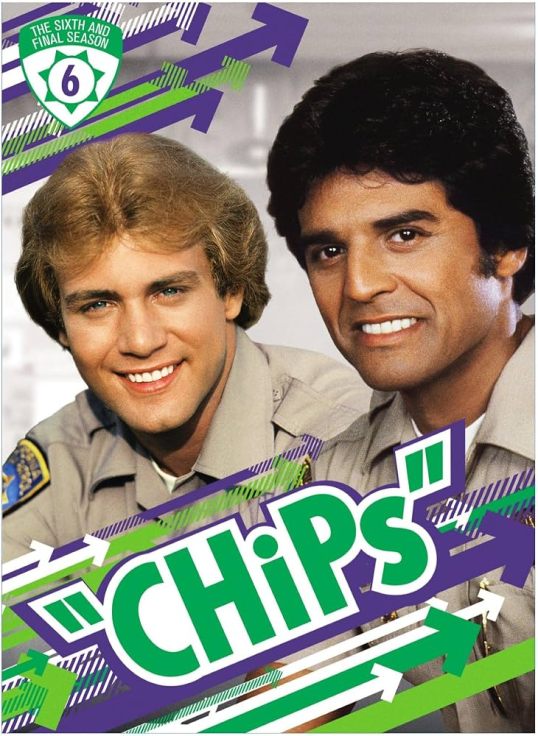
Late Night Retro Television Review: CHiPs 6.11 “Day of the Robot”


Welcome to Late Night Retro Television Reviews, a feature where we review some of our favorite and least favorite shows of the past!  On Mondays, I will be reviewing CHiPs, which ran on NBC from 1977 to 1983.  The entire show is currently streaming on Prime!

This week, Ponch is busy.  The rest of the Highway Patrol is impressed.

Episode 6.11 “Day of the Robot”

(Dir by Phil Bondelli, originally aired on January 2nd, 1983)

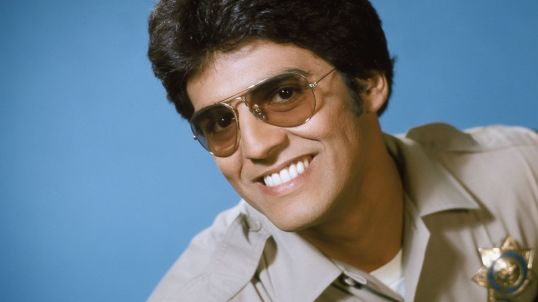
Years ago, Emily’s younger brother was killed by a reckless driver.  Now, Emily (Melody Anderson) is the leader of a group of young women who drive their motorcycles up and down the highway and keep an eye out for people who run stop signs and make unsafe lane changes.  They issue their own tickets.  They attempt to make citizen’s arrests.  They always call the Highway Patrol before going off in pursuit but Ponch, Getraer, and even Bobby still think that they’re putting their own lives at danger.  When two stereo thieves decide to get revenge on Emily for a ticket, can Ponch save the day?

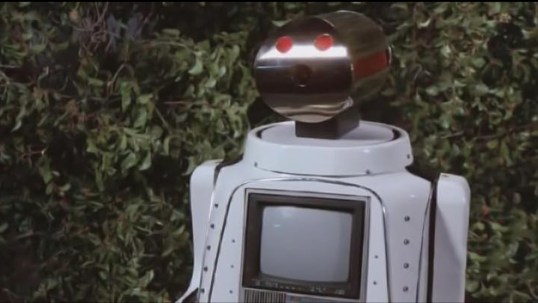
Meanwhile, a robot named MERV has been loaned to the Highway Patrol to help with filing and other tasks.  When it turns out that MERV has a short in its system that’s turned it into a “ticking time bomb,” can Ponch figure out how shut it down so it can be repaired before it accidentally blows up the children’s wing of the hospital?

Of course, he can.  Ponch can do anything!

This episode was a good example of how, during the show’s final season, everyone at the Highway Patrol was pretty much useless except for Ponch.  Ponch is the one who knows exactly what to say to Emily.  Ponch is the one who saves a bunch of sick kids from a potentially explosive situation.  Ponch is practically the only member of the Highway Patrol who couldn’t easily be replaced by a robot.

One gets the feeling that the show’s producers were getting a little desperate during season 6.  Not only have we had a UFO and a tragic death but this season has also given us a robot.  Remember how the early seasons mostly just tried to be a realistic portrait of the day-to-day activities of the Highway Patrol?

Those days are over.  The episode reminds us that CHiPs is now….

On the plus side, at least the robot was cute.

Horror On TV: Fear Itself 1.5 “Eater” (dir by Stuart Gordon)


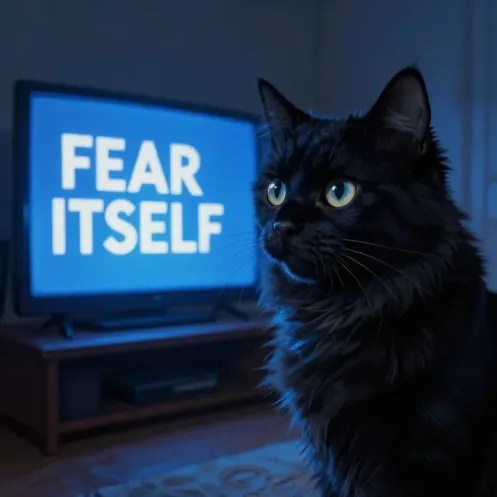
On tonight’s episode of Fear Itself, a young police officer (Elisabeth Moss) finds herself assigned to be a part of a detail that is guarding a serial killer cannibal named Duane Mellor (Stephen R. Hart).  As the night goes on, strange things start to happen and it becomes apparent that Mellor has powers and habits that go beyond just eating people.

You may have noticed that I skipped the fourth episode of Fear Itself.  That episode was In Sickness and In Health and it was about a bride-to-be who, on her wedding day, receives a note that reads, “The person you are marrying is a serial killer.”  It all leads to a pretty predictable twist.  The reason why I decided not to post that episode is because it was written by Victor Salva, a filmmaker who sexually abused the 12 year-old star of his first film and who, after serving 15 months in prison, somehow went on to continue making movies.  I’ve made a personal decision not to review anything involving Victor Salva.  That said, I do think everyone has to make their own decision as far as problematic filmmakers are concerned so I will say that the episode is on YouTube if you want to watch it.

As for Eater, it’s an intense and atmospheric episode that benefits from Stuart Gordon’s strong direction and which features good performances from both Moss and Hart.  You can watch it below!


October Hacks: Buried Alive (dir by Gerard Kikoine)


1990’s Buried Alive may be the worst Edgar Allan Poe adaptation ever filmed.

The film takes place at the Ravenscroft Institute, a former mental asylum founded by the fearsome Jacob Julian (John Carradine). Jacob’s son, Gary (Robert Vaughn), took over the Institute after his father’s death, treated his patients with kindness and compassion, and preached about the need for “freedom.” Now, Gary has transformed Ravenscroft into an all-girls school for juvenile delinquents. The students worship him because he tells them that nothing is their fault and that they deserve to live the life they want. His newest teacher, Janet (Karen Lorre), is a fan as well. In fact, she soon finds herself falling in love with Gary.

However, from the minute Janet shows up at Ravenscroft, she starts having strange visions. She sees thousands of ants crawling over her feet. She hears strange sounds in the walls. At one point, an arm reaches out of a toilet and tries to grab her. She thinks she sees a distinguished Shakespearean character actor sealed behind a wall. Is she losing her mind, or has she stumbled across something more sinister?

Now, when I say that Buried Alive is one of the worst Edgar Allan Poe adaptations I’ve ever seen, understand that it is not the fault of the cast. There are some truly talented people in this film. A young Nia Long plays a student named Fingers. Ginger Lynn Allen has fun playing a bully named Debbie. Robert Vaughn is appropriately intense as Gary, and John Carradine is… well, he’s John Carradine. This was one of Carradine’s final films, and he actually died before it was released. Obviously, Carradine doesn’t do much, but, as was often the case, his intimidating screen presence meant that he didn’t have to do much to make an impression. He just had to exist. Donald Pleasence plays Dr. Schaeffer, a German-accented member of the staff who wears round glasses and an ill-fitting toupee and who pops up occasionally to tell Janet not to wander around at night. Pleasence was obviously not in the best of health when he played Schaeffer, but, much like Carradine, his eccentric presence gives the film some much-needed atmosphere, and there is a fairly effective twist involving his character. Finally, there’s an absolutely adorable black cat that randomly appears throughout the film. It’s the film’s way of acknowledging Edgar Allan Poe, I imagine.

No, the failure of Buried Alive is not due to the cast. It’s really not even due to the script, which borrows the idea of someone being buried alive and not much else from the Poe story. Instead, the fault almost entirely rests with the film’s direction. The story unfolds with little momentum, some scenes meander while others are over far too quickly, and the director seems to think that filming anyone in an extreme close-up will automatically make them creepy. There are a few gross sequences involving a bunch of ants and the film has a few slasher moments, like the silencing of one annoying victim via a garden tool to the forehead , but otherwise there’s little horror and next to no suspense. I actually found myself getting angry over how poorly directed this film was.

The cast deserved better.

SOV Horror Review: Spine (dir by John Howard and Justin Simmonds)


In the 1986 Shot-on-Video film Spine, a killer is stalking …. well, to be honest, I’m not sure which state this movie is supposed to be taking place in.  Some of the shots feature mountains in the background so it’s definitely not Texas.  I’m going to guess that the film was shot in California, despite the fact that some of performers had Southern accents.

Anyway, a killer is stalking California.  His victims are all nurses who stand 5’3.  He attacks them at home.  He ties them up in a way that causes them to strangle themselves when they struggle.  He cuts out their spinal cords.  Using his victim’s own bloody hands, he writes “LINDA” on the wall.  None of the victims are named Linda.

Who could this killer be?

Well, we know from the beginning.  This film is not a whodunit,  From the start, we see that the killer is Lawrence Ashton (R. Eric Huxley), a hulking man who has a Graham Platner-style beard and who apparently thinks that every nurse that he sees is his former girlfriend, Linda.  He holds Linda responsible for the death of his mother and he’s seeking revenge.

Who can stop Ashton?  How about a cop who does things his way!?  Sam Joffrey (Carl Elliott) doesn’t have time to go by the book!  He’s got nurses to save!

I spent most of this film thinking that Sam Joffrey was terrible at his job.  There was a lengthy and rather distasteful sequence in which Ashton menaced two nurses.  The whole thing seemed to go on forever and I found myself wondering just what exactly our “hero” was doing while all of this was going on.  However, the entire sequence turned out to be just a nightmare.  Really, movie?  I mean, again, I thought the whole sequence went on for way too long and that the film seemed to be celebrating the violence more than condemning it but, if you’re going film something like that, you should at least commit to it.  If you’re going to make a gory film about a sadistic murderer, there’s no excuse for hand-waving away the bloodiest part of the movie by making it “just a dream.”

Spine has all of the typical SOV flaws.  Even though it’s only 72 minutes long, I struggled to pay attention to it.  For the most part, the dialogue was either too muffled or too loud for me to really be able to follow any of the conversations.  (Even today, amateur filmmakers tend to underrate the importance of a clean soundtrack.)  The actors were pretty amateurish.  The dialogue had that “everyone told me this line was funny so we’re not cutting it from the script” feel that is such an integral part of the SOV experience.

That said, I have a weakness for these SOV films.  A part of it’s because I’m a history nerd and this film allowed me see just how tacky 1986 could be.  It’s one thing to shoot a scene on a soundstage that’s been designed to look like a living room.  It’s another thing to shoot a scene in an actual living room that has a really ugly couch as a centerpiece.  Finally, Spine actually did have an effective score.  In the usual SOV tradition, it was a synth score but it still did a good job of creating a slight feeling of unease.

There are better SOV films than Spine but there are worse ones as well.  Spine is right in the forgettable middle.