Horror Icarus File No. 35: Millennium (by Chris Carter)


“If I see in the darkness it’s because there is light.” — Frank Black

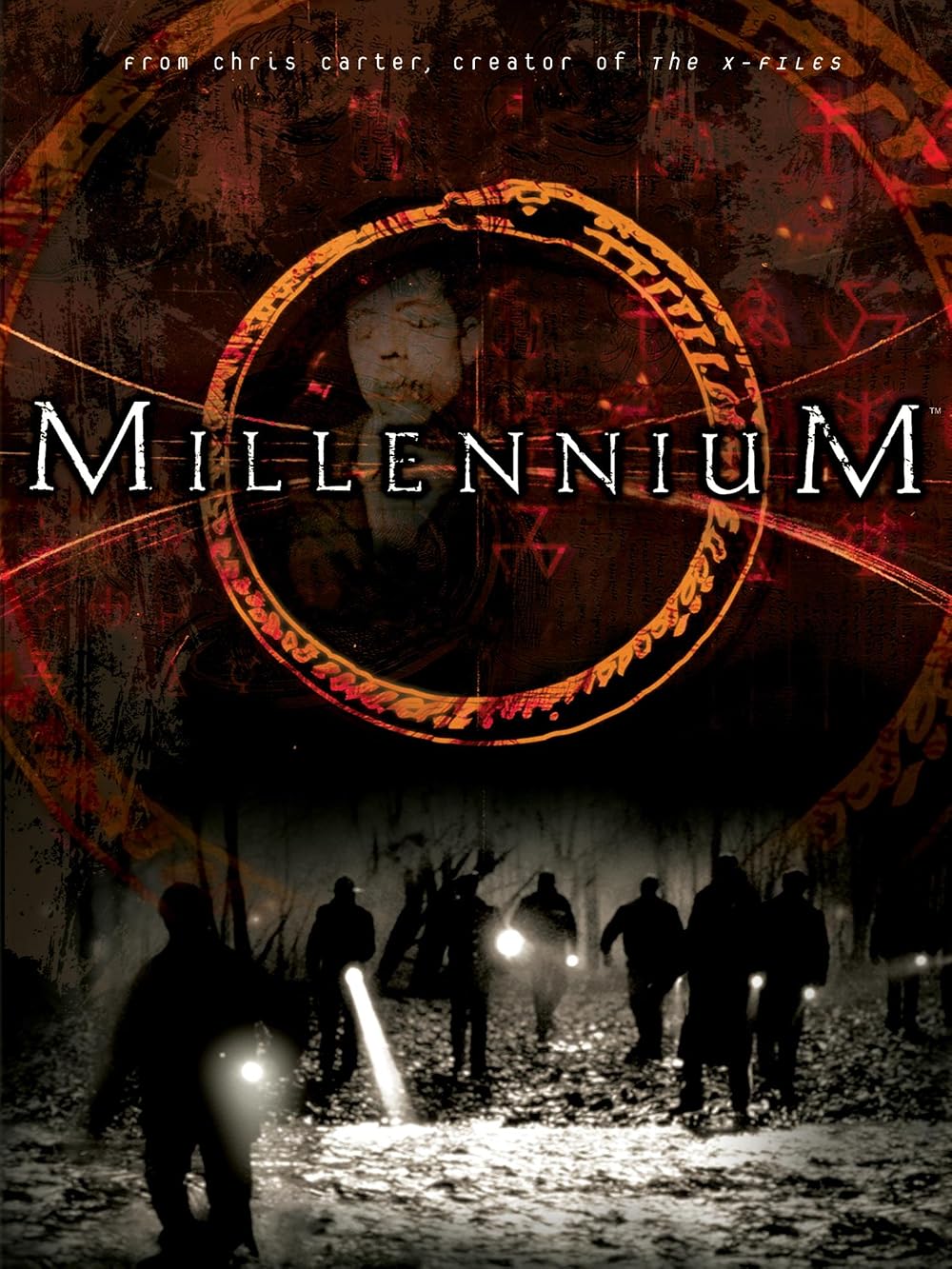
The most unsettling thing about Millennium is how rarely catching the killer feels like a victory. Someone may be stopped, a case may be closed, but the damage remains—and another investigation is already waiting. Created by Chris Carter, who also created The X-Files, the series takes a familiar crime-show structure and drains away much of its reassurance. Its real subject is the strain of repeatedly confronting the worst people can do without accepting that cruelty defines everyone. That makes it a difficult show to spend time with, but also a more humane one than its grim reputation suggests.

Much of that humanity comes from Lance Henriksen as Frank Black, a former FBI profiler whose insight into violent minds borders on the supernatural. The show renders his understanding through sudden flashes of disturbing imagery, making each breakthrough feel like an intrusion rather than an achievement. Henriksen plays Frank with restraint, suggesting exhaustion without reducing him to a permanently tortured expression. His measured voice and weathered features carry authority, but the gentleness underneath matters more. Frank is compelling because he understands terrible people without treating everyone else as a potential monster.

The first season establishes that distinction through its story-of-the-week format. Working with the Millennium Group, initially presented as a network of experienced investigative specialists, Frank encounters crimes driven by obsession, resentment, and distorted belief. The investigations offer procedural momentum, but the show cares as much about the emotional aftermath as the solution. An arrest cannot undo what happened or remove the images lodged in Frank’s head. That approach produces powerful television, although it can become repetitive when another grotesque crime seems designed merely to confirm that the world is a terrible place.

What gives those cases a larger purpose is the suggestion that they are symptoms of something spreading. Religious imagery, social alienation, and anxiety about the approaching millennium connect seemingly separate acts of violence. Again and again, people turn private grievances into fantasies of judgment or purification. Long before the Group’s secrets dominate the narrative, the weekly stories establish the mythology’s central concerns: who claims to recognize evil, what authority that recognition grants them, and how easily conviction becomes an excuse for cruelty. The serialized story is strongest when it develops those questions rather than simply adding more secrets.

Frank’s home life provides the necessary counterweight. Catherine and Jordan are not just vulnerable loved ones waiting to motivate the next investigation. They represent a life that requires his attention and emotional availability, things his work steadily consumes. His determination to protect them can make him distant, and his awareness of danger does not necessarily help him recognize what they need. Henriksen’s warmth gives these scenes their weight. The show may surround Frank with reasons to despair, but it also gives him tangible reasons not to. Without that balance, the darkness would become empty provocation.

Season two, guided by Glen Morgan and James Wong, makes the relationship between the cases and the mythology more ambitious. The Millennium Group stops being a dependable source of professional support and becomes an organization whose beliefs, divisions, and hidden intentions require investigation themselves. Frank now has to question not only the evidence but the people directing his attention toward it. That shift makes the weekly stories more unstable in an interesting way. A case can reveal something about a criminal while also exposing the priorities of an institution that may be manipulating Frank’s understanding.

This is where Millennium becomes most adventurous—and occasionally most frustrating. Religious conspiracy and apocalyptic horror give the second season momentum, while black humor and unusual detours loosen its oppressive atmosphere. But expanding the mythology does not always clarify what is at stake. Sometimes the show mistakes cryptic information for depth, allowing uncertainty to become muddle. What keeps the escalation meaningful is its connection to Frank’s family and fragile sense of purpose. The threat of catastrophe works because it might destroy something the series has taught us to value, not simply because the mythology announces another approaching disaster.

The third season struggles to maintain that connection. Frank’s return to the FBI and partnership with Emma Hollis restore a clearer investigative framework, while his opposition to the Group preserves the serialized conflict. There are worthwhile tensions between institutional loyalty and personal experience, but the procedural and conspiracy elements do not always reinforce each other. Across three seasons, the series repeatedly changes its approach, creating both memorable experiments and visible seams. Its willingness to evolve deserves credit, though the larger narrative never feels entirely under control.

That instability was one obstacle to broader success; the sustained bleakness was another. The X-Files could be frightening, but humor, adventure, and Mulder and Scully’s chemistry made its darkness easier to revisit. Millenniumventured further into territory its sibling series generally stopped short of inhabiting for long. It lingered over cruelty and its consequences, often refusing the escape hatch of a joke or an exhilarating discovery. That uncompromising approach probably contributed to its demise. What distinguished it creatively also made it harder to turn into a pop-cultural phenomenon: audiences were not always eager to return to such an emotionally punishing world.

Seen now, however, that commercial disappointment looks less like proof of a dead end than evidence of an early arrival. Criminal Minds, Dexter, Hannibal, and Mindhunter would explore related territory through murderous psychology, damaged investigators, and the uncomfortable intimacy between hunters and their targets. Those shows have their own creative roots, so direct influence should not be assumed, but Millennium helped sketch the possibilities of psychologically punishing crime television. It also challenged the idea that television horror needed sanitizing, anticipating a landscape where American Horror Story and The Walking Dead could flourish in the 2010s. Its once-alienating qualities became increasingly acceptable television fare.

Millennium deserves appreciation without having its shortcomings explained away. Its mythology can wander, its solemnity can wear thin, and its darkness sometimes overwhelms the people meant to give it meaning. Yet the weekly investigations, the Group’s grand designs, and Frank’s threatened family all return to a struggle worth watching: how to remain compassionate when fear keeps offering easier alternatives. Like Icarus, the series soared too high and burned before it could be fully appreciated. But its lasting achievement is quieter than its apocalyptic ambitions. It made one exhausted man’s refusal to stop caring feel as consequential as the end of the world.

Previous Icarus Files:

  1. Cloud Atlas
  2. Maximum Overdrive
  3. Glass
  4. Captive State
  5. Mother!
  6. The Man Who Killed Don Quixote
  7. Last Days
  8. Plan 9 From Outer Space
  9. The Last Movie
  10. 88
  11. The Bonfire of the Vanities
  12. Birdemic
  13. Birdemic 2: The Resurrection
  14. Last Exit To Brooklyn
  15. Glen or Glenda
  16. The Assassination of Trotsky
  17. Che!
  18. Brewster McCloud
  19. American Traitor: The Trial of Axis Sally
  20. Tough Guys Don’t Dance
  21. Reach Me
  22. Revolution
  23. The Last Tycoon
  24. Express to Terror
  25. 1941
  26. The Teheran Incident
  27. Con Man
  28. Looker
  29. 1776
  30. Here
  31. The Adventures of Brisco County, Jr.
  32. The Cable Guy
  33. A Chorus Line
  34. Carrie

Brad discovers THE OTHER (1972), directed by Robert Mulligan!


I was browsing through my streaming services this morning in search of a scary movie to watch when I came across THE OTHER. The poster featured a creepy-looking kid, and the movie was made in 1972, so I decided I would dig a little deeper. The first thing I saw in the credits was that it was directed by Robert Mulligan, the same guy who directed the classic TO KILL A MOCKINGBIRD, and that it was written by actor Tom Tryon. Now truly intrigued, I decided to go ahead and hit play, because there aren’t that many opportunities these days for me to experience a movie while knowing next to nothing about it. And good grief, I wasn’t emotionally prepared for what I was about to see.

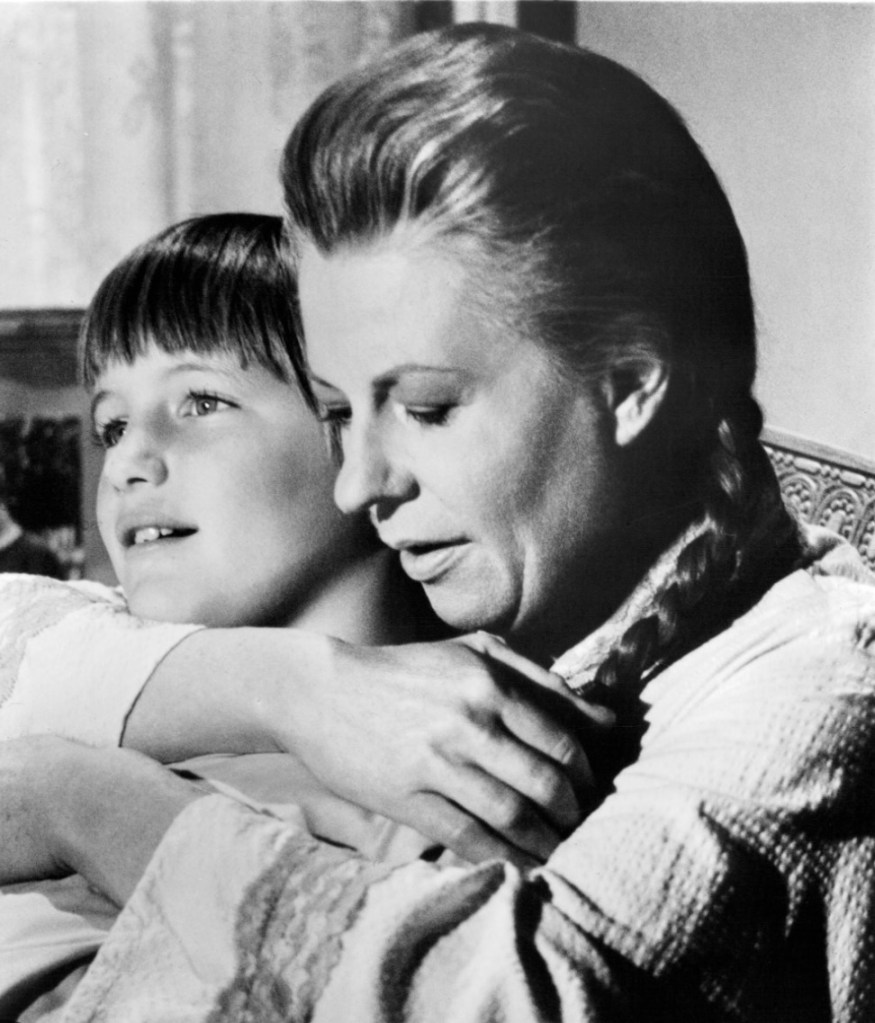
THE OTHER takes place in the summer of 1935, with twin brothers Niles and Holland Perry (Chris and Martin Udvarnoky) spending their days playing, fishing, and swimming on their family farm. At first it seems like we’ve stumbled across one of those perfectly nostalgic movie summers, but as we meet the rest of the family, we learn that there has been a lot of tragedy in their lives. Their father has recently died and their mother Alexandra (Diana Muldaur) seems to be lost in the grip of depression, which leaves their grandmother Ada (Uta Hagen) to give the boys most of the attention that they need. She’s even taught them fun games to play that allow them to use their imaginations. While it may all look innocent enough, it soon becomes clear that something is very wrong as bad things just keep happening.

This is a movie that takes its time building a world that changes dramatically from the beginning to the end as we slowly learn more about what’s really happening. When I was a kid, during the summers my brother and I would play in the woods behind our house. We mapped them, named the creeks our own made-up names, shot at trees with our BB guns, and walked as far as we could until we’d start thinking our mom would be mad at us. If we weren’t doing that, you might find us fishing on the pond behind our house. That’s the kind of stuff that these boys are doing at the beginning of the film and that connection to a simpler time drew me in. But once the initial layer is peeled back, we begin to realize that things aren’t how they appear. With each succeeding frame, I became more and more uncomfortable, and it doesn’t let up. I won’t spoil the movie’s surprises, but it pulls no punches.

Since THE OTHER relies on creeping dread to create its horror, as opposed to gore and jump scares, the performances need to be good, and they are really strong here. This is the only film that the Udvarnoky twins would appear in, and I think they’re very effective, with “Niles” coming off as particularly sweet and innocent. With their blue eyes, there were a couple of times they even reminded me of a young Kurt Russell. The fact that so much of the story revolves around children makes the events that follow that much more disturbing.

I found Uta Hagen to be fascinating as their grandmother Ada, whose extreme love for them comes with a whole bunch of unintended consequences. I didn’t know anything about her before watching this film either. After enjoying her performance here, I read up on her legendary career on the stage where she won multiple Tony awards, as well as a special Lifetime Achievement award. Diana Muldaur doesn’t have a lot to do, but she does have a couple of strong moments as the boys’ mother where she conveys a lot of information without being able to say a word. And while I enjoyed seeing John Ritter and Victor French pop up in various roles, no one is safe from extreme emotional or physical harm in this movie, so I can’t say there was anything fun about their characters.

In some ways, I’m quite surprised that I’d never heard about THE OTHER before now. But that’s been one of the best things about being part of TSL’s Horror-Thon, as I’ve been actively seeking out these types of films. This one stirred up a lot of emotions, with some of its visuals especially disturbing. And the less you know going in, the stronger the impact the film will have. I can just about guarantee that I will never watch it again, but there’s also a very good chance I’ll never forget it either!

Slither Into Halloween With These Snakes!


by Griffith Foxley

Almost everyone I know is scared of snakes but most of them are harmless.  Our cats regularly bring us little grass snakes and drop them at our feet and then act surprised when we say, “No, kitty!  Get that way from me!”  If a snake is really bothering you, you can get rid of it by chopping off its head with a shovel.  That was something that my mom taught me how to do when we were visiting her parents in South Texas and there actually were potentially dangerous snakes around.  Or you can just wait for it to leave.  Most snakes aren’t that bad.  Of the 4,000 known species of snake, 83% are harmless.

The other 17% are like the ones featured in these classic pulp covers!

by Ed Valigursky

Artist Unknown

Unknown Artist

Unknown Artist

by John Pedersen

Unknown Artist

by Rudolph Belarski

by Hans Wesselowski

Artist Unknown

Be careful out there!


Film Review: Body Double (dir by Brian De Palma)


Rumor has it that Brian De Palma’s motivation for directing 1984’s Body Double was that he was angry with the MPAA. After being forced to (unfairly, in his opinion) recut almost all of his previous films to avoid an X-rating, De Palma decided to make a film that was actually worthy of an X. It would feature the bloodiest and most sexually suggestive murder that he had filmed up to that point. Because a good deal of the film would deal with the adult film industry and would co-star Melanie Griffith as an actress named Holly Body, the film would be full of nudity. The film would even feature Frankie Goes to Hollywood performing their then-controversial hit song, “Relax.” De Palma said that the film would be a “real X,” and, indeed, it was rated X when it was first submitted. De Palma later said that he actually only had to cut a few seconds of nudity to get an R-rating, which was quite a contrast to what he went through with his previous films. The nudity was cut. The scene of Deborah Shelton getting murdered by a killer with a very phallic drill was untouched, just in case you were wondering about the MPAA’s priorities.

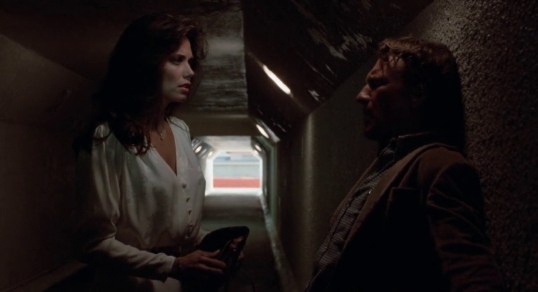
Body Double stars one of my favorite underrated actors, Craig Wasson. Wasson plays Jake Scully, a struggling actor with extreme claustrophobia. When he freezes up while lying in a coffin, Jake is fired from the vampire film in which he’s appearing. Jake’s friend, Sam Bouchard (Gregg Henry), takes some pity on him and arranges for Jake to housesit a luxurious apartment. Sam points out that, every night, Jake’s neighbor appears to dance naked in her apartment. Jake becomes obsessed with Gloria Revelle (Deborah Shelton) and starts to follow her across Los Angeles. (That Jake remains likable even after he watches her shop for underwear is a testament to Wasson’s amiable screen presence.) Jake realizes that he’s not the only one following Gloria. After a man who appears to be extremely scarred snatches Gloria’s purse, Jake chases after him. Jake doesn’t catch the man because his claustrophobia acts up when he has to run through a tunnel. But Gloria shares an impulsive kiss with him before leaving. Later that night, Jake looks into Gloria’s apartment and witnesses her being murdered by the man who earlier stole her purse….

Jake’s investigation into Gloria’s death leads him into the world of adult films and body doubles. In a typical De Palma twist, it also leads to Jake becoming a better actor as he’s forced to take on different identities and lie about his intentions. He meets Holly Body, an actress he’s shocked to discover he’s seen before.

Body Double is one of those De Palma films that seem to divide people. Viewers either love the twisty plot, the elaborate set pieces, and the deliberate homages to Hitchcock or else they find it all to be terribly self-indulgent. This film is De Palma at his most stylish. When Gloria and Jake kiss, De Palma doesn’t just show us the kiss. Instead, the camera spins around them and, for a few moments, De Palma’s thriller becomes a grand romance. There’s a dark sense of humor running through Body Double and, again, how one reacts to it will depend on how much one is already on De Palma’s wavelength. Just as Blow Out ended with Travolta finding the perfect scream, Body Double ends with Jake learning how to stay in the coffin until the director yells “Cut!” Big tragedies lead to small victories.

I have to admit that the first time I saw Body Double, I was a little bit annoyed with it. Every time that I started to get invested in the story, De Palma would launch into another lengthy set piece that ultimately seemed to be designed to remind me that it was just a movie. On repeat viewings, though, I’ve come to appreciate the film’s dark humor and the performances of Wasson, Griffith, and Gregg Henry. Now, I can appreciate the film for what it is, an exercise in glorious style and excess. Body Double is De Palma paying tribute to the masters (like Hitchcock) while also telling an unapologetically sordid story. De Palma’s real X holds up well.


Film Review: Blow Out (dir by Brian De Palma)


Before the shouting starts, allow me to say that I fully understand that 1981’s Blow Out is not a horror film .… or at least, it isn’t in the traditional way. It’s a conspiracy thriller starring John Travolta as Jack Terry, a Philadelphia sound technician. While recording outside sounds, he witnesses a car careen off a bridge and crash into a creek. Though the driver is killed in the crash, Jack is able to pull the car’s passenger, an escort named Sally (Nancy Allen), out of the water. Later, Jack learns that the driver was Governor George McRyan, a presidential candidate. And when Jack listens to his tapes of the crash, he becomes convinced that he can hear someone shooting out one of the tires.

So, yes, the film is definitely a conspiracy thriller, one that owes quite a bit to the lore surrounding the Kennedys. Jack’s sound tape and the later discovery that a sleazy guy with the unforgettable name of Manny Karp (Dennis Franz) filmed the accident bring to mind the Zapruder film and the ongoing debate about what it showed and didn’t show. (Watching the film, one is reminded that it took several years for people to acknowledge that a key moment in the Zapruder Tape was actually shown in reverse when it was first released to the public.) The crash into the creek brings to mind the night that Ted Kennedy drove off a bridge at Chappaquiddick and left Mary Jo Kopechne to die while he returned to his hotel and got some sleep. There were some conspiracy theorists who claimed that the accident was actually the result of an attempt on Ted’s life. (It’s always interesting how Chappaquiddick is described as being a Kennedy tragedy when, in actuality, Mary Jo Kopechne is the one who died and Ted was the one reelected to the Senate.) Just a year before Blow Out was released, Ted Kennedy ran for President and discovered that voters outside of Massachusetts actually did care about what he did at Chappaquiddick. Meanwhile, director Brian De Palma’s interest in the Kennedy assassination could be traced all the way back to Greetings and Gerrit Graham’s performance as a conspiracy-obsessed hipster.

That said, Blow Out is definitely horror-adjacent. The film opens with footage from a believably bad slasher film called Co-Ed Frenzy. The footage makes use of all the expected slasher tropes, from the prowling camera to the gratuitous nudity to the death of a voyeuristic extra. But it falls apart during the inevitable shower scene, when it turns out that the actress cannot scream. It’s a reminder that the violence in horror movies is not real. Instead, it’s carefully choreographed and edited to keep the viewer uneasy. Jack is ordered to record the perfect scream to fool viewers into thinking the horror is real. Jack manages to do so, but at a terrible cost. The scream works in the film. The spell that the film puts over the audience will not be broken. But Jack will never be able to listen to his work.

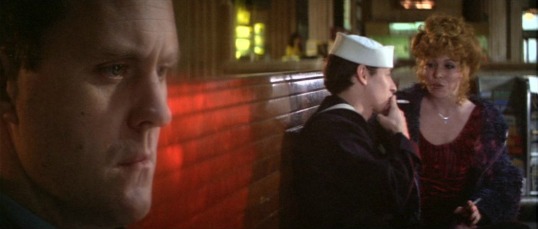
The film also features John Lithgow as Burke, one of the cruelest villains to be found in De Palma’s entire filmography. Burke knows that he has to kill Sally to cover up the assassination of Governor McRyan but, rather than just kill her, he first kills several women who resemble her so that Sally will be viewed as just being the latest victim of the Liberty Bell Strangler. John Lithgow is a terrifying murderer because he’s so casual about it. For him, it’s just a part of the job. Ever since I saw Blow Out for the first time, I automatically get uneasy whenever John Lithgow shows up in a movie. In a film full of good performances, John Lithgow is terrifying.

Blow Out is a stylish film, which should come as no surprise given that it was directed by Brian De Palma. De Palma goes as far as to create a fictional holiday—“Liberty Day”—so that he can fill the climax with red, white, and blue. The celebrations, which are meant to commemorate the ringing of the Liberty Bell, provide a joyous contrast to the darkness that defines the worlds of the film’s characters. Like the best conspiracy thrillers, Blow Out is drenched in an atmosphere of paranoia. No one can be trusted, and the scariest thing isn’t that people don’t know the truth. It’s that they don’t want to know. And while this theme was undoubtedly something that De Palma carried into the ’80s from the ’60s and the ’70s, it feels even more relevant today as we’re continually told that we shouldn’t still be thinking about the excesses and secrets of the COVID era.

So no, Blow Out is not a horror film.

But it’s definitely scary.

Horror Film Review: Psycho (dir by Alfred Hitchcock)


Just the thought of reviewing Psycho is intimidating.

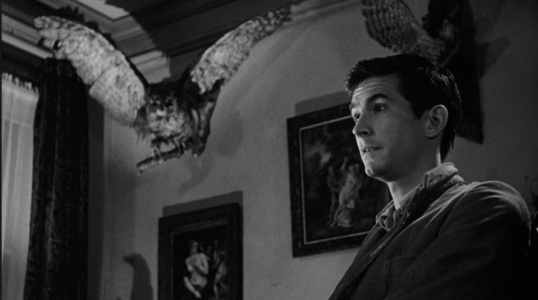
In the past, I’ve reviewed all of the sequels. I even reviewed a few episodes of Bates Motel. But I’ve avoided reviewing the original 1960 film because I wasn’t sure that there was much left for me to really say about it. It’s one of those films that has been endlessly analyzed. It’s also one of those films that is so famous and which has been imitated so many times that even people who haven’t seen Psycho know what the film is about. Everyone knows about the shower scene. Everyone knows about the twists that took audiences and critics by surprise in 1960. No one is shocked by the revelation about the true nature of Norman Bates and his mother anymore. In fact, most people are more likely to be surprised by Simon Oakland’s hammy performance as the psychiatrist than they are by the ending.

And indeed, probably the best thing that we can say about Psycho is that it still works even when the big twists are no longer a surprise. Janet Leigh’s performance as Marion Crane still holds up as one of the best recorded on film. Even before she arrives at the Bates Motel, we’re scared for her. She spends the first half of the film fleeing Phoenix with an envelope full of stolen cash. Everyone she meets on her journey, from the suspicious highway patrolman (Mort Mills) to the too-eager car salesman (John Anderson), comes across as being a threat. Of course, the bigger threats are the voices in her head as she imagines how people are going to react to her actions. When we hear the patrolman interrogating the salesman, are we hearing an actual interrogation or are we just hearing what Marion fears is happening? We don’t really know and neither does Marion. As played by Janet Leigh, Marion is both a femme fatale (that black bra after she steals the money!) and a relatable and frustrated single woman wondering if she’s waited too long to live her own life (that hotel room with John Gavin’s Sam Loomis!). She’s not a master criminal. She’s someone who did something impulsive and fears she’ll be punished for it.

Ironically, Marion’s murder in the shower has nothing to do with the money. When Norman is cleaning up the motel room afterwards, he picks up the newspaper in which Marion hid the money and tosses it into the trunk of her car. Everyone who comes after Marion assumes that Norman knew about the money, but Norman has no idea what they’re talking about. The money itself seems like such a petty thing. The money was stolen from an oilman (Frank Albertson, who also played Sam Wainwright in It’s a Wonderful Life) who confesses that he has a lot more hidden away. Sam’s claim that he can’t marry Marion because he doesn’t have the financial resources feels more like an excuse than a reason. When private detective Milton Arbogast (Martin Balsam) disappears, the sheriff (John McIntire) initially assumes that he stole the money for himself. Marion’s sister Lila (Vera Miles) assumes that Norman stole the money because his motel was struggling. Norman doesn’t care about the money. He sends the money (and Marion’s car) to the bottom of a nearby swamp and he does so in such a casual manner that there’s little doubt it’s not the first time. All Norman cares about is protecting his mother. And all his mother cares about is protecting Norman….

Everyone knows about the shower scene but what makes Psycho truly memorable are the little moments. I love Pat Hitchcock’s performance as Marion’s co-worker. “He was flirting with you. I guess he must have noticed my wedding ring,” is one of the best lines ever written and/or delivered. I love the taciturn sheriff and his oddly cheerful wife (Lurene Tuttle), the one who whispers “in bed.” I love the wonderfully passive-aggressive scenes between Arbogast and Norman. Martin Balsam and Anthony Perkins were two veterans of the New York stage and one can tell that they enjoyed bouncing lines off of each other. I even love John Gavin’s somewhat stiff performance as Sam Loomis. People tend to criticize Gavin but his stolid screen presence provides a nice contrast to Perkins’s nervous Norman. Psycho is a film that creates its own little world and Sheriff Chambers and Sam and Lila and Arbogast all come across as if they have (or, at least, had) lives outside of what we see in the film. Of course, Janet Leigh and later Anthony Perkins both dominate the film and indeed, Anthony Perkins, who had been a romantic lead up until Psycho, never escaped the shadow of Norman Bates. (Perkins was the first and really the only choice for the role, though Hitchcock was willing to offer it to Dean Stockwell if, for some reason, Perkins refused to play Norman.)

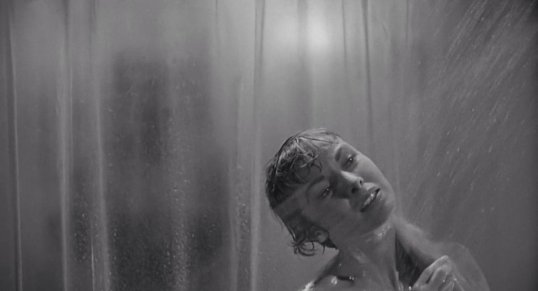
Oh, but the shower. You can’t talk about Psycho without talking about the shower, can you? It’s still a frightening scene, even when you know it’s coming. For Marion, the shower is more than just a shower and as someone who loves to take long showers, I always feel like I know exactly how she’s feeling. She’s decided to return to Phoenix and face the consequences. She’s washing away her guilt and her fear and, being in a motel room with a locked door, she has every reason to believe that she’s safe. But she’s not. We already know that she’s not because we’ve already seen Norman peeping in on her. (As disturbing as Norman’s peeping is, it’s not that much different from what the film’s audience was doing to Janet Leigh during the film’s opening scenes.) Marion discovers the danger too late. I find the scenes of Norman cleaning up the room to be even more unsettling, if just because he’s so professional about it. He knows exactly what to do, which lets us know that this isn’t the first time someone has died in that room. Marion, who we’ve just spent nearly an hour getting to know, is wrapped up in plastic and dumped in the back of her car and the audience is reminded that, when one’s physical life is over, it’s over.

66 years after it was first released, Psycho is still one of the greats.


Bonus Horror on the Lens: How To Make A Monster (dir by Herbert L. Strock)


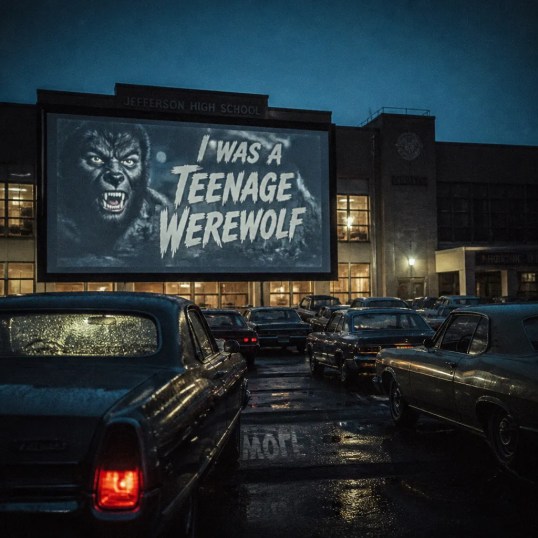
You’ve seen I Was A Teenage Werewolf….

You’ve watched I Was A Teenage Frankenstein….

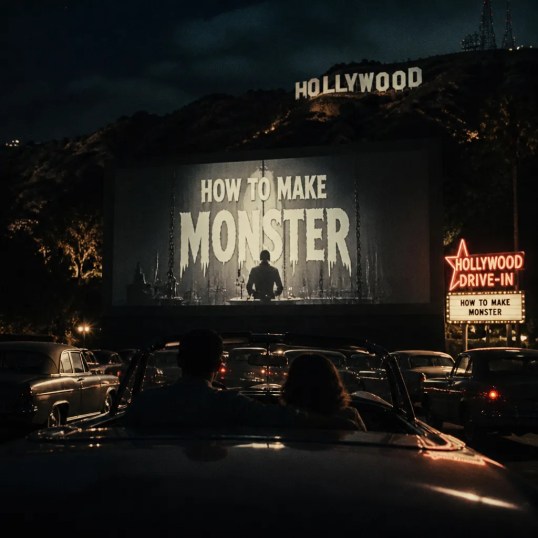
Now, it’s time to watch How To Make A Monster!

Released in 1958, How To Make A Monster is a clever little horror satire from American International Pictures in which the stars of Teenage Werewolf and Teenage Frankenstein are hypnotized into believing that they actually are the monsters that they played!  The main culprit is a movie makeup artist (Robert H. Harris) who has been deemed obsolete by the new bosses at AIP.

Be sure to watch for the finale, which features cameo appearances from several other AIP monsters!  And read my full review of the film by clicking here!

Bonus Horror On The Lens: I Was A Teenage Frankenstein (dir by Herbert L. Strock)


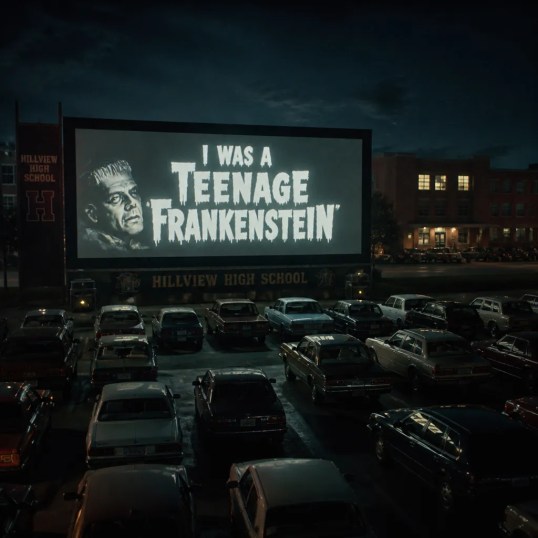
From 1957, it’s I Was A Teenage Frankenstein!

This film was produced as a direct result of the box office success of I Was A Teenage Werewolf.  Just as in Teenage Werewolf, Whit Bissell plays a mad scientist who makes the mistake of trying to play God.  (He also makes the mistake of keeping an alligator in his lab but that’s another story.)  The end result …. Teenage Frankenstein!

The makeup on the Teenage Frankenstein is probably the best thing about this film.  If nothing else, this film features a monster who actually looks like he was stitched together in a lab.

Enjoy and please be sure to read my full review!

Horror On The Lens: I Was A Teenage Werewolf (dir by Gene Fowler, Jr.)


1957’s I Was A Teenage Werewolf combines two genres that were very popular in the late 50s.

On the one hand, it’s a film about a teenage rebel.  Tony Rivers (Michael Landon) is a teenager that means well but he keeps losing his temper.  If he can’t learn to control his anger, he could very well be looking at a life behind bars.

On the other hand, it’s also a horror film.  When Tony visits a hypnotist (Whit Bissell), the end result is Tony turning into a werewolf and going on a rampage, all while still wearing his letterman jacket.

All in all, this is a pretty fun little movie.  You can check out my review of it by clicking here.

And you can watch the movie below!

Join #MondayMania For The Perfect Nanny!


Hi, everyone!  Tonight, on twitter, I will be hosting one of my favorite films for #MondayMania!  Join us for 20oo’s The Perfect Nanny!

You can find the movie on Prime and then you can join us on twitter at 9 pm central time!  (That’s 10 pm for you folks on the East Coast.)  See you then!