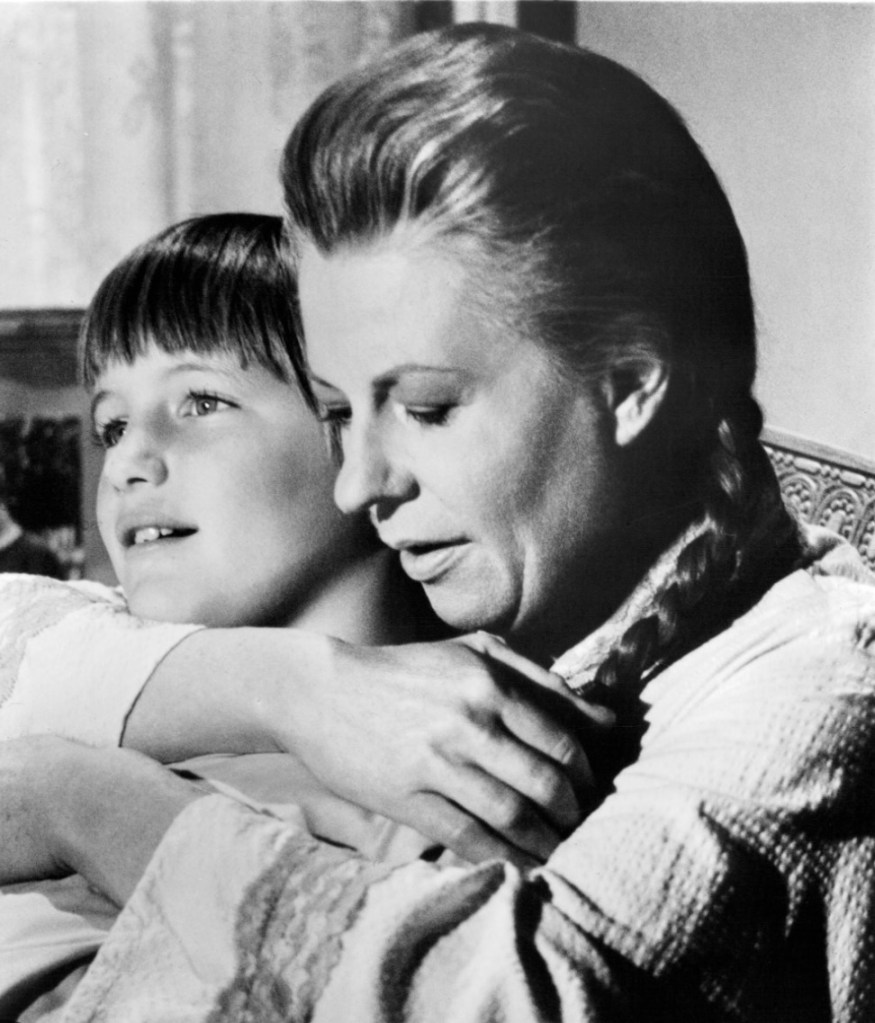
Brad discovers THE OTHER (1972), directed by Robert Mulligan!


I was browsing through my streaming services this morning in search of a scary movie to watch when I came across THE OTHER. The poster featured a creepy-looking kid, and the movie was made in 1972, so I decided I would dig a little deeper. The first thing I saw in the credits was that it was directed by Robert Mulligan, the same guy who directed the classic TO KILL A MOCKINGBIRD, and that it was written by actor Tom Tryon. Now truly intrigued, I decided to go ahead and hit play, because there aren’t that many opportunities these days for me to experience a movie while knowing next to nothing about it. And good grief, I wasn’t emotionally prepared for what I was about to see.

THE OTHER takes place in the summer of 1935, with twin brothers Niles and Holland Perry (Chris and Martin Udvarnoky) spending their days playing, fishing, and swimming on their family farm. At first it seems like we’ve stumbled across one of those perfectly nostalgic movie summers, but as we meet the rest of the family, we learn that there has been a lot of tragedy in their lives. Their father has recently died and their mother Alexandra (Diana Muldaur) seems to be lost in the grip of depression, which leaves their grandmother Ada (Uta Hagen) to give the boys most of the attention that they need. She’s even taught them fun games to play that allow them to use their imaginations. While it may all look innocent enough, it soon becomes clear that something is very wrong as bad things just keep happening.

This is a movie that takes its time building a world that changes dramatically from the beginning to the end as we slowly learn more about what’s really happening. When I was a kid, during the summers my brother and I would play in the woods behind our house. We mapped them, named the creeks our own made-up names, shot at trees with our BB guns, and walked as far as we could until we’d start thinking our mom would be mad at us. If we weren’t doing that, you might find us fishing on the pond behind our house. That’s the kind of stuff that these boys are doing at the beginning of the film and that connection to a simpler time drew me in. But once the initial layer is peeled back, we begin to realize that things aren’t how they appear. With each succeeding frame, I became more and more uncomfortable, and it doesn’t let up. I won’t spoil the movie’s surprises, but it pulls no punches.

Since THE OTHER relies on creeping dread to create its horror, as opposed to gore and jump scares, the performances need to be good, and they are really strong here. This is the only film that the Udvarnoky twins would appear in, and I think they’re very effective, with “Niles” coming off as particularly sweet and innocent. With their blue eyes, there were a couple of times they even reminded me of a young Kurt Russell. The fact that so much of the story revolves around children makes the events that follow that much more disturbing.

I found Uta Hagen to be fascinating as their grandmother Ada, whose extreme love for them comes with a whole bunch of unintended consequences. I didn’t know anything about her before watching this film either. After enjoying her performance here, I read up on her legendary career on the stage where she won multiple Tony awards, as well as a special Lifetime Achievement award. Diana Muldaur doesn’t have a lot to do, but she does have a couple of strong moments as the boys’ mother where she conveys a lot of information without being able to say a word. And while I enjoyed seeing John Ritter and Victor French pop up in various roles, no one is safe from extreme emotional or physical harm in this movie, so I can’t say there was anything fun about their characters.

In some ways, I’m quite surprised that I’d never heard about THE OTHER before now. But that’s been one of the best things about being part of TSL’s Horror-Thon, as I’ve been actively seeking out these types of films. This one stirred up a lot of emotions, with some of its visuals especially disturbing. And the less you know going in, the stronger the impact the film will have. I can just about guarantee that I will never watch it again, but there’s also a very good chance I’ll never forget it either!
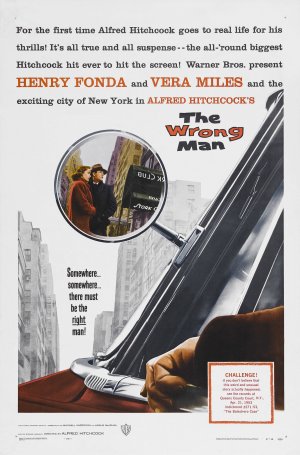
Lisa Marie Does The Wrong Man (dir by Alfred Hitchcock)


Since today is Alfred Hitchcock’s birthday, I figured why not take a few minutes to recommend one of his films that you may not have seen.  First released in 1956 but still painfully relevant today, The Wrong Man is one of Hitchcock’s best but it’s also one of his most underrated.

The Wrong Man deals with a common Hitchcock theme — i.e., an innocent man has been accused of a crime and, despite all of his efforts, cannot seem to convince anyone of his innocence.  The difference between The Wrong Man and something like Saboteur or Frenzy is that The Wrong Man is based on a true story.

Manny Ballestro (Henry Fonda) is a struggling musician.  He makes $85 a week, playing in a small jazz club.  But even though he may not be rich, he’s happy.  He loves his job.  He loves making music.  Even more importantly, he loves his wife, Rose (Vera Miles).  But Rose needs to have her wisdom teeth removed and it’s going to cost $300.  (As a sign of how much things have changed, I would have been relieved if it had only cost me $300 to get my wisdom teeth taken out.)  Desperate for money, Manny tries to borrow money on his wife’s life insurance plan.  What Manny doesn’t know is that the insurance office has been held up twice by a man who bears a vague resemblance to him.  A clerk calls the police and Manny soon finds himself being taken down to the police station.

Two detectives say that they need Manny’s help but they don’t tell him why.  But Manny knows he’s innocent of any crime and he believes that the police are on his side and he agrees to help.  When they tell him to walk into a liquor store, he does so.  When they take him to a deli, he goes in there as well.  When they demand to know why he was trying to borrow money on his wife’s life insurance, he tells them.  When they ask him about his financial difficulties, he tells them about that as well.  Why shouldn’t he?  He’s innocent and the police are just doing their job, right?  And when the cops finally ask him to copy down a few words that were used in the note that the robber slipped the clerk at the insurance company, Manny does so.  And when they then ask him to take part in a line-up, he does that as well…

And when Manny is arrested and charged with a crime … well, that’s when he finally understands that the system is not on his side.  His wife manages to hire a reputable attorney, Frank O’Connor (Anthony Quayle), to defend him but it quickly becomes obvious that the world has already decided that Manny is guilty.  When Manny and his wife try to track down some people who could provide Manny with an alibi, they discover that two of them are dead and one of them cannot be found.  For once, in a Hitchcock film, it’s not a case of conspiracy.  Instead, it’s just bad luck.

And, through it all, Rose continues to blame herself.  In fact, she is so wracked with guilt that she has a nervous breakdown.

It all leads to an amazingly disheartening courtroom scene.  As quickly becomes obvious, the judge has little interest in what’s happening in his court.  Even worse, the jury is unconcerned with the evidence.  Most of them are just annoyed at the inconvenience and punishing Manny seems like the perfect way to release their own frustrations…

It’s a bleak picture of the American justice system.  Watching The Wrong Man today, it’s tempting to say that the film is just a reflection of society in the 1950s and that things have changed today.  But really, have they?  True, the police may now be required to read someone their rights when they’re arrested.  A suspect can now ask for a lawyer.  We’ve got laws against entrapment and all the rest.  But that doesn’t matter.  We still live in a society where people are still widely presumed to be guilty, even after they’ve been found innocent in a court of law.  We still live in a society where the wrong man can have his life ruined because of one mistake.

The Wrong Man doesn’t get as much attention as some of Hitchcock’s other films.  In many ways, it’s an atypical example of his work.  Hitchcock was notorious for his dark sense of humor and his habit of waving away most plot points as just being mere “macguffins.”  With the exception of two scenes, both of which are meant to depict Manny’s mental state, The Wrong Man is filmed in a documentary style, one that occasionally seems more like Sidney Lumet than Alfred Hitchcock.  There’s next to no humor, nor are there any big or flamboyant twists.  In short, The Wrong Man finds the director of Psycho, Vertigo, and Rear Window at his most sincere.  It takes some getting used to.

But, once you do get used to it, The Wrong Man emerges as a powerful and bleak portrait of two innocent people at the mercy of a soulless system.  It’s a must see so be sure to see it!

The-Wrong-Man-poster