That sounds strange, doesn’t it? There’s never been a President named Milton Shapp. The name itself doesn’t exactly sound all the Presidential. A president named Milton? At one time, Milton brought to mind Paradise Lost. Today, for many people, Milton might bring to mind Stephen Root protectively holding his red stapler in Office Space. It’s not a name that we associate with presidents.
And yet, in 1976, Milton Shapp was one of the many people who ran an at least semi-serious campaign for presidency. He was the governor of Pennsylvania, having first been elected in 1970 and narrowly re-elected in 1974. He was the owner of an electronics company, a self-made millionaire. He played the violin. He wrote poetry. He was the author of several musicals that had never actually been produced. He ran for the Democratic Presidential nomination and, as you can probably guess, he didn’t get far. If he had been elected, he would have been the country’s first Jewish President.
Of course, he wasn’t elected President. If he had been elected, it’s doubtful that he would have been any better than Jimmy Carter. But he would be remembered. Milton Shapp would be the one with the books written about his life and Jimmy Carter would be the one reduced to being an obscure footnote in someone else’s story.
Unfortunately for Milton Shapp and the majority of the other people who ran for President in 1976, people don’t remember the also-rans. They remember the candidates who won their party’s nominations. To me, that’s a shame. Sometimes, the also-rans are far more intriguing than the people who won. In 1976, the first election after America’s only presidential resignation, over 20 candidates either ran or considered running for the White House. Arizona’s Mo Udall was a one-eyed Mormon who was also a former basketball player. North Carolina’s Terry Sanford was the President of Duke University. Oklahoma’s Fred Harris traveled across the country in a RV and stayed in the homes of his supporters. Indiana’s Birch Bayh and Idaho’s Frank Church were respected technocrats. Maryland’s Sargent Shriver was a Kennedy brother-in-law. Texas’s Lloyd Bentsen was a protegee of Lyndon B. Johnson and once called for nuking North Korea. Washington’s Henry “Scoop” Jackson was the original front runner who was still referred to be his childhood nickname despite being in his 50s. Alabama’s George Wallace campaigned from his wheelchair. At one point, every candidate had a shot at breaking through but only a few made it to the Convention. How different would America be if Mo Udall or Lloyd Bentsen or Milton Shapp had won in 1976?
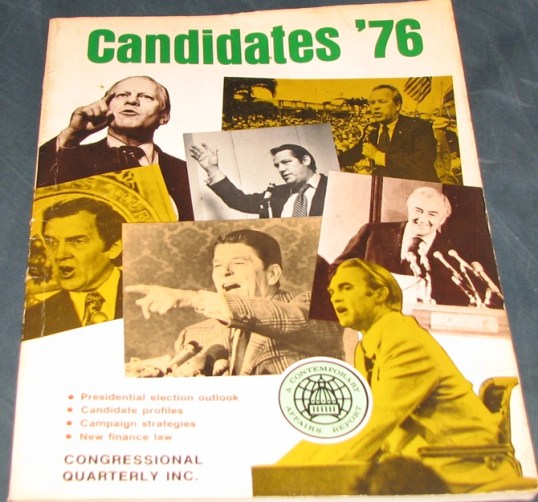
If you’re wondering how I know about all of these folks, it’s because I recently ordered a copy of Candidates ’76, a collection of candidate profiles that was put together by Congressional Quarterly. Along with taking a look at their positions on the issues of the day, it also details their individual backgrounds and assesses their prospects. Because Candidates ’76 was written in 1976, there’s no benefit of hindsight here. Instead, it’s an honest historical document, one that was written at a time when no one was sure what the post-Watergate political scene would eventually look like. For a history nerd like me, it’s the type of thing that is fascinating to read.
For the record, the following candidates and potential candidates are profiled in Candidates ’76. Candidates with an asterisk by their name actually ended up on the primary ballot in 1976.
Republicans:
Gerald Ford*
Ronald Reagan*
Nelson Rockefeller
John B. Connally
Howard Baker
Charles Percy
Charles Mathias
Elliot Richardson
Donald Rumsfeld
George H.W. Bush
Democrats:
Birch Bayh*
Lloyd Bentsen*
James “Jimmy” Carter*
Frank Church*
Fred Harris*
Hubert Humphrey
Henry Jackson*
Edward M. Kennedy
Edmund Muskie
Terry Sanford*
Milton Shapp*
R. Sargent Shriver*
Morris L. “Mo” Udall*
George C. Wallace*
George McGovern
Jerry Brown*
Hugh Carey
Independent;
Eugene McCarthy*
(As far as I can tell, the only candidate that CQ missed was Robert Byrd, who ran as a favorite son in West Virginia. Future Vice President Walter Mondale also ran briefly for President but ended his campaign before Candidates ’76 was put together.)
One of the great things about being a history nerd is that I can find a lot of happiness in reading something like Candidates ’76 and playing the “What If?” game. At a time when misinformation is everywhere and when historical revisionism has been normalized, it’s nice to be able to go back and look at an original document. It’s the next best thing to having a time machine.
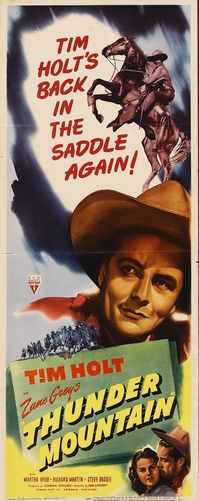
Having been away at agriculture school, Marvin Hayden (Tim Holt) returns home to discover that the ranch that he inherited from his father is about to be auctioned off due to unpaid back taxes. It’s all a part of a scheme concocted by Sherriff Bagley (Harry Harvey), Trimble Carson (Harry Woods), and Johnny Blue (Tom Keene) to get control of the land so that they can make a financial killing when the railroad comes through.
(As in so many B-westerns, Thunder Mountain presents the railroad as something that will help build a lasting society while also bringing out the worst in greedy people.)
Even though Marvin refuses to carry his father’s guns, he’s still viewed as being a threat. Because the Haydens have long feuded with the Jorth family, Carson murders Chick Jorth (Steve Brodie). Marvin is arrested for the crime. It falls to Marvin’s friends Chito (Richard Martin), Ginger (Virginia Owen), and Jim Gardner (Jason Robards, Sr., not to be mistaken for his son) to help Marvin break out of jail so that he can prove his innocence, save his ranch, and win the heart of feisty Ellie Jorth (Martha Hyer).
This was Tim Holt’s first starring role after he returned from serving in World War II and he makes the most of it. Holt plays Marvin Hayden as being a haunted man, someone who has seen firsthand the results of violence and frontier feuds. Unlike the heroes that Holt played before World War II, Marvin Hayden doesn’t want to carry a gun but, ultimately, circumstances don’t leave him with much choice. This movie is a perfect example of why Holt’s films are held in such high regard by B-western fans. The plot may not be anything special but Holt’s intelligent performance brings some unexpected shadings to the proceedings. Holt gets good support from Martin, Owen, and Robards and there’s a lot of spark to his scenes with Martha Hyer.
Based on a Zane Grey novel and featuring a brisk, 60-minute running time, Thunder Mountain is one of the better B-westerns out there and a good showcase for Tim Holt.
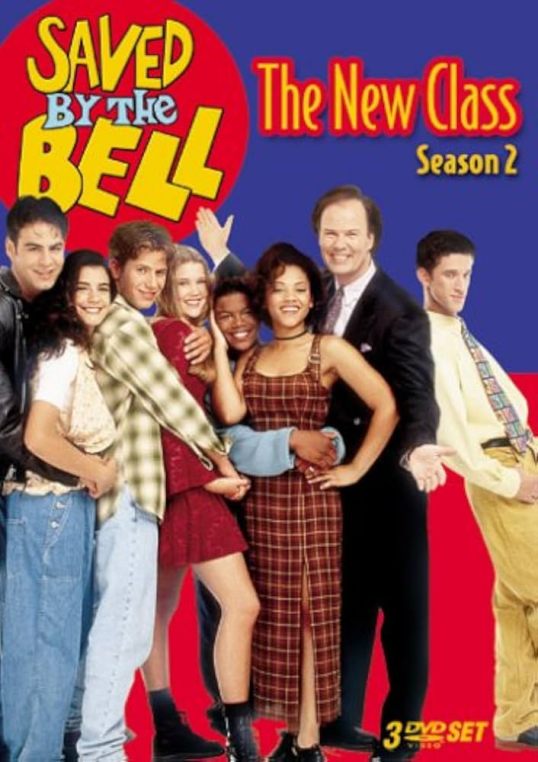
Welcome to Retro Television Reviews, a feature where we review some of our favorite and least favorite shows of the past! On Tuesdays, I will be reviewing Saved By The Bell: The New Class, which ran on NBC from 1993 to 2o00. The show is currently on Prime.
This week, Screech becomes a crusading editor.
Episode 2.7 “The People’s Choice”
(Dir by Don Barnhart, originally aired on October 1st, 1994)
Feeling underappreciated at the high school, Screech asks to be made faculty advisor of the school paper. With a staff made up of the Gang, Screech rejuvenates the paper. Soon, he is directing an investigation into why there’s no money in the school’s athletic budget for the girl’s swim team to go to state. Could it be because the misogynistic football coach (Brian Reddy) is a embezzling the money so the football team can go on a trip?
Unfortunately, everyone gets so involved in pursuing the story that they neglect their studies and they skip Mr. Belding’s college entrance exam review session! Honestly, college entrance exams are incredibly easy and anyone who needs a review session to do well on them wasn’t going to get into a decent college anyways. Seriously, just blow all that off and go to a party school like I did. GO MEAN GREEN!
Anyway, Screech realizes the error of his ways and puts the newspaper staff through a grueling review session. Everyone does well on their exam. And Screech disguises himself as an old man and tricks the coach into confessing his embezzlement! The coach presumably works with Screech every day so how did he fall for a wig and a fake mustache? Seriously, what is the deal with this show and disguises?
Despite the rather stupid plot, this episode wasn’t that bad. Dustin Diamond actually gave a fairly believable performance as Screech and the ensemble had a good chemistry. I’ll admit that I laughed at Tommy D’s attempts to be a food critic. I bet we never hear about the newspaper again.
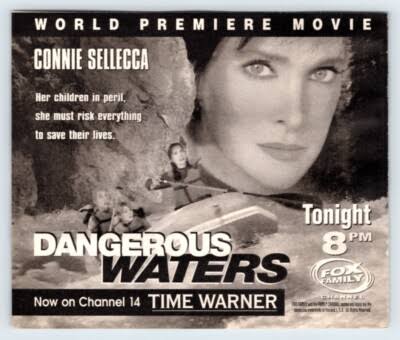
Widow Sarah Slavin (Connie Sellecca) wants to spend the weekend whitewater rafting with her teenage daughter Chrissie (Alana Austin), her son Gus (Anthony DeFilippo), and her boyfriend, Bob Brown (Matt McCoy). White water rafting probably isn’t the best way to introduce your kids to your new boyfriend but Sarah is hoping they can all bond while trying not to drown. Instead, they find an injured man in the woods and then end up getting held prisoner by two escaped prisoners who are searching for some money that they claim is hidden somewhere nearby. If you were in the middle of the woods and miles away from civilization, would you stop to help a wounded man who is wearing a prison uniform? If it was just me, I probably would. But if I was looking after two kids, the escaped con would be on his own.
I watched this movie on YouTube earlier today. At first, I thought it was a pretty obvious rip-off of The River Wild, with a bunch of television actors replacing Meryl Streep and Kevin Bacon. But then, about halfway through, there was a really good twist that totally changed what the movie was about and it actually caught me by surprise. There’s a decent amount of suspense and some good rafting scenes.
I instantly recognized Matt McCoy as being the goofy spokesman from the insurance commercials that would always air whenever my aunt was watching her mystery movies. After watching Matt McCoy in this movie, all I can say is that I will never look at a Hartford Insurance commercial the same way again!
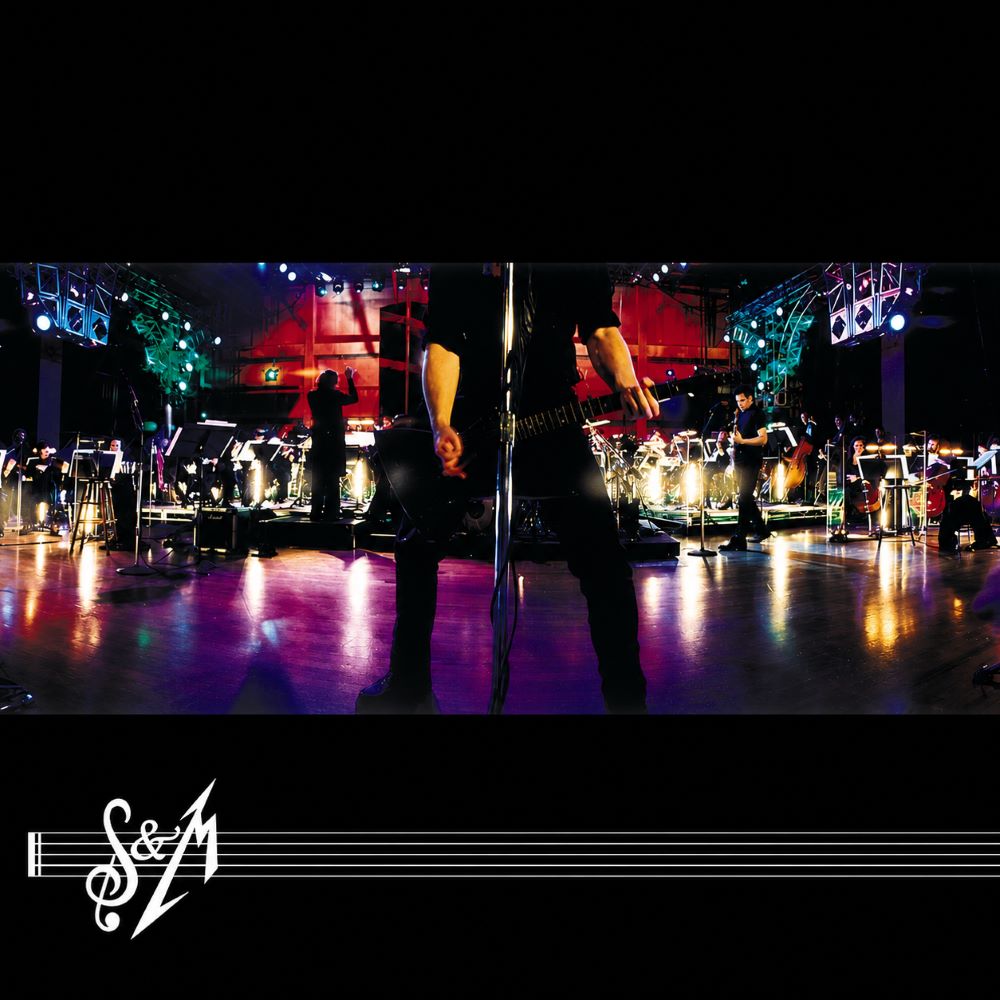
Let’s just get this out of the way right now: S&M is not the perfect metal album, nor is it the perfect classical album, and it is certainly not the perfect marriage of the two. But what it is, against all odds, is a wildly ambitious, occasionally clunky, and frequently thrilling document of a band daring to step way outside its comfort zone. Released in 1999, this live album captures Metallica joining forces with the San Francisco Symphony under the direction of Michael Kamen, and the result is a sprawling, two-disc behemoth that has aged into something of a curio in the band’s catalog. It is beloved by some, dismissed by others, and debated by just about everyone who has ever cared about thrash metal or orchestral music. After spending a good amount of time with the record again recently, I find myself landing somewhere in the messy middle, appreciating the sheer nerve of the project while wincing at its occasional misfires.
Right from the opening notes of The Ecstasy of Gold, which the symphony plays with appropriate gravitas, you get the sense that this is going to be an event. Kamen’s arrangements are the real star of the album in many ways, and his work here has been both praised and picked apart for over two decades. The criticism that the orchestra often feels like an accompaniment rather than a true integration is entirely fair. There are extended stretches across both discs where the symphony seems content to just pad the background, adding a cinematic wash to the music without fundamentally altering its structure or dynamics. It can feel like the orchestra is politely following the band’s lead rather than engaging in a genuine musical conversation, and on tracks like Sad but True, the strings and brass often get buried under Hetfield’s chugging riffs and Ulrich’s pounding drums. You have to listen closely to even hear them at certain points, which rather defeats the purpose of dragging a hundred classically trained musicians onto the stage in the first place.
However, when the arrangement clicks, it clicks with genuine force. The Call of Ktulu is the album’s crowning achievement in this regard, a song that always had a cinematic, almost film-score quality to it even in its original incarnation. With Kamen’s dark, brooding orchestration swelling behind it, the track finally receives the full-blown, apocalyptic setting it always deserved. The brass section is particularly effective here, lending a menacing grandeur that makes the studio version sound almost quaint by comparison. Similarly, The Thing That Should Not Be benefits enormously from the low-end rumble of the contrabassoons and timpani, creating a sound so heavy and oppressive that it rivals anything the band has ever committed to tape. These are the moments where the album transcends its gimmick and becomes something genuinely special, a testament to what can happen when two seemingly incompatible forces find common ground.
What makes this project feel so strangely appropriate, even when it stumbles, is that Metallica’s music has always carried an orchestral grandiosity in its DNA. This is not a band that ever sounded like a scrappy punk outfit, even when thrash metal was still finding its feet in the early eighties. The credit for that largely belongs to Cliff Burton, the band’s original bassist, whose tragically short tenure with Metallica left an indelible mark on their musical identity. Burton was a classically trained musician who grew up studying piano and theory, and he brought that background into a genre that was otherwise rooted in raw aggression and speed. He was the one who pushed the band to incorporate harmonized guitar lines, complex time signatures, and a sense of melodic drama that set them apart from their peers. You can hear his influence all over Ride the Lightning and Master of Puppets, albums that traded the pure punk energy of Kill ‘Em All for something far more ambitious and cinematic. That classical sensibility Burton injected into the band’s early work became the foundation of the Metallica sound, the secret ingredient that allowed them to write songs that felt epic rather than merely fast.
If Burton had lived, I cannot help but wonder how differently S&M might have turned out. He would have been the natural bridge between the metal and the symphony, the guy who could speak both languages fluently and translate the band’s vision into something that felt truly integrated rather than merely superimposed. Kamen did a commendable job, and I do not want to diminish his work, but he was an outsider coming into Metallica’s world. Burton would have been coming from the inside, someone who understood exactly where the orchestral flourishes should sit because he had been hearing them in his head since the early days of writing For Whom the Bell Tolls and Fight Fire with Fire. I genuinely believe he would have been in the forefront of ensuring that the metal and the symphony meshed together seamlessly, not just coexisting on the same stage but actually breathing together as one living organism. The album we got is fascinating, but the album we could have gotten with Burton steering the ship is a tantalizing what-if that I suspect will linger in the minds of fans forever.
But then there are the tracks where the whole enterprise threatens to unravel. Master of Puppets is the most obvious example, and it remains one of the most contentious performances on the album. The song is an absolute thrash classic, a relentless machine of riffage and aggression, and the orchestra simply cannot keep up with it. Kamen’s arrangement feels bolted on rather than woven in, and the result is a performance where the band and symphony are essentially occupying parallel universes, occasionally bumping into each other but never truly locking into a groove. It is still an impressive display of raw power, but it also highlights the fundamental tension at the heart of S&M: Metallica is a band that thrives on chaos and volume, while a symphony orchestra demands precision and restraint. Those two approaches do not always reconcile neatly, and this track is where the seams show the most. One cannot help but think that Burton’s classical ear would have found a way to bridge that gap, to write a countermelody or a harmonic texture that made the whole thing feel intentional rather than forced.
The setlist choices have also been a point of contention ever since the album dropped, and I have to say, the criticism is warranted. The complete absence of any material from Kill ‘Em All is a baffling omission that still rankles. Hearing The Four Horsemen or Seek and Destroy with a full symphony behind them could have been absolutely legendary, a chance to see raw, unfiltered thrash energy get a classical makeover. Instead, the tracklist leans heavily on the band’s more mid-tempo, radio-friendly material from the Black Album, Load, and Reload eras. That decision makes a certain amount of practical sense—those songs are more dynamically suited for orchestral accompaniment—but it also means the album never quite captures the full scope of Metallica’s career. For every For Whom the Bell Tolls or One, both of which translate beautifully to the symphonic treatment, there is a palpable sense of what could have been. The two new songs, No Leaf Clover and – Human, are welcome additions and remain highlights precisely because they were written with the orchestra in mind, so the band and symphony sound naturally more locked in and symbiotic from the very first note.
Vocally, James Hetfield is in fine form throughout, delivering his signature growls and melodic croons with the gruff authority that defined his late-nineties style. His between-song banter, while occasionally corny, adds a human touch to the otherwise grandiose proceedings, and you can hear the genuine excitement in his voice when he introduces the symphony or hypes up the crowd. The audience itself is a character on this album, their roars and sing-alongs providing a palpable energy that prevents the whole affair from becoming too stuffy or self-important. This is not a stuffy classical concert; it is a Metallica show with some fancy guests, and the crowd never lets you forget it. That raw, sweaty, headbanging energy is what keeps S&M grounded, even when the orchestral arrangements threaten to float off into pretentiousness.
In the end, S&M is a deeply imperfect album, and I think even its biggest defenders would admit that. The mix is often cluttered, the orchestra can feel like an afterthought on certain tracks, and the song selection will always be a source of debate among the faithful. But perfection was never really the point. I can say this with some authority because I was actually in the building for one of those two nights at the Berkeley Community Theatre, and despite all the flaws I can hear on the record, the live experience was something else entirely. When the symphony swelled behind the band’s heaviest riffs, the usual tribal divisions between metalheads and classical music fans simply evaporated. I found myself rocking out alongside long-haired thrashers and tuxedo-wearing symphony patrons in equal measure, all of us united by the sheer absurdity and power of what we were witnessing. The album captures that energy reasonably well, but it cannot fully replicate the feeling of being in a room where two completely different worlds decided to throw a party together. This was about a band that had conquered metal deciding to do something completely insane, something that could have easily backfired, and somehow pulling it off with enough swagger and sincerity to make it matter. It is a flawed, ambitious, and undeniably heavy document of a band taking a massive risk at the peak of their fame, and for that, it deserves a place of respect in the Metallica catalog. It may not be the definitive live album of their career, and it certainly is not the definitive symphonic metal album of all time, but it is a fascinating, exhilarating, and occasionally frustrating snapshot of a band refusing to play it safe. And honestly, in a world of safe career moves, that counts for something.
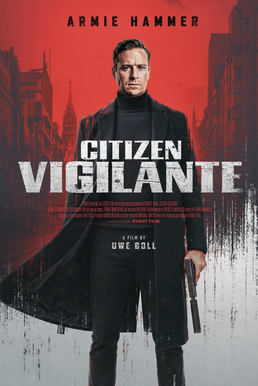
In Citizen Vigilante, Armie Hammer returns to the screen as Sanders, a former American military operative who is now living in an unnamed European country. The people in the country are terrified because the country has been flooded with violent refugees and the liberal judges and the ineffective police and the corrupt government can’t or won’t keep anyone safe. Sanders makes it his mission to mete out justice.
When he sees a group of arrogant young people refusing to pay to ride the bus, he pays for their ticket and then shows their leader that he has a gun. He explains how one person refusing to pay leads to everyone else having to pay more.
When he visits with a prostitute, he is disgusted to see that the building she works in has mold. Sanders is especially upset because his company owns the building. Sanders say that people have to start doing the right thing. Then he pays a woman for sex.
When a judge allows a group of rapists to go free because they’re struggling to “integrate into society,” Sanders drugs the judge and slits his wrists.
Sanders goes to the office of his father’s company and orders the any of his tenants who aren’t paying their rent should be immediately evicted. It’s explained that the government won’t allow Sanders to immediately evict anyone. In fact, the government wants Sanders to hand over his open units so that they can be used to house migrants. Sanders says that he’ll talk to the tenants himself. Uh-oh.
When the cops come looking for Sanders, he blows them up.
Sanders kills an innocent motorist in order to make a point about how people are scared to break the law. Wait, what? This is our hero?
Sanders kills a lot of people. He’s the Citizen Vigilante. He sends out distorted videos of himself in which he rambles about Nietzsche and justice. The fact that he sends out visually distorted videos would seem to suggest that he’s trying to hide his identity but he also spends almost the entire film wearing the exact same outfit and making no attempt to disguise his appearance while out in public. Interpol is determined to catch him but the average citizen, the people being victimized by “woke liberalism” (to quote Sanders), love him.
Lord help us. It’s 2026 and otherwise reasonable people are currently debating the merits of a Uwe Boll film. For all the talk about how this film is politically incorrect and right-wing, it’s really not that much different from Boll’s Assault on Wall Street. Both Assault on Wall Street and Citizen Vigilante are crude, heavy-handed films that capture the fantasies of people who currently feel powerless. Assault on Wall Street was designed to appeal to the Resistance morons, the same people who would later insist that Luigi Mangione’s vapid manifesto was a call for revolution. Citizen Vigilante is designed to appeal to the most simple-minded of the populists. Running through both Citizen Vigilante and Assault on Wall Street is a contempt for anything that reeks of “the system.” Both films are fueled less by politics and more by paranoia. Germany made the mistake of banning Citizen Vigilante, which just added more fuel to a fire that would have otherwise burned itself out.
Citizen Vigilante opens with a scene of shocking violence. It’s one of the more effective moments in the film, largely because it captures the randomness of modern crime. It’s also one of the few scenes not to feature Armie Hammer. One can make the argument that Armie Hammer was treated unfairly when he was canceled. (I mean, there are people out there who still think that Hammer is a cannibal!) Before his career collapsed, Hammer was a busy actor. His piercing eyes and his deep voice made him ideal for both heroes and villains. Citizen Vigilante has been touted as Hammer’s comeback, or at least it was until it was actually released. Hammer wanders through the film in almost zombie-like trance, refusing to show a hint of emotion. Every time he speaks, the deepness of his voice only reminds of how shallow the character (and the film) really is. The film works best when its lead character and actor are nowhere to be seen.
Citizen Vigilante is crude. Is it effective? Occasionally. Like most revenge films, it gets at the type of primal thoughts that a lot of people pretend not to have. That said, Uwe Boll is not a good director. Uwe Boll is an interesting media presence. I respect the fact that, when he challenged his critics to a boxing match, he actually followed through and knocked most of them out. I imagine there are many directors who are envious of that. But, as a filmmaker, Boll has never shown much skill or concern when its come to concepts like pacing, continuity, or getting the best out of his actors. Citizen Vigilante is a slow film that’s built around a character who registers as a big blank. It’s neither as dangerous nor as revolutionary as you may have heard. In the end, it’s just another film about people getting shot, blown up, and stabbed. I imagine that some scenes will achieve a second life on YouTube. That’s just the way of the world nowadays. But the film itself will be forgotten in a few months.
Wow. I just watched and reviewed a Uwe Boll film. I should get hazard pay.
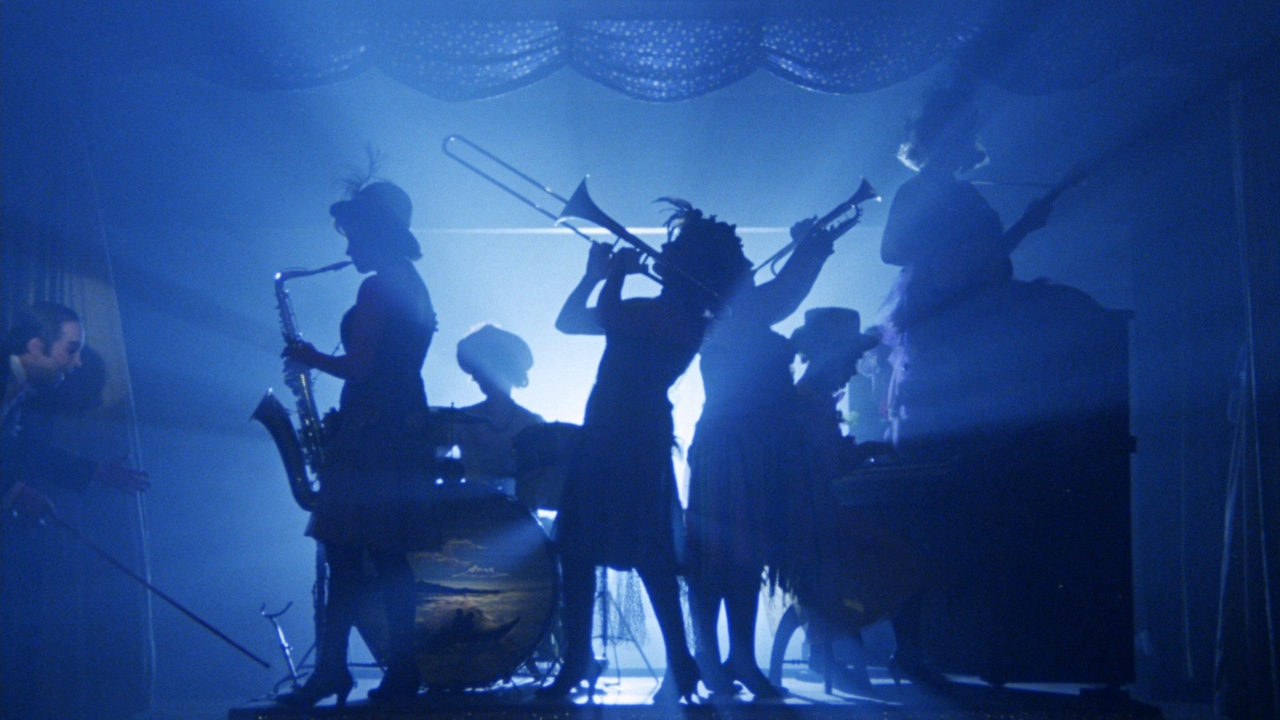
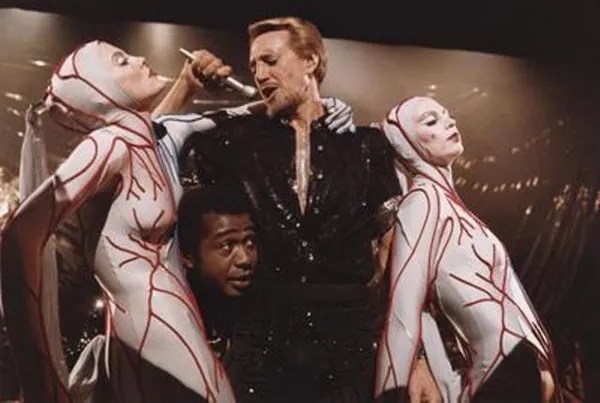
Since today is Bob Fosse’s birthday, it’s only appropriate that today’s scene that I love comes from his 1979’s masterpiece, All That Jazz!
This sequence captures everything we need to know about Joe Gideon (Roy Scheider). We see his talent. We see his self-destructive habits. And, though we don’t realize it until the end of the film, we also see that death is patiently waiting for him.
4 Or More Shots From 4 Or More Films is just what it says it is, 4 shots from 4 of our favorite films. As opposed to the reviews and recaps that we usually post, 4 Shots From 4 Films lets the visuals do the talking!
Today, we celebrate the birth and legacy of Bob Fosse. It’s time for….
4 Shots From 4 Bob Fosse Films
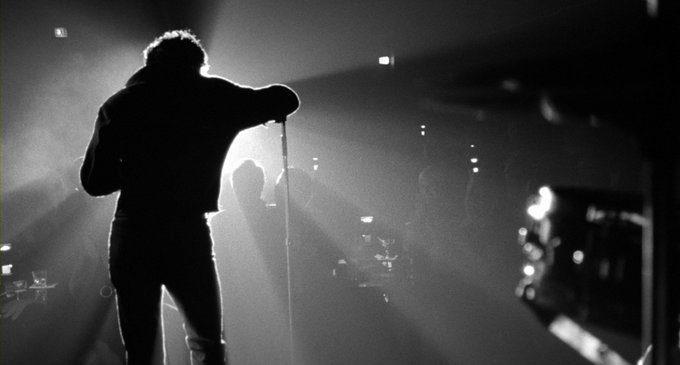
Cabaret (1972, dir by Bob Fosse, DP: Geoffrey Unsworth)
Lenny (1974, dir by Bob Fosse, DP: Bruce Surtees)
All That Jazz (1979, dir by Bob Fosse, DP: Giuseppe Rotunno)
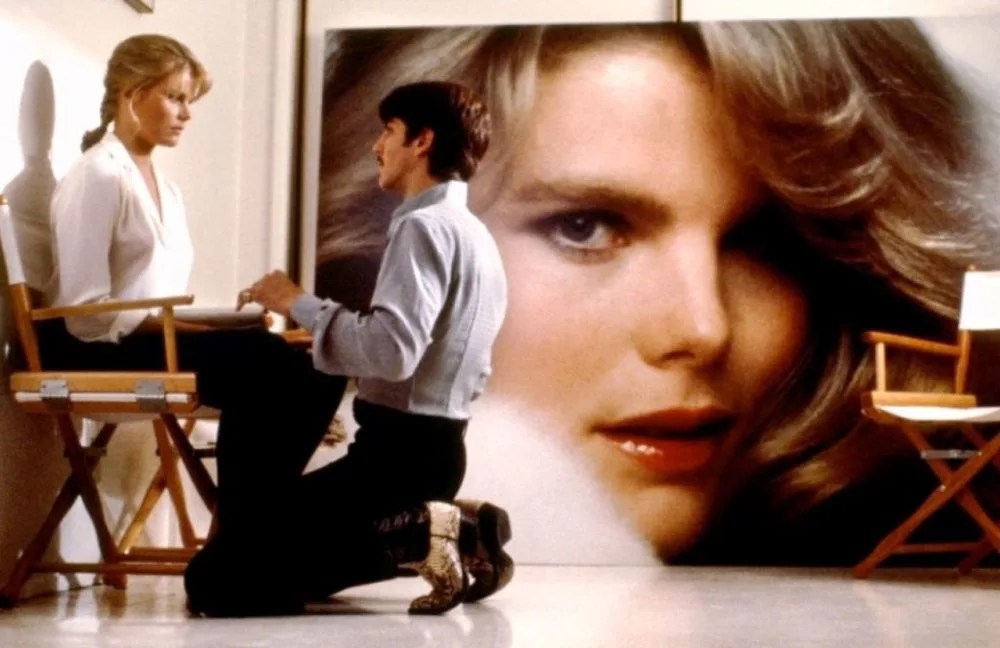
Star 80 (1983, dir by Bob Fosse, DP: Sven Nyvkist)