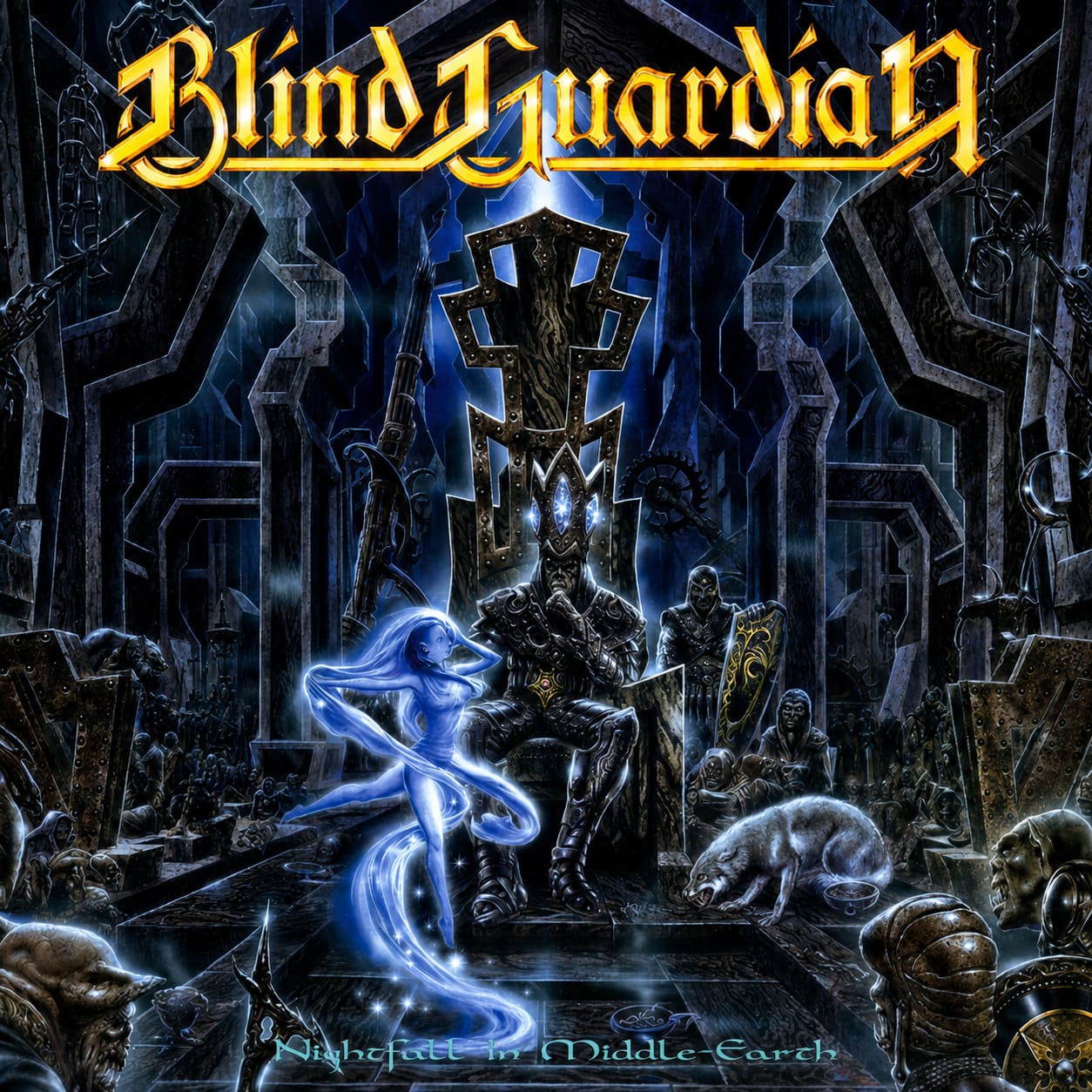
Okay, so you have to listen to Into the Storm by Blind Guardian. I know, I know, it’s easy to dismiss power metal as just another fantasy genre, but trust me on this one. This track is the perfect storm of aggression and melody, and it kicks off the Nightfall in Middle-Earth album with such incredible energy that you’ll be hooked from the first riff. It’s a furious, catchy, and surprisingly deep dive into the lore of The Silmarillion, capturing the raw desperation of Morgoth and Ungoliant squabbling over the Silmarils. But seriously, don’t let the subject matter intimidate you; just let the music do its thing and you’ll be chanting along to the chorus before you know it.
The track is a masterclass in how to build intensity, but the real reason I’m writing this is to talk about the guitar solo by André Olbrich. It is, without a doubt, one of the most underrated moments in their entire catalog. If you pull up the remastered version, the solo hits right at the 2:37 mark and doesn’t let up until about 3:07. It’s a short, sharp shock of pure melodic bliss. What makes it so special is that it completely eschews the typical speed-demon shredding you might expect. Instead, it’s a soaring, beautifully constructed lead that sounds like it’s carrying the entire weight of the song’s story on its shoulders. It perfectly mirrors Hansi Kürsch’s vocal style, acting as another voice in the track to carry you forward into the chaos.
André is often listed among the greatest metal guitarists for a reason, and this solo is a prime example of his genius. He’s not interested in showing off; he’s interested in serving the song and elevating the epic feel. During those 30 seconds, his guitar weeps and soars over the frantic rhythm section, creating this incredible feeling of hope and tragedy all at once. It’s a moment of pure clarity and emotion amidst the storm, and it’s the perfect payoff to the frantic energy that came before it. It’s a piece of music that gets stuck in your head for days, and it’s a big part of why this track is such a fan favorite.
So, if you consider yourself a fan of powerful, storytelling metal or just appreciate a killer guitar solo, do yourself a favor and cue up Into the Storm. Turn it up loud, wait for that solo to hit, and let yourself get swept away. It’s a gateway into one of the most epic albums ever written, and I promise you, that brief, beautiful guitar break will be the moment that makes you understand exactly what Blind Guardian is all about.
Into the Storm
Give it to me I must have it Precious treasure I deserve it
Where can I run How can I hide The Silmarils Gems of treelight Their life belongs to me Oh it’s sweet how the Darkness is floating around
We are following The will of the one Through the dark age And into the storm And we are following The will of the one Through the dark age And into the storm Lord I’m mean
(guitar solo @2:37)
Blackheart show me What you hold in hand I still hunger for more Release me From my pain Give it to me How I need it How I need it How I need it
I did my part Now it’s your turn And remember What you’ve promised
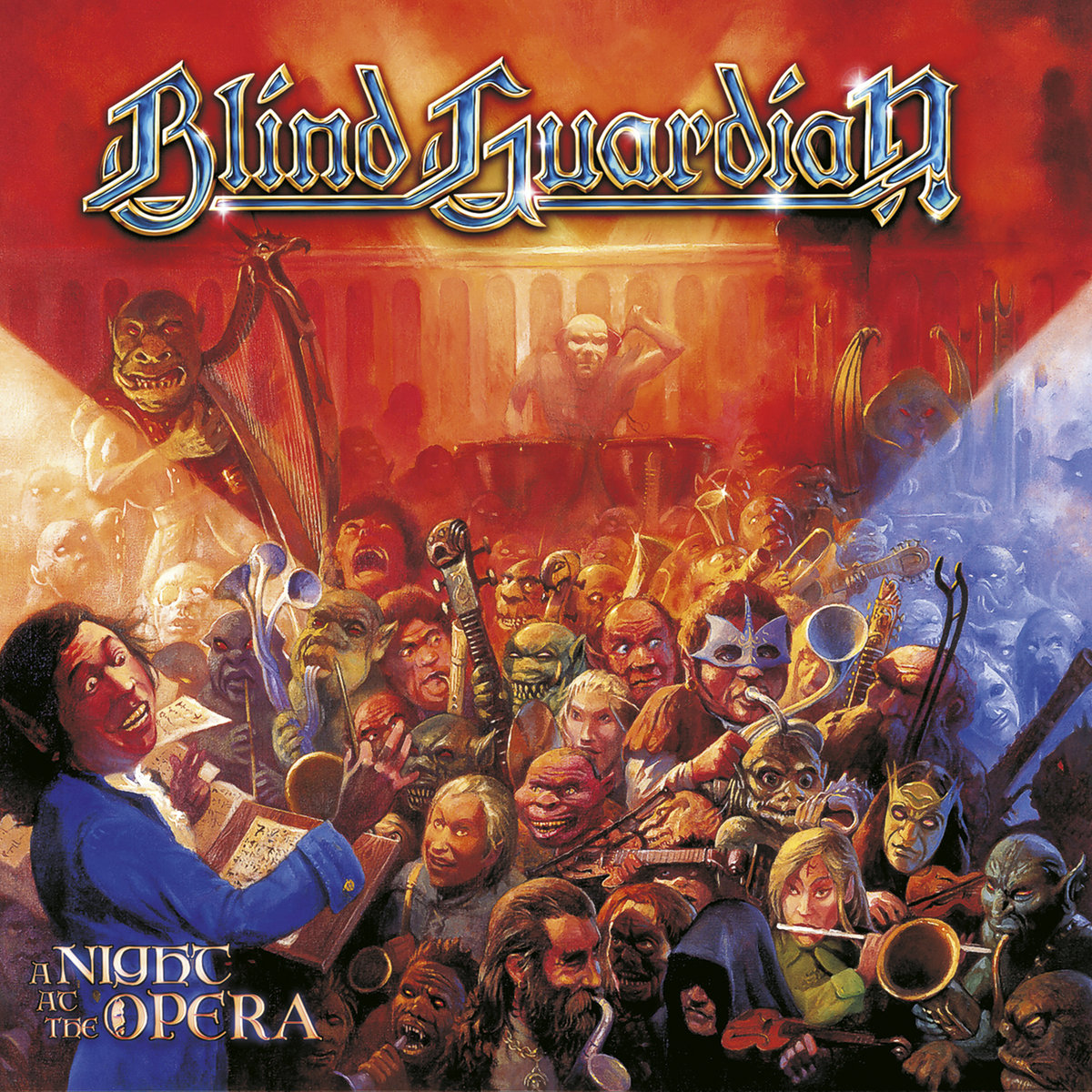
Before getting into it, a little context: this album was my first introduction to Blind Guardian, courtesy of TSL writer necromoonyeti — the same person responsible for putting Boris on my radar. So if this review reads like someone who came in completely cold and got their face melted off, that’s because that’s exactly what happened.
Let’s get one thing straight right away: A Night at the Opera is not a casual listen. It’s not something you throw on while you’re folding laundry or zoning out on the commute home. This is the kind of album that demands you sit down, maybe pour yourself something nice, and just let it completely steamroll you for about an hour. And honestly? That’s exactly the kind of album Blind Guardian needed to make at that point in their career.
Released in 2002, A Night at the Opera is the German power metal legends’ seventh studio album, and it arrived after the already-enormous Somewhere Far Beyond and Imaginations from the Other Side had already cemented the band as giants of the genre. So naturally, Hansi Kürsch and company decided to throw the rulebook entirely out the window. The result is one of the most ambitious, over-the-top, maximalist records in the history of metal — and it rules, even when it’s utterly overwhelming.
The album opens with Precious Jerusalem, and within about thirty seconds you understand exactly what kind of ride you’ve signed up for. The layered vocals, the orchestral bombast, the sheer density of the production — it all comes crashing in like a wall of sound that somehow never feels muddy. Hansi’s voice is front and center, soaring over a choir that sounds like it’s made up of about four hundred people, and it sets the tone perfectly. This isn’t metal with some orchestral elements sprinkled on top. This is something else entirely — something almost operatic in the truest sense of the word.
From there, Battlefield kicks in with a bit more aggression and momentum, which is a welcome shift. André Olbrich and Marcus Siepen’s guitar work throughout the record is phenomenal, but Battlefield is one of the spots where the riffs really get a chance to breathe and cut through the orchestral layering. It’s not quite the straightforward power metal banger you might want it to be, but it’s driving and epic in all the right ways.
Then there’s Under the Ice, which slows things down into something that almost feels mournful. It’s one of the quieter moments on the record, but it’s deceptively powerful. Hansi’s vocal performance here is genuinely moving, and the restraint the band shows — relative to literally everything else on this album — makes it stand out in a really effective way.
If there’s a centerpiece that most people point to when discussing A Night at the Opera, it’s almost certainly And Then There Was Silence. Clocking in at nearly fifteen minutes, it is an absolute monster of a track — a prog-metal epic that tells the story of the fall of Troy through the eyes of Cassandra. Yes, really. And somehow it doesn’t feel self-indulgent. Well, okay, it does feel self-indulgent, but in the best possible way. The track builds and shifts and spirals through so many phases that by the time it reaches its climactic final stretch, you’ve completely forgotten where it started. It’s one of the most impressive things Blind Guardian have ever put to tape, and that’s saying something.
The Maiden and the Minstrel Knight is probably the most accessible thing on the record — a more traditional Blind Guardian ballad that sits comfortably alongside tracks from their earlier work. It’s a bit of a breather in the middle of all the chaos, and it’s genuinely gorgeous. The vocal harmonies are lush and warm, and it’s one of those songs that reminds you how good Hansi Kürsch is at pure melody when he wants to be.
Sadly Sings Destiny and Wait for an Answer keep the epic atmosphere rolling in the back half of the album, though they can start to feel a little dense if you’re not fully locked in. That’s perhaps the one honest criticism of A Night at the Opera— it’s a lot. The production, helmed by Charlie Bauerfeind and the band themselves, is incredibly thick. There are reportedly hundreds of vocal overdubs on some tracks, and while that creates an incredible sound, it can also make the album feel like it’s working very hard to impress you, all the time, without pause. By the time you hit the later tracks, the sheer weight of everything can start to feel a little exhausting if you’re not in the right headspace.
But then The Soulforged comes along and reminds you why you’re here. Inspired by the Dragonlance fantasy series — classic Blind Guardian territory — it’s one of the most energetic tracks on the album, and the chorus is an absolute earworm. It’s big, it’s bright, and it shows that even buried under all the orchestral grandeur, the band still knows how to write a hook that sticks with you for days.
Closing things out, Age of False Innocence and Punishment Divine bring the album home in suitably dramatic fashion. By this point, you’ve been through the full experience, and the record ends feeling genuinely complete — like a proper album with a beginning, middle, and end, rather than just a collection of songs.
So where does A Night at the Opera land in the Blind Guardian catalog? Honestly, it’s one of those records that rewards the people willing to meet it on its own terms. If you go in expecting Somewhere Far Beyond or Imaginations from the Other Side, you might come out a little shell-shocked. But if you give it the time and attention it demands, you’ll find one of the most unique and daring records in power metal history — a band swinging for the absolute fences and largely connecting. It’s not always easy listening, but it’s always worth it.
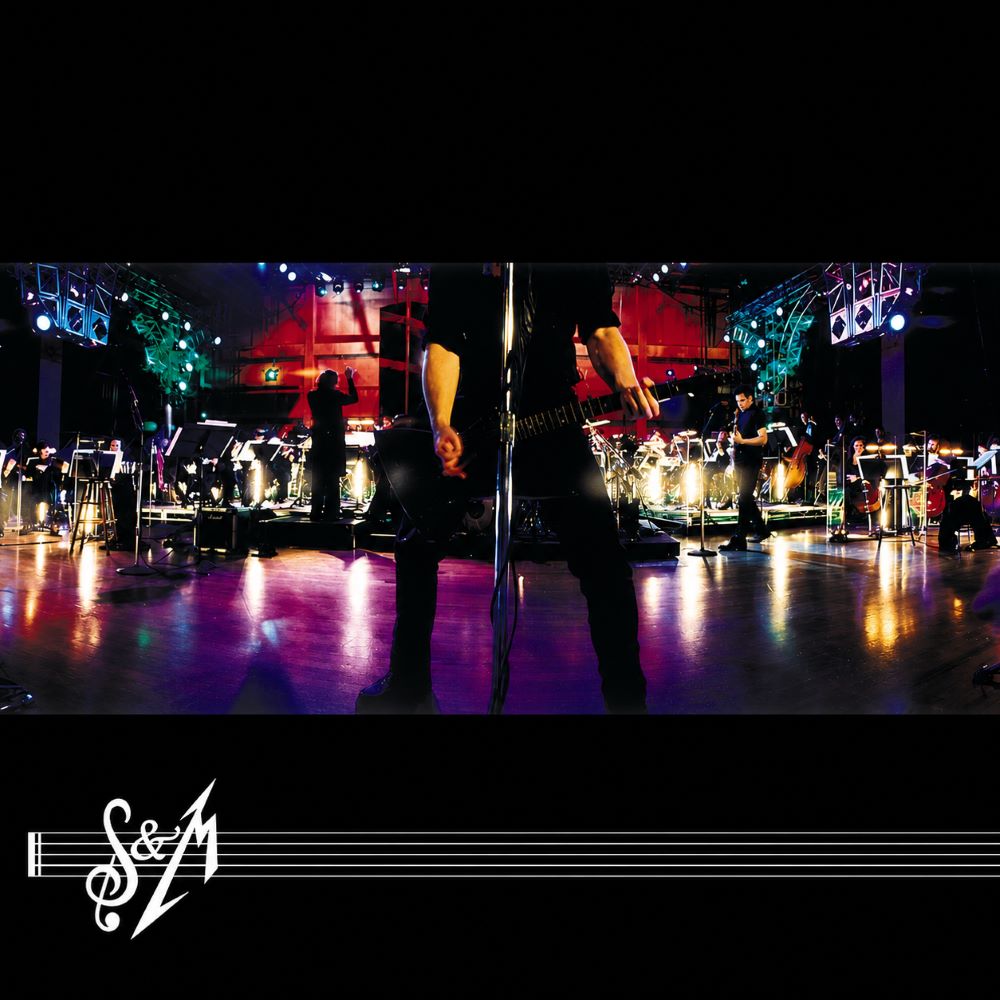
Let’s just get this out of the way right now: S&M is not the perfect metal album, nor is it the perfect classical album, and it is certainly not the perfect marriage of the two. But what it is, against all odds, is a wildly ambitious, occasionally clunky, and frequently thrilling document of a band daring to step way outside its comfort zone. Released in 1999, this live album captures Metallica joining forces with the San Francisco Symphony under the direction of Michael Kamen, and the result is a sprawling, two-disc behemoth that has aged into something of a curio in the band’s catalog. It is beloved by some, dismissed by others, and debated by just about everyone who has ever cared about thrash metal or orchestral music. After spending a good amount of time with the record again recently, I find myself landing somewhere in the messy middle, appreciating the sheer nerve of the project while wincing at its occasional misfires.
Right from the opening notes of The Ecstasy of Gold, which the symphony plays with appropriate gravitas, you get the sense that this is going to be an event. Kamen’s arrangements are the real star of the album in many ways, and his work here has been both praised and picked apart for over two decades. The criticism that the orchestra often feels like an accompaniment rather than a true integration is entirely fair. There are extended stretches across both discs where the symphony seems content to just pad the background, adding a cinematic wash to the music without fundamentally altering its structure or dynamics. It can feel like the orchestra is politely following the band’s lead rather than engaging in a genuine musical conversation, and on tracks like Sad but True, the strings and brass often get buried under Hetfield’s chugging riffs and Ulrich’s pounding drums. You have to listen closely to even hear them at certain points, which rather defeats the purpose of dragging a hundred classically trained musicians onto the stage in the first place.
However, when the arrangement clicks, it clicks with genuine force. The Call of Ktulu is the album’s crowning achievement in this regard, a song that always had a cinematic, almost film-score quality to it even in its original incarnation. With Kamen’s dark, brooding orchestration swelling behind it, the track finally receives the full-blown, apocalyptic setting it always deserved. The brass section is particularly effective here, lending a menacing grandeur that makes the studio version sound almost quaint by comparison. Similarly, The Thing That Should Not Be benefits enormously from the low-end rumble of the contrabassoons and timpani, creating a sound so heavy and oppressive that it rivals anything the band has ever committed to tape. These are the moments where the album transcends its gimmick and becomes something genuinely special, a testament to what can happen when two seemingly incompatible forces find common ground.
What makes this project feel so strangely appropriate, even when it stumbles, is that Metallica’s music has always carried an orchestral grandiosity in its DNA. This is not a band that ever sounded like a scrappy punk outfit, even when thrash metal was still finding its feet in the early eighties. The credit for that largely belongs to Cliff Burton, the band’s original bassist, whose tragically short tenure with Metallica left an indelible mark on their musical identity. Burton was a classically trained musician who grew up studying piano and theory, and he brought that background into a genre that was otherwise rooted in raw aggression and speed. He was the one who pushed the band to incorporate harmonized guitar lines, complex time signatures, and a sense of melodic drama that set them apart from their peers. You can hear his influence all over Ride the Lightning and Master of Puppets, albums that traded the pure punk energy of Kill ‘Em All for something far more ambitious and cinematic. That classical sensibility Burton injected into the band’s early work became the foundation of the Metallica sound, the secret ingredient that allowed them to write songs that felt epic rather than merely fast.
If Burton had lived, I cannot help but wonder how differently S&M might have turned out. He would have been the natural bridge between the metal and the symphony, the guy who could speak both languages fluently and translate the band’s vision into something that felt truly integrated rather than merely superimposed. Kamen did a commendable job, and I do not want to diminish his work, but he was an outsider coming into Metallica’s world. Burton would have been coming from the inside, someone who understood exactly where the orchestral flourishes should sit because he had been hearing them in his head since the early days of writing For Whom the Bell Tolls and Fight Fire with Fire. I genuinely believe he would have been in the forefront of ensuring that the metal and the symphony meshed together seamlessly, not just coexisting on the same stage but actually breathing together as one living organism. The album we got is fascinating, but the album we could have gotten with Burton steering the ship is a tantalizing what-if that I suspect will linger in the minds of fans forever.
But then there are the tracks where the whole enterprise threatens to unravel. Master of Puppets is the most obvious example, and it remains one of the most contentious performances on the album. The song is an absolute thrash classic, a relentless machine of riffage and aggression, and the orchestra simply cannot keep up with it. Kamen’s arrangement feels bolted on rather than woven in, and the result is a performance where the band and symphony are essentially occupying parallel universes, occasionally bumping into each other but never truly locking into a groove. It is still an impressive display of raw power, but it also highlights the fundamental tension at the heart of S&M: Metallica is a band that thrives on chaos and volume, while a symphony orchestra demands precision and restraint. Those two approaches do not always reconcile neatly, and this track is where the seams show the most. One cannot help but think that Burton’s classical ear would have found a way to bridge that gap, to write a countermelody or a harmonic texture that made the whole thing feel intentional rather than forced.
The setlist choices have also been a point of contention ever since the album dropped, and I have to say, the criticism is warranted. The complete absence of any material from Kill ‘Em All is a baffling omission that still rankles. Hearing The Four Horsemen or Seek and Destroy with a full symphony behind them could have been absolutely legendary, a chance to see raw, unfiltered thrash energy get a classical makeover. Instead, the tracklist leans heavily on the band’s more mid-tempo, radio-friendly material from the Black Album, Load, and Reload eras. That decision makes a certain amount of practical sense—those songs are more dynamically suited for orchestral accompaniment—but it also means the album never quite captures the full scope of Metallica’s career. For every For Whom the Bell Tolls or One, both of which translate beautifully to the symphonic treatment, there is a palpable sense of what could have been. The two new songs, No Leaf Clover and – Human, are welcome additions and remain highlights precisely because they were written with the orchestra in mind, so the band and symphony sound naturally more locked in and symbiotic from the very first note.
Vocally, James Hetfield is in fine form throughout, delivering his signature growls and melodic croons with the gruff authority that defined his late-nineties style. His between-song banter, while occasionally corny, adds a human touch to the otherwise grandiose proceedings, and you can hear the genuine excitement in his voice when he introduces the symphony or hypes up the crowd. The audience itself is a character on this album, their roars and sing-alongs providing a palpable energy that prevents the whole affair from becoming too stuffy or self-important. This is not a stuffy classical concert; it is a Metallica show with some fancy guests, and the crowd never lets you forget it. That raw, sweaty, headbanging energy is what keeps S&M grounded, even when the orchestral arrangements threaten to float off into pretentiousness.
In the end, S&M is a deeply imperfect album, and I think even its biggest defenders would admit that. The mix is often cluttered, the orchestra can feel like an afterthought on certain tracks, and the song selection will always be a source of debate among the faithful. But perfection was never really the point. I can say this with some authority because I was actually in the building for one of those two nights at the Berkeley Community Theatre, and despite all the flaws I can hear on the record, the live experience was something else entirely. When the symphony swelled behind the band’s heaviest riffs, the usual tribal divisions between metalheads and classical music fans simply evaporated. I found myself rocking out alongside long-haired thrashers and tuxedo-wearing symphony patrons in equal measure, all of us united by the sheer absurdity and power of what we were witnessing. The album captures that energy reasonably well, but it cannot fully replicate the feeling of being in a room where two completely different worlds decided to throw a party together. This was about a band that had conquered metal deciding to do something completely insane, something that could have easily backfired, and somehow pulling it off with enough swagger and sincerity to make it matter. It is a flawed, ambitious, and undeniably heavy document of a band taking a massive risk at the peak of their fame, and for that, it deserves a place of respect in the Metallica catalog. It may not be the definitive live album of their career, and it certainly is not the definitive symphonic metal album of all time, but it is a fascinating, exhilarating, and occasionally frustrating snapshot of a band refusing to play it safe. And honestly, in a world of safe career moves, that counts for something.
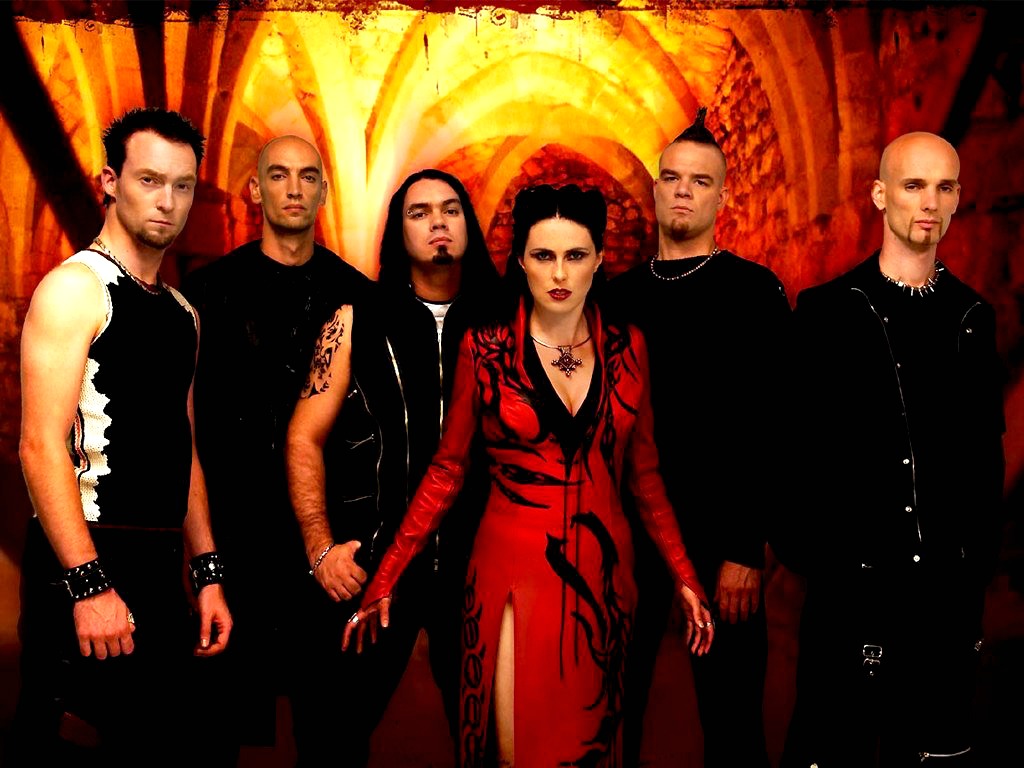
Symphonic metal stalwarts Within Temptation was first introduced to me not by resident metal expert necromoonyeti, but through an anime music video first witnessed at Anime Expo 2010. The video was “Alchanum” and while the anime used, Fullmetal Alchemist, was entertaining enough it was the song used that hooked me in. That song and the latest “Song of the Day” is “See Who I Am” from Within Temptation’s full-length album The Silent Force.
From that moment forward I’ve been an ardent follower of Within Temptation. There’s just something about the melding of metal and that of an orchestral symphony that just makes perfect sense. I’m more than satisfied with the raw, brutal, speed and guttural melodies of what many outsiders consider heavy metal (how wrong they can be), but symphonic metal just does it for me.
And for those who think heavy metal (and all it’s many subgenres) are all about angry dues with long, unwashed hair or tatted up to no end should be surprised to see that Within Temptation’s singer is a classically-trained mezzo-soprano by the name of Sharon den Adel.
See Who I Am
Is it true what they say? Are we too blind to find a way? Fear of the unknown Clouds our hearts today.
Come into my world, See through my eyes. Try to understand, Don’t want to lose what we have.
We’ve been dreaming But who can deny? It’s the best way of living Between the truth and the lies.
See who I am, Break through the surface. Reach for my hand, Let’s show them that we can Free our minds and find a way. The world is in our hands, This is not the end.
Fear is withering the soul At the point of no return. We must be the change we wish to see.
I’ll come into your world, See through your eyes. I’ll try to understand, Before we lose what we have. See who I am, Break through the surface. Reach for my hand, And show them that we can Free our minds and find a way. The world is in our hands This is not the end.
We just can’t stop believing Because we have to try. We can rise above their truth and their lies.
See who I am, Break through the surface. Reach for my hand, Let’s show them that we can Free our minds and find a way. The world is in our hands. See who I am, Break through the surface. Reach for my hand, And show them that we can Free our minds and find a way. The world is in our hands.
This is not the end.
I hear their silence Preaching my blame. Will our strength remain If their power reigns?
See who I am, Break through the surface. Reach for my hand, And show them that we can Free our minds and find a way. The world is in our hands. See who I am, Break through the surface. Reach for my hand, And show them that we can Free our minds and find a way. The world is in our hands.
It’s almost that time of the years when Through the Shattered Lens switches gears and goes into full dark fantasy and horror. While there will be the smattering posts that doesn’t dabble in all things dark and scary, it’s a month that’s become a yearly tradition and one that several writers on-site seem to enjoy. Though no one enjoys October at Through the Shattered Lens more than co-founder Lisa Marie Bowman. She’s the dark mother to all the writers at the site.
While it’s still not that month of darkness here’s a small taste of the sort of dark themes many of the posts will end up having during October.
The latest AMV of the Day comes courtesy of video creator Chiisus. The video manages to take the dark aspect of what too many outsiders to the anime scene as a light and kiddy cartoon: Sailor Moon Crystal.
This particular amv (anime music video) is titled Moonlight Requiem and combines the more dark fantasy side of Sailor Moon Crystal with the symphonic metal band’s Within Temptation and the melodic vocalizing of it’s frontman Sharon den Adel. The song chosen by Chiisus is one that many other amv creators have used in the past: “See Who I Am.” In fact, it’s the song to one of my all-time favorite anime music video: “Alchanum” by Rider4Z.
This time the song is used for Sailor Moon Crystal and, boy, if the song doesn’t fit in well with the scenes chosen for the video.
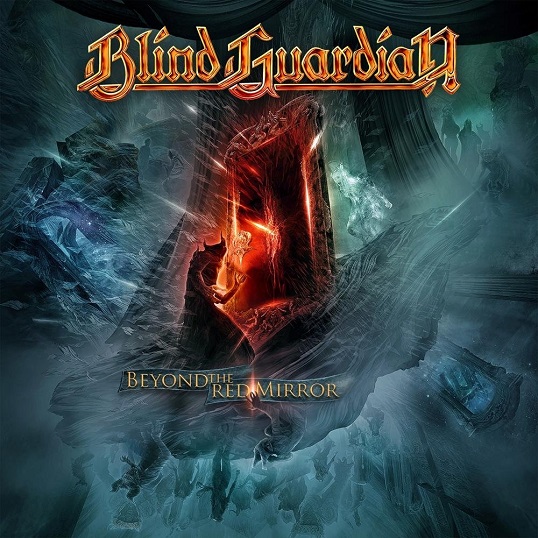
If Blind Guardian are not by now regarded with the sort of reverence generated by Metallica or Iron Maiden, it is a crime against heavy metal. Formed slightly before I was born, they might be the longest tenured band in existence that still carry extraordinarily high expectations. No one realistically expects a band to stay at the peak of their inspiration for thirty years, but Blind Guardian are the exception. They’ve never shown their age or wavered towards mediocrity. Does Beyond the Red Mirror keeps that tradition running strong?
“Yes” is the short answer. A thousand times “yes”, and only a fool would deny it. But when you’re talking about a band that released the unequivocal greatest power metal album of all time, there is still plenty of room for discussion.
Blind Guardian pulled off a pretty tough transition in 2002. They followed up Nightfall in Middle-Earth (1998), their magnum opus by nearly everyone’s measure, with a relatively significant change in style. A move like that has spelled disaster for many great bands, but when Blind Guardian traded in an edgier, crisper production for smooth and seamless symphonic beauty on A Night at the Opera (2002), it totally worked. Their next two albums continued in that direction, and I never had the slightest cause to question it. While A Twist in the Myth (2006) ranks relatively low in their discography for me, that resulted from what I felt was a bit of lackluster songwriting–not pervasive, but present enough to leave the album somewhat diminished in the shadow of its two groundbreaking predecessors. At the Edge of Time (2010) was a grand return to form, definitively proving that this band would not suffer a slow decline as the years caught up to them.
Beyond the Red Mirror opens up with a lot less steam than “Sacred Worlds” lent to At the Edge of Time. The first track, “The Ninth Wave”, kicks off with a pretty typical epic introduction, complete with a professional choir and orchestra, but it’s the sort of sound that really hinges on what will follow. We’re used to a sort of constant rise from symphonics into metal, but “The Ninth Wave” is far more brooding at the outset. “Underwhelming” might be the right word for any other band, and nothing about the lead in really grabs me, but let’s not forget what band this is. I feel pretty neutral–not negative–about the album until the first chorus kicks off. And when that point is reached–“Sail on till you reach the promised land. We all drown in the fifth dimension. The ninth wave.“–you get this big dump of pent-up anticipation that you never knew you had. The five year wait is over. Beyond the Red Mirror is here, and the chorus carries all the grandeur you knew would be coming. It feels so complete and full, so Blind Guardian to the core, that the introduction isn’t sour in retrospect. Instead, the slow motion into glory lets the album creep into you. One second you’re waiting for something to happen, the next you’re in love, and they don’t have to resort to anything jarring or sudden to create the effect.
“Prophecies”, “At the Edge of Time”, and “Grand Parade” follow this trend of paced execution, keeping you wrapped in the warm vibe that is Blind Guardian’s sound while ebbing and flowing along. Not out of place on A Night at the Opera, these four tracks suit the album’s production well and deliver without any misgivings.
“Miracle Machine” serves as the album’s only ballad, and the other five tracks… they’re pleasantly not what I expected. For all the big name orchestras involved in recording Beyond the Red Mirror, Blind Guardian actually get pretty old-school. “Ashes of Eternity”, for instance, is heavily driven by rhythm guitar, and André Olbrich’s tasty solo near the middle is cast far more in the spotlight than it might have been on previous albums. “The Holy Grail”, “Sacred Mind”, and “Twilight of the Gods” follow a similar pattern, while “The Throne” exists somewhere in between. My initial reaction to these songs was not entirely positive, but they’ve almost all grown on me over time. They make for an interesting perspective on Blind Guardian’s career. Hansi Kürsch’s gorgeous vocals still feel fairly well rooted in the A Night at the Opera sound, but Marcus Siepen and André Olbrich are bringing back a lot of the band’s more classic power metal sound. With Hansi still largely dominating the choruses and rhythm and lead guitar being more focal in between, the songs take on a novel sort of vibe that feels like quintessential Blind Guardian but does not point directly to any one previous era in the band’s illustrious history.
I definitely dig it, yet I don’t feel like Beyond the Red Mirror will leave quite the lasting impact on me that Nightfall in Middle-Earth, A Night at the Opera, and At the Edge of Time did. The problem, aside from the lack of a really stand-out ‘bard’ track–“Miracle Machine” is nice but has none of the sing-along appeal of say, “Curse My Name” or “Skalds and Shadows”–lies in the production. I can’t help but feel like Olbrich and especially Siepen are getting the short end of the stick throughout. Like the three albums before it, Beyond the Red Mirror sacrifices a lot of crispness to encompass the massive volume of vocals and orchestration. That worked really well before, but here I just don’t know. Lead and rhythm guitar alike rang with crystal clarity on Nightfall in Middle-Earth, and that was a major part of what made the album perfect. If guitar is to play a more central role again, it would be nice if I could properly hear it. My one beef with Beyond the Red Mirror is that, while the band continues to evolve in positive ways, their producer may be failing to keep up.
I think that’s a big issue. This album is awesome, but I would love it so much more if they’d filled the symphonic void with louder, crisper guitar. That goes for about half of the tracks. I just sometimes feel like a few modest tweaks would have made them better. I’m looking forward to seeing some quality live videos of these songs pop up on Youtube, because I think a live venue may do them better justice. For now, Beyond the Red Mirror earns entry into my Blind Guardian playlist with ease, but I’ll not be revisiting it quite so often as Nightfall, Night at the Opera, or Edge of Time.
If you want another song to check out, I think “Prophecies” is my favorite. “The Ninth Wave”, “Ashes of Eternity”, and “Grand Parade” come close.
Valknacht is a five-piece paganish metal band from Quebec that have released three albums beginning in 2009–not to be confused with Walknut, the highly acclaimed side-project of Stringsskald from Темнозорь (Temnozor). I suppose I grabbed this album for an obvious reason: it presented a pagan tag from a relatively new act I had never heard of. With the folk and pagan metal scene now fifteen years in the making, a lot of the old stalwarts are simply running low on material. I am always hoping to stumble upon a new collaboration willing to pick up the slack and carry one of my favorite genres onward into a new era. Valknacht could be that band, but it’s going to take some work.
Valknacht – Bataille de Maldon, from Le Sacrifice d’Ymir
The album begins with a 3 minute intro track that I’ll not bother sampling here. You already know what it sounds like. Oars splash through the sea in time with viking voices oooing and OOOing and sometimes aaahhing. Break and repeat with some overbearing choral and brass synth, throw in a gong for good measure, and you will find yourself in the opening moments of “Bataille de Maldon”. Add a dash of synth woodwind, queue the crunch crunch crunch monotone guitar, and remind your drummer to make it metal in a few more measures. The black metal at 2:05 gives us a well-needed boost, and from there the song transitions to something that ought to be really, really cool. 2:40 made me think of Nokturnal Mortum’s “The New Era of Swords” from Weltanschauung, and for about one minute “Bataille de Maldon” is a song I really want to listen to. But the segment soon gives way to something fairly indistinguishable from what came before.
For the vast, vast majority of this 9:30 song, what you hear is an endless rain of double bass, rhythm guitar that only knows two patterns and three chords, a cheap synth whistle that’s totally unconvincing as the real deal, an admittedly interesting lead guitar, and total synth overkill plugging in every gap, sometimes doubled up with layers of “OOOOOOOOO”.
Yet, this could have all worked out really well. This band surely listened to a lot of Moonsorrow, and the string portion of the synth gets playfully close to Nokturnal Mortum at times. But the rest of the synth is just bad. It feels so fake. They use bold brass like they’re Equilibrium or Turisas, but the music isn’t nearly bombastic enough to merit it. The woodwinds have no depth, no air, no punctuation… Аркона (Arkona) is about the only band I can think of that pulls off fake woodwinds effectively (unless others are doing it so well I take them for studio musicians), and they must have much higher-end equipment than Valknacht at their disposal to do it with. It would have been nothing for one of the band members to pick up a whistle and record it proper. The vocals get really annoying really quickly for lack of dynamics or anything interesting to encase them. And the song goes on and on and on without ever adding much of anything. By 3:10 we’ve pretty much heard everything, and there’s next to nothing in the form of build-up or break until we hit a sudden transition at 8 minutes into an admittedly solid finale.
So, am I going to say anything good about this album? Surprisingly, yes. Quite a lot actually.
Valknacht – Le carmin des anges, from Le Sacrifice d’Ymir
The tragedy of Le Sacrifice d’Ymir is that just about anyone listening to this album will get the same impression that I did for its first 13 minutes. How many will keep listening? Few, I suspect, and it’s a shame because by the end this album is sounding pretty damn solid. “Le carmin des anges” is the closing track. It should have been the opening. Here is a song that cuts out all of the bullshit and condenses everything I did like about “Bataille de Maldon” into a much more manageable 5 minute package. The term “trying” drops back down my throat, and I hear some really badass Windir licks connected by groovy breaks and synth again reminiscent of Noktrunal Mortum. Thorleïf’s vocals do a total 360, and his previously dull deeper bellows sound epic when juxtaposed and then overlaid with higher-pitched rabid black metal screams.
The collective sound really works here, too. The Moonsorrow vibe they were going for in “Bataille de Maldon” flopped for a far-too-excessive attempt to be epic. That sort of music is meant to sound earthy, and the synth swarm just made it seem cheap and fake. On “Le carmin des anges”, a lot of the frivolous choral and brass sounds are gone, and what remains works far better with the Windir vibe they’re getting at.
Valknacht – Le sacrifice d’Ymir, from Le Sacrifice d’Ymir
You didn’t have to wait until the last track to find this though. The third, “Chants de guerre”, carries an infinitely more successful Moonsorrow vibe than the song before it. The woodwind’s fakeness is barely significant because the loop it plays is more of an unnatural Falkenbach chant than a harmony. Thorleïf’s full vocal range finally comes into play, and there is way more Windir-esque black metal–a sound they do right. Track 4, “Sur les ruines de Rome”, throws in some seemingly female screams and spoken lines that feel kind of reminiscent of Masha from Arkona, and could be a guest musician or further testament to Thorleïf’s range. (Liner notes for this album have been hard to come by.) As if Masha had been on their minds, track 5, “Le sacrifice d’Ymir”, feels pretty “slava!”, with some frantic whistle and guitar tapping. I had good cause to doubt another 10 minute track, but there is so much more going on here than in “Bataille de Maldon”. Thorleïf’s vocal dynamics alone are enough to make the overdrawn passages–and there are certainly a few–way less dull, the lead guitarist keeps up that Windir kick he’s proven pretty good at, that obnoxious rhythm guitar from the opener is all but missing, mixed down from a nuisance to its proper role and a background accessory.
“De murmures et de givre” starts nice but regrettably returns to a lot of the mistakes of “Bataille de Maldon”–a 7 minute track that could have probably made its point in three and a half. “Que le sang constelle mes mains” gives us our first and last taste of some accordion. Though its synthetic generation is painfully obvious, it does kick off with a melody pleasantly reminiscent of Finsterforst. Again though, the song drones on way too long with boring “I’m going to growl, you chugga-chug, and you hit a whole bunch of notes at once on your keyboard” moments.
So what’s the verdict? I think that this band either ran out of material and had to generate a few filler tracks, or else the minds behind it have some differences of opinion on how they ought to sound and they tried to accommodate everyone. Over all, fans of Windir will find plenty of moments to swoon over, and Moonsorrow die-hards will be modestly entertained. I got a Nokturnal Mortum vibe in some of the synth string utilization and rhythm guitar breakdowns, but not nearly enough to satisfy, and it has to take second stage to a lot of derivative crap. These guys have enormous potential, and they’re relatively young by band standards. I think the inclusion of “Bataille de Maldon” in its present state–at all let alone as the not-so-grand opener–is a little suspect. It would be nice to hear some session musicians for the folk instrumentation, or at least a better keyboard. And they really need to do something about song lengths relative to content. I will have long forgotten Le Sacrifice d’Ymir this time next year, but I won’t forget to check out their future releases. Turisas rose from a totally generic sound to release one of the best albums in folk metal. So did Finsterforst. Valknacht are certainly capable of becoming a band I could fall in love with.
I think it’s not a secret that the anime series (and now the three films) Puella Magi Madoka Magica is one of my favorite anime. It’s not just me who has a major fondness for this anime. Site anime editor pantsukudasai56 also shares my passion for this series. Over a couple years ago I profiled several AMVs featuring this series. One of them was Chiikaboom’s Devil’s Game.
That very same editor decided to go back and re-edit the AMV using scenes from the series and the three films and what we get is a vast improvement over a video that was already a classic in the AMV scene. The animation from the films are much more crisp and the detail shows from the increased budget.
This “Devil’s Game 2.0” has now become one of my top AMVs ever and I’m sure I’m not the only one who feels this way.
Anime:Puella Magi Madoka Magica, Puella Magi Madoka Magica Movie 1: Beginnings, Puella Magi Madoka Magica Movie 2: Eternal, Puella Magi Madoka Magica Movie 3: Rebellion
Just going to be brief with the description of the latest “AMV of the Day”. The latest pick was the winner of Anime Weekend Atlanta (AWA) 2012.
“See Who I Am” is the title of the video and also the title of the song used by the video’s creator (Speedy180). This particular song is a favorite of mine from symphonic metal band Within Temptation and also used in one of the very first AMV’s I watched (Alchanum) and one which got me into the scene to begin with. The video itself is an anime mix of so many anime titles that I could only recognize some of the one’s that I’ve actually seen. I’m sure there are many more I missed.
It’s a well-done video that uses Sheryl Nome of Macross Frontier singing to sub in for Within Temptation’s Sharon den Adel. It’s a very dramatic song and the anime visuals picked and they’re put together more than matches the emotional content of the song.
Anime:Guilty Crown, Macross Frontier, Fairy Tail, Fate/Stay Night, Fafner in the Azure, Tengen Toppa Gurren Lagann, Bleach and many others…
Decade of last.fm scrobbling countdown:
20. Equilibrium (1,323 plays)
Top track (104 plays): Prolog Auf Erden, from Sagas (2008)
At the end of 2008, I made the peculiar decision to rank Sagas only 6th on my albums of the year list. I knew at the time that it would long outlive the albums that trumped it–The Tallest Man on Earth’s Shallow Grave, Boris’s Smile, Waylander’s Honour Amongst Chaos to name a few–but I suppose I was prioritizing some sort of artsy aesthetic over direct appeal. That was silly. Sagas is the most badass, epic 80 minutes of sound you will ever hear, and it deserves all the glory. Since I don’t know German, I can’t really judge how the lyrics hold up against comparable masterpieces like Blind Guardian’s Nightfall in Middle-Earth and Turisas’s The Varangian Way, but musically it pretty much perfects every epic/symphonic trend in the world of folk metal. What you hear on the opening track, “Prolog Auf Erden”, is a pretty accurate summary of the full album; it’s an explosive, relentless drive through one of the most imaginative worlds metal has ever conjured.
I can’t say I am terribly experienced in Equilibrium’s broader discography. Turis Fratyr (2005) did not grab me quite so immediately, and at the time I was too caught up in enjoying Sagas to really engage it. Rekreatur (2010) had its merits, but I could never fully get over the change in vocalists from Helge Stang to Robert Dahn. Never a band to rush out the new releases, their fourth studio album is not expected until some time in 2014.