By the way, here are the Satellite Award Nominations…


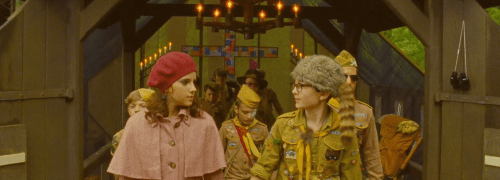
Moonrise

In even more Oscar season news, the International Press Association announced their nominations for the Satellite Awards yesterday.  Les Miserables led with 10 nominations.

If you’re like most people who don’t obsess over film awards then chances are that you’ve never heard of the International Press Association.  And that’s okay.  The main thing to know is that it’s Oscar season and that means that everyone’s giving out an award.  The Satellites are a lot like the Golden Globes, just with less credibility.  As far as serving as a precursor is concerned, a Satellite win can help a film maintain momentum but a loss doesn’t really hurt.

That said, for the past few years, I’ve always ended up agreeing more with the Satellite Nominations than with either the Oscars or the Golden Globes.  For instance, back in 2010, the Satellites nominated Noomi Rapace for her performance in the original (and the best) version of The Girl With The Dragon Tattoo.

BEST PICTURE
“Argo”
“Beasts Of The Southern Wild”
“Life Of Pi”
“Lincoln”
“Les Misérables”
“Moonrise Kingdom”
“The Sessions”
“Silver Linings Playbook”
“Skyfall”
“Zero Dark Thirty”

BEST DIRECTOR
Ben Affleck, “Argo”
Steven Spielberg, “Lincoln”
Kim Ki-duk, “Pieta“
Ben Lewin, “The Sessions”
David O. Russell, “Silver Linings Playbook”
Kathryn Bigelow, “Zero Dark Thirty”

BEST ACTRESS
Laura Birn, “Purge”
Jessica Chastain, “Zero Dark Thirty”
Emilie Dequenne, “Our Children”
Keira Knightley, “Anna Karenina”
Jennifer Lawrence, “Silver Linings Playbook”
Laura Linney, “Hyde Park On Hudson”
Emmanuelle Riva, “Amour”

BEST ACTOR
Bradley Cooper, “Silver Linings Playbook”
Daniel Day-Lewis, “Lincoln”
John Hawkes, “The Sessions”
Hugh Jackman, “Les Misérables”
Joaquin Phoenix, “The Master”
Omar Sy, “The Intouchables”
Denzel Washington, “Flight”

BEST SUPPORTING ACTRESS
Amy Adams, “The Master”
Samantha Barks, “Les Miserables“
Judi Dench, “Skyfall”
Helene Florent, “Café De Flore”
Anne Hathaway, “Les Misérables”
Helen Hunt, “The Sessions”

BEST SUPPORTING ACTOR
Javier Bardem, “Skyfall”
Robert De Niro, “Silver Linings Playbook”
John Goodman, “Flight”
Philip Seymour Hoffman, “The Master”
Tommy Lee Jones, “Lincoln”
Eddie Redmayne, “Les Misérables”

BEST ORIGINAL SCREENPLAY
John Gatins, “Flight”
Eric Toledano and Olivier Nakache, “The Intouchables”
Paul Thomas Anderson, “The Master”
Roman Coppola and Wes Anderson, “Moonrise Kingdom”
Kim Ki-duk, “Pieta”
Mark Boal, “Zero Dark Thirty”

BEST ADAPTED SCREENPLAY
Tom Stoppard, “Anna Karenina”
Chris Terrio, “Argo”
David Magee, “Life Of Pi”
Tony Kushner, “Lincoln”
Ben Lewin, “The Sessions”
David O. Russell, “Silver Linings Playbook”

BEST FOREIGN LANGUAGE FILM
“Amour” (Austria)
“Beyond The Hills” (Romania)
“Caesar Must Die” (Italy)
“The Intouchables” (France)
“Kon-Tiki” (Norway)
“Our Children” (Belgium)
“Pieta” (South Korea)
“A Royal Affair” (Denmark)
“War Witch” (Canada)

BEST ANIMATED OR MIXED-MEDIA FILM
“Brave”
“Frankenweenie”
“Ice Age 4: Continental Drift”
“Madagascar 3: Europe’s Most Wanted”
“Paranorman”
“Rise Of The Guardians”
“Wreck-It Ralph”

BEST DOCUMENTARY FEATURE
“Ai Weiwei: Never Sorry”
“The Central Park Five”
“Chasing Ice”
“The Gatekeepers”
“Marina Abramovic: The Artist Is Present”
“The Pruitt-Igoe Myth”
“Searching For Sugar Man”
“West Of Memphis”

BEST CINEMATOGRAPHY
Seamus McGarvey, “Anna Karenina”
Ben Richardson, “Beasts Of The Southern Wild”
Claudio Miranda, “Life Of Pi”
Janusz Kaminski, “Lincoln”
Mihai Malaimare, Jr., “The Master”
Roger Deakins, “Skyfall”

BEST PRODUCTION DESIGN
Sarah Greenwood, Niall Moroney, Thomas Brown, Nick Gottschalk and Tom Still, “Anna Karenina”
Nathan Crowley, Kevin Kavanaugh, James Hambidge and Naaman Marshall, “The Dark Knight Rises”
Rick Carter, Curt Beech, David Crank and Leslie McDonald, “Lincoln”
David Crank and Jack Fisk, “The Master”
Eve Stewart and Anna Lynch-Robinson, “Les Misérables”
Niels Sejer, “A Royal Affair”

BEST COSTUME DESIGN
Jacqueline Durran, “Anna Karenina”
Kym Barrett and Pierre-Yves Gayraud, “Cloud Atlas”
Christian Gasc and Valerie Ranchoux, “Farewell, My Queen”
Paco Delgado, “Les Misérables”
Manon Rasmussen, “A Royal Affair”
Colleen Atwood, “Snow White And The Huntsman”

BEST FILM EDITING
Alexander Berner, “Cloud Atlas”
Jeremiah O’Driscoll, “Flight”
Chris Dickens, “Les Misérables”
Lisa Bromwell, “The Sessions”
Jay Cassidy, “Silver Linings Playbook”
Dylan Tichenor, “Zero Dark Thirty”

BEST ORIGINAL SCORE
Dario Marianelli, “Anna Karenina”
Alexandre Desplat, “Argo”
Dan Romer and Benh Zeitlin, “Beasts Of The Southern Wild”
John Williams, “Lincoln”
Jonny Greenwood, “The Master”
Thomas Newman, “Skyfall”

BEST ORIGINAL SONG
“Learn Me Right,” “Brave”
“Fire In The Blood/Snake Song” “Lawless”
“Love Always Comes As A Surprise,” “Madagascar 3: Europe’s Most Wanted”
“Suddenly,” “Les Misérables”
“Still Alive,” “Paul Williams: Still Alive”
“Skyfall,” “Skyfall”

BEST SOUND (EDITING AND MIXING)
“Flight”
“Les Misérables”
“Snow White And The Huntsman”
“Kon-Tiki”
“Life Of Pi”
“Prometheus”

BEST VISUAL EFFECTS
“Cloud Atlas”
“The Dark Knight Rises”
“Flight”
“Life Of Pi”
“Prometheus”
“Skyfall”
And here are The Independent Spirit Nominations


The Gotham Awards aren’t the only awards regularly given to films that the majority of filmgoers will never get to see.  The Independent Spirit Nominations are also dedicated to recognizing the best of independent film and they tend to get a bit more attention than the Gothams.  With the early Oscar talk being dominated by mainstream studio films like Argo, Lincoln and Les Miserables, indie films like Bernie and Moonrise Kingdom are going to need all of the help that they can get.

BEST PICTURE

Bernie

Beasts of the Southern Wild

Keep The Lights On

Moonrise Kingdom

Silver Linings Playbook

BEST DIRECTOR

Wes Anderson, Moonrise Kingdom

Julia Loktev, The Loneliest Planet

David O. Russell, Silver Linings Playbook

Ira Sachs, Keep the Lights On

Benh Zeitlin, Beasts of the Southern Wild

BEST SCREENPLAY

Wes Anderson & Roman Coppola, Moonrise Kingdom

Zoe Kazan, Ruby Sparks

Martin McDonagh, Seven Psychopaths

David O. Russell, Silver Linings Playbook

Ira Sachs, Keep the Lights On

BEST FIRST FEATURE

Fill the Void

Gimme the Loot

Safety Not Guaranteed

Sound of My Voice

The Perks of Being a Wallflower

BEST FIRST SCREENPLAY

Rama Burshtein, Fill the Void

Derek Connolly, Safety Not Guaranteed

Christopher Ford, Robot & Frank

Rashida Jones & Will McCormack, Celeste and Jesse Forever

Jonathan Lisecki, Gayby

JOHN CASSAVETES AWARD – (for features under $500,000)

Breakfast with Curtis

Middle of Nowhere

Mosquita y Mari

Starlet

The Color Wheel

BEST FEMALE LEAD

Linda Cardellini, Return

Emayatzy Corinealdi, Middle of Nowhere

Jennifer Lawrence, Silver Linings Playbook

Quvenzhané Wallis, Beasts of the Southern Wild

Mary Elizabeth Winstead, Smashed

BEST MALE LEAD

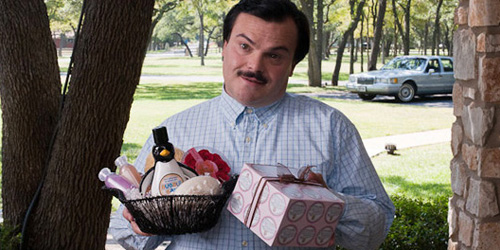
Jack Black, Bernie

Bradley Cooper, Silver Linings Playbook

John Hawkes, The Sessions

Thure Lindhardt, Keep the Lights On

Matthew McConaughey, Killer Joe

Wendell Pierce, Four

BEST SUPPORTING FEMALE

Rosemarie DeWitt, Your Sister’s Sister

Ann Dowd, Compliance

Helen Hunt, The Sessions

Brit Marling, Sound of My Voice

Lorraine Toussaint, Middle of Nowhere

BEST SUPPORTING MALE

Matthew McConaughey, Magic Mike

David Oyelowo, Middle of Nowhere

Michael Péna, End of Watch

Sam Rockwell, Seven Psychopaths

Bruce Willis, Moonrise Kingdom

BEST CINEMATOGRAPHY

Yoni Brook, Valley of Saints

Lol Crawley, Here

Ben Richardson, Beasts of the Southern Wild

Roman Vasyanov, End of Watch

Robert Yeoman, Moonrise Kingdom

BEST DOCUMENTARY

How to Survive a Plague

Marina Abramović: The Artist is Present

The Central Park Five

The Invisible War

The Waiting Room

BEST INTERNATIONAL FILM

Amour (France)

Once Upon A Time in Anatolia (Turkey)

Rust And Bone (France/Belgium)

Sister (Switzerland)

War Witch (Democratic Republic of Congo)

PIAGET PRODUCERS AWARD

Nobody Walks, Alicia Van Couvering

Prince Avalanche, Derrick Tseng

Stones in the Sun, Mynette Louie

SOMEONE TO WATCH AWARD

Pincus, director David Fenster

Gimme the Loot, director Adam Leon

Electrick Children, director Rebecca Thomas

TRUER THAN FICTION AWARD (given to emerging documentary filmmaker)

Leviathan, directors Lucien Castaing-Taylor and Véréna Paravel

The Waiting Room, director Peter Nicks

Only the Young, directors Jason Tippet & Elizabeth Mims

ROBERT ALTMAN AWARD (for ensemble cast)

Starlet Director: Sean Baker Casting Director: Julia Kim Cast: Dree Hemingway, Besedka Johnson, Karren Karagulian, Stella Maeve, James Ransone

Horror Film Review: House At The End of the Street (dir. by Mark Tonderai)


Hi there!  I’m back!  For the past two weeks, I’ve been “on the road,” traveling from my home in Texas to Baltimore, Maryland and then back to Texas again.  It was a great two weeks and a much-needed vacation and now, I am back at my office here at the Shattered Lens Bunker, and I am refreshed and I am ready to get caught up on what really matters: reviewing movies.

This is October, perhaps the third greatest month of the year.  Traditionally, October is horror month here at the Shattered Lens and, for my first post-vacation film review, I want to take a look at an underappreciated horror film that came out right before I left for Maryland.  It was released to theaters on September 21st, was the number one film in the country for a week, and got next to no love from either mainstream critics or my fellow film bloggers.  It’s still playing at a theater near you and, believe it or not, it’s not that bad.  The name of the film?  The House At The End of the Street.

(Or, as my BFF Evelyn and I called it, “The House at the End of the Cleavage” because seriously…)

In The House At The End of Street, recently divorced Sarah (Elisabeth Shue) and her daughter Elissa (Jennifer Lawrence) move to a small country home.  Sarah has managed to buy a house that she really shouldn’t be able to afford and the new neighbors quickly explain to them that this is because, many years ago, a crazy girl named Carrie-Ann was living at the house at the end of the street and she murdered her parents before then disappearing into the woods.  Apparently, this has caused all of the property values in town to plummet and I really have to wonder why.  I’m not a real estate expert (for instance, I have no idea what a mortgage is and I have no desire to learn) but, personally, I would love to live next to a murder house.  Seriously, imagine the interesting conversations that could be started by saying, “So, my neighbor buried a salesman in his basement…”

But anyway, it turns out that Elissa has a perfect view of the house at the end of the street from her bedroom window and she quickly discovers that the house is not deserted.  It turns out that Carrie-Anne’s brother Ryan (Max Thieriot) is living in the house and, despite being shunned by the entire community, he seems to be a nice, sensitive guy.  Despite her mother’s misgiving, Elissa befriends Ryan and defends him against everyone who claims that he’s crazy.

Of course, what Elissa doesn’t know is that there’s another girl in Ryan’s life and she’s locked up in his basement…

When I look over the negative reviews of House at the End of the Street (especially the ones written by male film bloggers), I frequently come across the phrase “lifetime movie.”  Their argument seems to be that House At The End of the Street, with its emphasis on a single mom raising her daughter, was essentially just a PG-13 rated Lifetime movie.

Well, they’re right.

But so what?

Seriously, Lifetime movies are a lot of fun to watch when you’re in the right mood for them and that’s a perfect way to describe House At The End Of The Street.  It’s a lot of fun, the type of silly horror film that’s fun to watch with a group of friends.  Max Thieriot plays the type of cute but damaged (and potentially dangerous) outsider that every girl has had a crush on and, for the boys in the audience, there’s plenty of cleavage and visible bra straps.

Finally, I think the main reason that House At The End of the Street stayed with me is because both Elisabeth Shue and Jennifer Lawrence really invested themselves in their roles.  They were totally believable as mother and daughter and their loving but occasionally contentious relationship felt totally true-to-life (or, at the very least, it was true to my life).  Lawrence and Shue both give performances that bring some unexpected depth to this underrated film.

It’s Time For The Annual Self-Important Post About The Year In Film So Far


For the entire past week, something has been nagging at me.  I knew that there was something that I needed to do but I couldn’t remember what it was.  Earlier today, however, I was reading the latest critical blathering about the state of cinema over at AwardsDaily.  As usual, that site’s editors were whining about the fact that the Social Network didn’t win best picture and also the fact that my generation is apparently the “WORST.  GENERATION.  EVER” and blah blah blah. 

Fortunately, however, reading that  post reminded me of what I had forgotten: We are now at the halfway mark as far as 2012 is concerned.  This is the time of year that self-important film critics (both online and elsewhere) tell their readers what type of year it’s been so far. 

So, without further ado — what type of year has 2012 been so far?

(By the way, you can also check out my thoughts from July of 2011 and July 2010 as well.)

(Also, please understand that the act of me posting this in no way guarantees that I won’t change my mind several times within the next hour.)

Best Film Of The Year (So Far): Cabin In The Woods. Compared to both 2010 and 2011, this has been a pretty slow year so far.  There really hasn’t been a Hanna or an Exit Through The Gift Shop type of film so far.  Instead, there’s been a handful of nice surprises, quite a few pleasant but somewhat forgettable films, and then quite a few films that i wish were forgettable.  Cabin In The Woods, however, was a nice little valentine to horror fans like me and it’s a film that actually gets even better with repeat viewings.  Runners up include Bernie, Damsels in Distress, Brave, The Hunger Games, Safety Not Guaranteed, Moonrise Kingdom, For Greater Glory, Jeff, Who Lives At Home, and the Avengers.

Best Male Performance Of The Year (So Far): Jack Black in Bernie.  Runners up include Andrew Garfield in The Amazing Spider-Man and Jason Segal in Jeff, Who Lives At Home.

Best Female Performance of the Year (So Far): Jennifer Lawrence in The Hunger Games.  Seriously, just try to imagine that film with someone else in the lead role.  Runners up include Susan Sarandon in Jeff, Who Lives At Home, Aubrey Plaza in Safety Not Guaranteed, and Greta Gerwig in Damsels in Distress.

Best Voice-Over Performance Of The Year (So Far): Kelly MacDonald in Brave.

Best Ending Of The Year (So Far): A 3-way tie between The Cabin In The Woods, Safety Not Guaranteed, and Jeff, Who Lives At Home.

Best Horror Film Of The Year (So Far): The Cabin In The Woods

Most Underrated Film Of The Year (So Far): The Five-Year Engagement, a sweet and funny movie that was just a tad bit too long.

Best Bad Film of the Year: Battleship.  Yes, the movie represented some of the worst impulses of big-budget filmmaking but I had a lot of fun watching it and Alexander Skarsgard was to die for in that white Navy uniform.

Worst Film Of The Year (So Far): The Wicker Tree.  I could make an argument for both Rock of Ages and The Devil Inside here but no…just no.  As the Trash Film Guru put it, “BURN THE WICKER TREE!”

Biggest Example Of A Missed Opportunity For This Year (So Far): Seeking a Friend For The End of the World.  A great performance from Steve Carrel can’t save a film that has no idea what it wants to be.

The Get Over It Already Award For The First Half of 2012: The Devil Inside, for being the most tedious example of a “found footage” horror film yet.  Coming in second: Rock of Ages, for reminding me that my parents had terrible taste in music.

The Trailer That Has Most Outgrown Its Welcome: The Perks of Being a Wall Flower.  “Be aggressive…passive aggressive…” Okay, shut up, already.

The Cameron/Fincher Bandwagon Trophy (Awarded To The Upcoming Film That, Regardless Of Quality, Will Probably Be So Violently Embraced By People Online That You’ll Be Putting Your Life In Danger If You Dare Offer Up The Slightest Amount Of Criticism): The Dark Knight Rises

The Ebert Award (Awarded to the upcoming film that will probably get  positive reviews based on the film’s political context as opposed to the film itself): Zero Dark Thirty

The Sasha Award (Awarded To The Film That I Am Predicting Will Be The Most Overrated Of The Year): Lincoln.

The Roland Emmerich/Rod Lurie Award For The Film That I’m Predicting Will Be The Worst Of 2012: Honestly, it’s really hard to imagine a worse film than The Wicker Tree (though, to be honest, Rock of Ages comes pretty close). 

Films I’m Looking Forward To Seeing In The Future (An incomplete list): On The Road, Lawless, The Dark Knight Rises, Cosmopolis, Django Unchained, The Hobbit, The Great Gatsby, and especially The Master and Joe Wright’s Anna Karenina.

And there you have it.  2012 hasn’t been a great year so far but there’s still a lot of time left.

Unless, of course, the Mayans were correct.

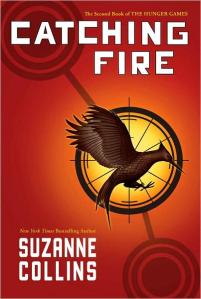
Catching Fire Has A Director


After two weeks of speculation, Catching Fire (the sequel to The Hunger Games) has a director and the winner is…

Francis Lawrence!

Francis Lawrence is known for directing music videos, Constantine, I Am Legend, and Water For Elephants.

I’ve never seen Constantine, I thought I am Legend was boring, and I enjoyed Water For Elephants but it’s hard not to feel that, after considering names like David Cronenberg, Alfonso Cuaron, Bennett Miller, and Duncan Jones, Lionsgate selected the most generic candidate in the mix.  

I’m sure that there will be a lot of people complaining about the selection but, to be honest, it’s not like Gary Ross was all that inspiring a director before Hunger Games.  In the end Catching Fire’s success is going to be more about Jennifer (as opposed to Francis) Lawrence.

Two weeks ago, we did a poll to see who you thought should direct Catching Fire and Hanna’s Joe Wright won a fairly easy victory.

Poll: Who Should Direct Catching Fire?


With the recent announcement that Gary Ross will not be directing Catching Fire, the second film in The Hunger Games trilogy, there’s been a lot of online speculation has started as to who will take his place.  Since I was bored at work, I spent an hour or two reading some of that speculation.  Needless to say, a lot of names are being tossed around and some are a lot more plausible than others.  However, a few names seem to be mentioned more often than others.

Speaking for myself, I don’t think that the loss of Gary Ross is going to really hurt the sequel, financially or artistically. 

Financially, people are going to see the sequel regardless of who directs it and, quite frankly, I doubt many people went to the Hunger Games because they just couldn’t wait to see Gary Ross’s follow-up to Seabiscuit

From an artistic point of view, the main reason that I loved the Hunger Games was because, after years of seeing blockbuster movies where being female was essentially the same as being helpless and insipid, it was so refreshing to see a film about a strong, independent young woman who is concerned about something more than just keeping her boyfriend happy.  In short, I loved The Hunger Games because of Jennifer Lawrence’s performance as Katniss Everdeen.  In short, Gary Ross was about as important to The Hunger Games franchise  as Chris Columbus was to the Harry Potter films.

As for who the new director is going to be, here’s some of the more interesting names that I’ve seen mentioned:

Danny Boyle is one of my favorite directors of all time and he’s certainly showed that he can create entertaining films that both challenge conventional and force you to think.  As well, directing the opening ceremonies for the London Olympics and, if that’s not good training for the Hunger Games then what is?

J.J. Abrams is a far more conventional director than Danny Boyle but he’s also proven that he can make blockbuster films that don’t necessarily insult one’s intelligence.  Add to that, he created Alias and he deserves a lot of credit for that.

As the only woman to ever win best director, Kathryn Bigelow is an obvious choice for a franchise that is ultimately all about empowerment.  Plus, she’s proven she can handle action films and I think it would be a neat if, under her direction, Catching Fire made more money than Avatar.

Sofia Coppola, who should have won an Oscar for Lost in Translation,  would bring a definitely lyrical quality to Catching Fire and, if nothing else. her version would be amazing to look at.  Add to that, Sofia Coppola deserves to have at least one blockbuster on her resume.  (Yes, I know a lot of you people hated Somewhere but you know what?  You’re wrong and I’m right.)

Alfonso Cuaron has proven, with Harry Potter and the Prisoner of Azbakan, that he can step into a franchise without sacrificing his own individual vision.  Children of Men shows that he can create a realistic dystopian future.

Debra Granik is best-known for directing Jennifer Lawrence in Winter’s Bone.  If not for Granik, Katniss Everdeen could have very easily ended up being played by Kristen Stewart.

Catherine Hardwicke is, of course, best known for directing the first Twilight film and a lot of people will never forgive her for that.  And you know what?  That’s really not fair to Hardwicke. Say what you will about Twilight, the film was actually pretty well-directed and Red Riding Hood is one of the unacknowledged masterpieces of 2011.  (No, really…)   Finally, Hardwicke directed Thirteen, one of the best films ever made.  Hardwicke’s Catching Fire probably wouldn’t be critically acclaimed but it would be a lot of fun.

Patty Jenkins is one of the more surprising names that I saw mentioned on several sites.  Jenkins is best known for directing the ultra-depressing Monster  as well as the atmospheric pilot for AMC’s The Killing. Apparently she was also, for a while, signed up to direct Thor 2, which would suggest that she can handle blockbuster action.  Of course, she was also fired from Thor 2.

Mike Newell directed the best of the Harry Potter films (Harry Potter and the Goblet of Fire) and has shown that he can handle action and spectacle.  He’s also directed Mona Lisa Smile, which is one of my favorite films of all time.

Sam Raimi would turn Catching Fire into a thrill ride.  While you would lose a lot of the story’s subtext, the film would certainly not be boring.  Add to that, Raimi directing would increase the chances of a Bruce Campbell cameo.

To be honest, I haven’t seen anyone mention the name of Mark Romanek so I’m going to mention him because I think he’s great and that Never Let Me Go was one of the best films of 2010.  Add to that, he actually played an important role in my life in that I can still remember being 12 years old, seeing his video for Fiona Apple’s Criminal, and going, “That’s what I’m going to do once I get to high school…”

Julie Taymor is best known as a theatrical director but her films have all been distinguished by a strong, individualistic vision.  More people need to see her film version of The Tempest.

Susanna White, though not well-known, was a contender to direct The Hunger Games before the job went to Gary Ross.  White got her start working with the BBC before coming over to America to direct episodes of Generation Kill and Boardwalk Empire for HBO.  She was also a contender to director another film based on YA literature, The Host.

With Hanna, Joe Wright gave us the best film of 2011 (regardless of what the Academy thinks) and he’s proven that he knows how to mix empowerment and action.

There are other names in contention, of course.  I’ve seen everyone from Stephen Soderbergh (bleh, to be honest) to Rob Zombie mentioned.  Arleigh suggested both James Cameron and David Fincher but I think he was mostly doing that to annoy me.  Someone on twitter (may have been me) mentioned Tyler Perry and then laughed and laughed.  However, the 14 names above are the ones that I find to be the most interesting and/or plausible.

So, who do you think would be a the best director for Catching Fire?

As for me and who I would like to so direct the film, I think that the director of Catching Fire should be a woman because Catching Fire is, ultimately, a story about empowerment.  I also think that characterization is far more important than action so I’m not as concerned about whether or not the director has a history of blowing things up onscreen.  Instead, what the franchise needs is a strong, female director with an eye for detail and a strong appreciation for what film is capable of accomplishing as an art form. 

For that reason, my vote goes to Sofia Coppola.

Trailer: The House At The End of the Street


I saw this trailer two weeks ago when I went to see Hunger Games.  I like the title (which is an obvious homage to the classic House On The Edge of the Park) and Jennifer Lawrence is like the best but I’d feel better about this film if it wasn’t rated PG-13.  Seriously, that PG-13 rating is quickly becoming the kiss of death as far as horror is concerned.

Quick Review: The Hunger Games (dir. by Gary Ross)


The Hunger Games is something of an event film, which means that this may not be the only review for the movie. Especially since I haven’t seen Battle Royale, which many say The Hunger Games is very similar to, there’ll probably be a number of viewpoints to this movie.

Update: leon3duke has added his own in-depth review of The Hunger Games. Definitely worth reading.

I consider myself fortunate that I knew next to nothing about the movie adaptation to Suzanne Collins “The Hunger Games” or the novel itself. When I purchased my ticket for a midnight showing, there were only about 10 people around, many of them wearing T-Shirts with the logo. However, when the movie house started asking for the tickets, that 10 turned into 30. By the time the movie started, the 30 became about 50 or so. Not exactly a packed spectacle for where I reside, but I know the ones in Manhattan were.

If any comparisons can be made, I guess it could be to 1987’s The Running Man, with maybe a dash of The Truman Show, but The Hunger Games stands on it’s own because it’s protagonist, Katniss Everdeen, comes across as being in danger every step of the way. That’s enough to keep the audience enthralled. Arnold, not so much.

So, what are the Hunger Games? It’s overall a really great film with a strong female lead in Jennifer Lawrence.

In the future, the nation goes through a number of changes. Wars, famine and poverty ravage the land and eventually, a sense of peace is found. Panem, as the country is called, is divided into 12 Districts. Much like Joss Whedon’s Firefly, the land is broken between the rich who live in the Capitol and the Districts, which live off of a bartering system and are extremely poor. At one time, a 13th Division challenged the rule of the Capitol and had to be taken down. As punishment and to remind the other districts of how great the Capitol is, each District picks one boy and girl between the ages of 12 and 18 to participate in a last one to the death event known as the Hunger Games.

Lawrence (X-Men First Class, Winter’s Bone) easily carries the film as Katniss Everdeen, a resident of District 12, who is great at Archery and uses her skills to hunt for food for her family. When her sister, Prim (Willow Shields) is chosen as a Hunger Games Tribute, she volunteers to take her place. Leaving behind her mother, sister and best friend (Liam Helmsworth), Katniss is taken to the Capitol to participate. Joining her is another member of her District, Peeta (Josh Hutcherson).

Katniss and Peeta are then introduced to their team, lead by Haymitch Abernathy (Woody Harrelson), Effie Trinket (a nearly unrecognizable Elizabeth Banks), and Cinna (Lenny Kravitz). Harrelson pretty much nails every scene he’s in, something I’ve noticed lately with a lot of his roles. I found it interesting as well to see Lawrence play opposite Lenny, considering she only recently acted alongside his daughter Zoe in X-Men: First Class last year. He actually does well with the time he has on-screen.

That there is the core of the film. Can Katniss survive The Hunger Games? There’s much more to that, but in originally writing this, I ended up explaining most of the film.

The movie does get bloody. It doesn’t try to make light of any of the situations the characters are in, but being a PG-13 film, it doesn’t turn into anything on the lines of a Saw film (which makes me wonder how that would have turned out).

Can I take the kids to this one? 

You can, yes, but note that even though this based on a story written for young audiences, it does have its share of blood and violence. Then again, considering that you can get the same kind of violence from video games these days, I’d say only the really young may be bothered. If there’s any problem regarding kids, it could be a patience factor. Kids expecting non stop action may get a little bored, but if they already read the book, they probably won’t have any problems with it at all and know what to expect. In terms of sexual situations, there aren’t any.

How long is the film? Am I going to yawn? 

The Hunger Games clocks in at about 142 minutes (2 hours and 22 minutes). The first half of the film needs to set up for the second half (The Games themselves), and while it doesn’t move slow, it takes it’s time in letting the audience know what the stakes are for them and to show the contrasts between the districts and the Capitol. Think of it like Batman Begins. Before we get to see Batman, we had to be able to see Bruce Wayne go through his training. There’s not action all the way through the movie, which actually works in it’s favor. The same kind of applies for The Hunger Games. If that made you yawn, then that first half of this film may have the same effect. I loved it, myself, because a lot of that information felt necessary to me, but what works for me may not work for everyone else.

Overall, The Hunger Games was definitely worth it, at least for an initial viewing. I hope that if they go with a sequel (given the success of this one, that’s pretty much guaranteed), they expand more on Panem and some of the events that brought things to where they are now.

A Quickie with Lisa Marie: Like Crazy (dir. by Drake Doremus)


Like Crazy tells the story of Anna (Felicity Jones) and Jacob (Anton Yelchin), two college students who start dating as graduation nears and eventually come to discover that they love each other “like crazy.”  Unfortunately, U.S. immigration officials don’t care how much they love each other and when the British Anna overstays on her visa, she is promptly sent back home and told that she cannot reenter the U.S.  While Anna continues to pursue her literary career in England, Jacob runs a succesful design business in America.  Anna and Jacob struggle to maintain their long distance relationship, even while both of them are tempted by others (played quite well by Jennifer Lawrence and Charlie Brewley, both of whom give nuanced performances that make their characters into more than just romantic complications). 

While the plot might sound like the formula for your standard romcom, Like Crazy is actually a surprisingly mature and realistic film that also manages to be gloriously romantic and just a little sad (yes, Lisa cried a lot).  You really come to care about not only about Jacob and Anna but you also come to feel less like your watching a movie and instead like you’re literally eavesdropping on real life.  This is director Drake Doremus’s third film and his work here is almost like a blue print of how to make a film like this work.  When the film starts, his hand-held cameras is jittery and nervous, reflecting the rush of hope and fear that we all feel at the beginning of a new relationship.  As the film progresses, Doremus’s camera also calms down and it makes it impossible for us to look away, even when it almost feels as if we’ve intruded too far on the lives and feelings of our two lovers.

Doremus is helped by the fact that his two lovers are perfectly cast and totally believable and likable delivering dialogue that was reportedly improvised during filming.  I’ve seen Anton Yelchin in a few films but this is the first time that he ever truly impressed me as an actor.  One need only compare his vulnerable performance here to his more showy (and less effective) performance in The Beaver to see just how much Yelchin benefits from the improvised nature of Doremus’s film.  As Anna, Felicity Jones proves that a previously unknown actress doesn’t need a gimmick (like a dragon tattoo) to give a breakthrough performance.  Yelchin and Jones have a very real chemistry and you sincerely care about them. 

The end result is a wonderful film that deserves to be seen.  Like Crazy was one of the best films of 2011 and it’s a shame that it’s being overshadowed a bit by the bigger, more traditional films that have been released at the end of the year.

Review: X-Men: First Class (dir. by Matthew Vaughn)


The name Matthew Vaughn should be familiar with comic book fans everywhere. In 2005, Vaughn was introduced as the director to replace Bryan SInger for the third film in the X-Men franchise. The news was met with some cautious optimism. This was a filmmaker who had quite the loyal and growing following for his work on Stardust and Layer Cake. Months after he was picked my 20th Century Fox news came down that he was backing out of the project due to personal reasons and the film scrambled for a replacement which ended up being Brett Ratner. History was made that day as the beginning of the franchise’s decline began and steep plummet which recently reached it’s nadir with 2009’s Wolverine: Origins.

It’s has now been five years since X-Men: The Last Stand made it to the big-screen and now we have a new film in the franchise. X-Men: First Class has a familiar name behind the director’s seat and it looks like Matthew Vaughn stayed this time around (after directing a smaller superhero film in Kick-Ass for 2010) to craft what could become the best film in the X-Men/Wolverine film franchise. This film is a prequel/reboot of sorts (more on that later) and brings a fresh set of eyes and take on the origin story of this franchise.

X-Men: Last Stand actually begins the film exactly how the first X-Men film began with the 1944 World War II concentration camp setting where a young Erik Lensherr (later to become Magneto) finally manifests his power over magnetic fields as he watches his parents torn from his side. The first film ended that sequence once Erik was knocked out, but this time around it continues with a mysterious man named Schmidt (aka Sebastian Shaw and played with James Bond villainous-flair by Kevin Bacon) taking great interest in Erik and his ability which Erik could only use during bouts of pain and anger. The film continues this slight change in the series’ origins by switching over to Westchester County and into the expansive home of a young Charles Xavier who finds a certain young, blue-skinned shapeshifter named Raven who he invites to stay and become his friend once he realized he wasn’t the only one who was different and with abilities.

These two sequences continue to move the film forward as the we see these two “leaders in the making” adults and trying to find their place in the world of the free-swinging lifestyle and the Cold War culture of the 1960’s. Charles Xavier (played like a well-meaning cad and good-natured naivete about the world by James McAvoy) is a student working on his doctorate in Oxford on genetic theories while his “sister” Raven (Jennifer Lawrence) accompanies him. This is a Xavier who still hasn’t found the patient benevelonce of Patrick Stewart’s Professor X and uses his considerable telepathic abilities to help him pick up on beautiful coeds instead. It’s during such a scene where we see Raven show just a hint of jealousy as Xavier tries his lines and moves on a beautiful British lass. It would seem Raven’s feelings for her ‘brother” may go beyond sibling affection though Xavier doesn’t see her as anything other than a sister for him to protect.

Erik Lensherr’s time as an adult was shown as having become a life of obsession over his treatment at the hands of the Nazi’s and those of Schmidt’s as he travels the world in search of escaped Nazi war criminals. Erik takes him throughout South America as he finds the trail of Nazis hiding out in that region since the end of the war. We see this adult Erik hardened by his anger and single-minded need for revenge on Schmidt and those he worked for. He’s not above using his abilities to kill in order to get the information he requires and there’s a hint of satisfaction when he does kill those he sees as responsible for his tragic upbringing with his magnetic abilities. These two adult sequences continues the film’s theme of the ideological difference between Xavier and Erik being formed through nature and nurture as their lives moved down diverging paths from an early beginning until it convergence for a small, brief period around the time of the Cuban Missile Crisis.

The film’s second act begins with Moira McTaggart (Rose Byrne), now a covert CIA Agent, investigating a certain Col. Hendry who she suspects as having betrayed the nation to the Soviets, but instead finds out that the true nature of Hendry’s associations were much more insidious and dangerous. The iconic Hellfire Club of the comics finally make their appearance with Schmidt who actually happens to be Sebastian Shaw (whose powers grant him the ability to absorb all kinetic energy which he uses to keep himself young and can release with explosive results), Emma Frost (January Jones) who’s a telepath with the ability to turn body in a sort of diamond-form, Riptide who can create tornado-like abilities and finally the demonic-looking Azazel whose ability to teleport might give people not well-versed in the “X-Men Universe” a clue as to one-half of parents who may be responsible for Nightcrawler in the second film.

X-Men: First Class spends much of this second act like it was Ocean’s 11 as Xavier and Erik get recruited by the CIA to find other mutants and create their own mutant team to counter Sebastian Shaw’s Hellfire Club and his goal of initiating World War III between the US and the USSR and thus destroy all of humanity and leave the planet for the mutants to rule over. Yeah, it is this part of the film’s plot which may strain the suspension of disbelief for some audiences who never grew up reading the comics, but it shouldn’t. Ian Fleming’s James Bond series used scenarios just as ludicrous with villains just as Machiavellian in the form of SPECTRE so X-Men: First Class and it’s world domination plans shouldn’t be too farfetched to fans of that British superspy and his adventures.

This middle section of the film is where X-Men: First Class actually begins to lag after a strong first act. I don’t know if the sequences of the new recruits training, bonding and learning how to use their powers could’ve been written to move much faster without losing some of the character building scenes. From how this second act played it seemed to look like scenes were actually cut out to try and keep the film from being too long (it’s final cut being just a tad over two hours already upon release), but I wouldn’t be surprised if the DVD/Blu-Ray release actually has a director’s or uncut version that actually expands this middle section to really give life to it instead of having it play out like a perfunctory training montage with a dash of character beats.

The film hits it’s action-film stride with the third and final act as Xavier and Erik’s team of young mutants must now use their abilities to stop Shaw and his Hellfire Club and at the same time prevent World War III from beginning and not freaking out the humans who are still unaware of their existence as a whole. It’s this third section which we see too much of it in the trailers and tv spots that one might say we’ve seen it all before we even see the film as a whole, but it still kept back a lot from those ads to make the whole final twenty minutes of the film thrilling and action-packed.

All of this could just mean that X-Men: First Class was just your run-of-the-mill superhero action film that we get on a yearly basis come summertime, but it’s a testament to Matthew Vaughn’s direction and the strength of the script by Vaughn, longtime collaborator Jane Goldman and Thor scribes Ashley Edward Miller and Zack Stentz that the film goes beyond being just an action film with all it’s sturm und drang coupled with fancy special effects. The previous films in the series always explored important cultural and moral themes that’s always been the bread-and-butter of the X-Men stories in the comic books. We just don’t see the film explore the ideological difference between Xavier’s peaceful co-existence between humans and mutants alike, but also we get more detail on why Magneto finally comes to the conclusion that war between humans and mutants was an inevitability and why his stance doesn’t fall under the aegis of being evil, but something that anyone could understand and even support whether one was human or mutant.

The story also doesn’t just pay lip-service to the idea of how mutants view themselves and how even within the mutant community there’s a visible rift between those whose abilities are invisible to the general population and those whose abilities and genetic mutation physically manifest themselves in such ways that to many might not look to appealing. This idea really gets a major exploration in the subplot involving Raven (soon to be Mystique), Hank McCoy and, to a certain degree, Xavier and Erik. We see how those like Xavier whose abilities don’t show in a physical manner have a sort of “don’t ask, don’t show” about those like Raven when it comes to their power when in public.

Raven (played beautifully by Jennifer Lawrence) is caught between Xavier who wants her to remain incognito so as not to shock the world too soon in realizing that mutants exists and that of Erik who sees Raven’s original blue-skinned form as beauty and perfection and how she should never hide who she truly is. This tug and pull between her two mentors makes for a convincing subplot in how Raven comes to the conclusion which would take her to the side of Magneto in later films, but also highlight how the two sides in later films have so much intertwining bonds of friendship and relationship that seeing them against each other becomes a tragedy on its own. Civil wars are not just a thing of humans but those who sees themselves apart from them.

The great performances by most of the leads add to the film’s strength. McAvoy and Fassbender, at first, look to be unconvincing in terms of their appearance as the younger versions of Patrick Stewart and Ian McKellen, respectively. This becomes a non-issue once they’ve established themselves through their performances which gives new layers to the personalities of Professor X and Magneto. Many people always saw these two as the comic book version of Martin Luther King, Jr and Malcolm X, but that’s an oversimplification. The film and the performances by McAvoy and Fassbender digs deeper into both their characters’ motivations and ideologies and how their past experiences and upbringing couple with their time together as brothers-in-arms and friends show more about these two than just being mutant-proxies of MLK and Malcolm X. The other young mutants do an adequate enough job that they don’t seem lost in the film. Nicholas Hoult as the young Hank McCoy and how he plays off Lawrence’s Raven during their little subplot in the film is one stand-out that I hope gets explore even more in any follow-up sequel.

There’s a nice burgeoning young love chemistry between him and Lawrence as Beast and Raven that doesn’t seem too tacked on to create a the prerequisite love couple in any film. Their common trait of having physical mutations and how they seem to both feel apart even from their fellow mutants develop their characters in ways the previous films in the series never did. They never want to rid themselves of their mutant powers. They just want to look normal and still keep their abilities. It’s a having your cake and eat it too mentality that has some surprising results for both Raven and Hank.

X-Men: First Class has had some fans of the series put in a very difficult situation. The film definitely is a prequel to the previous films, but it also does a major time in rewriting continuity in the series. I was one of those fans and thought it would ruin the film in the context of the franchise. I’m surprised that in the end I didn’t really care and actually hope that this film actually is a reboot of the franchise. I see this film and forget the previous three as being part of it. This film was just too good and fun in it the end for continuity issues to become the major flaw that sinks it. I liken this film as similar to Christopher Nolan rebooting the Batman film franchise. That film honored the contributions to the character, but went on it’s own way to tell that character’s tale. I see Vaughn doing the same with this film. He has done something which many thought was a near-impossible task and that’s make the X-Men franchise relevant once more in a pop-culture landscape that seems to have left the franchise behind after the disastrous Wolverine: Origins of 2009.

This film delivered on the ideas that made the comic books so beloved by millions of fans for almost a half-century. It made great use of the 1960’s time and setting to tell a story of these characters beginnings as heroes and villains (though the latter shouldn’t be seen as them being truly just evil bad guys). Even the inclusion of real-world historical event like the Cuban Missile Crisis was a nice touch which gave the film a foundation in realism. Again, this film played off like a superhero, Marvel version of an Iam Fleming James Bond story. For those who are huge fans of the previous films there’s even two brief cameos of those films two favorite characters that appear in this film. They don’t come off as cheesy and unnecessary and actually come off as great additions. I won’t mention who these cameos were but the audience’s reaction to them was very vocal and very positive. I say the same should be said for X-Men: First Class as a film that resuscitates the franchise.