Welcome to Retro Television Reviews, a feature where we review some of our favorite and least favorite shows of the past! On Mondays, I will be reviewing Miami Vice, which ran on NBC from 1984 to 1989. The entire show can be purchased on Prime!
This week, Al Lombard retuns.
Episode 5.18 “World of Trouble”
(Dir by Alan Myerson, originally aired on Jun 14th, 1989)
Way back in the first season, Dennis Farina appeared as an honorable gangster named Al Lombard who did not want his son, Sal, to follow him into the family business. During his first appearance, Lombard considered ratting out his associates in return for an immunity deal but, in the end, he refused. Al Lombard was old school. He was not a rat. That didn’t make much difference to his associates. The episode ended with an ambiguous freeze frame and gunshot that suggested they had executed him.
In this episode, it is revealed that Al Lombard faked his death and has spent the last few years in Europe. When a judge dismisses the years-old indictment against him, Al returns to Miami so he can visit his son, Sal (Timothy Patrick Quill). Despite the fact that Lombard went back on his promise to testify against his associates, Crockett and Tubbs are still happy to see him. Al is a likable guy!
Unfortunately, the whole thing is a set-up. Rival gangster Federico Librizzi (Ned Eisenberg) arranged for the indictment to be dismissed in order to lure Al back to Miami. Once in Miami, Al is upset to discover that Sal is now involved in the family business and that a gang war is about to break out over a new superweapon that Sal stole from the DEA. When Librizzi’s hitmen try to take out Al, they hit Sal instead.
Sal is dead and Al wants revenge. Al is smart enough to show up at a meeting between Librizzi and Burnett and Cooper (*sigh* the undercover thing again). Librizzi shoots Al, forcing Crockett and Tubbs to shoot Librizzi.
This was one of the fifth season episodes that did not originally air during the show’s network run. It was included in syndication as a “lost episode.” Dennis Farina gives a charismatic performance as Al Lombard but that’s about all this episode really has going for it. The other performances are nowhere close to being as good as Farina’s and the whole plot to bring Lombard back to Miami is ludicrously convoluted. Seriously, there aren’t mob hitmen in Europe?
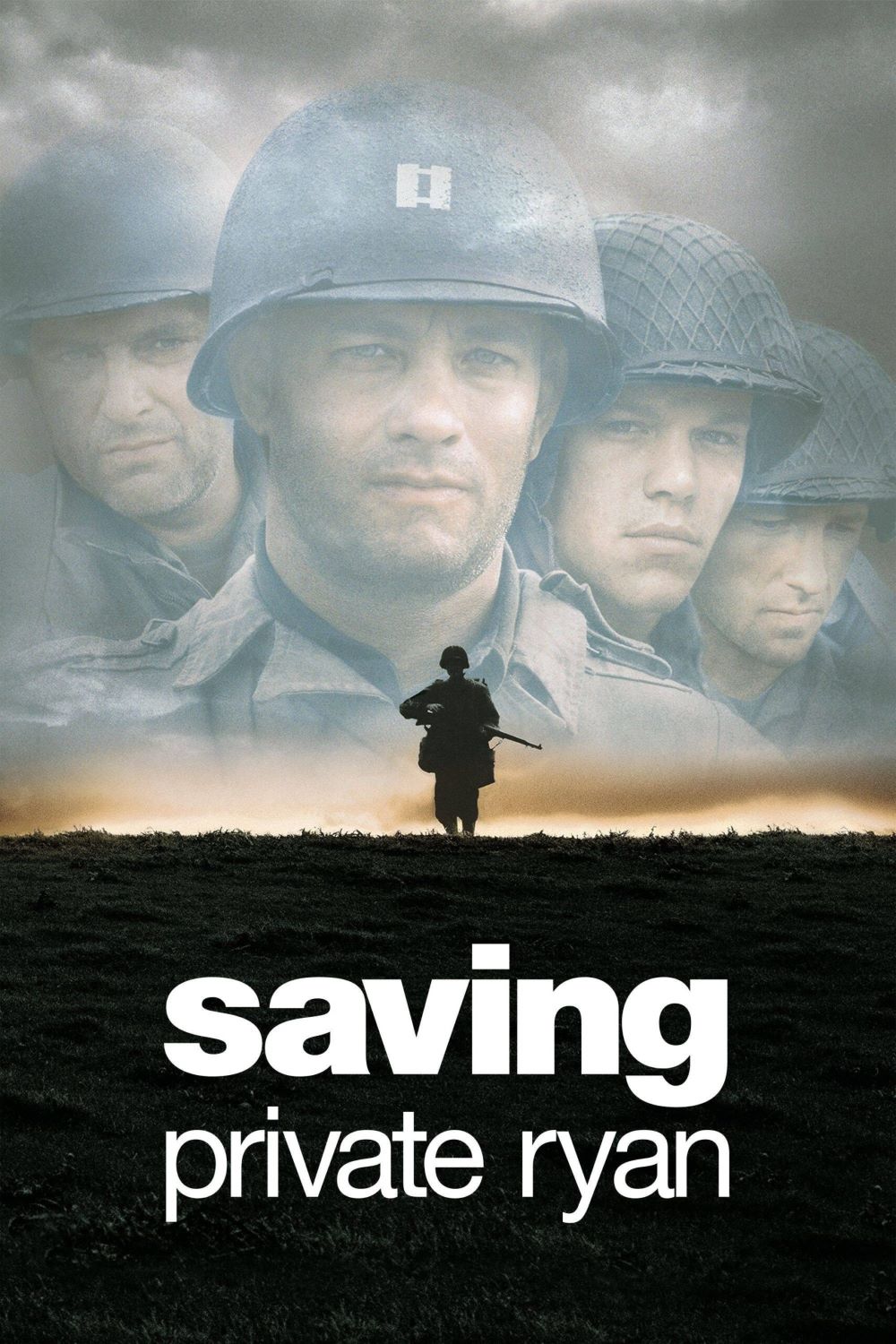
“Someday we might look back on this and decide that Saving Private Ryan was the one decent thing we were able to pull out of this whole godawful, shitty mess.” — Sergeant Horvath
Saving Private Ryan stands as a landmark achievement in war cinema, intricately weaving immersive battle scenes, rich character dynamics, and profound moral themes into a nearly three-hour exploration of World War II’s human cost. One of its most remarkable features is the opening Omaha Beach landing sequence, a meticulously crafted, over 24-minute depiction of warfare’s brutal reality. Spielberg deploys a cinema verité style with handheld cameras capturing disorientation and chaos through the soldiers’ eyes. The sound design envelops the viewer in a sensory onslaught—gunfire, shouting, explosions—creating a visceral experience that immerses audiences directly in the terror and confusion of D-Day.
The filming process drew heavily on historical accuracy, with the production shot on the coast of County Wexford, Ireland, employing amputee actors and practical effects over computer graphics to simulate violent injuries and battlefield horrors. Muted tones evoke wartime photographs, and rapid, shaky editing conveys the disorganized, frantic environment soldiers endured. Consulting WWII veterans and historians, Spielberg created a sequence that reshaped cinematic portrayals of war, influencing how future films would approach the genre’s raw immediacy and emotional weight.
The film’s narrative follows a squad led by Captain Miller on a mission to locate and bring home Private James Ryan, whose three brothers have been killed in combat. The mission is steeped in the real-life tragedy of the five Sullivan brothers who died together aboard the USS Juneau in the Pacific, prompting military policies to prevent similar familial devastation. This historical context frames the story’s ethical heart: risking several men’s lives to save one, raising enduring questions about the value of individual sacrifice within the broader war.
In Saving Private Ryan, sacrifice is portrayed ambiguously—not as the sacrifice of a single hero but as the collective cost borne by the men tasked with rescuing one individual under perilous conditions. As the squad journeys through the war-torn French countryside, the deaths, injuries, and tensions they face underscore war’s randomness and the difficulty of weighing one life against many. The narrative refuses to romanticize or simplify, instead confronting the audience with the tragic truth that countless soldiers lose their lives without recognition or purpose, while some survive against staggering odds.
Duty and camaraderie thread throughout the film, portrayed through the soldiers’ evolving relationships and personal struggles. Each grapples with loyalty not only to their mission but to their fellow men and their own moral codes.
Integral to the film’s power is Tom Hanks’s layered performance as Captain John Miller. Hanks breathes life and emotional depth into Miller, portraying him as a man shaped by civilian life—revealed poignantly when he discloses his pre-war profession as a schoolteacher—now transformed by the relentless demands of war. He embodies an officer who is both composed and vulnerable, carrying the heavy burden of leadership with quiet dignity. Hanks’s portrayal reveals the internal struggles beneath Miller’s stoic exterior: moments of doubt, moral conflict, and fatigue subtly expressed through a trembling hand or a weary gaze. This humanity makes Miller relatable, as a man trying to maintain order and purpose amid chaos.
Hanks skillfully balances Miller’s authoritative presence with warmth and empathy, particularly evident in his paternal interactions with younger soldiers, reinforcing Miller’s role as both a leader and protector. His nuanced acting delivers the complexity of a man constantly negotiating duty and compassion. In scenes of high tension or moral quandaries, Hanks conveys the weight of command while allowing glimpses into Miller’s psychological strain, deepening the film’s emotional resonance.
Following Hanks’s Miller, a standout amongst the supporting cast is Tom Sizemore’s portrayal of Technical Sergeant Mike Horvath, Miller’s steady second-in-command. Sizemore embodies the pragmatic, battle-hardened soldier whose loyalty and experience provide emotional grounding for the squad. Sizemore portrays Horvath’s weariness and quiet commitment, adding layers of realism that deepen the exploration of how war reshapes individuals. The chemistry and shared history between Miller and Horvath are palpable, illustrating the bonds that sustain soldiers through hardship and lending emotional weight to the narrative.
The film wrestles with intense moral ambiguity throughout. The mission’s premise—to risk many lives to save one—compels both characters and viewers to confront complex questions about justice, value, and the cost of war. Scenes presenting difficult choices, such as the decision to spare or execute prisoners, dramatize these ethical dilemmas and highlight the emotional burdens borne by soldiers.
Technically, the film excels, with Janusz Kaminski’s dynamic cinematography capturing both the chaos of battle and intimate moments with evocative clarity. The immersive sound design reinforces the brutal reality, stripping warfare of glamor and confronting audiences with its daunting human costs.
Despite the overwhelming destruction and loss, Saving Private Ryan offers moments of humanity and hope. The rescue mission serves as a fragile symbol of compassion in the midst of devastation, while the film’s closing reflections on memory and legacy emphasize the lasting significance of sacrifice and survival.
Saving Private Ryan stands as a monumental achievement in the war genre, combining visceral combat realism, compelling characters, and moral complexity. Through Hanks’s deeply human Captain Miller and the nuanced supporting performances, especially Sizemore’s grounded Horvath, the film explores themes of sacrifice, duty, and brotherhood with unflinching honesty. Its enduring legacy lies in its unvarnished yet empathetic portrayal of war’s cost and the profound sacrifices made by those who lived it.
Hi, everyone! Brad and his wife Sierra are on vacation so guess is who is guest hosting the #MondayMuggers live tweet tonight? That’s right …. me!
Tonight’s movie will be MANHUNTER (1986), the classic Michael Mann-directed thriller that introduced the world to the characters of Will Graham, Jack Crawford, Francis Dollarhyde, and Hannibal Lecter! (Though it’s spelled Lektor in this film.) Check out the trailer!
You can find the movie on Prime and then you can join us on twitter at 9 pm central time! (That’s 10 pm for you folks on the East Coast.) See you then!
In 1995’s Get Shorty, John Travolta stars as Chili Palmer.
Chili is a loan shark for the mob, an effortlessly cool guy who lives in Miami and who loves to watch old movies. Chili may work for the Mafia and he may make his living by intimidating people but he doesn’t seem like such a bad guy, especially when compared to someone like Ray “Bones” Barboni (Dennis Farina). Bones is an uncouth and rather stupid gangster who steals Chili’s leather jacket from a restaurant. Chili reacts by breaking Bones’s nose with just one punch. Bones reacts by trying to shoot Chili but instead, he gets shot by Chili himself. (The bullet only grazes his forehead.) Chili can do all this because he’s protected by Momo (Ron Karasbatsos) but, after Momo drops dead after having to walk up several flights of stairs just to then be given a surprise birthday party, Chili suddenly finds himself working for Bones. (This all happens in the first few minutes of this perfectly paced film.)
Bones, eager to humiliate Chili, sends him to Vegas to collect on a debt owed by a dry cleaner named Leo (David Paymer). Leo is thought to be dead but Bones wants to collect the money from Leo’s widow. It’s not the sort of thing that Chili likes to do so instead, he ends up going to Hollywood to collect a debt from B-movie director Harry Zimm (Gene Hackman). Chili happens to like Harry’s movies. He also likes Harry’s current girlfriend and frequent co-star, actress Karen Flores (Rene Russo).
Chili ends up in Hollywood, a town where everyone has some sort of hustle going. Chili finds himself dealing with drug dealers (Delroy Lindo), egocentric film stars (Danny DeVito), stuntmen-turned-criminals (James Gandolfini), and the widow (Bette Midler) of a screenwriter. Chili also finds himself looking to escape from the debt collection business by becoming a film producer. Harry has a script that he wants to make. Chili proposes a film based on the story of Leo the dry cleaner. Danny DeVito’s Martin Weir wants to be a “shylock” in a movie just so he can show off his intimidating stare. (“Is this where I do the look?” he asks while listening to the pitch.) Get Shorty is a whip-smart satire of Hollywood, one in which the gangsters want to be film people and all of the film people want to be gangsters. It features wonderful performances from the entire cast, with Travolta epitomizing cool confidence as Chili Palmer. Hackman, Russo, DeVito, Gandolfini, and Lindo are all excellent in their supporting roles but I have to admit my favorite performance in the film is probably given by Dennis Farina, who turns Bones Barnobi into a very believable (and a believably dangerous) buffoon.
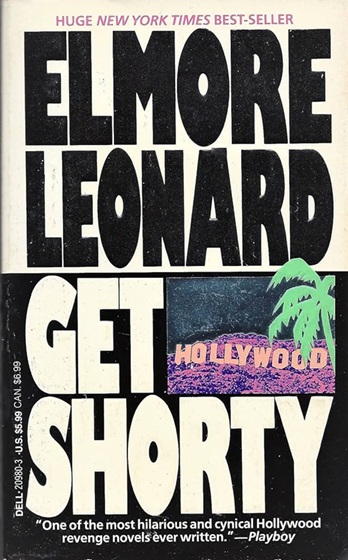
GetShorty is based on a book by Elmore Leonard. First published in 1990, the book is a quick and entertaining read, one that reminds us that Leonard was one of the best “genre” writers of his time. When I read that book, I was surprised to see how closely the movie stuck to the book’s plot. Much of the film’s dialogue is right there in the book. It’s a book that practically shouts, “Turn me into a movie!” and fortunately, director Barry Sonnenfeld did just that.
1981’s Thief tells the story of Frank (James Caan).
Frank is a professional diamond thief, one of the best in the business. He’s so cool that he even has his own Tangerine Dream soundtrack. After doing a stint in prison, Frank lives his life very carefully and with discipline. He’s determined not to return to prison. His mentor (played by Willie Nelson) is still behind bars and will probably die there. In fact, Frank has even found himself thinking about abandoning his criminal lifestyle. He’s got two front businesses, both of which are doing well. (Frank’s used car lot looks like some sort of alien world.) He’s fallen in love with a cashier named Jessie (Tuesday Weld) and it’s starting to seem like now would be a good time to settle down and become a family man. The only problem is that Frank is working for Leo (Robert Prosky) and Leo has absolutely no intention of allowing Frank to walk away. As Leo puts it, Frank belongs to him. That’s not a smart thing to say to someone like Frank.
Frank’s an interesting character. He’s the film’s hero, not because he’s a good guy but because he’s a smidgen better than most of the other bad guys. He’s a professional, one who goes out of his way avoid unnecessary complications. When we see him on the job, it’s impossible not to admire just how good he is at stealing stuff. When he uses a blowtorch to break into a store or a safe, the screen is full of sparks and, for a few minutes, Frank looks like some sort of cosmic super hero brought to life. We admire Frank but we discover early on that he’s willing to get violent. He’s willing to pull a gun and threaten his way out of a situation. Frank is loyal. He visits his mentor in prison. He takes care of his partner-in-crime, Barry (Jim Belushi, making his film debut). He truly loves Jessie. But, at heart, he’s a criminal who doesn’t hesitate to pull the trigger when he has to. The question the film asks is whether one can just go straight, after years of breaking the law and living in the shadows. Can Frank abandon the lifestyle, even for love? Or is he destined to always be a thief?
Thief was Michael Mann’s feature film debut. (The Jericho Mile was Mann’s directorial debut but it was made for television.) Thief is full of the usual Mann themes and also Mann’s signature style, showing that Mann knew exactly what type of films he wanted to make from the start of his career. The nights are full of shadows. The days are deceptively calm. The neon of Frank’s car lot glows like another dimension. The final bloody shoot out takes place at night, in the type of suburban neighborhood in which most people would probably love to live. And holding the film together is James Caan, giving a coolly centered performance as a man who has learned to hold back his emotions and who won’t be controlled by anyone. Halfway through the film, Caan delivers a seven-minute monologue about life in prison and it’s an amazing moment, one in which Caan shows just how good of an actor he truly was. Thief is an effective and stylish neo-noir, one that sticks with you as the end credits roll.
The 1980’s saw the what film enthusiasts saw as the death of the grindhouse experience. Major cities had begun to clean up their skid rows and the $1 all-day matinee theaters were closing down left and right. By the late 80’s gone were the buckets of stale popcorn, watered down sodas, carpets so sticky that one didn’t even want to think was made them that way and, of course, the sketchy individuals who always seemed to in every showing no matter the time.
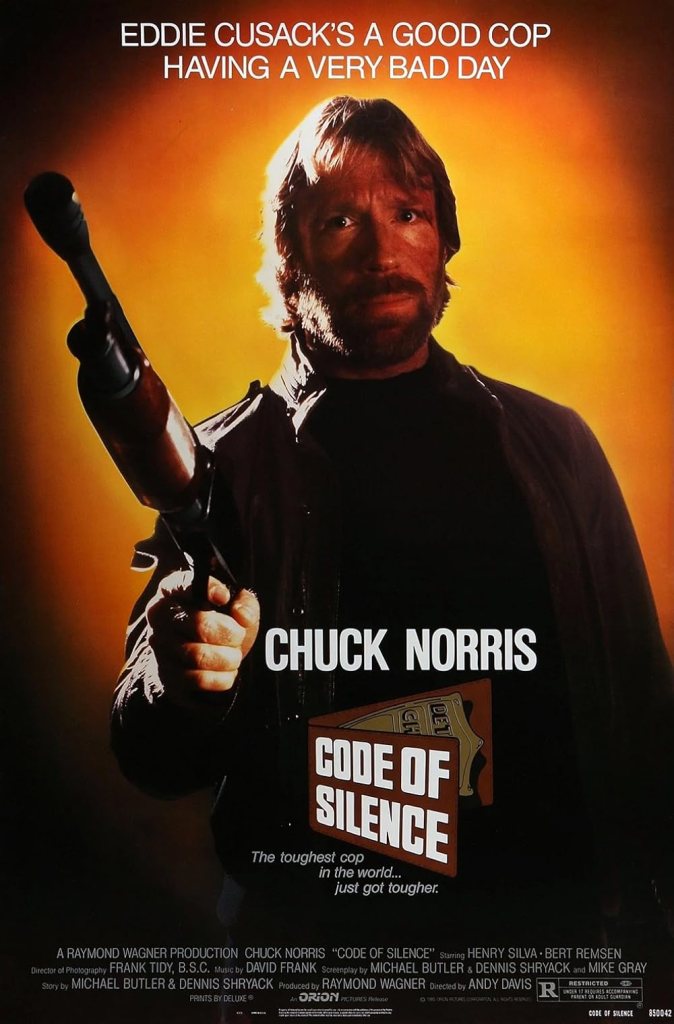
Yet, the grindhouse never truly left the cinema, but became a bit more “mainstream” under the many independent studios that came about during the early 80’s. You had Cannon, Carolco, United Film and Orion to name a few. It was with Orion that we get the latest guilty pleasure of mine and that was the one really good film that Chuck Norris ever made: Code of Silence.
Chuck Norris was the Jason Statham and Scott Adkins of the 1980’s action scene. He was cranking out action flicks almost on a yearly basis trying to cash in on not just the Bruce Lee martial arts phase, but also the action hero phase that was beginning to be dominated by Schwarzenneger and Stallone. While Norris never reached the heights of those two action stars, his list of action films from the 80’s and into the early 90’s were decent and, dare I say, very workmanlike.
Code of Silence was the one film that had a decent story of the lone good cop that has to fight not just the criminals but also the corrupt cops and system that allows crime to run rampart. Norris as Sgt. Eddie Cusack of the Chicago PD has become the template for the loner hero cop who ends up not just fighting the mob (of differently nationalities) but also a corrupt partner and, they always have one or two, a couple of retired cops who help him but also die in the process.
Norris doesn’t lean heavily on the martials arts of his previous action films. Code of Silence was the film that helped transition him to the gunplay of the action flicks that the public couldn’t get enough of. While the film could and never truly escape it’s grindhouse influence it was very good enough both in characters, plot and direction (director Andrew Davis would later film later classics with The Fugitive and Under Siege).
The film really gets its grindhouse bonafides with the addition of Henry Silva as the main antagonist. Silva would make a career out of being the villain in many 80’s action flicks and in Code of Silence he steals the limelight with his over the top performance as Colombian drug trafficker Luis Camacho. Where Jack Palance got more praise for being the preeminent villain and tough guy of from the 70’s and 80’s, I do believe that Silva was the more sinister of the pair when it came to their performance.
Code of Silence shows that Chuck Norris can carry a film with minimal dialogue and on the power of his silent, seething stares. He was never one for quippy one-liners and Code of Silence is all the better because of it.
Welcome to Retro Television Reviews, a feature where we review some of our favorite and least favorite shows of the past! On Mondays, I will be reviewing Miami Vice, which ran on NBC from 1984 to 1989. The entire show is currently streaming on Tubi!
The 21st episode of Miami Vice is Evan. It’s regularly listed as being one of the best episodes of the show and it’s not available to stream online. Apparently, this is due to someone referring to another character as being a “faggot.” Yes, it’s a dirty word but I’m an adult and I do think that I could handle hearing the word and figuring out the context of why it was used. Censorship sucks so shame on Prime, Tubi, NBC, and everyone else who is involved in not streaming Evan.
With Evan not available to be viewed, I moved on to the first season finale.
Episode 1.22 “Lombard”
(Dir by John Nicollela, originally aired on May 10th, 1985)
The first season of Miami Vice comes to an end with a rather simple story. Lombard (Dennis Farina) is a crime lord, a first-generation Italian-American whose father lived an honest life and who died poor as a result. Lombard did what he had to do to get ahead and, as a result, he’s now a very rich man who lives on a boat.
He’s also being targeted by both rival gangsters and the law. When Lombard agrees to testify against the Mafia in return for immunity, Crockett and Tubbs are assigned to babysit him until the trial. Crockett and Tubbs are both weary of Lombard but Lombard turns out to be a charming guy with a sense of ethics. He cooks them a big Italian dinner. He entertain them with stories. Crockett and Tubbs start to like the guy, even if guarding him means that they get involved in a few mob shootouts.
However, when it comes time to testify, Lombard refuses. Under the immunity deal, he’s no longer qualified to plead the fifth but Lombard does just that. Repeatedly, he pleads the fifth and, as a result, he gets enough contempt citations that he’s probably looking at least a decade in jail, regardless of the fact that he didn’t admit to any of the major crimes that he committed.
Sonny and Tubbs are impressed. Lombard may be a criminal but he has a sense of honor. He doesn’t snitch. He’s not a rat. Of course, that doesn’t make a difference to the criminals who apparently gun him down in the episode’s final ambiguous freeze frame.
The story was simple and, to be honest, it wasn’t anything that Miami Vice hadn’t already done. But the episode works, because of Dennis Farina’s charismatic performance as Lombard and John Nicolella’s stylish and moody direction. The first season of Miami Vice ends much as it began, with ambiguity and defeat. Lombard scores a moral victory but is gunned down minutes afterwards. Crockett and Tubbs keep Lombard alive just long enough for him to double-cross the authorities. In the end, the ruthless gangster turns out to have more honor than the people prosecuting him and Crockett and Tubbs are again forced to consider that there’s not a lot of difference between them and the people that they’re chasing.
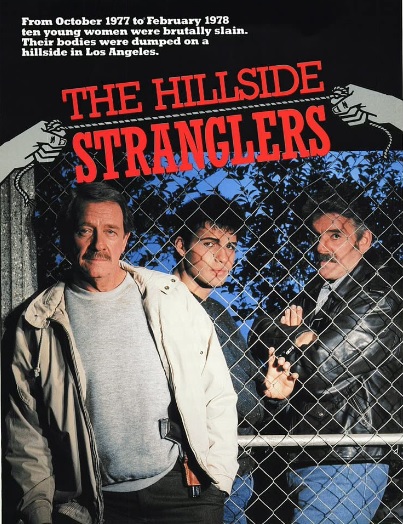
1989’s The Case of the Hillside Stranglers is based on the killing spree of Angelo Buono and Kenneth Bianchi, two cousins who terrorized Los Angeles in the late 70s. Buono owned his own garage and aspired to be a tough and macho pimp. Bianchi was an aspiring police officer who supported himself as a security guard. Over the course of just five months, they murdered ten women. They probably would never have been caught if not for the fact that Buono eventually tired of Bianchi and kicked him out of his house. Bianchi moved up to Washington where he committed two murders on his own. When he was arrested, he attempted to convince the cops that he was suffering from dissociative identity disorder and that the murders were committed by his other personalities.
The Case of the Hillside Stranglers starts with the murder spree already in progress. Buono is played by Dennis Farina while Bianchi is played by a very young Billy Zane. Both of them are well-cast, with Farina especially making an impression as a misogynistic bully who thinks that he is untouchable. (In real life, Farina spent 18 years as a Chicago cop and, watching his performance in this film, it’s hard not to get the feeling that he had to deal with more than one guy like Angelo Buono over the course of his time on the force.) For all of their cockiness, the film emphasizes that neither Angelo nor Kenneth were particularly clever. The fact that they got away with their crimes for as long as they did was largely due to a combination of luck and witnesses who did not want to get involved. Early on in the film, one woman who is harassed and nearly abducted by Buono and Bianchi refuses to call the police afterwards because she doesn’t want to relive what happened.
That said, the majority of the film actually focuses on Bob Grogan (Richard Crenna), the tough veteran detective who heads up the Hillside Strangler taskforce and who becomes so obsessed with tacking down the elusive killers that he soon finds himself neglecting both his family and his own health. Whenever we see Grogan trying to enjoy any quality time with his children, we know that his beeper is going to go off and he’s going to have to search for a telephone so that he can call into headquarters. (Remember, this film was set in the 70s.) His children are a bit miffed about it, which I can understand though I really do have to say that his son, in this film, really does come across as being a brat. (“Just ignore it, Dad,” he says, as if there aren’t two serial killers murdering innocent people in the city.) The recently divorced Grogan pursues a tentative romance with a woman (played by Karen Austin) who, at one point, decides to investigate Angelo on her own. Crenna, not surprisingly, is sympathetic as Grogan. The film works best as an examination of what it does to one’s soul to spend all day investigating the worst crimes that can be committed. Grogan gets justice but, the film suggests, he does so at the sacrifice of his own peace of mind.
It’s a well-made and well-acted film, one that will probably appeal more to fans of the police procedural genre as opposed to those looking for a grisly serial killer film. In real life, Bianchi is serving a life sentence and Angelo Buono died in prison. And the real Bob Grogan? He appeared in this movie, slapping the handcuffs on Billy Zane.
Welcome to Retro Television Reviews, a feature where we review some of our favorite and least favorite shows of the past! On Mondays, I will be reviewing Miami Vice, which ran on NBC from 1984 to 1989. The entire show is currently streaming on Tubi!
This week, Vice gets a new leader!
Episode 1.7 “One Eyed Jack”
(Dir by Lee H. Katzin, originally aired on November 2nd, 1984)
Oh, that Sonny Crockett. He’s got problems!
For one thing, animal control is still showing up at the harbor and trying to repossess his pet alligator, Elvis. Sonny manages to talk them out of it by explaining that Elvis is actually employed by the Miami Police Department. Sonny even flashes his badge as proof, which I found strange since I thought the whole idea of Sonny living on the boat was so that he could convince everyone that he was actually a big time drug dealer. For someone who is supposed to be deep undercover, Sonny never seems to make much of an effort to hide the fact that he’s a cop.
Crockett and Tubbs have been assigned to stakeout a bookie in the hope that it’ll lead to the arrest of his boss, a supposedly “untouchable” gangster named Al Lombard (Dennis Farina, who was always a totally convincing gangster despite actually being a Chicago cop). Crockett is shocked to see his ex-girlfriend, Barbara (Janet Constable), begging the bookie for more time to pay off her gambling debts. Apparently, Barbara is so far in debt that Lombard’s second-in-command, Vince DeMarco (played by former Andy Warhol superstar, Joe Dallesandro), has stolen the tools that Barbara’s husband needs to make a living.
Seeking to help out his ex, Crockett approaches Vince and requests that he return the tools. Vince explains that the tools have already been destroyed and then offers Crockett an envelope full of cash as payment for them. Crockett takes the envelope and is promptly arrested by Internal Affairs Detective Schroeder (Dan Hedaya, as wonderfully sleazy as ever). It turns out that Vince agreed to expose a dirty cop in return for being granted immunity on some racketeering charges.
Everyone knows that Crockett has been framed. In the past, Lou Rodriguez would have stood by Crockett but Rodriguez died two episodes ago and the new head of vice is Lt. Martin Castillo (Edward James Olmos). Accurately described as being “Charles Bronson by way of Havana,” by Tubbs, Castillo is an enigmatic figure, one who rarely speaks or shows the slightest hint of emotion. He has a withering stare that can be terrifying in its intensity. When Tubbs, feeling that Castillo isn’t being properly supportive of Crockett, demands to know, “Whose side are you on?,” Castillo replies, “Don’t ever come up to my face like this again, Detective,” and the viewer is left with no doubt that Castillo is perhaps the most terrifying man in Miami.
After Barbara turns up dead, Tubbs goes undercover. After meeting with DeMarco, Tubbs works his way up to Lombard. Tubbs claims to be a gangster from Philadelphia who is looking to get in on the action in Miami. (“If Miami doesn’t have it,” DeMarco assures him, “nobody’s thought of it yet.”) Lombard takes a liking to Tubbs and hires him to deal with his Black and Spanish “clientale.” Soon, Tubbs and DeMarco are hitting the cockfights and going to the club with Lombard. Tubbs also frames DeMarco for the theft of $2,000. Realizing that Lombard is probably going to try to kill him, DeMarco not only signs a paper exonerating Crockett but he also wears a wire the next time that he and Tubbs visit Lombard’s yacht.
Good news, right? Well, it would be …. except that Barbara’s husband Jerry (Jimmie Ray Weeks) sneaks onto the yacht and shoots DeMarco dead before Lombard says anything incriminating. Jerry goes to prison and Lombard goes free. Crockett and Tubbs end up on Crockett’s boat, fishing at ten o’clock at night. Crockett says that it’s the only way to stay sane.
What a dark episode! Crockett was exonerated but his otherwise perfect plan fell apart. This episode truly presented Miami as being a decadent playground, one that could make someone rich just as easily as it could destroy them. While Jerry and Barbara lived in a small, run-down house, DeMarco wore expensive suits and Lombard lived on an expensive yacht and neither one gave much thought to the people whose lives were destroyed by their activities. With Crockett sidelined by the IA investigation, Tubbs finally got his chance to shine and Philip Michael Thomas did a good job of capturing the adrenaline rush of becoming a part of Lombard’s world. As opposed to the cynical and weary Crockett, Tubbs seems like he could be seriously tempted to switch sides in the war on crime. In the end, Tubbs outsmarted DeMarco not by being better than him but instead by being even more ruthless. And yet, for all the dark vibes to be found in this episode, the glamour of life in Miami was undeniably appealing. Where else, the episode asked, can you arrest the bad guys while also working on your tan and hanging out on the beach?
Indeed, I find myself feeling a bit jealous of Gina (played by Saundra Santiago). So far, she hasn’t gotten to do much on the show beyond being Sonny’s sometime girlfriend. But she still gets to wear the best clothes and hang out with the coolest people and she gets to do it all while carrying a gun. What more could one ask for?
Next week, Bruce Willis makes his television debut!
Thomas Hardy (Bruce Willis) comes from a huge family of Pittsburgh cops. He used to be a homicide detective but then his father (John Mahoney) was murdered by a serial killer and his cousin (Robert Pastorelli) jumped off a bridge after Hardy turned him in for being crooked. When Hardy insisted that the serial killer who murdered his father and countless others in Pittsburgh had to be a cop, he was kicked out of homicide and reassigned to the river patrol.
Two years later, Hardy drinks too much and spends his time floating up and down the river. He’s got a new, younger partner named Emily (Sarah Jessica Parker) but not even Emily can snap him out of his funk. It’s not until the serial killer starts to strike again — this time specifically targeting people from Hardy’s life — that Hardy starts to care about police work again.
Striking Distance is a good example of a thoroughly mediocre film that bombed at the box office but was given a new lease on life by HBO. During the 90s, it sometimes seemed as if there wasn’t a day that went by that HBO didn’t air Striking Distance at least once. I guess it makes sense. Bruce Willis was a big name and Sarah Jessica Parker did eventually end up starring on one of HBO’s signature hits. Still, it seems like they could have found a better Bruce Willis film to air. When critics in the 90s complained that Bruce Willis was an ego-driven star who wasn’t willing to break out of his comfort zone, they weren’t talking about Willis’s appearances in films like Pulp Fiction or 12 Monkeys or even Die Hard. They were talking about movies like Striking Distance, where Willis smirks his way through the film and spends more time making the camera gets his good side than actually developing a character.
The most interesting thing about Striking Distance is that it manages to be too simple and too complicated at the same time. There’s no mystery to the identity of the serial killer or why Hardy is being targeted. There’s also no depth to Hardy and Emily’s relationship. As soon as they meet, everyone knows where their relationship is going to head. At the same time, the movie is full of red herrings and unnecessary characters. Hardy comes from a family of policemen and it seems like we meet every single one of them. Tom Atkins, Dennis Farina, and Tom Sizemore all show up as different relatives. They don’t add much to the movie but they’re there. Andre Braugher, Timothy Busfield, and Brion James also all show up in minor roles, to no great effect beyond providing the film with an “It’s that guy!” moment.
To the film’s credit, it has a few good chase scenes, though the novelty of everyone being in a boat wears off pretty quickly. Striking Distance is a mess but everyone who had HBO in the 90s sat through it at least once.


 Through the Shattered Lens