Retro Television Reviews: Miami Vice 1.22 “Lombard”


Welcome to Retro Television Reviews, a feature where we review some of our favorite and least favorite shows of the past!  On Mondays, I will be reviewing Miami Vice, which ran on NBC from 1984 to 1989.  The entire show is currently streaming on Tubi!

The 21st episode of Miami Vice is Evan.  It’s regularly listed as being one of the best episodes of the show and it’s not available to stream online.  Apparently, this is due to someone referring to another character as being a “faggot.”  Yes, it’s a dirty word but I’m an adult and I do think that I could handle hearing the word and figuring out the context of why it was used.  Censorship sucks so shame on Prime, Tubi, NBC, and everyone else who is involved in not streaming Evan.

With Evan not available to be viewed, I moved on to the first season finale.

Episode 1.22 “Lombard”

(Dir by John Nicollela, originally aired on May 10th, 1985)

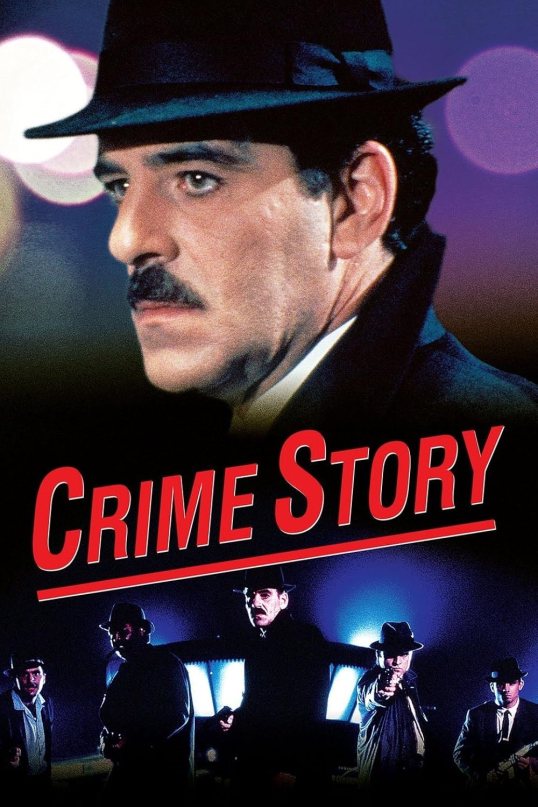
The first season of Miami Vice comes to an end with a rather simple story.  Lombard (Dennis Farina) is a crime lord, a first-generation Italian-American whose father lived an honest life and who died poor as a result.  Lombard did what he had to do to get ahead and, as a result, he’s now a very rich man who lives on a boat.

He’s also being targeted by both rival gangsters and the law.  When Lombard agrees to testify against the Mafia in return for immunity, Crockett and Tubbs are assigned to babysit him until the trial.  Crockett and Tubbs are both weary of Lombard but Lombard turns out to be a charming guy with a sense of ethics.  He cooks them a big Italian dinner.  He entertain them with stories.  Crockett and Tubbs start to like the guy, even if guarding him means that they get involved in a few mob shootouts.

However, when it comes time to testify, Lombard refuses.  Under the immunity deal, he’s no longer qualified to plead the fifth but Lombard does just that.  Repeatedly, he pleads the fifth and, as a result, he gets enough contempt citations that he’s probably looking at least a decade in jail, regardless of the fact that he didn’t admit to any of the major crimes that he committed.

Sonny and Tubbs are impressed.  Lombard may be a criminal but he has a sense of honor.  He doesn’t snitch.  He’s not a rat.  Of course, that doesn’t make a difference to the criminals who apparently gun him down in the episode’s final ambiguous freeze frame.

The story was simple and, to be honest, it wasn’t anything that Miami Vice hadn’t already done.  But the episode works, because of Dennis Farina’s charismatic performance as Lombard and John Nicolella’s stylish and moody direction.  The first season of Miami Vice ends much as it began, with ambiguity and defeat.  Lombard scores a moral victory but is gunned down minutes afterwards.  Crockett and Tubbs keep Lombard alive just long enough for him to double-cross the authorities.  In the end, the ruthless gangster turns out to have more honor than the people prosecuting him and Crockett and Tubbs are again forced to consider that there’s not a lot of difference between them and the people that they’re chasing.

Next week …. it’s time for Season 2!

October True Crime: The Case of the Hillside Stranglers (dir by Steve Gethers)


1989’s The Case of the Hillside Stranglers is based on the killing spree of Angelo Buono and Kenneth Bianchi, two cousins who terrorized Los Angeles in the late 70s.  Buono owned his own garage and aspired to be a tough and macho pimp.  Bianchi was an aspiring police officer who supported himself as a security guard.  Over the course of just five months, they murdered ten women.  They probably would never have been caught if not for the fact that Buono eventually tired of Bianchi and kicked him out of his house.  Bianchi moved up to Washington where he committed two murders on his own.  When he was arrested, he attempted to convince the cops that he was suffering from dissociative identity disorder and that the murders were committed by his other personalities.

The Case of the Hillside Stranglers starts with the murder spree already in progress.  Buono is played by Dennis Farina while Bianchi is played by a very young Billy Zane.  Both of them are well-cast, with Farina especially making an impression as a misogynistic bully who thinks that he is untouchable.  (In real life, Farina spent 18 years as a Chicago cop and, watching his performance in this film, it’s hard not to get the feeling that he had to deal with more than one guy like Angelo Buono over the course of his time on the force.) For all of their cockiness, the film emphasizes that neither Angelo nor Kenneth were particularly clever.  The fact that they got away with their crimes for as long as they did was largely due to a combination of luck and witnesses who did not want to get involved.  Early on in the film, one woman who is harassed and nearly abducted by Buono and Bianchi refuses to call the police afterwards because she doesn’t want to relive what happened.

That said, the majority of the film actually focuses on Bob Grogan (Richard Crenna), the tough veteran detective who heads up the Hillside Strangler taskforce and who becomes so obsessed with tacking down the elusive killers that he soon finds himself neglecting both his family and his own health.  Whenever we see Grogan trying to enjoy any quality time with his children, we know that his beeper is going to go off and he’s going to have to search for a telephone so that he can call into headquarters.  (Remember, this film was set in the 70s.)  His children are a bit miffed about it, which I can understand though I really do have to say that his son, in this film, really does come across as being a brat.  (“Just ignore it, Dad,” he says, as if there aren’t two serial killers murdering innocent people in the city.)  The recently divorced Grogan pursues a tentative romance with a woman (played by Karen Austin) who, at one point, decides to investigate Angelo on her own.  Crenna, not surprisingly, is sympathetic as Grogan.  The film works best as an examination of what it does to one’s soul to spend all day investigating the worst crimes that can be committed.  Grogan gets justice but, the film suggests, he does so at the sacrifice of his own peace of mind.

It’s a well-made and well-acted film, one that will probably appeal more to fans of the police procedural genre as opposed to those looking for a grisly serial killer film.  In real life, Bianchi is serving a life sentence and Angelo Buono died in prison.  And the real Bob Grogan?  He appeared in this movie, slapping the handcuffs on Billy Zane.

Retro Television Reviews: Miami Vice 1.7 “One Eyed Jack”


Welcome to Retro Television Reviews, a feature where we review some of our favorite and least favorite shows of the past!  On Mondays, I will be reviewing Miami Vice, which ran on NBC from 1984 to 1989.  The entire show is currently streaming on Tubi!

This week, Vice gets a new leader!

Episode 1.7 “One Eyed Jack”

(Dir by Lee H. Katzin, originally aired on November 2nd, 1984)

Oh, that Sonny Crockett.  He’s got problems!

For one thing, animal control is still showing up at the harbor and trying to repossess his pet alligator, Elvis.  Sonny manages to talk them out of it by explaining that Elvis is actually employed by the Miami Police Department.  Sonny even flashes his badge as proof, which I found strange since I thought the whole idea of Sonny living on the boat was so that he could convince everyone that he was actually a big time drug dealer.  For someone who is supposed to be deep undercover, Sonny never seems to make much of an effort to hide the fact that he’s a cop.

Crockett and Tubbs have been assigned to stakeout a bookie in the hope that it’ll lead to the arrest of his boss, a supposedly “untouchable” gangster named Al Lombard (Dennis Farina, who was always a totally convincing gangster despite actually being a Chicago cop).  Crockett is shocked to see his ex-girlfriend, Barbara (Janet Constable), begging the bookie for more time to pay off her gambling debts.  Apparently, Barbara is so far in debt that Lombard’s second-in-command, Vince DeMarco (played by former Andy Warhol superstar, Joe Dallesandro), has stolen the tools that Barbara’s husband needs to make a living.

Seeking to help out his ex, Crockett approaches Vince and requests that he return the tools.  Vince explains that the tools have already been destroyed and then offers Crockett an envelope full of cash as payment for them.  Crockett takes the envelope and is promptly arrested by Internal Affairs Detective Schroeder (Dan Hedaya, as wonderfully sleazy as ever).  It turns out that Vince agreed to expose a dirty  cop in return for being granted immunity on some racketeering charges.

Everyone knows that Crockett has been framed.  In the past, Lou Rodriguez would have stood by Crockett but Rodriguez died two episodes ago and the new head of vice is Lt. Martin Castillo (Edward James Olmos).  Accurately described as being “Charles Bronson by way of Havana,” by Tubbs, Castillo is an enigmatic figure, one who rarely speaks or shows the slightest hint of emotion.  He has a withering stare that can be terrifying in its intensity.  When Tubbs, feeling that Castillo isn’t being properly supportive of Crockett, demands to know, “Whose side are you on?,” Castillo replies, “Don’t ever come up to my face like this again, Detective,” and the viewer is left with no doubt that Castillo is perhaps the most terrifying man in Miami.

After Barbara turns up dead, Tubbs goes undercover.  After meeting with DeMarco, Tubbs works his way up to Lombard.  Tubbs claims to be a gangster from Philadelphia who is looking to get in on the action in Miami.  (“If Miami doesn’t have it,” DeMarco assures him, “nobody’s thought of it yet.”)  Lombard takes a liking to Tubbs and hires him to deal with his Black and Spanish “clientale.”  Soon, Tubbs and DeMarco are hitting the cockfights and going to the club with Lombard.  Tubbs also frames DeMarco for the theft of $2,000.  Realizing that Lombard is probably going to try to kill him, DeMarco not only signs a paper exonerating Crockett but he also wears a wire the next time that he and Tubbs visit Lombard’s yacht.

Good news, right?  Well, it would be …. except that Barbara’s husband Jerry (Jimmie Ray Weeks) sneaks onto the yacht and shoots DeMarco dead before Lombard says anything incriminating.  Jerry goes to prison and Lombard goes free.  Crockett and Tubbs end up on Crockett’s boat, fishing at ten o’clock at night.  Crockett says that it’s the only way to stay sane.

What a dark episode!  Crockett was exonerated but his otherwise perfect plan fell apart.  This episode truly presented Miami as being a decadent playground, one that could make someone rich just as easily as it could destroy them.  While Jerry and Barbara lived in a small, run-down house, DeMarco wore expensive suits and Lombard lived on an expensive yacht and neither one gave much thought to the people whose lives were destroyed by their activities.  With Crockett sidelined by the IA investigation, Tubbs finally got his chance to shine and Philip Michael Thomas did a good job of capturing the adrenaline rush of becoming a part of Lombard’s world.  As opposed to the cynical and weary Crockett, Tubbs seems like he could be seriously tempted to switch sides in the war on crime.  In the end, Tubbs outsmarted DeMarco not by being better than him but instead by being even more ruthless.  And yet, for all the dark vibes to be found in this episode, the glamour of life in Miami was undeniably appealing.  Where else, the episode asked, can you arrest the bad guys while also working on your tan and hanging out on the beach?

Indeed, I find myself feeling a bit jealous of Gina (played by Saundra Santiago).  So far, she hasn’t gotten to do much on the show beyond being Sonny’s sometime girlfriend.  But she still gets to wear the best clothes and hang out with the coolest people and she gets to do it all while carrying a gun.  What more could one ask for?

Next week, Bruce Willis makes his television debut!

Striking Distance (1993, directed by Rowdy Herrington)


Thomas Hardy (Bruce Willis) comes from a huge family of Pittsburgh cops.  He used to be a homicide detective but then his father (John Mahoney) was murdered by a serial killer and his cousin (Robert Pastorelli) jumped off a bridge after Hardy turned him in for being crooked.  When Hardy insisted that the serial killer who murdered his father and countless others in Pittsburgh had to be a cop, he was kicked out of homicide and reassigned to the river patrol.

Two years later, Hardy drinks too much and spends his time floating up and down the river.  He’s got a new, younger partner named Emily (Sarah Jessica Parker) but not even Emily can snap him out of his funk.  It’s not until the serial killer starts to strike again — this time specifically targeting people from Hardy’s life — that Hardy starts to care about police work again.

Striking Distance is a good example of a thoroughly mediocre film that bombed at the box office but was given a new lease on life by HBO.  During the 90s, it sometimes seemed as if there wasn’t a day that went by that HBO didn’t air Striking Distance at least once.  I guess it makes sense.  Bruce Willis was a big name and Sarah Jessica Parker did eventually end up starring on one of HBO’s signature hits.  Still, it seems like they could have found a better Bruce Willis film to air.  When critics in the 90s complained that Bruce Willis was an ego-driven star who wasn’t willing to break out of his comfort zone, they weren’t talking about Willis’s appearances in films like Pulp Fiction or 12 Monkeys or even Die Hard.  They were talking about movies like Striking Distance, where Willis smirks his way through the film and spends more time making the camera gets his good side than actually developing a character.

The most interesting thing about Striking Distance is that it manages to be too simple and too complicated at the same time.  There’s no mystery to the identity of the serial killer or why Hardy is being targeted.  There’s also no depth to Hardy and Emily’s relationship.  As soon as they meet, everyone knows where their relationship is going to head.  At the same time, the movie is full of red herrings and unnecessary characters.  Hardy comes from a family of policemen and it seems like we meet every single one of them.  Tom Atkins, Dennis Farina, and Tom Sizemore all show up as different relatives.  They don’t add much to the movie but they’re there.  Andre Braugher, Timothy Busfield, and Brion James also all show up in minor roles, to no great effect beyond providing the film with an “It’s that guy!” moment.

To the film’s credit, it has a few good chase scenes, though the novelty of everyone being in a boat wears off pretty quickly.  Striking Distance is a mess but everyone who had HBO in the 90s sat through it at least once.


A Movie A Day #304: Code of Silence (1985, directed by Andrew Davis)


It’s life and death in the Windy City.  It’s got Chuck Norris, Henry Silva, Dens Farina, and a robot, too.  It’s Code of Silence.

Chuck plays Eddie Cusack, a tough Chicago policeman who is abandoned by his fellow officers when he refuses to cover for an alcoholic cop who accidentally gunned down a Hispanic teenager and then tried to place a gun on the body.  This the worst time for Cusack to have no backup because a full-scale gang war has just broken out between the Mafia and the Comachos, a Mexican drug gang led by Luis Comacho (Henry Silva).  When a cowardly mobster goes into hiding, Luis targets his daughter, Diana (Molly Hagan).  Determined to end the drug war and protect Diana, Eddie discovers that he may not be able to rely on his brothers in blue but he can always borrow a crime-fighting robot named PROWLER.

Despite the presence of a crime-fighting robot, Code of Silence is a tough, gritty, and realistic crime story.  Though Chuck only gets to show off his martial arts skills in two scenes (and one of those scenes is just Eddie working out in the gym), Code of Silence is still Norris’s best film and his best performance.  The film draws some interesting comparisons between the police’s code of silence and the Mafia’s omerta and director Andrew Davis shows the same flair for action that he showed in The Fugitive and Above the LawCode of Silence‘s highlight is a fight between Chuck and an assassin that takes place on top of a moving train.  Norris did his own stunts so that really is him trying not to fall off that train.

Davis surrounds Norris with familiar Chicago character actors, all of whom contribute to Code of Silence‘s authenticity and make even the smallest roles memorable.  (Keep an eye out for the great John Mahoney, playing the salesman who first introduces the PROWLER.)  Norris’s partner is played by Dennis Farina, who actually was a Chicago cop at the time of filming.  After Code of Silence, Farina quit the force to pursue acting full time and had a busy career as a character actor, playing cops and mobsters in everything from Manhunter to Get Shorty.  As always, Henry Silva is a great villain but the movie is stolen by Molly Hagan, who is feisty and sympathetic as Diana.  To the film’s credit, it doesn’t try to force Eddie and Diana into any sort of contrived romance.

Unfortunately, none of Chuck Norris’s other films never came close to matching the quality of this one.  Code of Silence is a hint of what could have been.

A Movie A Day #198: Men of Respect (1990, directed by William Reilly)


That Bill Shakespeare really gets around.

Men of Respect comes to us disguised as a gangster movie but it is actually a modern-day version of MacBeth.  Mike Battaglia (John Turturro) is one of Charlie D’Amico’s (Rod Steiger) top lieutenants but he is upset because D’Amico has announced that his successor will be Bankie Como (Dennis Farina).  When Mike stumbles across a fortune teller, he is told that not only will he soon be in charge of the D’Amico crime family but that he will hold the position until the stars fall from the sky and that he will never be harmed by a “man of woman born.”  At the instigation of his ambitious wife, Ruthie Battaglia (played by Turturro’s real-life wife, Katherine Borowitz), Mike murders Charlie, Bankie, and everyone else who is standing in his way.  Even as D’Amico’s son (Stanley Tucci) starts to recruit soldiers for an all out war, Mike remains confident.  Even when one of this soldiers sees a fireworks show and says, “Jeez, it looks like stars from falling from the sky,” Mike remains cocky.  When his wife starts to complain that she can not get the blood stains (“the spot”) out of the linen, Mike is not concerned.  Why not?  “All these guys were born of a woman,” Mike says, “they can’t do shit to me.”

Turning MacBeth (or any of Shakespeare’s tragedies) into a Mafia film is not a bad idea but Men of Respect‘s attempt to translate Shakespeare’s language to 20th century gangster talk leads to some memorably awkward line readings from an otherwise talented cast.  By the time Matt Duffy (Peter Boyle) announced, in his Noo Yawk accent, that he was delivered via caesarean section, I could not stop laughing.  Even the scenes of gangland mayhem feel like second-rate Scorsese.  The idea behind the film is intriguing and there are a lot of recognizable faces in the cast but Men of Respect gets bogged down as both a Shakespearean adaptation and a gangster film.

Horror on TV: Tales From The Crypt 4.13 “Werewolf Concerto” (dir by Steve Perry)


For tonight’s excursion into televised horror, we present to you the 13th episode of the 4th season of HBO’s Tales From The Crypt!

Werewolf Concerto originally aired on September 9th, 1992.  It deals with what happens when a group of hotel guests believe that there might be a werewolf in the area.  Fortunately, Timothy Dalton is also in the area and he claims to be a professional werewolf hunter!

Or is he….?

You’ll have to watch to find out!

Enjoy!

Guilty Pleasure No. 8: Paparazzi


259791_ori

I once got into an argument with a friend of mine about whether or not a film could actually be so bad that it was good.

His argument was that bad, by its very definition, was the opposite of good and therefore, nothing bad could be good and vice versa.

My argument was Paparazzi.

First released back in 2004, Paparazzi tells the story of Bo Laramie (Cole Hauser).  Bo is an up-and-coming super star.  As the film begins, we’re told — by a breathless correspondent from E! News — that Bo has arrived.  He’s starring in what promises to be “the world’s biggest action franchise.”  Bo has a wife (Robin Tunney), a son, and a beautiful house on the beach.  Whenever he goes jogging, huge groups of women magically materialize so that they can giggle as he runs by.

However, not everything is perfect in the world of Bo Laramie.  Like far too many defenseless celebrities, he’s being harassed by the paparazzi.  At first, Bo attempts to be polite.  However, a demonic photographer named Rex (Tom Sizemore) refuses to stop trying to take pictures of Bo at his son’s soccer game.  Things escalate until eventually, Bo’s son is in a coma and Bo is coming up with ludicrously elaborate ways to kill all of Rex’s colleagues.

The thing that distinguishes Paparazzi is not that it’s a revenge film.  What distinguishes Paparazzi is that it seems to seriously be arguing that celebrities have the right to kill people who annoy them.  Rex and his colleagues are portrayed as being pure evil (one even laughs maniacally after snapping a picture) while Bo is the victim who has to deal with the issues that come from being a multimillionaire.  Even the homicide detective played by Dennis Farina seems to be continually on the verge of saying, “Right on!” while looking over the results of Bo’s handiwork.

It’s so ludicrous and stupid and over-the-top that it can’t help but also be a lot of fun.

Don’t get me wrong.  Paparazzi is a terrible film.  In fact, it’s so terrible that, if a group of aliens ever somehow saw Paparazzi, they would probably hop in their spaceship and come to Earth specifically to wipe out the human race.  However, as bad as the film is, it’s also one of those films that you simply cannot look away from.  Watching this film is like witnessing a tornado of pure mediocrity coming straight at you.  You know that you should just stop watching and get to safety but it’s such an unexpectedly odd sight that you can’t look away.  Once you’ve seen it, you’ll never forget it and it becomes impossible not to become fascinated by the fact that such a terrible film could actually exist.

Consider the following:

1) When he’s not busy killing photographers, Bo Laramie is filming a movie called Adrenaline Force 2.  Seriously, that title is so generic that I couldn’t help but smile every time it was mentioned.  Can you imagine anyone saying, “I want to see that new movie, what’s it called, uhmm… Adrenaline Force 2?”

2) Speaking of generic, do you think that anyone named Bo Laramie could ever possibly become the biggest film star in the world?

3) In the role of Bo Laramie, Cole Hauser seems like he’s as confused by this movie as everyone else.  However, towards the end of the film, he starts to flash a psychotic little grin and the contrast between that grin and Laramie’s previously stoic facade is oddly charming.

Hauser-in-Paparazzi-cole-hauser-12392470-853-480

4) You haven’t lived until you’ve seen Tom Sizemore play the world’s sleaziest photographer.

5) Vince Vaughn has a cameo as himself!  He’s co-starring in Adrenaline Force 2.

6) Mel Gibson has a cameo as himself!  He’s seen sitting in a psychologist’s office.  (No, seriously…)

7) Matthew McConaughey has a cameo as himself!  He shows up out-of-nowhere, tells Bo that it’s a pleasure to meet him, and then goes, “Alright, alright…”

8) Chris Rock has a cameo as a …. pizza deliveryman!  At first, I assumed that Chris Rock was playing himself and I kept waiting for him to explain why he was delivering a pizza to Bo Laramie’s house.  However, according to the end credits, Vaughn, McConaughey, and Gibson were playing themselves while Rock was playing the role of “Pizza Guy.”

9) Plotwise, this film invites the viewer to play a game of, “What if everyone in this film wasn’t a total and complete idiot?”  For all the effort that Bo puts into plotting his revenge, it’s hard not to feel that he just got extremely lucky.

10) The film manages to be both silly and completely humorless at the same time.  As a result, it’s a good for more than a few laughs.

11) There’s a scene where, out of nowhere, Bo recites an inner monologue about the price of fame that will remind observant viewers of Tony Bennett’s classic narration from The Oscar.

12) At one point, Tom Sizemore says, “I am going to destroy your life and eat your soul. And I can’t wait to do it.”

13) The film’s director used to be Mel Gibson’s hairdresser.

14) Finally, the film was produced by Mel Gibson and that probably means that the film actually is making a sincere case for murdering members of the paparazzi.

If ever a film has deserved the description of being so bad that it’s good, it is Paparazzi.  Between the sense of entitlement, the feverish fantasies of revenge, and the out-of-nowhere celebrity cameos, Paparazzi is a film that has earned the title of guilty pleasure.

Tom-in-Paparazzi-tom-sizemore-26901287-853-480

Previous Guilty Pleasures:

  1. Half-Baked
  2. Save The Last Dance
  3. Every Rose Has Its Thorns
  4. The Jeremy Kyle Show
  5. Invasion USA
  6. The Golden Child
  7. Final Destination 2