Villain of the Day: Boyd Crowder (Justified)


“I’ve been accused of being a lot of things, inarticulate ain’t one of them.” — Boyd Crowder

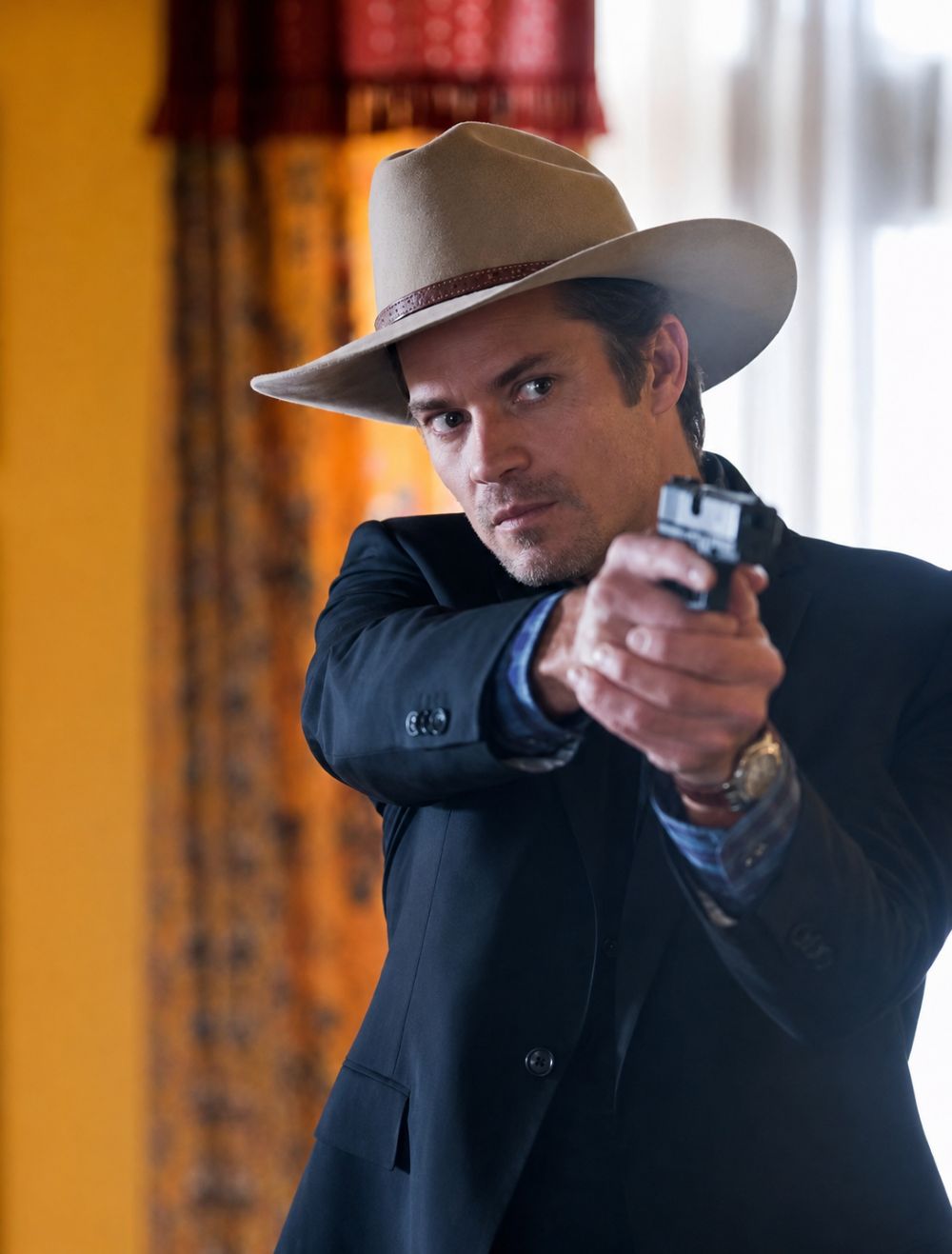
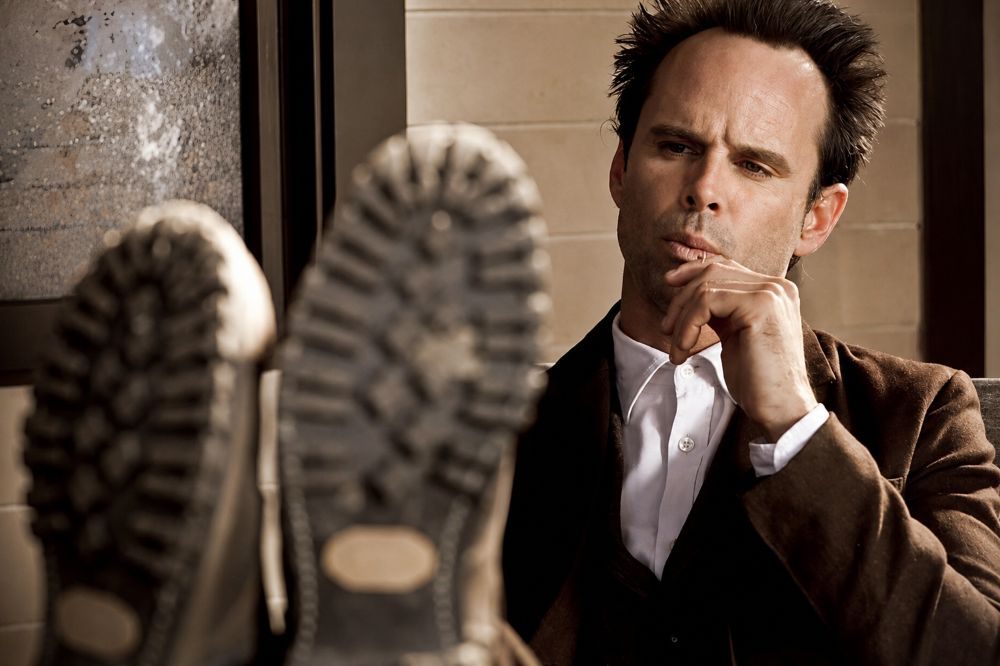
Boyd Crowder, as portrayed by Walton Goggins in Justified, stands as one of television’s most compelling villains, a character whose depth and complexity elevate him far beyond the typical antagonist. What makes Boyd so fascinating is his multidimensionality—he is at once a criminal mastermind, a charismatic preacher, and a man deeply rooted in the moral ambiguities of his Kentucky upbringing. Unlike one-dimensional villains who exist solely to oppose the hero, Boyd is a fully realized character with his own code of honor, twisted though it may be. His intelligence, wit, and ability to manipulate those around him make him a constant challenge for Raylan Givens, the show’s protagonist. Boyd doesn’t just oppose Raylan; he understands him, often mirroring his quick thinking and sharp tongue, which creates a dynamic tension that drives the series forward.

What truly sets Boyd apart is his ability to evolve throughout the series. He begins as a white supremacist with a violent streak, but his character arc takes him through a journey of self-discovery, reinvention, and even moments of redemption. Walton Goggins’ performance is a masterclass in balancing menace with charm, making Boyd both terrifying and oddly likable. His speeches, often laced with biblical references and folksy wisdom, reveal a man who sees himself as a kind of outlaw philosopher, justifying his actions through a warped moral lens. This intellectual and verbal sparring with Raylan—another man of sharp intellect and a complicated past—creates some of the show’s most electric scenes. Their relationship is less about good versus evil and more about two sides of the same coin, each man representing a different path taken from the same starting point.

Boyd’s role as a foil to Raylan is central to Justified’s appeal. Where Raylan is the cool, collected lawman who operates by a strict personal code, Boyd is the chaotic force who bends the rules to his will. Yet, both men share a deep connection to Harlan County and its culture of violence, loyalty, and survival. Their mutual respect, and even affection, adds layers to their rivalry. Boyd doesn’t just hate Raylan; he enjoys their cat-and-mouse game, often taunting him with a grin that suggests he’s always three steps ahead. This dynamic keeps the audience guessing—who will outsmart the other? Their confrontations are less about physical violence and more about psychological warfare, with Boyd frequently getting under Raylan’s skin by exposing his vulnerabilities.

Another aspect of Boyd’s greatness as a villain is his unpredictability. Just when it seems he’s cornered, he finds a way to flip the script, whether through sheer audacity, manipulation, or brute force. His ability to command loyalty from his followers, even as he betrays and discards them, speaks to his magnetic personality. Walton Goggins imbues Boyd with a physicality that’s both intimidating and mesmerizing—whether he’s calmly negotiating or exploding into rage, every movement feels deliberate and dangerous. This unpredictability makes him a constant threat, but it also makes him endlessly watchable. The audience is drawn to him, even as they root for Raylan to bring him down.

Ultimately, Boyd Crowder’s brilliance as a villain lies in his humanity. He’s not a monster; he’s a man shaped by his environment, his past, and his own flawed sense of justice. His relationship with Raylan is the heart of Justified, a dance between two men who are more alike than either would care to admit. Boyd forces Raylan to confront his own demons, while Raylan represents the path Boyd could have taken—if only he had chosen differently. Their final confrontation is a testament to the power of their dynamic: it’s not just about winning or losing, but about the legacy each leaves behind. Boyd Crowder, as written and performed, is a villain for the ages—one who challenges, fascinates, and lingers in the mind long after the screen fades to black.

Villain of the Day

Hero of the Day: Raylan Givens (Justified)


“You make me pull, I’ll put you down.” — Raylan Givens

U.S. Marshal Raylan Givens stands as one of television’s most compelling modern heroes, a character who embodies the contradictions of the American frontier in a contemporary setting. Created from the imagination of crime novelist Elmore Leonard, Raylan is a man who wears a Stetson and cowboy boots in an era of SUVs and cell phones, yet this anachronistic quality is not mere affectation but a statement of his character’s core philosophy. He seems to be a type of lawman born a century late, a man who would appear far more at home in the untamed frontier of the Old West than in the boardrooms and courthouses of modern Kentucky. He is an old-school lawman who lives by a personal code, a man who is as quick with a dry, cutting quip as he is with the Glock 17 he carries on his hip. His introduction in the series pilot, a showdown in a Miami restaurant, immediately establishes him as a man who operates on the edge, a true-blue hero who is nevertheless irresponsible, impatient, and troubled by his past. It is this tension between his heroic aspirations and his human flaws that makes him so fascinating to watch.

Raylan’s compelling nature is deeply rooted in the fact that he is not a clean-cut paragon of virtue but a man driven by a profound, barely concealed rage. As his ex-wife Winona observes, he is the angriest man she has ever known. This anger is the product of his harsh upbringing in Harlan County, Kentucky, where he was raised by a criminal father, Arlo, a man Raylan has spent his entire life trying not to become. The series constantly examines whether the sins of the father are visited upon the son, forcing Raylan to confront his own inherited demons. He suppresses his fury behind a calm, self-effacing demeanor, but it erupts in acts of incredible violence, which are almost always technically justified by his badge. This internal conflict makes him a psychologically rich character, as he struggles to be a good guy while wrestling with a brutish nature that often compels him toward the very lawlessness he is sworn to fight.

The brilliance of Raylan’s characterization is further enhanced by the world he inhabits, particularly his fraught relationship with his nemesis, Boyd Crowder. Boyd is not merely a villain but a mirror image of Raylan, a man who took a different path from the same origins. Their bond, forged in the coal mines of their youth, creates a relationship of mutual respect, intellectual equality, and inevitable, tragic conflict. The show was built around the idea that he and Boyd took opposite paths from the same origin. Where Raylan represents law tainted by hubris, Boyd represents crime tempered by a strange moral code, and their philosophical debates and cold-blooded confrontations elevate the show beyond a simple procedural. The viewer is left uncertain whether these two men are fated to kill one another or save one another, a tension that is central to the show’s enduring appeal.

This anachronistic quality is what truly separates Raylan Givens from the archetypal Western heroes of old, yet it also positions him as their spiritual heir. He is more akin to legendary Old West lawmen such as Wyatt Earp, Bass Reeves, and Seth Bullock—men who operated in territories where the law was often a suggestion and justice was dispensed at the barrel of a gun. Like Earp, Raylan possesses a quiet, intimidating presence that commands respect without demanding it. Like Reeves, he navigates a morally ambiguous world where the line between right and wrong is frequently blurred by personal history and regional loyalties. And like Bullock, he is a man of few words but swift action, quick to anger and quicker to draw. Raylan may wear a modern suit and carry a contemporary sidearm, but his soul belongs to the dusty streets of Dodge City or Deadwood. As his character evolves, especially in the revival Justified: City Primeval, he becomes a man fighting to come to terms with aging, fatherhood, and obsolescence, further testing whether his brand of frontier justice can apply beyond his home turf. This evolution ensures that the gunslinger myth is retooled for a modern audience, proving that the values of independence and ruggedness are not geographical but a matter of attitude.

Ultimately, Raylan Givens is a compelling hero because he refuses to be a simple one. He is a man who perpetually subverts his own archetype, a lawman who bends the law, a gentleman who is polite but ready to be brutal at the drop of a Stetson, and a loner who is inextricably tied to the people and place he desperately wants to escape. He is a hero for a cynical age, a man who makes the audience wrestle with the question of whether the ends truly justify the means—a question that is the very title of his show. By embodying the contradictions and complexities of modern life while carrying the spirit of the Old West in his bones, Raylan Givens proves that the Western is not dead; it simply evolved into a man in a Stetson, walking the thin line between law and justice.

Hero of the Day

Review: Justified (by Graham Yost)


“You do a good job of hiding it. And I suppose most folks don’t see it. But honestly? You’re the angriest man I have ever known.” — Winona Hawkins (describing Raylan Givens)

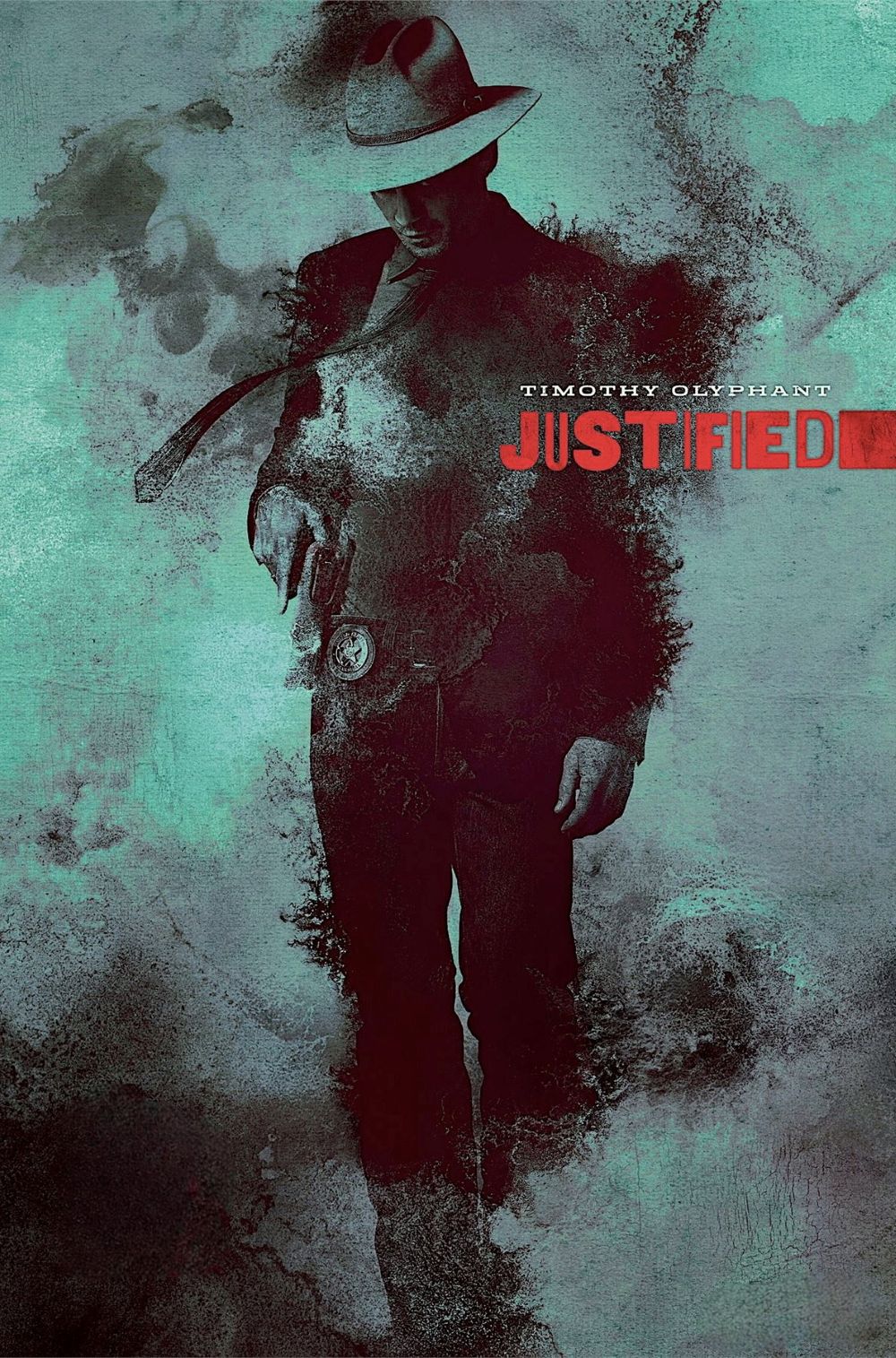
Justified is one of those rare TV shows that feels like a perfectly aged whiskey—smooth, rich, and with a kick that lingers long after you’ve finished a glass. Adapted from Elmore Leonard’s stories featuring the sharp-shooting, quick-witted U.S. Marshal Raylan Givens, the FX series is a masterclass in character-driven storytelling, sharp dialogue, and the kind of moral ambiguity that makes you question who you’re really rooting for. At the heart of it all is Timothy Olyphant as Raylan, a man who carries the weight of his past like a well-worn leather jacket, and Walton Goggins as Boyd Crowder, the charismatic, Bible-quoting criminal who might just be the most compelling villain—or antihero—you’ve ever seen on screen.

What makes Justified stand out in a sea of crime dramas is its refusal to take itself too seriously, even when the stakes are life-or-death. The show thrives on its dialogue, which crackles with the kind of wit and rhythm you’d expect from Leonard’s work. Raylan’s dry, understated humor is a constant delight, whether he’s trading barbs with a suspect, outsmarting a room full of criminals, or just trying to keep his cool in the face of his own family’s dysfunction. Olyphant delivers every line with a mix of charm and menace, making Raylan feel like a man who’s seen it all but hasn’t lost his sense of humor—or his moral compass, however bent it might be. There’s a scene early in the series where Raylan gives a criminal 24 hours to leave town, and the way Olyphant sells the quiet intensity of that moment is a testament to his ability to command the screen without raising his voice. He’s the kind of hero who doesn’t need to shout to be heard.

But as good as Olyphant is, Justified might just belong to Walton Goggins as Boyd Crowder. Boyd is the kind of character who could’ve been a cartoonish villain in lesser hands, but Goggins turns him into something far more fascinating. A former coal miner turned criminal mastermind, Boyd is equal parts philosopher, showman, and cold-blooded killer. He quotes the Bible one minute and pulls a trigger the next, all while delivering monologues that somehow make his twisted logic sound almost reasonable. Goggins’ performance is electric, and his chemistry with Olyphant is the kind of alchemy that elevates the entire series. Their dynamic is a dance—sometimes a waltz, sometimes a knife fight—where neither man is entirely sure who’s leading. Boyd isn’t just a thorn in Raylan’s side; he’s a dark reflection of him, a man who also grew up in the same rough-and-tumble world of Harlan County, Kentucky, but chose a different path. Their rivalry is the backbone of the show, and every scene they share is a masterclass in tension and subtext.

Then there’s Ava Crowder, Boyd’s sister-in-law and a force of nature in her own right, portrayed with fierce intelligence by Joelle Carter. Ava’s relationship with Boyd is a rollercoaster of love, hate, and everything in between. Their dynamic is just as compelling as the one between Raylan and Boyd, filled with a volatile mix of loyalty, betrayal, and an undeniable connection that neither can fully shake. Ava’s journey from a woman trying to escape her family’s criminal past to a power player in her own right is one of the show’s most compelling arcs. She’s tough, resourceful, and just as morally complex as the men around her, and her interactions with Boyd crackle with the same energy and tension as his showdowns with Raylan. Whether they’re working together, scheming against each other, or caught in some messy in-between, their relationship adds another layer of depth to the show’s already rich tapestry of characters.

The supporting cast is just as strong, filled with characters who feel like they’ve been lifted straight out of a Leonard novel. There’s Art Mullen, Raylan’s boss and the closest thing he has to a father figure, played with gruff warmth by Nick Searcy. And let’s not forget the various criminals, informants, and eccentric locals who populate Harlan County, each one memorable in their own right. Whether it’s the hilariously unhinged Dickie Bennett or the stoic, loyal Limehouse, the show’s roster of side characters ensures that every episode is packed with personality.

What’s so refreshing about Justified is that it never feels the need to over-explain itself. The dialogue is sharp and efficient, often delivering character development and plot twists in the same breath. The show trusts its audience to keep up, and it rewards that trust with some of the most satisfying writing on television. The banter isn’t just clever—it’s purposeful, revealing layers of the characters and their relationships without ever feeling like exposition. And the action? It’s as tight and precise as Raylan’s aim. The shootouts are sudden and brutal, but they’re never gratuitous. Every pull of the trigger feels earned, and the tension leading up to those moments is often as gripping as the violence itself.

The setting of Harlan County is almost a character in itself. The show paints a vivid picture of a place where the law is more of a suggestion than a rule, and where family loyalty often trumps justice. The rugged, coal-dusted landscape mirrors the moral grayness of the stories being told. This isn’t a world of clear-cut heroes and villains; it’s a world where everyone has their own code, and where the line between right and wrong is as blurry as the smoke from a freshly fired revolver. Raylan himself is a product of this environment, and his struggle to reconcile his past with his present is one of the show’s most compelling threads. He’s a man who left Harlan to become a marshal, but Harlan—and its ghosts—never really left him.

One of the show’s greatest strengths is its ability to balance humor and darkness. Even in its grimmest moments, Justified never loses its sense of fun. The writers have a knack for undercutting tension with a well-placed joke or a bit of absurdity, and the result is a show that’s as entertaining as it is thought-provoking. Whether it’s Raylan’s deadpan reactions to the chaos around him or Boyd’s theatrical antics, there’s always a moment to lighten the mood, even when the stakes are at their highest. This balance keeps the show from ever feeling too heavy, and it makes the darker moments hit even harder when they do arrive.

If there’s one thing Justified doesn’t get enough credit for, it’s its consistency. Over six seasons, the show rarely misfires. The writing remains sharp, the performances stay top-notch, and the stories continue to surprise. Even when it dips into more serialized storytelling in its later seasons, it never loses sight of what makes it special: the characters and their relationships. And when the series finally reaches its conclusion, it does so in a way that feels both satisfying and true to everything that came before. There are no easy answers in Justified, no neat bows tied around its themes. Instead, it leaves you with the sense that life—and justice—is messy, complicated, and often unfair.

At its core, Justified is a show about men and women shaped by their pasts, trying to carve out a future in a world that doesn’t always make it easy. Raylan Givens is a hero, but he’s not a saint. Boyd Crowder is a villain, but he’s not without his own twisted sense of honor. Ava Crowder is a survivor, navigating a world where loyalty is a currency and trust is a luxury. The beauty of the show is that it lets these characters exist in all their complexity, never forcing them into boxes they don’t fit into. And with dialogue that snaps like a twig underfoot and performances that bring every word to life, it’s a series that’s as rewarding to revisit as it is to experience for the first time. If you’re a fan of stories where the characters are as rich as the plot, and where every line of dialogue feels like it’s been polished to a shine, then Justified is the kind of show you’ll want to savor. It’s a modern classic, plain and simple.

Book and Film Review: Get Shorty (by Elmore Leonard and dir by Barry Sonnenfeld)


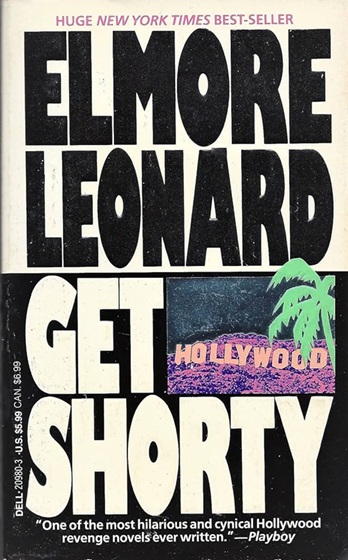
In 1995’s Get Shorty, John Travolta stars as Chili Palmer.

Chili is a loan shark for the mob, an effortlessly cool guy who lives in Miami and who loves to watch old movies.  Chili may work for the Mafia and he may make his living by intimidating people but he doesn’t seem like such a bad guy, especially when compared to someone like Ray “Bones” Barboni (Dennis Farina).  Bones is an uncouth and rather stupid gangster who steals Chili’s leather jacket from a restaurant.  Chili reacts by breaking Bones’s nose with just one punch.  Bones reacts by trying to shoot Chili but instead, he gets shot by Chili himself.  (The bullet only grazes his forehead.)  Chili can do all this because he’s protected by Momo (Ron Karasbatsos) but, after Momo drops dead after having to walk up several flights of stairs just to then be given a surprise birthday party, Chili suddenly finds himself working for Bones.  (This all happens in the first few minutes of this perfectly paced film.)

Bones, eager to humiliate Chili, sends him to Vegas to collect on a debt owed by a dry cleaner named Leo (David Paymer).  Leo is thought to be dead but Bones wants to collect the money from Leo’s widow.  It’s not the sort of thing that Chili likes to do so instead, he ends up going to Hollywood to collect a debt from B-movie director Harry Zimm (Gene Hackman).  Chili  happens to like Harry’s movies.  He also likes Harry’s current girlfriend and frequent co-star, actress Karen Flores (Rene Russo).

Chili ends up in Hollywood, a town where everyone has some sort of hustle going.  Chili finds himself dealing with drug dealers (Delroy Lindo), egocentric film stars (Danny DeVito), stuntmen-turned-criminals (James Gandolfini), and the widow (Bette Midler) of a screenwriter.  Chili also finds himself looking to escape from the debt collection business by becoming a film producer.  Harry has a script that he wants to make.  Chili proposes a film based on the story of Leo the dry cleaner.  Danny DeVito’s Martin Weir wants to be a “shylock” in a movie just so he can show off his intimidating stare.  (“Is this where I do the look?” he asks while listening to the pitch.)  Get Shorty is a whip-smart satire of Hollywood, one in which the gangsters want to be film people and all of the film people want to be gangsters.  It features wonderful performances from the entire cast, with Travolta epitomizing cool confidence as Chili Palmer.  Hackman, Russo, DeVito, Gandolfini, and Lindo are all excellent in their supporting roles but I have to admit my favorite performance in the film is probably given by Dennis Farina, who turns Bones Barnobi into a very believable (and a believably dangerous) buffoon.

Get Shorty is based on a book by Elmore Leonard.  First published in 1990, the book is a quick and entertaining read, one that reminds us that Leonard was one of the best “genre” writers of his time.  When I read that book, I was surprised to see how closely the movie stuck to the book’s plot.  Much of the film’s dialogue is right there in the book.  It’s a book that practically shouts, “Turn me into a movie!” and fortunately, director Barry Sonnenfeld did just that.

Film Review: Jackie Brown (dir by Quentin Tarantino)


It took me a while to really appreciated Jackie Brown.

I was nineteen and in college when I first watched the movie.  A friend rented it and we watched it with the expectation that it would be another Tarantino film that would be full of violence, fast music, and stylish characterizations.  And, of course, Jackie Brown did have all three of those.  But it was also a far more melancholy film than what we were expecting and compared to something like Kill Bill, Jackie Brown definitely moved at its own deliberate pace.  That’s a polite way of saying that, at times, the film seemed slow.  It seemed like it took forever for the story to get going and, even once it became clear that Jackie Brown (Pam Grier) and Max Cherry (Robert Forster) were going to steal from Ordell Robbie (Samuel L. Jackson), it still felt like an oddly laid back heist.  Robert de Niro, the film’s biggest star, played a guy who seemed to be brain dead.  Bridget Fonda brought an interesting chaotic energy to the film but her character was disposed of in an almost off-hand manner.  The whole thing just felt off.  I appreciated the performances.  I appreciated the music on the soundtrack.  But I felt like it was one of Tarantino’s weaker films.

As I’ve gotten older, I’ve come to better appreciate Jackie Brown.  First released in 1997 and adapted from a novel by Elmore Leonard, Jackie Brown finds Quentin Tarantino at his most contemplative.  Indeed, Tarantino wouldn’t direct anything quite as humanistic until he did Once Upon A Time In Hollywood.  If the heist seemed rather laid back, that’s because Jackie Brown really isn’t a heist film.  It’s a film about aging, starring two icons of 70s exploitation.  Robert Forster was 56 when he played bail bondman Max Cherry while Pam Grier was 48 when she was cast as Jackie Brown, the flight attendant turned smuggler.  Jackie and Max two middle-aged people faced with a world that doesn’t really make much sense to them anymore.  (Obviously, it’s easier for me to understand them now than it was when I was nineteen and I felt like the future was unlimited.)  Max bails people out of jail and it’s obvious that he still has a shred of idealism within him.  He actually does care about the people he gets out of jail and he’s disgusted by Ordell’s callous attitude towards the people who work for him.  Jackie is a flight attendant who, when we first see her, looks like she could have just stepped out of a 1970s airline commercial.  Ripping off Ordell isn’t just something that she’s doing for revenge or to protect herself, though there’s certainly an element of both those motivations in her actions.  This is also her chance to finally have something for her.  Jackie and Max are two lost souls who find each other and wonder where the time is gone.  All of those critics who have wondered, over the years, when Quentin Tarantino would make a mature movie about real people with real problems need to rewatch Jackie Brown.

Of course, it’s still a Quentin Tarantino film.  And that means we get a lot of scenes of Samuel L. Jackson talking.  This is one of Jackson’s best performances.  Ordell is definitely a bad guy and most viewers will be eager to see him get his comeuppance but, as played by Jackson, he’s also frequently very funny and definitely charismatic.  One can understand how Ordell lures people into his trap.  Jackson loves to watch video tapes of women shooting guns.  He allows De Niro’s Louis to crash at his place and the scene where Ordell realizes that Louis is thoroughly incompetent is brilliantly acted by both men.  And then you have Bridget Fonda, as a force of pure sunny chaos.  Jackson, De Niro, and Fonda are definitely a watchable trio, even if the film rightly belongs to Pam Grier and Robert Forster.

The older I get, the more I appreciate Jackie Brown.  This is the film where Tarantino revealed that there was more to his artistic vision than just movie references and comic book jokes.  This film takes Tarantino’s style and puts it in the real world.  It’s Tarantino at his most human.

High Noon, Part II: The Return of Will Kane (1980, directed by Jerry Jameson)


One year after throwing his tin star to the ground and riding out of town in disgust at the cowardice of the citizens who he once served, former Marshal Will Kane (Lee Majors, stepping into the role that won Gary Cooper an Oscar) returns to Hadleyville with his bride, Amy (Katherine Cannon).

Hadleyville has a new sheriff.  When Kane angrily left, he was replaced by J.D. Ward (Pernell Roberts), a corrupt tyrant who runs the town with an iron fist and who is more interested in making money than upholding the law.  Ward is determined to collect the bounty on Ben Irons (David Carradine), a reformed outlaw who swears that he’s innocent.  Kane decides to try to help Ben escape from Ward and his posse, which leads to potentially disastrous consequences for him.  Will the town finally show the courage necessary to stand behind Kane or will he once again be forced to go it alone?

High Noon, Part II is a made-for-TV movie.  It was obviously designed to be a pilot for a potential television series, one that would have featured the weekly adventures of Will Kane in Hadleyville.  As far as made-for-TV westerns are concerned, it’s about average, neither particularly good nor bad.  Lee Majors may not have been a great actor but he was believable in western roles and both Pernell Roberts and David Carradine give good performances as well.  Jerry Jameson directs in a workmanlike manner.  The story’s predictable but it’s a western so what do you expect?

The main problem with the film is that it’s set up to be a sequel to a film that never needed one.  When Gary Cooper threw that star in the dust and climbed up on that wagon with Grace Kelly in High Noon, the whole point of the story was that Will Kane was never going to return to Hadleyville because the citizens of Hadleyville deserted him when he most needed them.  Hadleyville didn’t deserve Will Kane.  That’s what set High Noon apart from other westerns.  Having Kane return to Hadleyville and once again pick up the tin star negates everything that made High Noon so effective.  The whole point of the ending was that Will Kane was never going to return but, according to this movie, he did and forgave the town for the unforgivable.  It’s impossible to watch High Noon II without thinking about how it goes against everything that the first High Noon was all about.

Oddly enough, the film’s forgettable screenplay was written by the great Elmore Leonard.  Leonard did better work before this film and he would do better work afterwards.


A Movie A Day #316: 52 Pick-Up (1986, directed by John Frankenheimer)


Harry Mitchell (Roy Scheider) is a businessman who has money, a beautiful wife named Barbara (Ann-Margaret), a sexy mistress named Cini (Kelly Preston), and a shitload of trouble.  He is approached by Alan Raimey (John Glover) and informed that there is a sex tape of him and his mistress.  Alan demands $105,000 to destroy the tape.  When Harry refuses to pay, Alan and his partners (Clarence Williams III and Robert Trebor) show up with a new tape, this one framing Harry for the murder of Cini.  They also make a new demand: $105,000 a year or else they will release the tape.  Can Harry beat Alan at his own game without harming his wife’s political ambitions?
Based on a novel by the great Elmore Leonard and directed by John Frankenheimer, 52 Pick-Up is one of the best films to ever come out of the Cannon Film Group.  Though it may not be as well-known as some of his other films (like The Manchurian Candidate, Seconds, Black Sunday, and Ronin), 52 Pick-Up shows why Frankenheimer was considered to be one of the masters of the thriller genre.  52 Pick-Up is a stylish, fast-paced, and violent thriller.  John Glover is memorably sleazy as the repellent Alan and the often underrated Roy Scheider does an excellent job of portraying Harry as a man who starts out smugly complacent and then becomes increasingly desperate as the story play out.

One final note: This movie was actually Cannon’s second attempt to turn Elmore Leonard’s novel to the big screen.  The first attempt was The Ambassador, which ultimately had little to do with Leonard’s original story.  Avoid The Ambassador but see 52 Pick-Up.

A Movie A Day #167: Stick (1985, directed by Burt Reynolds)


Stick (Burt Reynolds) is a veteran car thief who has just gotten out of prison.  No sooner has Stick arrived home in Florida then he accompanies his friend, Rainy (Jose Perez), on a drug deal that goes bad.  When Rainy is killed, Stick goes into hiding.  He manages to get a stable job, working as a chauffeur for an eccentric millionaire (George Segal).  He gets a new girlfriend (Candice Bergen) and starts to bond with his teenage daughter (Tricia Leigh Fisher).  Stick wants to go straight but, before he can, he knows that he has to confront the men who murdered Rainy.
Stick starts out strong.  The first half of the film finds Burt, who was often as underrated as a director as he was as an actor, in pure Sharky’s Machine mode, mixing the steamy Florida atmosphere with quirky character comedy and hardboiled action.  Adapting his own novel, Elmore Leonard wrote the screenplay and Stick seems like a classic Leonard hero, a criminal with his own moral code.  

But then Stick falls apart during the second half and it becomes obvious why both Reynolds and Leonard often cited this film as being one of the biggest disappointments of their careers.  Universal Studios disliked Burt’s first cut of the film and brought in a second screenwriter, who beefed up the action scenes and added the subplot with Stick’s teenage daughter.  Reynolds reshot the second half of the movie, no longer playing Stick as a tough criminal but instead as another variation on the Bandit.  The end result is a very disjointed movie, with Burt looking bored.

It does not help that the movie’s main villain is played by Charles Durning, who wears an orange fright wig and several Hawaiian shirts.  Durning was an actor who gave many great performances but never was he as miscast as when he played a drug dealer in Stick.

More Of Bronson’s Best: Mr. Majestyk (1974, directed by Richard Fleischer)


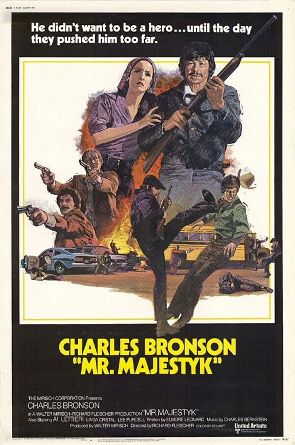
Mr_Majestyk_movie_posterWhat happens when you combine the great tough guy writer Elmore Leonard with the great tough guy actor Charles Bronson?

You get Mr. Majestyk, one of Bronson’s finest films.

Vince Majestyk (Bronson) may be a former U.S. Army Ranger instructor and a decorated Vietnam vet but now that he has returned home to Colorado, all he cares about is running his watermelon farm.  With a lucrative harvest approaching, Majestyk hires a group of unionized Mexican migrant workers, led by the fiery Linda Chavez (Linda Cristal), to pick his crops.  When a local criminal named Bobby Kopas (Paul Koslo) shows up and demands that Majestyk hire his drunken crew instead, Majestyk does what Bronson does best.  He gives Kopas an ass-kickin’ beat down.

After Kopas charges him with assault, the local police arrest Majestyk and, despite his request that he be allowed three days to finish harvesting his crop, Majestyk is thrown in jail.  Also in the jail is a Mafia hitman named Frank Renda (Al Lettieri).  Renda may be a tough guy but nobody’s tougher than Vince Majestyk.  When Renda’s associates attempt to hijack a prison bus, Majestyk ends up hijacking it instead.  Majestyk plans to hold Renda hostage until the police agree to give him his three days of freedom so he can get back to his farm.  Renda even offers to pay him off but Majestyk doesn’t care about his money.  He just cares about melons.

Because he was the only 1970s action star who could be believable as both a decorated combat veteran and a no-nonsense watermelon farmer, Charles Bronson is the only actor who could have brought Mr. Majestyk to life.  Before he became an actor, Bronson worked for a living.  From the age of ten until he enlisted in the Army, Bronson worked in the Pennsylvania coal mines, earning one dollar for each ton of coal that he mined.  Though Bronson was never a great actor, his legitimately working class background allowed him to bring an authenticity to a role like Vince Majestyk that most other actors would have lacked.  When Bronson says that all he cares about is bringing in the harvest on time, you believe him just as much as you believe him when he’s beating up Paul Koslo or hijacking a prison bus.

The rest of the cast is full of good 1970s actors who have never really been given their due.  Al Lettieri may be best known for playing Sollozzo in The Godfather but he also does a good job as Frank Renda.  Paul Koslo plays another one his sleazy villains here and does a great job as Bobby Kopas.

Mr. Majestyk was directed by Richard Fleischer but, with its colorful characters, working class hero, and modernized brand of frontier justice, the film is clearly the work of Elmore Leonard. Though Mr. Majestyk is credited as being based on a novel by Leonard, Leonard actually wrote the screenplay before the novel.

The combination of Elmore Leonard and Charles Bronson makes Mr. Majestyk one of the best action films of the 1970s.

majestyk_rifle


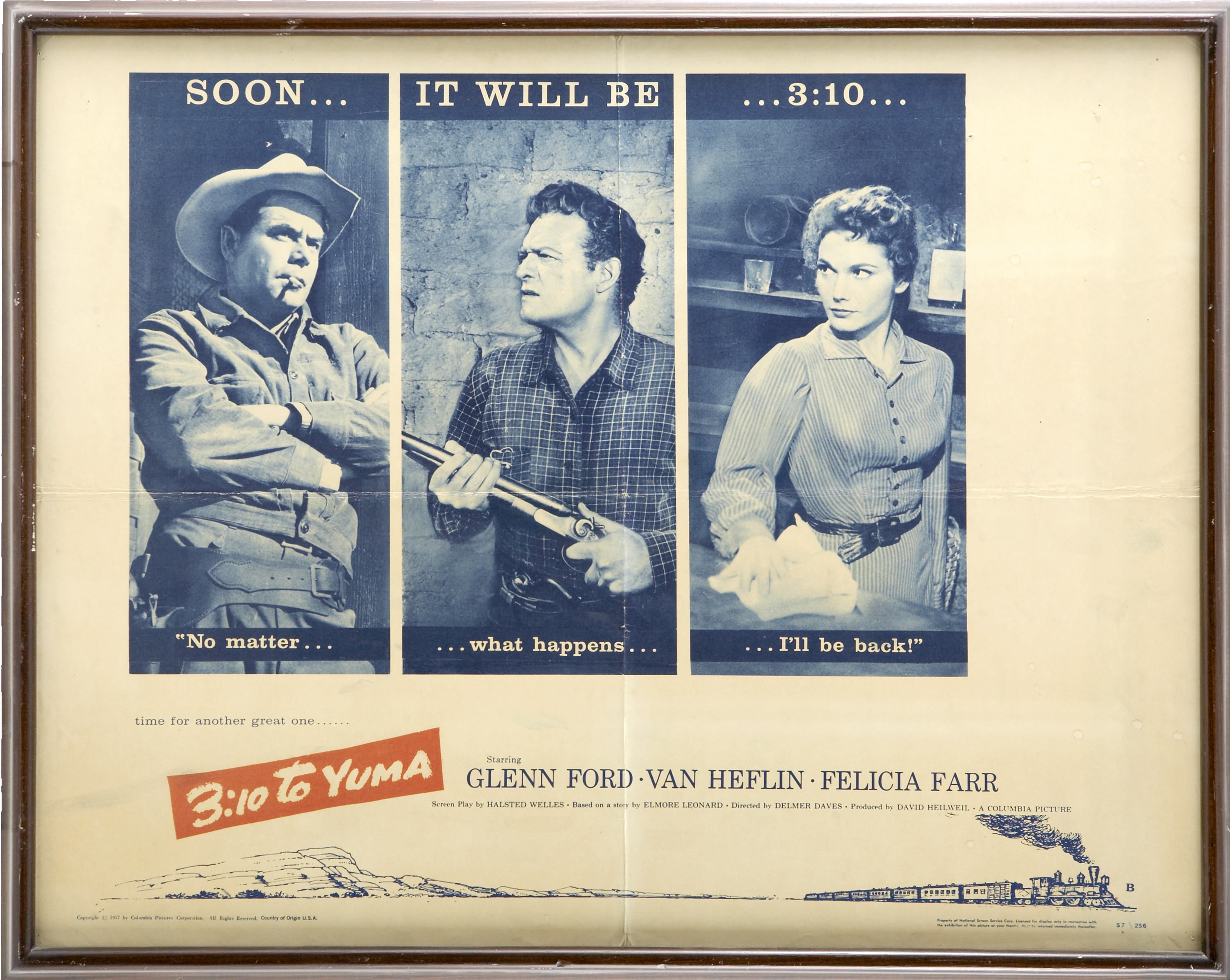
Happy 100th Birthday Glenn Ford: 3:10 TO YUMA (Columbia 1957)


gary loggins's avatarcracked rear viewer

3101

Actor Glenn Ford was born 100 years ago today in Sainte-Christine-d’Auergne, Quebec, Canada. Yes, the All-American star was actually Canadian, becoming a U.S. citizen in 1939. That same year, Ford signed a contract with Columbia Pictures and began a long, prosperous career with the studio. After getting noticed in films like HEAVEN WITH A BARBED WIRE FENCE, SO ENDS OUR NIGHT, and TEXAS (his first Western), Ford took a break from acting and joined the Marine Corps to serve in World War II.

3102

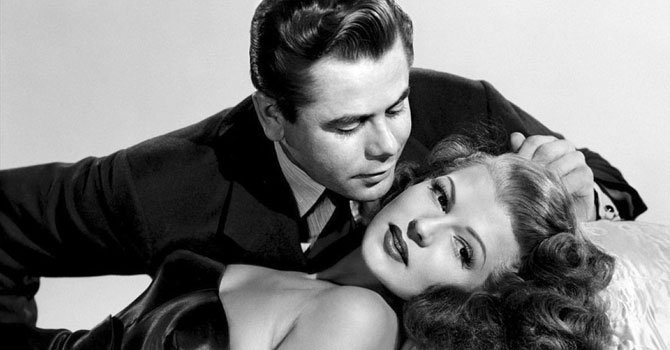
After the war, Glenn Ford was one of Hollywood’s top leading men. He hit it big with 1946’s GILDA, co-starring Rita Hayworth in what may very well be the first true film noir. Soon he found himself the hero in a string of successes: FRAMED, MAN FROM THE ALAMO, THE BIG HEAT , BLACKBOARD JUNGLE, JUBAL, and TEAHOUSE OF THE AUGUST MOON. But my favorite Ford role casts him…

View original post 553 more words