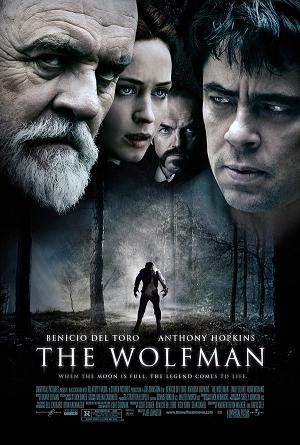
Horror Film Review: The Wolfman (dir by Joe Johnston)


I have to admit that I’m always a little bit surprised to discover how many people really don’t like the 2010 film, The Wolfman.

I mean, I’ll be the first to admit that it may not have been the greatest film ever made but the amount of negative feelings that this film has managed to generate over the years seems, to me, to be a bit out of proportion.  Essentially, it’s just a silly film about a werewolf.

Yes, it is a remake of The Wolf Man and we’re all honor-bound to dislike remakes but, if we’re going to be absolutely honest, the original Wolf Man was sometimes pretty silly too.  If anything, the original’s success is largely due to the heartfelt work of Claude Rains in the role of the Wolf Man’s father.  Yes, the original Wolf Man is a classic but remaking it is not exactly sacrilege.

In the remake, Benicio Del Toro takes over the role of Larry Talbot, who is reimagined as a Shakespearean actor who has a history of mental instability.  Del Toro is not exactly convincing as an Englishman, though the same could be said of Lon Chaney, Jr.  However, nobody broods with quite the panache of Benicio Del Toro and that’s what was needed for the remake’s version of Larry Talbot.  If Lon Chaney, Jr. played Larry as being a dumb lug, Del Toro plays Larry as being a tortured artist.

Anthony Hopkins takes over the old Claude Rains role.  Just as it’s difficult to imagine Del Toro as being English, it’s next to impossible to imagine him sharing any DNA with Anthony Hopkins.  And yet, I’m really glad that Hopkins was cast in the role.  Of course, in the remake, the character of John Talbot has been totally reimagined.  He’s now something of a bitter and sarcastic alcoholic, a negligent father who always seem to be amused at some mean-spirited joke that only he can understand.  I imagine that if I asked Hopkins, he’d say that he did this role for the money but there’s nothing wrong with that.  Some of Hopkins’s best performances have been the ones that he subsequently claimed to have done only for the money.  Freed from any obligation to give a nuanced or subtle performance, Hopkins goes totally over-the-top and it’s actually a lot of fun to watch.  In The Wolfman, Hopkins turns the delivery of bitter bon mots and erduite insults into an art form.

Watching the film’s first half, we all know what’s going to happen.  Gypsies are going to show up in the woods near Talbot Hall and paranoid villagers are going to blame them for everything that happens.  Larry is going to get bitten by a werewolf and transform every night when the moon is full.  Larry is going to fall in love with Gwen (Emily Blunt) but, for her own protection, will try to send her away.  An arrogant but clever inspector, Francis Abberline (Hugo Weaving, playing a version of the real-life detective who inspired the role played by Johnny Depp in From Hell), is going to arrive from London to investigate all the recent deaths…

About halfway through, The Wolfman takes a totally unexpected turn.  I won’t spoil it here, just in case you haven’t seen the movie.  I know a lot of people don’t care much for the big twist but I happened to love it.  Yes, it doesn’t necessarily make a lot of sense and it’s all a bit overdone but so what?  It’s exactly the type of weird twist that a movie like this needs.  It all leads to a final confrontation, one that is as exuberantly silly as the original’s conclusion was somber and tragic.

The key to enjoying The Wolfman is to accept it for what it is, an occasionally dumb and definitely not-to-be-taken-seriously movie that features some appropriately atmospheric cinematography, gorgeously gothic production design, and some very talented actors.  (I especially enjoyed Weaving’s performance as Abberline.)  A classic it may not be, but it’s still a fun little movie if you’re in the right mood for it.
Here’s What Won At The Emmys Last Night!


Last night, Lisa Marie did not watch the Emmys because she says that, “I’m just not feeling TV this year.”  If Twin Peaks had been eligible to be nominated, I bet it would have been a different story!

Instead, she asked me to watch the ceremony and let everyone know what I thought.  It needed less politics and more cats.

Here’s the list of winners:

COMEDY

BEST COMEDY SERIES
“Atlanta”
“Black-ish”
“Masters of None”
“Modern Family”
“Silicon Valley”
“Unbreakable Kimmy Schmidt”
X — “Veep”

BEST COMEDY ACTRESS
Pamela Adlon, “Better Things”
Jane Fonda, “Grace and Frankie”
Allison Janney, “Mom”
Ellie Kemper, “Unbreakable Kimmy Schmidt”
X — Julia Louis-Dreyfus, “Veep”
Tracee Ellis Ross, “Black-ish”
Lily Tomlin, “Grace and Frankie”

BEST COMEDY ACTOR
Anthony Anderson, “Black-ish”
Aziz Ansari, “Master of None”
Zach Galifianaks, “Baskets”
X — Donald Glover, “Atlanta”
William H. Macy, “Shameless”
Jeffrey Tambor, “Transparent”

BEST COMEDY SUPPORTING ACTRESS
Vanessa Bayer, “Saturday Night Live”
Anna Chlumsky, “Veep”
Kathryn Hahn, “Transparent”
Leslie Jones, “Saturday Night Live”
Judith Light, “Transparent”
X — Kate McKinnon, “Saturday Night Live”

BEST COMEDY SUPPORTING ACTOR
Louie Anderson, “Baskets”
X — Alec Baldwin, “Saturday Night Live”
Tituss Burgess, “Unbreakable Kimmy Schmidt”
Ty Burrell, “Modern Family”
Tony Hale, “Veep”
Matt Walsh, “Veep”

BEST COMEDY DIRECTING
X — “Atlanta” (“B.A.N.”)
“Silicon Valley” (“Intellectual Property”)
“Silicon Valley” (“Server Error”)
“Veep” (“Justice”)
“Veep” (“Blurb”)
“Veep” (“Groundbreaking”)

BEST COMEDY WRITING
“Atlanta” (“B.A.N.”)
“Atlanta” (“Streets on Lock”)
X — “Master of None” (“Thanksgiving”)
“Silicon Valley” (“Success Failure”)
“Veep” (“Groundbreaking”)
“Veep” (“Georgia”)

DRAMA

BEST DRAMA SERIES
“Better Call Saul”
“The Crown”
X — “The Handmaid’s Tale”
“House of Cards”
“Stranger Things”
“This is Us”
“Westworld”

BEST DRAMA ACTRESS
Viola Davis, “How to Get Away with Murder”
Claire Foy, “The Crown”
X — Elisabeth Moss, “The Handmaid’s Tale”
Keri Russell, “The Americans”
Evan Rachel Wood, “Westworld”
Robin Wright, “House of Cards”

BEST DRAMA ACTOR
X — Sterling K. Brown, “This is Us”
Anthony Hopkins, “Westworld”
Bob Odenkirk, “Better Call Saul”
Matthew Rhys, “The Americans”
Liev Schreiber, “Ray Donovan”
Kevin Spacey, “House of Cards”
Milo Ventimiglia, “This is Us”

BEST DRAMA SUPPORTING ACTRESS
Uzo Aduba, “Orange is the New Black”
Millie Bobby Brown, “Stranger Things”
X — Ann Dowd, “The Handmaid’s Tale”
Chrissy Metz, “This is Us”
Thandie Newton, “Westworld”
Samira Wiley, “The Handmaid’s Tale”

BEST DRAMA SUPPORTING ACTOR
Jonathan Banks, “Better Call Saul”
David Harbour, “Stranger Things”
Ron Cephas Jones, “This is Us”
Michael Kelly, “House of Cards”
X — John Lithgow, “The Crown”
Mandy Patinkin, “Homeland”
Jeffrey Wright, “Westworld”

BEST DRAMA DIRECTING
“Better Call Saul” (“Witness”)
“The Crown” (“Hyde Park Corner”)
“The Handmaid’s Tale” (“The Bridge”)
X — “The Handmaid’s Tale” (“Offred”)
“Homeland” (“America First”)
“Stranger Things” (“Chapter One: The Vanishing of Will Byers”)
“Westworld” (“The Bicameral Mind”)

BEST DRAMA WRITING
“The Americans” (“The Soviet Division”)
“Better Call Saul” (“Chicanery”)
“The Crown” (“Assassins”)
X — “The Handmaid’s Tale” (“Offred”)
“Stranger Things” (“Chapter One: The Vanishing of Will Byers”)
“Westworld” (“The Bicameral Mind”)

MOVIE/LIMITED SERIES

BEST LIMITED SERIES
X — “Big Little Lies”
“Fargo”
“Feud: Bette and Joan”
“Genius”
“The Night Of”

BEST TV MOVIE
X — “Black Mirror: San Junipero”
“Christmas of Many Colors”
“The Immortal Life of Henrietta Lacks”
“Sherlock: The Lying Detective”
“The Wizard of Lies”

BEST MOVIE/MINI ACTRESS
Carrie Coon, “Fargo”
Felicity Huffman, “American Crime”
X — Nicole Kidman, “Big Little Lies”
Jessica Lange, “Feud: Bette and Joan”
Susan Sarandon, “Feud: Bette and Joan”
Reese Witherspoon, “Big Little Lies”

BEST MOVIE/MINI ACTOR
X — Riz Ahmed, “The Night Of”
Benedict Cumberbatch, “Sherlock: The Lying Detective”
Robert De Niro, “The Wizard of Lies”
Ewan McGregor, “Fargo”
Geoffrey Rush, “Genius”
John Turturro, “The Night Of”

BEST MOVIE/MINI SUPPORTING ACTRESS
Judy Davis, “Feud: Bette and Joan”
X — Laura Dern, “Big Little Lies”
Jackie Hoffman, “Feud: Bette and Joan”
Regina King, “American Crime”
Michelle Pfeiffer, “The Wizard of Lies”
Shailene Woodley, “Big Little Lies”

BEST MOVIE/MINI SUPPORTING ACTOR
Bill Camp, “The Night Of”
Alfred Molina, “Feud: Bette and Joan”
X — Alexander Skarsgard, “Big Little Lies”
David Thewlis, “Fargo”
Stanley Tucci, “Feud: Bette and Joan”
Michael Kenneth Williams, “The Night Of”

BEST MOVIE/MINI DIRECTING
X — “Big Little Lies”
“Fargo” (“The Law of Vacant Places”)
“Feud: Bette and Joan” (“And the Winner Is”)
“Genius” (“Einstein: Chapter One”)
“The Night Of” (“The Art of War”)
“The Night Of” (“The Beach”)

BEST MOVIE/MINI WRITING
“Big Little Lies”
X — “Black Mirror: San Junipero”
“Fargo” (“The Law of Vacant Places”)
“Feud: Bette and Joan” (“And the Winner Is”)
“Feud: Bette and Joan” (“Pilot”)
“The Night Of” (“Call of the Wild”)

VARIETY/REALITY

BEST REALITY COMPETITION PROGRAM
“The Amazing Race”
“Amercan Ninja Warrior”
“Project Runway”
“RuPaul’s Drag Race”
“Top Chef”
X — “The Voice”

BEST VARIETY TALK SERIES
“Full Frontal with Samantha Bee”
“Jimmy Kimmel Live”
X — “Last Week Tonight with John Oliver”
“Late Late Show with James Corden”
“Late Show with Stephen Colbert”
“Real Time with Bill Maher”

BEST VARIETY SKETCH SERIES
“Billy on the Street”
“Documentary Now”
“Drunk History”
“Portlandia”
X — “Saturday Night Live”
“Tracey Ullman’s Show”

BEST VARIETY SERIES DIRECTING
“Drunk History”
“Jimmy Kimmel Live”
“Last Week Tonight with John Oliver”
“Late Show with Stephen Colbert”
X — “Saturday Night Live”

BEST VARIETY SERIES WRITING
“Full Frontal with Samantha Bee”
X — “Last Week Tonight with John Oliver”
“Late Night with Seth Meyers”
“Late Show with Stephen Colbert

A Movie A Day #112: The Trial (1993, directed by David Jones)


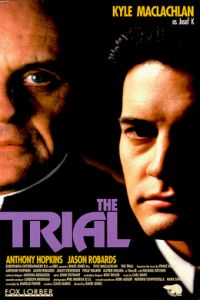
One morning, in turn of the century Prague, Josef K. (Kyle MacLachlan) wakes up to discover that two detectives are in his room.  They tell him that he is under arrest but they do not tell him the charges.  Josef remains free to go about his everyday life but he must report to the court whenever the court deems to see him.  No matter where Josef turns or who he talks to, he cannot get any answers concerning what he has been charged with.  Even his disinterested attorney (Jason Robards) can not give him a straight answer on why he is being prosecuted.  No matter how much Josef protests that he is innocent of whatever has been accused of, his fate has already been decided.
On paper, this film version of Franz Kafka’s classic novel sound like it should be a masterpiece.  The film was shot on location in Prague, the script was written by Harold Pinter, and Kyle MacLachlan seems like the perfect choice for Josef K.  Unfortunately, director David Jones takes a very straightforward approach to the material and does not exploit the story’s nightmarish qualities.  This is a version of Kafka that could easily play on Masterpiece Theater.  (The perfect choice to direct The Trial would have been MacLachlan’s frequent director, David Lynch.)  MacLachlan does well as Josef K. but he is overshadowed by a steady and distracting stream of cameos from actors like Anthony Hopkins, Alfred Molina, and David Thewlis.

Despite not being totally faithful to its source material, Orson Welles’s 1962 adaptation, which stars Anthony Perkins as Josef K., remains the version to see.

Embracing the Melodrama Part II #89: Legends of the Fall (dir by Ed Zwick)


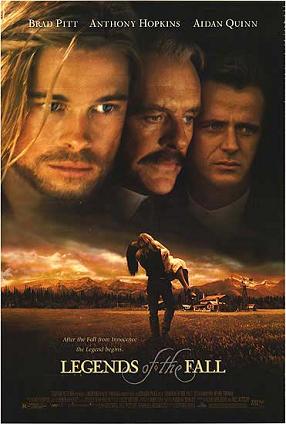
LegendsoffallposterWhen I first started to watch the 1994 film Legends of the Fall on Encore, I was a little bit concerned when I discovered that it was directed by Ed Zwick.  After all, Zwick also directed Love and Other Drugs, which is one of the worst and most insulting films of all time.  In fact, I nearly stopped watching when I saw Zwick’s name.  But, largely because I want to finish up this series of melodramatic film reviews at some point in the near future, I decided to go ahead and watch the film.

And it turned out that Legends of the Fall is not a bad film.  I probably would have enjoyed it more if I had seen it in a movie theater as opposed to on television but, considering that it was directed by Ed Zwick, Legends of the Fall is definitely watchable.  If nothing else, it’s better than Love and Other Drugs.

Legends of the Fall tells the story of the Ludlows, a family that lives on a Montana ranch at the start of the 2oth Century.  Starting with the final days of the Indian wars and proceeding through World War I and prohibition, Legends of the Fall covers a lot of historical events but does so in a very Hollywood way, which is to say that all of the main characters dress like they’re from the past but they all have very modern social attitudes.  In this case, Col. William Ludlow (Anthony Hopkins) may be a wealthy white military veteran but he’s also totally pro-Native American.  And, of course, all the local Native Americans love him, despite the fact that he’s a representative of the institutions that have destroyed their way of life.

Anyway, Col. Ludlow has three sons.  The oldest, Alfred (Aidan Quinn), is serious and responsible. The youngest, Samuel (Henry Thomas), is naive and idealistic.  And the middle child is Tristan (Brad Pitt), who is wild and rebellious and looks like Brad Pitt.  You have to wonder how the same gene pool could produce both Aidan Quinn and Brad Pitt.

As the film begins, Samuel has returned from studying at Harvard.  With him is his fiancée, Susannah (Julia Ormond, who has really pretty hair in this movie).  Though she loves Samuel, Susannah finds herself attracted to Tristan, largely because Tristan looks like Brad Pitt.  Tristan is also attracted to Susannah but he would never betray his younger brother.  In fact, when Samuel announces that he’s enlisted in the Canadian army so that he can fight in World War I, Tristan and Alfred soon do the exact same thing.

War is Hell, which is something that Samuel discovers when he’s gunned down by a bunch of German soldiers.  Tristan responds by cutting Samuel’s heart out of his body and sending it back to Montana.  He then proceeds to go a little crazy and when we next see Tristan, he’s uniform is decorated with the scalps of dead Germans.

Meanwhile, Alfred has been wounded in battle and is sent back to Montana.  Eventually, he ends up married to Susannah.  And then Tristan comes back home and…

Well, a lot of stuff happens after Tristan returns.  In fact, you could even argue that too much happens.  Zwick obviously set out to try to make Legends of the Fall into an old school Hollywood epic but far too often, it seems like he’s mostly just copying scenes from other films.  There’s a hollowness at the center of Legends of the Fall and the end result is a film that’s visually gorgeous and thematically shallow.

And yet, you should never underestimate the importance of looking good.  Legends of the Fall is a beautiful film to look at and so is Brad Pitt.  I wouldn’t necessarily say that Brad gives a particularly good performance here because, to be honest, Tristan is such an idealized character that I doubt anyone could really make him believable.  But the Brad Pitt of 1994 looked so good and had such a strong screen presence that it didn’t matter that he wasn’t as good an actor as the Brad Pitt of 2015.  Legends of The Fall is one of those movies that can get by on pure charisma and fortunately, Brad Pitt is enough of a movie star to make the film work.

Legends of the Fall is not a great film but it’s still not a bad way to waste 120 minutes.  (Of course, the film itself lasts 133 minutes but still…)

Shattered Politics #80: Bobby (dir by Emilio Estevez)


Bobby_poster

A few years ago, I was on twitter when I came across someone who had just watched The Breakfast Club.  

“Whatever happened to Emilio Estevez?” she asked.

Being the know-it-all, obsessive film fan that I am, I tweeted back, “He’s a director.”

Of course, I could not leave well enough along.  I had to send another tweet, “He directed a movie called Bobby that got nominated for bunch of Golden Globes.”

“Was it any good?” she wrote back.

“Never seen it,” I wrote back, suddenly feeling very embarrassed because, if there’s anything I hate, it’s admitting that there’s a film that I haven’t seen.

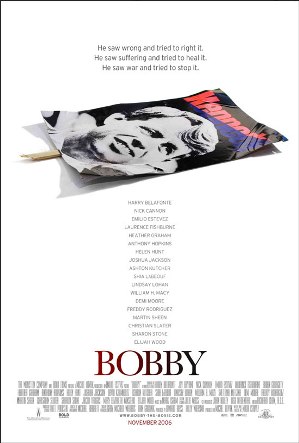
However, Shattered Politics gave me an excuse to finally sit down and watch Bobby.  So now, I can now say that I have watched this 2006 film and … eh.

Listen, I have to admit that I really hate giving a film like Bobby a lukewarm review because it’s not like Bobby is a bad film.  It really isn’t.  As a director, Emilio Estevez is a bit heavy-handed but he’s not without talent.  He’s good with actors.  Bobby actually features good performances from both Lindsay Lohan and Shia LaBeouf!  So, give Estevez that.

And Bobby is a film that Estevez spent seven years making.  It’s a film that he largely made with his own money.  Bobby is obviously a passion project for Estevez and that passion does come through.  (That’s actually one of the reasons why the film often feels so heavy-handed.)

But, with all that in mind, Bobby never really develops a strong enough narrative to make Estevez’s passion dramatically compelling.  The film takes place on the day of the 1968 Democratic California Presidential Primary.  That’s the day that Robert F. Kennedy won the primary and was then shot by Sirhan Sirhan in the kitchen of the Ambassador Hotel.  However, it never seems to know what it wants to say about Kennedy or his death, beyond the fact that Estevez seems to like him.

(Incidentally, it’s always interesting, to me, that Dallas is still expected to apologize every day for the death of JFK but Los Angeles has never had to apologize for the death of his brother.)

Estevez follows an ensemble of 22 characters as they go about their day at and around the Ambassador Hotel.  As often happens with ensemble pieces, some of these characters are more interesting than others.

For instance, Anthony Hopkins plays a courtly and retired doorman who sits in the lobby and plays chess with his friend Nelson (Harry Belafonte).  It adds little to the film’s story but both Hopkins and Belafonte appear to enjoy acting opposite each other and so, they’re fun to watch.

Lindsay Lohan plays a woman who marries a recently enlisted soldier (Elijah Wood), the hope being that his marital status will keep him out of Vietnam.  The problem with this story is that it’s so compelling that it feels unfair that it has to share space with all the other stories.

Christian Slater plays Darrell, who runs the kitchen and who spends most of the movie talking down to the kitchen staff, the majority of whom are Hispanic.  Darrell is disliked by the hotel’s manager (William H. Macy) who is cheating on his wife (Sharon Stone).

And then, you’ve got two campaign aides (Shia LaBeouf and Brian Geraghty) who end up dropping acid with a drug dealer played by Ashton Kutcher.  Unfortunately, Estevez tries to visualize their trip and it brings the film’s action to a halt.

Estevez himself shows up, playing the husband of an alcoholic singer (Demi Moore).  And Estevez’s father, Martin Sheen, gets to play a wealthy supporter of Kennedy’s.  Sheen’s wife is played by Helen Hunt.  She gets to ask her husband whether she reminds him more of Jackie or of Ethel.

(Actually, Martin Sheen and Helen Hunt are cute together.  Much as with Lohan and Wood, you wish that more time had been devoted to them and their relationship.)

And there are other stories as well.  In fact, there’s far too many stories going on in Bobby.  It may seem strange for a girl who is trying to review 94 films in three weeks to say this but Emilio Estevez really tries to cram too much into Bobby.

At the same time, too much ambition is better none.  Bobby may have been a misfire but at least it’s a respectable misfire.

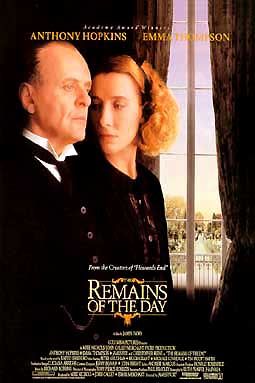
Shattered Politics #55: The Remains of the Day (dir by James Ivory)


Remains_of_the_day

The 1993 Best Picture nominee The Remains of the Day is a love story.  Actually, it’s a series of love stories.  Every character in the film is in love with something or someone.  It’s just that, with one exception, they’re all so extremely British that it’s sometimes hard to tell.

The one exception is an American congressman named Trent Lewis (Christopher Reeve).  As the film opens in the 1950s, he’s just purchased Darlington Hall, which is one of those country manors that hold so much history and romance for those of us who regularly watch Downton Abbey.  Lewis is excited to have a British manor of his very own.  It even comes with its very own butler, a Mr. Stevens (Anthony Hopkins).

As we see in flashback, Stevens previously worked at Darlington Hall when it was owned by Lord Darlington (James Fox).  In the 1930s, Lord Darlington may have loved Britain but he was also dangerously naive about the rise of Nazi Germany.  Actually, to say that he was naive might be letting Lord Darlington off too easily.  When we first meet Lord Darlington, he seems like a well-meaning but hopelessly out-of-touch aristocrat.  He has so little understanding of the real world that he even asks Stevens to have the sex talk with his godson (played, somewhat inevitably, by Hugh Grant), who happens to be close to 30 years old at the time and, one would presume, far beyond the age when the talk is really necessary. When we first see Lord Darlington, who is hosting a conference on how to best deal with the rise of the Nazis, arguing that Britain should ignore the rise of Hitler, it’s easy to assume that he’s just as clueless about Germany as he is about his godson.  But then, eventually, Lord Darlington orders Stevens to fire two Jewish maids and you’re forced to reconsider everything that you previously believed about him.

And then there’s Ms. Kenton (Emma Thompson), who worked as a housekeeper for Lord Darlington.  She loves the repressed Mr. Stevens but continually finds herself frustrated by Stevens’s professional detachment.  Unlike Stevens, Ms. Kenton doesn’t hold back on her opinions but, when she finally has a chance to stand up for her beliefs and defy the status quo at Darlington Hall, she backs down.

And then there’s Mr. Stevens.  Mr. Stevens may be one of the most emotionally repressed characters in the history of the movies but the entire film revolves around trying to figure out what or who Stevens loves.  It’s a little too easy to assume that he’s in love with Ms. Kenton, even though that will be the natural instinct of most viewers.  While he obviously feels affection towards her, he can never bring himself to truly express it.  (That said, getting a letter from her appears to be the only thing that can actually inspire him to leave the safety of Darlington Hall and venture into the outside world.)  While it seems, at times, that he might love Lord Darlington, Stevens himself prefers to say that he respected Lord Darlington and, after the war, Stevens seems to have no trouble staying on at Darlington Hall even after its bought by Congressman Lewis.  Much like the ghosts in The Shining, Stevens has always been the butler and always will be.

Ultimately, Mr. Stevens loves his job.  He loves being a butler. He’s a man so dedicated to his job that he even continues to work even while his father is dying in the next room.   He loves making sure that everything’s perfect at Darlington Hall and he never bothers with worrying about how imperfect the world outside Darlington Hall may be.    In that way, Stevens is a stand-in for all of the European leaders who willfully chose to ignore what was happening in Germany in the days leading up to World War II.  And, much like those European leaders, he finds himself forced to work for an American in the aftermath.

As a film, The Remains of the Day can be frustrating but in a good way.  Mr. Stevens is such a repressed and detached character that, much like Ms. Kenton, we’re always tempted to give up on him.  Fortunately, Anthony Hopkins is one of those actors who can suggest so much with just a pause in his dialogue or a quick glance to the side.  You look at his sad eyes and suddenly, you know everything that Mr. Stevens cannot bring himself to say.  Emma Thompson has a somewhat easier role because Ms. Kenton at least gets to say what she’s thinking but she still bring a lot of depth to the role and has a lot of chemistry with Hopkins.  And finally, you’ve got James Fox who is so comically befuddled that it’s all the more shocking to consider all of the pain that he — intentionally or not — is partially responsible for.

The Remains of the Day is a great film for all of us Downton Abbey-loving history nerds.

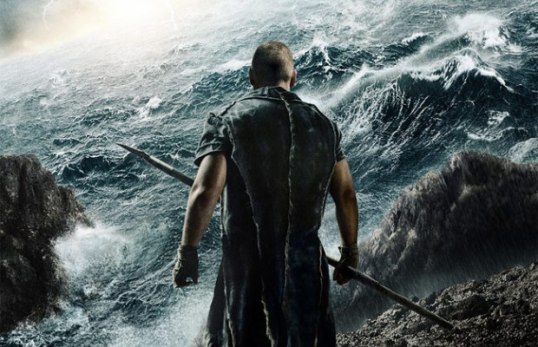
So, was Noah good or not?


Poster-Noah-Aronofsky

Was Noah a good movie or not?

That’s a question that was first asked way back in March.  At the time, the answer depended on who you asked.  For instance, Noah is one of Arleigh’s favorite films of the year.  My reaction, however, was far more mixed.  Noah was one of those movies that I thought I would review as soon as I watched it but that proved to be a lot more difficult than I expected.  As I found myself wondering what I should say in my review, it became very apparent to me that I wasn’t sure whether I liked the film or not.

By the time that I finally decided that I was, overall, disappointed by Darren Aronofsky’s controversial and spiritual-but-not-quite-biblical version of the Deluge, over a month had passed and we had all moved on to different movies.

And so that review remained unwritten.  And, at first, I thought it wouldn’t matter.  As much as I try to review every single movie that I see, I know that the world is not going to end if I miss a film or two.  After all, I’ve never specifically written down just how much I hated the latest Transformers movie and the world has yet to plunge into the sun…

And yet, for all of its flaws and the fact that it left me feeling underwhelmed, Noah has stuck in my mind in a way that many of the films that I saw this year have not.  It would be a struggle for me to remember much of anything about Dracula Untold but Noah Noah has stayed with me.

Thinking back, it’s easy for me to say what did not work about Noah.

As opposed to Aronofsky’s best films (Requiem for A Dream, The Wrestler, and my beloved Black Swan), Noah felt oddly paced with certain scenes ending too quickly while other scenes seemed to drag on forever.

The film’s environmental message was delivered with such a heavy hand that it ultimately did not make much of a difference whether you agreed or not.  For a film that went out of its way to establish itself as not being a traditional biblical film, Noah was certainly preachy.

While the film deserves credit for not flinching in its portrait of a surly and self-righteous Noah, it still doesn’t change the fact that the movie was essentially 138 minutes spent with a very unlikable character.

Anthony Hopkins gave perhaps the worst performance of his career as Methuselah.  In the role of Tubal-Cain, Ray Winstone was such a one-dimensional villain that I half expected him to invent trains just so he could tie Emma Watson to the tracks.

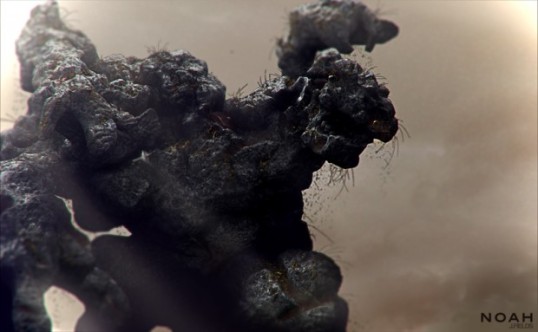
And, of course, there were the Watchers — fallen angels who had been turned into sentient piles of stone by a vengeful God.  I know that some people loved the Watchers but to me, they looked ludicrous…

NoahWatchers

And yet, that’s the reason why we love Darren Aronofsky, isn’t it?

Obviously, it was a risk to portray the fallen angels as being a bunch of talking rocks.  It was also a risk to take a character who is mentioned only once in the book of Genesis — in this case, Tubal-Cain — and then use that character as a representation of everything that’s wrong with the human race.  It was a risk to make a “biblical” film that openly questioned both the existence and wisdom of God.  We expect and demand that directors take risks but, at the same time, we also want to ridicule and judge when those risks don’t work out.  That’s the issue that we, as film lovers, often face.  Do we celebrate and perhaps excuse a director for his intentions or do we solely judge him based on the results?

And the thing with Noah is that, as much as the movie did not work for me, it also did work for me.  For all of those flaws that I listed above, Noah is full of images that are so beautiful and so memorable that I can still visualize them as if I saw them yesterday:

Noah and his sons walk across a gray and blasted landscape, stopping just long enough to stare at a foreboding city in the distance.

Noah walks through a decadent settlement and briefly, this somber film is so full of bright colors and flamboyant characters that the viewer is almost as overwhelmed as Noah.

That Ark, looking small and isolated, floating across an endless blue ocean.

And finally, Noah talking about the horrors of humanity and briefly, we see that the shadows that he’s visualizing are dressed in modern clothing.

For all of my issues with Noah, it’s such a visually impressive film and takes so many risks that I can’t help but respect it.  I don’t consider it to be a great film but, after all this time, I can say that it’s a film that only a true artist could make.

And, considering the current state of American film, that’s one of the best compliments that one can give.

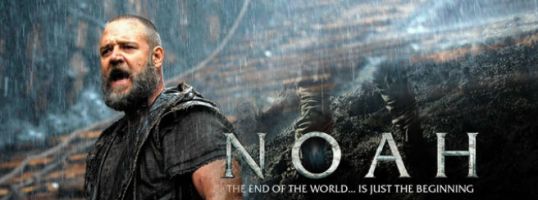
noah-banner222

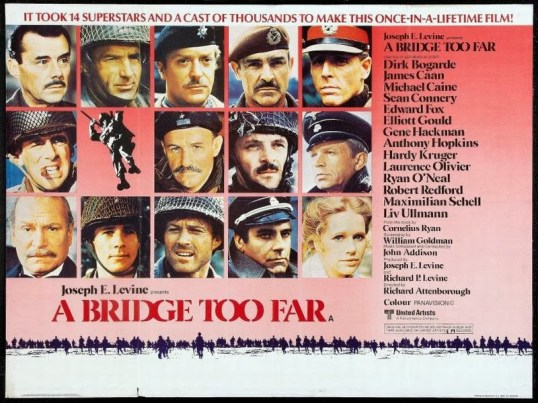
Review: A Bridge Too Far (dir. by Sir Richard Attenborough)


1977 a bridge too far

“Well, as you know, I always felt we tried to go a bridge too far” — Lt. Gen. Frederick Browning

With the recent passing of Sir Richard Attenborough I decided to bring up one of the films which first brought his name to my attention. I was quite the young lad when I first saw Attenborough’s epic war film A Bridge Too Far. I would say that it was one of my earlier memories of watching a film with my father who was a major fan of war films. One could say that I got my appreciation and love for the genre from him.

A Bridge Too Far was adapted from the Cornelius Ryan book of the same name which depicted from start to finish the disastrous World War II battle known as Operation Market Garden. The film states that the Allied landings at Normandy, France in the summer of 1944 had the German forces reeling and on the verge of collapse. With Eisenhower having to choose between competing plans to chase Hitler’s forces right into Berlin from his two best generals in George S. Patton and Bernard Montgomery, the film already lays down something that’s become synonymous with military disasters throughout history. Political expediency and pressure on Eisenhower led to an operation that was never attempted in military history and one which required every aspect of the operation to go according to plan for it to work. As the film would show this was not meant to be.

The film begins with the operation’s early days as Allied commanders rush to put Montgomery’s plan to drop 35,000 paratroopers behind German lines in occupied-Netherlands in order to capture and hold key bridges until Allied armored forces arrived to reinforce them. It’s a daring plan that the Attenborough films with a obvious confidence and enthusiasm, but also one that already showed some nagging doubts from field commanders who would be in the thick of the fighting if intelligence reports were inaccurate. One could almost say that Attenborough was making the film a sort of anti-war message which was a rarity when it came to Hollywood and and film industry depicting the events of World War II at the time.

While the film does explore that very anti-war theme throughout it’s really a by-product of how the battle itself unfolds and shown to the viewers that might give one such an idea. Yet, in the end A Bridge Too Far was a much more complicated film to just be labeled as an anti-war film. Yes, the battle itself was a disaster for the Allied forces of American, British and Polish soldiers involved, but despite the political bumbling and military arrogance of those who command from behind a desk, the film actually does a great job of showing that bond soldiers earn when confronted with the horrors of battle.

Attenborough and producer Joseph E. Levine pulls together an all-star cast for the film with names such as Sean Connery, Edward Fox, Robert Redford, Michael Caine and Laurence Olivier just to name a few. Films such as A Bridge Too Far rarely get made anymore in this day and age. The cast itself is part of the reason why the film still holds up to scrutiny decades after it’s release. While all-star casts such as this seemed to have been common place before the 1980’s it still looked like a daunting task for Attenborough to manage so many Hollywood stars and veteran British actors. Every character from Hopkin’s Col. Frost, Connery’s Gen. Urquhart and Redford’s Maj. Cook get to shine in their sections of the film as their individual stories about the battle all tie-in together to show just how complicated the events that they were filming truly turned out to be.

At times, one almost could feel overwhelmed by the amount of recognizable names and faces that come across the screen, yet Attenborough and producer Levine were able to juggle not just the logistics of the film’s screenplay, but the egos and reputation of the very stars who would become the backbone of the film.I think in a lesser filmmaker A Bridge Too Far could easily have turned into the very Operation Market Garden it was trying to depict.

It’s a film that never celebrates the concept of war itself, but actually shows that war remains a bloody and chaotic affair that relies not just on planning and execution but on the whims of lady luck. While Attenborough’s film never reached the sort of iconic status that another Cornelius Ryan adapted film has attained in The Longest Day, it does remain the more powerful of the two as it doesn’t just explore the historical event as a sort of academic exercise, but as an exploration of that old military adage of “No plan survives contact with the enemy”.

So, in the end I recommend that those looking to watch and experience the earlier directorial works of Sir Richard Attenborough should check out A Bridge Too Far. It remains to this day one of his more underappreciated films especially when compared to his later more acclaimed films like Gandhi, Chaplin and Shadowlands.

44 Days of Paranoia #30: Nixon (dir by Oliver Stone)


For our latest entry in the 44 Days of Paranoia, we take a look at Oliver Stone’s 1995 presidential biopic, Nixon.

Nixon tells the life story of our 37th President, Richard Nixon.  The only President to ever resign in order to avoid being impeached, Nixon remains a controversial figure to this day.  As portrayed in this film, Nixon (played by Anthony Hopkins) was an insecure, friendless child who was dominated by his ultra religious mother (Mary Steenburgen) and who lived in the shadow of his charismatic older brother (Tony Goldwyn).  After he graduated college, Nixon married Pat (Joan Allen), entered politics, made a name for himself as an anti-communist, and eventually ended up winning the U.S. presidency.  The film tells us that, regardless of his success, Nixon remained a paranoid and desperately lonely man who eventually allowed the sycophants on his staff (including James Woods) to break the law in an attempt to destroy enemies both real and imagined.  Along the way, Nixon deals with a shady businessman (Larry Hagman), who expects to be rewarded for supporting Nixon’s political career, and has an odd confrontation with a young anti-war protester who has figured out that Nixon doesn’t have half the power that everyone assumes he does.

Considering that his last few films have been W., Wall Street: Money Never Sleeps, and SavagesI think it’s understandable that I’m often stunned to discover that, at one point in the distant past, Oliver Stone actually was a worthwhile director.  JFK, for instance, is effective propaganda.  Nixon, which feels a lot like an unofficial sequel to JFK, is a much messier film than JFK but — as opposed to something like Savages — it’s still watchable and occasionally even thought-provoking.  Thanks to Hopkins’ performance and, it must be admitted, Stone’s surprisingly even-handed approach to the character, Nixon challenges our assumptions about one of the most infamous and villified figures in American history.  It forces us to decide for ourselves whether Nixon was a monster or a victim of circumstances that spiraled out of his control.  If you need proof of the effectiveness of the film’s approach, just compare Stone’s work on Nixon with his work on his next Presidential biography, the far less effective W.

(I should admit, however, that I’m a political history nerd and therefore, this film was specifically designed to appeal to me.  For me, half the fun of Nixon was being able to go, “Oh, that’s supposed to be Nelson Rockefeller!”)

If I had to compare the experience of watching Nixon to anything, I would compare it to taking 10 capsules of Dexedrine and then staying up for five days straight without eating.  The film zooms from scene-to-scene, switching film stocks almost at random while jumping in and out of time, and not worrying too much about establishing any sort of narrative consistency.  Surprisingly nuanced domestic scenes between Anthony Hopkins and Joan Allen are followed by over-the-top scenes where Bob Hoskins lustily stares at a White House guard or Sam Waterston’s eyes briefly turn completely black as he discusses the existence of evil.  When Nixon gives his acceptance speech to the Republican Convention, the Republican delegates are briefly replaced by images of a world on fire.  Familiar actors wander through the film, most of them only popping up for a scene or two and then vanishing.  The end result is a film that both engages and exhausts the viewer, a hallucinatory journey through Stone’s version of American history.

Nixon is a mess but it’s a fascinating mess.

Other Entries In The 44 Days of Paranoia 

  1. Clonus
  2. Executive Action
  3. Winter Kills
  4. Interview With The Assassin
  5. The Trial of Lee Harvey Oswald
  6. JFK
  7. Beyond The Doors
  8. Three Days of the Condor
  9. They Saved Hitler’s Brain
  10. The Intruder
  11. Police, Adjective
  12. Burn After Reading
  13. Quiz Show
  14. Flying Blind
  15. God Told Me To
  16. Wag the Dog
  17. Cheaters
  18. Scream and Scream Again
  19. Capricorn One
  20. Seven Days In May
  21. Broken City
  22. Suddenly
  23. Pickup on South Street
  24. The Informer
  25. Chinatown
  26. Compliance
  27. The Lives of Others
  28. The Departed
  29. A Face In The Crowd