Film Review: The Crucible (dir by Nicholas Hytner)


In 1692 and 1693, over 200 people were accused witchcraft in colonial Massachusetts.  Thirty people were found guilty.  19 were executed, fourteen women and five men.  One man died while being tortured in an effort to get a confession out of him.  At least five more people died in their jail cells, awaiting their trial.

There’s a lot of debate about how the witch trials actually began but it’s generally agreed that the initial accusations were made by four girls in the village of Salem.  The oldest was 17 while the youngest was just nine.  (One of the girls, 12 year-old Abigail Williams, was related to the village’s pastor, Samuel Parris.  Traditionally, she has been portrayed as being the ringleader of the accusers.)  The girls claimed that the women of the village had caused them physical pain through witchcraft.  Soon, other girls in nearby villages were making similar accusations.  Some of the accused confessed to being witches to avoid execution.  Others claimed to be innocent but also said they knew who the real witches were.  And, of course, many refused to confess and were executed as a result.

Today, it’s easy to see that the Salem Witch Trials were an early “moral panic.”  What is often forgotten is that, even at the time the trials were taking place, there were many prominent thinkers who condemned them as being a case of mass hysteria.  In the years immediately following the trials, the majority of its victims were posthumously exonerated.  The Reverend Samuel Parris wrote an official apology letter for his role in the trials.  One of the legacies of the Salem Witch Trials was that the First Amendment of the United States Constitution made clear that “Congress shall make no law respecting an establishment of religion.”

Arthur Miller’s 1953 play, The Crucible, was set during the Salem Witch Trials and, for many people, it’s the defining work about the trials, despite the fact that Miller acknowledged to taking dramatic liberties with some of the characters and events.  Miller, who had recently been questioned by the House Unamerican Activities Committee, meant for the play to be both a commentary on McCarthyism and a rebuke towards people like his former friend, Elia Kazan, who “named names” to protect themselves.   Of course, one could argue that the main difference between the Salem Witch Trials and the Red Scare is that communists were real while the Salem witches were not.  But, no matter.  It’s one of Miller’s better plays.  If Elia Kazan could justify his testimony by imagining himself as a punch-drunk boxer standing up to a corrupt union, I suppose Arthur Miller could pretend to be a man accused of witchcraft.  The play was initially not as acclaimed as some of Miller’s other works but, over the years, it has come to be widely acknowledged as one of the classic works of American theater.

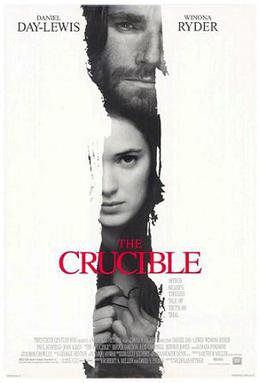
In the 90s, Miller wrote the screenplay for a film adaptation of the The Crucible.  First released in 1996, this adaptation starred Daniel-Day Lewis as the wrongly accused John Proctor, Joan Allen as Proctor’s wife, Elizabeth, and Winona Ryder as Abigail Williams.  For the purposes of Miller’s dramatization, Abigail was reimagined as being a teenage girl who had a brief affair with John Proctor and who was still obsessed with him.  When the Reverend Parris (Bruce Davison) catches Abigail and some of her friends trying to cast a “love spell” on John, the girls try to avoid punishment by accusing Parris’s slave, Tituba (Charlayne Woodard), of being a witch.  Tituba gives a false confession to avoid being hanged.  The girls are soon accusing numerous other women, including Elizabeth Proctor, of witchcraft.

As a film, The Crucible is a fine adaptation of Miller’s play and it’s always a little bit surprising to me that the movie itself isn’t better-known.  Daniel Day-Lewis, Winona Ryder, Joan Allen, and Bruce Davison all give excellent performances, as does Rob Campbell as a reverend who comes to doubt the accusations of witchcraft.  The great Paul Scofield also does a good job as Danforth, the stern judge who attempts to be fair but ultimately is not willing to admit that the law itself is in error.  The film recreates Salem is such detail that you feel as if you’re walking its streets.  The film also recreates the horrible conditions that a colonial prisoner would have to deal with while imprisoned.  Watching Daniel Day-Lewis go from being handsome and rugged to being an emaciated man with rotten teeth really drives home the story’s portrayal of casual, state-sanctioned cruelty.  By the end of the movie, Day-Lewis is a testament to what authoritarians will do to someone who insists on thinking for himself.

The film is at its strongest when showing how a moral panic begins.  The unstable Abigail is looking for revenge against John Proctor.  The other girls, immature and trying to be avoid being punished, make their accusations without giving much thought to the consequences.  Soon, the adults of Salem — all of whom have no excuse for not knowing better — are making accusations because it’s better to be an accuser than to be one of accused.  The film presents a disturbing portrait of how quickly a community can turn on itself.

The film ends on a note of devastating sadness.  Though the witch trials were eventually seen for being the farce that they were, it was too late for the twenty-five people who died as a result of the hysteria.  (Today, with a clear mind, it’s easy to see that the Salem Witch Trials had more in common with Stalin’s show trials and China’s Cultural Revolution than anything else.)  The Crucible is a powerful film adaptation that deserves to be better-known.
Review: Straw Dogs (dir. by Sam Peckinpah)


“Violence can be the only answer sometimes.” — David Sumner

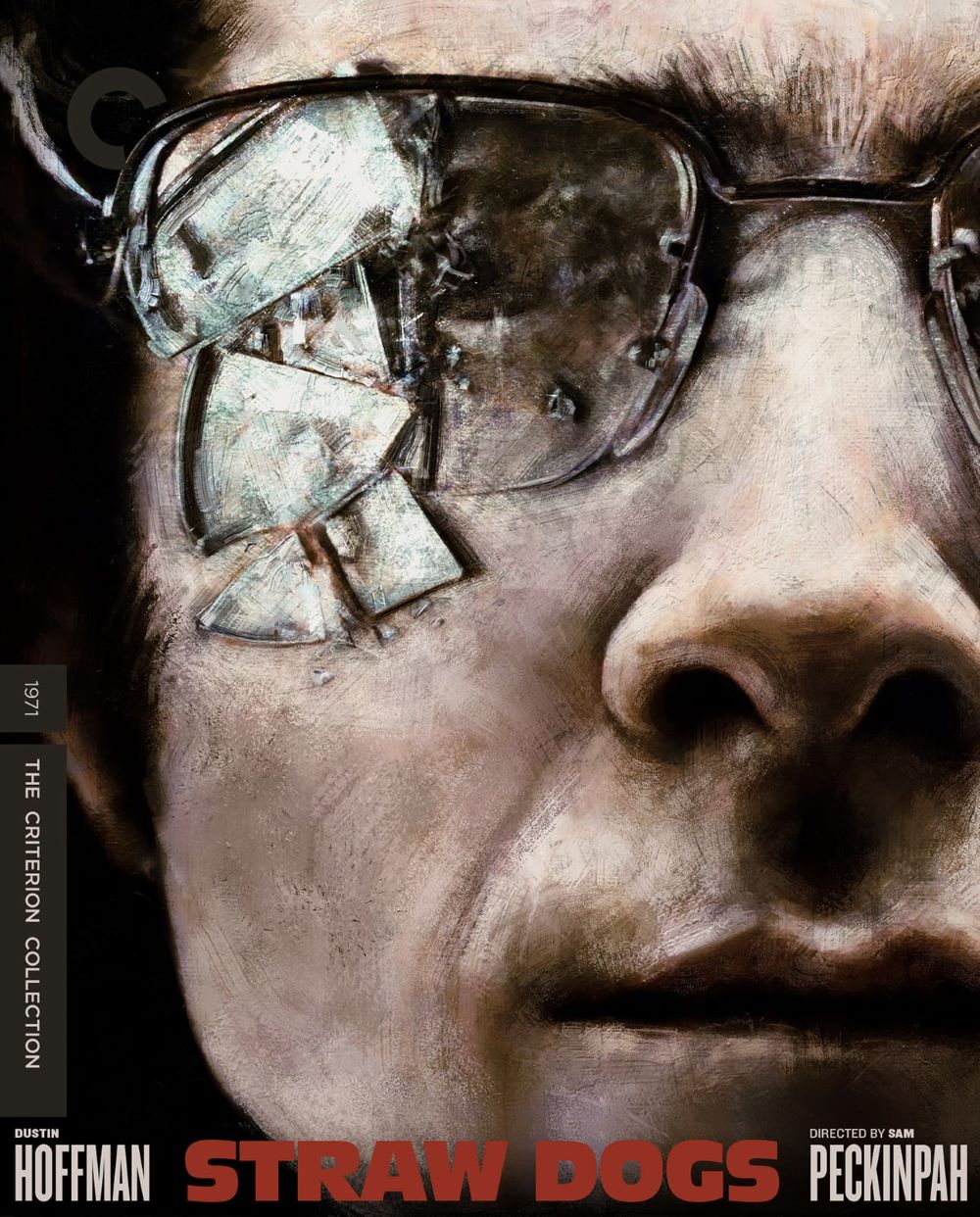
Sam Peckinpah’s Straw Dogs is a raw, compelling dive into the breakdown of civility and the primal instincts bubbling underneath. The story follows David Sumner, a mild-mannered American mathematician, who moves with his wife Amy to her rural English hometown. The couple’s plan for a quiet life takes a sharp turn when tensions with the locals spiral out of control, resulting in a violent showdown. At its core, the film examines how far a person can be pushed before the veneer of civilization peels away, revealing something much wilder underneath.

The tension starts subtly, as David’s intellectual and pacifist nature clashes with the rough, territorial mindset of the local men. This brewing conflict isn’t just about cultural difference but taps into deeper themes around masculinity, power, and identity. Straw Dogs asks difficult questions about what it means to be a man, exploring how fragile male identity can be when confronted with real or perceived threats. David’s journey is less about heroism and more about the psychological and emotional transformation forced upon a man who initially seems ill-equipped for the violence unleashed around him. The whole film operates as a kind of symbolic stage where primal instincts and societal expectations collide, forcing each character to confront their own limits.

Amy’s role in the film is both pivotal and deeply complex. Her experience of assault, handled with subtle but unflinching attention, adds emotional and thematic weight without dominating the narrative. The film portrays her trauma through its impact on her and the shifting dynamics in her relationship with David, inviting reflection on resilience and struggle for control. Amy is depicted not merely as a victim but as a layered character navigating vulnerability and strength amid the hostile environment. This approach challenges viewers to consider the nuanced and often contradictory responses to trauma, avoiding simplistic victim narratives while emphasizing its profound consequences.

The rural setting of Straw Dogs is more than just a backdrop; it becomes a character in its own right. The close-knit, insular community embodies a microcosm where social order teeters and violence hides just beneath the surface. Law enforcement and authority figures seem ineffective or indifferent, which heightens the sense of isolation and lawlessness. The hostility from some village locals, including Amy’s ex-boyfriend Charlie, feeds into a toxic masculinity that sees David as weak and out of place. Peckinpah carefully stages this clash, using tension and silence as expertly as physical violence, making viewers feel the pressure ramping up until it finally snaps.

Dustin Hoffman’s portrayal of David is quietly brilliant in its subtlety. He plays David as a man trapped between worlds—intellectual and physical, passivity and aggression—with a restrained but deeply affecting performance. Hoffman’s ability to convey complex emotions beneath a calm exterior makes David’s eventual transformation all the more gripping. Susan George delivers an equally powerful performance as Amy, capturing the mixture of fear, defiance, and heartbreak her character endures. Their dynamic feels authentic and layered, making the viewer invested in their peril. The supporting cast, including actors like Peter Vaughan, add a layer of authentic menace, embodying the grim rural antagonists with convincing grit and intensity. The performances overall ground the film’s explosive themes in believable, relatable humans.

Themes in Straw Dogs extend beyond just personal violence to address ideas about identity and societal breakdown. The film explores the notion of the “symbolic order”—how individuals fit into and negotiate the rules and roles imposed by society. David’s identity crisis and his uneasy place within the village spotlight questions of power, emasculation, and rebirth. Peckinpah uses psycho-sexual imagery—such as symbols of emasculation and phallic power—to deepen the psychological stakes of David’s journey. The film conveys how deeply fragile human identity is and how violence can act as a brutal yet transformative force pushing individuals to redefine themselves. At the same time, the portrayal of Amy complicates these themes by challenging traditional gender roles, making the film as much about female agency as male dominance.

The film’s violence is famously brutal and unsettling. Peckinpah does not shy away from showing the full consequences of escalating conflict, culminating in an intense and chaotic finale where the line between victim and aggressor blurs. This isn’t violence for spectacle but a narrative and thematic necessity that Peckinpah uses to strip away pretenses and reveal the raw human instincts beneath. It’s this uncompromising depiction that both shocked audiences at the time and continues to provoke discussion about the nature of power and survival. The film is also notable for its innovative editing, with Peckinpah’s use of jump cuts and slow-motion heightening the emotional intensity and pacing the violence with a rhythmic, almost visceral punch.

Ultimately, Straw Dogs is a challenging film that forces viewers to confront disturbing truths about human nature, relationships, and societal order. Its exploration of violence and masculinity is complex and often uncomfortable, presenting no easy answers. The film remains a significant piece of cinema for its bold themes, outstanding performances, and the way it captures the frailty and ferocity of its characters. Peckinpah’s direction melds tension, psychological drama, and physical action into a gripping, unforgettable experience. Though controversial for its content, Straw Dogs endures as a powerful work that asks what truly happens when the thin line between civilization and savagery breaks down.

A Movie A Day #14: Eyewitness (1970, directed by John Hough)


eyewitness-1970-film

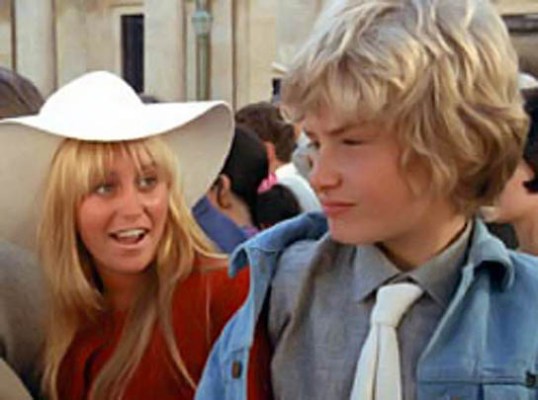
In Eyewitness (which is also known as Sudden Terror), eleven year-old Ziggy (Mark Lester) witnesses a policeman (Peter Vaughan) assassinating a visiting African dignitary but, because he has a history of “crying wolf,” he can’t get anyone to believe him.  Not his older sister, Pippa (Susan George).  Not his grandfather (Lionel Jeffries), the lighthouse keeper.  Not the housekeeper, Madame Robiac (Betty Marsden).  Not even Tom Jones (Tony Bonner), a tourist who fancies Pippa.  When he sees two policemen driving up to his grandfather’s lighthouse, Ziggy panics and runs.  Though John Hough’s direction, which is full of zoom shots and Dutch angles, is dated, Eyewitness holds up well as a tight thriller.  Susan George was beautiful in 1970 and Peter Vaughan is a great villain.

If Sam Peckinpah had ever made a children’s movie, it would probably look a lot like Eyewitness.  The movie starts out with Ziggy playing on the beach and pretending to be a soldier while imaginary gunshots and explosions are heard in the background.  It ends with a strange joke about a man who looks like Hitler, followed by a cheery freeze frame.  In between all that cheeriness, the assassin and his brother (Peter Bowles) chase Ziggy across Malta and kill anyone who gets in their way, from a friendly priest to a ten year-old girl being held by her father.  I counted ten onscreen death, which is a lot considering that this British movie was released at a time when some were still arguing that Jon Pertwee-era Dr. Who was too scary for children.  There’s even an exciting car chase that ends with one car overturned and the blood-covered survivors struggling to drag themselves out from underneath the wreckage.  How many British children were traumatized by Eyewitness?


Shattered Politics #55: The Remains of the Day (dir by James Ivory)


Remains_of_the_day

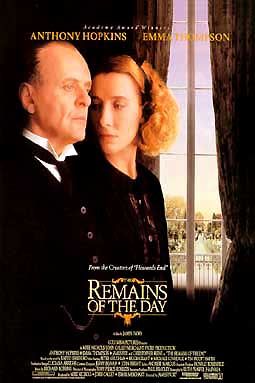
The 1993 Best Picture nominee The Remains of the Day is a love story.  Actually, it’s a series of love stories.  Every character in the film is in love with something or someone.  It’s just that, with one exception, they’re all so extremely British that it’s sometimes hard to tell.

The one exception is an American congressman named Trent Lewis (Christopher Reeve).  As the film opens in the 1950s, he’s just purchased Darlington Hall, which is one of those country manors that hold so much history and romance for those of us who regularly watch Downton Abbey.  Lewis is excited to have a British manor of his very own.  It even comes with its very own butler, a Mr. Stevens (Anthony Hopkins).

As we see in flashback, Stevens previously worked at Darlington Hall when it was owned by Lord Darlington (James Fox).  In the 1930s, Lord Darlington may have loved Britain but he was also dangerously naive about the rise of Nazi Germany.  Actually, to say that he was naive might be letting Lord Darlington off too easily.  When we first meet Lord Darlington, he seems like a well-meaning but hopelessly out-of-touch aristocrat.  He has so little understanding of the real world that he even asks Stevens to have the sex talk with his godson (played, somewhat inevitably, by Hugh Grant), who happens to be close to 30 years old at the time and, one would presume, far beyond the age when the talk is really necessary. When we first see Lord Darlington, who is hosting a conference on how to best deal with the rise of the Nazis, arguing that Britain should ignore the rise of Hitler, it’s easy to assume that he’s just as clueless about Germany as he is about his godson.  But then, eventually, Lord Darlington orders Stevens to fire two Jewish maids and you’re forced to reconsider everything that you previously believed about him.

And then there’s Ms. Kenton (Emma Thompson), who worked as a housekeeper for Lord Darlington.  She loves the repressed Mr. Stevens but continually finds herself frustrated by Stevens’s professional detachment.  Unlike Stevens, Ms. Kenton doesn’t hold back on her opinions but, when she finally has a chance to stand up for her beliefs and defy the status quo at Darlington Hall, she backs down.

And then there’s Mr. Stevens.  Mr. Stevens may be one of the most emotionally repressed characters in the history of the movies but the entire film revolves around trying to figure out what or who Stevens loves.  It’s a little too easy to assume that he’s in love with Ms. Kenton, even though that will be the natural instinct of most viewers.  While he obviously feels affection towards her, he can never bring himself to truly express it.  (That said, getting a letter from her appears to be the only thing that can actually inspire him to leave the safety of Darlington Hall and venture into the outside world.)  While it seems, at times, that he might love Lord Darlington, Stevens himself prefers to say that he respected Lord Darlington and, after the war, Stevens seems to have no trouble staying on at Darlington Hall even after its bought by Congressman Lewis.  Much like the ghosts in The Shining, Stevens has always been the butler and always will be.

Ultimately, Mr. Stevens loves his job.  He loves being a butler. He’s a man so dedicated to his job that he even continues to work even while his father is dying in the next room.   He loves making sure that everything’s perfect at Darlington Hall and he never bothers with worrying about how imperfect the world outside Darlington Hall may be.    In that way, Stevens is a stand-in for all of the European leaders who willfully chose to ignore what was happening in Germany in the days leading up to World War II.  And, much like those European leaders, he finds himself forced to work for an American in the aftermath.

As a film, The Remains of the Day can be frustrating but in a good way.  Mr. Stevens is such a repressed and detached character that, much like Ms. Kenton, we’re always tempted to give up on him.  Fortunately, Anthony Hopkins is one of those actors who can suggest so much with just a pause in his dialogue or a quick glance to the side.  You look at his sad eyes and suddenly, you know everything that Mr. Stevens cannot bring himself to say.  Emma Thompson has a somewhat easier role because Ms. Kenton at least gets to say what she’s thinking but she still bring a lot of depth to the role and has a lot of chemistry with Hopkins.  And finally, you’ve got James Fox who is so comically befuddled that it’s all the more shocking to consider all of the pain that he — intentionally or not — is partially responsible for.

The Remains of the Day is a great film for all of us Downton Abbey-loving history nerds.