“I don’t know if you’ve noticed this, but nothing has been fine. And everything’s been getting worse every second.” — Eric
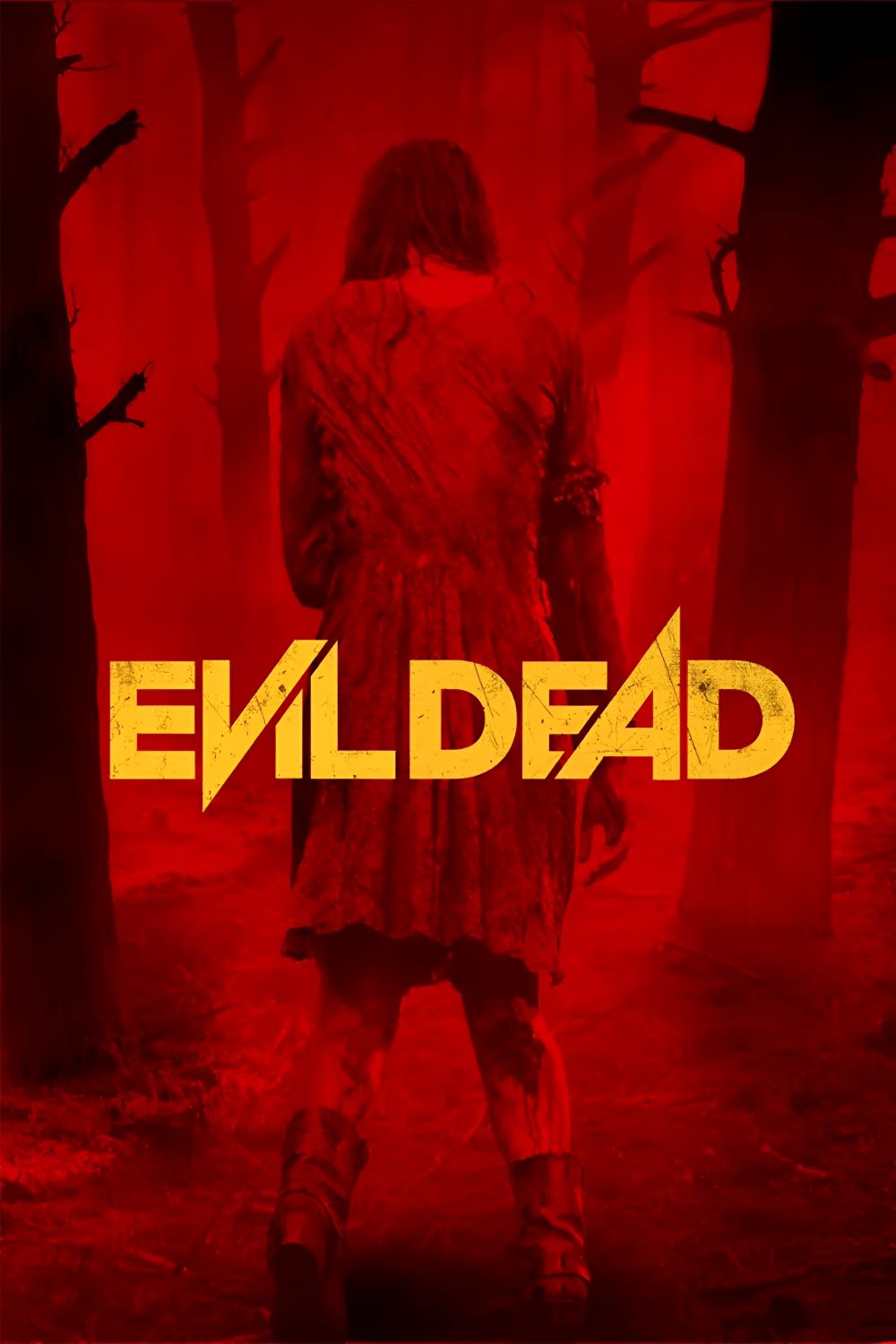
Evil Dead does not tiptoe around its legacy; it kicks the cabin door open, grabs the Necronomicon, and buries the audience under gallons of blood. Fede Alvarez’s 2013 soft reboot faced the nearly impossible task of revisiting Sam Raimi’s The Evil Dead, a cult horror landmark so tied to its handmade weirdness, manic energy, and eventual dark-comedy sensibility that a straight duplicate would have been pointless. Alvarez wisely does not try to replace the original. Instead, he takes its basic framework—the isolated cabin, the Book of the Dead, a group of doomed young people, and an escalating demonic outbreak—and reshapes it into something more polished, more punishing, and much more relentlessly nasty.
The major difference is tone. Raimi’s original had a rough, handmade quality that made every improvised effect, wild camera move, and strange performance feel like part of its identity. It was scary, but it was also energized by a kind of reckless invention. Alvarez’s Evil Dead goes in another direction. It is slicker, more controlled, and deeply mean-spirited in a way that makes the cabin feel less like a creepy vacation spot and more like a rotting death trap. This is not a winking horror-comedy, at least not until the violence becomes so excessive that it starts circling back around into stunned laughter. For most of its running time, the movie plays things brutally straight. It wants the audience to feel trapped in that filthy cabin right alongside the characters, watching every injury worsen and every possible escape route close off.
That seriousness is actually one of the film’s smartest choices. The cabin trip is no longer just a random weekend getaway that turns into hell. Mia, played by Jane Levy, is being brought to the family cabin by her brother David and a few friends so she can detox from heroin. It is a grim premise, but it gives the story a real emotional spine. Mia’s friends and family are not merely there to be picked off one by one; they are trying, however imperfectly, to help her survive something terrifying before any supernatural force enters the picture. When Mia starts seeing horrific things, the others initially assume she is suffering withdrawal symptoms or trying to manipulate them into letting her leave. That adds a nasty layer of uncertainty to the setup. The audience knows something evil is happening, but the people around Mia have a believable reason not to trust her.
Jane Levy carries a huge amount of the movie. Mia has to move through several different modes: vulnerable, furious, terrified, possessed, exhausted, and eventually almost mythic in her determination to survive. It would have been easy for the movie to turn her into either a helpless victim or a standard final girl, but Levy gives her enough rawness that she feels like a person fighting two battles at once. She is struggling with addiction, family resentment, and an actual demonic infection spreading through the cabin. Her performance gets more intense as the movie goes on, and by the final act she has become one of the more memorable protagonists in the franchise.
The supporting cast is less developed, though that is partly by design. David, played by Shiloh Fernandez, is Mia’s estranged brother and the closest thing the film has to a traditional lead for much of the first half. Lou Taylor Pucci’s Eric is the unfortunate idiot who reads from the Necronomicon despite the book being wrapped in barbed wire, marked with warnings, and seemingly designed to scream “do not open this.” Still, the movie at least gives him more guilt than the average horror-movie fool. Once he realizes what he has unleashed, Eric spends much of the film trying to help Mia and clean up his mistake. Olivia and Natalie are thinner characters, but the film uses them effectively as different stages of the Deadite infection and as delivery systems for some especially vile set pieces.
And that is where Evil Dead really earns its reputation. The film’s violence is not merely bloody; it is aggressive, tactile, and determined to make the audience squirm. Needles, glass, nail guns, electric carving knives, box cutters, hot water, exposed nerves, severed limbs—Alvarez and co-writer Rodo Sayagues treat the cabin like a giant torture chamber filled with household objects waiting to become weapons. The gore is so over-the-top that it becomes almost operatic. There is a clear effort to make every major injury feel specific rather than generic. This is not just people getting slashed in dark rooms. The movie wants viewers to remember exactly what happened, which is why several scenes are difficult to shake even after the credits roll.
What makes the carnage work is the heavy use of practical effects. The film has digital touch-ups here and there, but it mostly wants blood, makeup, prosthetics, and physical messiness in the frame. That choice connects it directly to the old-school horror tradition that made the original The Evil Dead so memorable. Alvarez has a cleaner visual style than Raimi, but he does not make the mistake of turning the Deadites into sleek CGI monsters. They look diseased, swollen, burned, cut open, and horribly physical. The cabin itself is just as important. It is damp, dark, decaying, and full of corners that seem infected before anyone even opens the book.
The film also knows how to use the iconography of the series without becoming trapped by it. The Book of the Dead is immediately recognizable, but it is presented as a more grotesque object than ever: bound in human skin, wrapped in barbed wire, and full of disturbing images and warnings that practically dare someone to ignore them. There are nods to Raimi’s films, including a familiar yellow Oldsmobile and the expected cabin imagery, but Alvarez avoids simply repeating Ash Williams’s story. Bruce Campbell’s Ash is such a distinct character that trying to replace him outright would have been a disaster. Instead, Evil Dead makes Mia its own survivor and lets her final confrontation stand apart from the earlier movies.
The biggest criticism of Alvarez’s film is also a fair one: it can feel almost too grim. The original movies had a wild punk-rock sense of fun—raw, fast, messy, inventive, and powered by the kind of reckless confidence that turns limitations into personality. Alvarez’s soft reboot abandons that punk-rock attitude almost entirely. If Raimi’s The Evil Dead feels like a sweaty, chaotic garage band ripping through a horror song at maximum volume, Alvarez’s Evil Dead is the Norwegian black-metal version: colder, uglier, more nihilistic, and committed to burying the audience under mud, blood, grief, and cruelty. It is still extreme, but it is extreme in a much more punishing key.
That is not automatically a flaw, even if it may leave fans of the original’s humor missing the unhinged fun. Alvarez is not trying to make a Raimi imitation. He makes a full-blooded, punishing horror film that takes the mythology seriously while still delivering the series’ essential pleasures: demonic possessions, a cursed cabin, practical gross-out effects, and enough blood to drown a small town. The dialogue is occasionally stiff, some of the supporting characters never become much more than targets, and the addiction metaphor can be a little blunt, but those weaknesses do not erase the film’s commitment or craft.
The climax is where the movie finally fully embraces the outrageousness that defines the franchise. Mia’s fight against the Abomination during a literal rain of blood is ridiculous in the best possible way. It is gruesome, excessive, and visually unforgettable. The movie has spent so long tightening the screws that this ending feels like an explosion of all the pent-up insanity it had been holding back. It is not as funny as Evil Dead II or Army of Darkness, but it absolutely understands that an Evil Dead finale should be bigger, wetter, louder, and more deranged than logic permits.
Ultimately, Evil Dead works because it treats the source material with respect without treating it like museum property. It is nastier than the original, more emotionally grounded, and less playful, but it is still recognizably part of the same cursed family tree. Alvarez’s version may not have the handmade chaos or goofy charm of Raimi’s The Evil Dead, but it has its own savage identity. More importantly, it proved the franchise could move forward without simply repeating Ash Williams’s story. Its grimy, practical-effects-heavy, emotionally brutal approach became the blueprint for the modern Evil Dead films that followed, including Evil Dead Rise and Evil Dead Burn, even as each one found a new setting, cast, and nightmare to unleash. Evil Dead Rise moved the carnage from the cabin into a cramped apartment building, while Evil Dead Burn carried that modern branch of the series forward with another standalone story connected to the same larger Deadite universe.
For viewers who want horror movies to go all the way—who want the blood to spray, the limbs to fly, and the final girl to earn every second of her survival—it remains one of the strongest horror remakes of its era.

 1963’s House of the Damned tells the story of an isolated mansion. It’s a place that many people have tried to live in but no one has ever been willing to stick around for too long. There are rumors that the mansion is haunted. In fact, you could even make the claim that the mansion is a house of the damned! Of course, we all know that there’s no such thing as ghosts, right?