Review: Chicken Run (dir. by Peter Lord & Nick Park)


“I don’t want to be a pie. I don’t like gravy.” — Babs

Chicken Run is one of those animated films that seems simple at first glance: a bunch of chickens want to escape a farm before they become pies. That basic premise could have easily turned into a lightweight family comedy full of barnyard jokes and little else. Instead, the 2000 DreamWorks and Aardman production, directed by Peter Lord and Nick Park, plays like a miniature war movie, prison-break thriller, romance, survival adventure, and pitch-black satire all at once. It is consistently funny, but its comedy works because the stakes feel real. These chickens are not merely trying to get away from an annoying farmer; they are trying to survive an industrial system that sees them as disposable raw material.

The first thing that makes Chicken Run so memorable is how completely it commits to its central influence: John Sturges’s The Great Escape. Ginger, voiced with determined energy by Julia Sawalha, is essentially the Steve McQueen-like mastermind of a prisoner-of-war escape film, only without the motorcycle. She has attempted escape after escape from the Tweedys’ chicken farm, and every failure has made her more experienced, more stubborn, and more isolated from the flock. The farm itself is built and filmed like a prison camp: there are fences, watchtowers, guards, roll calls, surveillance, punishments, and a constant feeling that someone is always being watched. The chickens dig tunnels, build plans, assign tasks, debate leadership, and struggle with morale in a way that directly echoes the Allied prisoners in The Great Escape.

That influence is not just a clever parody. It gives the movie a real sense of structure and urgency. Ginger is not a character who simply wishes for freedom; she is obsessed with earning it. Every failed attempt lands her in the punishment shed, a tiny isolated box that is funny in its exaggerated stop-motion form but also genuinely unpleasant. The sight of Ginger sitting alone in darkness, listening to the rain and realizing that another escape has failed, establishes that the movie is willing to make her suffering count. She is not invincible, and the other chickens do not always believe in her. That gives her eventual success much more weight than it would have had in a more conventional cartoon.

The Tweedys are also far more sinister than the average animated villains. Mr. Tweedy, voiced by Tony Haygarth, is the bumbling half of the pair: nervous, confused, increasingly paranoid, and convinced that “the chickens are organizing.” It is one of the best-running jokes in the movie because he is absolutely right, but his wife refuses to take him seriously. Melisha Tweedy, voiced by Miranda Richardson, is the truly frightening one. She is cold, practical, greedy, and almost entirely without sentiment. When egg production drops, she does not consider improving conditions for the chickens. She decides to turn them into chicken pies.

That is where Chicken Run goes into much darker territory than its cheerful clay-animation style initially suggests. The film’s narrative is built around factory farming, confinement, exploitation, and mass slaughter. The chickens know that when one of them stops laying eggs, she is not being taken somewhere safe. She is taken away to die. The scene involving the elderly hen Edwina is particularly unsettling because it is handled with restraint. The audience never sees explicit violence, but the implication is unmistakable. The sound of the axe, the sudden absence, and the reactions of the other chickens tell the whole story. It is dark material for a family film, but it is never treated as a joke. The humor comes from character behavior and British deadpan timing, not from dismissing the fear these animals feel.

That balance is one of the movie’s greatest achievements. Chicken Run is undeniably an animated comedy, filled with visual gags, eccentric voices, and absurdly specific bits of dialogue, yet its themes remain surprisingly grim. The Tweedys’ new pie machine is not just a goofy invention. It is a huge, mechanized symbol of industrialized cruelty, a machine designed to turn living creatures into products at maximum efficiency. Once it appears, the farm stops feeling merely like a prison camp and starts feeling like something even more horrifying: a production line where the inmates are literally the merchandise. The comedy makes the movie accessible, but the darker ideas give it teeth.

Aardman’s stop-motion animation is essential to that effect. The chickens are expressive in a way that never makes them overly cute or polished. Their handmade look gives them texture and personality. You can see the fingerprints of the animators in the characters’ surfaces, the uneven little details of the farm, and the tangible construction of the machinery. Modern computer animation can create smoother movement and more elaborate spectacle, but Chicken Run has a physical presence that is hard to replicate digitally. The fences feel like real fences. The mud feels like real mud. The pie machine feels enormous and dangerous because it is a real object built in miniature and photographed frame by frame.

The design also helps sell the film’s strange mix of bleakness and whimsy. The Tweedys’ farm is gray, muddy, cramped, and oppressive, a place where every chicken coop resembles a barracks. Beyond the fence is a bright green countryside that feels almost mythic to the trapped flock. Freedom is not some vague emotional idea; it is visible right there, just beyond reach. That visual contrast makes Ginger’s desperation easy to understand. She is not asking for luxury. She wants sunlight, open space, and the ability to live without being counted, confined, or killed for failing to produce enough eggs.

Mel Gibson’s Rocky Rhodes enters the story as the possible answer to Ginger’s problem. He is introduced as a flying American rooster who crashes into the farm like a larger-than-life war hero. His nickname, “the Lone Free Ranger,” and his exaggerated confidence make him feel like a parody of classic American movie masculinity. Rocky is all swagger, charm, and improvised survival instinct, which makes him a good contrast to Ginger’s disciplined, strategic personality. He tells the chickens he can teach them to fly, and the entire farm becomes invested in the idea even when the plan seems impossible.

Rocky works because the film does not make him a flawless hero. He is entertaining and ultimately brave, but he is also a fraud. His supposed ability to fly is part of a circus act, and he has escaped captivity before by using a human-operated catapult rather than his own wings. When the truth comes out, it hurts because the chickens have placed their hope in him. Ginger especially feels betrayed, not only because Rocky lied but because she allowed herself to believe that someone else might finally have the answer. Their relationship has a nice edge to it; it is not a sweeping romance so much as a reluctant partnership between two strong-willed survivors who approach freedom in completely different ways.

The sequences built around the escape plan show how much fun Lord and Park have with action-adventure movie language. While The Great Escape is the most obvious inspiration, certain moments have an energy reminiscent of Indiana Jones and the Raiders of the Lost Ark. There are close calls with traps, rapid-fire improvisation, looming mechanical threats, and escapes that depend on inches of timing. The climax inside and around the pie machine especially has that pulpy serial-adventure tension. Characters are dragged toward blades and conveyor belts, machinery rattles and groans, and plans collapse only for someone to invent another solution at the last possible second.

The final act also brings in a strong resemblance to The Flight of the Phoenix, particularly in the way the chickens turn desperation into engineering. The flock has to build a flying machine out of whatever materials they can gather, and the project depends on cooperation between characters with very different skills. Fowler, the elderly rooster voiced by Benjamin Whitrow, becomes crucial here. At first he seems like a pompous relic, forever talking about his days in the Royal Air Force and resisting Ginger’s modern plans. But his knowledge and experience eventually become useful. He gives the group the language, confidence, and organizational spark needed to turn their makeshift aircraft from a dream into something that might actually leave the ground.

Fowler is also one of the funniest parts of the film because he represents a specific kind of old British pride: stubborn, ceremonial, and deeply attached to the past. His stories about serving under “the old RAF” seem ridiculous until the moment the chickens actually need someone who understands the basic principles of flying. The film never makes him into a conventional action hero, but it allows him to reclaim some dignity. Like many of the supporting characters, he gets a small but satisfying arc.

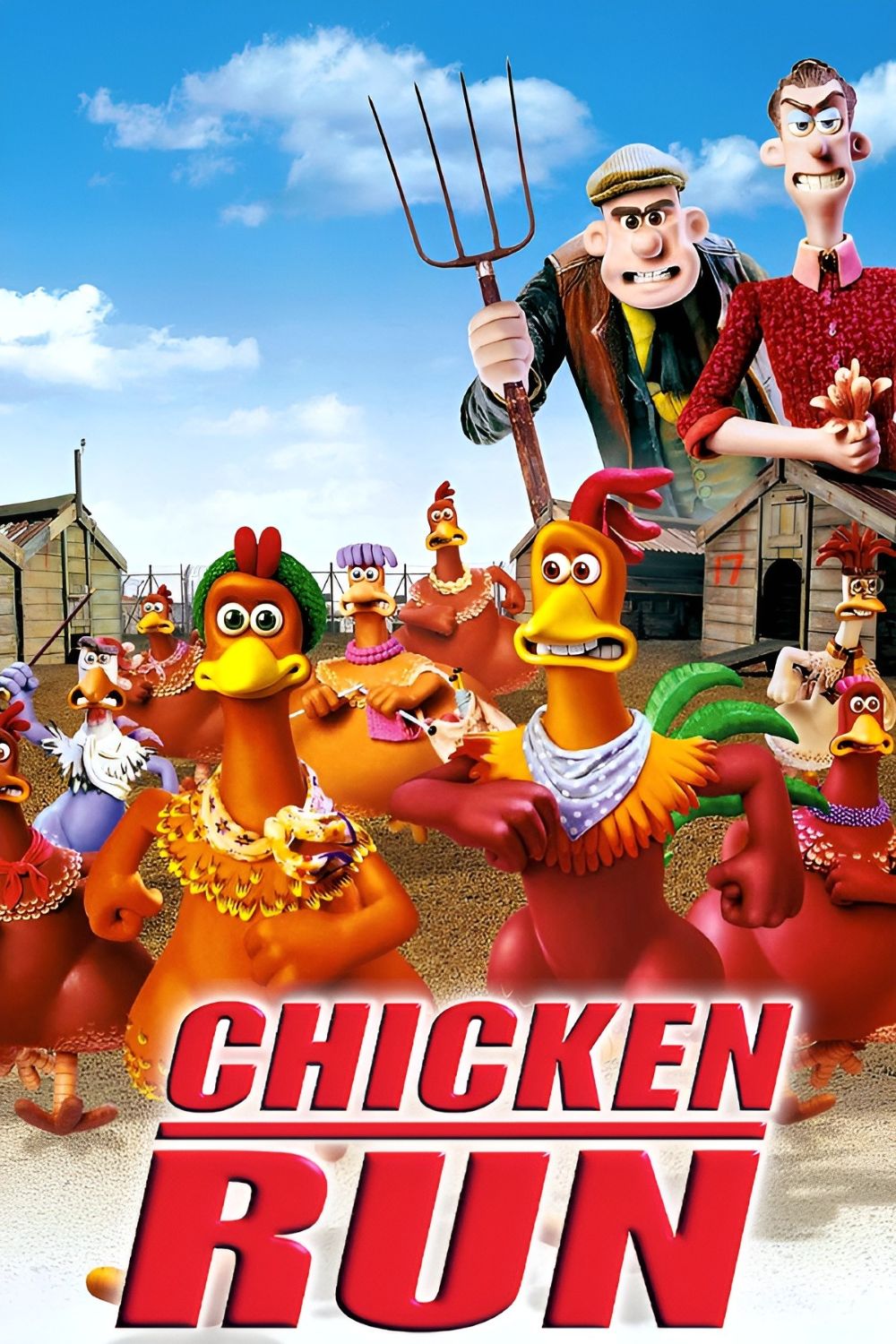
The rest of the flock is memorable because they are not interchangeable background animals. Babs is sweet, distracted, and constantly knitting, but her innocent manner hides an ability to contribute when it matters. Bunty is blunt, cynical, and always ready to question Ginger’s plans. Mac, with her Scottish accent and technical expertise, is the group’s engineer and probably the person most likely to explain why a wild idea will not work. Fetcher, the rat, is opportunistic and cowardly, but he is useful in the way only a black-market scavenger can be. Even the two dimwitted farm dogs have personality, serving as comic obstacles while still making the farm feel guarded and dangerous.

What makes Chicken Run endure is that it never treats its characters’ freedom as a trivial goal. The story has jokes about eggs, knitting, chicken behavior, British class attitudes, and American bravado, but beneath all of that is a serious belief that a community can refuse to accept the role assigned to it. Ginger’s greatest strength is not that she has the perfect plan. It is that she refuses to surrender when every plan fails. Her determination eventually spreads to the other chickens, who stop seeing themselves as helpless inmates and start acting like participants in their own rescue.

The ending is satisfying because it feels earned. The chickens do not escape through luck alone, and they do not wait for a human to save them. They escape because they organize, take risks, use their talents, forgive one another’s failures, and choose action over resignation. That is a surprisingly powerful message for a film about clay chickens escaping a pie factory.

More than two decades later, Chicken Run still stands as one of the strongest animated films of its era. Its stop-motion craft remains beautiful, its jokes still land, and its references to The Great Escape, Indiana Jones and the Raiders of the Lost Ark, and The Flight of the Phoenix add an extra layer of fun for viewers familiar with those films. But it is the movie’s willingness to acknowledge fear, exploitation, and death beneath the comedy that makes it more than a clever genre spoof. Chicken Run is funny because it is inventive, but it is memorable because it understands that freedom means the most when it is hardest to achieve.
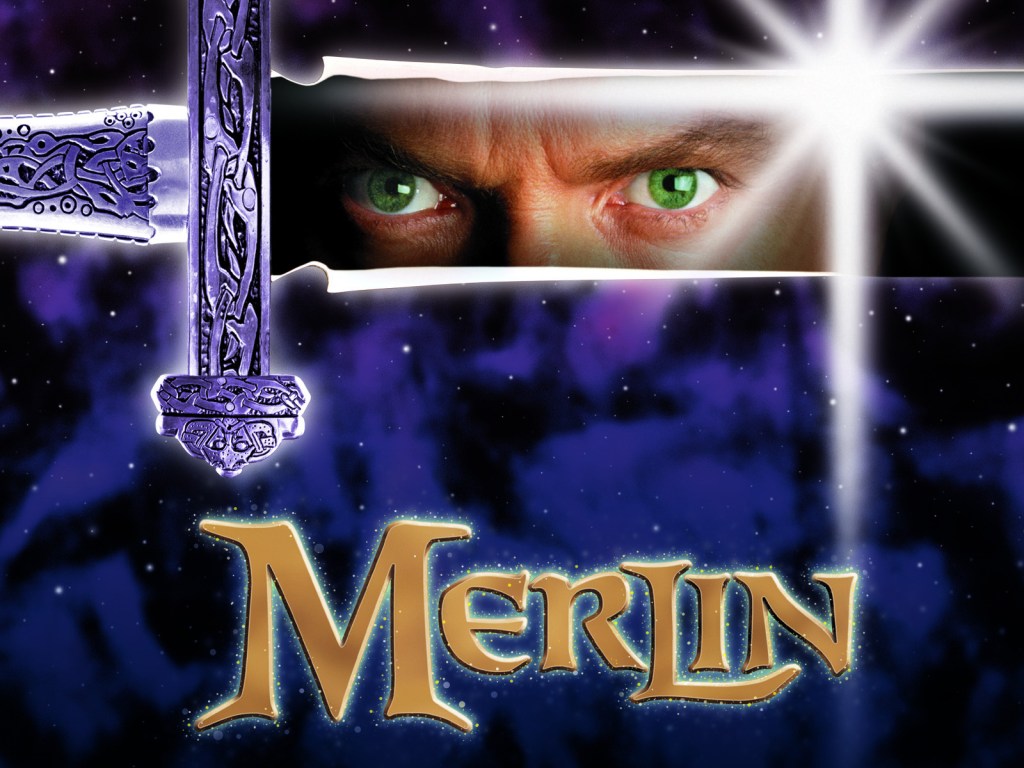
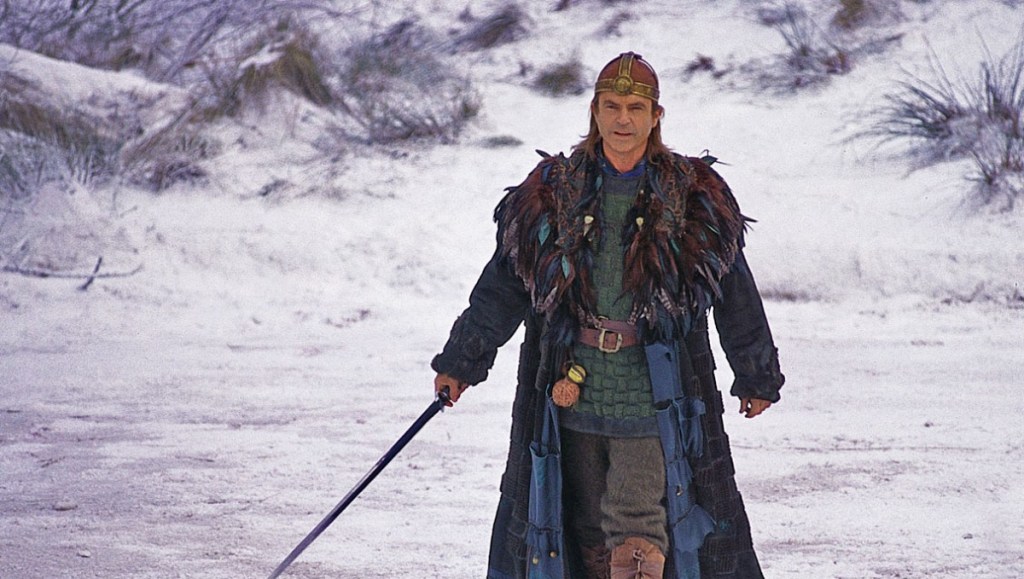
Brad revisits the mini-series MERLIN (1998), starring Sam Neill!


I hated reading the news that Sam Neill had recently passed away. As an obsessed movie fan going back to the mid-80’s, I had especially enjoyed his work in films like DEAD CALM (1989) and THE HUNT FOR RED OCTOBER (1990) prior to him starring in Steven Spielberg’s juggernaut JURASSIC PARK (1993)! Like so many others, I was wowed in the theater watching the film, and Neill was so good in it. From that point forward, he was a part of our lives no matter what the film or television series. We all kind of felt like we knew him. When I was looking back through his filmography, I was reminded of the TV mini-series MERLIN, that I made sure to watch each night when it premiered on NBC in April of 1998. I have not watched it since the original broadcast, but in tribute to Sam Neill, I decided I’d revisit the series again this week.

To somewhat set the stage, some TV mini-series were extremely big deals back in the ‘90’s, and MERLIN was a major “event!” This was before streaming services like Netflix or Amazon were pumping out a new 6-part series every other week. In those days, when something like MERLIN premiered on network TV, a lot of people would make sure they were at home every night so they could be sure to see these ambitious stories play out. With an extraordinary cast led by Sam Neill, and its fresh take on the Arthurian legend, MERLIN would be a massive ratings and critical success for NBC.

In complete honesty, at that time in my life, I had my eye on the series because one of my favorite actors, Rutger Hauer, has a role as the evil, power mad King Vortigern. I have also been a big fan of the legend of King Arthur, I guess going all the way back to when I was a kid and watching Disney’s THE SWORD IN THE STONE! But this time I was here to celebrate Sam Neill, and I must say he’s very good as Merlin. Neill’s Merlin is much more than an all-knowing wizard guiding King Arthur. Rather, he’s a man who experiences the full spectrum of human emotion. We see him fall in love, suffer heartbreak, admit his own mistakes, and then fight on behalf of the world when just about everyone else is gone. The character of Merlin was personalized for me for the first time in my life, and I give Neill’s likable performance full credit for that. In a career with so much great work, this is another excellent achievement.

MERLIN has an incredible supporting cast. Rutger Hauer, Helena Bonham Carter, Miranda Richardson, John Gielgud, James Earl Jones, Isabella Rossellini, Martin Short, Billie Whitelaw, Lena Headey, and many others bring the story to life and remind us just how big a production this really was. Of the supporting performances, Miranda Richardson, who plays dual roles, Helena Bonham Carter, and Martin Short really stood out the most to me. Hauer leaves a memorable impression despite relatively limited screen time. Neill, Carter, and Short would all be nominated for Primetime Emmy Awards for their acting, but none would win the award. The series would be nominated for a total of 15 Primetime Emmy awards, taking 4 of them home, mostly in technical categories.

Looking back on MERLIN after thirty years, I would have to say I appreciate it more now than I did then. I like the fact that it takes its time exploring big ideas like good vs. evil, destiny, sacrifice, and the unstoppable passage of time. I also like the visual effects, which may very much be a product of 1998, but I think they provide a charm that helps sell this timeless story. There’s a reason some stories are told for centuries, and this series does honor to the legend.

Just this past week, I made arrangements for my wife and I to spend a week on the beach in Perdido Key, FL at the end of the summer. The last time I was there was during the summer of 2019. As I sat on the beach back at that time, I received a notification on my phone that Rutger Hauer had passed away. Having been a fan of his for over thirty years, I just remember being sad that another one of my movie heroes was gone. Time doesn’t stop for anyone, and while my wife and I will be enjoying that same beach next month, there’s no doubt that I’ll think about Hauer, and now Sam Neill. Actors leave us, but their work lives on forever, and sometimes that work is legendary. Thanks for all the great memories, Sam.

Lisa Marie Reviews An Oscar Winner: The Crying Game (dir by Neil Jordan)


Directed by Neil Jordan and first released in 1992, The Crying Game opens at a fair in Northern Ireland.  A black British soldier named Jody (Forest Whitaker) meets a flirtatious woman named Jude (Miranda Richardson).  Jude leads Jody away from the fairground.  Jody thinks that they’re going to have sex but instead, he ends up getting kidnapped by Fergus (Stephen Rea) and Peter Maguire (Adrian Dunbar).  As Peter explains it after Jody is taken to an abandoned cottage, the soldier is now a prisoner of the Irish Republican Army.

Jody is left in a dark room, tied to a chair and with a canvas bad over his head.  Fergus is often left to guard him.  Despite Peter’s explicit orders, Fergus talks to Jody and the two men strike up an uneasy friendship.  Fergus removes the bag from Jody’s head.  He even reveals his name.  Jody and Fergus talk about their lives.  Jody says he joined the Army and was immediately sent to the most racist part of the UK.  Fergus replies that his only issue with Jody is that “you shouldn’t be over here.”  Jody talks about his love of cricket.  Fergus talks about his love of hurling.  Fergus sees a picture of Jody with his lover, Dil (Jaye Davidson).  Fergus comments that Dil is attractive.  “She’s not your type,” Jody replies.

Peter warns Fergus not to become friends with Jody because there’s a good chance that they’re going to have to execute him.  And when the British refuse to exchange prisoners, the order does come down to carry out the execution.  Fergus demands that he be allowed to carry out the shooting.  However, as he leads Jody out of the cottage, Jody breaks free.  Fergus chases him but, as they reach a nearby road, Fergus realizes that he can’t bring himself to kill Jody.  Unfortunately, Jody is still killed when he’s run over by a British army truck.

Fergus flees to London and, after getting a job as a construction worker, he tries to lay low and track down Dil.  Dil, however, turns out to be not quite was Fergus was expecting.  It turns out that Jody didn’t reveal every aspect of his life while he was trapped in that cottage.  Meanwhile, Jude and Peter both show up in London and demand that Fergus help them execute “some judge.”

The Crying Game is a twisty and engaging thriller, one that is best known for the twist involving Dil’s identity but which is also a thought-provoking look at the assumptions we make about each other and the roles that people feel forced to play.  Fergus doesn’t really have it in him to be a terrorist or an assassin but it’s the role that he feels he’s been forced into by his desire to see the British leave Northern Ireland.  Jody turns out to have a few secrets of his own and, once their revealed, his eagerness to go off with Jude is seen in an entirely new light.  Jude and Peter present themselves as being honorable freedom fighters but their actions often seem to suggest the opposite.  In the end, the only character who is truly comfortable with their nature is Dil.  Both Stephen Rea and Jaye Davidson more than deserved their Oscar nominations.  Their chemistry goes a long way towards making this a thriller that sticks with you.

The Crying Game was nominated for several Oscars but lost the majority of them to Unforgiven.  (Both Stephen Rea and Clint Eastwood lost Best Actor to Al Pacino for Scent of a Woman.)  However, Neil Jordan did win an Oscar for his clever screenplay.  Rea has continued to act.  Davidson, who reportedly hated the fame that came with appearing in The Crying Game, appeared in one more film before retiring.

Playing Catch-Up With The Films of 2017: Churchill (dir by Jonathan Teplitzky)


2017 is shaping up to be the year of films about Winston Churchill.

For instance, Dunkirk has been an Oscar front-runner ever since it was released last summer.  Winston Churchill does not actually appear in Dunkirk but his shadow hangs over the entire film.  Whenever Mark Rylance says that he’s doing what the prime minister requested him to do, we know that he’s talking about Winston Churchill.

Darkest Hour, which I hope to see this week, features Gary Oldman in the role of Churchill.  For most of the year, a lot of people (like me) assumed that Darkest Hour would be a definite best picture nominee and a probable winner.  While the film seems to have lost a little of its luster, everyone still seems to agree that Gary Oldman is not only going to be nominated by best actor but that he also has a pretty chance of finally winning.

However, before either of those films were released, there was Churchill.  Chuchill received a very limited release in June.  It starred Brian Cox in the title role and it took place in the days leading up to D-Day.  It follows Churchill as he struggles with self-doubt.  He is haunted by nightmares about the men he lost while a military commander in 1915.  He worries that he is being marginalized by the Americans (represented by John Slattery in the role of Dwight D. Eisenhower).  He worries that if he authorizes the invasion of Normandy, he’ll run the risk of losing whatever prestige he has left.  What if the invasion ends in disaster?

That question right there is the main problem with Churchill.  If you know anything about history, you know that the invasion of Normandy was a victory for the Allies, albeit a costly one.  Therefore, for this film to maintain any sort of suspense about what ‘s going to happen, it has to be viewed by people who don’t know about history.  But people who don’t care about history probably won’t be interested in watching a somewhat stuffy film about Winston Churchill.

Despite a few surrealistic nightmare sequences, Churchill ultimately feels like it belongs more on PBS than a movie screen.  It doesn’t surprise me to learn that the majority of director Jonathan Treplitzky’s work has been for British television because Churchill really does feel like a heavily edited version of a 6-hour miniseries.  You watch and you’re impressed by the production values and some of the performances but you find yourself wondering if certain have scenes have been cut out.  If Churchill had been made for HBO, I imagine that Brian Cox and Miranda Richardson (as Churchill’s wife) would be Emmy front-runners.  But, as a feature film, it feels like a decidedly minor portrayal of a major figure.

One final note: all films about the British government during World War II are required to feature at least one scene with King George VI.  Colin Firth, in The King’s Speech, remains the best George.  Laurence Fox in W.E. was the worst.  In Churchill, King George VI is played by James Purefoy.  He doesn’t have a big role but he does a good job with it.  To be honest, I wish that his role had been bigger because he and Cox are entertaining to watch when they’re acting opposite each other.


Scenes I Love: The Phantom of the Opera (Part 3)


Point of No Return

It’s time to finish off my triptych of Scenes I Love from 2004’s film adaptation of The Phantom of the Opera. The first two parts were my favorite solo and chorus scenes from film and now we finish it off with what has to be the top scene (IMO) from the film.

The characters of The Phantom and Christine have always been the focal point of the film. Even with the arrival of the wholesome and (as Lisa Marie would call him) vanilla Raoul, Vicomte de Chagny, the film continues to truly sizzle when it’s all about The Phantom and Christine moving their relationship from ingenue and mentor to unrequited lovers.

It’s the latter which this scene looks to portray through a duet written by The Phantom himself and where he swaps himself into the role of Don Juan. This duet has always been a fan favorite for those who love the musical and many different versions of it have played throughout the years. Yet, they all have one thing in common and that is the heated chemistry between the two characters once the duet begins.

The scene itself begins and comes off pretty much like foreplay between the two characters without having literal sex on the stage. The whole scene is so sexually charged that even those watching the duet who set the trap looked so transfixed that they fail to act. Even Raoul, Christine’s own fiance, finishes the scene with such a look of cuckold expression once he realizes that he could never have such a deep and personal connection that Christine has with The Phantom.

For me, this duet pretty much sums up what the whole is all about.

Scenes I Love: The Phantom of the Opera (Part 2)


Masquerade

Here we have the second of three scenes I love from the 2004 film adaptation of The Phantom of the Opera.

The first scenes was my favorite solo from the film with Emmy Rossum as Christine Daaé performing the solo “Think of Me”. It’s a powerful scene that more than holds it’s own against the other solos in the film. The second favorite scene from this film comes in the beginning of Act II.

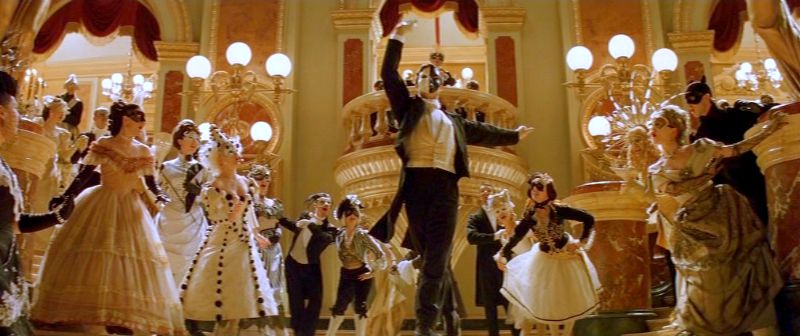
“Masquerade” is really the one and only true full cast and chorus production in the film and in the stage musical. While both would have songs and scenes involving multiple characters and a large of background chorus, this one pretty much cements the film’s grandiose and epic visuals.

Director Joel Schumacher may have his detractors and critics, but he definitely nails the grand masquerade ball in the opera house to begin the second half of the film.

Scenes I Love: The Phantom of the Opera (Part 1)


Think of Me

Stage productions, especially musicals, have always drawn me. I think it goes back to my time in my final two years in high school when, on a lark, I decided to join the Drama production as part of my after-school activities. For a teenager whose never really had any experience watching musicals prior to joining one I was surprised as any to have fallen in love with the art when exposed to it.

Musicals range from classic Sondheim-style productions to the Andrew Lloyd Webber rock opera epics right up to the Matt Stone and Trey Parker comedy musicals. I love them all. One musical production that I was literally obsessed with during those late high school years was Andrew Lloyd Webber’s rock opera production of The Phantom of the Opera.

I knew the songs by heart and, even now, I still remember those final years of high school fondly because of this particular musical. So, finding out that they were going to make a film adaptation of the musical had me feeling both excited and hesitant.

How could a stage musical translate to film if they cast more for acting and less for singing?

My trepidation ended up being unfounded once I finally saw the film and was satisfied that all involved were more than up to the task of performing the iconic roles in the musical.

This first of three of my favorite scenes from The Phantom of the Opera comes early in the film as Emmy Rossum’s understudy, Christine Daaé, gets a chance to show just how much she has learned from her mysterious tutor. “Think of Me” is the one of the signature solos in the musical (the other being the Phantom’s own) and Emmy Rossum nails the scene and song. The expression on the skeptical managers in the beginning quickly turns to surprise as does the rest of the cast and crew who never realized they had a genuine ingenue in their midst.

While I will admit that the song and the scene has been pulled off better on stage, Emmy Rossum’s own experience singing as a member of the Metropolitan Opera as a child leading up to being chosen for the role of Christine Daaé more than makes her hold her own against those who came before her.

Embracing the Melodrama Part II #116: The Young Victoria (dir by Jean-Marc Vallee)


Young_victoria_poster

So, earlier, I was having a conversation with my BFF Evelyn and I discovered that we both have a massive girl crush on Emily Blunt.

And really, can you blame us?

First off, Emily Blunt is incredibly talented.  She’s one of those actresses who can play just about anyone and anything.  I have never heard or seen an interview with her where she seemed to be anything less than intelligent and witty.  She speaks her mind and projects an attitude of not really caring what other people think about her.  Add to that, she’s absolutely gorgeous and she has a body and a face to die for.  If I were to ever get a nose job (and that’s always been a temptation for me), I would definitely tell the surgeon to give me Emily Blunt’s nose.

Evelyn and I also love the fact that Emily Blunt always plays characters who kick ass, often times literally.  Whether it was in Looper or Edge of Tomorrow or the upcoming Sicario, one thing remains consistent.  You simply do not mess with Emily Blunt because she’s a fighter.

Finally, Emily Blunt gets to spend every night with Jon Krasinski!

Seriously, how can you not love Emily Blunt?

Emily Blunt first received attention as the result of supporting turns in The Devil Wears Prada and Charlie Wilson’s War.  Her first starring role — or, at the very least, her first starring role to receive wide distribution here in the states — was in the 2009 film, The Young Victoria.

The Young Victoria attempts to do for Britain’s famous Queen Victoria what Elizabeth did for Queen Elizabeth I.  It attempts to humanize an iconic figure and show that, underneath the popular image of Victorian refinement and emotional repression, Victoria was actually a passionate and headstrong woman.  And the film largely succeeds at doing that because Victoria is played by Emily Blunt.

Unfortunately, The Young Victoria is never quite as interesting as Elizabeth.  Whereas both films feature young queens struggling to prove themselves worthy of leading Britain, Elizabeth benefited from being conceived as a renaissance version of The Godfather.  Elizabeth was full of shadowy conspiracies, ominous whispers, and secrets.  When, at the end of the film, Elizabeth had solidified her hold on the British crown, you felt that she had truly accomplished something and that perhaps her victory was worth living the rest of her life as the Virgin Queen.

Whereas in The Young Victoria, the conspiracies basically amount to smug civil servants assuring themselves that Victoria won’t do something and then being shocked when Victoria does exactly what they weren’t expecting her to do.  And, while it’s undeniably fun to watch Victoria refuse to sign away her power and announce that she can decide for herself what her royal role should be, that’s largely because it’s always fun to watch Emily Blunt stand up for herself.

The majority of the film is taken up with Victoria being courted by Prince Albert (Rupert Friend).  Again, there’s no real conflict in Victoria and Albert’s relationship.  We know that Victoria is eventually going to marry Albert.  And, even when the two have an argument towards the end of the film, you know that they are going to reconcile.  What you may not be prepared for is a scene where Albert is gravely wounded while protecting Victoria from an assassin’s bullet.  That’s because it never happened.  A man did attempt to assassinate Victoria but he failed and Albert was not wounded at all.  But then again, why let history get in the way of a good story?

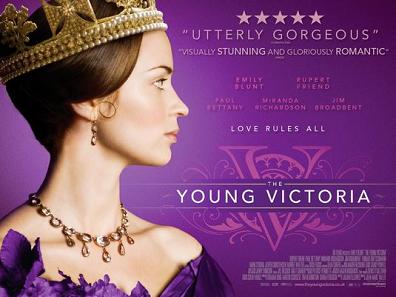
On the poster at the top of the post, The Young Victoria is described as being “gorgeous.”  And really that’s the main reason to see the film.  The film looks really, really good.  The costumes and the sets are wonderfully ornate.  The cinematography is vibrant and lush.  And Emily Blunt’s performance can rightly be called gorgeous.   By the end of The Young Victoria, you really don’t feel like you’ve learned anything new about Queen Victoria.  But you do appreciate Emily Blunt.