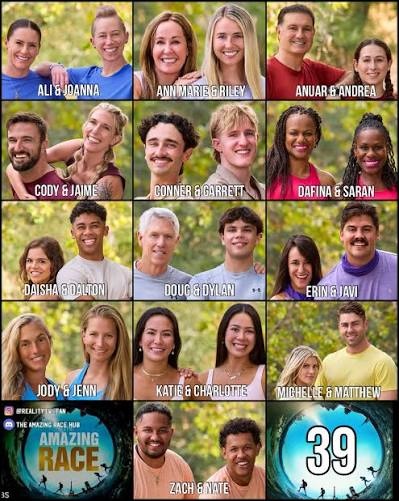
Really, Amazing Race? We’re ending on a cliffhanger!?
Well, kind of. Watching last night’s episode, it seemed pretty obvious to me that this was going to be the first non-elimination leg of the season. When you’ve got a roadblock, a detour, and then an extra task that are all as difficult as the ones last night, it typically means that the leg is going to turn out to be a non-elimination leg. The first roadblock, for instance, was pretty much dependent on luck. (Jody and Jenn had some bad luck, and Jenn spent two hours smashing vases and searching for the next clue.) The detour involved either learning a difficult language or rolling a giant tiger through the desert. And then the extra task was designed to upset and frustrate the players. This was a leg designed to generate drama as opposed to an elimination.
I would also point out that the fourth leg also appears to take place exclusively in Morocco. So my feeling is that whenever Dylan and Doug or Jody and Jenn reach the Pit Stop, Phil will say, “You are the last team to arrive. However, you are still racing, and here is your next clue!”
Here’s where the teams stood at the end of the episode.
Ann-Marie and Riley, both of whom strike me as being a bit fake, are currently in first place. They used their Express Pass to get out of doing the fruit stacking.
Anuar and Andrea are in second, mostly because they used their Express Pass to get out of doing the detour.
Ali and Joanna are in third place, and they still have their Express Pass. They’re doing well, but it’s hard for me to root for anyone who took a knee during the National Anthem.
Connor and Garrett are in fourth place and still have their Express Pass. After struggling last week, they came on strong this week.
Cody and Jaime are in fifth place. They seem to be getting stronger as the race goes on.
Michelle and Matt went from second to sixth place. They seem to be a good, middle-of-the-road sort of team.
Dafina and Saran are in seventh place. Dafina and Saran have achieved some good karma by helping out some of the other teams. They also received the Roadside Assistance Advantage, which means that both of them can work together on a roadblock if it is used. (Usually, only one player is allowed to do the roadblock.)
Erin and Javi are in eighth place. It looks like their earlier first-place finish was pretty much entirely due to using their Express Pass, because they’ve been struggling ever since.
Daisha and Dalton are in 9th place. They really need to have a good leg to break their cycle of finishing in the back.
Finally, Dylan and Doug and Jody and Jenn are competing for 10th and 11th place. Dylan and Doug did surprisingly well at the Detour, but then, when they had to stack the fruit, Dylan seemed to be letting his frustration get the better of him. As for Jody and Jenn, I’m sure they spent this leg regretting that they wasted their Express Pass in Madrid.
“The last team to arrive may be eliminated!” Phil said, but I don’t think that’s going to happen to either Dylan and Doug or Jody and Jenn, at least not at this Pit Stop. The fourth leg, though, will be a whole different story.
We’ll find out next week!
For the record, here are the three teams who still have Express Passes: Ali and Joanna, Connor and Garrett, and Michelle and Matt. They’ve only got two more legs left before they expire.
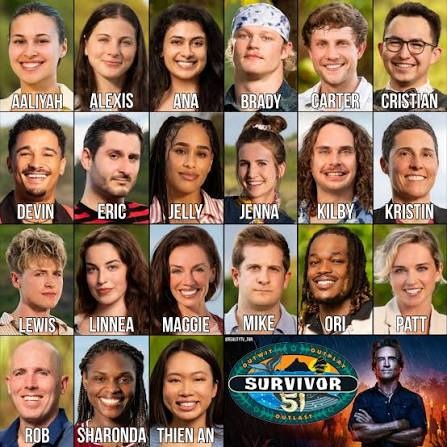
Throughout the history of Survivor, there have been plenty of people who had to leave the show because they had a genuine medical emergency. They’ve either seriously injured themselves while competing, fallen victim to malnutrition, or developed an infection of some sort while living on the beach. It’s never enjoyable to see someone eliminated for that sort of reason, though we are all glad that the show has a medical team on hand to look after the players.
Then there are the players who pretend to be ill to get off the show so they won’t be voted out. The prime example of this was Colton, who Jeff Probst has always claimed faked having appendicitis to get out of One World. (Colton, for the record, swears that he actually had a severe bacterial infection that felt like appendicitis.) This week, we got the most blatant example yet of a player faking an injury when Rob announced that he had to quit the game because his foot hurt.
The medical team was brought in to look at his foot. We were given a close-up of his foot while it was being examined, and I can say that it did not appear to be injured in any way. There were no bruises. There was no swelling. As a former dancer, I know a little bit about ankle and toe injuries, and Rob… well, I don’t want to call him a liar. If he was in pain, it was probably due to stress. Considering that Brady competed in an immunity challenge after chopping off a piece of his thumb and Kristen has a broken foot, it was hard to have much sympathy for Rob’s declaration that his foot pain made it impossible for him to continue in the game.
Rob, who started out so gung-ho and so determined to run the game, left the Savu tribe at the beginning of this episode. Most of the Savu Tribe suspected that he left not because of his foot but because he was on the wrong side of the cote at Tribal and his bizarre mid-council conversation with Eric didn’t work out the way that he thought it would. Rob left his immunity idol to Carter, who started this episode at the bottom of the totem pole with his tribe. However, Carter then left the Savu tribe when he was given an opportunity to visit the Toka tribe, search for a hidden advantage at their camp, and join their tribe if he felt like it. Carter didn’t find the hidden advantage, largely because the Savu tribe went through his bag and found the information about the hidden advantage while Carter was having a one-on-one conversation with Mike. Brady and Maggie were the ones who found the advantage, which turned out to be an extra vote at tribal. Carter, however, still decided to mutiny and join the Toka tribe.
Meanwhile, Devin volunteered to visit the Savu tribe. Devin did not mutiny because he felt that their shelter was not up to his standards. He did reconnect with Sharonda and Ori, with whom he made an alliance during the initial helicopter ride to the island. With Sharonda’s help, Devin found the hidden advantage. He also told everyone at the Savu tribe that Kilby could not be trusted.
Toka entered the immunity challenge with 11 members. Savu only had seven, but Savu still managed to win not just immunity but also four hens. The main reason Toka lost was because Savu had to sit out four people and Devin took it upon himself to tell Kilby that he wasn’t allowed to play, despite the fact that Kilby solves puzzles for a living.
At tribal, Devin, Brady, Patt, Jelly, and Mike were all determined to vote out Kilby. Devin felt he couldn’t trust Kilby. Brady was mad because he felt Kilby had insinuated that he was stupid. Kilby, however, was able to convince his allies — Jenna, Maggie, and Thien Ann — to join him in voting for Patt. Lewis and Carter, the two new members of the tribe, decided to join with Kilby, and Patt was voted out by a vote of 6-5.
I actually liked Patt. She reminded me of my best friend. But Brady and Devin have both been so smug that it was nice seeing them get blindsided. Devin, in particular, needs to get a grip and stop being so cocky. Brady can be a jerk, but he’s important to have around if you want to win challenges. I’m not sure what Devin really brings to the tribe beyond his own attitude.
For those keeping track of advantages: Carter has an immunity idol. Jelly has an immunity idol. Maggie has an extra vote. Devin has an extra vote. And there’s still an immunity idol sitting on Exile Island.
Next week — could it already be time for a merge? Or are they reshuffling the tribes? We’ll find out!
Hi, everyone! Tonight, on Mastodon, I will be hosting the #TubiThursday watch party! Join us for 1979’s The Warriors!
You can find the movie on Tubi and you can join us on Mastodon at 9 pm central time! (That’s 10 pm for you folks on the East Coast.) We will be using #TubiThursday hashtag! See you then!
Today, the Shattered Lens wishes a happy birthday to the one and only Sigourney Weaver. Seen here with Jonesy the Cat, Weaver will always be best-remembered for bringing to life Ellen Ripley and totally revolutionizing both horror and science fiction!
Today’s song of the day comes from Jerry Goldsmith’s iconic score for Alien.
This scene comes from the 1982 film, Pieces. It’s not easy find an appropriate scene to share from Pieces, or at least a scene that I can share without this site getting in trouble. Just about every scene in the movie features either nudity or really bloody violence. It’s probably nothing that would shock our wonderfully jaded readers but still….
But then there’s this scene right here. Now, in order to understand what’s happening here, you should keep in mind that Lynda Day George is playing an undercover cop who also happens to be a tennis pro. She’s been assigned to the local college. Her job is to figure out who is using a chainsaw to kill all of the students. Unfortunately, she sucks at her job so she has to get this kinda nerdy college student to help her out.
Anyway, after a fun-filled morning of playing tennis and not looking for the killer, they’ve just discovered a dead body in the showers. Yes, the killer has struck again and …. well, it was really messy. Speaking as someone who appreciates a clean house and a carefully organized day, I can relate to the reaction below.
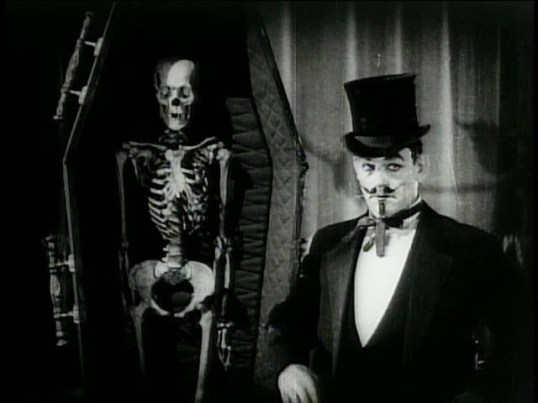
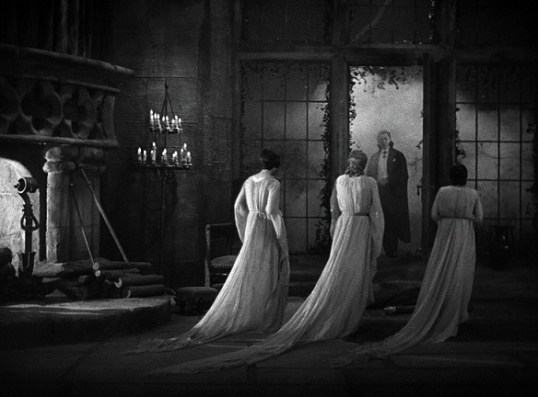
4 Or More Shots From 4 Or More Films is just what it says it is, 4 shots from 4 of our favorite films. As opposed to the reviews and recaps that we usually post, 4 Shots From 4 Films lets the visuals do the talking!
4 Shots From 4 Horror Films
West of Zanzibar (1928, dir by Tod Browning, DP: Percy Hilburn)
Dracula (1931, dir by Tod Browning. DP: Karl Freund)
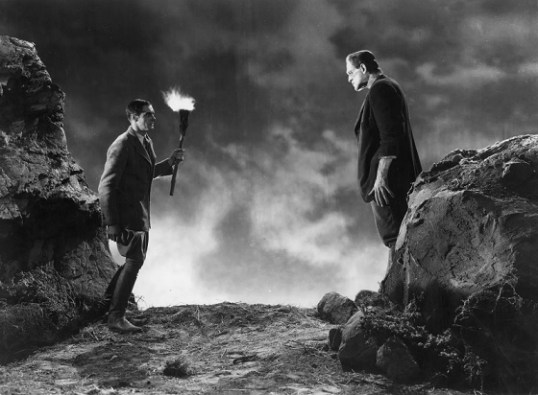
Frankenstein (1931, dir by James Whale, DP: Arthur Edeson)
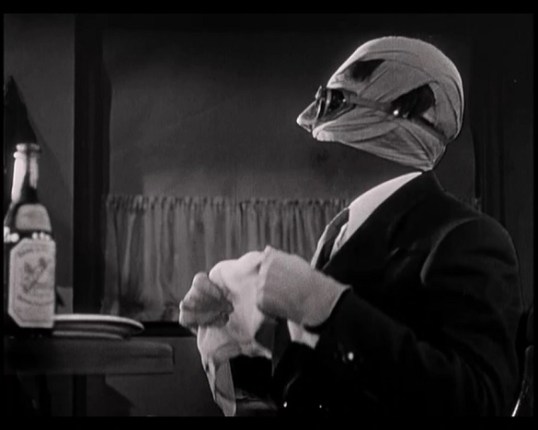
The Invisible Man (1933, dir by James Whale, DP: Arthur Edeson)
Hello and welcome to Day 8 of our annual October Horrorthon. I hope everyone is enjoying the horror content that we’ve offered so far. There’s a lot more to come! I was being somewhat flippant when I originally said that I was hoping for 1,000 October posts this year, but still, October is traditionally the month that brings out the site’s prolific side. One of the more interesting things about the horror genre is that there has always been a demand for it. People have always been in the mood for a good scare. Perhaps it helps them deal with reality. If I can handle seeing something scary on a screen, I can handle seeing it on a street corner as well.
I Blame American Horror Story
That said, I do have to say that I worry horror is becoming too “respectable” for its own good. When I was growing up, horror films got terrible reviews and were hated by parents. Today, they get nominated for Oscars, and horror filmmakers are given glowing write-ups in glossy magazines. That just doesn’t feel right to me. The best horror tended to be subversive, rebellious, and fearfully fun, and I fear that’s something that has been lost in this age of “elevated” horror.
Personally, I blame American Horror Story. Ryan Murphy’s deathless series normalized the idea of horror as something you watch in your living room with your family, as opposed to something you watch with all the lights out and the sound turned down so you don’t get in trouble. I’ve always felt that American Horror Story was essentially a horror show that was made by people who think that they’re better than the genre. We’re meant to be impressed that American Horror Story has a political and cultural subtext, as if that weren’t true of thousands of horror productions released before AHS aired its first episode. We’re supposed to be impressed that Jessica Lange and Sarah Paulson are willing to do horror, while ignoring all of the truly talented actors who worked exclusively in the genre before them.
Probably the worst thing that could have happened to the genre was American Horror Story winning that first Emmy for Best Limited Series. True horror doesn’t need awards.
In Praise of Older Movies
With all the controversy surrounding AI, I will say that, speaking for myself, I will always prefer movies with human beings, and I will always prefer practical effects to CGI. I think that’s reflected in the movies that I choose to review. I prefer older movies, and it worries me that those classics are running the risk of being forgotten.
That’s why I’m going to keep reviewing and promoting older films. I’m going to keep watching It’s a Wonderful Life every time it airs, because I know that, as soon as the ratings slip, NBC will use it as an excuse to yank it and replace it with Caroling With Celebs or something similar. And I am going to hold onto my physical media and keep it safe. That doesn’t mean that good films can’t be make use of AI, though I do think that it’s something that will work better for short films than for feature length productions. But my heart will always be with movies starring real people and shot in real locations and I’ll always admire the ingenuity of low-budget filmmakers who managed to make a compelling movie while spending very little money.
In the end, I think the future of AI in the film industry will depend on whether or not the studios feel that they can increase their profits by using it. That’s just the way things work. That said, I also think that there’s something a little bit boring about the inauthentic perfection of Tilly Norwood, and hopefully audiences will agree.
Who Are These People?
I’ve noticed that films are now being advertised with pull quotes taken from Letterboxd and other social media reviews. At the risk of being a snob, that really bothers me. I don’t know who any of these people are. Why should I care what they think about a movie? In the advertising for Backrooms, a Letterboxd user is quoted as saying, “Horror fans are eating good.” What does that even mean? Why should I be impressed that someone couldn’t even come up with something original to say?
Is That It?
That’s it! I hope everyone continues to enjoy Horrorthon and that this October is a great one for you!
The lesson of this video is don’t try to bury Messiah Marcolin.
Marcolin was the lead singer of the Swedish doom metal band, Candlemass. In this video, for their song Bewitched, Messiah Marcolin not only comes back to life and rises from his own coffin but he uses his powers of awesome singing to create an army of brainwashed zombies. This would be scary, except for the fact that Messiah Marcolin spends most of the video looking like this:
And this.
He does somehow manage to entrance a cute girl about halfway through the video.
I guess that’s the power of Swedish doom metal.
This video, which has been called one of the most enjoyably bad metal video of all time, is significant for being the first video to have been directed by Jonas Akerlund. From working with Candlemass, Akerlund went on to direct videos for everyone from U2 to Jane’s Addiction to Beyonce to The Rolling Stones to almost everyone else who has ever had a hit song.
“I don’t know if you’ve noticed this, but nothing has been fine. And everything’s been getting worse every second.” — Eric
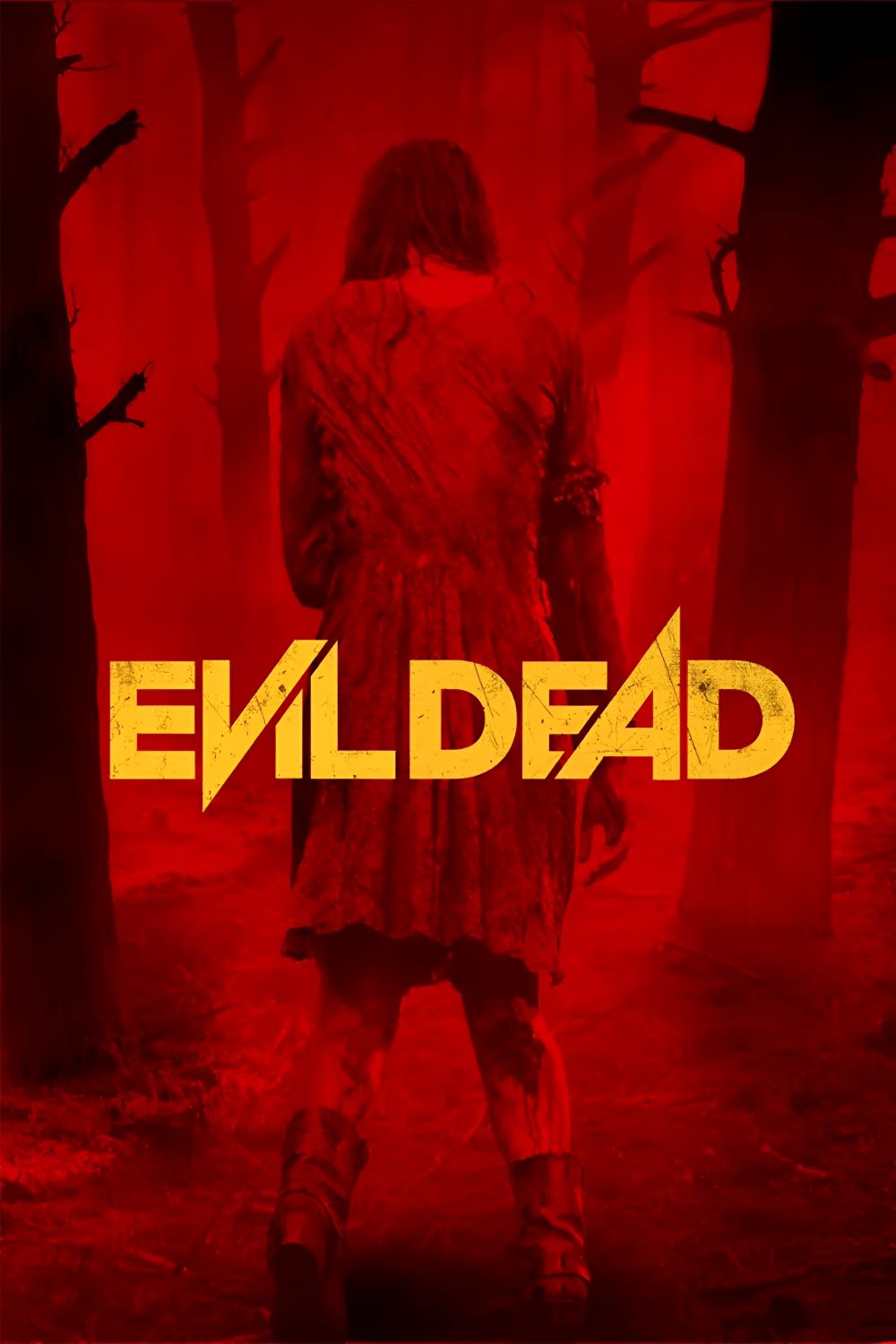
Evil Dead does not tiptoe around its legacy; it kicks the cabin door open, grabs the Necronomicon, and buries the audience under gallons of blood. Fede Alvarez’s 2013 soft reboot faced the nearly impossible task of revisiting Sam Raimi’s The Evil Dead, a cult horror landmark so tied to its handmade weirdness, manic energy, and eventual dark-comedy sensibility that a straight duplicate would have been pointless. Alvarez wisely does not try to replace the original. Instead, he takes its basic framework—the isolated cabin, the Book of the Dead, a group of doomed young people, and an escalating demonic outbreak—and reshapes it into something more polished, more punishing, and much more relentlessly nasty.
The major difference is tone. Raimi’s original had a rough, handmade quality that made every improvised effect, wild camera move, and strange performance feel like part of its identity. It was scary, but it was also energized by a kind of reckless invention. Alvarez’s Evil Dead goes in another direction. It is slicker, more controlled, and deeply mean-spirited in a way that makes the cabin feel less like a creepy vacation spot and more like a rotting death trap. This is not a winking horror-comedy, at least not until the violence becomes so excessive that it starts circling back around into stunned laughter. For most of its running time, the movie plays things brutally straight. It wants the audience to feel trapped in that filthy cabin right alongside the characters, watching every injury worsen and every possible escape route close off.
That seriousness is actually one of the film’s smartest choices. The cabin trip is no longer just a random weekend getaway that turns into hell. Mia, played by Jane Levy, is being brought to the family cabin by her brother David and a few friends so she can detox from heroin. It is a grim premise, but it gives the story a real emotional spine. Mia’s friends and family are not merely there to be picked off one by one; they are trying, however imperfectly, to help her survive something terrifying before any supernatural force enters the picture. When Mia starts seeing horrific things, the others initially assume she is suffering withdrawal symptoms or trying to manipulate them into letting her leave. That adds a nasty layer of uncertainty to the setup. The audience knows something evil is happening, but the people around Mia have a believable reason not to trust her.
Jane Levy carries a huge amount of the movie. Mia has to move through several different modes: vulnerable, furious, terrified, possessed, exhausted, and eventually almost mythic in her determination to survive. It would have been easy for the movie to turn her into either a helpless victim or a standard final girl, but Levy gives her enough rawness that she feels like a person fighting two battles at once. She is struggling with addiction, family resentment, and an actual demonic infection spreading through the cabin. Her performance gets more intense as the movie goes on, and by the final act she has become one of the more memorable protagonists in the franchise.
The supporting cast is less developed, though that is partly by design. David, played by Shiloh Fernandez, is Mia’s estranged brother and the closest thing the film has to a traditional lead for much of the first half. Lou Taylor Pucci’s Eric is the unfortunate idiot who reads from the Necronomicon despite the book being wrapped in barbed wire, marked with warnings, and seemingly designed to scream “do not open this.” Still, the movie at least gives him more guilt than the average horror-movie fool. Once he realizes what he has unleashed, Eric spends much of the film trying to help Mia and clean up his mistake. Olivia and Natalie are thinner characters, but the film uses them effectively as different stages of the Deadite infection and as delivery systems for some especially vile set pieces.
And that is where Evil Dead really earns its reputation. The film’s violence is not merely bloody; it is aggressive, tactile, and determined to make the audience squirm. Needles, glass, nail guns, electric carving knives, box cutters, hot water, exposed nerves, severed limbs—Alvarez and co-writer Rodo Sayagues treat the cabin like a giant torture chamber filled with household objects waiting to become weapons. The gore is so over-the-top that it becomes almost operatic. There is a clear effort to make every major injury feel specific rather than generic. This is not just people getting slashed in dark rooms. The movie wants viewers to remember exactly what happened, which is why several scenes are difficult to shake even after the credits roll.
What makes the carnage work is the heavy use of practical effects. The film has digital touch-ups here and there, but it mostly wants blood, makeup, prosthetics, and physical messiness in the frame. That choice connects it directly to the old-school horror tradition that made the original The Evil Dead so memorable. Alvarez has a cleaner visual style than Raimi, but he does not make the mistake of turning the Deadites into sleek CGI monsters. They look diseased, swollen, burned, cut open, and horribly physical. The cabin itself is just as important. It is damp, dark, decaying, and full of corners that seem infected before anyone even opens the book.
The film also knows how to use the iconography of the series without becoming trapped by it. The Book of the Dead is immediately recognizable, but it is presented as a more grotesque object than ever: bound in human skin, wrapped in barbed wire, and full of disturbing images and warnings that practically dare someone to ignore them. There are nods to Raimi’s films, including a familiar yellow Oldsmobile and the expected cabin imagery, but Alvarez avoids simply repeating Ash Williams’s story. Bruce Campbell’s Ash is such a distinct character that trying to replace him outright would have been a disaster. Instead, Evil Dead makes Mia its own survivor and lets her final confrontation stand apart from the earlier movies.
The biggest criticism of Alvarez’s film is also a fair one: it can feel almost too grim. The original movies had a wild punk-rock sense of fun—raw, fast, messy, inventive, and powered by the kind of reckless confidence that turns limitations into personality. Alvarez’s soft reboot abandons that punk-rock attitude almost entirely. If Raimi’s The Evil Dead feels like a sweaty, chaotic garage band ripping through a horror song at maximum volume, Alvarez’s Evil Dead is the Norwegian black-metal version: colder, uglier, more nihilistic, and committed to burying the audience under mud, blood, grief, and cruelty. It is still extreme, but it is extreme in a much more punishing key.
That is not automatically a flaw, even if it may leave fans of the original’s humor missing the unhinged fun. Alvarez is not trying to make a Raimi imitation. He makes a full-blooded, punishing horror film that takes the mythology seriously while still delivering the series’ essential pleasures: demonic possessions, a cursed cabin, practical gross-out effects, and enough blood to drown a small town. The dialogue is occasionally stiff, some of the supporting characters never become much more than targets, and the addiction metaphor can be a little blunt, but those weaknesses do not erase the film’s commitment or craft.
The climax is where the movie finally fully embraces the outrageousness that defines the franchise. Mia’s fight against the Abomination during a literal rain of blood is ridiculous in the best possible way. It is gruesome, excessive, and visually unforgettable. The movie has spent so long tightening the screws that this ending feels like an explosion of all the pent-up insanity it had been holding back. It is not as funny as Evil Dead II or Army of Darkness, but it absolutely understands that an Evil Dead finale should be bigger, wetter, louder, and more deranged than logic permits.
Ultimately, Evil Dead works because it treats the source material with respect without treating it like museum property. It is nastier than the original, more emotionally grounded, and less playful, but it is still recognizably part of the same cursed family tree. Alvarez’s version may not have the handmade chaos or goofy charm of Raimi’s The Evil Dead, but it has its own savage identity. More importantly, it proved the franchise could move forward without simply repeating Ash Williams’s story. Its grimy, practical-effects-heavy, emotionally brutal approach became the blueprint for the modern Evil Dead films that followed, including Evil Dead Rise and Evil Dead Burn, even as each one found a new setting, cast, and nightmare to unleash. Evil Dead Rise moved the carnage from the cabin into a cramped apartment building, while Evil Dead Burn carried that modern branch of the series forward with another standalone story connected to the same larger Deadite universe.
For viewers who want horror movies to go all the way—who want the blood to spray, the limbs to fly, and the final girl to earn every second of her survival—it remains one of the strongest horror remakes of its era.