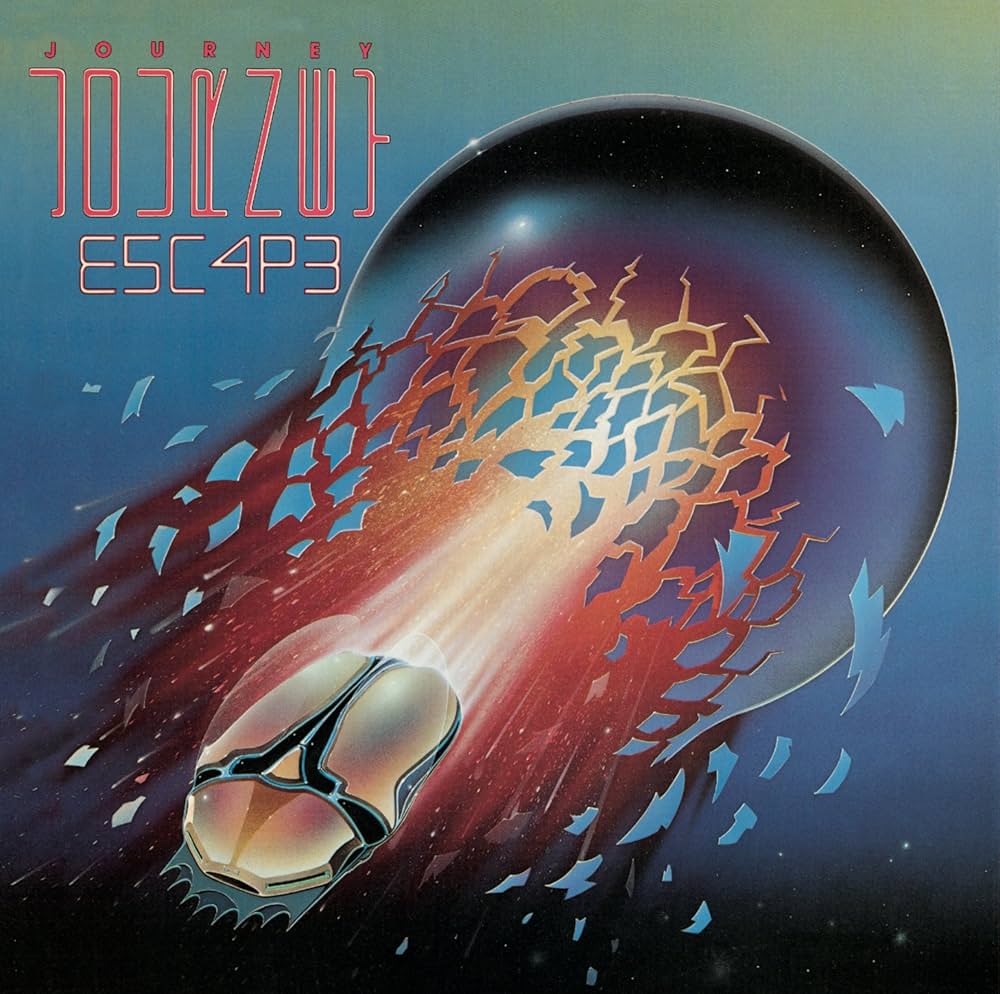
Let’s be real for a second: if you had to pick one single album that perfectly encapsulates the moment arena rock shook off its 70s blues-rock hangover and planted its flag square in the middle of the 1980s, it’s Escape. Journey’s seventh studio album, dropped in the sweltering summer of 1981, wasn’t just a commercial smash—it was a cultural re-calibration. It’s the record that took a band of former San Francisco prog-rockers, gave them a glossy sheen, and turned them into the house band for every stadium, coliseum, and municipal auditorium from coast to coast. This wasn’t a sellout; this was a breakthrough. Escape didn’t just ride the wave of arena rock—it basically built the wave, grabbed a surfboard, and rode it straight to diamond-certified immortality.
The secret to Escape’s world-conquering power starts with the lineup, plain and simple. This was the first full album with keyboardist Jonathan Cain fully integrated into the songwriting engine, and his arrival cannot be overstated. Before Cain, Journey had a more progressive, meandering sound—great musicianship, sure, but lacking that killer hook that could stop a radio dial in its tracks. Cain, alongside guitar virtuoso Neal Schon and the golden-throated Steve Perry, formed a triumvirate that just clicked. They started writing songs that were lean, mean, and built for maximum emotional impact. Cain’s keyboard riffs became the melodic anchor, Schon’s guitar work shifted from noodly solos to these wide, shimmering power-chord landscapes, and Perry? Man, Perry just did what he did best—singing his lungs out with that raspy, soulful tenor that could make a breakup feel like a Shakespearean tragedy and a triumph feel like winning the lottery. The production, helmed by the legendary Kevin Elson and Mike Stone, was pristine, layering every synth pad and backing vocal until it sounded like a cathedral of rock sound. It was expensive, it was ambitious, and it worked like a charm.
Now, let’s talk about the hits, because you literally cannot escape them—pun absolutely intended. The opening salvo of Don’t Stop Believin’ is arguably the most iconic album opener in rock history, and I’ll fight anyone who disagrees. That plinking piano intro, the creeping bass line, the way it builds and builds until Perry finally explodes with that “streetlight people” chorus—it’s pure adrenaline in musical form. It peaked at number nine on the Billboard Hot 100, but that statistic is laughable considering it’s become a karaoke national anthem for multiple generations. Then you’ve got Open Arms, the ultimate power ballad that sat at number two for six agonizing weeks, kept from the top spot by Olivia Newton-John’s Physical. But honestly? Open Arms is the one that still makes grown adults tear up at weddings and funerals alike. It’s tender without being saccharine, huge without being bombastic. And you can’t forget Who’s Crying Now, the first single, which kicks off with that unforgettable synth hook and rides a funky, almost new-wave groove that proved Journey could adapt without losing their identity. Still They Ride rounds out the hit parade, a more melancholic, bluesy number that showed they had range beyond the stadium anthems.
But here’s the thing that makes Escape a true landmark: the deep cuts are just as vital as the singles. This isn’t a two-hit wonder padded with filler. The title track, Escape, is a turbo-charged rocker that might actually be the most inspiring song on the whole record, a call to break free from whatever’s holding you down. Stone in Love became a massive FM radio staple in its own right, a nostalgic trip back to teenage summers that feels both specific and universal. Keep on Runnin’ and Lay It Down bring the raw energy, with Schon’s guitar biting harder than anywhere else on the album, while Mother, Father closes out the A-side with a dramatic, almost cinematic sweep that hints at the band’s prog-rock past. Every single track clocks in under five minutes, every chorus is built for a crowd of twenty thousand people to shout back, and every guitar solo feels like it was recorded in an echo chamber the size of a football field. It’s a record that was deliberately, meticulously designed for live performance, and it shows in every note.
So how did Escape usher in the 80s arena rock era? Let’s break it down. Before this album, the arena rock landscape was dominated by the bombastic blues of Led Zeppelin, the theatrical metal of Van Halen, and the working-class heartland rock of Bruce Springsteen. Those were all massive acts, sure, but they were holdovers from the 70s. Journey, with Escape, offered something different: a sound that was cleaner, brighter, and more synth-forward, yet still packed enough guitar muscle to satisfy the headbangers. They basically invented the template that bands like Bon Jovi, Def Leppard, and REO Speedwagon would ride to glory for the rest of the decade. The massive, layered backing vocals, the anthemic “whoa-oh” choruses, the gleaming keyboard patches that sounded like they were beamed in from a sci-fi future—all of that became the default setting for 80s rock. Escape proved that you didn’t need gritty distortion or bluesy swagger to fill a stadium; you just needed a killer hook, a relatable lyric about love or dreams, and a chorus that could be heard over the roar of twenty thousand screaming fans. It was rock music that was aspirational, not confrontational—music for the masses, not the misfits. And the industry took notice. Suddenly, every major label was hunting for their own Steve Perry, their own Jonathan Cain, their own glossy production team to replicate that Escape magic.
Looking back over forty years later, Escape hasn’t aged a day. It still sounds massive, still sounds fresh, and still sounds like the definitive blueprint for 80s arena rock. It’s the album that made Journey a household name, that turned Don’t Stop Believin’ into an eternal anthem, and that showed the world how to marry melody with muscle in a way that filled seats and sold records. Sure, you can argue that Infinity or Departure had more adventurous moments, but neither of those albums had the cultural reach, the radio dominance, or the sheer, unadulterated swagger of Escape. This was the moment when Journey stopped being a band and started being an institution. Escape didn’t just capture the sound of 1981—it predicted the sound of the next decade. It’s a time capsule, a greatest-hits collection in its own right, and a masterclass in how to build a rock album that’s built to last. Put it on, turn it up, and try not to sing along. I dare you.

