I’ve shared several episodes of the “This Week in Charles Bronson” podcast with our readers over the last year. I just love visiting with my Buchinsky Buddy Eric Todd about all things related to Charles Bronson. In our latest episode, Eric pays tribute to actress Antoinette Bower, who passed away on April 30th, 2026, at the age of 93. The first Bronson film he ever saw was THE EVIL THAT MEN DO (1984), where Bower plays Claire Molloch, the sister and the love of the life of political torturer Clement Molloch (Joseph Maher). In Bower’s three-decade career she starred in just about every classic TV series you can think of, including Have Gun, Will Travel, The Man from U.N.C.L.E., Star Trek, and with Bronson and Kurt Russell in The Travels of Jaimie McPheeters. It’s a lot of fun revisiting much of her film work, and finding out a lot of other interesting things about her life after she retired from show business in the early 90’s.
After that, I get to tell you all about my trip to Vermont! My wife and I were able to visit Charles Bronson’s gravesite at the Brownsville Cemetery in West Windsor, as well as the property that was once his and Jill Ireland’s horse farm on Bronson Road. We were able to eat at places where he liked to eat and even go shopping at places where he liked to shop! And to top it all off, we had the good fortune to meet his son, Valentine McCallum, who still has property in the area and just happened to be visiting when we were there. Val’s an incredible professional musician and singer, and we were able to catch him performing at the Skunk Hollow Tavern on our last night in the area. I share a couple of his songs on the podcast. What I love the most is that these are very personal songs that Val performed that night. I think you’ll enjoy them. I know we sure did!
So, if any of that sounds like fun to you, take some time to give us a listen. I’m sharing the YouTube and Spotify links below, but you can find us on Apple Podcasts as well!
4 Or More Shots From 4 Or More Films is just what it says it is, 4 shots from 4 of our favorite films. As opposed to the reviews and recaps that we usually post, 4 Shots From 4 Films lets the visuals do the talking!
Today, we pay tribute to the year 2004! It’s time for….
4 Shots From 4 2004 Films
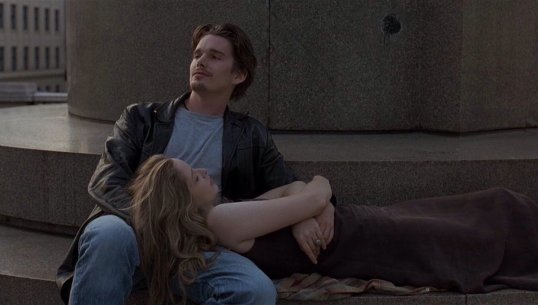
Before Sunset (2004, dir by Richard Linklater, DP: Lee Daniel)
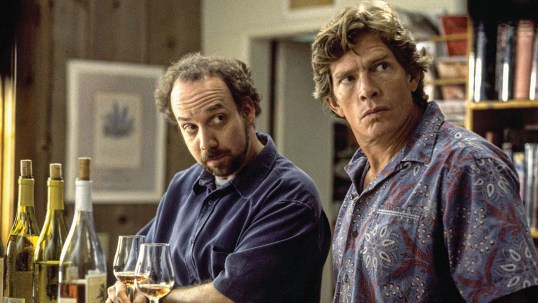
Sideways (2004, dir by Alexander Payne, DP: Phedon Papamichael)
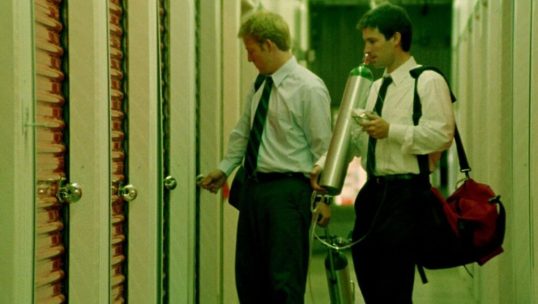
Primer (2004, dir by Shane Carruth)
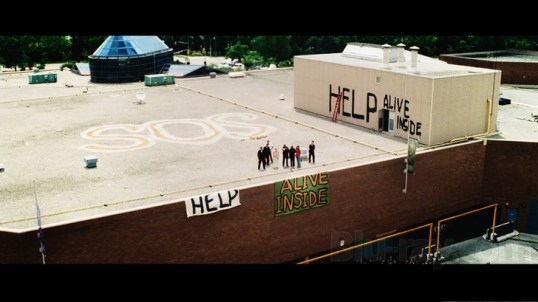
Dawn of the Dead (2004, dir by Zack Snyder, DP; Matthew F. Leonetti)
When I was a teenager growing up in Toad Suck, Arkansas, we only had 5 TV channels. My favorite of those channels was Fox 16 out of Little Rock, because they showed a lot of movies. Many of my favorite movies to this day are the movies that showed on Fox 16 in the mid-80’s. One of those movies that they played frequently was TIGHTROPE. This being the TV edit of the movie, I was too young and naive to realize just how different of a character Wes Block was for Clint Eastwood. Sure, he was a badass cop, but he also indulged in somewhat perverse sexual activities with the ladies of the night in New Orleans. It’s actually an incredible performance and the type that helps separate Eastwood from so many of his contemporaries.
TIGHTROPE was released 42 years ago to the date on August 17th, 1984. Let’s celebrate by watching this interesting clip from the movie. It’s definitely tame compared to many others in film, but I love the payoff !
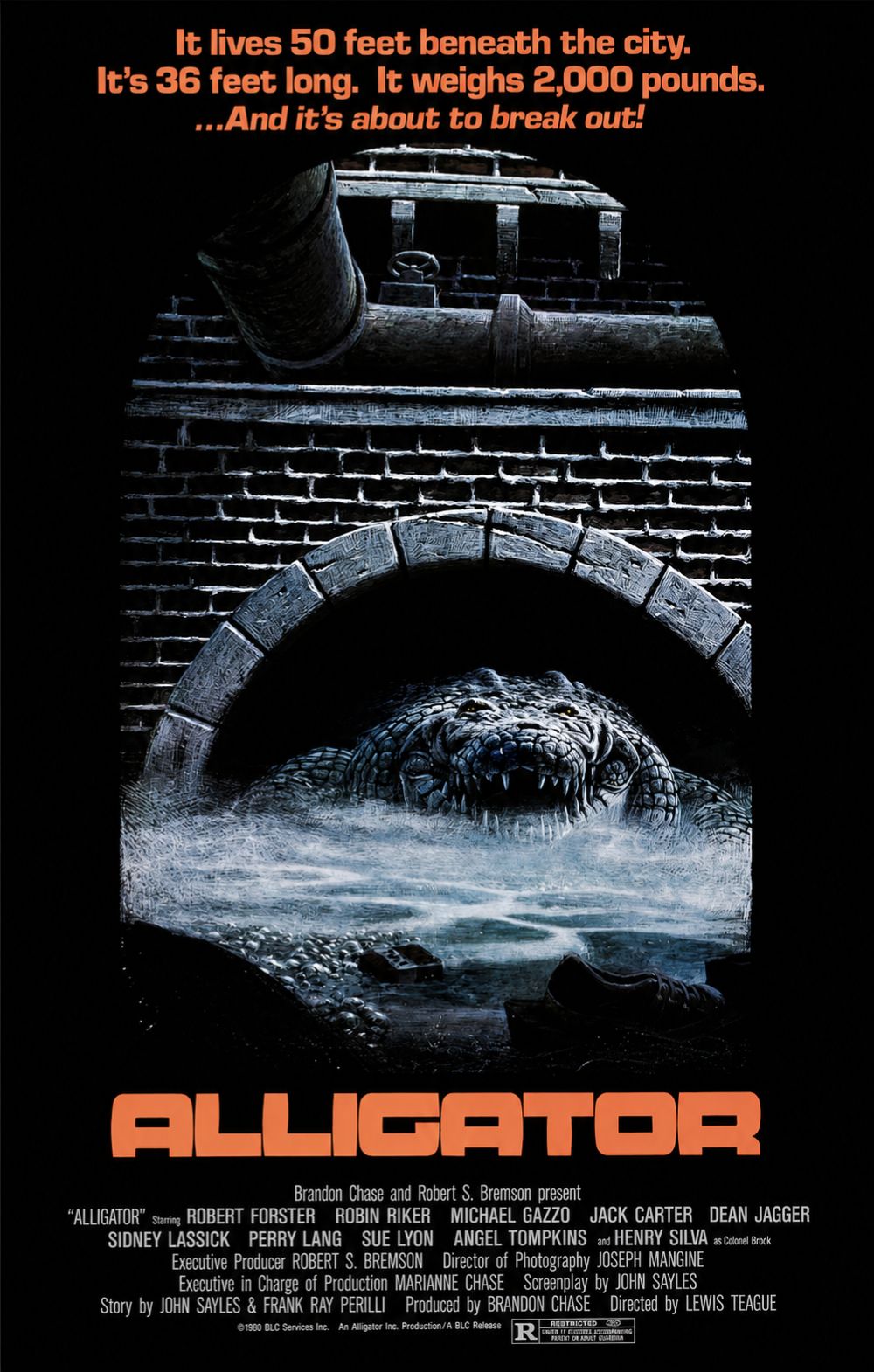
Lewis Teague’s Alligator is exactly the sort of movie that sounds like a bad joke until you sit down with it and realize it is having a much better time than most “serious” creature features. The premise is pure drive-in delirium: a baby alligator is flushed down a toilet, survives in the sewer system beneath St. Louis, Missouri, feeds on discarded laboratory animals pumped full of experimental growth hormones, and eventually becomes a gigantic, people-eating urban nightmare. It is absurd from the start, but that absurdity is the movie’s best asset. Alligator is not a good film in the polished, tightly controlled sense. It is too clunky, too broad, and too openly ridiculous for that. But it is never boring, and it understands that a movie about a giant alligator stalking the sewer tunnels under St. Louis should be grimy, nasty, funny, and just a little bit stupid.
The film arrives in that sweet spot between the straightforward animal-attack movies of the 1970s and the increasingly self-aware horror comedies of the 1980s. It has some of the structure of a Jaws knockoff, of course: authorities dismiss warnings, a difficult investigator takes the danger seriously, and a creature grows into an outsized public threat before the final confrontation. But Alligator does not have the resources, atmosphere, or aquatic terror of Spielberg’s film, and to its credit, it does not really pretend to. Instead, it leans into the cheapness of its materials. The alligator is mostly an oversized practical effect, sometimes convincing enough to be threatening and sometimes looking like the kind of thing that should be knocking over miniature buildings in a 1950s monster movie. The difference is that Teague knows how to frame the thing. He keeps the creature partly hidden when that helps, lets the sewer setting do much of the atmospheric heavy lifting, and saves the full ridiculousness of the monster for when ridiculousness is exactly what the audience wants.
There is an immediately appealing trashy logic to the story. The alligator is not simply an animal that wandered into the wrong place; it is a product of environmental carelessness, corporate experimentation, and the city’s tendency to throw its problems underground. The movie opens with a young girl’s pet alligator being flushed away after it bites someone, a cruelly comic act that functions as the film’s entire moral universe in miniature. Humans dispose of an inconvenient creature, neglect the consequences, and then act shocked when the creature becomes a gigantic murderous problem. The idea is broadly ecological and vaguely anti-corporate, but Alligator never becomes preachy. It keeps those elements in the background as an excuse for gore, sewer crawling, and a steadily escalating body count.
Robert Forster plays David Madison, a St. Louis cop with the permanently tired demeanor of someone who has been forced to listen to too many witnesses describe impossible things. Forster is a major reason the movie works as well as it does. He does not play the material like a joke, but he also does not strain to elevate it into prestige horror. His performance is dry, irritated, and completely appropriate for a man investigating missing-person cases that increasingly point toward a subterranean reptile large enough to eat a car. Madison is not a particularly complicated protagonist, but Forster gives him enough weary professionalism that the audience can follow him through the nonsense. His deadpan approach also makes the film funnier without turning it into outright parody.
The supporting cast is a strange, entertaining mixture of familiar character-actor energy and exploitation-movie weirdness. Robin Riker plays Marisa, a reptile expert and Madison’s eventual love interest, and she is better than the role strictly requires. She has a brisk, practical presence, which is useful in a movie where most characters either refuse to believe the obvious or exist to become alligator food. The romance between her and Madison is thin, but it is handled with enough low-key charm that it does not stop the movie cold. It feels like a necessary B-movie ingredient rather than a desperate attempt to convince viewers that they are watching something emotionally profound.
Then there is Henry Silva. Honestly, the presence of Henry Silva alone tells you what kind of movie Alligator is trying to be. Silva plays Colonel Brockman, a professional hunter hired by the evil pharmaceutical company to find and kill Ramon, the giant gator created by its illegal growth-hormone dumping. He is not the mastermind behind the scientific mess; he is the company’s hired cleanup crew, brought in once the whole operation has become too big and too toothy to bury. Silva approaches the role with exactly the degree of swaggering, oily menace it needs. He is here to be Henry Silva in a monster movie, which means glaring, sneering, and acting as though the chance to hunt a massive sewer reptile is simply another profitable afternoon at work. Every time he shows up, the movie gets a little more fun.
The screenplay comes from John Sayles, which is almost comically overqualified on paper, though it makes more sense once the dialogue starts landing. Sayles gives the movie flashes of wit and an edge of social satire that keep it from being totally disposable. There are jokes about cops, politicians, wealthy elites, and corporate corruption, and while none of them are especially subtle, they have the right bite for a film this grubby. The story’s best satirical impulse is its refusal to make the rich and powerful merely unlucky victims of the monster. The alligator’s rampage eventually collides with a wealthy social gathering, and the movie takes obvious pleasure in turning a fancy event into a feeding ground. It is not exactly The Texas Chain Saw Massacre in its class consciousness, but it does understand that watching an enormous reptile crash through the polished facade of upper-class respectability is satisfying.
Teague directs with the workmanlike confidence of someone who knows that the material only needs to get from one entertaining set piece to another. The sewer scenes are the film’s strongest visual material. They are damp, shadowy, cluttered, and full of the sort of industrial grime that exploitation cinema loves. The setting is inherently creepy because it is both unreal and plausible: everyone knows a city like St. Louis has tunnels, pipes, forgotten chambers, and places where things can disappear, even if nobody really believes a giant alligator lives down there. The movie uses that unease effectively. When characters descend into the darkness, the tension is simple but real. You know something huge is moving nearby, and you know the special effects are not going to hold up to close inspection, but the atmosphere carries you through.
The attacks are uneven, but that is part of the charm. Some are genuinely nasty, particularly when the movie lets the creature strike suddenly from the shadows. Others are so exaggerated that they become funny in ways the filmmakers likely anticipated. There is a particularly memorable moment involving a child and a swimming pool that has the gleefully tasteless punch of old-school grindhouse horror. Alligator is never as graphic as the nastier exploitation films of its era, but it has enough blood, torn bodies, and monstrous chomping to satisfy an audience looking for low-rent carnage. It knows the basic rule of this kind of movie: if you are going to ask viewers to accept a mutant sewer alligator, you had better let it eat some people.
What makes Alligator last beyond its premise is that it does not seem embarrassed by what it is. There are many creature features that feel apologetic, as if the filmmakers know they are making junk and are waiting for the audience to laugh at them. Teague’s film is junk, absolutely, but it is crafted junk. It has actual pacing, committed actors, useful atmosphere, and a screenplay that occasionally has more on its mind than the average monster-on-the-loose picture. It is bad enough that its flaws become part of the entertainment, especially whenever the huge reptile lumbers into view or the plot makes a leap that only makes sense if nobody involved pauses to think for ten seconds. Yet it is not so bad that it becomes a chore. That is the crucial distinction.
By the time Alligator reaches its climax, it has delivered nearly everything its title promises: sewers, corrupt businessmen, cops with guns, practical monster effects, socialites getting their comeuppance, and Henry Silva looking like he would gladly accept a corporate paycheck to hunt an enormous mutant reptile. It is the kind of film best watched with an appreciation for grime, excess, and the noble tradition of exploitation cinema turning a ridiculous idea into a perfectly decent Saturday-night monster movie. Alligator will not make anyone forget the great creature features, but it earns its place as a scrappy, trashy, oddly lovable B-movie. It is not awful. It is not even truly bad. It is just delightfully cheap, mean, and goofy enough to remind you why bad movies can sometimes be more fun than good ones.
Hi, everyone! Tonight, on twitter, I will be hosting one of my favorite films for #MondayMania! Join us for The Surrogate!
You can find the movie on Prime and then you can join us on twitter at 9 pm central time! (That’s 10 pm for you folks on the East Coast.) See you then!
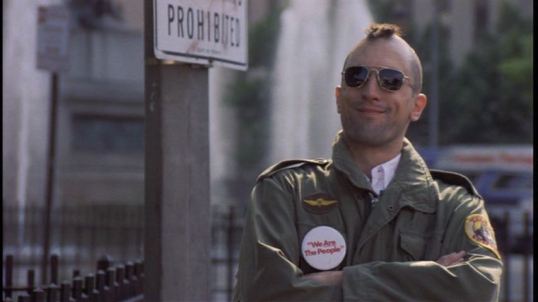
Taxi Driver is 50 years old but it’s still one of cinema’s most definitive portraits of urban paranoia and societal detachment. Travis (played by Robert De Niro) obsesses on the city that he harshly judges even though he’s as much a part of New York as those who he wishes will be washed away.
This scene features Robert De Niro, Martin Scorsese, and Paul Schrader at their definite best. I imagine that, for a lot of people, this is one of those scenes that solidified their opinions on New York City. For the record, the last time I was in New York, everyone was fairly pleasant. They weren’t exactly friendly but I also didn’t get my bag stolen. (Those of us who don’t live in New York tend to assume that we’ll get mugged as soon as we leave JFK.)
4 Or More Shots From 4 Or More Films is just what it says it is, 4 shots from 4 of our favorite films. As opposed to the reviews and recaps that we usually post, 4 Shots From 4 Films lets the visuals do the talking!
Today, the Shattered Lens wishes a happy birthday to actor Robert De Niro. It’s time for….
4 Shots From 4 Robert De Niro Films
Taxi Driver (1976, dir. Martin Scorsese, DP: Michael Chapman)
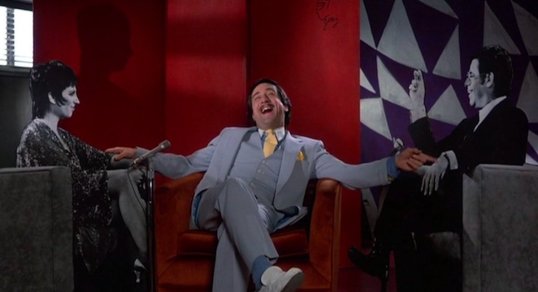
The King of Comedy (1982, dir by Martin Scorsese, DP; Fred Schuler)
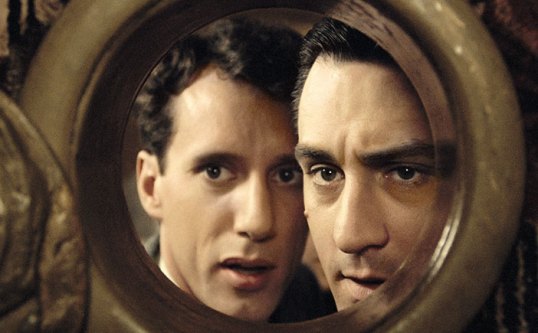
Once Upon A Time In America (1984, dir by Sergio Leone, DP: Tonino Delli Colli)
Casino (1995, dir by Martin Scorsese, DP: Robert Richardson)
As some of our regular readers undoubtedly know, I am involved in hosting a few weekly live tweets on twitter and occasionally Mastodon. I host #FridayNightFlix every Friday, I co-host #ScarySocial on Saturday, and I am one of the five hosts of Mastodon’s #MondayActionMovie! Every week, we get together. We watch a movie. We snark our way through it.
Tonight, for #MondayActionMovie, I will be hosting Zombie 5: Killing Birds!
If you want to join this watch party, just hop onto Mastodon, pull up Zombie 5: Killing Birds on YouTube, start the movie at 8 pm et, and use the #MondayActionMovie hashtag!
After reading a lot of negative reviews, I went into this 2011 remake of Sam Peckinpah’s STRAW DOGS expecting to not like it. I only bought the DVD because I’m a James Woods super-fan and completist. The good thing about that lowering of expectations, though, is that in my first viewing (in 2026) I was able to focus on the movie itself rather than in comparison to the original. After watching it, I would never argue that this version is a great movie, but I did find myself enjoying it more than I thought I would.
David and Amy Sumner (James Marsden and Kate Bosworth) arrive in her childhood hometown of Blackwater, Mississippi, where David plans to work on a screenplay while they fix up her old family home. David’s a successful Hollywood screenwriter, but he’s not tough at all, which is at odds with the small town football and southern deer-hunting culture he now finds himself in. Amy, who’s had some success as an actress, has a history with many of the people in town, especially her old boyfriend Charlie (Alexander Skarsgard). Eventually that history turns into something much more dangerous than you would ever imagine (if you hadn’t seen the original).
Because I’ve only seen the original film once or twice in my currently 52-year-old life, I don’t necessarily hold it as some sort of untouchable masterpiece of cinema, and I can like how this version of STRAW DOGS builds its tension. There are definitely some moments where I found myself wondering what the hell David and Amy were thinking. David seems intent on giving the local yokels every possible opportunity to walk all over him. Then again, as a person who always tries to be nice and avoid a fight, I don’t know how much different I would have been. I would hope that if my wife and entire livelihood was being threatened, however, I’d find the intestinal fortitude to do whatever it takes to protect them and myself. David eventually does find that nature within himself.
Amy’s unexplained behavior is even worse. After being offended that the locals ogle her when she’s exercising, she decides the appropriate response is taking her top off purposely in front of an open window so those same locals can see. While I can unequivocally state that there’s never any excuse for violence against women among rational people, the problem is that these are irrational people who don’t play by the rules of society. This is one of those cases where the only possible explanation for Amy’s behavior is because the screenplay needed her to do it. Even when the worst case scenario eventually plays out, the despicable behavior taps into our basic instincts and we want to see vengeance served.
James Marsden and Kate Bosworth are okay as David and Amy. Their characters aren’t particularly engaging, but you can’t help but pull for them in comparison to those around them. Alexander Skarsgard is awkward and creepy as Charlie, Amy’s old boyfriend. I loved him as the powerful vampire in the HBO series TRUE BLOOD. He’s something totally different here, and he eventually goes so far off the reservation you can’t help but want him to get his comeuppance. Of course, I wanted to watch the movie because of James Woods, who plays Tom Heddon, a former local high school football coach who seems to be just a drunk at the bar these days. It turns out that he’s loud, mean and incredibly nasty. In a history of playing vicious bastards, this character plays out as one of his worst. It’s an incredible performance just a couple of years before, as Woods has said, his unapologetically conservative political views would essentially get him blackballed from Hollywood.
The final scenes are extremely violent, and based on what we’ve seen, it’s hard not to feel that the violence is justified. It’s ugly, but I won’t deny that I wasn’t emotionally moved to see it. Legendary film critic Roger Ebert would say that he preferred this remake to the original. I won’t go that far, but that’s a pretty strong indicator that this film shouldn’t be dismissed just because most won’t find it to be as good as the original. What it is is a mean, violent thriller with some strong performances, especially from Skarsgard and Woods. If you’re willing to forget that it’s a remake of a superior film from 40 years earlier, you just may enjoy it!