What’s an Insomnia File? You know how some times you just can’t get any sleep and, at about three in the morning, you’ll find yourself watching whatever you can find on cable or streaming? This feature is all about those insomnia-inspired discoveries!
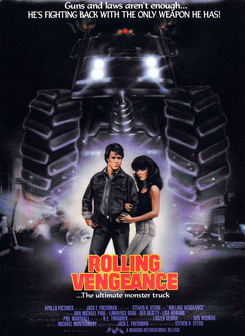
If you’re having trouble getting to sleep tonight, you can always go over to YouTube and watch 1987’s Rolling Vengeance.
Rolling Vengeance supposedly takes place in Ohio but one look at the perpetually wet weather and the misty country side leaves little doubt that this film was shot in Canada. Joey Russo (Don Michael Paul) is a trucker who seeks revenge after the antics of Tiny (Ned Beatty) and his redneck sons lead to death of first his mother (Susan Hogan) and sisters and then his father (Lawrence Dane). Joey’s way of getting revenge is to go down to the junkyard, collect a bunch of parts, and build his own monster truck. Soon, Joey is tracking down Tiny’s men. Somehow, Joey is able to sneak up on people while driving a gigantic truck. Also, for some reason, it never occurs to anyone that the best way to escape from the path of a big, lumbering vehicle is to do anything other than run in a straight line.
It’s a bit of a stupid movie and there’s a gratiotious rape scene that is hard to sit through and which leaves a sour taste that runs throughout the final 20 minutes of the film. Don Michael Paul makes for a blank-faced hero. On the plus side, the truck destroys a lot of poorly constructed buildings. Fan of vehicular mayhem will find a lot to enjoy here. Fans of great character actors going totally overboard in genre films will enjoy watching Ned Beatty as he wears a leather jacket and talks like the leader of the Canadian Hell’s Angels.
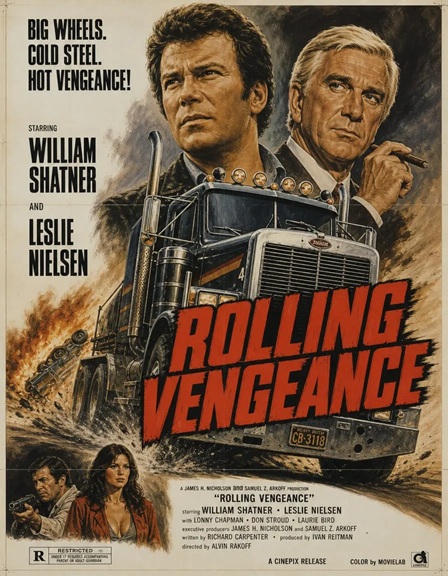
As I watched the film, it occurred to me that, if it had been made in the 70s, it would have starred William Shatner as the good trucker and Leslie Nielsen would have played the Ned Beatty role. Lawrence Dane would have still played the father.
These predictions are still too early to be taken seriously. The year is getting off to a slow start as far as the Oscars are concerned. That said, here are my predictions for June!
Check out my predictions for March and April and May!
Best Picture
The Adventures of Cliff Booth
Digger
Dune Part Three
Fatherland
Fjord
I Play Rocky
Primetime
Project Hail Mary
The Social Reckoning
Wild Horse Nine
Best Director
David Fincher for The Adventures of Cliff Booth
Phil Lord and Christopher Miller for Project Hail Mary
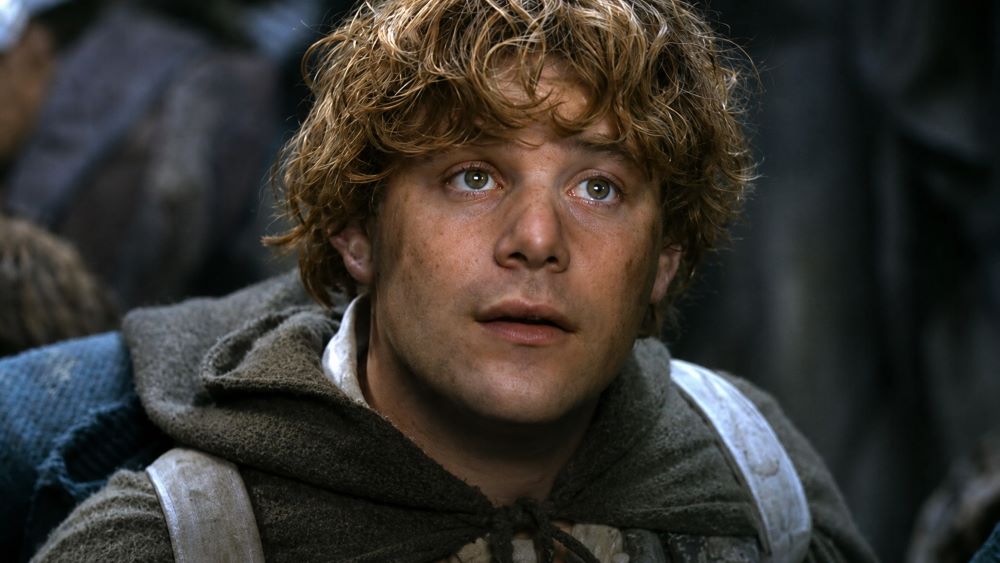
“Don’t you leave him, Samwise Gamgee. And I don’t mean to.” — Samwise Gamgee
Samwise Gamgee stands as one of the most compelling and deeply human characters in J.R.R. Tolkien’s The Lord of the Rings, a figure whose quiet strength and unwavering loyalty redefine the very notion of heroism. Unlike the noble Aragorn or the wise Gandalf, Sam is an ordinary hobbit—grounded, humble, and devoid of grand ambitions. His heroism does not stem from swordplay or sorcery, but from his steadfast devotion to Frodo Baggins and the simple, unshakable belief that even the smallest person can change the course of the future. Tolkien uses Sam to illustrate that true courage is not the absence of fear, but the resolve to act despite it, a theme that resonates throughout the epic narrative of The Lord of the Rings.
Traditional fantasy heroes are often defined by their extraordinary abilities or grand destinies, but Sam’s greatness is rooted entirely in his profound normalcy. He is not driven by a prophetic calling or a desire for glory; rather, his initial motivation is simply the fear of losing his master and friend, Frodo Baggins. Tolkien uses Sam to demonstrate that heroism is not the absence of fear, but the choice to push forward in spite of it. When Sam is forced to temporarily take up the burden of the One Ring in The Return of the King, his inherent simplicity becomes his greatest weapon. Unlike the great lords of Men, Sam lacks the ambition and desire for power that the Ring exploits, allowing him to willingly surrender it back to Frodo—a testament to the incorruptible nature of the common folk.
At the heart of Samwise’s character is an unparalleled loyalty that elevates him from a mere sidekick to the true savior of the quest. As Frodo is progressively broken down by the physical and psychological toll of the journey to Mordor, it is Sam who serves as the emotional anchor preventing his total collapse. Sam’s devotion reaches its zenith on the slopes of Mount Doom, where his refusal to let Frodo fail results in one of literature’s most iconic declarations: “I can’t carry it for you, but I can carry you.” In this moment, Sam embodies the purest form of love and sacrifice. He does not save Middle-earth by striking down a dark lord, but by literally carrying the weight of his friend’s despair when Frodo can no longer stand.
Furthermore, Sam provides a vital, grounded perspective that prevents the narrative from becoming lost in its own high-fantasy majesty. His deep connection to the Shire, to the soil, and to the simple joys of life—like a good meal or a smoke—acts as a tether to goodness in a world being consumed by shadow. This “salt of the earth” wisdom allows Sam to perceive the true horror of Mordor and the Ring not in abstract, philosophical terms, but as a direct threat to the innocent, everyday life he holds dear. By viewing the apocalyptic conflict through the eyes of a gardener, Tolkien makes the stakes feel remarkably intimate, reminding the reader that the ultimate goal of the quest is not to establish a new empire, but to preserve the quiet beauty of the natural world.
Ultimately, Samwise Gamgee endures as one of literature’s greatest heroes because he represents the best of what ordinary people can achieve under extraordinary circumstances. He begins the story as a timid, provincial hobbit terrified of leaving his hometown, yet he ends it as a resilient warrior, a loving husband, and a civic leader. Tolkien, a veteran of the brutal trenches of World War I, understood that the world is often saved not by brilliant generals or chosen ones, but by the quiet courage of everyday people doing their duty. Through Sam, The Lord of the Rings delivers a timeless and deeply moving message: that in the face of insurmountable darkness, the most powerful force in the world is a stubborn, unassuming love.
Today’s scene that I love from 1969’s They Shoot Horses, Don’t They? After all the drama and all the tragedy and all the sadness, the dance continues without end.
4 Or More Shots From 4 Or More Films is just what it says it is, 4 shots from 4 of our favorite films. As opposed to the reviews and recaps that we usually post, 4 Shots From 4 Films lets the visuals do the talking!
Tomorrow would have been Sydney Pollack’s 91st birthday.
Sydney Pollack was born in Indiana. Though Pollack got his start as an actor, he soon moved into directing and was one of the key television directors of the 1960s. He eventually branched out into film, making a name for himself as a director of intelligent and sensitive comedies and dramas. Though he only directed 21 films over the course of his career, his films received a total of 48 Oscar nominations and 11 wins. 1982’s Tootsie and 1985’s Out of Africa were both nominated for Best Picture. Out of Africa won. Pollack also returned to acting in the 90s, making a name for himself as a skilled character actor. I’ll always remember him from Eyes Wide Shut, intimidating Tom Cruise while playing pool.
In memory of Sydney Pollack, here are….
4 Shots From 4 Sydney Pollack Films
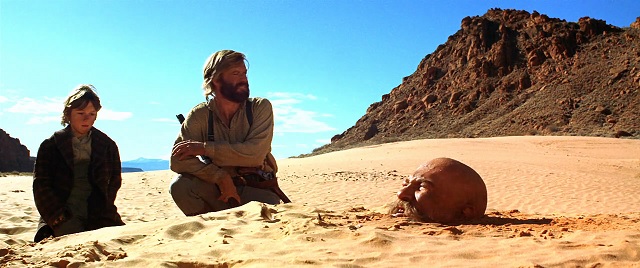
Jeremiah Johnson (1972, dir by Sydney Pollack, DP: Duke Callaghan)
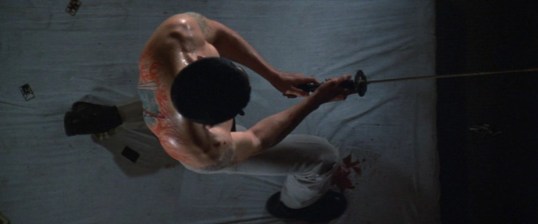
The Yakuza (1974, dir by Sydney Pollack, DP: Duke Callaghan and Kozo Okazaki)
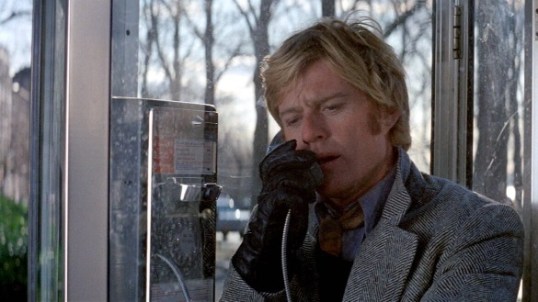
Three Days of Condor (1975, dir by Sydney Pollack, DP: Owen Roizman)
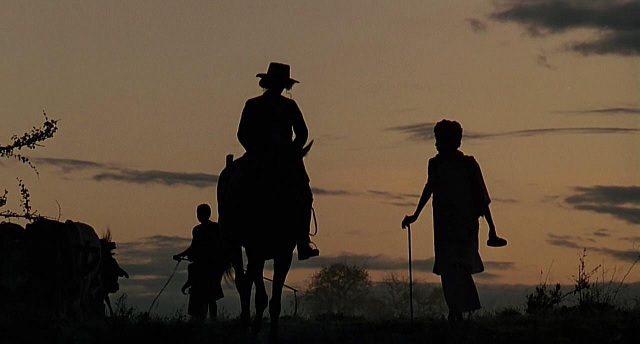
Out of Africa (1985, dir by Sydney Pollack, DP: David Watkins)
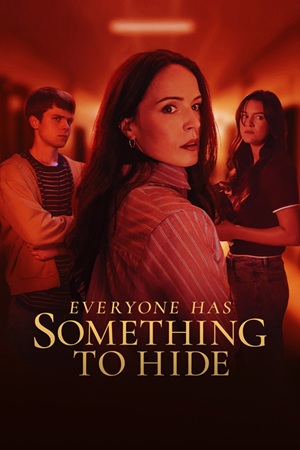
Years ago, Kathy Waters (Emily Alatalo) escaped from her abusive husband, taking her young son Noah with her. Now, Noah (Sam Ashe Arnold) is a senior in high school and a talented composer. The school band even plays one of his compositions at a football game and everyone in the stands applaud. It reminded of those old episodes of Degrassi where Marco would write some overwrought performance piece and all the students would respond by going, “Yeah, Marco!”
Unfortunately, Kathy and Noah are not getting along as well as they used to. They’re fighting and arguing constantly. Kathy is overprotective. Noah is …. well, Noah’s kind of a creep. Noah is always complaining about how his former best friend Ethan is now more popular than he is. (Ethan plays football. Noah …. composes orchestrual music. You do the math.) Ethan is mad because Noah is now going out with Ethan’s ex-girlfriend, Maddie (Tori Barban). At one point, Tori has to duck into a bathroom so she can throw up. This is a Lifetime film and that means you don’t throw up unless you’re pregnant and trying to keep it a secret.
Kathy is a real estate agent. That’s not a surprise as selling houses is right up there with owning a bakery or being a mommy vlogger as far as careers in Lifetime movies are concerned. One morning, she gets a notification that someone has entered one of the empty houses that she’s selling. Going to the house, she discovers the remains of a wild party. She also finds Ethan dead in a nearby shed.
Noah becomes the number one suspect. Soon, someone is spray-painting “MURDERER” across the front door of Kathy’s house. Kathy’s friends are refusing to talk to her. Detective Summers (Puja Uppal) is asking questions. Noah claims that he’s innocent but even Kathy begins to have her doubts after she discovers just how angry Noah can get. Noah’s father was abusivie. Did Noah inherit the violence gene?
As I mentioned earlier, Noah is kind of a creep and it is easy to imagine circumstances in which he could be guilty. The fact that Lifetime has lately featured several films featuring violent teenage boys also might lead one to suspect that Noah’s the killer. Well, fear not. This is a traditional Lifetime film and that means that Noah is not the murderer. Instead, he’s just an obnoxious teenager who needs to treat his mom with more respect. I will not spoil the movie by revealing the identity of the killer. That said, you should be able to guess who it is because there’s not that many people in the movie.
“Everyone Has Something To Hide!” the title announces and, as far as this film is concerned, I guess that’s true. Considering that Noah’s a musician, they could have made just a few adjustments to the script and called this movie While My Guitar Gently Weeps. As for the film itself, it suffers from a lack of likable characters. (When I say that Noah’s a creep, I mean he is really a creep!) But the film does deserve credit for fully embracing the melodrama. The film has it’s flaws but it still held my attention for 88 minutes.
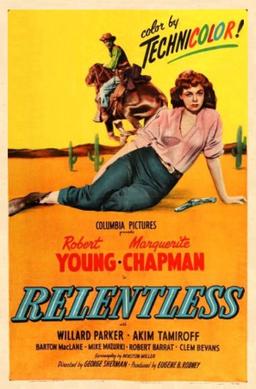
Earlier today, I was searching for an old Johnny Mack Brown Western called Fronteir Agent. I found a video on YouTube that claimed to be an upload of Frontier Agent but, when I started watching it, I discovered that the movie, while a western, was definitely not a Johnny Mack Brown programmer. Instead, it was a movie called Relentless and it was about as different from Johnny Mack Brown’s cheery B-westerns as you could get.
Robert Young plays Nick Buckley, a drifter who is more comfortable riding the range than spending time with “civilzation.” He rides into town on a rainy night, looking for shelter for him both him and his pregnant mare. At the local saloon, two prospectors invite him to stay at their cabin for the night. Another man, Tex (Barton MacLane), suggests that Nick and his mare should instead stay in Tex’s stables. Tex isn’t just being altruistic. He and Jim (Frank Fenton) murder the prospectors at their cabin and steal their map to a gold mine. Tex then kills Jim and frames Nick for all three of the murders. The entire town wants to either hang Nick or turn him in for the reward or force him to draw the map that they think he killed the prospectors for. Only the owner of the traveling general store, Luella (Marguerite Chapman), believes Nick when he says that he’s been framed.
Dark and moody, Relentless is almost as much of a film noir as a western. At first, Robert Young seems like a strange choice to play a drifter but he actually does a good job of showing how Nick is someone who has spent so much time on the frontier that he’s not really sure how to deal with civilization. One reason that Tex is able to frame Nick is because Nick is a stranger. He has no history and, at first, his main concerns seems to be taking care of his mare and her foal. Nick was unlucky enough to ride into town at the wrong time and soon, he’s worth more dead than alive. Nick’s quest to both clear his name and get revenge becomes an obsession (you might even call it relentless) and it takes him from the town to a barren desert.
One thing that sets this western apart from so many others is the relationship between Nick and Louella. Louella is also a loner but, as a store owner, she’s accepted by the town in a way that Nick is not. Louella and Nick come across as two mature people who have been hardened by life in the old west but who still haven’t surrendered their morals to greed like so many other characters in the movie.
Relentless is a superior western, featuring good acting and interesting characters. I may never find Frontier Agent but I’m glad I found Relentless.
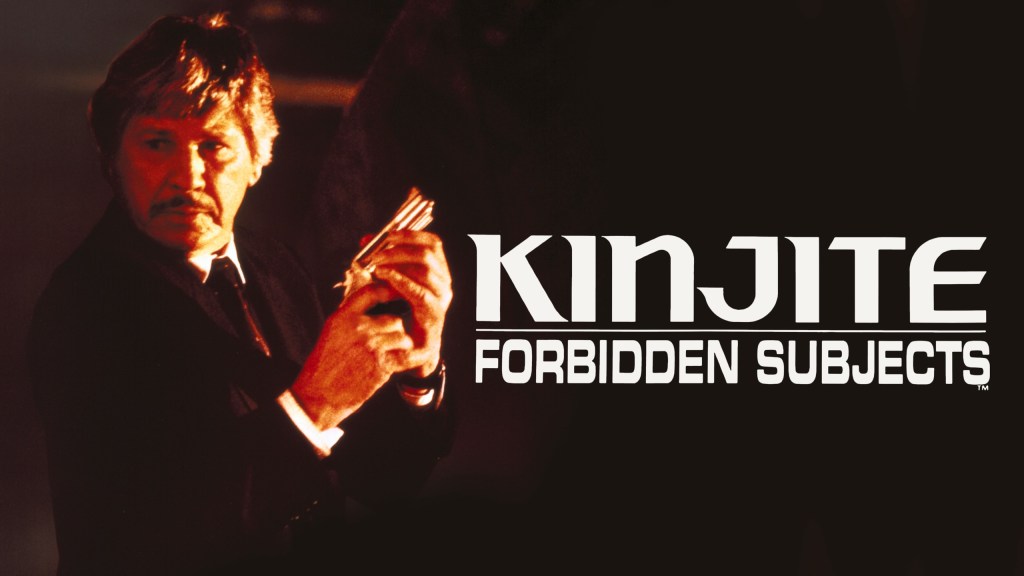
Back when I was a teenager, I would always get the entertainment section out of my dad’s Sunday paper so I could check out the movie listings. I was mainly looking for information about my favorite movie star, Charles Bronson. Nowadays, we know about new movies months, even years, in advance, but back then I would learn about them from the entertainment section of dad’s paper. One Sunday in early 1989, when I was 15 years old, I saw an advertisement for a new Bronson film called KINJITE: FORBIDDEN SUBJECTS. It was the first time I had ever heard of it. I knew I wasn’t going to get to see it at the movies because it was only playing in Little Rock, but I was excited anyway because it would be on its way to video soon!
In the film, Bronson plays police Lieutenant Crowe. Along with his partner Eddie Rios (Perry Lopez), he deals with the sleaziest criminals in Los Angeles on a daily basis and it’s starting to take a toll on his personal life. He’s currently invested in bringing down an underage prostitution ring led by Duke (Juan Fernandez) and Lavonne (Sy Richardson). When Japanese businessman Hiroshi Hada’s (James Pax) young daughter is kidnapped by Duke, Crowe decides he must do everything in his power to get her back to her family.
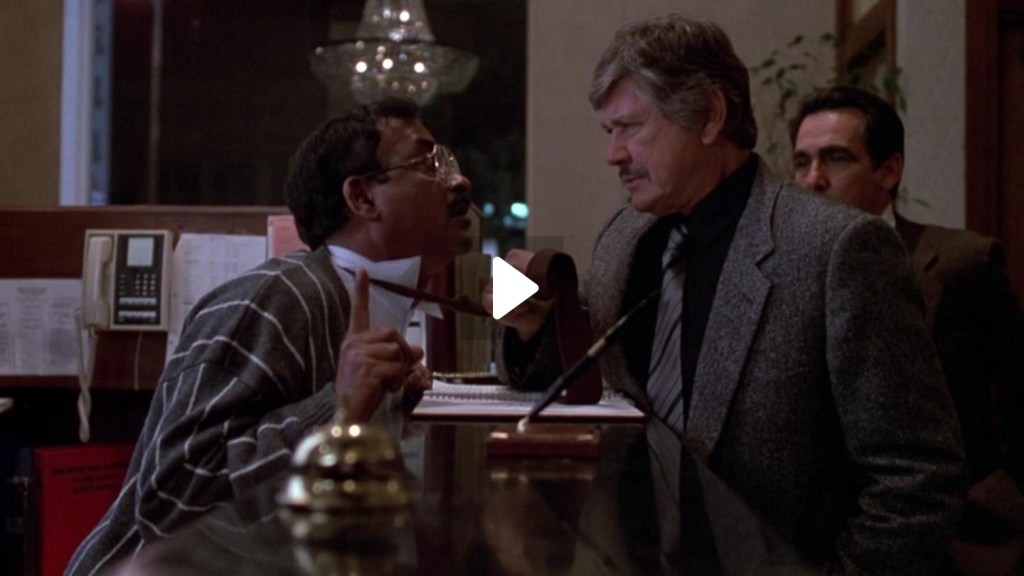
KINJITE reunites Bronson with director J. Lee Thompson for the ninth and final time, bringing to an end what I think is one of the more underrated actor-director partnerships of the action genre. Bronson had first worked with Thompson on the fun mystery film ST. IVES at the peak of his 70’s career. By 1989, Bronson was in his late sixties and understandably slowing down on the action front, but he still possessed that unmistakable presence on screen. He’s more invested in his performance as the prejudicial Lt. Crowe than he’s usually given credit for. There’s one specific scene where he goes off on a group of Japanese businessmen and women who are holding up traffic in front of a large hotel. It’s one of Bronson’s strongest scenes of the 1980’s as he yells various traffic code violations, and obscenities, at the surprised guests. It’s a bad moment for his character, but a well-acted moment for Bronson.
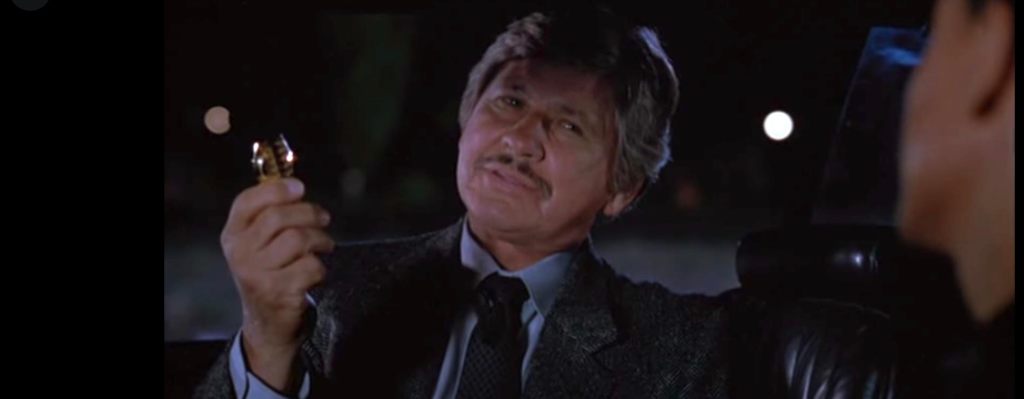
None of Bronson’s ‘80’s action films were based on stories about sunshine and roses, but the subject matter of KINJITE is particularly dark and ugly. Themes of child exploitation, human trafficking, sexual violence, and prejudice are all given screen time in a world that’s so corrupt that only someone as committed as Lt. Crowe is even capable of taking on the evil that’s presented here. Crowe is not necessarily a good man, and his sense of justice goes completely overboard at times. For example, in one scene where he catches a pervert preparing to commit an assortment of depraved sexual acts on a young prostitute (played by Nicole Eggert), Crowe says “I’m going to show you what it feels like to be one of these girls,” and we, along with his partner, hear the screams off-screen as he honors his word. In another scene, he makes the pimp Duke eat a giant Rolex watch, which prompts the trafficker to say, “I’m gonna die…” None too concerned about Duke’s health, Crowe casually tells him, “No you won’t, but you will have to stick your head between your legs to tell the time.” This is not a well-adjusted human being, but with all the evil acts being committed around him, you still can’t help but root for the guy.
The supporting cast around Bronson is quite good. Juan Fernandez is a standout as the despicable pimp, Duke. There’s something about Fernandez that just makes him great as a bad guy, as he had proved a few years earlier in the Oliver Stone film SALVADOR. His character here has this odd energy about him that oozes evil. Veteran character actor Perry Lopez, who had worked with Bronson going all the way back to the 1954 western DRUM BEAT, provides the aging icon a solid partner who helps smooth out his character’s roughest edges. Their scenes together are very strong because they feel like two weary detectives and old friends trying to deal with a world they’re both sick of.
While I think Bronson provides a good performance and that Thompson provides solid direction, I wouldn’t rank KINJITE among the star’s best 80’s films. It tries to juggle a lot of difficult themes and wants to comment on cultural differences, built-in prejudices, and sexual deviance, and it also wants to deliver the kind of action that audiences expected from Bronson’s Cannon films. It’s a well-made film, but the results aren’t completely effective because it can’t find the right balance between the serious dramatic themes and the expected action heroics. In the end, the events depicted on screen are too disturbing for the film to qualify as fun, escapist entertainment, but they’re not handled with enough depth for the film to make any sort of serious statement. The film ends up making you pretty darn uncomfortable, so I don’t revisit it as often as I do other Bronson / Thompson collaborations like 10 TO MIDNIGHT and MURPHY’S LAW.
Based on the dark subject matter I’ve described above, I can’t give KINJITE: FORBIDDEN SUBJECTS an unreserved recommendation like I do so many other Bronson films. But as the final collaboration between Bronson and J. Lee Thompson, it does carry a certain historical significance. And for fans interested in seeing the darker side of Bronson’s film career, it remains a memorable, and unsettling, final chapter in one of action cinema’s most enduring partnerships.
“Once you are able to kill mentally, the physical part will be easy. The difficult part… is learning how to turn it off.” — L.T. Bonham
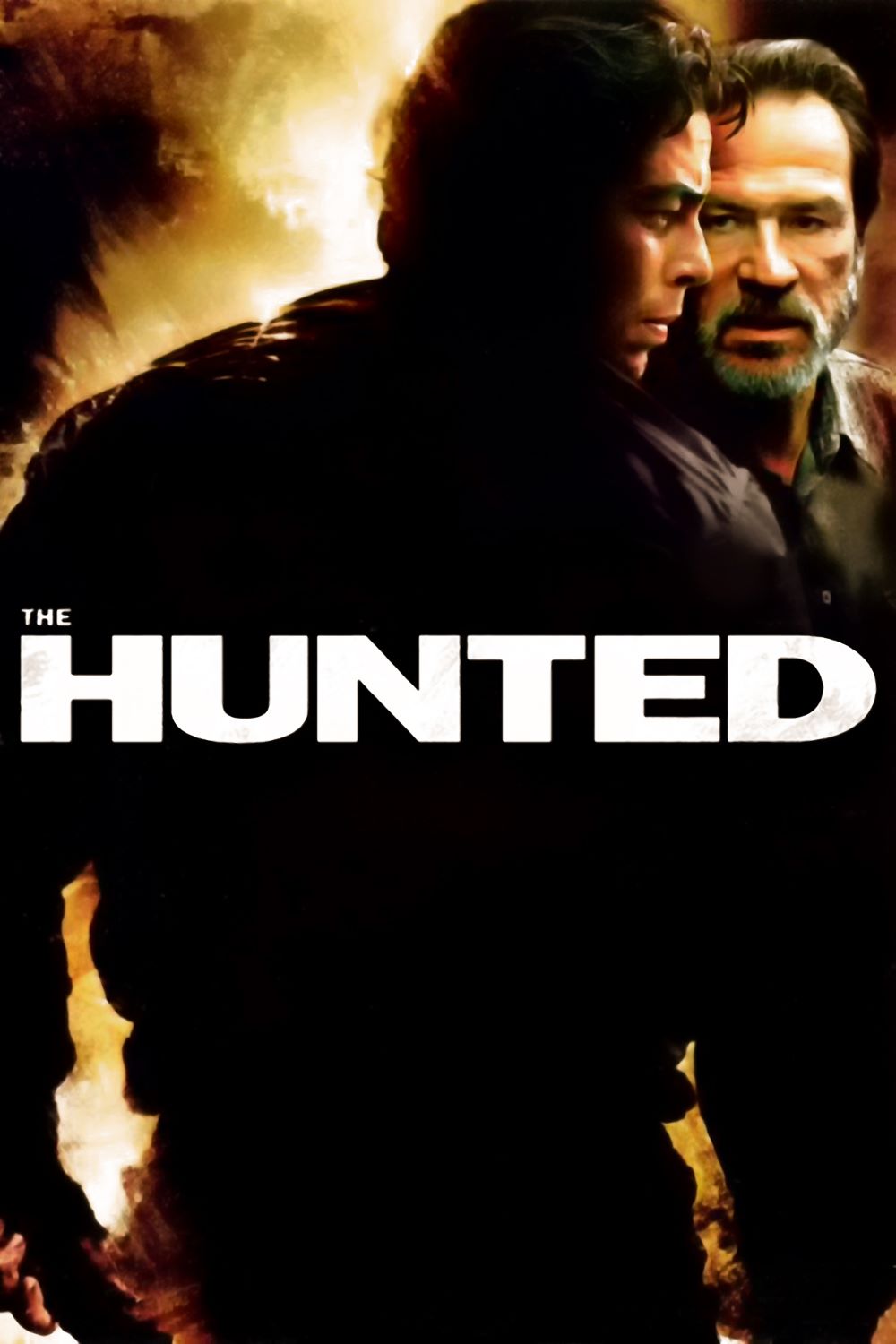
The Hunted (2003) is one of those films that feels like it slipped through the cracks of early 2000s cinema—a gritty, atmospheric thriller directed by William Friedkin, a filmmaker whose name alone should’ve guaranteed more attention. Friedkin, the man behind The French Connection and The Exorcist, has always had a knack for tension and raw, almost documentary-like realism, and The Hunted carries that same DNA. It’s not a perfect movie, but it’s a fascinating one, a slow-burn chase film that trades explosive set pieces for mood, character, and a kind of existential dread that lingers long after the credits roll.
The story follows L.T. Bonham, a former survival instructor played by Tommy Lee Jones, who’s called back to help the authorities when a series of brutal murders points to a former student of his, Aaron Hallam, played by Benicio del Toro. Hallam, a highly trained assassin, has gone rogue, and Bonham is the only one who can track him down. The premise is simple, almost minimalist: two men, one hunting the other, with the wilderness of the Pacific Northwest serving as their battleground. There’s no grand conspiracy, no world-ending stakes—just a personal, almost primal duel between mentor and protégé. The film’s strength lies in its refusal to overcomplicate things. It’s a character study disguised as a thriller, and it’s all the better for it.
What’s immediately striking about The Hunted is its pacing. Friedkin doesn’t rush. The film takes its time establishing Bonham’s world—a quiet, isolated life in the woods, where he trains soldiers in the art of survival and combat. There’s a sense of routine, of discipline, and when Hallam re-enters his life, it’s not with a bang but with a whisper. The first act is deliberate, almost meditative, as Bonham pieces together the clues and realizes the man he’s after isn’t just any killer, but someone he once shaped. This isn’t a film about action for action’s sake. It’s about the weight of violence, the cost of skill, and the thin line between hunter and hunted.
Benicio del Toro is the standout here. Hallam is a role that could’ve easily been reduced to a one-dimensional villain, but del Toro imbues him with a quiet, unsettling intensity. There’s a scene early on where Hallam, having just committed a particularly gruesome murder, calmly walks away from the crime scene, his face a mask of detached focus. It’s chilling not because he’s raging or unhinged, but because he’s so controlled. Hallam isn’t a monster in the traditional sense; he’s a man who’s been trained to kill and has embraced that role with terrifying efficiency. Del Toro plays him with a stillness that’s unnerving, his eyes always calculating, always three steps ahead. It’s a performance that relies more on presence than dialogue, and it’s one of his most underrated.
Tommy Lee Jones, on the other hand, is a different kind of compelling. Bonham is a man of few words, a hardened veteran who’s seen too much to be rattled by much. Jones, with his gravelly voice and weathered demeanor, sells the role of a man who’s spent a lifetime in the shadows. There’s a weariness to him, a sense that he’s not just chasing Hallam to stop the killings, but to confront his own past. The dynamic between the two is electric, even when they’re not in the same scene. Their eventual face-to-face encounters crackle with tension, not because of what they say, but because of what they don’t. These are two men who understand each other on a level that most people never will, and that mutual recognition makes their conflict all the more tragic.
Friedkin’s direction is, as always, masterful in its restraint. He’s never been one for flashy camerawork or overly stylized shots, and The Hunted is no exception. The cinematography is stark and functional, emphasizing the cold, unforgiving landscape of the Pacific Northwest. The forests, rivers, and small towns feel like characters in their own right, vast and indifferent to the human drama unfolding within them. There’s a scene where Bonham and a local sheriff, played by Connie Nielsen, track Hallam through the woods. The camera lingers on the trees, the mud, the rain—details that ground the film in a tangible, almost tactile reality. It’s not just a chase; it’s a test of endurance, both physical and psychological.
The film shares some striking thematic ground with First Blood, another story about soldiers haunted by what they’ve seen and done in war. Both films explore men who are not just racked with guilt but suffering from PTSD, their minds fractured by the horrors of combat. But where First Blood ultimately offered a glimmer of hope—that understanding and redemption might be possible—The Hunted takes a far bleaker view. Bonham and Hallam aren’t just damaged; they’re broken in ways that can’t be fixed. Hallam, in particular, represents the idea that some soldiers simply cannot come back from the brink of their experiences. There’s no catharsis for him, no moment of clarity or salvation. The film suggests that for some, the training and the trauma run too deep, and the only way out is through violence. It’s a brutal, unflinching perspective that sets The Hunted apart from more sentimental takes on the same themes.
The film’s action sequences, when they do arrive, are brutal and concise. There’s no shaky cam or rapid editing here—Friedkin lets the violence unfold in long, unflinching takes. A knife fight in a motel room is particularly memorable, not for its choreography, but for its rawness. It’s messy, desperate, and over in seconds. There’s no glorification, no slow-motion heroics. Just two men trying to kill each other in the most efficient way possible. It’s a far cry from the hyper-stylized action of the era, and it’s all the more effective for it.
Unfortunately, the film’s strengths are bogged down by its weaknesses, particularly in how it handles its secondary characters. The supporting cast, including Connie Nielsen as the sheriff, often feel thinly written, existing primarily as obstacles to delay the inevitable showdown between Bonham and Hallam. Their motivations and personalities are barely sketched out, making them feel more like narrative speed bumps than fully realized people. It’s frustrating because the film’s core dynamic is so compelling that these underdeveloped side characters only serve to slow down the momentum. And despite its brisk 90-plus minute runtime, The Hunted still manages to drag at times. The deliberate pacing that works so well in establishing atmosphere starts to feel indulgent when the story isn’t moving forward, leaving the audience waiting for the next meaningful interaction between its two leads.
If The Hunted has other weaknesses, it’s that it might be a little too restrained for some viewers. The slow burn won’t be for everyone, especially in an era where audiences have come to expect constant stimulation. The film demands patience, and those who aren’t willing to meet it on its terms might find it dull. There are also moments where the plot feels a bit thin, as if Friedkin and screenwriter Art Monterastelli were more interested in atmosphere than narrative complexity. But that’s also part of its charm. The Hunted isn’t trying to be a puzzle-box thriller or a high-octane spectacle. It’s a mood piece, a meditation on violence and the men who wield it.
The ending, without spoiling too much, is ambiguous in a way that feels true to the film’s themes. There’s no neat resolution, no easy answers. It’s a conclusion that lingers, forcing the audience to sit with the uncomfortable questions it raises. Is justice served? Is Hallam truly defeated, or is he just the first of many? The film doesn’t provide answers, and that’s to its credit. It’s more interested in the journey than the destination, in the hunt rather than the catch. While First Blood left room for healing, The Hunted closes the door on that possibility for some, reinforcing its bleak worldview.
In the grand scheme of Friedkin’s filmography, The Hunted might not rank alongside his most iconic works, but it’s a fascinating entry in his body of work. It’s a film that feels out of time, both in its style and its themes. Released in 2003, it arrived in a cinematic landscape dominated by CGI spectacle and franchise filmmaking, and it’s easy to see why it didn’t make a bigger splash at the time. But for those willing to seek it out, The Hunted is a hidden gem—a tense, thought-provoking thriller that rewards patience and close attention. It’s a film about the cost of violence, the weight of the past, and the thin line between the hunter and the hunted. And in an era where action movies often prioritize style over substance, its grounded, no-nonsense approach feels like a breath of fresh air.
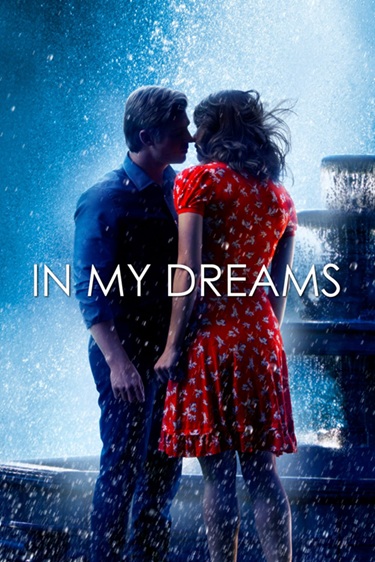
Natalie Russo (Katharine McPhee) and Nick Smith (Mike Vogel) are two singles who are both unlucky in love. Natalie manages her family’s Italian restaurant, where opera is constantly playing. Nick is an architecht whose mother (JoBeth Williams) keeps setting him up on dates. They both toss a penny in the magical Hayward Fountain and wish for a chance to find their one true love. Despite having never met, they start dreaming about each other. Even though Natalie is being pursued by a volatile chef (Antonio Cupo) and Nick’s mom has set him up with another woman (Chiara Zanni), Natalie and Nick fall for each other.
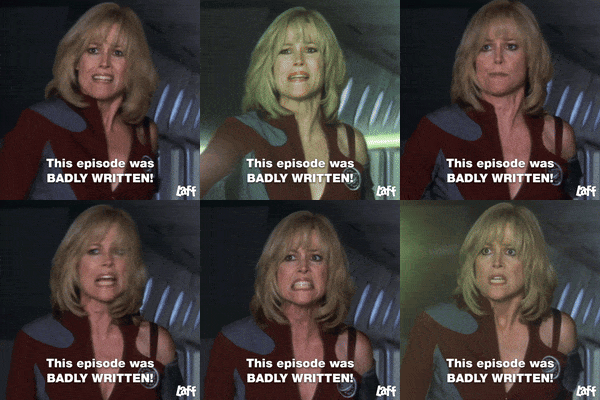
That’s romantic, right? The problem is that the fountain has some dumb rules. Once you toss your penny and start dreaming, you only have seven days to find your perfect mate or you’ll lose them. That seems pretty mean-spirited to me. To quote Sigourney Weaver:
This is a Hallmark film so you never doubt that Nick and Natalie will find each other. I did get frustrated because it seemed like they should have spent more time in their dreams disccussing where to meet up and maybe exchanging numbers, But I guess that’s not the way the magic works. Still, it’s a sweet movie. Katharine McPhee is really pretty and Mike Vogel is really handsome. They probably would have fallen in love eventually even without the fountain.