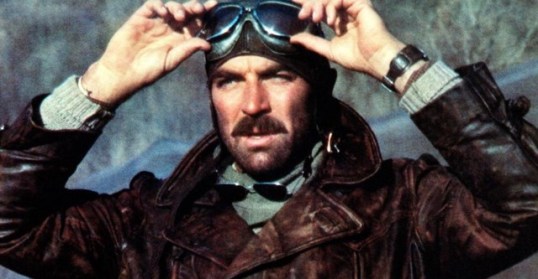
Battlestar Galactica (1978, directed by Richard A. Colla and Alan J. Levi)


In a distant galaxy, the humans and the robotic Cylons have been at war for a thousand years.  Due to the diplomacy of Count Baltar (John Colicos), it appears that a peace agreement has finally been reached.  On their homeworld, President Adar (Lew Ayres) and the leaders of humanity prepare to welcome to the Cylons to a signing ceremony.  Amongst the commanders of the fleet of ships that orbit and defend the homeworld, only Commander Adama (Lorne Greene) fears that the Cylons may be plotting a sneak attack.

Adama turns out to be correct.  Baldar betrays humanity and the Cylons launch a sudden attack, wiping out the human leadership and almost the entire fleet of Battlestars.  Only Adama’s Galactica survives.  After picking up the refugees who survived the attack, the Galactica sets out to find a legendary planet that might be home to more humans.  With the Cylons pursuing and brave men like Starbuck (Dirk Benedict) and Adama’s son, Apollo (Richard Hatch), fighting to protect the last of the human refugees, the Galactica searches for Earth.

With Star Wars still a cultural phenomenon in 1978, it made sense that a television network like ABC would greenlight a science fiction series.  When producer Glen A. Larson pitched the idea for Battlestar Galactica, ABC was eager to move forward with it.  However, when the pilot cost $8,000,000 to produce (which was then a record-setting amount for a television show), ABC decided to recoup their costs by releasing an edited version of the pilot in theaters.  In Canada and the United States, the “film” hit theaters before it was subsequently aired on television.  The film was then later released in Europe, where it was a huge hit.

In fact, it was such a hit that 20th Century Fox sued Universal Studios, claiming that Battlestar Galactica stole the majority of its ideas from Star Wars.  Universal responded by filing a countersuit, claiming that Star Wars stole the majority of its ideas from Flash Gordon.  The case was eventually settled in 1983, long after the original Battlestar Galactica television series had been canceled.

And while that is all very interesting, it doesn’t answer the question that is probably on your mind right now.  Is the edited theatrical release of the Battlestar Galactica pilot any good?

Yes and no.  The first part of the movie, which deals with the Cylon sneak attack and Starbuck and Apollo rescuing the human refugees is an excellent work of science fiction, a space opera that can stand up with the best of them.  Even after all this time, the special effects are still effective as is Lorne Greene’s authoritative performance as Adama.  Richard Hatch and Dirk Benedict are also strong as the two main fighter pilots, even if both of them are obviously meant to be television versions of Luke Skywalker and Han Solo.  (Benedict’s Starbuck was the coolest character on Battlestar Galactica.  He was the best pilot, he was the best poker player, and he even smoked a cigar.)  The Cylons are chilling victims and the pilot even features some effective human drama along with all of the space battles.  After the Cylon attack, the story follows the Galactica as it makes a stop on a planet that’s also a casino that’s being run by untrustworthy space insects.  That part betrays the film’s television origins and feels like one of those episodes of Dr. Who that people try to forget.  The pilot features everything that made Battlestar Galactica work but, unfortunately, it also features everything that didn’t work.

Watching it today, though, it’s impossible not to feel the welcome pull of nostalgia.  In a time of cynicism, the pure idealism of Battlestar Galactica and its quest for Earth provides a nice and needed relief.  To quote Commander Adama:

“Fleeing from the Cylon tyranny, the last battlestar, Galactica, leads a ragtag fugitive fleet on a lonely quest… a shining planet known as Earth.”

Review: National Treasure (dir. by John Turteltaub)


“If there’s something wrong, those who have the ability to take action have the responsibility to take action.” — Benjamin Gates

National Treasure directed by John Turteltaub is one of those movies that feels like a love letter to adventure, history, and a bit of old-fashioned treasure hunting. It’s the kind of film that doesn’t take itself too seriously but still manages to pull you in with its charm, puzzles, and non-stop action. At its heart, it’s a story about obsession, legacy, and the idea that history isn’t just something you read about in books—it’s something you can touch, chase, and maybe even uncover if you’re clever enough.

The movie kicks off with Benjamin Franklin Gates, played by Nicolas Cage in one of his most Nicolas Cage roles, as a historian and amateur treasure hunter convinced that a massive treasure hidden by the Freemasons and the Founding Fathers is real. The idea is wild: a secret stash of gold, artifacts, and historical riches hidden away to keep them out of the wrong hands. Most people, including his own father, think he’s nuts. But Ben’s got a lead, and when a rival treasure hunter, Ian Howe (played by Sean Bean), starts closing in on the same clues, the race is on. The stakes get higher when Ben realizes that if Howe finds the treasure first, it could mean disaster—not just for Ben’s reputation, but for history itself.

What makes National Treasure so much fun is how it blends history with a modern-day adventure. The film takes real historical figures and events—like the Declaration of Independence, the Liberty Bell, and the National Archives—and weaves them into a fictional but plausible treasure hunt. It’s the kind of movie that makes you want to dust off your old history textbooks or visit a museum the next day. The puzzles and clues are clever, even if they’re a little far-fetched. From invisible ink on the back of the Declaration to a series of riddles leading to the next location, the film keeps you guessing and engaged. And let’s be honest, who hasn’t daydreamed about finding a hidden message in a famous document or stumbling upon a secret that changes everything?

You really cannot talk about National Treasure without talking about Nicolas Cage. By 2004, Cage had already firmly established his reputation as an actor who brings a very specific, slightly unhinged energy to every role, and Benjamin Franklin Gates might be the perfect vessel for that energy. Ben is a nerd, but he is a nerd who somehow knows how to do parkour and execute complex heists. Cage plays him with this weird, endearing earnestness that anchors the movie. He delivers ridiculous lines about the Illuminati and secret tunnels with the gravity of a Shakespearean monologue, and it is hilarious, but it also makes you genuinely root for him. He never winks at the audience; he truly believes in the treasure, and that conviction pulls the whole thing together.

Of course, Cage cannot carry the entire movie on his own, and the supporting cast is surprisingly well-calibrated for this kind of ridiculous adventure. Justin Bartha plays Riley Poole, Ben’s tech-savvy sidekick who provides a running commentary of sarcastic quips. Bartha is essentially the audience surrogate, constantly pointing out how insane everything is, but he never gets annoying, which is a tough balancing act for a comic relief character in an action movie. Then there is Diane Kruger as Abigail Chase, an archivist at the National Archives who gets dragged into the chaos. Kruger does a great job of playing the exasperated straight woman to Cage’s eccentric history buff, and their chemistry is surprisingly charming, even if her character arc basically boils down to realizing that stealing national monuments is actually kind of fun.

On the villain side of things, we have Sean Bean as Ian Howe, and honestly, casting Sean Bean as a treasure-hunting bad guy is just a cheat code for making your movie better. Howe is a classic blockbuster villain—polished, ruthless, and driven entirely by greed—but Bean gives him just enough suave charm that he feels like a genuine threat rather than a cartoonish punching bag. Rounding out the main cast is Jon Voight as Ben’s estranged father, Patrick, and Christopher Plummer as his grandfather, John. Their inclusion adds a nice generational family drama to the story. The Gates family has been mocked for centuries for chasing this mythical treasure, and seeing Ben finally prove his father wrong adds a surprising amount of emotional weight to a movie that is otherwise about stealing the Declaration of Independence with a bunch of plastic ciphers.

John Turteltaub’s direction keeps the movie moving at a brisk pace. There’s never a dull moment, and the film balances its action sequences with quieter moments of discovery and problem-solving. The chase scenes, whether it’s through the streets of Washington D.C. or the tunnels beneath Philadelphia, are exciting without being over-the-top. The film also does a great job of making the historical elements feel tangible. When Ben and his team are examining a clue or piecing together a puzzle, you feel like you’re right there with them, trying to figure it out alongside them. It’s a testament to Turteltaub’s ability to make the implausible feel plausible, at least for the two hours you’re watching the movie.

Of course, National Treasure isn’t without its flaws. The plot does require a fair amount of suspension of disbelief. The idea that a treasure of this magnitude could stay hidden for centuries, or that Ben could outsmart everyone from the FBI to a team of professional thieves, is a stretch. And some of the historical liberties the film takes might make purists cringe. But that’s part of the fun. This isn’t a documentary—it’s a popcorn movie, and it embraces that wholeheartedly. The film also leans heavily on its twists and turns, some of which you might see coming a mile away. But even when you can predict what’s going to happen next, it’s still entertaining to watch it unfold.

What really stands out about National Treasure is its sense of wonder. It’s a movie that reminds you of the joy of discovery, whether it’s uncovering a hidden clue or simply learning something new about the world. The film’s climax, set in a secret underground chamber, is a perfect example of this. Without giving too much away, it’s a moment that feels both epic and intimate, a payoff for all the hard work and dedication Ben has put into his quest. And while the treasure itself might not be what you expect, the journey to find it is what makes the movie so satisfying.

In the end, National Treasure is a film that’s easy to enjoy. It’s got action, humor, history, and heart, all wrapped up in a package that’s as entertaining as it is lighthearted. It’s the kind of movie you can watch on a lazy Sunday afternoon and come away from feeling like you’ve been on an adventure yourself. Sure, it might not be high art, but it doesn’t need to be. Sometimes, a great story, a little bit of mystery, and a lot of fun are all you need. And National Treasure delivers on all three. If you’re a fan of adventure films, history buffs, or just love a good treasure hunt, this one’s for you. Just don’t be surprised if you find yourself Googling Freemason symbols or the history of the Declaration of Independence afterward.

Film Review: The Crucible (dir by Nicholas Hytner)


In 1692 and 1693, over 200 people were accused witchcraft in colonial Massachusetts.  Thirty people were found guilty.  19 were executed, fourteen women and five men.  One man died while being tortured in an effort to get a confession out of him.  At least five more people died in their jail cells, awaiting their trial.

There’s a lot of debate about how the witch trials actually began but it’s generally agreed that the initial accusations were made by four girls in the village of Salem.  The oldest was 17 while the youngest was just nine.  (One of the girls, 12 year-old Abigail Williams, was related to the village’s pastor, Samuel Parris.  Traditionally, she has been portrayed as being the ringleader of the accusers.)  The girls claimed that the women of the village had caused them physical pain through witchcraft.  Soon, other girls in nearby villages were making similar accusations.  Some of the accused confessed to being witches to avoid execution.  Others claimed to be innocent but also said they knew who the real witches were.  And, of course, many refused to confess and were executed as a result.

Today, it’s easy to see that the Salem Witch Trials were an early “moral panic.”  What is often forgotten is that, even at the time the trials were taking place, there were many prominent thinkers who condemned them as being a case of mass hysteria.  In the years immediately following the trials, the majority of its victims were posthumously exonerated.  The Reverend Samuel Parris wrote an official apology letter for his role in the trials.  One of the legacies of the Salem Witch Trials was that the First Amendment of the United States Constitution made clear that “Congress shall make no law respecting an establishment of religion.”

Arthur Miller’s 1953 play, The Crucible, was set during the Salem Witch Trials and, for many people, it’s the defining work about the trials, despite the fact that Miller acknowledged to taking dramatic liberties with some of the characters and events.  Miller, who had recently been questioned by the House Unamerican Activities Committee, meant for the play to be both a commentary on McCarthyism and a rebuke towards people like his former friend, Elia Kazan, who “named names” to protect themselves.   Of course, one could argue that the main difference between the Salem Witch Trials and the Red Scare is that communists were real while the Salem witches were not.  But, no matter.  It’s one of Miller’s better plays.  If Elia Kazan could justify his testimony by imagining himself as a punch-drunk boxer standing up to a corrupt union, I suppose Arthur Miller could pretend to be a man accused of witchcraft.  The play was initially not as acclaimed as some of Miller’s other works but, over the years, it has come to be widely acknowledged as one of the classic works of American theater.

In the 90s, Miller wrote the screenplay for a film adaptation of the The Crucible.  First released in 1996, this adaptation starred Daniel-Day Lewis as the wrongly accused John Proctor, Joan Allen as Proctor’s wife, Elizabeth, and Winona Ryder as Abigail Williams.  For the purposes of Miller’s dramatization, Abigail was reimagined as being a teenage girl who had a brief affair with John Proctor and who was still obsessed with him.  When the Reverend Parris (Bruce Davison) catches Abigail and some of her friends trying to cast a “love spell” on John, the girls try to avoid punishment by accusing Parris’s slave, Tituba (Charlayne Woodard), of being a witch.  Tituba gives a false confession to avoid being hanged.  The girls are soon accusing numerous other women, including Elizabeth Proctor, of witchcraft.

As a film, The Crucible is a fine adaptation of Miller’s play and it’s always a little bit surprising to me that the movie itself isn’t better-known.  Daniel Day-Lewis, Winona Ryder, Joan Allen, and Bruce Davison all give excellent performances, as does Rob Campbell as a reverend who comes to doubt the accusations of witchcraft.  The great Paul Scofield also does a good job as Danforth, the stern judge who attempts to be fair but ultimately is not willing to admit that the law itself is in error.  The film recreates Salem is such detail that you feel as if you’re walking its streets.  The film also recreates the horrible conditions that a colonial prisoner would have to deal with while imprisoned.  Watching Daniel Day-Lewis go from being handsome and rugged to being an emaciated man with rotten teeth really drives home the story’s portrayal of casual, state-sanctioned cruelty.  By the end of the movie, Day-Lewis is a testament to what authoritarians will do to someone who insists on thinking for himself.

The film is at its strongest when showing how a moral panic begins.  The unstable Abigail is looking for revenge against John Proctor.  The other girls, immature and trying to be avoid being punished, make their accusations without giving much thought to the consequences.  Soon, the adults of Salem — all of whom have no excuse for not knowing better — are making accusations because it’s better to be an accuser than to be one of accused.  The film presents a disturbing portrait of how quickly a community can turn on itself.

The film ends on a note of devastating sadness.  Though the witch trials were eventually seen for being the farce that they were, it was too late for the twenty-five people who died as a result of the hysteria.  (Today, with a clear mind, it’s easy to see that the Salem Witch Trials had more in common with Stalin’s show trials and China’s Cultural Revolution than anything else.)  The Crucible is a powerful film adaptation that deserves to be better-known.

So, We Watched The Mystery Cruise (2013, Dir. by Douglas Barr)


The other day, Lisa Marie and I watched The Mystery Cruise.

Regan Reilly (Michelle Harrison) is the daughter of mystery novelist Nora Reilly (Colleen Winton) and a respected private detective in her own right.  Her friend, Alvirah (Gail O’Grady), has just won the lottery and wants to open up a detective agency with Regan.  Regan doesn’t think that the flighty Alvirah would be a good partner.  Along with their husbands, they set sail on a mystery cruise that is being used to promote Nora’s new book.  Every passenger on the cruise is trying to solve a fake murder but Alvirah thinks that one of the passengers is plotting a real murder!

This Hallmark movie was dumb and silly and kind of fun as long as you didn’t demand too much from it.  I actually liked Regan and Alvirah’s husbands (played by Peter Benson and Larry Miller) more than I liked either of them.  The mystery was easy to solve and it was clear that the movie wasn’t mean to be taken seriously.  My sister and I agreed that a mystery cruise was the sort of thing that we would enjoy doing but we couldn’t agree on which one of us would be Regan and which one would be Alvirah.

This movie was based on a book written by Mary Higgins Clark and her daughter, Carol Higgins Clark.  Sadly both of them have since passed away but, as we watched, Lisa Marie and I remembered how our aunt used to have an entire closet full of Mary Higgins Clark novels.  It was a good memory.

Live Tweet Alert: Join #FridayNightFlix for Raw Deal!


As some of our regular readers undoubtedly know, I am involved in a few weekly watch parties.  On Twitter, I host #FridayNightFlix every Friday and I co-host #ScarySocial on Saturday.  On Mastodon, I am one of the five hosts of #MondayActionMovie!  Every week, we get together.  We watch a movie.  We tweet our way through it.

Tonight, at 10 pm et, I will be hosting #FridayNightFlix!  The movie?  Raw Deal!

If you want to join us this Friday, just hop onto twitter, find Raw Deal on Prime, start the movie at 10 pm et, and use the #FridayNightFlix hashtag!  I’ll be there happily tweeting.  It’s a friendly group and welcoming of newcomers so don’t be shy.

See you there!


Scenes I Love: Tom Cruise and Val Kilmer Play Beach Volleyball in Top Gun


Tom Cruise is 64 years old today!  He still doesn’t look a day over 36.  Insert your own Dorian Gray joke here.

No matter what else you may want to say about Tom Cruise, you can’t deny that he’s one of the last of the genuine movie stars.  He’s been a star in since the 80s, doing things onscreen that you could never imagine some of our younger actors even attempting.  Juat four years agp, Top Gun: Maverick was unstoppable with audiences and critics.  There were many reasons for Maverick‘s popularity but one cannot deny that a lot of it is the fact that Cruise just has that old-fashioned movie star charisma.

Today’s scene that I love comes from the first Top Gun.  In this scene, Tom Cruise, Anthony Edwards, Val Kilmer, and Rick Rossovich play beach volleyball.  The scene kind of comes out of nowhere and there are times when the whole thing comes close to self-parody.  (Actually, if we’re going to be honest, it crosses the line into self-parody more than a few times.)  But, Cruise and the much-missed Kilmer manage to save it, like the movie stars they are!

4 Shots From 4 Films: Special Michele Soavi Edition


4 Or More Shots From 4 Or More Films is just what it says it is, 4 shots from 4 of our favorite films. As opposed to the reviews and recaps that we usually post, 4 Shots From 4 Films lets the visuals do the talking!

Today, the Shattered Lens wishes a happy 69th birthday to one of our favorite directors, Michele Soavi!  In other words, it’s time for….

4 Shots from 4 Michele Soavi Films

Stage Fright (1987, dir by Michele Soavi, DP: Renato Tafuri)

The Church (1989, dir by Michele Soavi, DP: Renato Tafuri)

The Sect (1991, dir by Michele Soavi, DP: Raffaele Mertes)

Dellamorte Dellamore (1994, dir by Michele Soavi, DP: Mauro Marchetti)

Insomnia File #78: Nails (dir by John Flynn)


What’s an Insomnia File? You know how some times you just can’t get any sleep and, at about three in the morning, you’ll find yourself watching whatever you can find on cable or streaming? This feature is all about those insomnia-inspired discoveries!

If you’re having trouble getting to sleep, you can always go over to YouTube and watch 1992’s Nails.

Dennis Hopper stars Harry “Nails” Nile, a cop who …. wait for it …. doesn’t go by the book!  He’s just a few days away from retirement but before Nails turns in his badge and his gun, he has to track down the drug dealers responsible for the death of his partner (Earl Billings).  His superior officer doesn’t like him.  His wife (Anne Archer) doesn’t trust him.  Both the cartel and a local political fixer want him taken down.  But Nails isn’t going to give up.  He’s going to solve the case and stop the bad guys and get revenge.  And he’s going to do it …. wait for it …. HIS WAY!

As you can probably already guess, Nails features just about every cop cliche imaginable.  Nails’s partner talks about how much he’s enjoying life right before he gets gunned down.  Nails’s boss yells about how much Nails’s out-of-control antics are costing the city.  There are car chases.  There are foot chases.  There are shoot-outs and one-liners.  There’s even a moving van chase that features the sight of Dennis Hopper frantically running down the street.  And, of course, Danny Trejo shows up in a small role.  It’s predictable and mindless and kind of entertaining if that’s what you’re in the mood for.

The thing that sets this film apart — really, the only thing — is that Dennis Hopper gives such an over-the-top performance as Nails.  He’s the type of cops who randomly yells at strangers, occasionally giggles, and has a habit of repeating back any threat that he happens to hear.  When I watched the film, I originally thought a better title than Nails would be Method Cop because Hopper truly does seem to be going out of his way to bring the full weight of the Method onto the type of role that could have just as easily been played by Chuck Norris.  However, as the film progressed, I realized that Hopper was basically giving the same performance that he gave in Blue Velvet, except he was now playing the good guy.  What if Frank Booth was the hero?  Nails answers the question.

Of course, once the film ended, I was reminded that Hopper’s villain in Speed was a former cop.  Is it possible that Speed was actually a sequel to Nails?

As far as I’m concerned, it definitely was!

The world misses you, Dennis!

Previous Insomnia Files:

  1. Story of Mankind
  2. Stag
  3. Love Is A Gun
  4. Nina Takes A Lover
  5. Black Ice
  6. Frogs For Snakes
  7. Fair Game
  8. From The Hip
  9. Born Killers
  10. Eye For An Eye
  11. Summer Catch
  12. Beyond the Law
  13. Spring Broke
  14. Promise
  15. George Wallace
  16. Kill The Messenger
  17. The Suburbans
  18. Only The Strong
  19. Great Expectations
  20. Casual Sex?
  21. Truth
  22. Insomina
  23. Death Do Us Part
  24. A Star is Born
  25. The Winning Season
  26. Rabbit Run
  27. Remember My Name
  28. The Arrangement
  29. Day of the Animals
  30. Still of The Night
  31. Arsenal
  32. Smooth Talk
  33. The Comedian
  34. The Minus Man
  35. Donnie Brasco
  36. Punchline
  37. Evita
  38. Six: The Mark Unleashed
  39. Disclosure
  40. The Spanish Prisoner
  41. Elektra
  42. Revenge
  43. Legend
  44. Cat Run
  45. The Pyramid
  46. Enter the Ninja
  47. Downhill
  48. Malice
  49. Mystery Date
  50. Zola
  51. Ira & Abby
  52. The Next Karate Kid
  53. A Nightmare on Drug Street
  54. Jud
  55. FTA
  56. Exterminators of the Year 3000
  57. Boris Karloff: The Man Behind The Monster
  58. The Haunting of Helen Walker
  59. True Spirit
  60. Project Kill
  61. Replica
  62. Rollergator
  63. Hillbillys In A Haunted House
  64. Once Upon A Midnight Scary
  65. Girl Lost
  66. Ghosts Can’t Do It
  67. Heist
  68. Mind, Body & Soul
  69. Candy
  70. Shortcut to Happiness
  71. Dallas Cowboy Cheerleaders
  72. Dallas Cowboy Cheerleaders II
  73. Don’t Kill It
  74. Listen To Me
  75. 300 Miles For Stephanie
  76. Hackers
  77. Rolling Vengeance

Proud Men (1987, directed by William A. Graham)


During the Vietnam War, Charley McLeod, Jr. (Peter Strauss) deserted from the U.S. Army.  He has spent the last several years living in France with his wife Adrienne (Maria Mayenzet) but, when he learns that his father (Charlton Heston) is ill, Charley returns to the ranch where he grew up and tries to make peace with the old man before he dies.  It’s not easy.  Charley, Sr. never agreed with his son’s decision to desert and the local townspeople, including Charley’s former friend Brian (Alan Autry), view him as either being a coward or a traitor.

Proud Men was made for television and it’s clearly a product of a time when people were still coming to terms with both the war in Vietnam and the protests that surrounded it.  Strauss isn’t the most convincing rancher that I’ve ever seen but, not surprisingly, Heston is totally believable as Charley’s old-fashioned father.  Not much really happens in Proud Men.  Charley, Jr. tries to prove himself by working on the ranch.  Charley, Sr. holds back his emotions until the inevitable scene where he finally admits that he still loves his son.  Probably the best performance comes from Alan Autry, whose character is written to be a bully but who also has a point when he point out that not everyone had the opportunity or the money necessary to just desert and start a new life in another country.

This is definitely a Dad film.  It’s about working hard, doing what you have to do even when its difficult, and knowing how to throw a punch when someone in a bar disrespects your wife.  It’s a minor film but I actually liked it.  Heston may not have had the widest range as an actor but he was capable of very good work when he was cast in the right role, like he is here.

Brad’s “Hero of the Day” – Bernardo O’Reilly (THE MAGNIFICENT SEVEN)!


“You think I am brave because I carry a gun? Well, your fathers are much braver because they carry responsibility… This is bravery.”  

Bernardo O’Reilly, played by Charles Bronson in the classic 1960 western THE MAGNIFICENT SEVEN, is not a character that I often hear discussed among the great western heroes. In a film that featured so many movie stars portraying so many memorable characters, O’Reilly may be somewhat overlooked in the annals of film history. But the truth is, the man is a true hero who just doesn’t happen to fit the traditional mold. He’s not the fastest gun, the most charismatic, or the natural leader… rather, his heroism comes from a place of incredible character.

Consider these heroic traits:

  1. Bernardo is motivated more by compassion and camaraderie than money. Bernardo agrees to join the seven because he wants to help the Mexican villagers and ride with men he respects. He’s not chasing money or glory because we find out how much more he’s made in some of his earlier jobs. He knows the reward is small and the opposition is large, but he goes anyway.
  • He becomes the voice of truth that the village boys need to hear. My favorite storyline in the film concerns Bernardo’s relationship with a few of the boys in the village. These boys idolize the gunfighters and are embarrassed by their own fathers, who they see as cowards. Bernardo not-so-gently teaches them, and by that I mean he takes one of the boys over his knee and spanks his butt, that their fathers possess a courage he could never have, and that is the courage of responsibility. His speech about the true bravery of their fathers is one of the best character moments in the film.
  • He combines toughness with kindness. Like many of the characters played by Charles Bronson, Bernardo is a physically intimidating man of few words, yet he’s also gentle under that surface. At the very beginning, we see him make the wooden whistle that he then offers to the young village girl with that wonderful Bronson smile. This love for children is most certainly an element of Bronson’s own personal character that shows up in Bernardo O’Reilly. His understated performance lets you see that he’s so much more than just a hardened gunman.
  • He leaves the greatest legacy. Bernardo doesn’t just preach selflessness. During the final battle, he risks his own life without hesitation to protect the village boys and pays the ultimate sacrifice. While the surviving gunfighters get to ride away, Bernardo has taught the boys the ultimate lesson. He changes how they see their fathers and what it really means to be a man. His acts of heroism outlive him.

For me, Bernardo O’Reilly redefines what it means to be a western hero. He proves that courage isn’t ultimately measured by how many men you kill, but by whether you’re willing to put someone else’s life ahead of your own. Even in a film filled with iconic characters like Chris (Yul Brynner), Vin (Steven McQueen), and Britt (James Coburn), Bernardo is the character that stands out the most. In his words and his final sacrifice, he’s transformed from a hired gun into a genuine hero.

Hero of the Day