Earlier this year, I read Ray Bradbury’s original novel so I hope the upcoming HBO film version of Fahrenheit 451 will do justice to the book’s themes. The trailer below feels a bit more like Blade Runner than Bradbury but Michael B. Jordan and Michael Shannon both seem to be ideally cast.
(The third one does deserve some credit for allowing Kyle Secor to go totally over the top but all the stuff about Elizabeth Mitchell’s presidential campaign was sooooooooo boring!)
Apparently, The First Purge is going to be a prequel. It’s going to show us how the Purge came to be, which sounds … well, to be honest, I’ve never really cared how the Purge came to be. In fact, one reason the franchise worked is because they didn’t waste a lot of time explaining all the exact details about how the Purge came to be. So, I’m not really sure if this is a good idea.
There’s a new director for this installment so it’ll probably suck but here’s the trailer anyway!
Today is a very special day! It’s Roger Corman’s 92nd birthday!
Here at the Shattered Lens, we traditionally celebrate this day with a special edition of Lisa Marie’s Favorite Grindhouse and Exploitation Film Trailers! Below, you’ll find the trailers for 12 films that were either directed by, produced by, or distributed by the legendary Roger Corman!
Five Guns West (1955)
This western was the first film that Roger Corman was credited with directing.
2. The Day The World Ended (1955)
Though Corman worked in almost every type of film genre imaginable, he’s probably best remembered for his science fiction and horror films. This was one of the first of them.
3. Machine Gun Kelly (1958)
Along with westerns and sci-fi films, Corman also directed several gangster classics. Machine Gun Kelly is remembered as one of his best.
4. The Intruder (1962)
Corman was an exploitation filmmaker with a conscience. At a time when other films were avoiding social issues, Corman dove right in with challenging films like The Intruder.
5. The Terror (1963)
Corman was famous for his ability to spot new talent. His 1963 film The Terror starred a then unknown actor named Jack Nicholson.
6. The Masque of the Red Death (1964)
In the 60s, Corman was also well-known for his Edgar Allan Poe adaptations, the majority of which starred Vincent Price. With these colorful and flamboyant films, Corman showed himself to be a pop artist at heart.
7. Boxcar Bertha (1972)
In the 70s, Corman moved away from directing and focused on producing. His ability to spot talent undiminished, Corman helped to launch the careers of the some of the important directors of all time. In 1972, he hired a young director named Martin Scorsese to direct Boxcar Bertha.
8. Cries and Whispers (1973)
While Corman was producing exploitation films, he was also distributing “difficult” foreign-language films that might otherwise have never been seen in an American theater. In 1973, he distributed this classic Ingmar Bergman film. Cries and Whispers was nominated for best picture of the year, losing to The Sting.
9. Caged Heat (1974)
Jonathan Demme was another director who got his start directing Corman-produced films like Caged Heat. Demme would later thank Corman by casting him in several of his films, including the 1991 Best Picture winner, The Silence of the Lambs.
10. Piranha (1978)
Piranha was one of Corman’s biggest hits as a producer.
11. Carnosaur (1993)
With Carnosaur, Corman showed that you didn’t need a lot of money to bring dinosaurs back to life.
12. Dinocroc vs Supergater (2010)
Corman has continued to produce films in the 21st century. Films like Dinocroc vs Supergator not only won him legions of new fans but they also paved the way for films like Sharkando.
American filmgoers have had a long love affair with the gangster movie. The Pre-Code era was riddled with rat-a-tat-tat tommy gun action from Warner Brothers, MGM, and the other studios, helping to make stars out of Edward G. Robinson , James Cagney , Clark Gable , and a host of movie tough guys. Things quieted down once the Code was strictly enforced, but the gangster was still around, sometimes in comedy masks as likeable lugs, deneutered yet always lurking on-screen in some capacity.
By the late 1940’s, film noir introduced us to a darker vision, one seething with murderous rage. Cagney in WHITE HEAT, Robinson in KEY LARGO , and virtually everything Lawrence Tierney was in showed us gangsters were no “swell guys”, but anti-social psychopaths. The 50’s saw the gangster relegated mainly to ‘B’ status, just another genre to pit the good guys against the bad guys. Then in…
With the release of Avengers: Infinity War right around the corner, Marvel has released a whole new collection of character posters! Just in case you were wondering who, from the MCU, is going to show up in Infinity War, here’s a partial reminder!
(By the way, the answer would appear to be just about everyone who has ever appeared in an MCU film!)
What’s an Insomnia File? You know how some times you just can’t get any sleep and, at about three in the morning, you’ll find yourself watching whatever you can find on cable? This feature is all about those insomnia-inspired discoveries!
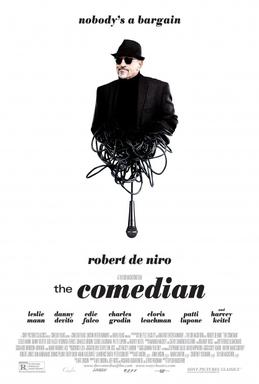
If you were having trouble getting to sleep around two in the morning last night, you could have turned over to Starz and watched the 2016 film, The Comedian.
It probably wouldn’t have helped. It’s not that The Comedian is a particularly interesting movie or anything like that. Abysmally paced and full of dull dialogue, The Comedian would be the perfect cure for insomnia if it just wasn’t so damn loud. Robert De Niro plays an aging comedian named Jackie Burke and, in this movie, being an aging comedian means that you shout out your punch lines with such force that you almost seem to be threatening anyone who doesn’t laugh. However, the threats aren’t necessary because everyone laughs at everything Jackie says.
Actually, it’s a bit of an understatement to say that everyone laughs. In The Comedian, Jackie is such a force of pure, unstoppable hilarity that all he has to do is tell someone that they’re fat and literally the entire world will shriek with unbridled joy. The thing with laughter is that, in the real world, everyone laughs in a different way. Not everyone reacts to a funny joke with an explosive guffaw. Some people chuckle. Some people merely smile. But, in the world of The Comedian, everyone not only laughs the same way but they also all laugh at the same time. There’s never anyone who doesn’t immediately get the joke and, by that same token, there’s never anyone who can’t stop laughing once everyone else has fallen silent. The Comedian takes individuality out of laughter, which is a shame because the ability to laugh is one of the unique things that makes us human.
Anyway, The Comedian is about a formerly famous comedian who is now obscure. He used to have a hit TV show but now he’s nearly forgotten. Why he’s forgotten is never made clear because nearly everyone in the movie still seems to think that he’s the funniest guy in the world. Jackie’s an insult comic and people love it when he tells them that they’re overweight or when he makes fun of their sexual preferences. This would probably be more believable if Jackie was played by an actor who was a bit less intense than Robert De Niro. When De Niro starts to make aggressive jokes, you’re natural instinct is not so much to laugh as it is to run before he starts bashing in someone’s head with a lead pipe.
Anyway, the plot of the film is that Jackie gets into a fight with a heckler. The video of the fight is uploaded to YouTube, which leads to a scene where his manager (Edie Falco) stares at her laptop and announces, “It’s going viral!” Later on, in the movie, Jackie forces a bunch of old people to sing an obnoxious song with him and he goes viral a second time. I kept waiting for a shot of a computer screen with “VIRAL” blinking on-and-off but sadly, the movie never provided this much-needed insert.
In between beating up the heckler, ruining his niece’s wedding, and hijacking a retirement home, Jackie finds the time to fall in love with Harmony Schlitz (Leslie Mann), a character whose name alone is enough to The Comedian one of the most annoying films of all time. Harmony’s father is a retired gangster (Harvey Keitel) and you can’t help but wish that Keitel and De Niro could have switched roles. It wouldn’t have made the movie any better but at least there would have been a chance of Keitel going batshit insane whenever he took the stage to deliver jokes.
I’m not sure why anyone thought it would be a good idea to cast an actor like Robert De Niro as a successful comedian. It’s true that De Niro was brilliant playing a comedian in The King of Comedy but Rupert Pupkin was supposed to be awkward, off-putting, and not very funny. I’m not an expert on insult comics but, from what I’ve seen, it appears that the successful ones largely succeed by suggesting that they’re just having fun with the insults, that no one should take it personally, and that they appreciate any member of the audience who is willing to be a good sport. Jackie just comes across like a cranky old misogynist. Watching Jackie is like listening to your bitter uncle play Vegas. I guess it would help if Jackie actually said something funny every once in a while. A typical Jackie joke is to refer to his lesbian niece as being a “prince.” Speaking for myself, when it comes to Robert De Niro being funny, I continue to prefer the scene in Casino where he hosts the Ace Rothstein Show.
Perhaps the funniest thing about The Comedian is that, when it originally released into theaters, it was advertised as being “The Comedian, a Taylor Hackford film,” as if Taylor Hackford is some type of Scorsese-style auteur. Taylor Hackford has been making films for longer than I’ve been alive and he has yet to actually come up with any sort of signature style beyond point and shoot. The second funniest thing is that The Comedian was billed as a potential Oscar contender, up until people actually saw the damn thing.
Though it may have failed at the box office, The Comedian seems to show up on Starz quite frequently. They always seem to air it very late at night, as if they’re hoping people won’t notice.
4 Shots from 4 Films is just what it says it is, 4 shots from 4 of our favorite films. As opposed to the reviews and recaps that we usually post, 4 Shots from 4 Films lets the visuals do the talking!
In honor of Marlon Brando’s birthday, here’s…
4 Shots From 4 Films
A Streetcar Named Desire (1952, dir by Elia Kazan)
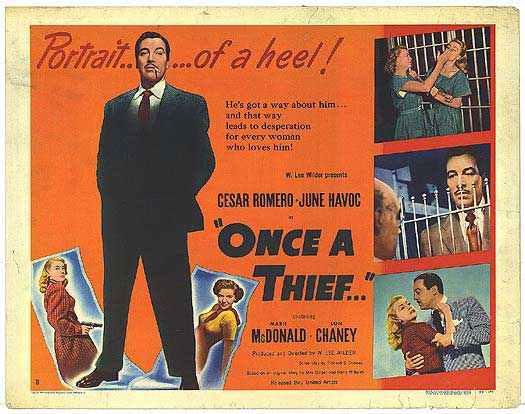
I devote a lot of time and space on this blog writing about ‘B’ Movies, those frequently overlooked quickies from days past made on the cheap for the bottom of a double feature bill. Some are highly innovative, others less so, but they served as a kind of on-the-job-training ‘film school’ before there was such a thing. Most (but not all) of them have something to offer, whether a performance by a cast member on their way up (or down) or an early effort by a future director of note. Recently, I watched ONCE A THIEF, and while it certainly broke no new ground, I found it a tight little ‘B’ noir featuring in this case a female protagonist trapped in that familiar downward spiral.
‘B’ Movie Queen June Havoc (sister of famed ecdysiast* Gypsy Rose Lee) is the troubled gal in question, a down on her luck lady named…
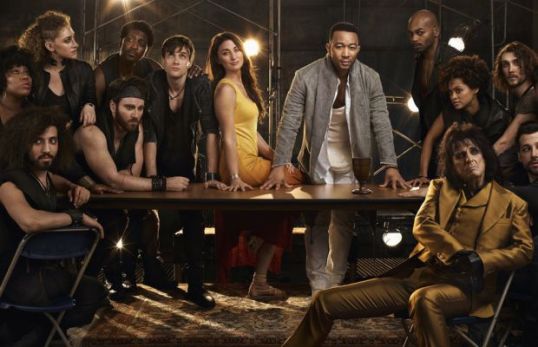
On Sunday night, my family and I ended our Easter Sunday by watching Jesus Christ Superstar Live. Now, before I say anything else about NBC’s latest live musical production, there are a few things that I should make clear:
In college, there was this girl in my dorm who started the semester as a pagan, spent a month as an evangelical, and then ended the semester as a pagan again. When she was going through her evangelical phase, she would listen to the Jesus Christ Superstar soundtrack constantly, with the volume turned up so loud that you could hear it up and down the hallway. Seriously. 24 hours a day. 7 days a week. After three days, I was sick of hearing it. I found myself wondering if anyone had ever been driven to murder over having to listen to Heaven On Their Minds one too many times. Fortunately, something happened to cause her to once again lose her faith and she went back to listening to Fall Out Boy.
For quite some time afterward, I would instinctively cringe whenever I heard any of the songs from Jesus Christ Superstar. In fact, it wasn’t until I first came across the 1973 film version that I was able to once again appreciate it as a musical and overlook its association with that annoying pagan. From the first time I watched it, I really liked that movie and, every time I rewatch it, I like it even more. When I started watching Sunday’s production, I was seriously wondering if I’d be able to set aside my feelings about both the pagan and the movie and judge the television version on its own merits.
Well, I shouldn’t have worried. While I still prefer the original film version, Sunday’s television production was wonderfully conceived and executed. From the first note of music to the final curtain call, Jesus Christ Superstar Live In Concert captured my attention and refused to let it go, keeping me watching even through the lengthy commercial interruptions. The musicians and the singers sounded great, or at least they did once the audience mics were turned down. (At the start of the show, the audience was so loud that they threatened to drown out Heaven On Their Minds.) The production design was simply amazing, combining downtown New York with ancient Judea in a way that reminded us just how timeless the musical’s story truly is. (The 1973 film opened with a bunch of hippies driving through the desert. The 2018 production opened with Jesus’s name being spray painted on a wall. Both openings felt perfect for the story that was being told.)
As for the cast, Brandon Victor Dixon was compellingly intense as Judas and Norm Lewis was properly intimidating as Caiaphas. The big marquee name was Alice Cooper, who obviously enjoyed playing the production’s burlesque version of Herod. That said, the entire show was stolen by Ben Daniels, who was wonderfully conflicted as Pilate. I wasn’t as impressed by Sara Bareilles as Mary Magdalene, or I should say that I apparently wasn’t as impressed with her performance as everyone else on twitter. (To me, she seemed a bit too peppy, especially in the early numbers. I know I’m in the minority as far as that goes.) Finally, in the role of Jesus, John Legend grew on me. Of course, in the show, Jesus doesn’t really become an interesting character until he sings “Poor Jerusalem” and that was the moment that Legend himself seemed to truly feel comfortable with the role.
It’s probably pointless to compare the 1973 film to the 2018 version but still, I did find it interesting how the live version reimagined the relationship between Jesus and Judas. In the 1973 version, Jesus is largely aloof for almost the entire film. Judas seems to be frustrated because he can’t figure out what Jesus is planning to do and Jesus himself never seems to feel that he can allow himself to get truly close to anyone. In the film, Judas’s anger is the anger of someone who has spent the last few years of his life following a leader and who is now wondering if he’s been wasting his time. He’s like a Democrat who has just realized that his party is even less interested in reigning in Wall Street than the Republicans.
In the live version, the Jesus/Judas relationship came across as being a bromance gone wrong. In this version, Judas’s disatisfaction is less political and more jealousy over Jesus being closer to the Magdalene than to him. When Judas snaps at Jesus in the 2018 version, Jesus actually seems to get personally offended. The dynamic between Dixon and Legend is definitely different from the one between Ted Neeley and Carl Anderson in the original version. Of course, there’s nothing wrong with that. That’s one of the wonderful things about theater. When successfully done, each subsequent production brings something new to an old story.
Jesus Christ Superstar definitely worked. As far as the current wave of live television musicals is concerned, this was the best one yet.
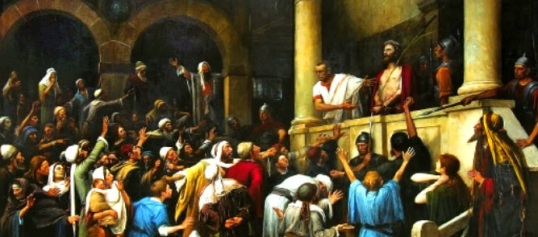
The simple answer to that is that Barabbas was the prisoner who, according to the Gospels, Pontius Pilate released during Passover. As the story goes, Pilate gave the people the choice. He could either release Barabbas or Jesus. For what crime was Barabbas being held? The Gospel of Matthew merely says that Barabbas was a “notorious prisoner.” Mark and Luke both write that he was involved in a recent riot and that he was a murderer. The Gospel of John refers to him as being a bandit, which may have been another term for revolutionary. Regardless of what crime he had committed, the people overwhelmingly called for Barabbas to be released and for Jesus to be crucified. What happened to Barabbas after he was set free is not recorded but has been the subject of a good deal of speculation over the centuries.
(Of course, there are some scholars who believe that the Barabbas story was simply an invention of later writers, designed to shift the responsibility for the crucifixion away from the Romans. There’s also some who say that Jesus and Barabbas were actually the same person and that the inclusion of the Barabbas story was meant to indicate that Jesus was actually a revolutionary who was working to free Judea from Roman role. I imagine Dan Brown will eventually base a novel on this theory, so look forward to hearing your grandma debating the historicity of Barabbas at some point in the future.)
Back to the original question, who was Barabbas?
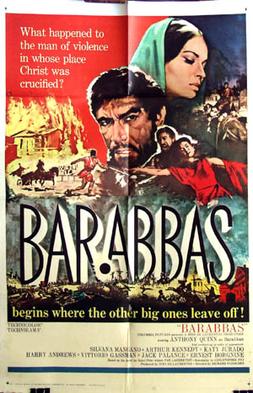
According to the 1961 film of the same name, Barabbas was Anthony Quinn.
Based on a novel by the Nobel Prize-winning Swedish author, Pär Lagerkvist, Barabbas opens with Pilate (Anthony Kennedy) making his infamous offer. Barabbas or Jesus? Perhaps the only person more shocked than Pilate by the people’s decision is Barabbas himself. A brutish and violent man, Barabbas is looking forward to returning to his old life but, as he leaves the prison, he finds himself fascinated by the sight of Jesus stoically carrying the cross, heading to the fate that Barabbas was spared. Later, Barabbas witnesses the Crucifixion and is shaken when, upon Jesus’s death, the sky turns black.
(Director Richard Fleischer shot the Crucifixion during an actual solar eclipse, so that the sky actually did turn black during filming. It’s a stunning scene.)
For the rest of his life, Barabbas is haunted by both his narrow escape from death and his subsequent notoriety. When Barabbas tries to reunite with his former lover, Rachel (Silvana Mangano), he discovers that not only does she now want nothing to do with him but that she has also become a follower of Jesus. (Later, in a surprisingly graphic scene, Rachel is stoned to death.) Barabbas becomes convinced that he cannot die and he becomes increasingly reckless in his behavior. Over the next few decades, he finds himself sold into slavery and forced to spend 20 years working in the harsh sulfur mines of Sicily. He befriends a Christian named Sahak (Vittorio Gassman) and, with him, is trained to be a gladiator by the sadistic Torvald (Jack Palance). Eventually, Barabbas finds himself rejected by both the Romans and the Christians while Rome burns all around him.
Barabbas is a film that really took me by surprise. I’ve seen a lot of Biblical and Roman films from the 50s and 60s and I was expecting that Barabbas would be another sumptuously produced but slow-paced epic, one that would inevitably feature stiff dialogue and overly reverential performances. I mean, don’t me wrong. I happen to love spectacle and therefore, I enjoy watching most of those old historical and religious epics. But still, for modern audiences, these films can often seem rather … well, hokey.
But Barabbas was totally different from what I was expecting. As wonderfully played by Anthony Quinn, Barabbas wanders through most of the film in a state of haunted confusion. Even at the end of the film, after he’s met St. Peter (Harry Andrews), Barabbas doesn’t seem to fully understand what he believes or how he’s become one of the most notorious men in Rome. Quinn plays Barabbas almost like a wild animal, one that has been cornered and trapped by his own infamy. The more Barabbas struggles against his fate, the more trapped he becomes. Barabbas may be a brute but, the film suggests, even a brute can find some sort of redemption. Quinn gets good support from the entire supporting cast. Jack Palance is perfectly evil as Torvald while Vittorio Gassman, Silvana Mangano, and Ernest Borgnine bring some needed nuance to characters who, in lesser hands, could have just been cardboard believers.
Barabbas is a surprisingly dark film. When Rachel is stoned, the camera doesn’t flinch from showing just how cruel an execution that was. Nor does the camera flinch from the violent brutality of the gladiatorial games. When Barabbas is sold into slavery, the sulfur mines of Sicily are depicted in Hellish detail and practically the only thing that saves Barabbas from spending the rest of his life being smothered under a cloud of sulfur is a giggly Roman woman who decides to buy Barabbas so that he can serve as a good luck charm. The scenes of Barabbas’s skill of a gladiator are contrasted with the bloodthirsty crowd demanding and cheering death. Even when Barabbas joins the Christians in the Roman catacombs, he discovers that they want nothing to do with him, suggesting that they believe in forgiveness for everyone but him. The spectacle of Rome is displayed but so is the terror of what lies underneath the city’s ornate surface. If Barabbas is occasionally a ruthless or unsentimental character, one need only look at the world he lives in to understand why.
With the exception of a few slow scenes at the start of the film, director Richard Fleischer does a good job of keeping the action moving. It’s a long film but it never becomes a boring one. In the end, thanks to Quinn’s performance and the film’s unflinching portrayal of life in ancient Rome, Barabbas is a biblical epic for people who usually don’t like biblical epics.