“This is my tip-of-the-hat to early Rolling Stones. Like in 1964/65 when their songs were very Chuck Berry orientated. They just feel so good, in the pocket. This song was begging to be in the live show. We’ve done it in four different continents now and no one had ever heard it. By the second chorus, the whole audience is singing ‘I’ll Bite Your Face Off.’ It’s the perfect little 3 minute hit single.”
I’ll Bite Your Face Off was the first single to be released off Welcome 2 My Nightmare, Alice Cooper’s 26th studio album and a follow-up to Cooper’s 1975 album, Welcome To My Nightmare. Each song represents a different aspect of a bad dream. In I’ll Bite Your Face Off, Alice dreams about being introduced to the devil.
The video was filmed at several different live venues. One of these performances was at the 100 Club in London, where actor Johnny Depp joined the band on guitar.
“Metal confronts what we’d rather ignore. It celebrates what we often deny. It indulges in what we fear most. And that’s why metal will always be a culture of outsiders.” — Sam Dunn
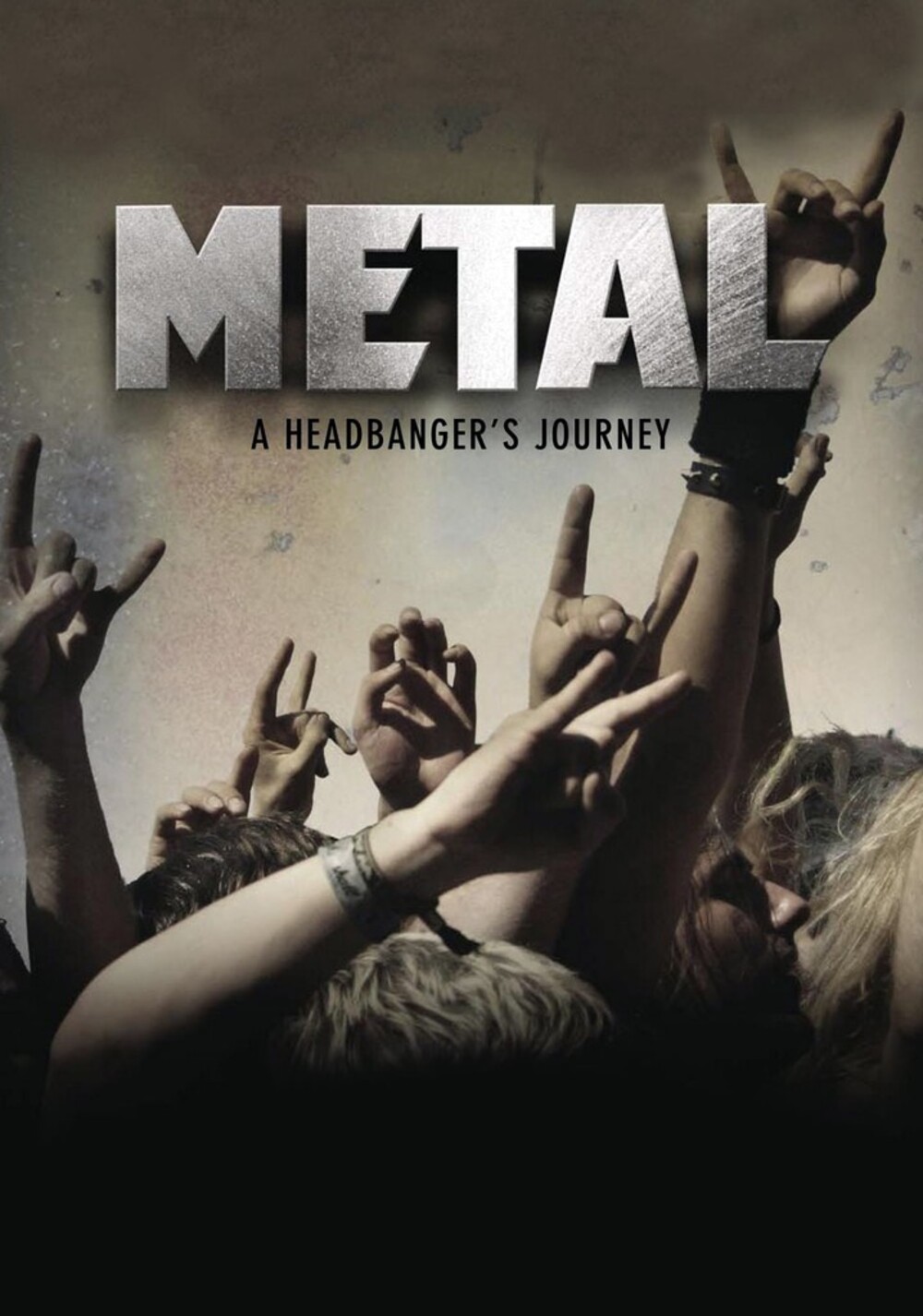
Metal: A Headbanger’s Journey is the kind of documentary that feels like it was made by someone who actually gets heavy metal instead of just staring at it from the outside and treating it like a weird cultural problem to be solved. Sam Dunn, with Scot McFadyen and Jessica Wise, builds the film around a simple but very effective idea: if metal has spent decades getting mocked, misunderstood, and moral-panic’d into the ground, why not let a real fan and anthropologist go out and explain what the scene is actually about? That perspective gives the movie a relaxed confidence right away. It never acts like it has to apologize for loving metal, and that attitude makes the whole thing way more engaging than a dry music-history lecture.
What makes the documentary work so well is the mix of fandom and curiosity. Dunn is not posing as some detached academic who wandered into the pit by accident. He is clearly a lifer, and that matters because his enthusiasm keeps the film from turning into a lecture about subgenres, stereotypes, and cultural backlash. At the same time, he is smart enough to ask real questions about why metal exists, why it inspires such loyalty, and why it keeps attracting outsiders who feel like they do not fit anywhere else. That balance gives the movie its shape. It is informative without becoming stiff, and it is affectionate without becoming blind praise.
The film does a stellar job of tracing the evolutionary trajectory of the genre. It starts with the bedrock, showing how the heavy, blues-influenced rock of the late sixties and early seventies paved the way for everything else. Dunn maps out the genealogy of metal with a sense of wonder, illustrating how a common foundation in the hard rock of acts like Led Zeppelin or the dark, doom-laden riffs of Black Sabbath splintered into a massive, tangled family tree. You get to see the distinct shifts in tone, speed, and imagery as the music moved from the raw power of pioneers like Iron Maiden and Motörhead into the more extreme, experimental territories of bands like Cannibal Corpse or the provocative, atmospheric reaches of Mayhem. This structural focus turns the film into a clear guide for how metal constantly reinvented itself while holding onto that core aggressive energy.
The interviews are a huge part of why the film stays alive. Dunn talks to an incredible array of musicians who cover a lot of ground, including legends like Alice Cooper, Bruce Dickinson, and Ronnie James Dio, and the movie benefits from the fact that these people are speaking as insiders rather than museum curators. Some bring humor, some bring historical context, and some bring genuine passion that reminds you why this music matters to its fans in the first place. What’s especially nice is that the movie does not treat everyone with the same reverence. It lets personalities come through, which gives the film a looser, more conversational energy. That makes it easier to sit through even when it moves into territory that could have felt overly academic in less capable hands.
One of the most memorable things about Metal: A Headbanger’s Journey is the way it handles the old stigma around heavy metal. The film doesn’t just repeat the familiar story that “metal got unfairly attacked”; it also shows why those attacks stuck in the public imagination for so long. That gives the documentary more bite. It is not only defending the genre, but also explaining the cultural fear that surrounded it, whether that meant the PMRC era or the broader idea that loud guitars and dark imagery automatically equal danger. Dunn and company make a strong case that metal is often a release valve rather than a threat. For a lot of listeners, it is a place to channel anger, alienation, and frustration instead of acting them out in destructive ways.
The film also does not shy away from the darker controversies that have haunted the genre’s reputation, specifically the actions linked to the Norwegian black metal scene. Dunn confronts the violence and extremism associated with these artists head-on, including a chilling interview with Gaahl, the infamous frontman of the Norwegian black metal band Gorgoroth. By highlighting the intense, radical nature of Gaahl’s worldview and the violent history of the subculture he represented, the film addresses the deep, dark mark these controversies placed on the Norwegian scene. Acknowledging how these headlines fueled mainstream hatred toward the music is essential to the film’s narrative. However, the documentary’s nuance really shines in its later home video releases, where Dunn adds vital context to ensure viewers understand that those dark moments were extreme outliers rather than the standard for the community at large. By clarifying that these actions did not represent the vast majority of metal fans or artists, the film successfully separates the music’s spirit from the criminal acts of a few.
There is also a fun educational streak running through the whole thing. The movie likes to trace lines between older rock traditions and the more extreme corners of metal, and that gives it some useful perspective. It reminds you that the genre did not appear out of nowhere and that its DNA is tangled up with blues, hard rock, theatricality, and rebellion. Even if you already know a fair amount about the subject, the film still has a way of making those connections feel vivid rather than obvious. It does a solid job of showing how metal evolved into something bigger and more fragmented than casual listeners usually assume.
If the movie has a weakness, it is that it can feel a little too short for everything it wants to cover. There is so much material here that some topics get only a snapshot when they could have used a deeper dive. That is especially true if you are the kind of viewer who wants more on the later developments and regional differences within the scene. Still, the brisk runtime also helps the film stay punchy and rewatchable. It does not overstay its welcome, and it keeps moving at a pace that suits the subject. In a weird way, the documentary’s eagerness to pack in so much is part of its appeal.
Visually and structurally, the movie keeps things straightforward, which works in its favor. It is not trying to be slick in a way that would distract from the subject. Instead, it uses interviews, performance footage, festival scenes, and Dunn’s own traveling framework to keep the momentum going. That direct approach fits the personality of the material. Metal is not a genre that usually benefits from fancy packaging. It needs energy, attitude, and clarity more than polish, and this documentary understands that.
The best compliment you can give Metal: A Headbanger’s Journey is that it feels like a conversation with someone who loves the music enough to explain it honestly. It celebrates the bombast, the mythology, the anger, and the community without pretending metal is above criticism or complexity. It is smart, funny in places, and genuinely useful as both a fan piece and an introduction for newcomers. Even years later, it still comes off as a passionate and accessible guide to a scene that is often easier to caricature than understand. For metal fans, it is an easy recommendation. For everyone else, it is one of those documentaries that might actually change how you hear the genre the next time a riff kicks in.
What better way to celebrate Halloween than with the original horror rocker himself, Alice Cooper? Welcome To My Nightmare is one of Alice Cooper’s signature tunes. This video comes from the 1990 concert film, .Alice Cooper Trashes The World.
Bed of Nails is from Alice Cooper’s 11th studio album, Trash. It was the album’s second most successful single, despite not even being released as a single in the U.S. Maybe some of that success was due to this music video, in which Alice the singer performs over and in a bed of nails while women in leather walk through the studio and play the cello.
This video was directed by Nigel Dick, who directed videos for anyone who was anyone. If Nigel Dick has not done a video for you, you are not really a rock star.
There are actually two versions of this video. Both of them feature model Rana Kennedy as the mysterious woman looking over Alice Cooper. One version features shots where the woman is meant to be topless. (A body double was used in those shots). The MTV-friendly version excises the toplessness and is less focused on torture than the first version.
Director Nigel Dick was one of the big music video directors of the MTV era. He worked with everyone who was anybody. Alice Cooper definitely was and still is somebody. It’s funny how he went from being the rocker that parents feared to being a beloved cultural institution and he did it while, for the most part, still remaining true to his original act and persona. All the kids who used to get yelled at for listening to Cooper grew up and kept listening to him and Alice turned out to be a pretty smart guy.
How You Gonna See Me Now? is one of the songs to cite if anyone ever says that Alice Cooper was only capable of writing gimmicky songs. This is one of Alice’s best ballads, asking his former companion how she is going to see him when he returns to her life.
Of course, the video features Alice in jail and getting what appears to be electroshock therapy, in between writing a letter home to his wife. As with many of Alice Cooper’s videos, this video is memorable because of the contrast between the heartfelt and sincere lyrics and the macabre, sometimes bordering on campy imagery.
Director Bruce Gowers has also directed videos for Prince, Fleetwood Mac, Rush, Supertramp, and really just about anyone who was anybody in the 70s and 80s.
Is Alice Cooper haunting her dreams or has she been hypnotized? According to this song’s Wikipedia page, this video received “virtually no airplay” on MTV. 1994 was at the height of MTV’s embrace of grunge and also the beginning of Britpop so I guess Alice Cooper was not high on the channel’s radar.
This song appeared on Alice Cooper’s 13th solo album, The Last Temptation. All of the songs on the album dealt with a mysterious showman and his attempts to get a boy named Steven to join his traveling show. At least some parts of the video feature Alice in character as the showman.
In this 2012 Asylum production, the legendary Bigfoot is revealed to just be a big gorilla who wants to sleep for the winter. In fact, Bigfoot seems to have more in common with King Kong than the hairy, humanoid that people have been reporting seeing for over a hundred years. Unfortunately, all of the hunters and the tourists and the noise from a local music festival keep interrupting Bigfoot’s slumber. It turns out that Bigfoot is not a morning monster and tends to wake up grumpy. When Bigfoot is in a bad mood, he turns over RVs, steps on hunters, and tries to destroy Mt. Rushmore.
Concert promoter Harley Henderson (Donny Bonaduce) wants to kill Bigfoot and turn his body into a tourist attraction. Environmental activist Simon Quinn (Barry Williams) wants to not only protect Bigfoot but to also perform protest-themed folk music. Harley and Simon were once musical partners, until Simon decided that he would rather protect endangered species and Harley decided to become a businessman. Now, they hate each other and are constantly on the verge of coming to blows. Meanwhile, Sheriff Alvarez (Sherilyn Fenn) just wants to keep her town safe from the creature’s rampage. You read that right. This film is The Partridge Family vs. The Brady Bunch with Twin Peaks trying to keep the peace. If you’re wondering how The Asylum convinced Bonaduce, Williams, and Sherilyn Fenn to all appear in a low-budget film about a giant gorilla menacing South Dakota, consider that they also convinced Bruce Davison to appear in it as well. In fact, Bruce not only stars but he directed the film as well! I mean, Bonaduce and Williams were probably just happy that someone was calling them and this film was made before Twin Peak: The Return reignited Fenn’s career. Bruce Davison, however, has an Oscar nomination to his name. Of course, before one gets too snarky, it’s important to remember that actors have bill to pay, just like the rest of us. Sometimes, those bills are played by appearing in Shakespeare. Sometimes, they’re paid by appearing in Bigfoot.
Actually, no one should be ashamed about appearing in Bigfoot. Like most of the films produced by the Asylum, Bigfoot is actually a lot of fun. It’s not a film that’s meant to be taken seriously. Instead, it’s basically a parody of the big-budget giant monster movies that come out of Hollywood, complete with a tacked-on environmental subplot and an endangered national monument. Bigfoot is in on the joke. The minute that Barry Williams picks up his guitar and starts to sing an insufferable folk song, it’s obvious that this film is laughing along with us. Bigfoot was designed to be a silly film and it succeeds. When taken on its own terms, it’s hard not to enjoy it.
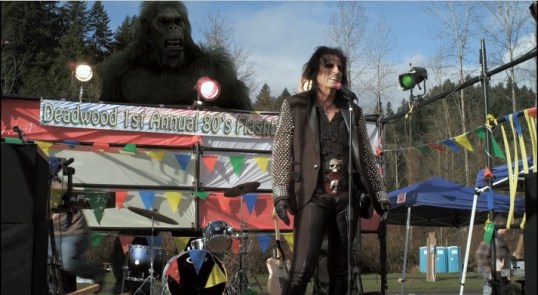
Finally, Alice Cooper appears in this film as himself, performing at Bonaduce’s concert. After Alice complains about the crowd size and bemoans the indignity of going from being one of the world’s biggest stars to performing at a festival in South Dakota, Bigfoot literally kicks him off the stage. Much like the film, Alice deserves some credit for be willing to poke fun at himself.
Hey Stoopid is the title track off of Alice Cooper’s 12th solo studio album. The song is about drug abuse and suicide, with Alice telling his listeners to stay off drugs, to “put the gun down,” and that rock and roll isn’t about being self-destructive. Alice Cooper even sings, “You ain’t living in a video.” (Thought he did struggle with alcohol and it would probably shock many of the people who criticized him during his 70s heyday, Alice Cooper has always been anti-drug.) Slash plays guitar on the track while Ozzy Osbourne provided backing vocals.
The music videos is a mix of live action, animations, and Alice Cooper performing with a skull. I wouldn’t mind spending a day in Alice Cooper Land.