Review: Conspiracy (dir. by Frank Pierson)


“We will not sterilize every Jew and wait for them to die. We will not sterilize every Jew and then exterminate the race. That’s farcical.” — Reinhardt Heydrich

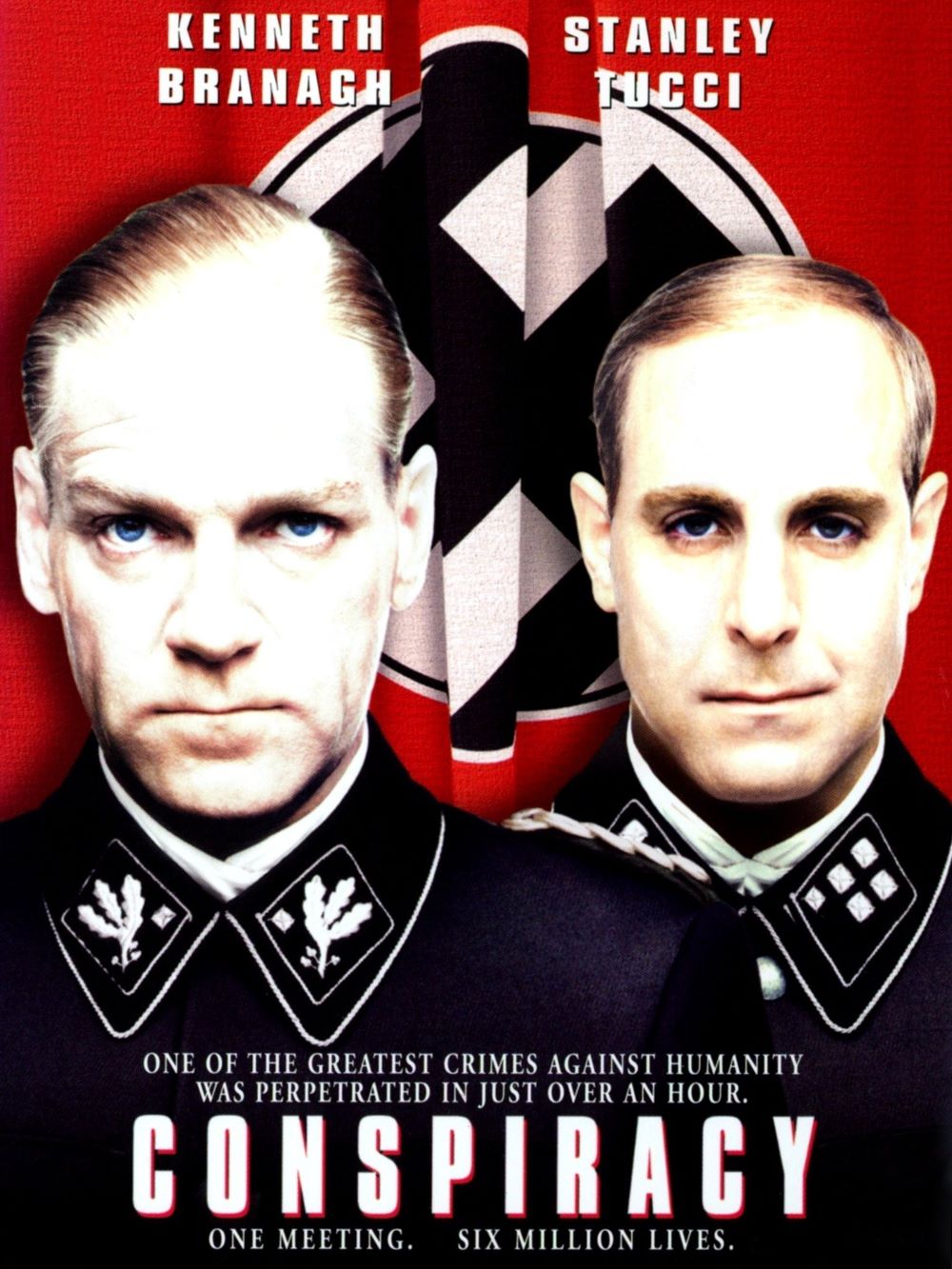
HBO’s Conspiracy (2001) masterfully dramatizes the infamous Wannsee Conference, held on January 20, 1942, where high-ranking Nazi officials orchestrated the Final Solution. The film’s running time mirrors the historical meeting itself, distilling one of the darkest moments in history into a single, chilling sitting that balances historical fidelity, psychological insight, and dramatic restraint. The premise is stark and deceptively simple: a group of men, most of whom had never previously met, gather in a sun-drenched villa outside Berlin to discuss systematic mass murder while enjoying fine food and polite conversation. This contrasting setting, rendered with careful attention to period detail, powerfully underscores what Hannah Arendt called the “banality of evil.” In Conspiracy, evil is not the property of villainous caricatures, but of functionaries and technocrats—chillingly rational and disturbingly mundane.

Much of the film unfolds in real time, utilizing dialogue taken from the sole surviving minutes of the Wannsee Conference. Screenwriter Loring Mandel and director Frank Pierson avoid unnecessary embellishments, allowing the facts and the conversations themselves to carry the full, horrifying weight. Kenneth Branagh gives an Emmy-winning performance as Reinhard Heydrich, the orchestrator and presiding presence at the conference. Branagh’s portrayal is both urbane and authoritative, presenting Heydrich as a figure whose affable composure thinly veils his unwavering commitment to genocide. There is no soaring rhetoric or overt menace; Heydrich’s evil is presented with administrative casualness, making it all the more chilling.

Stanley Tucci is equally compelling as Adolf Eichmann, Heydrich’s logistical right hand and the architect of the machinery of death. Tucci infuses Eichmann with a quiet efficiency and bureaucratic pride—a portrait of a man more attached to process than morality, disturbingly bland in his demeanor. The supporting cast is no less impressive. Colin Firth, as Dr. Wilhelm Stuckart, portrays a legal architect of Nazi race law who appears increasingly unsettled as the agenda shifts from disenfranchisement to extermination. Each attendee is rendered with psychological nuance. Some are disturbingly enthusiastic about their roles, while others are quietly apprehensive, yet ultimately complicit. These subtle gradations of doubt, ambition, and opportunism animate the film’s psychological landscape.

The dialogue, rooted in the actual transcript and skillful dramatic writing, eschews melodrama. The horror emerges not through spectacle, but in analytic exchanges about logistics, quotas, and definitions—the cold calculus of genocide. The men’s debates around how to classify mixed-race Jews, whether sterilization is preferable to extermination, and who should be spared create a bureaucratic puzzle as vile as its intent. Their discussions are delivered in a neutral, even mundane tone, which heightens the chilling reality of what they are planning. Pierson’s direction is restrained; the film never leaves its confined setting, emphasizing the claustrophobic mood of collective complicity. The camera lingers on faces rather than violence, building tension through small gestures—a glance, a pause, the clinking of glassware. The impact of what is said is matched only by the weight of what goes unsaid, until Heydrich, in a quietly devastating moment, makes the true purpose explicit.

More than a simple history lesson, Conspiracy meditates on themes of collective guilt, moral responsibility, and the terrifying ease with which ordinary people become accessories to atrocity. The film is haunted by bureaucracy; if everyone is “just following orders” or “simply doing their job,” the boundaries of blame blur and diffuse. The characters’ debates skillfully skirt the language of murder, favoring euphemisms such as “evacuation” or “resettlement.” This allows viewers to witness, in real time, the kind of moral erosion that enables atrocity on a massive scale. The dry, matter-of-fact tone of the film deepens its emotional impact, forcing the audience to comprehend that such horrors were conjured not in a frenzy, but in calm administrative exchanges over lunch.

For both historians and general audiences, Conspiracy earns praise for its meticulous adherence to historical detail. The screenplay closely follows the Wannsee minutes, and the film’s design choices—muted score, period-accurate costumes, and careful pacing—all serve to render bureaucratic evil as mundane and unremarkable. This unwavering restraint, however, does impose certain limits. The film’s dramatic arc is inherently subdued; the absence of conventional action or narrative tension makes it unfold like an extended negotiation rather than a traditional drama. Some viewers may find this lack of overt conflict stifling or static, resulting in a work that feels more “important” than “entertaining,” but this is clearly by design.

Conspiracy received widespread acclaim for both its historical gravity and psychological depth. Branagh and Tucci, in particular, were celebrated for their nuanced performances. The film is often cited as a model example of how the “banality of evil” operates—not through monsters, but through functionaries in tailored uniforms, sipping wine and rationalizing extermination. For those unfamiliar with the events, the manner in which these men discuss matters of life and death with casual detachment is shocking. As one critic noted, “Most people believe they know what evil looks like… But in Conspiracy, men of true evil met in pristine, gorgeous surroundings… and go about their business leisurely… with a smile and barely a hint of remorse.”

Within the canon of Holocaust cinema, Conspiracy stands apart from films like Schindler’s List or The Pianist, which focus on the suffering and survival of victims. Instead, it occupies a space similar to Downfall and the earlier Die Wannseekonferenz, dramatizing not the machinery of genocide but the mindsets of its architects. By confining itself to dialogue and implication, the film compels viewers to reflect on how civilization’s facades both enable and obscure horror.

The film’s lingering effect is not found in dramatic catharsis or tears, but in an enduring sense of discomfort. Conspiracy dramatizes not just a choice among evil options, but the ease with which those choices become rote procedure and social negotiation. The silence in the final act, as the men calmly disperse after codifying genocide, lands with a cold, almost procedural finality. The closing captions, briefly summarizing the fates of those present, deliver a sobering message: accountability was sporadic, often delayed, and never guaranteed.

Conspiracy is not casual entertainment, nor is it meant to be. Instead, it is essential viewing for anyone interested in the psychology of atrocity, the peril of bureaucratic amorality, and the enduring question of how ordinary people become complicit in extraordinary evil. With a screenplay of surgical precision, outstanding ensemble cast (especially Branagh and Tucci), and a director committed to understatement, HBO’s film demonstrates how history’s darkest decisions are forged not in chaos, but in chilling consensus. To those seeking to understand not only what happened at Wannsee, but how, Conspiracy offers an unblinking and quietly devastating answer.

Film Review: Conspiracy (dir by Frank Pierson)


The 2001 film, Conspiracy, takes place at a villa on the outskirts of Berlin.  It’s a lovely villa and, as we can see during the film’s opening moments, it’s about to play host to a meeting of very important people.

The date is January 20th and the year is 1942.  Having conquered much of Europe, Nazi Germany is now at war with the Allies.  Reinhard Heydrich (Kenneth Branagh), the young chief of the Reich Security Main Office and the man who many feel will eventually succeed Adolf Hitler as the leader of the Third Reich, has been directed to call a conference so that he and his deputy, Adolf Eichmann (Stanley Tucci), can “discuss” ways to solve “the Jewish question.”  One-by-one, representatives of the Reich’s bureaucracy show up at the villa.

At the start of the meeting, the men discuss various ways to force the Jews out of Germany and all of the occupied territories.  The men chose their words carefully, speaking in euphemisms and doing their best to sound like concerned government officials.  The men know what they’re talking about but they still seem to feel the need to avoid coming right and saying it.  As they talk, it becomes clear that everyone is trying to stay in Heydrich’s good graces while, at the same time, avoiding the fact that they understand the truth about what Germany is doing.  It’s not until halfway through the meeting that Heydrich and Eichmann reveal that Germany’s policy has already been determined and that concentration camps with gas chambers have already been designed and built.  The meeting is less about discussing the policy and more about getting each man at the meeting to sign off on it.  The unspoken subtext is that each man is being tested to determine who will support (and, if need be, help to cover up) the Final Solution and who will have to be otherwise dealt with.

Based on the actual minutes of the meeting, Conspiracy is film that is perhaps even more important now than when it was first released.  It’s a film that explores not only the banality of evil but also seeks to answer the question of why no one in Hitler’s government forcefully objected to the Final Solution.  (Many, of course, claimed not to know what was going on.  This film reveals just how little credibility that claim had.)  Some of the men go along because they understand not going along would mean the end of their careers and maybe their lives.  Some of the men agree because, as members of the military, they believe in supporting their country’s leadership, regardless of what that leadership represents.  Some of the men agree because they want to stay in Heydrich’s good graces.  These men represent a society where anti-Semitism is so normalized that it is accepted as a given and, while some of the men are not as outspoken in their prejudice as the others, it’s clear that all of them view the Jewish people as being a unique problem.  Those who do raise concerns do so only out of worry of what will happen to them if the rest of the world discovers what Germany is planning.  Heydrich insists that there is no need to worry because Germany will win the war.  Some of the men at the Conference are clearly not convinced of Germany’s pre-destined victory but not a single one has either the morality or the courage to refuse to endorse the Final Solution.  The film ends with a series of title cards, letting us know what became of the men who attended the Wannsee Conference.  Heydrich was assassinated during the war.  Eichmann fled to South America and hid there until he was captured by Israel in 1960.  Many of the men were executed for war crimes but a surprising number of them were either acquitted or never put on trial and went to live peacefully after the war.

Well-directed by Frank Pierson, Conspiracy has a distinguished cast who brings the historical characters to terrible life.  It’s one thing to read about what was said and planned at the Conference.  It’s another thing to actually hear those words spoken aloud and it’s a reminder that the evil of the Holocaust was not an accident nor was it something that took its perpetrators by surprise.  It was something that meticulously planned by human beings who were fully aware of what they were doing.  Kenneth Branagh makes for an arrogant and intimidating Heydrich while Stanley Tucci plays Eichmann as being the type of bureaucratic robot who is incapable of seeing human beings as anything more than just dwindling numbers on a report.  Colin Firth and David Threlfall make strong impressions as two of the more weary members of the Conference, as does Ian McNeice in the role of the type of crude, career-driven government functionary who has survived by pretending to be dumb.

At a time when anti-Semitism is on the upswing and Holocaust denialism is being mainstreamed, Conspiracy is an important film.  When others say that the Holocaust didn’t happen or that it doesn’t matter, Conspiracy defiantly says, “Yes, it did and yes, it does.”

Horror Scenes I Love: The Arrival At Allerdale Hall in Crimson Peak


Since today is Guillermo del Toro’s birthday, it only seems appropriate that today’s scene that I love comes from my favorite del Toro film.

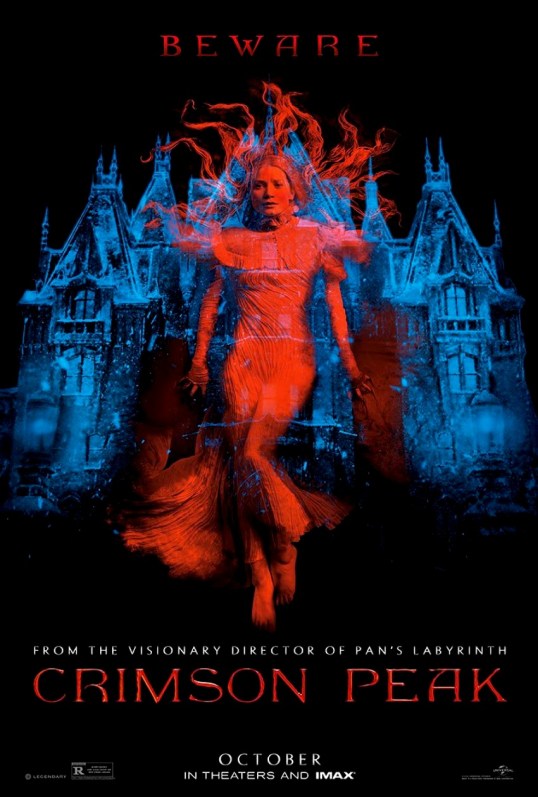
In this scene from Crimson Peak, Thomas bring Edith to Allerdale Hall for the first time and it’s both hauntingly beautiful and rather frightening at the same time.  The same thing can be said for this film itself and perhaps all of del Toro’s work.  I just love the gothic atmosphere of the location.  Edith is determined to see the positive.  Thomas’s personality is already starting to change as the weight of returning to Allerdale starts to push in on him.  The mansion has already started to sink back into the Earth.  It’s just a wonderfully put-together scene, one that sets the mood for the rest of this sadly underrated film.

Here’s The Trailer For Loki!


Like many people, I was broken-hearted when it appeared that Tom Hiddleston’s Loki was killed during Avengers: Infinity War. Then I was happy to see that he came back (in a fashion) in Avengers: Endgame! As for the upcoming Disney+ series featuring Loki …. well, let’s just watch the trailer and patiently wait for June 11th, shall we?

It looks good to me but, of course, you knew I was going to say that. I’m among those who feels that Tom Hiddleston can do no wrong so I’m going to be happy to see him in just about everything. Does this series make Loki the first Marvel villain to get his own MCU vehicle? Good for him. Who doesn’t love Loki?

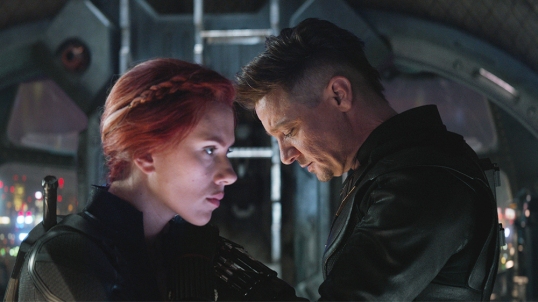
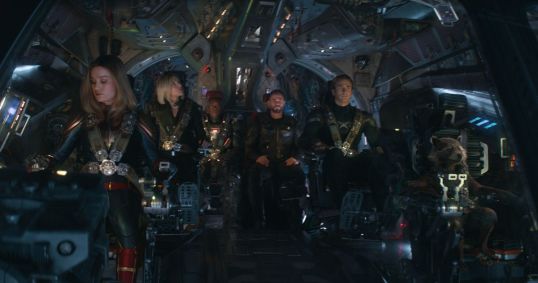
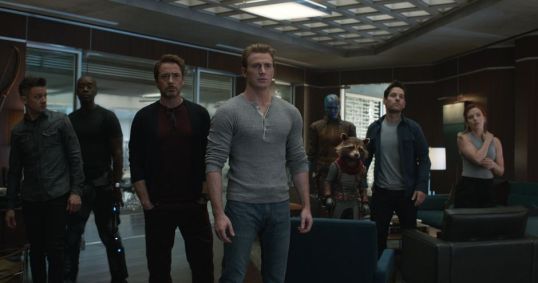
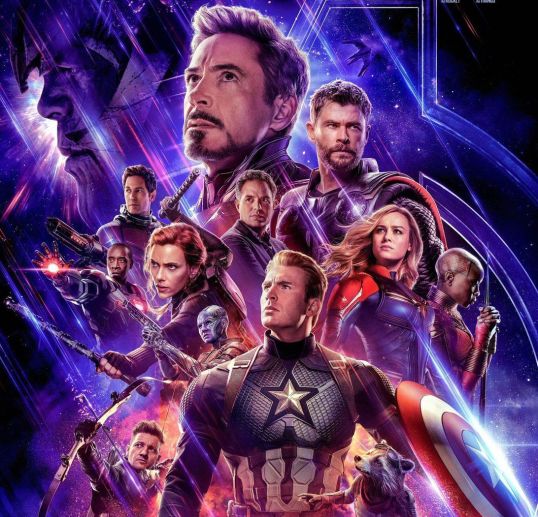
Film Review: Avengers: Endgame (dir by the Russo Brothers)


(Minor Spoilers Below!  Read at your own risk.)

So, how long does the no spoiler rule for Avengers: Endgame apply?  There’s so much that I want to say about this film but I know that I shouldn’t because, even though it had a monstrous opening weekend, there are still people out there who have not had a chance to see the film.  And while this review will have minor spoilers because, otherwise, it would be impossible to write, I’m not going to share any of the major twists or turns.

I will say this.  I saw Avengers: Endgame last night and it left me exhausted, angry, sad, exhilarated, and entertained.  It’s a gigantic film, with a plot that’s as messy and incident-filled as the cinematic universe in which it takes place.  More than just being a sequel or just the latest installment in one of the biggest franchises in cinematic history, Avengers: Endgame is a monument to the limitless depths of the human imagination.  It’s a pop cultural masterpiece, one that will make you laugh and make you cheer and, in the end, make you cry.  It’s a comic book film with unexpected emotional depth and an ending that will bring a tear to the eye of even the toughest cynic.  By all logic, Avengers: Endgame is the type of film that should collapse under its own weight but instead, it’s a film that thrives on its own epic scope.  It’s a three-hour film that’s never less than enthralling.  Even more importantly, it’s a gift to all of us who have spent the last ten years exploring the Marvel Cinematic Universe.

The film itself starts almost immediately after the “Snap” that ended Avengers: Infinity War and we watch as Clint Barton (Jeremy Renner, returning to the franchise after being absent in the previous film) finds himself powerless to keep his family from disintegrating.  After often being dismissed as the Avengers’s weak link, both Clint Barton and Jeremy Renner come into their own in the film.  As one of two members of the Avengers who does not have super powers, Clint serves as a everyperson character.  He’s a reminder that there’s more at stake in Endgame than just the wounded pride of a few super heroes.  When Thanos wiped out half the universe, he didn’t just wipe out Spider-Man, Doctor Strange, and Groot.  He also left very real wounds that will never be healed.

When the film jumps forward by five yeas, we discover that the world is now a much darker place.  When we see New York, the once vibrant city is now gray and deserted.  Our surviving heroes have all dealt with the Snap in their own way.  Clint is now a vigilante, killing anyone who he feels should have been wiped out by Thanos but wasn’t.  Thor (Chris Hemsworth) drinks and eats and feels sorry for himself.  Captain America (Chris Evans) attends support groups and, in one nicely done scene, listens as a man talks about his fear of entering into his first real relationship in the years since “the Snap.”  Tony Stark (Robert Downey, Jr.) is living as a recluse and is still blaming himself.  Hulk (Mark Ruffalo) is now an avuncular, huge, and very green scientist.  Only Natasha (Scarlett Johansson) remains convinced that the Snap can somehow be undone.  She’s right, of course.  But doing so will involve some unexpected sacrifices and a lot of time travel….

And that’s as much as I can tell you, other than to say that the film takes full advantage of both the time travel aspects (yes, there are plenty of Back to the Future jokes) and its high-powered cast.  With our heroes — which, along with the usual Avengers, also include Ant-Man (Paul Rudd) and Rocket Racoon (Bradley Cooper) — hopping through time and space, we get a chance to revisit several of the films that led up to Endgame and it’s a thousand times more effective than it has any right to be.  Yes, one could argue that the cameos from Robert Redford, Tom Hiddleston, Hayley Atwell, and others were essentially fan service but so what?  The fans have certainly earned it and the MCU has earned the chance to take a look back at what it once was and what it has since become.

Indeed, Avengers: Endgame would not work as well as it does if it hadn’t been preceded by 21 entertaining and memorable movies.  It’s not just that the MCU feels like a universe that it as alive as our own, one that is full of wonder, mystery, sadness, and love.  It’s also that we’ve spent ten years getting to know these characters and, as a result, many of them are much more than just “super heroes” to us.  When Tony Stark and Captain America argue over whether it’s even worth trying to undo the Snap, it’s an effective scene because we know the long and complicated history of their relationship.  When the Avengers mourn, we mourn with them because we know their pain.  We’ve shared their triumphs and their failures.  Tony Stark may be a guy in an iron suit but he’s also a man struggling with his own demons and guilt.  Steve Rogers may be a nearly 100 year-old super solider but he’s also every single person who has struggled to make the world a better place.  As strange as it may be to say about characters known as Iron Man, Captain America, and the Black Widow, we feel like we know each and every one of them.  We care about them.

Needless to say, the cast is huge and one of the great things about the film is that previously underused or underestimated performers — like Jeremy Renner, Scarlett Johansson, Paul Rudd, Don Cheadle, and Karen Gillan — all finally get a chance to shine.  As always, the heart of the film belongs to Chris Evans while Robert Downey, Jr. provides just enough cynicism to keep things from getting to superficially idealistic.  Chris Hemsworth and Mark Ruffalo get most of the film’s big laughs, each playing their borderline ludicrous characters with just the right combination of sincerity and humor.  Of course, Josh Brolin is back as well and he’s still perfectly evil and arrogant as Thanos.  But whereas Thanos was the focus of Infinity War, Endgame focuses on the heroes.  If Infinity War acknowledged that evil can triumph, Endgame celebrates the fact that good never surrenders.

As Endgame came to an end, I did find myself wondering what the future is going to hold for the MCU.  A part of me wonders how they’re going to top the past ten years or if it’s even possible to do so.  Several mainstays of the MCU say goodbye during Endgame and it’s hard to imagine the future films without their presence.  It’s been hinted that Captain Marvel is going to be one of the characters holding the next phase of the  MCU together and, fortunately, Brie Larson is a quite a bit better in Endgame than she was in her previous MCU film.  Hopefully, regardless of what happens in the future, Marvel and Disney will continue to entrust their characters to good directors, like the Russo Brothers, James Gunn, and Taika Waititi.  (Wisely, Disney reversed themselves and rehired James Gunn for the next Guardians of the Galaxy film.  Of course, Gunn never should have been fired in the first place….)

And that’s really all I can say about Avengers: Endgame right now, other than to recommend that you see it.  In fact, everyone in the world needs to hurry up and see it so we can finally start talking about the film without having to post spoiler warnings!

For now, I’ll just say that Avengers: Endgame is a powerful, emotional, and entertaining conclusion to one of the greatest cinematic sagas ever.

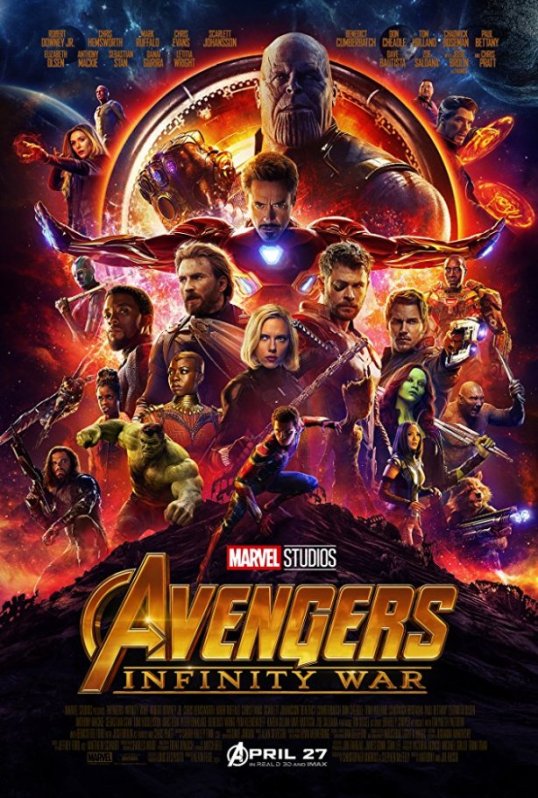
Lisa Reviews Avengers: Infinity War (dir by Joe and Anthony Russo)


(Warning: There are spoilers in this review.  They’re not necessarily huge spoilers but they’re there.  Read at your own risk.)

Avengers: Infinity War is a lot of things.  It’s big, it’s thrilling, it’s emotional, it’s colorful, it’s loud, it’s flamboyant, and, clocking in at two and a half hours, it’s occasionally a bit exhausting.  It’s overwhelming but it’s never boring.  It’s a nearly perfect example of pure cinema, where the story is less about what happens and more how it’s told. It’s a tribute to not just the Marvel Cinematic Universe but also to the audiences who have been flocking to each movie since Iron Man was first released way back in 2008.  Avengers: Infinity War is a pop art masterpiece, one that provides the first part of a climax to a saga that’s been unfolding for ten years.

In the days leading up to the release of Avengers: Infinity War, the main selling point was the assumption that this movie would feature every single character that’s been introduced as a citizen of the MCU so far.  Though the film comes close to including everyone, there are still a few characters who are notable for their absence.  Ant-Man and the Wasp are nowhere to be seen.  None of the Marvel Television characters show up, which is a shame because I’m sure Jessica Jones would have had some choice words about the potential end of the universe.  Two familiar SHIELD agents make a brief appearance, though you have to wonder where they were when New York and Wakanda were being invaded.

That said, all of the big heroes show up.  Tony Stark (Robert Downey, Jr.) flies into space with Dr. Strange (Benedict Cumberbatch) and Spider-Man (Tom Holland).  Thor (Chris Hemsworth) teams up with Rocket Racoon and Groot (voiced by Bradley Cooper and Vin Diesel, respectively).  When Wakanda is attacked, Black Panther (Chadwick Boseman), Captain America (Chris Evans), The Falcon (Anthony Mackie), White Wolf (Sebastian Stan), the Hulk (Mark Ruffalo), Rhodey (Don Cheadle), and Natasha (Scarlett Johansson) are all present to defend it.  Meanwhile, Vision (Paul Bettany) and Wanda (Elizabeth Olsen) continue to pursue their odd relationship while Peter Quill (Chris Pratt) and Gamora (Zoe Saldana) search for Gamora’s father, Thanos (Josh Brolin).

It’s a packed film and the fact that it works as well as it does is a testament to the power of perfect casting and movie star charisma.  At this point, we feel as if we know these characters.  We know that Tony Stark is going to be haunted by what happened the last time Thanos’s minions involved New York.  We know that Spider-Man is going to be desperate to prove that he belongs with the adults, just as we know that Dr. Strange isn’t going to be particularly impressed with anyone he meets.  Needless to say, some characters get more screen time than others.  Despite a good deal of the film taking place in Wakanda, Black Panther largely stays in the background.  I personally wish that both Natasha and Captain America had been given a bit more to do.  Considering just how talented both Anthony Mackie and Don Cheadle are, it’s a shame that neither one of them ever gets to do much in these films.  At the same time, Infinity Wars allows both Elizabeth Olsen and Paul Bettany to come into their own and Chris Hemsworth again shows that he may be the most underrated star in the MCU.  I’ve read a lot of criticism of certain actions taken by Peter Quill towards the end of the film but actually, it’s exactly what you would expect his character to do in the situation and, up until that moment, Chris Pratt is a welcome presence.  It’s important to have someone around who appreciates good music and who can make you laugh, especially considering that Thanos is planning to wipe out 50% of the universe’s population…

Oh yes, Thanos.  After spending years lurking in the background, Thanos finally steps forward in Infinity War.  In fact, it can be argued that Avengers: Infinity War is actually much more of a Thanos film than an Avengers film.  While our heroes are continually spending the film trying to catch up to Thanos and reacting to his latest action, Thanos is always one step ahead.  Thanos is the one who steers the narrative and, for once, you really do believe that an MCU villain views the heroes as being mere distractions.  Thanos is the one on a quest and the film follows him through every step of his search.  In fact, the film’s most emotional moments belong to Thanos.  For all the death and destruction to be found in the film’s surprisingly dark narrative, Thanos is the only character to ever shed a tear.  Like all great villains, Thanos doesn’t view himself as being evil.  Instead, Thanos speaks very sincerely of his desire to bring balance to the universe.  The scary thing about Thanos isn’t that he claims that he’s being merciful when he slaughters millions of beings.  The scary thing about Thanos is that believes it.

Thanos, you see, is a bit of an intergalactic environmentalist.  As he explains it, the universe only has a finite number of resources.  By killing half of the universe’s population, he is ensuring that the other half will be able to survive in peace and harmony.  Most people would call Thanos’s actions genocidal but Thanos would probably say that he’s merely making the difficult decisions that others don’t have the courage or intelligence to make.  It may all sound rather far-fetched and melodramatic until you consider that, just last week, bureaucrats and doctors in the UK decided it would be better to starve a sick infant to death rather than allow his parents to take him to be treated in another country.  With his mix of narcissism and absolutely belief in his own moral certitude, Thanos is a far more familiar villain than a lot of viewers might want to admit.  As opposed to the forgettable villains who have appeared in so many MCU films, Thanos is a compelling and complicated figure.  It’s interesting to note that two of the best performances of the year so far were given by actors appearing as villains in MCU films, Michael B. Jordan in Black Panther and Josh Brolin in this one.

As befits the film’s subject matter, Infinity War is a sprawling film, one that skips from world to world.  The visuals are frequently spectacular, as are the many battles.  From the opening attack on New York to the final battles in Wakanda and in space, the action is non-stop and thrilling.  (It helps that, as opposed to some of the previous MCU films, it’s always clear who is fighting who and why they’re fighting.)  For me, though, the most memorable scenes are the scenes where Thanos looks and considers the worlds that he’s destroyed.  There’s a scene where an exhausted Thanos rests on a placid planet and it’s one of the strongest images in the history of the MCU.

I’ve been told that I shouldn’t worry too much about all of the characters who are killed over the course of Infinity War.  From what I’ve been told, it’s apparently something of a tradition in Marvel comics to kill off a bunch of recognizable characters and then have them come back to life an issue or two later.  And the fact that the sequel to Infinity War has already been filmed and is set to released next year leads me to suspect that nothing’s permanent.  I mean, if all of these people are really dead, there aren’t going to be many heroes left to make any more movies about.  That said, I still got far more emotional than I probably should have at some of the unexpected demises.  Especially … well, no.  I won’t say the name.  But seriously, it was upsetting.

2018 is shaping up to be the year of Marvel.  So far, Marvel has released two of the best films of the year.  To be honest, a film as huge as Infinity War shouldn’t have worked and yet, it does.  It’s a masterpiece of pop art.*

* For a totally different response to Avengers: Infinity War, check out Ryan’s review by clicking here!

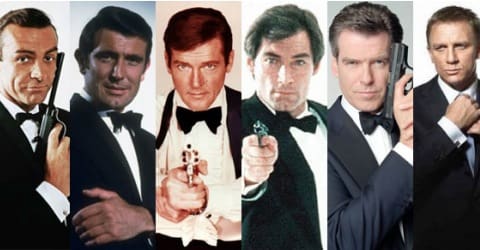
Celebrate National Trivia Day With The Actors Who Could Have Been James Bond!


Today is National Trivia Day so I thought why not share some trivia?  I love film trivia.  I especially love trivia about who was considered for certain films.  Hell, one of my most popular posts on the Shattered Lens dealt with all of the actors who were considered for the Godfather!

(I even came up with an alternative cast for The Godfather, even though I consider the actual film to be the best cast film in history.)

I also happen to love the James Bond films.  (Well, not so much the recent Bond films.  I’ve made my feelings on SPECTRE clear.)  As a franchise, I absolutely love them.  So, with all that in mind, here is a look at the actors who could have been Bond.  I’ve compiled this article from many sources.  And yes, you could probably just find a lot of the information on Wikipedia but then you’d miss out on my editorial commentary.
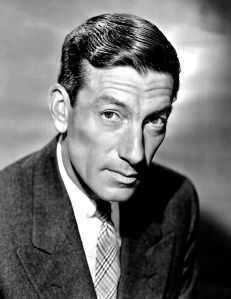
Hoagy Carmichael

Ian Fleming himself always said that his pick for Bond would have been the musician, Hoagy Carmichael.  He even made a point, in Casino Royale, of having Vesper Lynd exclaim that Bond looked like Hoagy Carmichael.  Of course, the first actor to actually play Bond was Barry Nelson in a 1954 television adaptation of Casino Royale.  Nelson is probably best remembered for playing Mr. Ullman in Stanley Kubrick’s The Shining.
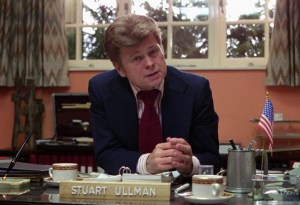
Barry Nelson, the first James Bond

When Dr. No went into production in 1961, many actors were considered for the role before Sean Connery was eventually cast.  Many of them were very well-known actors and, had they been cast, Dr. No would not have been remembered as a Bond movie.  Instead, it would be remembered as a star vehicle for … well, let’s take a look at some of the better-known possibilities:

Among the famous actors who were mentioned for Bond in 1961: Cary Grant, Richard Burton, James Mason, Trevor Howard, Stanley Baker, George Baker, Jimmy Stewart, Rex Harrison, and David Niven.  (Of that list, I think Burton would have made for an interesting Bond.  If the Bond films had been made in the 1940s, Grant would have been my first choice.  Trying to imagine Jimmy Stewart as a British secret agent is … interesting.)

Once it became obvious that a star was not going to play Bond, the role was offered to Patrick McGoohan and Rod Taylor.  McGoohan had moral objections to the character.  Rod Taylor reportedly felt that the film would flop.  Steve Reeves, the American body builder who became famous for playing Hercules in Italy, was reportedly strongly considered.  At one point, director Terrence Young wanted to offer the role to Richard Johnson, who later played Dr. Menard in Lucio Fulci’s Zombi 2.

Of course, the role went to Sean Connery and made Connery a huge star.  In 1967, after Connery announced that he would no longer play the world’s most famous secret agent, there was a huge and widely publicized search for his replacement.  Some of the names that were considered are intriguing.  Others are just bizarre.
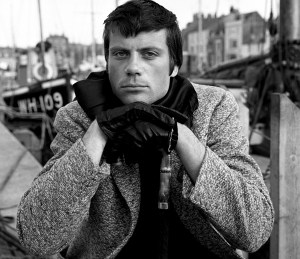
Oliver Reed

To me, perhaps the most intriguing name mentioned was that of Oliver Reed.  Reed definitely would have brought a rougher edge of the role than some of the other actors considered.  However, that’s one reason why Reed wasn’t picked.  Apparently, it was felt that he did not have the right public image to play the suave Mr. Bond.

Somewhat inevitably, Michael Caine was sought out for the role.  Caine, however, refused to consider it because he had already starred in three back-to-back spy thrillers and didn’t want to get typecast.  Caine’s former roommate, Terrence Stamp, was another possibility but wanted too much control over the future direction of the Bond films.  Future Bond Timothy Dalton was considered to be too young.  Another future Bond, Roger Moore, didn’t want to give up his television career.  Eric Braeden has the right look for Bond but was German.  Rumor has it that producer Cubby Broccoli even considered Dick Van Dyke for the role, though I find that hard to believe.  An even more surprising possibility was the nobleman Lord Lucan, who was offered a screen test in 1967 and who, ten years later, would vanish after being accused of murdering his children’s nanny.
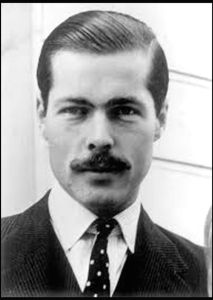
Lord Lucan

Among the actors who auditioned before George Lazenby was cast in On Her Majesty’s Secret Service: Michael Billington, Jeremy Brett, Peter Purves, Robert Campbell, Patrick Mower, Daniel Pilon, John Richardson, Anthony Rogers, Hans De Vries, and Peter Snow.

After the mixed reception of both Lazenby’s performance and On Her Majesty’s Secret Service, Lazenby was soon out as James Bond.  Even today, there’s a lot of controversy about what led to Lazenby being dismissed from the role.  Some say Lazenby demanded too much money.  Some say that Lazenby was merely used a pawn to try to get Sean Connery to return to the role.  Regardless, Lazenby only made one film as Bond.  (Of course, On Her Majesty’s Secret Service has retroactively been recognized as being one of the best of the series.)

With Connery still claiming that he would never return to the role, the film’s producers went through the motions of looking for a new Bond.  Once again, Roger Moore and Timothy Dalton were considered.  Connery suggested that a talk show host named Simon Dee should play the role.  An actor named Roger Green auditioned.  So did Michael Gambon, though he later said he was turned down because, in his own words, he “had tits like a woman.”  Interestingly, several Americans were mentioned.  Clint Eastwood as James Bond?  Burt Reynolds?  Adam “Batman” West? The mind boggles but their names were mentioned.
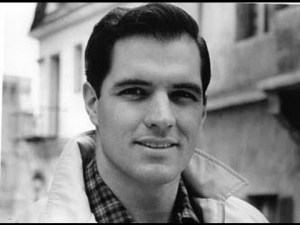
John Gavin

And interestingly enough, an American was cast.  John Gavin is best known for playing Sam Loomis in Psycho but he was also, briefly, James Bond.  After Gavin accepted he role and signed a contract, Sean Connery announced that he would be willing to return to the role.  Gavin was paid off and Connery went on to star in Diamonds are Forever.

After Diamonds, Connery left the role for a second time and, once again, Bond was recast.  This time, Roger Moore would finally accept the role.  However, before Moore was cast, several other actors were considered.  Some of the regular possibilities were mentioned again: John Gavin, Simon Oates, Timothy Dalton, and Michael Billington.  Others considered included Jon Finch, Ranulph Fiennes, Peter Laughton, and Guy Peters.  Some of those names are probably as unknown to you as they are to me but it’s intriguing to think that Guy Peters may not be a well-known name but, at one time, there was a possibility that he could suddenly become one of the biggest stars in the world.

Looking over the history of the Bond franchise, it’s interesting to see the number of times that Moore tried to leave the role, just to be talked into returning.  Every time that Moore considered quitting, a new group of actors would be considered for the role of Bond.  In 1979, when Moore said he might not return after Moonraker, Timothy Dalton, Michael Jayston, Patrick Mower (who was also considered for On Her Majesty’s Secret Service), and Michael Billington were all considered as replacements.  So was Julian Glover.  Ironically, when Moore did agree to return to the role, Glover was cast as the villain in For Your Eyes Only.
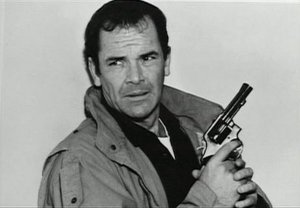
David Warbeck

To me, the most intriguing actor mentioned as a replacement for Roger Moore was David Warbeck.  Warbeck was a television actor and model who subsequently had a nearly legendary film career in Italy.  Not only did he play a key role in Sergio Leone’s Duck You Sucker!, but he also starred in Lucio Fulci’s The Black Cat and The Beyond.  He also appeared in the best of Italian Apocalypse Now rip-offs, The Last Hunter.  In interviews, Warbeck claimed that he was under contract to Cubby Broccoli to step into the role in case Roger Moore ever walked off the set.  The likable and rugged Warbeck would have been an interesting Bond.

In 1983, when Moore again said he might not return to the role, Michael Billington (who actually did appear in a Bond film when he played a KGB agent killed at the start of The Spy Who Loved Me) would be once more considered as a replacement.  British TV actors Lewis Collins and Ian Ogilvy were also considered for the role.  In a repeat of what happened with John Gavin in Diamonds are Forever, American actor James Brolin was actually put under contract until Moore agreed to play the role in Octopussy.

James Brolin, in a screen test for Octopussy

After A View To A Kill, Moore left the role for the final time.  Famously, future Bond Pierce Brosnan was actually cast as his replacement until the surge of interest created by his casting led to the renewal of Remington Steele, the American television show in which Brosnan was starring.  Once the show was renewed, Brosnan could no longer work the Bond films into his schedule.

Among the other names mentioned: Sean Bean, Simon MacCorkindale, Andrew Clarke, Finlay Light, Mark Greenstreet, Neil Dickson, Christopher Lambert, Mel Gibson, and Antony Hamilton.  Sam Neill was another possibility and reportedly came very close to getting the role.  Watch any of the films that Neill made when he was younger and you can definitely see hints of Bond.
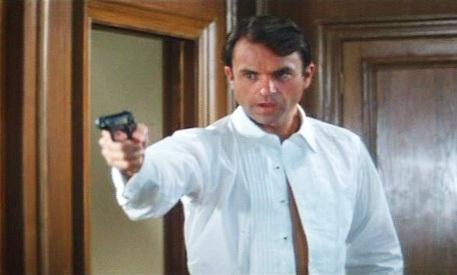
Sam Neill

In the end, Timothy Dalton finally accepted the role.  Ironically, for an actor who spent 20 years being courted for the role, Dalton turned out to be a bit of a flop as Bond.  He made two movies (both of which were considered to be disappointing when compared to the previous Bond films) and then left the role.

Looking over the contemporary reviews of Dalton as Bond, one thing that comes through clearly is that a lot of people resented him for taking a role that they felt should have gone to Pierce Brosnan.  When the Bond films resumed production with Goldeneye in 1994, Brosnan finally stepped into the role.  Reportedly, if Brosnan had turned down the role, the second choice was Sean Bean.  Much like Julian Glover, Bean may have lost out on 007 but he did end up playing the villain.
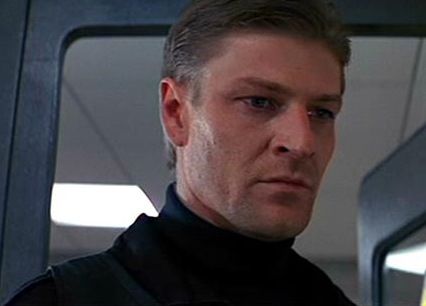
Sean Bean

Among the other actors who were reportedly considered before Brosnan accepted the role: Mark Frankel, Paul McGann, Liam Neeson, Russell Crowe, and Lambert Wilson.  Ralph Fiennes, who has been M since Skyfall, was also considered.

As opposed to his predecessors, Brosnan seemed to be very comfortable with the idea of playing Bond and never threatened to leave the role.  Looking over the Bond-related articles that were published from 1995 to 2004, I found the occasional speculation about whether Rupert Everett would be the first gay James Bond or if Sharon Stone would be the first female James Bond but I found very little speculation about Brosnan actually leaving the role.  Indeed, when Brosnan officially retired as Bond in 2004, it was less his decision and more at the prodding of the franchise’s producers, who felt that the series needed to be rejuvenated with a new (and younger) actor.  After Brosnan left, the series was rebooted and Daniel Craig played the role in Casino Royale.

In the past, I’ve made it clear that Daniel Craig is hardly my favorite Bond.  I loved Skyfall (and I consider it to the 2nd best Bond film, after From Russia With Love) but, even in that case, I felt that the film succeeded despite Craig instead of because of him.  With Casino Royale, we were supposed to be seeing a young and inexperienced Bond.  That’s never come through to me, probably because Craig looked like he was nearly 50 years old when he made Casino Royale.

Among the actors who were mentioned for the role before Craig received the role: Ralph Fiennes (again), Colin Salmon, Ewan McGregor, Henry Cavill, Rupert Friend, Julian McMahon, Alex O’Laughlin, Clive Owen, Dougray Scott, and Goran Visjnic.  Dominic West, who I think would have been great in the role, reportedly ruled himself out because he heard a rumor that Brosnan would be returning to the role.
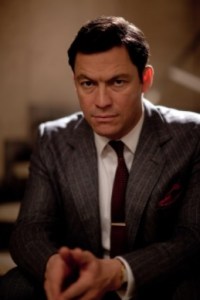
Dominic West

Daniel Craig, of course, has been talking about leaving the role ever since he was first cast.  I think Skyfall would have been a perfect movie for him to leave on.  (It would have saved the world from SPECTRE.)  However, Craig has apparently agreed to do at least one more Bond film.  Maybe two.

When Craig does leave, who will replace him?  Idris Elba, of course, is probably the most widely discussed possibility.  James Norton has also been named as a possibility.  Others that I’ve seen mentioned: Tom Hardy, Jack Huston, Aidan Turner, Tom Hiddleston, Michael Fassbender, Jamie Bell, and Henry Cavill (again).

My personal choice?  Dominic Cooper.  He’d be an off-center Bond but I think it would still be an intriguing pick.

Dominic Cooper

Who knows what the future may hold for 007?  All I know is that I look forward to the speculation.

Happy National Trivia Day, everyone!
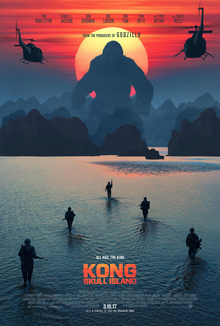
A Halloween Film Review: Kong: Skull Island (dir by Jordan Vogt-Roberts)


You may have noticed that, in the title of this post, I specifically referred to Kong: Skull Island as being a Halloween film but not a horror film.

That was very much intentional on my part.  Kong: Skull Island is really not a horror film.  (I think you could argue that the only King Kong film that can legitimately be considered a horror film would be Peter Jackson’s version and that’s just because he tossed in a few scenes that were obviously inspired by the old Italian cannibal films.)  I watched Kong: Skull Island a few months ago and I really can’t say that there was ever a moment where I was scared or even uneasy.  It’s just not that type of film.

At the same time, it is a fantastically fun and entertaining monster movie, one that has a good sense of humor about its own absurdity.  Halloween is not just a time to get scared.  It’s also a time to have fun and, for that reason, Kong: Skull Island is a perfect movie for October.  In fact, I think that it was actually a mistake for Warner Bros. to release the film in March.  They should have released it during the first weekend of October.  It could have provided a counterbalance to all of the depressing films that have been released this month,

Kong: Skull Island is a throwback to the gleefully absurd monster movies of the past.  Just so we don’t miss that point, the film starts with a 1944 prologue before then jumping forward to 1973.  (Significantly, not a single scene takes place in the 21st Century.)  Samuel L. Jackson plays Lt. Col. Preston Packard, the tough, no-nonsense commander of the Sky Devils helicopter squadron.  The Sky Devils are finally on the verge of leaving Vietnam but they’ve been asked to carry out on more mission.  They’ve been asked to fly an expedition over a newly discovered island.  The official story is that they’re going to be mapping the island but everyone knows better than to trust the government.

Kong: Skull Island is very well-cast, which is a good thing because the majority of the characters are thinly written.  Among the civilians in the helicopters: Tom Hiddleston, Brie Larson, and John Goodman.  Of course, they’re all playing characters but, for the most part, you’ll spend the entire movie thinking of them as being Tom Hiddleston, Brie Larson, and John Goodman.  For that matter, you never think of Samuel L. Jackson as being Preston Packard.  He simply is Samuel L. Jackson.  When they eventually discover a castaway living on the island, it doesn’t matter that the man’s “name” is supposedly Hank Marlow.  He’s played by john C. Reilly and that’s who you’ll always think of him as being.   They’re all charismatic actors so you certainly don’t mind watching them but, at the same time, the film understands that the main reason we’re all here is to see the giant gorilla.

To the film’s credit, it doesn’t take long for King Kong to show up.  This is not one of those films where things are dragged out in an unnecessary attempt to create suspense.  (After all, the audience already knows that King Kong’s on the island.)  Almost as soon as the helicopters breach the airspace over Skull Island, Kong shows up and starts knocking them out of the sky.  The survivors end up stranded on different parts of the island.

Of course, it’s not just Kong that they have to worry about.  In fact, from the start, the audience is smart enough to know that Kong is actually one of the good monsters.  However, Skull Island is also inhabited by bad monsters, like these giant reptiles that Kong keeps having to fight.

Early on, there’s a scene in America where, in regards to the Watergate scandal, John Goodman says that Washington, D.C. is never going to be more screwed up than it is at that moment.  That line pretty much epitomizes Kong: Skull Island.  It’s a lark with a knowing sense of humor and it is not meant to be taken at all seriously.  At it’s best, Kong: Skull Island satirizes some of the most pompous monster movies of the past.  Whenever someone says something portentous, you can be sure that the film will quickly find a way to puncture the somber mood.

And it’s all terrifically entertaining.  Watch, enjoy, and don’t worry too much about whether or not any of it makes sense.  A trip to Skull Island is a trip worth taking.

Belatedly, here are the trailers for Thor: Ragnarok and Ready Player One!


I know, I know.  These two trailers dropped in July and I’m late in sharing them.  Trust me, I feel totally guilty.

Anyway, it’s been a good year for comic books movies so far.  Will that trend continue with Thor: Ragnarok?  Traditionally, of all the MCU films, it’s the Thor movies that always have the toughest time with the critics.  I’ll just say that, to me, Jeff Goldblum was born to play an intergalactic villain.

Plus, Tom Hiddleston!  Everyone loves Tom Hiddleston!

Thor: Ragnarok is coming out later this year.  We won’t get to see Steven Spielberg’s adaptation of Ready Player One until 2018 but we can watch this teaser!

Hopefully, after slipping a bit with The BFG, Spielberg will return to quality filmmaking with Ready Player One.

(It’s interesting to note that Spielberg does — in theory — have a film coming out this year.  It’s called The Papers and it was hastily put together to serve as both a historical drama and a rebuke to the Trump administration’s criticism of the press.  The Papers is currently in post-production and there’s some confusion as to whether it will be ready for a 2017 release and Oscar run.  To be honest, Ready Player One sounds like it’ll be more fun than The Papers.)

Here Are Two New Teasers From The MCU: Thor: Ragnarok and Guardians of the Galaxy Vol 2!


Okay, so I’ll admit that I’m really excited about the trailer for Lady Bloodfight.

But, just from glancing at twitter, it appears that most of y’all are more excited about two other trailers that dropped today!

It’s kind of a tradition to complain that the Thor movies are the weakest part of the MCU.  Of course, I would never say that because … well, you know.  Chris Hemsworth and Tom Hiddleston.  I mean, c’mon!

But anyway, there always has been kind of an inherent silliness to Thor and that silliness certainly seems to be present in the first trailer for Thor: Ragnarok.

Silliness, thy name is Jeff Goldblum.

Also, it appears that only Cate Blanchett can destroy Thor’s hammer.  Well, that kinda makes sense. Cate Blanchett can do anything.

(I just like the music.  Hey, Arleigh, is that Led Zeppelin?)

And then there’s this fun new teaser for Guardians of the Galaxy Vol. 2!  Have I mentioned how much I’m looking forward to this movie?

(Hmmm….Chris Evans, Chris Pratt, Chris Hemsworth, there’s a lot of Chris in the MCU.  But where’s Christopher Walken?)