Film Review: The Fish That Saved Pittsburgh (dir. by Gilbert Moses)


“The stars don’t lie. I do, but they don’t.” — Mona Mondieu

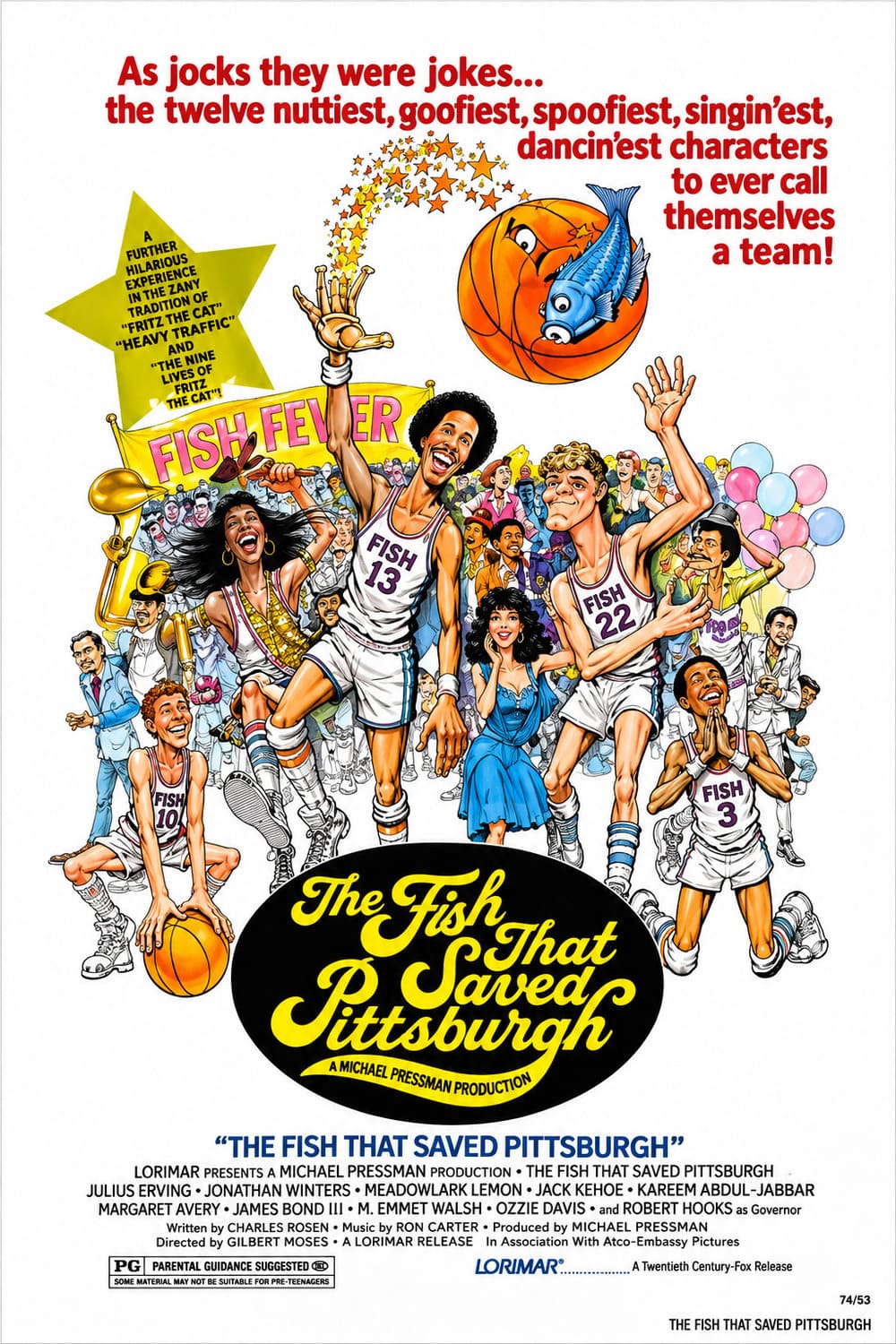
Winning is usually the whole point of a sports movie, but The Fish That Saved Pittsburgh makes a pretty good case for looking fabulous while you figure everything else out. Gilbert Moses’s 1979 basketball comedy is full of music, outlandish ideas, and the kind of confidence that can make a shaky premise surprisingly entertaining. Its plot involves rebuilding a losing team through astrology, which should tell you how much realistic sports management to expect. The movie is messy, sometimes sluggish, and not nearly as funny as it wants to be. Yet its greatest asset is enthusiasm, especially when it stops explaining itself and lets basketball and music take over.

The struggling team is the Pittsburgh Pythons, whose star player, Moses Guthrie, cannot single-handedly turn things around. Guthrie is played by Julius “Dr. J.” Erving, and casting a basketball legend gives the film an immediate advantage: nobody needs convincing that this guy belongs on the court. The unconventional rescue plan comes from Tyrone Millman, the team’s young ballboy, played by James Bond III. Tyrone turns to astrologer Mona Mondieu, played by Stockard Channing, and together they pursue a roster built around Guthrie’s zodiac sign. With enough Pisces playing together, the thinking goes, chemistry should take care of itself. The newly named Pittsburgh Pisces are born.

As a hook, that is silly in an appealingly specific way. Plenty of sports comedies bring together oddballs and hope their clashing personalities will generate laughs. This one adds the suggestion that the universe has already handled the personnel decisions. The astrology gives the familiar comeback story an eccentric identity, and the movie deserves some credit for not constantly winking at its own ridiculousness. Tyrone believes in the plan, Mona has her own unusual authority, and the story gives their scheme room to work. The audience is not asked to take astrology seriously so much as accept it as the rule of this particular playground.

The trouble is that the setup promises more comic invention than the screenplay consistently delivers. Once the players have been gathered, the narrative becomes much more ordinary. The team improves, the games provide milestones, and the expected feel-good trajectory settles into place. There is nothing inherently wrong with a predictable sports story, but predictability needs support from strong characters or especially good jokes. Here, both are uneven. Too many players feel like introductions waiting for further development. We understand that they are a colorful bunch, but the film does not always give us enough reason to care about them individually.

Some of that broad characterization has also aged badly. Winston Running Hawk, the Native American player, is an obvious example of the movie leaning on a stereotype instead of building a personality. Those shortcuts make the comedy feel lazier than its central idea deserves. A film about discovering an unexpected connection among outsiders ought to be curious about the people making that connection. Instead, it sometimes seems satisfied simply to put unusual figures in the same uniform. The result is a team whose visual identity is stronger than its emotional one. You can enjoy watching the Pisces without becoming particularly invested in everybody wearing the jersey.

Erving is the exception, although not because he turns out to be a natural screen actor. His dialogue scenes can feel stiff, and the romantic material involving Guthrie and Tyrone’s sister, Toby, played by Margaret Avery, never develops much spark. On the court, however, the movie suddenly has something it cannot fake. Erving’s movement is fluid, assured, and genuinely pleasurable to watch. His athletic ability supplies the charisma that the dramatic scenes struggle to capture. Rather than wishing he were a more polished actor, you start wishing the movie would stop interrupting him with scenes that require a different set of skills.

Channing and James Bond III help keep the off-court material alive. Mona’s eccentricity fits the movie’s peculiar logic, while Tyrone supplies the sincere desire underneath the gimmick. His faith in the team gives the story a small but useful emotional anchor. Still, the most reliable source of energy is Thom Bell’s soundtrack. The music gives the basketball sequences a buoyancy that makes the film feel less like a conventional competition narrative and more like an extended celebration. When the action and soundtrack click together, the looseness becomes easier to accept. You stop waiting for the next plot development and start enjoying the atmosphere.

That atmosphere reaches its natural peak in the extravagant arena spectacle, complete with silver-lamé uniforms and a hot-air-balloon entrance. It is excessive, but excess is where this movie feels most comfortable. The flashier it becomes, the less its ordinary storytelling seems to matter. That does not magically repair the weak jokes or thin relationships, but it makes clear what the film has been reaching for all along: not sporting realism, but a fantasy in which a basketball team can become the center of a joyful, slightly ridiculous communal event.

The fairest way to judge The Fish That Saved Pittsburgh is probably by the mood it leaves behind rather than the strength of its story. Its flaws are easy to list, and a tighter script could have made much better use of its cast and premise. Even so, there is something appealing about a movie that treats basketball as an excuse for imagination rather than another lesson in grit. It does not earn every laugh or emotional payoff, but it earns some affection through sheer commitment to its own oddball pleasures. The Pisces may need the stars to align; the movie mostly needs the music turned up and Erving back on the court.
Review: Conspiracy (dir. by Frank Pierson)


“We will not sterilize every Jew and wait for them to die. We will not sterilize every Jew and then exterminate the race. That’s farcical.” — Reinhardt Heydrich

HBO’s Conspiracy (2001) masterfully dramatizes the infamous Wannsee Conference, held on January 20, 1942, where high-ranking Nazi officials orchestrated the Final Solution. The film’s running time mirrors the historical meeting itself, distilling one of the darkest moments in history into a single, chilling sitting that balances historical fidelity, psychological insight, and dramatic restraint. The premise is stark and deceptively simple: a group of men, most of whom had never previously met, gather in a sun-drenched villa outside Berlin to discuss systematic mass murder while enjoying fine food and polite conversation. This contrasting setting, rendered with careful attention to period detail, powerfully underscores what Hannah Arendt called the “banality of evil.” In Conspiracy, evil is not the property of villainous caricatures, but of functionaries and technocrats—chillingly rational and disturbingly mundane.

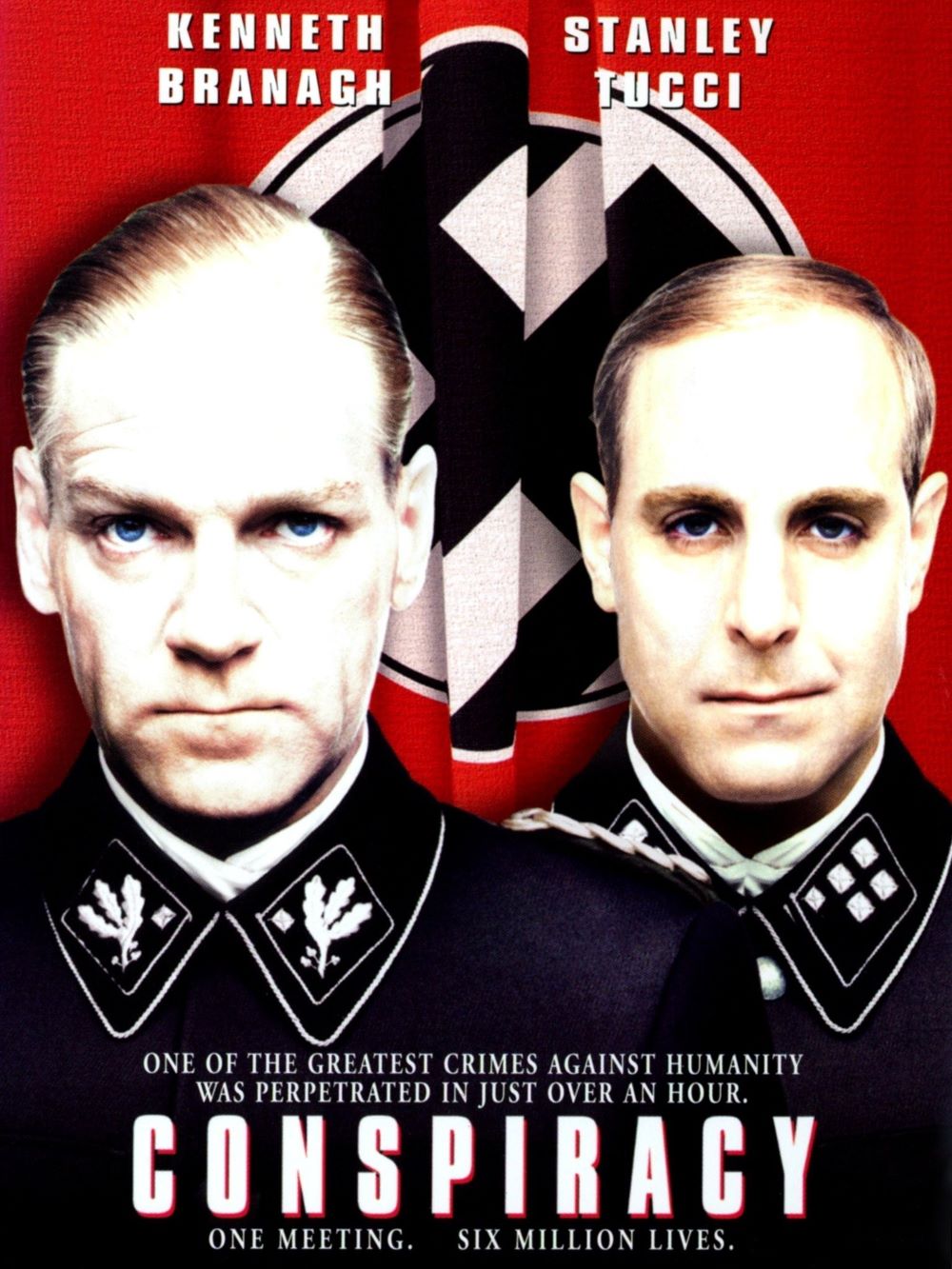
Much of the film unfolds in real time, utilizing dialogue taken from the sole surviving minutes of the Wannsee Conference. Screenwriter Loring Mandel and director Frank Pierson avoid unnecessary embellishments, allowing the facts and the conversations themselves to carry the full, horrifying weight. Kenneth Branagh gives an Emmy-winning performance as Reinhard Heydrich, the orchestrator and presiding presence at the conference. Branagh’s portrayal is both urbane and authoritative, presenting Heydrich as a figure whose affable composure thinly veils his unwavering commitment to genocide. There is no soaring rhetoric or overt menace; Heydrich’s evil is presented with administrative casualness, making it all the more chilling.

Stanley Tucci is equally compelling as Adolf Eichmann, Heydrich’s logistical right hand and the architect of the machinery of death. Tucci infuses Eichmann with a quiet efficiency and bureaucratic pride—a portrait of a man more attached to process than morality, disturbingly bland in his demeanor. The supporting cast is no less impressive. Colin Firth, as Dr. Wilhelm Stuckart, portrays a legal architect of Nazi race law who appears increasingly unsettled as the agenda shifts from disenfranchisement to extermination. Each attendee is rendered with psychological nuance. Some are disturbingly enthusiastic about their roles, while others are quietly apprehensive, yet ultimately complicit. These subtle gradations of doubt, ambition, and opportunism animate the film’s psychological landscape.

The dialogue, rooted in the actual transcript and skillful dramatic writing, eschews melodrama. The horror emerges not through spectacle, but in analytic exchanges about logistics, quotas, and definitions—the cold calculus of genocide. The men’s debates around how to classify mixed-race Jews, whether sterilization is preferable to extermination, and who should be spared create a bureaucratic puzzle as vile as its intent. Their discussions are delivered in a neutral, even mundane tone, which heightens the chilling reality of what they are planning. Pierson’s direction is restrained; the film never leaves its confined setting, emphasizing the claustrophobic mood of collective complicity. The camera lingers on faces rather than violence, building tension through small gestures—a glance, a pause, the clinking of glassware. The impact of what is said is matched only by the weight of what goes unsaid, until Heydrich, in a quietly devastating moment, makes the true purpose explicit.

More than a simple history lesson, Conspiracy meditates on themes of collective guilt, moral responsibility, and the terrifying ease with which ordinary people become accessories to atrocity. The film is haunted by bureaucracy; if everyone is “just following orders” or “simply doing their job,” the boundaries of blame blur and diffuse. The characters’ debates skillfully skirt the language of murder, favoring euphemisms such as “evacuation” or “resettlement.” This allows viewers to witness, in real time, the kind of moral erosion that enables atrocity on a massive scale. The dry, matter-of-fact tone of the film deepens its emotional impact, forcing the audience to comprehend that such horrors were conjured not in a frenzy, but in calm administrative exchanges over lunch.

For both historians and general audiences, Conspiracy earns praise for its meticulous adherence to historical detail. The screenplay closely follows the Wannsee minutes, and the film’s design choices—muted score, period-accurate costumes, and careful pacing—all serve to render bureaucratic evil as mundane and unremarkable. This unwavering restraint, however, does impose certain limits. The film’s dramatic arc is inherently subdued; the absence of conventional action or narrative tension makes it unfold like an extended negotiation rather than a traditional drama. Some viewers may find this lack of overt conflict stifling or static, resulting in a work that feels more “important” than “entertaining,” but this is clearly by design.

Conspiracy received widespread acclaim for both its historical gravity and psychological depth. Branagh and Tucci, in particular, were celebrated for their nuanced performances. The film is often cited as a model example of how the “banality of evil” operates—not through monsters, but through functionaries in tailored uniforms, sipping wine and rationalizing extermination. For those unfamiliar with the events, the manner in which these men discuss matters of life and death with casual detachment is shocking. As one critic noted, “Most people believe they know what evil looks like… But in Conspiracy, men of true evil met in pristine, gorgeous surroundings… and go about their business leisurely… with a smile and barely a hint of remorse.”

Within the canon of Holocaust cinema, Conspiracy stands apart from films like Schindler’s List or The Pianist, which focus on the suffering and survival of victims. Instead, it occupies a space similar to Downfall and the earlier Die Wannseekonferenz, dramatizing not the machinery of genocide but the mindsets of its architects. By confining itself to dialogue and implication, the film compels viewers to reflect on how civilization’s facades both enable and obscure horror.

The film’s lingering effect is not found in dramatic catharsis or tears, but in an enduring sense of discomfort. Conspiracy dramatizes not just a choice among evil options, but the ease with which those choices become rote procedure and social negotiation. The silence in the final act, as the men calmly disperse after codifying genocide, lands with a cold, almost procedural finality. The closing captions, briefly summarizing the fates of those present, deliver a sobering message: accountability was sporadic, often delayed, and never guaranteed.

Conspiracy is not casual entertainment, nor is it meant to be. Instead, it is essential viewing for anyone interested in the psychology of atrocity, the peril of bureaucratic amorality, and the enduring question of how ordinary people become complicit in extraordinary evil. With a screenplay of surgical precision, outstanding ensemble cast (especially Branagh and Tucci), and a director committed to understatement, HBO’s film demonstrates how history’s darkest decisions are forged not in chaos, but in chilling consensus. To those seeking to understand not only what happened at Wannsee, but how, Conspiracy offers an unblinking and quietly devastating answer.