Scenes I Love: Saving Private Ryan


SavingPrivateRyan

Today marks the 71st Anniversary of the Normandy Landings on D-Day. As the day winds down I thought it best to share one of my favorite scenes from a film that tried to capture the chaos and death of the fateful day on June 6, 1944. The film in question is Steven Spielberg’s Saving Private Ryan. This is the film which won him his second Best Director Oscar (I still think the film should’ve won Best Picture over Shakespeare In Love) and the film which helped redefine not just how war films were shot from 1998 on, but also de-glorify World War II on film.

This scene showed the opening moments of the D-Day Landings on Omaha Beach in Normandy, France. It’s a scene that’s over 22-minutes in length and shows the utter chaos and destruction heaped on American troops as they attempted to land on the beach to take their objectives. While there have been war film before Saving Private Ryan that depicted war as the hell it truly is they were mostly about the Vietnam War. Rarely did we ever get a World War II-based war film which showed war in realistic fashion. Spielberg broke that taboo by making the battle scenes in his film — especially this extended opening sequence — done as realistic as possible without actually having people killed for real on-screen.

When this film first came out in the summer of 1998 no one knew what to make of it. This opening sequence became the talk of everyone who went to see the film. To say that they were shocked by what they saw was an understatement. Even now with over a decade since the film was released and people having seen this scene over and over again it still retain it’s impact. It’s not even the grand scale of the production required to film this action sequence which made this scene so memorable. It were the little things. Like a mortally wounded American GI crying out to his mother while trying to keep his blown out insides from spilling out. Then there’s the scene of another young soldier praying furiously with his rosary beads as men around him die by the score.

This scene also showed what most World War II films of the past failed to do. It showed both sides behaving barbarically. In the past, only the Germans were shown in a bad light. In Saving Private Ryan, we see that American soldiers were also prone at shooting surrendering troops and/or not mercy-killing enemy soldiers being burned alive (actions that have been well-documented by historians). This scene also showed just how courageous the young men of this generation which Tom Brokaw has called “The Greatest Generation”. Men who went off to war not for material gains, but for an idea that they had to stop evil (Nazi and Hitler) from taking all of Europe and, maybe, the world itself.

There’s a reason why Saving Private Ryan is in my list for greatest films of all-time and why this scene remains one of my all-time favorites.

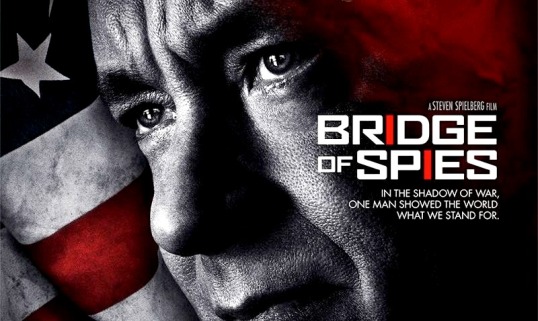
The Cold War Relived Through Bridge of Spies


BridgeofSpies

Lisa Marie is not the only history nerd in this here place. I don’t think it was a coincidence that TSL’s co-founders ended up being both history nerds. We both love films the depict historical events. Some of them turn out to be great while some end up on the trash heap.

One filmmaker who has made a career late in his life of making historical films is Steven Spielberg. The same one who gave us great blockbusters in the scifi, thriller and fantasy genres has also given us some excellent historical films such as Saving Private Ryan, Schindler’s List, Munich and Lincoln.

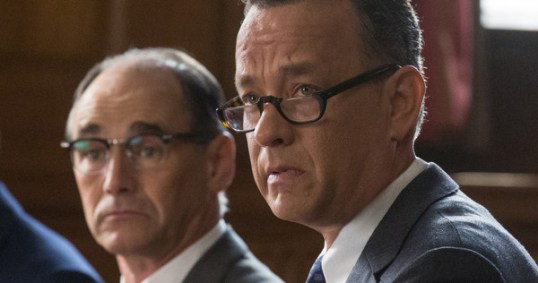
We have the first trailer for Spielberg’s latest film which is based on the real-life events surrounding the 1960 U-2 spy plane incident where American pilot Francis Gary Powers was shot down while on a mission over the Soviet Union and was subsequently swapped back into US custody for a Soviet spy that the Americans were holding.

Bridge of Spies showcases the events which led to that swap and how contentious the negotiations had been before it finally came about. Everyone knows the Cuban Missile Crisis put the world very close to nuclear annihilation, but what many don’t know is how the Gary Powers Incident also pushed the two nuclear powers very close to the brink.

Bridge of Spies is set for an OCt. 16, 2015 release date…just in time for the start of Lisa Marie’s favorite film season: Awards Season.

Embracing the Melodrama Part II #68: Mazes and Monsters (dir Steven Hilliard Stern)


M_M_DVDIt’s amazing the things that you find when you randomly search the DVD section of Half-Price Books.  For instance, I found a very cheap DVD of the 1982 made-for-TV film Mazes and Monsters and I simply had to buy it.

Why?

Well, just look at the cover above.  Look at the ominous castle.  Look at the shadowy dragons flying around it.  Look at that Shining-style maze.  Look at the ominous tag line: “Danger lurks between fantasy and reality.”  And especially be sure to look at Tom Hanks gazing serenely over it all.

“Wow,” I thought, “Tom Hanks fights a dragon?  This is something that I’ve got to see!”

Well, there are no dragons in Mazes and Monsters.  There are a few monsters but they’re only briefly seen figments of Tom Hanks’s imagination.  The film is about a group of college students who obsessively play an RPG called Mazes and Monsters.  When one of the students (an annoying genius who wears wacky hats and is played by an actor with the surprisingly poetic name of Chris Makepeace) suggests that they play Mazes and Monsters “for real” in some caverns near the college, it leads to Robbie (Tom Hanks) have a mental breakdown.  Soon, Robbie is convinced that he’s actually a monk.  He breaks up with his girlfriend because he doesn’t want to violate his vow of celibacy.  (Of course, the real fantasy is that a college student obsessed with playing Mazes and Monsters would have a girlfriend in the first place but anyway…)  He keeps seeing imaginary minotaurs lurking in the shadows.  Finally, he runs off to New York on a quest to find “the great Hall.”  It’s up to his friends to find him and hopefully impart an important lesson about the dangerous reality of RPG addiction.

Or something.

Listen, to be honest, if not for Tom Hanks, there would be no reason to watch Mazes and Monsters.  It’s poorly acted.  It’s written and directed with a heavy hand.  There’s some nice shots of downtown New York City but otherwise, it’s visually drab.

But, because Tom Hanks is in it and he’s playing a role that demands that he go totally over-the-top in his performance, Mazes and Monsters is totally worth watching.  If you’ve ever wanted to see Tom Hanks wander around New York City while dressed like a monk, this is the film for you.  If you’ve ever wanted to see Tom Hanks start to tremble while explaining that, as a monk, he’s not allowed to kill minotaurs, this is the movie for you.  Most of all, if you’ve ever wanted to see Tom Hanks shrieking, “THERE’S BLOOD ON MY KNIFE!” while standing in an old school phone booth, this is definitely the movie for you!

Seriously.

Considering that Tom Hanks is currently viewed as being some sort of elder statesman of American film (and, even more importantly, Hanks seems to view himself as being some sort of national treasure), there’s something oddly satisfying about seeing him before he became THE Tom Hanks.  It’s good to be reminded that, at one time, he was just another young actor doing his best in a crappy made-for-TV movie.

Lisa’s Way Too Early Oscar Predictions For April


Best Picture

Black Mass

Bridge of Spies

Brooklyn

The End of the Tour

Grandma

The Hateful Eight

In The Heart of the Sea

The Revenant

The Walk

Woman in Gold

Best Actor

Bryan Cranston in Trumbo

Leonardo DiCaprio in The Revenant

Michael Fassebender in Steve Jobs

Tom Hanks in Bridge of Spies

Jason Segel in The End of the Tour

Best Actress

Blythe Danner in I’ll See You In My Dreams

Jennifer Lawrence in Joy

Helen Mirren in Woman in Gold

Saoirse Ronan in Brooklyn

Lily Tomlin in Grandma

Best Supporting Actor

Jim Broadbent in Brooklyn

Albert Brooks in Concussion

Paul Dano in Love and Mercy

Tom Hardy in The Revenant

Kurt Russell in The Hateful Eight

Best Supporting Actress

Julia Garner in Grandma

Jennifer Jason Leigh in The Hateful Eight

Kristin Scott Thomas in Suite Francaise

Kristen Stewart in Clouds of Sils Maria

Meryl Steeep in Suffragette

Best Director

John Crowley for Brooklyn

Ron Howard for In The Heart of the Sea

James Ponsoldt for The End of the Tour

Steven Spielberg for Bridge of Spies

Robert Zemeckis for The Walk

Lisa’s Way Too Early Oscar Predictions for March


The-Walk-movie-poster

Best Picture

Black Mass

Bridge of Spies

Brooklyn

The End of the Tour

Grandma

The Hateful Eight

In The Heart of the Sea

The Revenant

The Walk

Woman in Gold

Best Actor

Bryan Cranston in Trumbo

Leonardo DiCaprio in The Revenant

Michael Fassebender in Steve Jobs

Tom Hanks in Bridge of Spies

Jason Segel in The End of the Tour

Best Actress

Blythe Danner in I’ll See You In My Dreams

Jennifer Lawrence in Joy

Helen Mirren in Woman in Gold

Saoirse Ronan in Brooklyn

Lily Tomlin in Grandma

Best Supporting Actor

Jim Broadbent in Brooklyn

Albert Brooks in Concussion

Paul Dano in Love and Mercy

Tom Hardy in The Revenant

Kurt Russell in The Hateful Eight

Best Supporting Actress

Julia Garner in Grandma

Jennifer Jason Leigh in The Hateful Eight

Kristin Scott Thomas in Suite Francaise

Kristen Stewart in Clouds of Sils Maria

Meryl Steeep in Suffragette

Best Director

John Crowley for Brooklyn

Ron Howard for In The Heart of the Sea

James Ponsoldt for The End of the Tour

Steven Spielberg for Bridge of Spies

Robert Zemeckis for The Walk

Shattered Politics #81: Charlie Wilson’s War (dir by Mike Nichols)


Charliewilsonwarposter

I hate to say it but Charlie Wilson’s War did not do much for me.

I hate to say that because this 2007 film is fairly well-acted, well-directed, and well-written (by Aaron Sorkin, whose scripts usually get on my last nerve).  And it deals with an important subject.  Taking place in the 80s, the film details how a Texas congressman (Tom Hanks), working with a profane CIA agent (Philip Seymour Hoffman) and an eccentric socialite (Julia Roberts), managed to create popular and political support for giving weapons to the Afghan rebels who were fighting the Soviet invasion of their country.  By doing so, Wilson helps to weaken the Soviet Union but, when his efforts to provide humanitarian aide to Afghanistan are less successful, he also contributes to the subsequent rise of the Taliban.

It should have been a film that I would normally rave about but … I don’t know.

I watched Charlie Wilson’s War.  I laughed at some of Tom Hanks’s facial reactions.  (Hanks is playing a womanizer here who may, or may not, have been high on cocaine when he first learned about the Soviet invasion of Afghanistan and it’s obvious that Hanks really enjoyed getting to play someone who wasn’t a traditionally upright hero.)  As I watched, I again considered what a loss we suffered when the brilliant Philip Seymour Hoffman died.  And, as I watched Julia Roberts, I again wonder why, despite the fact that she’s from Georgia, it is apparently impossible for Julia to sound authentically Southern.

(Of course, I’m sure some would argue that Julia wasn’t playing Southern here.  She was playing a Texan.  Well, I’m a Texan and I’ve never heard anyone down here sound like that.  Tom Hanks, meanwhile, actually managed to come up with a decent accent.  Wisely, he underplayed the accent, whereas I don’t think that Julia has ever underplayed anything in her life.)

And, at the end of Charlie Wilson’s War, I knew I had watched a good film but it was also a film that left me feeling curious detached.  To be honest, I almost think the film would have been better if Hoffman’s CIA agent had been the main character, as opposed to Hanks’s congressman.  Hoffman’s character, after all, is the one who nearly lost his job over his belief that the Afghan rebels should be armed.  All Hanks really has to worry about is whether or not he’s going to be indicted for using cocaine in Vegas.

However, I do think that Charlie Wilson’s War does deserve praise for one very specific reason.  Excluding the films made by native filmmakers like Richard Linklater and Wes Anderson, Charlie Wilson’s War is one of the few films that I’ve ever seen that actually portrays anyone from Texas in a positive light.  Even more shockingly, it’s a positive portrayal of a Texas politician!

(I know it must have been tempting to change history and pretend that Charlie Wilson was originally elected from somewhere up north…)

But, overall, Charlie Wilson’s War didn’t do much for me.  But, if you’re into military history and all that, you might enjoy the film more than I did.

(Plus, all you boys will probably enjoy Emily Blunt’s scenes….)

At the very least, you can watch it for Philip Seymour Hoffman.


Lisa’s Way, Way, Way Too Early Oscar Predictions For January!


James Franco OMG

Obviously, it’s way too early to start speculating about who and what will receive Oscar nominations in 2016.  I mean, that would be crazy, right?

So, that’s exactly what I’m going to do.  Just like last year, I’m going take a monthly wild guess and try to predict what might be nominated.  Next year, around this time, we’ll look at the predictions below and probably laugh.

Since the year just started, these predictions should be taken with more than a few grains of salt.  Needless to say, these predictions are heavily orientated towards what played at Sundance this week and also towards films that were directed by the usual suspects.  For instance, I know next to nothing about St. James Place but it stars Tom Hanks and it was directed by Steven Spielberg and, when you’re guessing this early in the year, that’s enough to earn it a listing.

 (And before you laugh too much at how influenced this list was by Sundance, consider that the campaigns for both Boyhood and Whiplash started at Sundance.)

Of course, for all I know, the release of some of these films might be delayed, much as how Foxcatcher was moved from 2013 t0 2014.

With all that in mind, here are my way, way, way too early Oscar predictions for January!

Best Picture

Brooklyn

Concussion

The End of the Tour

Grandma

The Hateful Eight

In the Heart of the Sea

The Martian

The Revenant

St. James Place

The Walk

Best Actor

Matt Damon in The Martian

Leonardo DiCaprio in The Revenant

James Franco in I Am Michael

Tom Hanks in St. James Place

Jason Segel in The End of The Tour

Best Actress

Juliette Binoche in Clouds of Sils Maria

Blythe Danner in I’ll See You In My Dreams

Jennifer Lawrence in Joy

Saoirse Ronan in Brooklyn

Lily Tomlin in Grandma

Best Supporting Actor

Albert Brooks in Concussion

Bruce Dern in The Hateful Eight

Jesse Eisenberg in The End of the Tour

Sam Elliott in Grandma

Tom Hardy in The Revenant

Best Supporting Actress

Julia Garner in Grandma

Jennifer Jason Leigh in The Hateful Eight

Kristin Scott Thomas in Suite Francaise

Kristen Stewart in Clouds of Sils Maria

Meryl Streep in Suffragette 

Best Director

John Crowley for Brooklyn

Ron Howard for In The Heart of the Sea

Alejandro Gonzalez Inarritu for The Revanant

Quentin Tarantino for The Hateful Eight

Robert Zemeckis for The Walk
The Walk

Icarus Files No. 1: Cloud Atlas (dir. by The Wachowskis and Tom Tykwer)


CloudAtlas

“My life amounts to no more than one drop in a limitless ocean. Yet, what is any ocean, but a multitude of drops?” — David Mitchell

Let me tell you about Icarus. He took flight with wings of feather and wax. Warned not to fly too low so as not to have the sea’s dampness clog his wings or to climb too high to have the sun melt the wax. Icarus heeded not the latter and tried to fly as close to the sun. Just as his father had warned him the wax in his wings melted as he flew too close to the sun and soon fell back to earth and into the sea.

A tale from Greek mythology that taught has taught us about ambition reaching so high that it’s bound to fail. One such ambitious failure of recent times has been the epic science fiction film Cloud Atlas directed by The Wachowskis and Tom Tykwer.

The film was adapted from the novel of the same name by author David Mitchell which looked to take six stories set in 19th-century South Pacific and right up to a distant, post-apocalyptic future. Each story’s characters and actions would connect with each other through the six different time and space. The film attempts to do what Mitchell’s novel did through several hundred dense and detailed pages.

CLOUD ATLAS

Just like Icarus The Wachowski and Tom Tykwer’s attempt to connect the lives and actions of all six stories amounts for what admirers and detractors can only agree on as an admirable and ambitious failure.

The film boasts a large ensemble cast led by Tom Hanks, Halle Berry, Jim Broadbent, Hugh Grant and Hugo Weaving. More than one of the actors in the cast would perform characters in each and every six interconnecting stories in the film which added a sense of rhythmic continuity to the whole affair, but also made for some very awkward and uncomfortable scenes of what could only amount to as “yellowface”. This was most evident in the story set in 22nd-century Neo Seoul, South Korea where actors such as James D’Arcy, Jim Sturgess, Keith David and Hugo Weaving have been heavily made-up to look Asian.

Cloud Atlas was and is a sprawling film that attempts to explore the theme that everything and everyone is connected through time and space. It’s how the action of one could ripple through time to have a profound effect on others which in turn would create more ripples going forward through time. The film both succeeds and fails in portraying this theme.

cloud_atlas_hd_movie_trailer_stills_cinemavine_144.png.scaled1000

It’s the film’s narrative style to tell the six stories not in a linear fashion from 19th-century to the post-apocalyptic future, but instead allow all six tales to weave in and out of each other. At times this weaving style and how it would seamlessly go from one time location to another without missing a beat made for some very powerful and emotional moments. But then it would also make these transitions in such a clunky manner that it brings one out of the very magical tale the three directors were attempting to weave and tell.

Yet, even through some of it’s many faults and failings the film does succeed in some way due to the performances of the ensemble cast. Even despite the awkwardness of the “yellowface” of the Neo Seoul sequence the actors in the scenes perform their roles such admirable fashion. One would think that someone like Tom Hanks who has become such a recognizable presence in every film he appears in wouldn’t be able to blend into each tale being shown and told, but he does so in Cloud Atlas and so does everyone else.

It helps that the film was held up from a very hard landing after reaching so high with an exquisite and beautiful symphonic score composed by Tom Tykwer, Reinhold Heil and Johnny Klimek. It’s a score that manages to accentuate the film’s exploration of emotions and actions rippling through time without ever becoming too maudlin and pandering to the audiences emotions.

o0800045112460141324

Cloud Atlas was hyped as the next epic science fiction film from The Wachowskis and Tom Tykwer leading up to it’s release. This hype was further built-up with thundering standing ovation during it’s screening at the 37th Toronto International Film Festival. But once the film finally was released and more critics and the general public were able to see it for themselves the reaction have been divisive. This was a film that brooked no middle-ground. One either loved it flaws and all or hated it despite what it did succeed in accomplishing amongst the failures.

Just like Icarus, Cloud Atlas and it’s three directors had high ambitions for the film. It was a goal that not many filmmakers seem to want to put themselves out on the limb for nowadays because of how monumental the failure can be if their ambitions are just too high. It’s been the reputation of The Wachowskis since they burst into the scene with their Matrix trilogy. Their eclectic and, somewhat esoteric, storytelling style have made all their films an exercise in high-risk, high reward affairs that makes no apologies whether they succeed or fail. Each of their films have a unique vision that they want to share with the world and they make no compromises in how this vision is achieved.

One could call Cloud Atlas an ambitious failure. It could also be pop, New Age psychobabble wrapped up in so-called high-art. Yet, what the two siblings and Tom Tykwer were able to achieve with the film has been nothing less by brave and daring. If more filmmakers were willing to allow their inner Icarus to fly then complaints of Hollywood and the film industry not having anymore fresh new ideas would fade.

Here Are The 2013 SAG Nominations!


This morning the SAG Award nominees were announced and, perhaps not surprisingly, the story is less who was nominated and more who was snubbed.  For instance, Oscar front-runner Robert Redford’s performance in All Is Lost was ignored while Forest Whitaker’s rather one-note turn in The Butler was nominated.  Tom Hanks was not nominated for Saving Mr. Banks but the late and missed James Gandolfini picked up a nomination for Enough Said. Myself, I’m more surprised that Octavia Spenser was not nominated for her performance in Fruitvale Station.

As has been pointed out over at Goldderby, the SAG Awards are no longer the fool-proof Oscar prediction tool that they used to be.  Getting a SAG nomination no longer guarantees you an Oscar nomination and, by that same standard, getting snubbed is no longer an automatic cause for concern.

That said, the SAG winners do typically end up receiving an Oscar nomination in January.

The film nominees can be found below:

BEST FILM ENSEMBLE
“12 Years a Slave”
“American Hustle”
“August: Osage County”
“The Butler”
“Dallas Buyers Club”

BEST FILM ACTOR
Bruce Dern, “Nebraska”
Chiwetel Ejiofor, “12 Years a Slave”
Tom Hanks, “Captain Phillips”
Matthew McConaughey, “Dallas Buyers Club”
Forest Whitaker, “The Butler”

BEST FILM ACTRESS
Cate Blanchett, “Blue Jasmine”
Sandra Bullock, “Gravity”
Judi Dench, “Philomena”
Meryl Streep, “August: Osage County”
Emma Thompson, “Saving Mr. Banks”

BEST FILM SUPPORTING ACTOR
Barkhad Abdi, “Captain Phillips”
Daniel Bruhl, “Rush”
Michael Fassbender, “12 Years a Slave”
James Gandolfini, “Enough Said”
Jared Leto, “Dallas Buyers Club”

BEST FILM SUPPORTING ACTRESS
Jennifer Lawrence, “American Hustle”
Lupita Nyong’o, “12 Years a Slave”
Julia Roberts, “August: Osage County”
June Squibb, “Nebraska”
Oprah Winfrey, “The Butler”

BEST FILM STUNT ENSEMBLE*
“All is Lost”
“Fast & Furious 6”
“Lone Survivor”
“Rush”
“The Wolverine”

The full list of nominees can be found here.

—-

* Isn’t it about time that stunt performers get an Oscar category all their own?

Trailer: Parkland


PCAS

This year is the 50th anniversary of the assassination of President John F. Kennedy and I have to admit that I’m surprised that there aren’t a few hundred JFK-related films coming out this year.  Seriously, since January, it’s something that those of us in Dallas have had to hear about it on a daily basis.

Then again, it’s because I’m from Texas that I’m somewhat glad that there aren’t a lot of films coming out about that day back in 1963.  Quite frankly, I don’t need to sit through a hundred films featuring a bunch of character actors butchering my state’s native accent.

If you can’t do the accent, don’t accept the damn role.  End of story.

However, just because there aren’t a lot of them, that doesn’t mean that there won’t be films looking to exploit the anniversary.  For example, there’s Parkland.  Judging from the trailer below, Parkland appears to be an ensemble film about “ordinary” people dealing with the assassination of President Kennedy.

A lot of critics have been saying that Parkland might be a dark horse contender for best picture but it looks dreadfully earnest to me.  Add to that, this seems like just the subject matter to bring out the pompousness that always seems to be hiding underneath the surface of producer Tom Hanks.

That said, I know I’ll end up seeing it.

It’s about my hometown, after all.