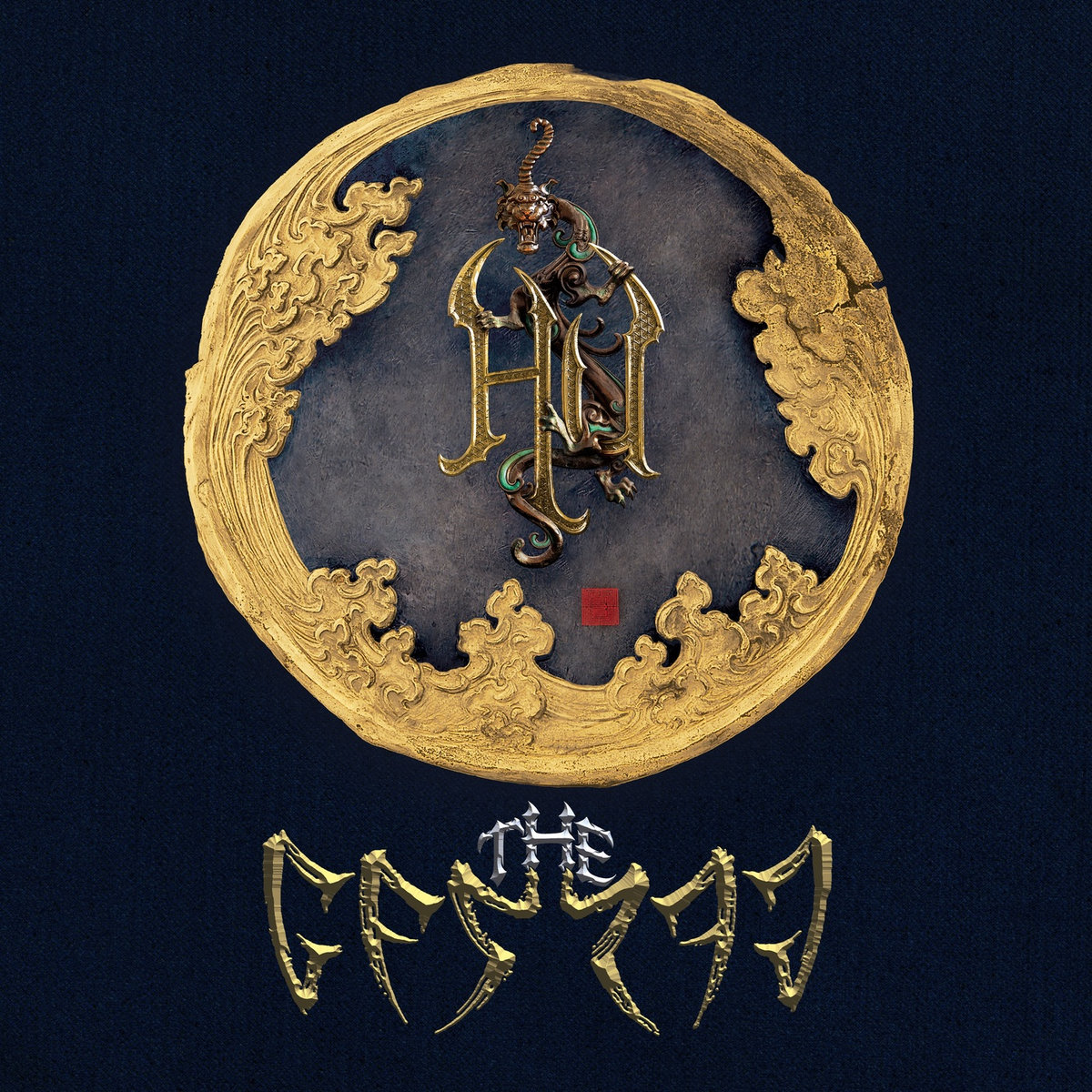
When you first hear about a band that mixes traditional Mongolian instrumentation with heavy metal, it sounds a bit like a novelty act. You might expect something that leans heavily into gimmickry, maybe a folk band that slapped some distortion on a track just for laughs. But then you actually press play on The Gereg, the 2019 debut album from The Hu, and you realize almost immediately that this is dead serious, incredibly heavy, and completely mind-blowing. The Gereg is a deeply emotional, fierce, and historic introduction to a band that has essentially invented a new subgenre they call “hunnu rock.” Instead of feeling like a patchwork quilt of mismatched ideas, the album flows with the kind of natural, organic power that makes you think these instruments were always meant to be played this loud.
Right from the opening track, The Gereg, you’re dropped into a world of thundering drums, droning strings, and that signature growling vocal style that immediately grabs your attention. The title track sets the tone perfectly: it’s epic, almost cinematic, with a sense of forward motion like you’re riding across steppes on horseback while a stadium-sized rock band backs you up. It’s not overly complicated in structure, but it doesn’t need to be—the power comes from the sheer force of the performance and the uniqueness of the sound palette. Those horse-head fiddles (morin khuur) and jaw harps (tumur khuur) might be ancient instruments, but in the hands of The Hu they sound like they were made for heavy rock all along.
Then comes Wolf Totem, arguably the song that broke The Hu internationally and the closest thing to an anthem on the record. The original version is a masterclass in building tension: it starts almost meditative, with throat singing and sparse instrumentation, then erupts into a massive, chant-driven chorus that feels like it could rally an entire army. There’s a reason this track racked up tens of millions of views on YouTube—it’s catchy, powerful, and utterly distinctive. The deluxe edition also includes a version featuring Jacoby Shaddix from Papa Roach, which leans more into a pop-punk/nu-metal vibe, but honestly, the original is the one that really captures the band’s essence. It’s the kind of song that makes you want to throw your fists in the air even if you have no idea what the lyrics mean (which, for most listeners, is probably the case).
The Great Chinggis Khaan slows things down just a touch but keeps the epic scale intact, sounding like something that could’ve fit on an early-’80s Iron Maiden record if Bruce Dickinson had studied khoomei throat singing. It’s semi-acoustic, more atmospheric, and carries a sort of reverence that matches its subject—the legendary Mongol leader Genghis Khan. There’s a dignity to this track that keeps it from feeling like a gimmick; it’s clear The Hu aren’t just playing with their heritage, they’re honoring it.
On the flip side, The Legend of Mother Swan brings a more folk-forward, almost Pogues-like energy, with a storytelling vibe that’s both haunting and melodic. It’s one of the more accessible tracks for listeners coming from a purely rock or folk background, with a structure that feels more like a traditional ballad. Meanwhile, Shoog Shoog is where the band really leans into the groove, built around a riff that wouldn’t sound out of place in an AC/DC or even a Neil Young jam. It’s fun, driving, and ridiculously catchy, with that throbbing bass and pounding drum work locking in perfectly with the twang of the tovshuur (Mongolian guitar).
Probably the most recognizable track after Wolf Totem is Yuve Yuve Yu, the song that essentially launched The Hu into viral fame back in 2018. It’s a full-throttle hunnu rock anthem with a chorus that’s impossible not to chant along to, even on first listen. Stripped of the throat singing and traditional instruments, it could easily pass as a Rammstein track—all stomping rhythm, industrial-tinged heaviness, and theatrical delivery. The deluxe version adds a remix featuring From Ashes to New that pushes it closer to nu-metal territory, but again, the original is the standout.
The Same and Shireg Shireg keep the momentum going, with the former offering a more introspective, almost bluesy take on the band’s sound and the latter doubling down on the rhythmic, almost trance-like quality that runs through much of the album. Shireg Shireg in particular has this hypnotic, circling riff that feels like it’s pulling you deeper into the album’s world. The acoustic version of this track on the deluxe edition is a nice touch, showing that these songs hold up even when stripped back to their core melodies.
Closing out the standard edition is Song of Women, a track that trades some of the aggression for a more melodic, art-rock feel that’s been compared to Peter Gabriel’s later work. It’s a bit of a curveball, with its swinging triplet rhythms and more sophisticated arrangement, but it works as a winding-down moment before the bonus tracks kick in. The deluxe version includes a remix featuring Lzzy Hale of Halestorm, which pushes it closer to modern metal, but the original’s subtlety is kind of refreshing after the bombast of the earlier tracks.
What makes The Gereg so compelling isn’t just the novelty of the fusion—it’s how well it actually works. The Hu aren’t just slapping throat singing over rock riffs and calling it a day; they’re writing genuinely strong songs that happen to feature ancient instruments and techniques. The production is clean but not over-polished, letting the raw energy of the performances shine through. And while the album is only about 40 minutes long (not counting the bonus tracks), it feels like a complete journey, moving from high-energy anthems to more reflective moments without ever losing its identity.
If I have one gripe, it’s that the album does start to blur together in the back half. Tracks like Upright Destined Mongol and Bii Biyelgee are solid, but they don’t hit with the same immediate impact as the first five songs. The formula—big riff, throat-sing verse, chant-along chorus, fiddle solo—starts to feel a little predictable by the time you reach the closing Tatar Warrior. That said, even a weaker The Hu song is still more interesting than 90% of the generic metalcore out there, and Tatar Warrior ends the album on a high note with a galloping, cinematic flourish that circles back to the opener. It’s a cohesive journey, even if it lags in the middle.
If you’re into rock, metal, folk, or just music that sounds like nothing else you’ve heard before, The Gereg is an absolute must-listen. It’s the kind of record that makes you reconsider what rock music can be, and it does it with a level of sincerity and power that’s hard to ignore. The Hu didn’t just make a debut album—they made a statement, and The Gereg still holds up as one of the most exciting and original rock records of the last few years.

