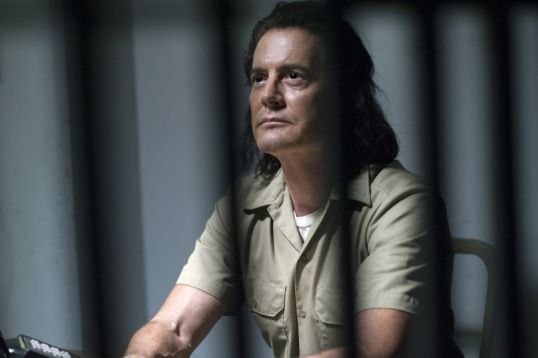
Aftershock (1990, directed by Frank Harris)


It’s the future and society has collapsed.  America is now controlled by the evil Commander Eastern (Richard Lynch) who, with the help of a propagandist known as Big Sister and a paramilitary leader named Oliver Queen (John Saxon), rules with an iron hand.  Colonel Slater (Christopher Mitchum) is the leader of the revolution that threaten to overthrow Eastern’s regime.

Two revolutionaries, Wille (Jay Roberts, Jr.) and Danny (Chuck Jeffreys), are stuck in one of Eastern’s prison.  Every day, they fight for their lives and they wait for a chance to escape.  That chances come in the form of Sabrina (the beautiful Elizabeth Kaitan), an alien who lands on our planet under the mistaken assumption that Earth is an utopia.

When Sabrina, Willie, and Danny finally manage to escape, they have to make it to Slater’s headquarters while avoiding the bounty hunter (Chris DeRose) who Queen has been sent to capture them.

A fairly standard rip-off of the Mad Max films, the most interesting thing about Aftershock is the cast.  I already mentioned Mitchum, Saxon, Lynch, and Elizabeth Kaitan but there are also appearances from Russ Tamblyn, Michael Berryman, Matthias Hues, and Deanna Oliver.  For a movie that looks cheap and doesn’t really bring anything new to the postapocalyptic genre, there are a lot of very talented people in this movie.  (Even talented people have to pay the bills.)  Most of them are only on for a few minutes.  The instantly forgettable Jay Roberts, Jr. and Chuck Jeffreys are the actual stars here.  Jeffreys was a stunt man who was famous for his resemblance to Eddie Murphy.  He looks good in the action scenes but otherwise, he and Roberts don’t make much of an impression.

At least Elizabeth Kaitan gets a decent amount of screentime.  Kaitan appeared in a lot of movies in the 80s and 90s.  None of the movies were very good.  She got stuck with roles like the girlfriend in Silent Night Deadly Night Part 2 and a victim in Friday The 13th Part VII.  Kaitan got roles primarily because she was beautiful but she had a likable screen presence and more than a little talent.  In Aftershock, she gives a convincing performance as a stranger in a strange land, one who has her own eccentric way of viewing things.  Her performance is the best thing about Aftershock and the main reason to watch.


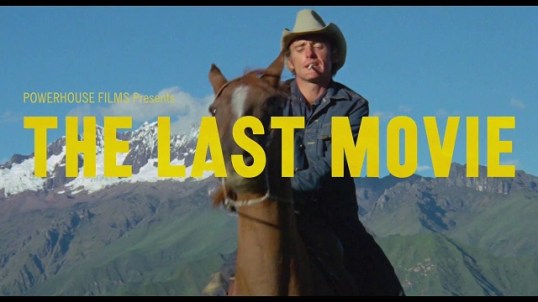
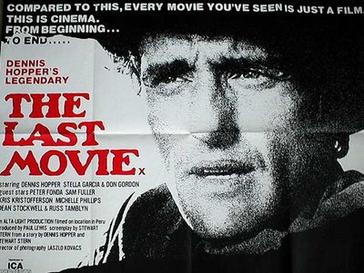
Icarus File No 9: The Last Movie (dir by Dennis Hopper)


The story behind the making of 1971’s The Last Movie is legendary.  It’s also a bit of a cautionary tale.

In 1969, Hollywood was stunned by the box office success of an independent, low-budget counter-culture film called Easy Rider.  Easy Rider not only made a star out of Jack Nicholson but it was also the film that finally convinced the studios that the way to be relevant was not to continue to crank out big budget musical extravaganzas like Doctor Doolittle and Hello, Dolly!  Instead, it was decided that the smart thing to do would be to hire young (or, at the very least, youngish) directors and basically just let them shoot whatever they wanted.  The resulting films might not make much sense to the executives but, presumably, the kids would dig them and as long as the kids were paying money to see them, everyone would continue to get rich.   Because Dennis Hopper had directed Easy Rider, he suddenly found himself very much in demand as a director.

Of course, almost everyone in Hollywood knew Dennis Hopper.  Long before he became an icon of the counter-culture, Dennis Hopper had been a part of the studio system.  John Wayne even referred to Hopper as being his “favorite communist.”  Everyone knew that Dennis could be a bit arrogant.  Everyone knew that Dennis was very much into drugs and that, as a result, he had a reputation for being a bit unstable.  Everyone knew that Dennis Hopper deliberately cultivated an image of being a bit of a wild man and a revolutionary artist.  But Dennis Hopper had just directed Easy Rider and Universal was willing to give Hopper some money to go down to Peru and direct his follow-up.

The Last Movie was a film that Hopper had been planning on making for a while.  The film’s original script told the story of an aging and broken-down stuntman named Kansas who retires to Mexico and searches for a gold mine with a friend of his.  Hopper first tried to get the film going in 1965, with Montgomery Clift in the lead role.  After Clift died, Hopper tried to interest John Wayne in the starring role but, though Wayne enjoyed having Hopper in his films so that he could threaten to shoot him whenever Abbie Hoffman said something shocking, he had no interest in being directed by him.   When Universal finally agreed to put up the money for the film, Hopper offered the lead role to Jack Nicholson.  Nicholson turned it down and told Hopper that it was obvious that Dennis wanted to play the role himself.  Dennis decided that he agreed with Nicholson and he cast himself as Kansas.  Dennis also made the fateful decision to not only change the story’s setting to Peru but to also film on location.

Dennis and a group of friends flew down to Peru, which, at that time, was the cocaine capitol of the world.  Drug use was rampant on the set, with Dennis reportedly being one of the main offenders.  The cast and crew filmed during the day and partied at night and no one was particularly sure what the film was supposed to be about.  Amazingly, Hopper finished filming on schedule and within budget but, much as he did with Easy Rider, he also overfilmed and ended up with 40 hours of footage.  Not wanting to be bothered by the studios, Hopper edited the footage in his compound in Taos, New Mexico.  Working slowly and continuing to consume a large amount of drugs and alcohol, Hopper still managed to put together a film that had a straightforward storyline.  When Hopper showed his initial cut to filmmaker Alejandro Jodorowsky, the director of El Topo accused Hopper of being too conventional in his approach, which led to Hopper chopping up the film and reassembling it.  Finally, after spending over a year working with the footage, Hopper turned in his final edit.

Universal had no idea what to make of the film that Hopper delivered to them.  Still, they released it with the hope that the same crowd that loved Easy Rider would embrace The Last Movie.  While the film did win an award at the Venice Film Festival, critics hated it and, even worse, audiences stayed away.  The film’s reception was so overwhelmingly negative that Hopper found himself largely exiled from Hollywood, with only a few directors (like Francis Ford Coppola) willing to take the chance of working with him.  It wasn’t until the 80s, when he finally got clean and sober, that Dennis Hopper was able to reestablish himself as a character actor and, ultimately, a beloved cultural institution.

But what about The Last Movie?  Was is it really as bad as the critics claimed?  Or was it, as some more recent reviewers have suggested, an unacknowledged masterpiece that was ahead of its time?  I recently watched The Last Movie to find out for myself.

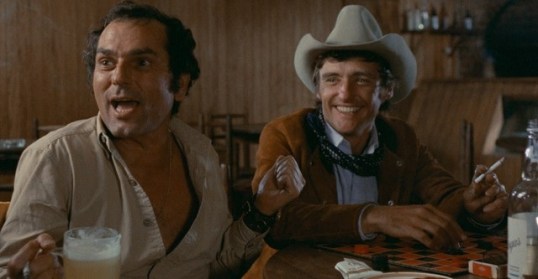
Despite its reputation, The Last Movie gets off to a pretty strong start.  Samuel Fuller (playing himself) is directing a hilariously over-the-top and violent western in the mountains of Peru.  Kansas (Dennis Hopper) is working as a stuntman.  He’s fallen in love with a local sex worker named Maria (Stella Garcia).  Kansas is meant to be an aging Hollywood veteran, someone who has broken a lot of bones and who carries a lot of aches as a result of his line of work.  (One can see why Hopper initially imagined an actor like John Wayne in the role.)  He knows that this is going to be his last job and, as we see over the first 25 minutes of the film, he feels alienated from the rest of the cast and crew.  Admittedly, Hopper does appear to be a bit too young for the role.  The ideal Kansas would have been someone like Ben Johnson, L.Q. Jones, or perhaps Warren Oates.  But, still, Hopper does a good job of capturing Kansas’s mixed feelings about the western that’s being filmed around him.

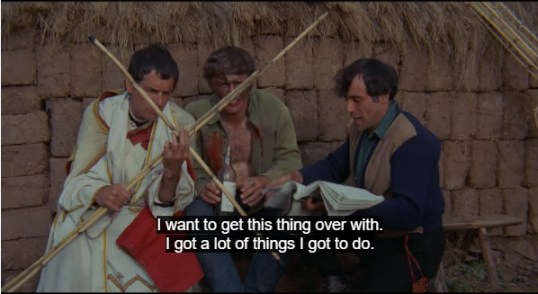
A lot of familiar faces pop up in the film’s fictional western.  Dean Stockwell plays an outlaw.  Jim Mitchum, Russ Tamblyn and Kris Kristofferson plays his associates.  Peter Fonda is the youthful sheriff.  Michelle Phillips is the daughter of the town’s banker and apparently, she’s also the girlfriend of one of the outlaws.  We watch as the actors pretend to shoot guns and kill each other while the cameras are rolling, just to get up off the ground once “Cut” is yelled.  When a local Indian who has been cast as an extra grows upset at the violence, an assistant director explains to him that no one really dies while the cameras are rolling.  When shooting wraps, the film company goes home but Kansas stays behind with Maria.  One day, the local priest (Tomas Milian) warns Kansas that the local indigenous people have moved into the abandoned film set and are trying to shoot their own movie.  Kansas discovers that they have built wooden cameras and wooden boom mics and that their chief is giving orders in the style of Sam Fuller.  They’re also firing the guns that the Americans left behind.

The first part of the film works quite well.  Hopper’s camera captures the beautiful and isolated Peruvian landscape.  The violent western is a pitch perfect and affectionate parody of a generic studio film. Though Hopper is a bit too young for the role, he still does a good job of capturing Kansas’s alienation from his fellow Americans.  Even more importantly, the first part of the film seems to have an identifiable theme.  The American film crew invaded an isolated part of Peru and changed the culture of the natives without even realizing it.  Now, they’ve left but the natives are still dealing with the after effects of the American “invasion.”  It’s easy to see, within that part of the story, a critique of both American culture and American foreign policy.

The second part of the film is where things start to fall apart.  Kansas meets an old friend named Neville (Don Gordon).  Neville has discovered a gold mine in the Peruvian mountains.  With Kansas as his partner, he tries to get a businessman named Harry Anderson (Roy Engel) to invest in it.  Kansas and Neville try to impress Harry and his wife (Julie Adams, best-known for being stalked by The Creature From The Black Lagoon).  Kansas and Neville take the Andersons to a brothel and, in the process, Kansas offends Maria.  Kansas then paws Mrs. Anderson’s fur coat and mentions that human beings are covered in hair.  For all of their efforts, Harry will not invest, no matter how desperately Neville begs him to reconsider.

The second part of the film drags, with many of the scenes being obviously improvised between Hopper, Gordon, Garcia, Engel, and Adams.  Unfortunately, the improved conversations aren’t particularly interesting and they tend to go on forever.  Usually a reliable character actor, Don Gordon ferociously chews the scenery as Neville and it doesn’t take long before one grows tired of listening to him yell.  (Gordon was far more impressive in Hopper’s Out of the Blue.)  With the use of improvisation and overlapping dialogue, the second half of the film tries to feel naturalistic but instead, it’s a migraine-inducing method exercise gone wrong.  It’s also during the second part of the film that a “scene missing” title card flashes on the screen, an indication that the discipline that Hopper showed as a director during the beginning of the film is about to be abandoned.

Finally, the third part of the film — well, who knows?  The final 25 minutes of the film is collection of random scenes, some of which may be connected and some of which may not.  The natives have decided that the only way to properly end their “film” is to kill Kansas.  Kansas is shot several times and rides away on his horse.  Suddenly, Kansas is back at his home and Maria is taunting him for getting shot.  Then, Kansas is riding his horse again.  Then suddenly, Dennis Hopper and Tomas Milian are laughing at the camera.  A script supervisor tries to get Dennis to look at the shooting schedule while Dennis drinks.  This happens:

Milian points out that the blood on Hopper’s shirt is dry.  Hopper looks at his shoulder, where Kansas was previously shot, and says that someone needs to add his scar before he can shoot the scene.  Ah!  So, now we’re acknowledging that it’s all just a movie.  Thanks, Dennis!  Suddenly, Dennis is Kansas again and he’s collapsing over and over again in the dust.  He appears to be dead but no, now he’s Dennis again and he’s standing up and smiling at the camera.  And now, he’s singing Hooray for Hollywood.  And now, suddenly, Kansas and Neville are talking about The Treasure of the Sierra Madre and then….

Well, let’s just say that it goes on and on before finally ending with a scrawled title card.

It’s a disjointed mess and it’s all the more frustrating because the first 30 minutes of the film is actually pretty good.  But then, Dennis apparently remembered that he was supposed to be the voice of the counter-culture and he gave into his most pretentious impulses.  Of course, just because a film is a mess, that doesn’t mean that it can’t be entertaining.  And again, the first part of the film is entertaining and third part of the film is weird enough that it’ll hold most people’s attention for at least a few minutes.  But the middle section of the film is so slow and pointless that it pretty much brings down the entire film.

In the end, what is The Last Movie about?  In The American Dreamer (a documentary that was filmed while Hopper was editing The Last Movie in New Mexico), Hopper spends a lot of time talking about revolution and taking over Hollywood but The Last Movie is hardly a revolutionary film.  The film is at its most alive when it is focused on the shooting of its fictional western.  For all the satirical pokes that The Last Movie takes at the studio system, it’s obvious that Hopper had a lot of affection for Old Hollywood and for directors like Sam Fuller.  Kansas may say “Far out,” but he’s hardly a hippie.  Even the film’s jumbled finale seems to be saying, “It’s all Hollywood magic!”  In the end, the film’s call for a new style of cinema is defeated by its love for the old style of cinema.

Instead, I think The Last Movie works best when viewed as a portrait of paranoia.  Hopper himself admitted that he was naturally paranoid and the heavy amount of drugs that he was doing in the 70s didn’t help.  One reason why Hopper filmed in Peru and edited in New Mexico was so the studios couldn’t keep track of him and, while directing, he worried about being arrested by the Peruvian secret police.  As an actor, Hopper plays Kansas as being someone who views the world with caution and untrusting eyes.  He doesn’t trust the other members of the film crew.  He loves Maria but he’s still convinced that she’s going to betray him.  Even the natives ultimately try to destroy him and the script supervisor tries to get him to stick to the shooting schedule.  The film works best as a disjoined portrait of one man’s paranoid and fatalistic world view.

The Last Movie pretty much ended the studio’s attempts to harness the counter-culture by giving money to self-described revolutionaries.  The new wave of directors — like Spielberg and Lucas — may have shared Hopper’s then-politics but they weren’t looking to burn down the system.  (Hopper himself later became a Republican.)  The Last Movie may not have been the literal last movie but it was, for a while at least, the last of its kind.

Previous Icarus Files:

  1. Cloud Atlas
  2. Maximum Overdrive
  3. Glass
  4. Captive State
  5. Mother!
  6. The Man Who Killed Don Quixote
  7. Last Days
  8. Plan 9 From Outer Space

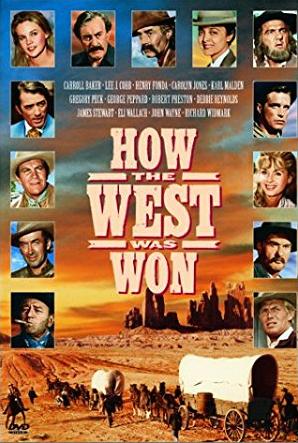
Lisa Reviews An Oscar Nominee: How The West Was Won (dir by Henry Hathaway, George Marshall, John Ford, and Richard Thorpe)


(With the Oscars scheduled to be awarded on March 4th, I have decided to review at least one Oscar-nominated film a day.  These films could be nominees or they could be winners.  They could be from this year’s Oscars or they could be a previous year’s nominee!  We’ll see how things play out.  Today, I take a look at the 1963 best picture nominee, How The West Was Won!)

How was the west won?

According to this film, the west was won by the brave men and women who set out in search of a better life.  Some of them were mountain men.  Some of them worked for the railroads.  Some of them rode in wagons.  Some of them gambled.  Some of them sang songs.  Some shot guns.  Some died in the Civil War.  The thing they all had in common was that they won the west and everyone had a familiar face.  How The West Was Won is the history of the west, told through the eyes of a collection of character actors and aging stars from Hollywood’s Golden Age.

In many ways, How The West Was Won was the Avatar of the early 60s.  It was a big, long, epic film that was designed to make viewers feel as if they were in the middle of the action.  Avatar used 3D while How The West Was Won used Cinerama.  Each scene was shot with three synchronized cameras and, when the film was projected onto a curved Cinerama screen, it was meant to create a truly immersive experience.  The film is full of tracking shots and, while watching it on TCM last night, I tried to imagine what it must have been like to see it in 1963 and to feel as if I was plunging straight into the world of the old west.  The film’s visuals were undoubtedly diminished by being viewed on a flat screen and yet, there were still a few breath-taking shots of the western landscape.

The other thing that How The West Was Won had in common with Avatar was a predictable storyline and some truly unfortunate dialogue.  I can understand why How The West Was Won was awarded two technical Oscars (for editing and sound) but, somehow, it also picked up the award for Best Writing, Screenplay or Story.  How The West Was Won is made up of five different parts, each one of which feels like a condensed version of a typical western B-movie.  There’s the mountain man helping the settlers get down the river story.  There’s the Civil War story.  There’s the railroad story and the outlaw story and, of course, the gold rush story.  None of it’s particularly original and the film is so poorly paced that some sections of the film feel rushed while others seem to go on forever.

Some of the film’s uneven consistency was undoubtedly due to the fact that it was directed by four different directors.  Henry Hathaway handled three sections while John Ford took care of the Civil War, George Marshall deal with the coming of the railroad, and an uncredited Richard Thorpe apparently shot a bunch of minor connecting scenes.

And yet, it’s hard not to like How The West Was Won.  Like a lot of the epic Hollywood films of the late 50s and early 60s, it has its own goofy charm.  The film is just so eager to please and remind the audience that they’re watching a story that could only be told on the big screen.  Every minute of the film feels like a raised middle finger to the threat of television.  “You’re not going to see this on your little idiot box!” the film seems to shout at every moment.  “Think you’re going to get Cinerama on NBC!?  THINK AGAIN!”

Then there’s the huge cast.  As opposed to Avatar, the cast of How The West Was Won is actually fun to watch.   Admittedly, a lot of them are either miscast or appear to simply be taking advantage of a quick payday but still, it’s interesting to see just how many iconic actors wander through this film.

For instance, the film starts and, within minutes, you’re like, “Hey!  That’s Jimmy Stewart playing a mountain man who is only supposed to be in his 20s!”

There’s Debbie Reynolds as a showgirl who inherits a gold claim!

Is that Gregory Peck as a cynical gambler?  And there’s Henry Fonda as a world-weary buffalo hunter!  And Richard Widmark as a tyrannical railroad employee and Lee J. Cobb as a town marshal and Eli Wallach as an outlaw!

See that stern-faced settler over there?  It’s Karl Malden!

What’s that?  The Civil War’s broken out?  Don’t worry, General John Wayne is here to save the day.  And there’s George Peppard fighting for the Union and Russ Tamblyn fighting for the Confederacy!  And there’s Agnes Moorehead and Thelma Ritter and Robert Preston and … wait a minute?  Is that Spencer Tracy providing narration?

When Eli Wallach’s gang shows up, keep an eye out for a 36 year-old Harry Dean Stanton.  And, earlier, when Walter Brennan’s family of river pirates menaces Karl Malden, be sure to look for an evil-looking pirate who, for about twenty seconds, stares straight at the camera.  When you see him, be sure to say, “Hey, it’s Lee Van Cleef!”

How The West Was Won is a big, long, thoroughly silly movie but, if you’re a fan of classic film stars, it’s worth watching.  It was a huge box office success and picked up 8 Oscar nominations.  It lost best picture to Tom Jones.

(By the way, in my ideal fantasy world, From Russia With Love secured a 1963 U.S. release, as opposed to having to wait until 1964, and became the first spy thriller to win the Oscar for Best Picture.)

2017 In Review: Lisa Marie’s Final Post About Twin Peaks: The Return (for now)


“Nothing will die. The stream flows, the wind blows, the cloud fleets, the heart beats. Nothing will die.” — John Merrick’s Mother, quoting Tennyson, at the end of The Elephant Man (1980)

Was Twin Peaks: The Return a movie or a TV show?

As I sit here on January 9th, 2018, that’s a question that’s still on my mind.  There are many critics who insist that Twin Peaks: The Return should be viewed as being a 16-hour movie.  It’s a claim that I, myself, have made several times.  In order to support this argument, we point out that David Lynch and Mark Frost didn’t sit down and write 16 different scripts.  Instead, they wrote one 900-page script which they then filmed and subsequently divided into 16 different “chapters.”  It’s really not that much different from what Quentin Tarantino did with Kill Bill or what Peter Jackson did with both The Lord of the Rings and The Hobbit.  As well, Twin Peaks: The Return was such a monumental artistic achievement that calling it a TV show just seems somehow diminishing.

And yet, the fact of the matter is that Twin Peaks: The Return did air on television.  It aired in 16 different episodes, which were aired on a weekly basis.  To many, that fact alone makes Twin Peaks: The Return a television show.

It may all seem like a silly question to some readers.  However, for those of us who like to make best-of lists at the start of the new year, it is a legitimate issue.  Should I include Twin Peaks: The Return at the top of my list of the best 26 films of 2017 or should I rave about it in my list of good things I saw on television in 2017?

My solution is to do neither.  Twin Peaks: The Return was such a monumental achievement that it deserves a best-of entry of its very own.

(Of course, not everyone is going to agree.  For everyone who loved Twin Peaks: The Return, there was someone else who hated it with just as much of a passion.)

Months after the show ended, Twin Peaks: The Return continues to haunt many viewers.  As the Man From Another Place once told Agent Cooper, “She is full of secrets.”  When the show ended, many of the show’s mysteries were left unsolved.  Really, we shouldn’t have been surprised.  As a filmmaker, David Lynch has always been most interested in mysteries than solutions.  What happened to Audrey?  Why did Laura/Carrie scream?  At the end of the show, was Dale trapped in another world or another time?  Was BOB really destroyed?

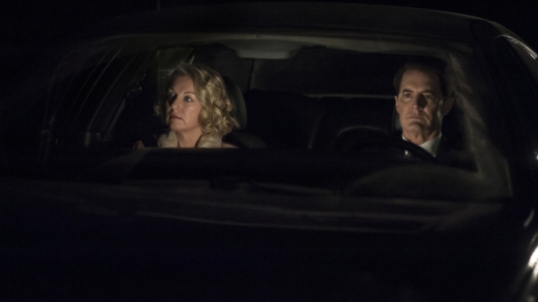
Interestingly, David Lynch actually provided viewers with two endings.  The first ending, which occurred halfway through Part 17, was an ending that would have been perfect for a television show.  Dale Cooper, back to normal, defeated the bad guys and was reunited with all of his friends.  The second ending — also known as Part 18— was a much more Lynchian ending as two strangers took a road trip to nowhere.  Part 17 gave us hope for the future.  Part 18 ended with a dark reminder that the past cannot be changed, no matter how much we obsess over it.  For me, Part 18 was the most important chapter of Twin Peaks: The Return.  Part 8, of course, is the chapter that got and continues to get all the attention.  And Part 8 was probably one of the greatest stand-alone episodes in television history.  But, when considering the reoccurring themes of Twin Peaks: The Return and all of Lynch’s work, Part 18 was far more important.

What’s interesting is that, while the show ended on a dark note, Twin Peaks: The Return was often Lynch at his most optimistic.  For all the terrible things that happened, the show also featured a reoccurring theme of redemption.  Two of the original show’s most villainous characters — Dana Ashbrook’s Bobby Briggs and Richard Beymer’s Ben Horne — were reintroduced as two of the most sympathetic characters to be found in The Return.  Agent Cooper finally escaped from the Black Lodge and not only got a chance to redeem himself by destroying Bob but he also destroyed his evil Double.  He even got a chance to turn Dougie Jones into a good husband, father, and employee.

In the end, it would appear that Cooper’s only mistake was thinking that he could change the past.  He may have saved Laura but, in doing so, he just transformed her into Carrie, an unbalanced woman living in a house with a dead body on the couch.  As her final scream confirmed, he could save her life but he couldn’t erase her pain.  The past is the past but the future can always be better.

Of course, it wasn’t just the characters on the show who won redemption.  The cast of Twin Peaks: The Return was truly amazing and, by the time the show ended, my opinion of several performers had changed forever.  Who would ever have guessed that Jim Belushi would end up being one of my favorite characters?  Or that Michael Cera would turn Wally Brando into a minor cult hero?   Or that David Lynch would prove to be as good an actor as he is a director?  Or that Balthazar Getty would get a chane to redeem his less than impressive work in Lost Highway with a chilling performance as the newest face of Twin Peaks corruption?  Even the returnees from the original show — Dana Ashbrook, Wendy Robie, Sheryl Lee, Harry Goaz, Kimmy Robertson, Russ Tamblyn, Everett McGill, Peggy Lipton, Grace Zabriskie, James Marshall, Madchen Amick, and others — were given a chance to reveal new depths of character.  Veterans like Robert Forster, Ashley Judd, Laura Dern, Don Murray, Jennifer Jason Leigh, Naomi Watts and Tim Roth shared the stage with newcomers like Chrysta Bell and Eamon Farren and they all came together to create an unforgettable world.

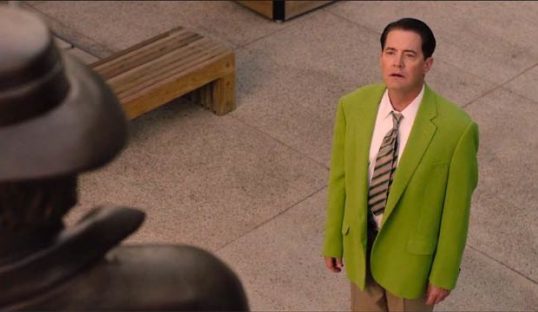
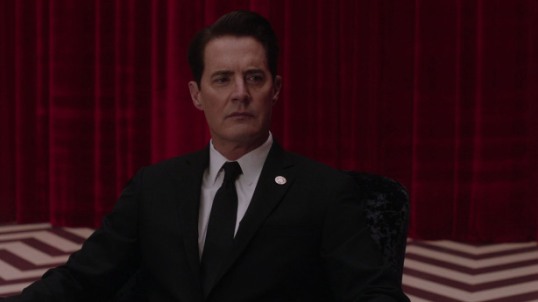
You could even argue that Twin Peaks: The Return was a comeback of sorts for Kyle MacLachlan.  Hollywood has never seemed to really understand how to best use this appealing but quirky actor.  Twin Peaks: The Return provided him with a chance to show what he can do, giving him not just one but three characters to play.


Twin Peaks: The Return gave us one final chance to appreciate some talented people who are no longer with us.  Harry Dean Stanton was the face of old-fashioned decency.  Miguel Ferrer provided snarky commentary, letting the audience know that the show understood how strange it was.  Warren Frost returned briefly, still as reliable as ever as Doc Hayward.  And Catherine E. Coulson, who was so often Lynch’s muse, got to play the role one more time.

(Jack Nance, Don S. Davis, Frank Silva, and David Bowie all made appearances as well, a reminder that they may no longer be with us but they will never be gone.)

In the end, it seems appropriate to end this post with a picture of Ed and Norma, finally together.  The world of Twin Peaks: The Return was frequently a dark one but sometimes, love won.

Tomorrow, my look back at 2017 continues with my picks for my favorite songs of 2017.

Previous entries in the TSL’s Look Back at 2017:

  1. 2017 in Review: Top Ten Single Issues by Ryan C
  2. 2017 in Review: Top Ten Series by Ryan C
  3. 2017 In Review: Top Ten Collected Edition (Contemporary) by Ryan C
  4. 2017 In Review: Top Ten Collected Editions (Vintage) by Ryan C
  5. 2017 in Review: Top Ten Graphic Novels By Ryan C
  6. 25 Best, Worst, and Gems I saw in 2017 by Valerie Troutman
  7. My Top 15 Albums of 2017 by Necromoonyeti
  8. 2017 In Review: Lisa Marie’s Picks For the 16 Worst Films of 2017


Horror on the Lens: Dracula vs. Frankenstein (dir by Al Adamson)


Zandor Vorkov is Dracula!

John Blood is Frankenstein’s monster!

Together … THEY SOLVE CRIMES!

No, actually, they don’t.  If anything, they cause crimes to happen.

First released in 1971 and directed by Al Adamson, Dracula vs. Frankenstein may not be a good film but it’s definitely an unforgettable film.  Yes, it may be thoroughly inept but it’s also perhaps the strangest take on the Dracula/Frankenstein rivalry that you’ll ever see.

Plus, it’s one of the final films of Lon Chaney, Jr.  Unfortunately, Lon doesn’t exactly look his best in Dracula vs Frankenstein...

Speaking of slumming celebrities, long before he played Dr. Jacoby and inspired America to shout, “Dig yourself out of the shit!,” Russ Tamblyn played a biker named Rico in this movie.

Also, like every other exploitation film made in 1971, Dracula vs. Frankenstein features hippies, leading to the age old question: who needs the supernatural when you’ve got LSD-crazed hippies running around?

Another age old question: Is Dracula vs. Frankenstein merely inept or is it a classic of bad filmmaking?

Watch below and decide for yourself.

Enjoy!

TV Review: Twin Peaks: The Return Part 13 (dir by David Lynch)


There are only five hours left in Twin Peaks: The Return and yet, there are still many mysteries to be resolved.  Considering that this is a David Lynch production, it’s entirely possible and probably rather probable that a good deal of those mysteries will never be resolved.

That said, all of the disparate elements of Twin Peaks: The Return have slowly been coming together, providing evidence — if any was needed — that Lynch knows exactly what he’s doing.  In some ways, tonight’s episode was Twin Peaks at its most straightforward.  And yet, nothing can ever be totally straight forward when it comes to Twin Peaks.

We wouldn’t want it any other way.

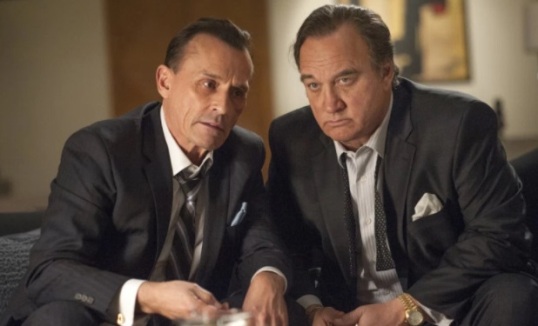
Tonight’s episode begins with joyful music playing in Las Vegas.  As Anthony Sinclair (Tom Sizemore) watches from his office, the Mitchum Brothers (James Belushi and Robert Knepper) dance down the hallways.  The three ladies in pink are with them.  And so is … Dougie Jones (Kyle MacLachlan), the man who Anthony was supposed to trick the Mitchums into killing!

The Mitchums have come to see Bushnell Mullins (Don Murray) and they’ve brought him gifts, all to thank him for introducing them to Dougie and for helping them to make money off of that insurance claim.  “A wrong has been made right and the sun is shining bright!” Bradley Mitchum declares.

Meanwhile, in his office, Anthony calls Duncan Todd (Patrick Fischler) and tells him that Dougie is still alive.  Todd replies that it’s now Anthony’s responsibility to kill Dougie and he only had one day to do it, not the two days that he promised earlier.

The generosity of the Mitchums continues as both a new car and a jungle gym are delivered to Dougie’s house.  It’s quite a jungle gym as well.  It’s big, it’s lit up with neon, and everything about it just screams Vegas.  Sonny Jim (Pierce Gagnon) is quite happy.  So is Janey-E (Naomi Watts), which is good.  They deserve some happiness.

The next morning, in Montana, the evil Doppelganger Cooper arrives at a compound called The Farm.  Ray (George Griffith) has been hiding out at the Farm with Renzo (Derek Mears) and his men.  When they see the Doppelganger pull up, Ray comments that he killed the Doppelganger.  “You didn’t kill him too good, Ray,” Renzo replies.

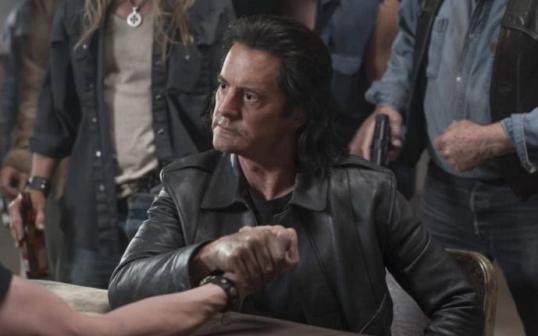
Anyway, Ray volunteers to kill the Doppelganger a second time but it turns out that Renzo is something of an arm wrestling fanatic.  Renzo explains that if the Doppelganger can beat him, he’ll get control of the Farm and Renzo’s entire crew.  The only catch is that Renzo has never been defeated.  The Doppelganger says he doesn’t want the farm, he just wants Ray.

The arm wrestling goes about how you would imagine it would go — Renzo ends up getting his arm broken and then his face literally smashed in by one punch from the Doppelganger.  As for Ray, he confesses that it was Phillip Jeffries who hired him to kill the Doppelganger.  Ray explains that he never met Jeffries, he just talked to him on the phone.  Jeffries told Ray that the Doppelganger had something inside of him that “they” wanted.  (Killer BOB, perhaps?  BOB was seen directly inside of the Doppelganger during Part 8.) Ray holds up a ring that he was supposed to put on the Doppelganger’s finger.  Ray says that he got it from a prison guard right before they escaped.  The Doppelganger makes Ray put on the ring.  Ray then gives the Doppelganger a piece of paper with the coordinates that he says he got from Bill Hastings and his secretary (that would be Ruth Davenport).  The Doppelganger asks Ray where Phillip Jeffries is.  Ray says Philip is at a place called “The Dutchman’s.”  The Doppelganger proceeds to shoot Ray in the face.

And guess whose watching all of this unfold?  Richard Horne (Eamon Farren)!  Apparently, ever since fleeing Twin Peaks, Richard has been hiding out in Montana.  So, does that mean that the Farm and the late Renzo had a connection to Red?  If so, how is Red going to react to the Doppelganger killing Renzo and becoming The Farm’s new boss?  And does Richard looked so shocked because he never thought anyone would ever beat Renzo at arm wrestling (not to mention kill him) or is it because he realizes that the Doppelganger is probably his father?

Ray’s body appears inside the Black Lodge.  MIKE (Al Strobel) takes the ring and puts it on a marble table.

Back at the Las Vegas Metropolitan Police HQ, something weird’s going on in the background.  We can hear a woman yelling as she apparently defecates on the floor.  She’s tased and screams, “I want to report a cop!”  Sitting in their office, the Fuscos aren’t too concerned.  It doesn’t even bother them when they receive a report that Dougie has the same fingerprints as both an escapee from a South Dakota prison and a missing FBI agent.  They laugh and throw the report away.

They barely notice as Anthony Sinclair wanders through the station, looking for Detective Clark (John Savage).  Clark is outside smoking a cigarette and he doesn’t appear to be very enthusiastic about the prospect of talking to Anthony.  Anthony asks Clark for the name of a good poison, one that would be undetectable.  Apparently, Clark also works for Duncan Todd.  Clark agrees to help Anthony get the poison.

In South Dakota, Chantal (Jennifer Jason Leigh) and Hutch (Tim Roth) drive down the interstate and, as they enter Utah, discuss what it must be like to be a Mormon.

The next morning, after Janey-E drops him off at work, Dougie runs into Anthony.  A nervous Anthony offers to buy Dougie a cup of coffee at the pastry shop.  Since Dougie is obsessed with coffee, he agrees.  When Dougie gets distracted by a cheery pie in a display case and stands up to go stare at it, Anthony puts the poison in Dougie’s coffee.

When Dougie returns to the table, he is distracted by the dandruff on the back of Anthony’s suit.  Dougie places his hands on Anthony shoulders.  Mistaking this for a sign of friendship, Anthony breaks down into tears and shouts that he never meant to hurt anyone.  He pours out Dougie’s poisoned coffee.  Dougie responds by drinking Anthony’s coffee instead.

In Twin Peaks, at the Double R, Shelley (Madchen Amick) gets a call from Becky (Amanda Seyfried).  Becky’s in tears.  Steven, the man she tried to shoot, hasn’t come home in two days.

Back in Vegas, Anthony sits in Bushnell’s office and says that he’s come to confess.  Standing to the side, Dougie blankly repeats, “Confess.”  Anthony confesses to Bushnell that he’s been working for Duncan Todd and that he’s been lying to Bushnell for years.  Bushnell says that Dougie revealed all of this to him yesterday.  Bushnell asks if Anthony is prepared to testify against Duncan Todd.  Anthony says that he is.

Bushnell asks if Anthony is willing to testify “against the two cops that Dougie found.”

“He know about them too!?” Anthony says.

“Them too,” Dougie blankly repeats.

Anthony says he only wants to fix the mess that he made.  He says that Dougie saved his like.  “Thanks, Dougie!”

“Thank Dougie,” Dougie says.

In tears, Anthony does just that.

At the Double R, Norma (Peggy Lipton) has a meeting with the somewhat oily Walter Lawford (Grant Goodeve).  Apparently, Norma’s Double R is a franchise now.  Walter says that there are several profitable locations in Washington State but Norma is concerned that those locations are using inferior ingredients.  Walter argues that it makes good business sense to cut costs.  This entire scene, of course, feels like Lynch’s commentary on the studio executives who constantly tried to interfere with Twin Peaks the first time around.

Norma and Walter are apparently a couple, as well.  As they talk, they are watched by both Deputy Bobby Briggs (Dana Ashbrook) and Big Ed Hurley (Everett McGill), Norma’s former (?) lover and the husband of Nadine (Wendy Robie).

Speaking of Nadine, she is leaving her silent drape store when who should show up but Dr. Jacoby (Russ Tamblyn)!  As we’ve already seen, Nadine is a huge fan of Jacoby’s podcast.  She even has her own golden shovel hanging in the window of her store.  Dr. Jacoby says that the last time he saw Nadine, she was on her hands and knees, looking for a potato.

At the Palmer House, Sarah (Grace Zabrikie) is drunk and watching a boxing match.  Or, actually, I should say that she’s watching 30 second of a boxing match on a continious loop.  The announcer says, several times: “Oh the right hand catches the big guy by the ear!  And he finally goes down, hanging on the ropes.  Oh, the gentleman asks if he’s okay.  Look like, uh, round number one and two on the way.  Now, it’s a boxing match again.”

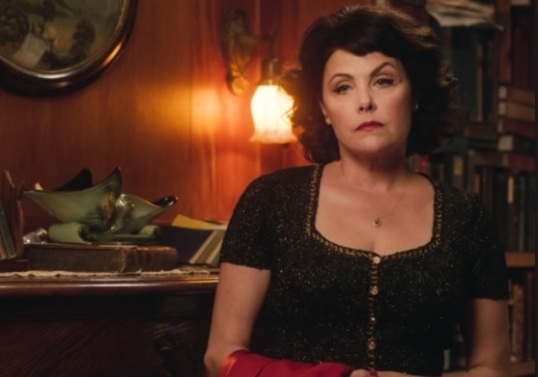
Elsewhere, Audrey (Sherilyn Fenn) yells at Charlie (Clark Middleton).  An emotional Audrey says that she feels like she’s somewhere else, like she’s not sure who she is.  Charlie says, “This is Existentialism 101.” Audrey’s not amused and demands to know what she’s supposed to do if she can’t trust anyone and she’s not sure who she is.  Charlie replies that she’s supposed to go to the Roadhouse and look for Billy.  Audrey demands to know where the Roadhouse is.

“Are you going to stop playing games?” Charlie asks, “or am I going to have to end your story, too?”

Audrey starts to cry.

At the Roadhouse, none other than James Hurley (James Marshall) performs the song You and I.  Accompanying him are two backup singers who look like they could be Donna and Maddy.  Considering that the scene during the second season, in which James, Donna, and Maddy performed You And I, is regularly ridiculed by even the show’s biggest fans, you have to wonder if David Lynch is doing some deliberate trolling here.  Well, it does’t matter.  It’s a lovely song, one that perfectly captures the aching feeling of loss that runs through every minute of Twin Peaks: The Return.

At the gas station, Big Ed Hurley sits alone, staring at his gas pumps.

And that’s how Part 13 ends.

Twin Peaks on TSL:

  1. Twin Peaks: In the Beginning by Jedadiah Leland
  2. TV Review: Twin Peaks 1.1 — The Pilot (dir by David Lynch) by Lisa Marie Bowman
  3. TV Review: Twin Peaks 1.2 — Traces To Nowhere (directed by Duwayne Dunham) by Jedadiah Leland
  4. TV Review: Twin Peaks 1.3 — Zen, or the Skill To Catch A Killer (dir by David Lynch) by Lisa Marie Bowman
  5. TV Review: Twin Peaks 1.4 “Rest in Pain” (dir by Tina Rathbone) by Leonard Wilson
  6. TV Review: Twin Peaks 1.5 “The One-Armed Man” (directed by Tim Hunter) by Jedadiah Leland
  7. TV Review: Twin Peaks 1.6 “Cooper’s Dreams” (directed by Lesli Linka Glatter) by Lisa Marie Bowman
  8. TV Review: Twin Peaks 1.7 “Realization Time” (directed by Caleb Deschanel) by Lisa Marie Bowman
  9. TV Review: Twin Peaks 1.8 “The Last Evening” (directed by Mark Frost) by Leonard Wilson
  10. TV Review: Twin Peaks 2.1 “May the Giant Be With You” (dir by David Lynch) by Leonard Wilson
  11. TV Review: Twin Peaks 2.2 “Coma” (directed by David Lynch) by Jedadiah Leland
  12. TV Review: Twin Peaks 2.3 “The Man Behind The Glass” (directed by Lesli Linka Glatter) by Jedadiah Leland
  13. TV Review: Twin Peaks 2.4 “Laura’s Secret Diary” (dir by Todd Holland) by Lisa Marie Bowman
  14. TV Review: Twin Peaks 2.5 “The Orchid’s Curse” (dir by Graeme Clifford) by Lisa Marie Bowman
  15. TV Review: Twin Peaks 2.6 “Demons” (dir by Lesli Linka Glatter) by Leonard Wilson
  16. TV Review: Twin Peaks 2.7 “Lonely Souls” (directed by David Lynch) by Jedadiah Leland
  17. TV Review: Twin Peaks 2.8 “Drive With A Dead Girl” (dir by Caleb Deschanel) by Lisa Marie Bowman
  18. TV Review: Twin Peaks 2.9 “Arbitrary Law” (dir by Tim Hunter) by Lisa Marie Bowman
  19. TV Review: Twin Peaks 2.10 “Dispute Between Brothers” (directed by Tina Rathbone) by Jedadiah Leland
  20. TV Review: Twin Peaks 2.11 “Masked Ball” (directed by Duwayne Dunham) by Leonard Wilson
  21. TV Review: Twin Peaks 2.12 “The Black Widow” (directed by Caleb Deschanel) by Leonard Wilson
  22. TV Review: Twin Peaks 2.13 “Checkmate” (directed by Todd Holland) by Jedadiah Leland
  23. TV Review: Twin Peaks 2.14 “Double Play” (directed by Uli Edel) by Jedadiah Leland
  24. TV Review: Twin Peaks 2.15 “Slaves and Masters” (directed by Diane Keaton) by Lisa Marie Bowman
  25. TV Review: Twin Peaks 2.16 “The Condemned Woman” (directed by Lesli Linka Glatter) by Leonard Wilson
  26. TV Review: Twin Peaks 2.17 “Wounds and Scars” (directed by James Foley) by Lisa Marie Bowman
  27. TV Review: Twin Peaks 2.18 “On The Wings of Love” (directed by Duwayne Dunham) by Jedadiah Leland
  28. TV Review: Twin Peaks 2.19 “Variations on Relations” (directed by Jonathan Sanger) by Lisa Marie Bowman
  29. TV Review: Twin Peaks 2.20 “The Path to the Black Lodge” (directed by Stephen Gyllenhaal) by Lisa Marie Bowman
  30. TV Review: Twin Peaks 2.21 “Miss Twin Peaks” (directed by Tim Hunter) by Leonard Wilson
  31. TV Review: Twin Peaks 22.2 “Beyond Life and Death” (directed by David Lynch) by Lisa Marie Bowman
  32. Film Review: Twin Peaks: Fire Walk With Me (dir by David Lynch) by Lisa Marie Bowman
  33. Here’s The Latest Teaser for Showtime’s Twin Peaks by Lisa Marie Bowman
  34. Here’s The Newest Teaser for Showtime’s Twin Peaks by Lisa Marie Bowman
  35. 12 Initial Thoughts About Twin Peaks: The Return Parts One and Two by Lisa Marie Bowman
  36. This Week’s Peaks: Parts One and Two by Ryan C. (trashfilm guru)
  37. TV Review: Twin Peaks: The Return Parts One and Two (dir by David Lynch) by Lisa Marie Bowman
  38. 4 Shots From 4 Films: Special Twin Peaks Edition by Lisa Marie Bowman
  39. This Week’s Peaks: Parts Three and Four by Ryan C. (trashfilm guru)
  40. 14 Initial Thoughts About Twin Peaks: The Return Part Three by Lisa Marie Bowman (dir by David Lynch)
  41. 10 Initial Thoughts About Twin Peaks: The Return Part Four by Lisa Marie Bowman (dir by David Lynch)
  42. TV Review: Twin Peaks: The Return Parts Three and Four (dir by David Lynch) by Lisa Marie Bowman 
  43. 18 Initial Thoughts About Twin Peaks: The Return Part 5 (dir by David Lynch) by Lisa Marie Bowman
  44. This Week’s Peaks: Part Five by Ryan C. (trashfilm guru)
  45. TV Review: Twin Peaks: The Return: Part 5 (dir by David Lynch) by Lisa Marie Bowman
  46. 14 Initial Thoughts On Twin Peaks Part 6 (dir by David Lynch) by Lisa Marie Bowman
  47. This Week’s Peaks: Part Six by Ryan C. (trashfilm guru)
  48. TV Review: Twin Peaks: The Return Part 6 (dir by David Lynch) by Lisa Marie Bowman
  49. 12 Initial Thoughts on Twin Peaks: The Return Part 7 (dir by David Lynch) by Lisa Marie Bowman
  50. This Week’s Peaks: Part Seven by Ryan C. (trashfilm guru)
  51. TV Review: Twin Peaks: The Return Part 7 (dir by David Lynch) by Lisa Marie Bowman
  52. Ten Initial Thoughts on Twin Peaks: The Return Part 8 (dir by David Lynch) by Lisa Marie Bowman
  53. This Week’s Peaks: Part Eight by Ryan C (trashfilm guru)
  54. TV Review: Twin Peaks: The Return Part 8 (dir by David Lynch) by Lisa Marie Bowman
  55. 16 Initial Thoughts on Twin Peaks: The Return Part 9 (dir by David Lynch) by Lisa Marie Bowman
  56. This Week’s Peaks: Part Nine by Ryan C (trashfilm guru)
  57. TV Review: Twin Peaks: The Return Part 9 (dir by David Lynch) by Lisa Marie Bowman
  58. 20 Initial Thoughts On Twin Peaks: The Return Part 10 (dir by David Lynch) by Lisa Marie Bowman
  59. This Week’s Peaks: Part 10 by Ryan C (trashfilm guru)
  60. TV Review: Twin Peaks: The Return Part 10 (dir by David Lynch) by Lisa Marie Bowman
  61. 16 Initial Thoughts About Twin Peaks: The Return Part 11 (dir by David Lynch) by Lisa Marie Bowman
  62. This Week’s Peaks: Part 11 by Ryan C (trashfilm guru)
  63. TV Review: Twin Peaks: The Return Part 11 (dir by David Lynch) by Lisa Marie Bowman
  64. 20 Initial Thoughts on Twin Peaks: The Return Part 12 (dir by David Lynch) by Lisa Marie Bowman
  65. This Weeks Peaks: Part 12 by Ryan C (trashfilm guru)
  66. TV Review: Twin Peaks: The Return Part 12 (dir by David Lynch) by Lisa Marie Bowman
  67. 22 Initial Thoughts on Twin Peaks: The Return Part 13 (dir by David Lynch) by Lisa Marie Bowman
  68. This Week’s Peaks: Part 13 by Ryan C (trashfilm guru)

TV Review: Twin Peaks: The Return Part 12 (dir by David Lynch)


Do you realize that there are only 6 episodes of Twin Peaks: The Return left?

Normally, this is when most limited series would start working towards a climax.  If this was any other show, Cooper would no longer be trapped in Dougie’s body, everyone would already be back in Twin Peaks, and … well, things would be a lot different.

But the fact of the matter is that Twin Peaks is different.  That’s why we watch.  That’s what makes it exciting.  David Lynch has repeatedly shown that he has no interest in slavishly following the traditional rules of television.  In fact, to call Twin Peaks a television series is incorrect.  It’s an 18-hour movie, one that’s been directed by America’s premiere surrealist.  In many ways, this show requires the viewer to take a leap of faith.  “Trust me,” Lynch is saying, “You might not understand it all but you’ll never forget it.”  I have no idea what’s going to happen over the next month but, as always, I’m looking forward to finding out.

Part 12 opens in an office, with Albert (Miguel Ferrer) telling Tammy (Chrysta Bell) to ignore the strange man.  The man in question is Gordon Cole (David Lynch) and while Gordon may be eccentric, Albert is just showing off his famous wit.  Albert, Gordon, and Tammy drink a toast to the bureau and then Tammy is invited to join the Blue Rose.  Albert explains that the Blue Rose is a secret task force that was set up to investigate that strange cases that Project Blue Book could not solve.  The Blue Rose was originally made up of Albert, Philip Jeffries, Dale Cooper, and Chet Desmond.

“Perhaps you have noticed,” Albert says, “that I’m the only one of that group who hasn’t vanished without explanation.”

Despite the dangers, Tammy agrees to join the task force.  Yay, Tammy!

Diane (Laura Dern) then enters the office.  Gordon and Albert offer to deputize her into the Blue Rose.  Diane at first seems hesitant but suddenly, after a sudden burst of dramatic music, she says, “Let’s rock!”  And, of course, true fans of the show will immediately remember the first time that Cooper met the Man From Another Place during the first season of Twin Peaks.  Coincidence?  I don’t know if anything in Twin Peaks is ever a coincidence.

(I loved this scene.  It was nicely acted by all involved, including the underrated Chrysta Bell, and Angelo Badalamenti’s haunting music was used to wonderful effect.)

Back in Twin Peaks, Jerry (David Patrick Kelly) finally comes running out of the woods.

Meanwhile, in a grocery store, Sarah Palmer (Grace Zabriskie, who is absolutely brilliant in this episode) wanders down the liquor aisle.  After filling up her shopping cart with liquor, she goes to the check out and also gets a carton of Salems.  While the cashier rings her up, Sarah stares at a display of beef jerky.  She appears to be disturbed by it and I don’t blame her.  Beef jerky is nasty.

Anyway, Sarah’s liquor and cigarette bill comes to $133.70.  However, she is more concerned about the beef jerky display.  It wasn’t there before, she says.  She asks if the beef jerky is smoked.  The cashier says that it’s the same beef jerky except that its turkey.

“Were you here when they brought it in?” Sarah asks.  Then, “Your room seems different … AND MEN ARE COMING!  I am trying to tell you that you have to watch out!  Things can happen!  Something happened to me!  I don’t feel good, I don’t feel good!  Sarah … Sarah, stop doing this.  Okay.  Leave this place.”

Leaving behind her liquor and cigarettes, Sarah leaves the store.

At the trailer park, Carl (Harry Dean Stanton) talks to one of his residents, an old man who walks with a cane.  Carl finds out that the man has been selling his blood for money.  Yet, he mows people’s lawns and puts in propane tanks for free.  Carl gives the man $50 and tells him not to worry about paying that month’s rent.  Carl says he doesn’t like the idea of people selling their blood.

In Las Vegas, Dougie (Kyle MacLachlan) and his son play catch in the back yard.  Or, to be honest, his son tries to play catch.  Dougie just stands there while the baseball bounces off his head.  Here’s what Kyle MacLachlan had to say on twitter after someone asked him how he felt after filming this scene:

Back in Twin Peaks, Hawk (Michael Horse) walks up to the Palmer House, to check on Sarah’s well-being.  As he approaches, we see the infamous ceiling fan through a window.  In the original series, any shot of that ceiling fan was usually followed by an appearance by Killer BOB.

Sarah tells Hawk that she doesn’t know what came over her in the grocery store.  Sarah says she’s fine now but she refuses to open the door wide enough for Hawk to get a good view inside the house.  Hawk asks if there’s someone in the house.  “No,” Sarah says, “just something in the kitchen.”

“You’re okay, then?” Hawk asks.

“It’s a goddamn bad story, isn’t it, Hawk?” Sarah suddenly snarls.

Hawk says that if she needs help, she can call him anytime.  Sarah shuts the door in his face.

Cut to Twin Peaks Hospital, where a badly beaten Miriam (Sarah Jean Long) lies in bed.

At the hotel bar, Diane gets a text, asking if they’ve asked about Las Vegas yet.

At the Great Northern, Truman (Robert Forster) meets with Ben (Richard Beymer).  Truman tells Ben that they know that his grandson, Richard, was behind the wheel in the hit and run that killed the little boy.  Truman also says that Richard tried to kill Miriam.  Miriam is a teacher without insurance and now, she’s in intensive care and is going to need an operation.  Truman suggests that Ben should pay for her medical treatment.  Ben agrees and then says that something has always been wrong with Richard.

After talking about Richard being on the run, Ben holds up Cooper’s old room key, the one that he received in the mail a few episodes ago.  He gives it to Truman and asks him to give it to Harry.

After Truman leaves, Ben tells Beverly (Ashley Judd) about Richard.  Richard never had a father, Ben says.  (Perhaps because his father was Doppelganger Cooper.)

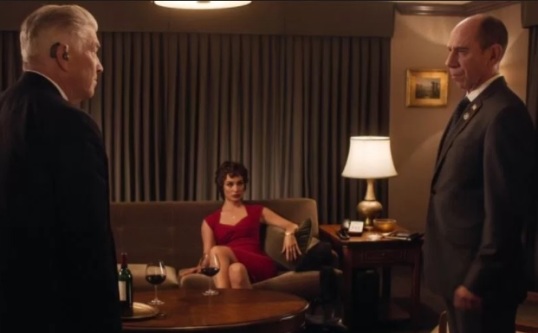
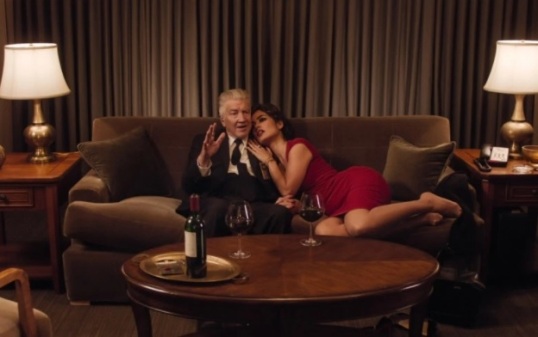
Back in South Dakota, Gordon has a mysterious French woman (Bérénice Marlohe) in his hotel room.  He’s telling her an old FBI story when they’re interrupted by Albert.  Albert asks the woman to wait downstairs.  Though it takes her a while to get her shoes back on (we’ve all been there), she finally does leave.  Gordon explains that the woman is visiting a friend who owns a turnip farm.  The friend’s daughter has disappeared.

“I told her the daughter would turn up eventually,” Gordon explains, before adding, “She didn’t get it either.”  What’s funny is that I can imagine David Lynch telling that exact same joke in real life.

Anyway, Albert is more concerned about the text message that Diane received, the one asking about Las Vegas.

Gordon says they’ll figure it out but, first, he’d like to get back to his wine.

“What kind is it?” Albert asks.

Gordon looks at his watch.  “11:05,” he announces.

When Albert stares at him without responding, Gordon says, “Albert, sometimes I really worry about you.”

Meanwhile, Chantal (Jennifer Jason Leigh) and Hutch (Tim Roth) use a sniper rifle to assassinate the warden (James Morrison) as he walks up to his house.  The warden’s young son comes outside and sees his father dead on the porch.  “Daddy!” he shouts.  It could have been worse.  Hutch wanted to kidnap and torture the warden but Chantel was hungry and wanted to get something to eat.

Back in Twin Peaks, Dr. Jacoby (Russ Tamblyn) rants about the government and sells his golden shovels.  In her shop, Nadine (Wendy Robie) listens approvingly.  Apparently, Dr. Jacoby is now known as Dr. Amp and, just from the way he rants, I bet he’s on twitter and he probably does the whole numbered tweet threading thing.

Meanwhile, Audrey Horne (Sherilyn Fenn) is talking to her husband Charlie (Clark Middleton) and — OH MY GOD!  AUDREY’S BACK!  Audrey and Charlie are arguing.  Audrey wants to go out and find someone named Billy.  Charlie says he has a lot of paperwork to do and that there’s no point in going at night.  Audrey is emotional and Charlie … well, Charlie most definitely is not.  Charlie is calm to the point of being creepy.

“What kind of shit are you?” Audrey asks, “You are nothing but a fucking no-balls loser.”

You tell him, Audrey!  I don’t know Charlie but if Audrey says he’s a loser…

Charlie gets peeved and asks Audrey not to talk to him like that but Audrey has no use for him or his hurt feelings.  “You have no balls,” she tells him, “that’s why I am in love with Billy.   That’s why I am fucking Billy.  And Tina … I got to find Tina.  She was the last person who fucking saw Billy and I can’t stand being in the same room as her!”

Audrey demands that Charlie sign some papers that she gave him.  Charlie says he’s not singing anything until he runs them by his lawyer.  Apparently, their marriage involves a contract and, by demanding a divorce, Audrey is reneging on a contract.  Charlie is shocked but Audrey doesn’t care.

Charlie finally agrees to go with Audrey to Roadhouse so they can look for Billy.  But first, Charlie suggests that he should call Tina and talk to her.  Audrey repeats that Tina was the last one to see Billy but then she says that “Chuck is certifiable so we can’t count on anything from him.”

“Did you know,” Charlie asks, “that Chuck stole Billy’s truck last week?”

Charlie goes on to say that the police eventually found Billy’s truck and that Billy dropped all charges.  Audrey seems both confused and fascinated by this story.  Myself, I’m wondering if Billy, Chuck, and Tina actually exist.  (Chuck and Charlie, of course, are both nicknames for Charles.)

I guess Tina is real because Charlie does call her, or at least he claims that he’s called and is talking to Tina.  (We only hear Charlie’s side of the conversation.  And everything that Charles says seems to be intentionally vague.)  After hanging up the phone, Charlie refuses to reveal what Tina said.

In South Dakota, Diane sits in the hotel bar and looks up the coordinates that were written on Ruth Davenport’s arm.  Not surprisingly, they’re the coordinates for Twin Peaks.

Meanwhile, at the Road House, Chromatics are playing once again.  In a booth, two women, Abbie (Elizabeth Anweis) and Natalie (Ana de la Reguera), gossip about a guy named Clark, who is apparently cheating on his girlfriend, Angela, with someone named Mary.  Apparently, Angela is off her meds now.  They also note that Angela’s having a rough time but they’re not surprised.  “Losing her mom like that!” they say.

Suddenly, they’re joined by a hyperactive man named Trick (Scott Coffey, who also played the mysterious Cowboy in Mulholland Drive) who is upset because, on his way to the roadhouse, another vehicle ran him off the road. Trick says he wishes he could kill whoever the other driver was.  When Trick goes to get a beer, Abbie and Natalie discuss that Trick was under house arrest but he’s free now.

To quote something that I said in my initial thoughts post for this episode:

In Dario Argento’s Inferno, there’s a random shot of a woman who we’ve never seen before hanging herself.  She’s never mentioned or seen again.  Argento has said that he included that random shot to show that the world was out of balance.  I think, to a large extent, that’s what Lynch is doing with several of the more random aspects of Twin Peaks.

And, with that in mind, the end credits roll and we only have six more episodes to go.

Twin Peaks on TSL:

  1. Twin Peaks: In the Beginning by Jedadiah Leland
  2. TV Review: Twin Peaks 1.1 — The Pilot (dir by David Lynch) by Lisa Marie Bowman
  3. TV Review: Twin Peaks 1.2 — Traces To Nowhere (directed by Duwayne Dunham) by Jedadiah Leland
  4. TV Review: Twin Peaks 1.3 — Zen, or the Skill To Catch A Killer (dir by David Lynch) by Lisa Marie Bowman
  5. TV Review: Twin Peaks 1.4 “Rest in Pain” (dir by Tina Rathbone) by Leonard Wilson
  6. TV Review: Twin Peaks 1.5 “The One-Armed Man” (directed by Tim Hunter) by Jedadiah Leland
  7. TV Review: Twin Peaks 1.6 “Cooper’s Dreams” (directed by Lesli Linka Glatter) by Lisa Marie Bowman
  8. TV Review: Twin Peaks 1.7 “Realization Time” (directed by Caleb Deschanel) by Lisa Marie Bowman
  9. TV Review: Twin Peaks 1.8 “The Last Evening” (directed by Mark Frost) by Leonard Wilson
  10. TV Review: Twin Peaks 2.1 “May the Giant Be With You” (dir by David Lynch) by Leonard Wilson
  11. TV Review: Twin Peaks 2.2 “Coma” (directed by David Lynch) by Jedadiah Leland
  12. TV Review: Twin Peaks 2.3 “The Man Behind The Glass” (directed by Lesli Linka Glatter) by Jedadiah Leland
  13. TV Review: Twin Peaks 2.4 “Laura’s Secret Diary” (dir by Todd Holland) by Lisa Marie Bowman
  14. TV Review: Twin Peaks 2.5 “The Orchid’s Curse” (dir by Graeme Clifford) by Lisa Marie Bowman
  15. TV Review: Twin Peaks 2.6 “Demons” (dir by Lesli Linka Glatter) by Leonard Wilson
  16. TV Review: Twin Peaks 2.7 “Lonely Souls” (directed by David Lynch) by Jedadiah Leland
  17. TV Review: Twin Peaks 2.8 “Drive With A Dead Girl” (dir by Caleb Deschanel) by Lisa Marie Bowman
  18. TV Review: Twin Peaks 2.9 “Arbitrary Law” (dir by Tim Hunter) by Lisa Marie Bowman
  19. TV Review: Twin Peaks 2.10 “Dispute Between Brothers” (directed by Tina Rathbone) by Jedadiah Leland
  20. TV Review: Twin Peaks 2.11 “Masked Ball” (directed by Duwayne Dunham) by Leonard Wilson
  21. TV Review: Twin Peaks 2.12 “The Black Widow” (directed by Caleb Deschanel) by Leonard Wilson
  22. TV Review: Twin Peaks 2.13 “Checkmate” (directed by Todd Holland) by Jedadiah Leland
  23. TV Review: Twin Peaks 2.14 “Double Play” (directed by Uli Edel) by Jedadiah Leland
  24. TV Review: Twin Peaks 2.15 “Slaves and Masters” (directed by Diane Keaton) by Lisa Marie Bowman
  25. TV Review: Twin Peaks 2.16 “The Condemned Woman” (directed by Lesli Linka Glatter) by Leonard Wilson
  26. TV Review: Twin Peaks 2.17 “Wounds and Scars” (directed by James Foley) by Lisa Marie Bowman
  27. TV Review: Twin Peaks 2.18 “On The Wings of Love” (directed by Duwayne Dunham) by Jedadiah Leland
  28. TV Review: Twin Peaks 2.19 “Variations on Relations” (directed by Jonathan Sanger) by Lisa Marie Bowman
  29. TV Review: Twin Peaks 2.20 “The Path to the Black Lodge” (directed by Stephen Gyllenhaal) by Lisa Marie Bowman
  30. TV Review: Twin Peaks 2.21 “Miss Twin Peaks” (directed by Tim Hunter) by Leonard Wilson
  31. TV Review: Twin Peaks 22.2 “Beyond Life and Death” (directed by David Lynch) by Lisa Marie Bowman
  32. Film Review: Twin Peaks: Fire Walk With Me (dir by David Lynch) by Lisa Marie Bowman
  33. Here’s The Latest Teaser for Showtime’s Twin Peaks by Lisa Marie Bowman
  34. Here’s The Newest Teaser for Showtime’s Twin Peaks by Lisa Marie Bowman
  35. 12 Initial Thoughts About Twin Peaks: The Return Parts One and Two by Lisa Marie Bowman
  36. This Week’s Peaks: Parts One and Two by Ryan C. (trashfilm guru)
  37. TV Review: Twin Peaks: The Return Parts One and Two (dir by David Lynch) by Lisa Marie Bowman
  38. 4 Shots From 4 Films: Special Twin Peaks Edition by Lisa Marie Bowman
  39. This Week’s Peaks: Parts Three and Four by Ryan C. (trashfilm guru)
  40. 14 Initial Thoughts About Twin Peaks: The Return Part Three by Lisa Marie Bowman (dir by David Lynch)
  41. 10 Initial Thoughts About Twin Peaks: The Return Part Four by Lisa Marie Bowman (dir by David Lynch)
  42. TV Review: Twin Peaks: The Return Parts Three and Four (dir by David Lynch) by Lisa Marie Bowman 
  43. 18 Initial Thoughts About Twin Peaks: The Return Part 5 (dir by David Lynch) by Lisa Marie Bowman
  44. This Week’s Peaks: Part Five by Ryan C. (trashfilm guru)
  45. TV Review: Twin Peaks: The Return: Part 5 (dir by David Lynch) by Lisa Marie Bowman
  46. 14 Initial Thoughts On Twin Peaks Part 6 (dir by David Lynch) by Lisa Marie Bowman
  47. This Week’s Peaks: Part Six by Ryan C. (trashfilm guru)
  48. TV Review: Twin Peaks: The Return Part 6 (dir by David Lynch) by Lisa Marie Bowman
  49. 12 Initial Thoughts on Twin Peaks: The Return Part 7 (dir by David Lynch) by Lisa Marie Bowman
  50. This Week’s Peaks: Part Seven by Ryan C. (trashfilm guru)
  51. TV Review: Twin Peaks: The Return Part 7 (dir by David Lynch) by Lisa Marie Bowman
  52. Ten Initial Thoughts on Twin Peaks: The Return Part 8 (dir by David Lynch) by Lisa Marie Bowman
  53. This Week’s Peaks: Part Eight by Ryan C (trashfilm guru)
  54. TV Review: Twin Peaks: The Return Part 8 (dir by David Lynch) by Lisa Marie Bowman
  55. 16 Initial Thoughts on Twin Peaks: The Return Part 9 (dir by David Lynch) by Lisa Marie Bowman
  56. This Week’s Peaks: Part Nine by Ryan C (trashfilm guru)
  57. TV Review: Twin Peaks: The Return Part 9 (dir by David Lynch) by Lisa Marie Bowman
  58. 20 Initial Thoughts On Twin Peaks: The Return Part 10 (dir by David Lynch) by Lisa Marie Bowman
  59. This Week’s Peaks: Part 10 by Ryan C (trashfilm guru)
  60. TV Review: Twin Peaks: The Return Part 10 (dir by David Lynch) by Lisa Marie Bowman
  61. 16 Initial Thoughts About Twin Peaks: The Return Part 11 (dir by David Lynch) by Lisa Marie Bowman
  62. This Week’s Peaks: Part 11 by Ryan C (trashfilm guru)
  63. TV Review: Twin Peaks: The Return Part 11 (dir by David Lynch) by Lisa Marie Bowman
  64. 20 Initial Thoughts on Twin Peaks: The Return Part 12 (dir by David Lynch) by Lisa Marie Bowman
  65. This Weeks Peaks: Part 12 by Ryan C (trashfilm guru)

TV Review: Twin Peaks: The Return Part 10 (dir by David Lynch)


I’m getting a late start on this recap and I imagine that, by the time I’m finished rewatching the latest episode of Twin Peaks and typing all this up, I’ll probably barely be able to keep my eyes open.  Dexedrine is a wonderful and helpful tool but it can only do so much.

(Don’t freak out, I take it for my ADD.  It helps me focus.  The endless energy is just a nice side benefit.)

So, I better not waste any time!  Let’s talk about Part 10 of Twin Peaks!
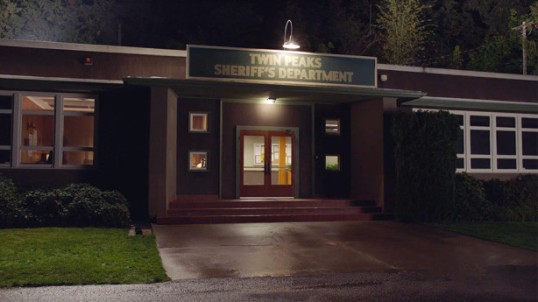
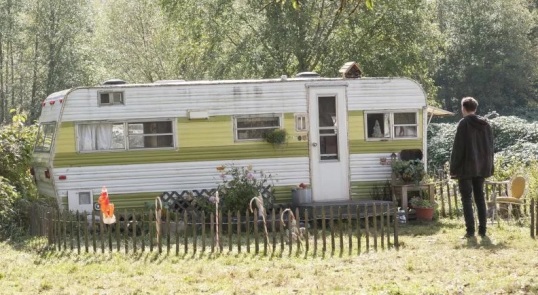
We open in Twin Peaks, at the trailer park to be exact.  Richard Horne (Eamon Farren) pulls up outside the trailer of Miriam (Sarah Jean Long), the poor woman who was unlucky enough to see him running down that little boy a few episodes ago.  As this episode will demonstrate, Richard is perhaps the most loathsome character to ever appear in a David Lynch film.  Even Blue Velvet‘s Frank Booth never ran down a child while driving around Lumberton.

From inside her trailer, Miriam yells at Richard that not only has she gone to the police but that she also wrote Sheriff Truman a letter, telling him that, if anything happens to her, Richard is the one responsible.  Richard responds by rushing into the trailer and beating Miriam to death.

As Richard walks away from the trailer, he calls his Deputy Chad (John Pirruccello) and orders him to intercept the letter and keep Truman from reading it.

Elsewhere in the trailer park. Carl (Harry Dean Stanton) sits in front of the manager’s office, plays his guitar, and sings.  The gentleness of Carl’s voice provides a stark contrast to the rest of the episode.
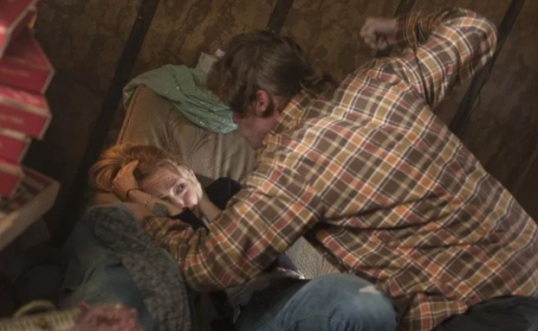
Carl’s song is interrupted by the sound of Steve (Caleb Landry Jones), in another trailer, yelling at Becky (Amanda Seyfried) and throwing stuff out the window.  Becky is not only Shelley’s daughter but apparently, she’s found herself married to a modern-day Leo Johnson as well.  Just like Leo, Steve is upset because he feels Becky isn’t keeping their home clean enough.

(Whatever happened to Leo?  I assume all those tarantulas eventually fell on his face and killed him.)

In Las Vegas, Candie (Amy Shiels) — wearing her iconic pink dress — attempts to kill a fly by hitting it with a remote.  Unfortunately, the fly happens to be on the face of Rodney Mitchum (Robert Knepper), which leads to him getting smacked.  Bradley (James Belushi) rushes into the room the make sure that Rodney is okay, while Candie screams and sobs. The fly, I believe, escaped unharmed.

Janey-E (Naomi Watts) and Dougie (Kyle MacLachlan) visit with Dr. Ben (John Billingsley).  While Dougie continues to stare blankly forward, Janey-E explains that he’s been acting strangely for a few days.  Janey-E explains that Dougie has a drinking and gambling problem.  Dr. Ben is bemused by Dougie’s weight loss.  Janey-E agrees that Dougie has lost a lot of weight … “in a good way.”  Dr. Ben announces that Dougie appears to be in perfect health.  “Remarkable,” Janey-E says while looking at the shirtless Dougie.

Back the Mitchum place, Candie is still crying while Rodney assures her that he’s fine.  On the TV, Bradley and Rodney watch a news story about both Dougie and the arrest of Ike the Spike.

“Brad,” Rodney says, “remind me to call off that hit on Ike.”

“Saved us a wad of dough!” Bradley agrees, “Niiiiiiiice!”

Bradley recognizes Dougie from the news.  “That’s our Mr. Jackpots,” Bradley says.

At the Jones house, Janey-E watches Dougie eat cake.  She asks if he finds her attractive.  Dougie says nothing, entranced by the cake.  Janey-E tells him that she finds him attractive.  Dougie stares at her blankly.  Janey-E takes Dougie upstairs, where she rides him while he lays underneath her in a state of stunned euphoria.  (Dougie/Cooper, of course, is experiencing all of this for the first time.)  Afterward, she tells Dougie, “I love you.”  “Love you,” Dougie blankly repeats.

In Twin Peaks, Dr. Jacoby (Russ Tamblyn) rants on his podcast about pharmaceutical companies.  Nadine (Wendy Robie) listens approvingly.  We see that she’s sitting in her own store, Run Silent Run Drapes.  Yay!  Nadine finally perfected her drape runners!

It’s morning in Vegas.  As Sonny Jim (Pierce Gagnon), fresh from being traumatized by all the noise his parents made while he was trying to get some sleep, waits in the car, Janey-E tells Dougie that she can’t stop thinking about last night.  Dougie blankly nods.

In the wilderness outside Twin Peaks, Jerry (David Patrick Kelly) is still lost.  “You can’t fool me!” he yells, “I’ve been here before!”

At the Sheriff’s office, Lucy (Kimmy Robertson) wonders why Deputy Chad is hanging out in the lobby.  Of course, we know that Chad is waiting for the mail so that he can intercept Miriam’s letter.  Chad, however, just says that he’s appreciating the beauty of the day.  Chad sees the mailman pulling up so he runs outside to meet him.  Lucy is rightly suspicious, especially when Chad rather obviously stuffs Miriam’s letter under his shirt.

This is followed by a scene that literally left me queasy.  At the Horne House, a bruised and battered Johnny Horne (Eric Rondell) stares at a creepy toy that has the body of teddy bear and a head of glass.  Throughout the entire violent and brutal scene that will follow, the toy continues to ask — in a vaguely British accent — “Hello, Johnny.  How are you today?”
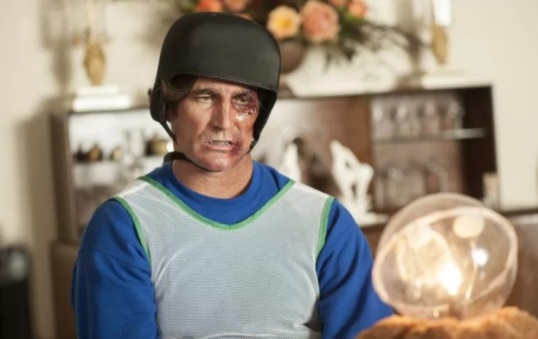
Johnny Horne (Richard’s uncle)

Richard bursts into the house and demands that Sylvia (Jan D’Arcy) give him money.  When she tells him to ask his grandfather, Richard grabs her by throat.  As Richard attacks her (and Farren is absolutely terrifying in this scene), Johnny falls out of the chair and groans on the floor.  It gets even worse when Johnny calls Sylvia “grandma.”

Sylvia, Richard’s grandmother

In other words, tonight, my greatest fear was confirmed.  Richard is Audrey’s son.  And judging from both his sociopathic personality and their shared affinity for leather jackets, it appears that Richard’s father is the Doppelganger.  A few episodes ago, Dr. Hayward revealed the, when Cooper last saw Audrey, she was still in a coma.
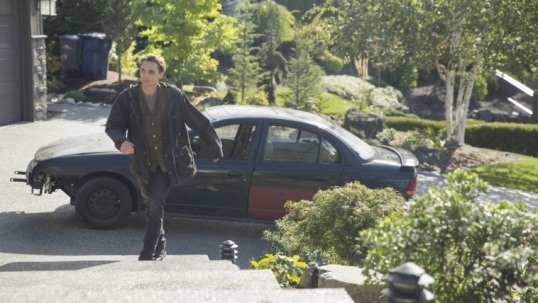
Richard Horne (son of Audrey and Cooper’s Doppelganger)

Richard gets the money.  He also calls his grandmother the C-word and steals her jewelry.  “Why do you have to make something so simple so fucking difficult!?” Richard snaps before leaving.

Seriously, this scene — more than anything else that we’ve seen so far in this series — left me truly shaken.  The performances of Farren and D’Arcy were so intense that, even though I knew it was coming and what would happen, I still had to take a break after rewatching this scene.

After that disturbing scene, we cut back to Las Vegas.  Roger (Joe Adler) tells Duncan Todd (Patrick Fischler) that it’s true that Ike has been captured by the police.  After Roger leaves, we see that Anthony Sinclair (Tom Sizemore) is in Duncan’s office.  Duncan tells Anthony that he’s to go to the Mitchum Brothers and that he’s to claim that Dougie cheated them out of an insurance claim.  Duncan believes that the Mitchums will respond by killing Dougie.  If the Mitchums don’t kill Dougie, Anthony will have to do it himself.

In South Dakota, love is in the air.  Albert (Miguel Ferrer) is on a date with coroner Constance Talbot (Jane Adams).  A bemused Gordon (David Lynch) watches them, with Tammy (Chrysta Bell) at his side.  But Gordon — you belong with Shelley!

Back in Vegas, Anthony goes to the casino and is spotted by the Mitchum brothers.  They tell Candie — who, like the other ladies in pink, is hanging out in their office — to bring Anthony to see them.  “You want me to bring him here?” Candie asks, somewhat vaguely, before heading to the casino floor.

As they watch Candie and Anthony on the surveillance footage, the Mitchum brothers realize that they may have made a mistake sending Candie.  Candie and Anthony start to have a long conversation.  Bradley is finally forced to tell the pit boss, Warrick (David Dastmalchian) to bring both Candie and Anthony back to the main office.

Before Rodney can complain, Bradley says, “If we fire her, she’s got no place to go.”  So, in case you were wondering which brother was the nice brother, apparently it’s Jim Belushi.
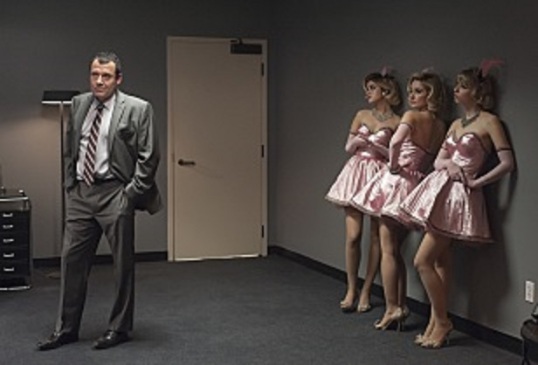
Anyway, Candie and Anthony finally arrive at the office.  The Mitchums demand to know what Candie and Anthony were talking about.  Candie thinks for a minute and then remembers that they were talking about how it was going to be hot and smoggy the next day.

Anthony finally gets his chance to tell the Mitchum brothers that Dougie handled their denied claim and that he has a personal vendetta against them.  Anthony is not exactly the best liar and the Mitchums tell Candie to show Anthony out of their office.

“You have an enemy in Douglas Jones!” Anthony shouts.

Later, Bradley and Rodney have a drink in their living room.  Despite Anthony not being the most convincing of storytellers, the Mitchum brothers appear to believe him and they both agree that Dougie has to die.  Rodney announces, “Now I know how Brando felt.”

(Wally Brando, maybe?)
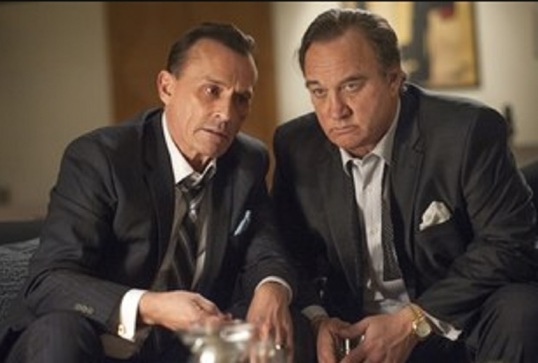
Back in South Dakota, Gordon sits in his hotel room and draws a picture — one that resembles the cave drawings from the 2nd season of Twin Peaks — on a piece of paper.  Someone knocks on his door.  When Gordon answers it, he has a vision of Laura crying while hearing Sarah Palmer (Grace Zabriksie) calling Laura’s name.

As the vision fades, Gordon sees that Albert is standing out in the hallway.  Albert enters the hotel room and reveals that, while they were in the morgue, Diane received a text on her phone: “Around the dinner table, the conversation is lively.”  Albert says that he and Tammy tracked the text as coming from Mexico.  Diane responded with a heavily encrypted message: “They have Hastings.  He’s going to take them to the site.”

“What should we do?” Albert asks.

“Keep her close,” Gordon replies.

Tammy then shows up at the room, revealing that she has new information concerning “the penthouse murders” in New York City.  (That would be the murder of poor Sam and Tracy in Part 1.)  She shows Gordon a picture of the Doppelganger in the penthouse, standing in front of the glass case.

At the Great Northern, Ben (Richard Beymer) takes a call from his now ex-wife, Sylvia.  Sylvia demands that Ben repay her all of the money that Richard stole from her.  Ben refuses.  Sadly, when Ben asks if Johnny’s okay, Sylvia snaps back, “No concern about me!”

Hanging up on his former wife, a frustrated Ben calls out, “Beverly, do you want to have dinner with me?”
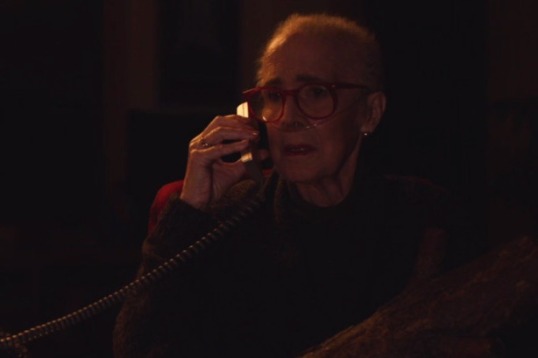
At her lonely house, the Log Lady (Catherine Coulson) calls Hawks (Michael Horse) and tell him that “Electricity is humming.  You can hear it in the mountains and rivers…in these days, the glow is dying?  What will be in the darkness that remains?”

(This scene is even more poignant when you consider it was probably the final thing that Coulson ever filmed before passing away last year.)

The Log Lady tells Hawk that the Truman brothers are “true men … they are your brothers … watch and lesson to the dream of time and space…Hawk…Laura is the one…”

At the Road House, Rebekah Del Rio performs, providing both this episode and the series as a whole with yet another link to Mulholland Drive.  (That’s not as crazy as it sounds.  Mulholland Drive was originally envisioned as being a spin-off of Twin Peaks, with Audrey moving to Hollywood.)
What to say about this episode?  It was, in many ways, deceptively simple.  All of the disparate elements of the show are finally coming together.  The appearances by Sizemore, Belushi, and Knepper served to remind us — just as Jennifer Jason Leigh did last week — that Twin Peaks is not just random David Lynch quirkiness.  Everything is connected.  A story is being told.  You just have to have the patience to look for the clues.

And finally, to those reviewers complaining that Twin Peaks: The Return is misogynistic, open your eyes.  Yes, many of the characters are misogynists.  Not a single one of them is, in anyway, portrayed sympathetically.  He may be a surrealist but David Lynch is one of the most humanistic filmmakers of all time.  If the world of Twin Peaks is sometimes ugly, so is the world outside your front door.

Twin Peaks on TSL:

  1. Twin Peaks: In the Beginning by Jedadiah Leland
  2. TV Review: Twin Peaks 1.1 — The Pilot (dir by David Lynch) by Lisa Marie Bowman
  3. TV Review: Twin Peaks 1.2 — Traces To Nowhere (directed by Duwayne Dunham) by Jedadiah Leland
  4. TV Review: Twin Peaks 1.3 — Zen, or the Skill To Catch A Killer (dir by David Lynch) by Lisa Marie Bowman
  5. TV Review: Twin Peaks 1.4 “Rest in Pain” (dir by Tina Rathbone) by Leonard Wilson
  6. TV Review: Twin Peaks 1.5 “The One-Armed Man” (directed by Tim Hunter) by Jedadiah Leland
  7. TV Review: Twin Peaks 1.6 “Cooper’s Dreams” (directed by Lesli Linka Glatter) by Lisa Marie Bowman
  8. TV Review: Twin Peaks 1.7 “Realization Time” (directed by Caleb Deschanel) by Lisa Marie Bowman
  9. TV Review: Twin Peaks 1.8 “The Last Evening” (directed by Mark Frost) by Leonard Wilson
  10. TV Review: Twin Peaks 2.1 “May the Giant Be With You” (dir by David Lynch) by Leonard Wilson
  11. TV Review: Twin Peaks 2.2 “Coma” (directed by David Lynch) by Jedadiah Leland
  12. TV Review: Twin Peaks 2.3 “The Man Behind The Glass” (directed by Lesli Linka Glatter) by Jedadiah Leland
  13. TV Review: Twin Peaks 2.4 “Laura’s Secret Diary” (dir by Todd Holland) by Lisa Marie Bowman
  14. TV Review: Twin Peaks 2.5 “The Orchid’s Curse” (dir by Graeme Clifford) by Lisa Marie Bowman
  15. TV Review: Twin Peaks 2.6 “Demons” (dir by Lesli Linka Glatter) by Leonard Wilson
  16. TV Review: Twin Peaks 2.7 “Lonely Souls” (directed by David Lynch) by Jedadiah Leland
  17. TV Review: Twin Peaks 2.8 “Drive With A Dead Girl” (dir by Caleb Deschanel) by Lisa Marie Bowman
  18. TV Review: Twin Peaks 2.9 “Arbitrary Law” (dir by Tim Hunter) by Lisa Marie Bowman
  19. TV Review: Twin Peaks 2.10 “Dispute Between Brothers” (directed by Tina Rathbone) by Jedadiah Leland
  20. TV Review: Twin Peaks 2.11 “Masked Ball” (directed by Duwayne Dunham) by Leonard Wilson
  21. TV Review: Twin Peaks 2.12 “The Black Widow” (directed by Caleb Deschanel) by Leonard Wilson
  22. TV Review: Twin Peaks 2.13 “Checkmate” (directed by Todd Holland) by Jedadiah Leland
  23. TV Review: Twin Peaks 2.14 “Double Play” (directed by Uli Edel) by Jedadiah Leland
  24. TV Review: Twin Peaks 2.15 “Slaves and Masters” (directed by Diane Keaton) by Lisa Marie Bowman
  25. TV Review: Twin Peaks 2.16 “The Condemned Woman” (directed by Lesli Linka Glatter) by Leonard Wilson
  26. TV Review: Twin Peaks 2.17 “Wounds and Scars” (directed by James Foley) by Lisa Marie Bowman
  27. TV Review: Twin Peaks 2.18 “On The Wings of Love” (directed by Duwayne Dunham) by Jedadiah Leland
  28. TV Review: Twin Peaks 2.19 “Variations on Relations” (directed by Jonathan Sanger) by Lisa Marie Bowman
  29. TV Review: Twin Peaks 2.20 “The Path to the Black Lodge” (directed by Stephen Gyllenhaal) by Lisa Marie Bowman
  30. TV Review: Twin Peaks 2.21 “Miss Twin Peaks” (directed by Tim Hunter) by Leonard Wilson
  31. TV Review: Twin Peaks 22.2 “Beyond Life and Death” (directed by David Lynch) by Lisa Marie Bowman
  32. Film Review: Twin Peaks: Fire Walk With Me (dir by David Lynch) by Lisa Marie Bowman
  33. Here’s The Latest Teaser for Showtime’s Twin Peaks by Lisa Marie Bowman
  34. Here’s The Newest Teaser for Showtime’s Twin Peaks by Lisa Marie Bowman
  35. 12 Initial Thoughts About Twin Peaks: The Return Parts One and Two by Lisa Marie Bowman
  36. This Week’s Peaks: Parts One and Two by Ryan C. (trashfilm guru)
  37. TV Review: Twin Peaks: The Return Parts One and Two (dir by David Lynch) by Lisa Marie Bowman
  38. 4 Shots From 4 Films: Special Twin Peaks Edition by Lisa Marie Bowman
  39. This Week’s Peaks: Parts Three and Four by Ryan C. (trashfilm guru)
  40. 14 Initial Thoughts About Twin Peaks: The Return Part Three by Lisa Marie Bowman (dir by David Lynch)
  41. 10 Initial Thoughts About Twin Peaks: The Return Part Four by Lisa Marie Bowman (dir by David Lynch)
  42. TV Review: Twin Peaks: The Return Parts Three and Four (dir by David Lynch) by Lisa Marie Bowman 
  43. 18 Initial Thoughts About Twin Peaks: The Return Part 5 (dir by David Lynch) by Lisa Marie Bowman
  44. This Week’s Peaks: Part Five by Ryan C. (trashfilm guru)
  45. TV Review: Twin Peaks: The Return: Part 5 (dir by David Lynch) by Lisa Marie Bowman
  46. 14 Initial Thoughts On Twin Peaks Part 6 (dir by David Lynch) by Lisa Marie Bowman
  47. This Week’s Peaks: Part Six by Ryan C. (trashfilm guru)
  48. TV Review: Twin Peaks: The Return Part 6 (dir by David Lynch) by Lisa Marie Bowman
  49. 12 Initial Thoughts on Twin Peaks: The Return Part 7 (dir by David Lynch) by Lisa Marie Bowman
  50. This Week’s Peaks: Part Seven by Ryan C. (trashfilm guru)
  51. TV Review: Twin Peaks: The Return Part 7 (dir by David Lynch) by Lisa Marie Bowman
  52. Ten Initial Thoughts on Twin Peaks: The Return Part 8 (dir by David Lynch) by Lisa Marie Bowman
  53. This Week’s Peaks: Part Eight by Ryan C (trashfilm guru)
  54. TV Review: Twin Peaks: The Return Part 8 (dir by David Lynch) by Lisa Marie Bowman
  55. 16 Initial Thoughts on Twin Peaks: The Return Part 9 (dir by David Lynch) by Lisa Marie Bowman
  56. This Week’s Peaks: Part Nine by Ryan C (trashfilm guru)
  57. TV Review: Twin Peaks: The Return Part 9 (dir by David Lynch) by Lisa Marie Bowman
  58. 20 Initial Thoughts On Twin Peaks: The Return Part 10 (dir by David Lynch) by Lisa Marie Bowman
  59. This Week’s Peaks: Part 10 by Ryan C (trashfilm guru)
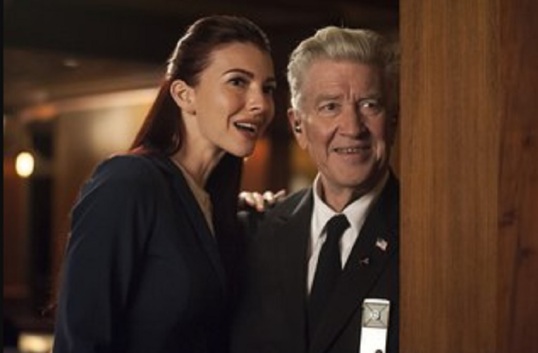
TV Review: Twin Peaks: The Return Part 5 (dir by David Lynch)


Well, there’s one thing that you can definitely say for sure about not only Twin Peaks but also about every other film that David Lynch has ever made.  (And make no mistake — they may be calling this the third season of Twin Peaks but it’s obviously meant to be more of an 18-hour film than a traditional television series.)  Lynch moves at his own pace.  He knows where he’s going but, often, he doesn’t seem to be in any hurry to get there.

And, quite frankly, that can sometimes to be frustrating.  David Lynch requires patience on the part of the viewer and a willingness to have faith in his ability as an artist.  To a certain extent, the modern world almost seems to be set up to make things as difficult as possible for an artist like David Lynch.  We’re used to things being fast-paced.  We’re used to having immediate (if superficial) answers to any and all questions.  In a time when movies are dominated by hyperactive editing and overwhelming soundtracks, David Lynch has the courage to portray moments of silence and stillness.  It’s what sets him apart from other filmmakers.  It’s also the reason why this critically acclaimed director has always struggled to get his films made.  In 41 years, David Lynch has had ten films theatrically released.  Michael Bay directed his first film twenty years after the release of Eraserhead and he has gone to direct twelve more.

Part 5 of Twin Peaks is a perfect example of Lynch’s deliberate pace.  As I watched it, I found myself occasionally saying, “When is Cooper going to get normal again!?”  I mean, Kyle MacLachlan is doing great work as Dougie/Cooper but how many more times am I going to have to watch him get confused over the need to urinate?  That’s a joke that’s getting old.

Yes, I was frustrated.

But here’s the thing:

As frustrated as I may be by the whole Dougie/Cooper situation, I’m not going anywhere.  I trust David Lynch and, throughout Part 5, there were scenes that reminded me of why I trust David Lynch.  The man is a genius.  I’m thinking of the three women in pink nonchalantly watching as the casino pit boss got beaten.  I’m thinking of the close-up on Amanda Seyfried’s face after she snorted the cocaine.  I’m thinking of Russ Tamblyn ranting.

I will follow David Lynch anywhere.

As for Part 5, it opened with Lynch’s camera prowling through the streets of Las Vegas, a city that seems especially Lynchian.

Out at the Rancho Rosa Development, the two hitmen who were sent to kill Dougie are still sitting outside of the deserted house that Dougie used for his lost weekend with Jade.  They’re watching Dougie’s car.  One of them calls a woman and tells her that they still haven’t seen Dougie.  She does not take the news well.  She sends a message to Argentina, where it is apparently received by a black box sitting in a basin.

In South Dakota, the coroner has found something in the stomach of the body that was found underneath the head of Ruth Davenport.  It’s a gold ring, one that has an inscription: “To Destiny, With Love, James C.”  (I’ve listened to the line about the inscription about a dozen times and I’m pretty sure that’s what the coroner said.  If I’m wrong, please let me know.)

(CORRECTION: According to Dylan Lange, host of Dylan Knows, the inscription read: To Dougie With Love, Janey-E.  Thank you, Dylan! — LMB)

In his prison cell, Doppelganger Cooper (Kyle MacLachlan) stares at himself in his cell’s tiny mirror.  He flashes back to the time he and Killer BOB shared a laugh in the Black Lodge.  He sees himself smashing his face into the mirror at the Great Northern.

In Twin Peaks, we are reintroduced to Mike Nelson (Gary Hershberger), who was Bobby’s best friend and fellow drug dealer during the first two seasons of Twin Peaks.  (He eventually became Nadine’s boyfriend during the time that she had amnesia and thought she was 16.)  Mike is a grown-up, suit-wearing professional now, sitting in an office that is decorated with the mounted heads of dead deer.  Mike is conducting a job interview with Steve Burnett (Caleb Landry Jones), who appears to be a real loser.  Mike informs Steve that his resume is the worst resume that he’s ever seen and then kicks him out of the office.

At the Sheriff’s Department, Doris Truman (Candy Clark) comes by to yell at Frank (Robert Forster) about something.  Honestly, I kinda tuned out this scene and I hope that Doris doesn’t become a major character.  If anything, Frank is even more laconic than his brother.

Back in Las Vegas, Janey-E (Naomi Watts) finally gets Dougie/Cooper (Kyle MacLachlan) out of the house.  She has to tie his necktie for him.  As she tells him everything that he needs to do, Dougie/Cooper stares at her with a blank look.  It’s interesting that, as frustrated as Janey-E gets with Dougie/Cooper, she still tries to rationalize his strange behavior.

At the Rancho Rosa development, Dougie’s car continues to sit there.  The two hitmen drive by again.  They are followed by five more guys, who are all in a black car and playing their music super loud.

Janey-E drops Dougie/Cooper off at his place of employment.  Apparently, Dougie worked for Lucky Seven Insurance.  However, Dougie/Cooper is less interested in his job and more fascinated by a statue of a cowboy pointing a gun.  In an oddly beautiful scene, he imitates the statue’s pose.  Finally, one of his co-workers wanders by and tells Dougie to “get the lead out” because they have a meeting.  That co-worker is carrying 8 cups of coffee so, of course, Dougie/Cooper follows after him.

At the meeting, which is full of vapid insurance people, Dougie/Cooper reveals that he can now tell when people are lying.  Apparently, whenever someone lies, a green light flashes across their face.  When Dougie/Cooper offends another agent (played by Tom Sizemore, no less) by calling him a liar, their boss, the wonderfully named Bushnell Mills (Don Murray), defuses the situation by giveing Dougie/Cooper several case files to take home with him.

Out in the hallway, Dougie/Cooper needs to pee but, like a panicking Sim, has no idea what to do.  Luckily, one of his co-workers, assuming that the men’s room must be locked, sneaks Dougie/Cooper into the ladies room.

At the Silver Mustang Casino, Rodney Mitchum (Robert Knepper) and Bradley Mitchum (Jim Belushi) demand to know how Cooper/Dougie could possibly have won 30 jackpots.  Rodney’s way of handling it is to beat up the pit boss (David Dastmalchian) while three women in pink stand in the corner of the room and nonchalantly watch.

Back at Rancho Rosa, Drugged-Out Mother (Hailey Gates) is passed out so her son leaves the house and walks across the street, intent on investigating Dougie’s bomb-laden car.  Fortunately, before the kid can set the bomb off, the black car pulls up.  The five men jump out of the car and tell the kid to “get the fuck outta here!”  They’re planning on stealing Dougie’s car for themselves.  Of course, as soon as the engine starts, the car explodes and takes three of the car thieves with it.  The kid runs back to his house, where the junkie mom is just now starting to come out of her stupor.

At a nearby carwash, Jade (Nafessa Williams) is getting her car washed when she comes across the key to Cooper’s room at the Great Northern.  She drops the key in a nearby mailbox.

At the Double R Diner — it’s Norma (Peggy Lipton) and Shelley (Madchen Amick)!  25 years have passed and they’re still exactly where we left them.  Except that Shelley now has a daughter named Becky (Amanda Seyfried) and Becky’s married to Steve.  Becky comes by the diner to borrow money from Shelley.  Then she goes outside and snorts cocaine with Steve.  Lynch’s camera gives us a close-up of Becky’s face as the drugs temporarily takes away all of her problems.  In this scene, not only does Becky look like Shelley’s daughter (Madchen Amick and Amanda Seyfried really do look like they could be related) but there’s also a disconcerting resemblance to Laura Palmer as well.

(Also, remember how Shelley used to say that she married Leo because of his car?  Well, Steve has a corvette of his own.)

Back in Vegas, Dougie/Cooper is still acting weird.  He doesn’t understand that, when riding an elevator, you’re supposed to get off when the doors open.  Some people get upset with him about that but Dougie/Cooper is more interested in going outside and staring at that statue.  Of course, Dougie/Cooper is still holding onto those case files.

At the Sheriff’s Department, Andy (Harry Goaz) and Hawk (Michael Horse) go through the Laura Palmer case files, searching for what’s missing.

In his trailer, Dr. Jacoby (Russ Tamblyn) goes live online, delivering a rant about globalist corporate conspiracies and selling his gold-painted shovels so that his listeners can “dig yourself out of the shit.”  Nadine (Wendy Robie) and Jerry (David Patrick Kelly) listen appreciatively.

At the Pentagon, Col. Davis (Ernie Hudson) is informed that they’ve gotten another “database hit” on Garland Briggs’s fingerprints.  Apparently, in the years since his mysterious death, Briggs’s finger prints have shown up in 16 different locations.

At the Roadhouse, the kickass band Trouble is playing.  Meanwhile, a handsome but dangerous looking man (Eamon Farren) sits under a sign that says no smoking and smokes a cigarette.  When a Roadhouse employee tells him to put out his cigarette, the man hands over a pack of cigarettes.  Inside the pack are several hundred dollar bills.  So, apparently, the Roadhouse is still the center of the Twin Peaks drug trade.

When Charlotte (Grace Victoria Cox) tries to flirt with him, the man suddenly turns violent, grabbing her and taunting her with, “Do you want to fuck me, Charlotte?  Do you want to fuck?  I’m going to laugh when I fuck you, bitch!”  It’s a deeply unpleasant scene, as Lynch obviously meant for it to be.

The man’s name is not mentioned but, according to the end credits, he’s Richard Horne.  Presumably, he’s a member of the infamous Horne Family.  Is he a cousin?  Or maybe Jerry’s kid?  Or, even more intriguingly, Audrey’s son?  Whatever he is, Richard is bad news.

(And let’s not forget that, way back at the start of Part One, the Giant told Cooper to remember “Richard and Linda.”)

At FBI Headquarters, Tamara (Chrysta Bell) compares the finger prints of both Cooper and his Doppelganger.

At the South Dakota prison, Doppelganger Cooper finally gets his phone call.  The warden (James Morrison) thinks that they’ll be able to listen in on the call but Doppelganger Cooper has other plans.  After taunting everyone listening, Cooper pushes several keys on the phone, which somehow causes every alarm in the prison to go off.  While the warden tries to restore order, Doppelganger Cooper says, into the phone, “The cow’s jumped over the moon.”  As soon as Doppelganger Cooper hangs up, the alarms fall silent.

In Argentina, the black box changes into a small ring.

In Vegas, Dougie/Cooper continues to stare at the statue.

And so, the latest episode ends.  The story may be moving at its own pace but I can’t wait to see where else it leads.

Twin Peaks on TSL:

  1. Twin Peaks: In the Beginning by Jedadiah Leland
  2. TV Review: Twin Peaks 1.1 — The Pilot (dir by David Lynch) by Lisa Marie Bowman
  3. TV Review: Twin Peaks 1.2 — Traces To Nowhere (directed by Duwayne Dunham) by Jedadiah Leland
  4. TV Review: Twin Peaks 1.3 — Zen, or the Skill To Catch A Killer (dir by David Lynch) by Lisa Marie Bowman
  5. TV Review: Twin Peaks 1.4 “Rest in Pain” (dir by Tina Rathbone) by Leonard Wilson
  6. TV Review: Twin Peaks 1.5 “The One-Armed Man” (directed by Tim Hunter) by Jedadiah Leland
  7. TV Review: Twin Peaks 1.6 “Cooper’s Dreams” (directed by Lesli Linka Glatter) by Lisa Marie Bowman
  8. TV Review: Twin Peaks 1.7 “Realization Time” (directed by Caleb Deschanel) by Lisa Marie Bowman
  9. TV Review: Twin Peaks 1.8 “The Last Evening” (directed by Mark Frost) by Leonard Wilson
  10. TV Review: Twin Peaks 2.1 “May the Giant Be With You” (dir by David Lynch) by Leonard Wilson
  11. TV Review: Twin Peaks 2.2 “Coma” (directed by David Lynch) by Jedadiah Leland
  12. TV Review: Twin Peaks 2.3 “The Man Behind The Glass” (directed by Lesli Linka Glatter) by Jedadiah Leland
  13. TV Review: Twin Peaks 2.4 “Laura’s Secret Diary” (dir by Todd Holland) by Lisa Marie Bowman
  14. TV Review: Twin Peaks 2.5 “The Orchid’s Curse” (dir by Graeme Clifford) by Lisa Marie Bowman
  15. TV Review: Twin Peaks 2.6 “Demons” (dir by Lesli Linka Glatter) by Leonard Wilson
  16. TV Review: Twin Peaks 2.7 “Lonely Souls” (directed by David Lynch) by Jedadiah Leland
  17. TV Review: Twin Peaks 2.8 “Drive With A Dead Girl” (dir by Caleb Deschanel) by Lisa Marie Bowman
  18. TV Review: Twin Peaks 2.9 “Arbitrary Law” (dir by Tim Hunter) by Lisa Marie Bowman
  19. TV Review: Twin Peaks 2.10 “Dispute Between Brothers” (directed by Tina Rathbone) by Jedadiah Leland
  20. TV Review: Twin Peaks 2.11 “Masked Ball” (directed by Duwayne Dunham) by Leonard Wilson
  21. TV Review: Twin Peaks 2.12 “The Black Widow” (directed by Caleb Deschanel) by Leonard Wilson
  22. TV Review: Twin Peaks 2.13 “Checkmate” (directed by Todd Holland) by Jedadiah Leland
  23. TV Review: Twin Peaks 2.14 “Double Play” (directed by Uli Edel) by Jedadiah Leland
  24. TV Review: Twin Peaks 2.15 “Slaves and Masters” (directed by Diane Keaton) by Lisa Marie Bowman
  25. TV Review: Twin Peaks 2.16 “The Condemned Woman” (directed by Lesli Linka Glatter) by Leonard Wilson
  26. TV Review: Twin Peaks 2.17 “Wounds and Scars” (directed by James Foley) by Lisa Marie Bowman
  27. TV Review: Twin Peaks 2.18 “On The Wings of Love” (directed by Duwayne Dunham) by Jedadiah Leland
  28. TV Review: Twin Peaks 2.19 “Variations on Relations” (directed by Jonathan Sanger) by Lisa Marie Bowman
  29. TV Review: Twin Peaks 2.20 “The Path to the Black Lodge” (directed by Stephen Gyllenhaal) by Lisa Marie Bowman
  30. TV Review: Twin Peaks 2.21 “Miss Twin Peaks” (directed by Tim Hunter) by Leonard Wilson
  31. TV Review: Twin Peaks 22.2 “Beyond Life and Death” (directed by David Lynch) by Lisa Marie Bowman
  32. Film Review: Twin Peaks: Fire Walk With Me (dir by David Lynch) by Lisa Marie Bowman
  33. Here’s The Latest Teaser for Showtime’s Twin Peaks by Lisa Marie Bowman
  34. Here’s The Newest Teaser for Showtime’s Twin Peaks by Lisa Marie Bowman
  35. 12 Initial Thoughts About Twin Peaks: The Return Parts One and Two by Lisa Marie Bowman
  36. This Week’s Peaks: Parts One and Two by Ryan C. (trashfilm guru)
  37. TV Review: Twin Peaks: The Return Parts One and Two (dir by David Lynch) by Lisa Marie Bowman
  38. 4 Shots From 4 Films: Special Twin Peaks Edition by Lisa Marie Bowman
  39. This Week’s Peaks: Parts Three and Four by Ryan C. (trashfilm guru)
  40. 14 Initial Thoughts About Twin Peaks: The Return Part Three by Lisa Marie Bowman (dir by David Lynch)
  41. 10 Initial Thoughts About Twin Peaks: The Return Part Four by Lisa Marie Bowman (dir by David Lynch)
  42. TV Review: Twin Peaks: The Return Parts Three and Four (dir by David Lynch) by Lisa Marie Bowman 
  43. 18 Initial Thoughts About Twin Peaks: The Return Part 5 (dir by David Lynch) by Lisa Marie Bowman
  44. This Week’s Peaks: Part Five by Ryan C. (trashfilm guru)


18 Initial Thoughts About Twin Peaks: The Return Part 5 (dir by David Lynch)


As always, a full recap will be posted either later tonight or tomorrow at the latest.  However, before I rewatch Part 5 of Twin Peaks, here are some initial thoughts.

1. Las Vegas, with all of its glitz and complicated history, really is the perfect David Lynch town.  I’d pay good money to see David Lynch remake Martin Scorsese’s Casino.

2. That old scene of Doppelganger Cooper and Killer BOB laughing it up is still pretty unsettling.

3. If anything, as played by Robert Forster, Frank Truman appears to be even more laconic than his brother, Harry.

4. Tonight, as I was watching Naomi Watts knot his tie, I noticed that Kyle MacLachlan has very sad eyes.  That actually made me feel kinda sad, just because Kyle seems to be such a nice person.  MacLachlan’s performance, especially as Dougie/Cooper, continues to be nothing short of amazing.  There was something so incredibly poignant about the sight of him wandering around in that huge green jacket.

5. Dougie works in insurance.  I had him pegged as working in real estate but insurance seems to work just as well.

6. The casino pit boss getting beaten up while the three women in the pink dresses watched in apparent boredom was perhaps the most Lynchian moment of the show so far.  Lynch has always combined the most savage violence with the most blasé reactions.

7. Dougie’s car finally blows up and the drug addict mom next door is passed out through the whole thing.

8.  No, Jade!  Don’t trust the postal service to deliver that key!  They can’t even get my Amazon orders here on time…

9. Peggy Lipton has apparently only aged seven years since the previous season of Twin Peaks aired back in 1991.

10. It’s been 25 years and Shelley is still working as a waitress?

11. Amanda Seyfried is the prefect choice to play Madchen Amick’s daughter.

12. Twin Peaks is apparently the cocaine capitol of the American northwest.  Actually, one thing that rarely seems to be pointed out is that David Lynch appears to be one of the most anti-drug filmmakers ever.  Every Lynch character who has ever tried or sold drugs has come to a bad end.

13. Of course, Dr. Jacoby would have a podcast.  And, of course, Nadine would be a fan.

14. “Dig yourself out of the shit!”

15. I want to hang out at the roadhouse.  All the best bands play there.  Tonight’s band was Trouble.

16. “The cow jumped over the moon.”  Agck!  Doppelganger Cooper is so creepy!

17. That was Don Murray playing Dougie/Cooper’s boss.  He was also appeared opposite Marilyn Monroe in Bus Stop, played Senator Brigham Anderson in Otto Preminger’s Advise and Consent, played a killer cop in the ahead-of-its time Deadly Hero, and appeared as Governor Breck in the best of the original Planet of the Apes films, Conquest of the Planet of the Apes.

18. For audiences who found tonight’s episode to be too weird and confusing, there’s absolutely nothing confusing about I’m Dying Up Here, the show that immediately followed.  In fact, it’s so easy to follow that it’s kind of annoying.

Twin Peaks on TSL:

  1. Twin Peaks: In the Beginning by Jedadiah Leland
  2. TV Review: Twin Peaks 1.1 — The Pilot (dir by David Lynch) by Lisa Marie Bowman
  3. TV Review: Twin Peaks 1.2 — Traces To Nowhere (directed by Duwayne Dunham) by Jedadiah Leland
  4. TV Review: Twin Peaks 1.3 — Zen, or the Skill To Catch A Killer (dir by David Lynch) by Lisa Marie Bowman
  5. TV Review: Twin Peaks 1.4 “Rest in Pain” (dir by Tina Rathbone) by Leonard Wilson
  6. TV Review: Twin Peaks 1.5 “The One-Armed Man” (directed by Tim Hunter) by Jedadiah Leland
  7. TV Review: Twin Peaks 1.6 “Cooper’s Dreams” (directed by Lesli Linka Glatter) by Lisa Marie Bowman
  8. TV Review: Twin Peaks 1.7 “Realization Time” (directed by Caleb Deschanel) by Lisa Marie Bowman
  9. TV Review: Twin Peaks 1.8 “The Last Evening” (directed by Mark Frost) by Leonard Wilson
  10. TV Review: Twin Peaks 2.1 “May the Giant Be With You” (dir by David Lynch) by Leonard Wilson
  11. TV Review: Twin Peaks 2.2 “Coma” (directed by David Lynch) by Jedadiah Leland
  12. TV Review: Twin Peaks 2.3 “The Man Behind The Glass” (directed by Lesli Linka Glatter) by Jedadiah Leland
  13. TV Review: Twin Peaks 2.4 “Laura’s Secret Diary” (dir by Todd Holland) by Lisa Marie Bowman
  14. TV Review: Twin Peaks 2.5 “The Orchid’s Curse” (dir by Graeme Clifford) by Lisa Marie Bowman
  15. TV Review: Twin Peaks 2.6 “Demons” (dir by Lesli Linka Glatter) by Leonard Wilson
  16. TV Review: Twin Peaks 2.7 “Lonely Souls” (directed by David Lynch) by Jedadiah Leland
  17. TV Review: Twin Peaks 2.8 “Drive With A Dead Girl” (dir by Caleb Deschanel) by Lisa Marie Bowman
  18. TV Review: Twin Peaks 2.9 “Arbitrary Law” (dir by Tim Hunter) by Lisa Marie Bowman
  19. TV Review: Twin Peaks 2.10 “Dispute Between Brothers” (directed by Tina Rathbone) by Jedadiah Leland
  20. TV Review: Twin Peaks 2.11 “Masked Ball” (directed by Duwayne Dunham) by Leonard Wilson
  21. TV Review: Twin Peaks 2.12 “The Black Widow” (directed by Caleb Deschanel) by Leonard Wilson
  22. TV Review: Twin Peaks 2.13 “Checkmate” (directed by Todd Holland) by Jedadiah Leland
  23. TV Review: Twin Peaks 2.14 “Double Play” (directed by Uli Edel) by Jedadiah Leland
  24. TV Review: Twin Peaks 2.15 “Slaves and Masters” (directed by Diane Keaton) by Lisa Marie Bowman
  25. TV Review: Twin Peaks 2.16 “The Condemned Woman” (directed by Lesli Linka Glatter) by Leonard Wilson
  26. TV Review: Twin Peaks 2.17 “Wounds and Scars” (directed by James Foley) by Lisa Marie Bowman
  27. TV Review: Twin Peaks 2.18 “On The Wings of Love” (directed by Duwayne Dunham) by Jedadiah Leland
  28. TV Review: Twin Peaks 2.19 “Variations on Relations” (directed by Jonathan Sanger) by Lisa Marie Bowman
  29. TV Review: Twin Peaks 2.20 “The Path to the Black Lodge” (directed by Stephen Gyllenhaal) by Lisa Marie Bowman
  30. TV Review: Twin Peaks 2.21 “Miss Twin Peaks” (directed by Tim Hunter) by Leonard Wilson
  31. TV Review: Twin Peaks 22.2 “Beyond Life and Death” (directed by David Lynch) by Lisa Marie Bowman
  32. Film Review: Twin Peaks: Fire Walk With Me (dir by David Lynch) by Lisa Marie Bowman
  33. Here’s The Latest Teaser for Showtime’s Twin Peaks by Lisa Marie Bowman
  34. Here’s The Newest Teaser for Showtime’s Twin Peaks by Lisa Marie Bowman
  35. 12 Initial Thoughts About Twin Peaks: The Return Parts One and Two by Lisa Marie Bowman
  36. This Week’s Peaks: Parts One and Two by Ryan C. (trashfilm guru)
  37. TV Review: Twin Peaks: The Return Parts One and Two (dir by David Lynch) by Lisa Marie Bowman
  38. 4 Shots From 4 Films: Special Twin Peaks Edition by Lisa Marie Bowman
  39. This Week’s Peaks: Parts Three and Four by Ryan C. (trashfilm guru)
  40. 14 Initial Thoughts About Twin Peaks: The Return Part Three by Lisa Marie Bowman (dir by David Lynch)
  41. 10 Initial Thoughts About Twin Peaks: The Return Part Four by Lisa Marie Bowman (dir by David Lynch)
  42. TV Review: Twin Peaks: The Return Parts Three and Four (dir by David Lynch) by Lisa Marie Bowman