2015 in Review: Lisa Marie’s 10 Favorite Songs!


Whenever we have visitors here at Shattered Lens HQ, the first thing that they always seem to notice is the wide variety of music being played.  Considering the number of contributors that we have working here on any given day, it makes sense.  After all, we all have our own individual tastes in music and we’re not afraid to play it loud.

Of course, I’m sure it can be somewhat jarring who is, for the first time, discovering the aural experience of walking down a hallway here at the TSL Building.  As you walk by Necromoonyeti’s office, you hear the sounds of metal thunder.  Across the hallway, Arleigh might very well be listening to The Phantom of the Opera soundtrack.  Even further down the hallway, you might hear the blogger known as Jedadiah Leland listening to anything from Nine Inch Nails to Ornette Coleman or maybe you’ll even hear my sister singing along with Beyonce.  Eventually, you’ll reach my office and, nine times out of ten, I will be blasting EDM (or occasionally Britney Spears) and dancing, only turning the music down if Leonard Wilson stops by my office to continue our debate as to whether or not Aaron Sorkin is an overrated misogynist.

(Occasionally, if I’m lucky, I can convince Valerie Troutman to come to my office and sing the Degrassi theme song with me.  Whatever it takes, I know I can make it through….)

Anyway, my point is that every writer at the Shattered Lens is an individual with her or his own taste in music, movies, and … well, everything.  So, when you look at my list of my 10 favorite songs of 2015, you should keep in mind that these are my ten favorite songs and they do not necessarily reflect the musical opinions or tastes of anyone here at the Shattered Lens but me!  And, in fact, if you want to see just how eclectic a group we here at the Shattered Lens, be sure to check out Necromoonyeti’s list of his favorite metal albums of 2015!

Anyway, here are my favorite songs of 2015.  Notice that I didn’t say “best.”  Instead, these are some of the songs that I spent the previous 12 months obsessively listening to.  When I make my autobiographical movie about my life in 2015, these are the songs that will appear on the soundtrack!

Honorable Mention: Elle King — Ex’s and Oh’s

Ex’s and Oh’s has pretty much been my song all through 2015.  However, the song itself was originally released in 2014 and this is a list of the best songs released in 2015.  That said, hardly a day in 2015 went by without my listening to and singing along with this song and there’s no way I can’t include it.

Special Bonus Track Included Because Otherwise There Would Be 11 Songs Listed And Lisa Has A Phobia About Odd Numbers: Ellie Goulding — Love Me Like You Do

And now the list:

10) Adele — When We Were Young

9) Icona Pop — Emergency

8) Kelly Clarkson — Take You High

7) The Chemical Brothers — Sometimes I Feel So Deserted

6) Public Service Broadcasting — Go!

5) Taylor Swift (featuring Kendrick Lamar) — Bad Blood

4) Purity Ring — Bodyache

3) Big Data (featuring Jamie Liddell) — Clean

2) Public Service Broadcasting — Gagarin

1) The Chemical Brothers (featuring St. Vincent) — Under Neon Lights

For my previous picks, check out 2011, 2012, 2013, and 2014!

Tomorrow, I will be posting some of my favorite things that I saw on television in 2015!

Previous Entries In The Best of 2015:

  1. Valerie Troutman’s 25 Best, Worst, and Gems I Saw in 2015
  2. Necromoonyeti’s Top 15 Metal Albums of 2015
  3. 2015 In Review: The Best of SyFy
  4. 2015 in Review: The Best of Lifetime
  5. 2015 In Review: Lisa’s Picks For The 16 Worst Films of 2015

Playing Catch Up: The Good Dinosaur and The Peanuts Movie


The Good Dinosaur (dir by Peter Sohn)

It may be hard to remember this now but, at the beginning of 2015, a lot of film bloggers were very excited about an upcoming film from Pixar Studios.  “This,” they said, “is the film that will remind people why they love Pixar in the first place!  In fact, this might be the first animated film to get a best picture nomination since Toy Story 3!”  Of course, there was another movie from Pixar that was due to come out in 2015 but everyone agreed that movie sounded too weird and silly to be a legitimate contender.  One of the movies would be a huge success and the other would probably be forgotten in a year or two.

And, at the time, everyone was sure that The Good Dinosaur would be the triumph while Inside Out would be the also-ran.

Instead, the exact opposite happened.  Inside Out turned out to be one of the most innovative and charming animated films ever.  Meanwhile, The Good Dinosaur — despite being a financial and critical success — has struggled to escape from Inside Out‘s shadow.

But you know what?  Taken on its own terms, The Good Dinosaur is a likable and entertaining movie.  No, it’s not as good as Inside Out but then again, the same can be said for a lot of good movie that were released in 2015.  Inside Out, of course, is a movie for adults that can still be enjoyed by kids.  The Good Dinosaur is definitely a movie for kids but it’s still visually striking enough that adults can get something out of it as well.

Plotwise, The Good Dinosaur imagines a world in which that meteorite did not strike the Earth and dinosaurs and humans developed next to each other.  A teenage dinosaur — eager to prove that he’s worthy despite being clumsy and easily scared — gets separated from his family and tries to get back to them.  Along the way, he deals with villainous pterodactyls and befriends a human child that he names Spot.  Sadly, the film brings about as much depth to the idea of talking dinosaurs as Pixar previously brought to the idea of talking cars but still, it’s an enjoyable and undeniably effective film.  Unlike Inside Out, it may not be great but it’s definitely good enough.

The Peanuts Movie (dir by Steve Martino)

My sister Erin and I saw The Peanuts Movie when it first opened last November.  As we left the theater, we both agreed that the movie was genuinely sweet and cute but that the ending just didn’t feel right.  Ultimately, we agreed that the ending was just too happy.

I don’t claim to be the world’s biggest expert on the life of Charlie Brown but I do know that he’s been around for nearly 70 years and, in that time, I don’t think he’s ever really had a traditionally happy ending.  From what I’ve seen of his holiday specials, it seems that Charlie is usually fated to end up sitting by himself while snow falls all around him.  And really, that always seemed to be the main appeal of Charlie Brown as a character.  Even though nothing ever goes his way, he never stops trying.  Even though he may sometimes get discouraged, he never gives up.  The Peanuts Movie actually rewards Charlie Brown for his patience and that didn’t quite feel right.

But you know what?  Maybe, after 70 years, Charlie Brown has finally earned the right to have at least one unambiguously positive ending.  The Peanuts Movie was a financial success so I imagine there will be a sequel.  If, during that sequel, Charlie wins a game or kicks that football or gets a kite to fly or actually wears a flattering outfit, it’ll be a problem.  But for now, it’s acceptable and perhaps even appropriate that he finally got to feel good about something at the end of The Peanuts Movie.

As for the rest of the film, it’s a cute homage to the original Peanuts specials.  Despite that happy ending, it remains true to the spirit of its source material and it’s obvious that the filmmakers had a lot of affection for Charlie, Linus, Snoopy, and all the rest.

And yes, Snoopy does steal the entire film.

Was there ever any doubt?

Playing Catch-Up: The Stanford Prison Experiment and The Tribe


The_Stanford_Prison_Experiment

The Stanford Prison Experiment (dir by Kyle Patrick Alvarez)

The Stanford Prison Experiment tells a true story.  It’s important to point that out because this is one of those films that, if you didn’t know it was based on a true story, you would probably be inclined to dismiss as being totally improbable.

In 1971, Professor Philip Zimbardo (played in the movie by Billy Crudup) conducted a psychological experiment at Stanford University.  A fake prison was built in the basement of a campus building, complete with cells and even a room to be used for solitary confinement.  15 students volunteered to take part in the experiment.  For $15.00 a day, some of the students were randomly assigned to be prisoners while others got to be guards.  The experiment was supposed to last for two weeks but Zimbardo ended it after 6 days.  Why?  Because the students had started to the take the experiment very seriously, with the guards growing increasingly sadistic towards their “prisoners.”  Afterwards, many of the prisoner students claimed to have been traumatized while the guard students felt they were just playing a game.

(As one of the guards says in the film, “Am I still going to get paid?”)

The Stanford Prison Experiment tells the story of that controversial experiment and it is, at times, quite a harrowing experience.  Interestingly, when the film begins, the focus is on the prisoners.  I immediately noticed that Ezra Miller was one of the prisoners and, being familiar with his work in Perks of Being A Wallflower and We Need To Talk About Kevin, I naturally assumed that the majority of the film would revolve around him.  After all, among the actors playing the prisoners, Ezra Miller was the “biggest name.”  And, when the film began, it did seem to be centered around Miller’s likable and rebellious presence.

But then something happened.  Miller faded into the background.  In fact, all of the “prisoners” faded into the background and the actors became almost indistinguishable from each other.  Instead, the film started to focus on one of the guards.  Outside of the prison, Christopher Archer (Michael Angarano) is a laid back and rather amiable California college student.  But, once he shows up for the night shift, Archer starts to talk about all of the prison films that he’s seen.  He starts to speak in a Southern accent.  He says stuff like, “What we have here is a failure to communicate.”  And soon, Archer is making the rules inside the prison.

In much the same way that Christopher Archer takes over the experiment, actor Michael Angarano takes over the film.  While Zimbardo and his colleagues watch Archer’s actions with a mix of fascination and fear, the film’s audience becomes enthralled with Angarano’s intense performance.  Wisely, neither Angarano nor the film allow Archer to turn into a cardboard villain.  He’s not a bad guy.  Instead, he’s playing a role.  He’s been told to act like a guard and that’s what he’s going to do, regardless of whatever else may happen.  The most fascinating part of the film becomes the contrast between Archer the likable student and Archer the fascist authority figure.

It’s frustrating that more people didn’t see The Stanford Prison Experiment when it was released in 2015.  Considering the blind trust in authority that is currently so popular in certain parts of the American culture, The Stanford Prison Experiment is a film that a lot of people really do need to see and learn from.

The_Tribe_poster

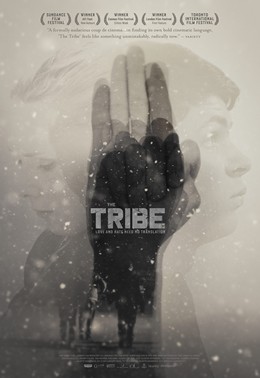
The Tribe (dir by Myroslav Slaboshpytskiy)

Anyone who says that they truly understand everything that happens in the disturbing Ukrainian film The Tribe is lying.  Taking place at a school for the deaf and exclusively cast with deaf actors, The Tribe is a film where everyone communicates in Ukrainian Sign Language and there are no subtitles.  However, the actors are often filmed with their back to the camera and occasionally, their hands are out of frame so, even if you do know Ukrainian Sign Language, there’s still going to be scenes where you have no idea what anyone is saying.

And it’s appropriate really.  The Tribe is a film about alienation and, by refusing to give us either an interpreter or subtitles, it forces the audience to feel the same alienation that the film’s characters have to deal with on a daily basis.  It quickly becomes obvious that these permanent outsiders have created their own society and the least of their concerns is whether the rest of the world understands it.

What can be learned about the film’s story largely comes from the body language of the actors and the audience’s own knowledge of gangster movies, which is what The Tribe basically is.  A new student at a boarding school for the deaf is recruited into a gang that deals drugs and pimps out two female students as prostitutes at a truck stop.  When the new student falls in love with one of the girls, it leads to some truly brutal acts of violence, all of which are somehow made more disturbing by the fact that they take place in total silence.

(The talkative criminals of most gangster films allow audiences to focus on something other than the violence.  When people talk about the opening of a film like Pulp Fiction, they talk about John Travolta and Samuel L. Jackson talking about Amsterdam.  They don’t focus on the guys getting gunned down in their apartment.  In The Tribe, there are no quips or one-liners before people are hurt and we are forced to pay more attention to the consequences of brutality.)

The Tribe is made up of only 34 shots.  The wide-angle lens forces us to consider these alienated characters against the barren Ukrainian landscape and the camera constantly moves with the characters, tracking them as closely as fate.  Intense and dream-lie, The Tribe is a hauntingly enigmatic film.  It’s not an easy film but it is a rewarding one.

Film Review: Suffragette (dir by Sarah Gavron)


Suffragette_poster

It’s funny (or perhaps not) when you think about it.  I’ve always taken my right to vote (and, in theory at least, have some say over how I’m governed) for granted.  Even before I turned 18 and officially registered, I never had any doubt that, some day, I would be able to vote for President and every other elected office.  (And, even before that, I voted in student council and mock presidential elections.)  Voting is something that I so take for granted that, even when I cast my first official vote in the 2004 Presidential election, it didn’t really mean much to me.  Given the choice between Bush and Kerry, I wrote in the name of Charles Jay, the candidate of the Personal Choice Party.  I knew nothing about Mr. Jay but I had come across his name online and I liked the idea of personal choice and I thought it would make for a funny story to tell all of my friends who were actually taking the election seriously.  (Even back then, I enjoyed annoying people who actually cared.)  Essentially, I threw my vote away and I did it without a second thought.

Of course, what I didn’t understand at that time was that the right to vote was something that many brave women had fought for, gone to prison for, and even died for.  If I had lived before 1920, I would not have had the right to vote and I certainly would not have had the opportunity to so casually toss my vote away.  Women in the U.S. did not win the right to vote until 1920.  But before everyone starts in with the usual “America is so backwards!” crap, consider this.  In Britain, women did not win the right to vote until 1928.  Women could not vote in France until 1944 and Switzerland waited until 1984!  Last year, women in Saudi Arabia voted for the first time.

The struggle of British women to gain equal rights under the law is the subject of the film Suffragette.  Maud Watts (played by Carey Mulligan, my generation’s Audrey Hepburn) is a laundress living in London in 1912.  She spends her day working for little money and for a male boss who, for years, has sexually harassed and abused the women working under him.  Unlike a lot of the women who work at the laundry, Maud has a stable home life.  She is a devoted mother and her husband, Sonny (Ben Whishaw), is supportive.

Or, at least, he seems to be at first.  Things chance once Maud gets involved in the suffragette movement.  It’s not just that her lecherous boss laughs at her for wanting to be treated equally,  That, we expect.  No, what is truly infuriating is to watch how quickly Sonny goes from being a loving husband to a monster, the type who forbids Maud from seeing her own son and then callously puts the boy up for adoption.  Confronted by his wife’s demand to be treated as his equal, Sonny reveals himself to be no better than the casual misogynists that Maud must deal with, on a daily basis, at work.  Raised on a diet of films where men come to their senses and justice (and love) somehow prevails, I kept expecting Sonny to see the error of his ways or for Maud to at least be reunited with her son.  Needless to say, none of that happened.  This is a film that never lets us forget the sacrifice involved in fighting for equal rights.

Instead, having lost everything that previously defined her life, Maud throws herself into the battle for women’s rights.  And, as Suffragette makes clear, that meant a lot more than just winning the right to vote.

It’s an inspiring story and both Carey Mulligan and Helena Bonham-Carter (who plays another suffragette) give powerful performances.  At the same time — and this is something that many critics need to understand and acknowledge — you can love a film for what it has to say while, at the same time, acknowledging that it doesn’t totally work as a piece of cinema.  Suffragette is not a perfect film and reviewing it, I found myself torn between praising the film’s message and criticizing director Sarah Gavron’s frequently uninspired cinematic technique.  (From a strictly cinematic point of view, Suffragette will play better on television than on a big movie screen.)

Perhaps for me, the film’s great weakness was casting Meryl Streep in the role of real-life activist Emmeline Pankhurst.  Ms. Pankhurst was the leader of the Suffragette movement and is an inspiring historical figure.  Unfortunately, as soon as Meryl shows up for her four-minute cameo, it becomes impossible to see her as being anyone other than Meryl Streep, a wealthy white woman who — unlike the real-life Ms. Pankhurst — will never be sent to prison for demanding the right to vote.  When Meryl shows up as Ms. Pankhurst, it takes the viewer out of the historical reality of the film.  You’re no longer watching a group of brave women risking their lives and demanding to be treated equally under the law.  Instead, you’re just watching a Meryl Streep cameo.

Throughout the film, Maud stays in a succession of safe houses and decrepit offices.  She always has a picture of Ms. Pankhurst near her and occasionally, she looks to it for strength and guidance.  However, since the picture of Ms. Pankhurst is really just a picture of Meryl Streep, it again serves to take the viewer out of the film.  Perhaps if Meryl Streep had more screen time, she would be able to get us to think of her as being Ms. Pankhurst but since she’s only onscreen for four minutes, she instead just serves to distract from the film’s message.

(Personally, I would have cast either Emma Thompson and Kristin Scott Thomas in the role of Ms. Pankhurst, two great actresses who would could have portrayed her charisma without being quite as distracting as Meryl Streep.)

As I said earlier, Suffragette is not a perfect film but it does teach an important lesson that needs to be learned, especially by those of us who occasionally take our rights for granted.  It’s a film that reminds us that years ago, brave women fought for everything that we have now and it’s a film that encourages us to keep fighting.  It’s not a perfect film but it’s a film that deserves to be seen.

2015 in Review: Lisa’s Picks For The 16 Worst Films Of The Year


leisureclasspic

There’s always a little bit of risk involved in making a list of the 16 worst films of the year.  People take movies very seriously and, often times, the crappiest of films will have very passionate (and very ignorant) defenders.  I was reminded of this in November when I wrote my review of The Leisure Class and I discovered that there actually are a few misguided dumbfug toadsuckers who actually enjoyed that movie.

But you know what?  Even with that risk, I always enjoy making out my worst-of-the-year list.  Let’s be honest: stupid people tend to like stupid movies.  And it’s important to point out that stupidity.  Only by pointing it out can we hope to defeat it.  I’m sure that some people will disagree with some of my picks.  After all, people initially disagreed with me when I announced that Man of Steel was the worst film of 2013. However, just 2 years later, most people now realize that I was right.  There were also people who insisted, in 2011, that Another Earth was a great movie.  Again, they now realize that they were wrong and I was right.

So, with all that in mind, here are my picks for the 16 worst films of 2015!  For the most part, 2015 was a pretty good year for cinema.  However, there were still a number of terrible films released and here’s 16 of them.

(Why 16?  Because Lisa doesn’t do odd numbers!)

16) Stockholm, Pennsylvania (dir by Nicholas Beckwith)

15) Aloha (dir by Cameron Crowe)

14) The Lazarus Effect (dir by David Gelb)

13) The Woman In Black 2: The Angel of Death (dir by Tom Harper)

12) The Stranger (dir by Guillermo Amoedo)

11) Get Hard (dir by Etan Coen)

10) Fantastic Four (dir by Josh Trank)

9) War Room (dir by Alex Kendrick)

8) Tommorrowland (dir by Brad Bird)

7) Jenny’s Wedding (dir by Mary Agnes Donoghue)

6) The Gallows (dir by Craig Lofing and Travis Cluff)

5) Tooken (dir by John Asher)

4) The Last House on Cemetery Lane (dir by Andrew Jones)

3) Vacation (dir by Jonathan Goldstein and John Francis Daley)

2) The Leisure Class (dir by Jason Mann)

And finally, it’s time to name the worst film of 2015!

And the winner is….

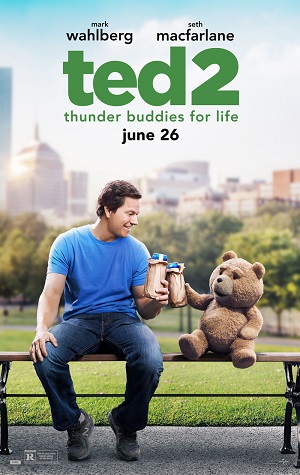
1) Ted 2 (dir by Seth McFarlane)

Ted_2_poster

(Feel free to also check out my picks for 2010, 2011, 2012, 2013, and 2014!)

Agree?  Disagree?  Leave a comment and let us know!  And if you disagree, please let me know what movie you think was worse than Ted 2!

Tomorrow, I will be posting my 10 favorite songs of 2015!

Previous Entries In The Best of 2015:
  1. Valerie Troutman’s 25 Best, Worst, and Gems I Saw in 2015
  2. Necromoonyeti’s Top 15 Metal Albums of 2015
  3. 2015 In Review: The Best of SyFy
  4. 2015 in Review: The Best of Lifetime

Playing Catch-Up With Two Documentaries: 3 1/2 Minutes 10 Bullets and The Wolfpack


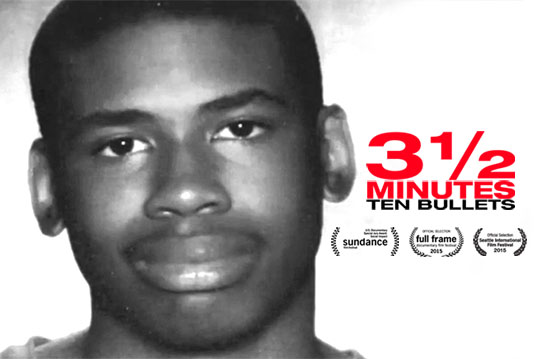
312 minutes

3 1/2 Minutes Ten Bullets (Dir by Marc Silver)

On November 23rd, 2012, an SUV pulled up to a gas station in Jacksonville, Florida.  Inside the SUV were four teenage boys, all of whom were black.  A car pulled up next to the SUV.  Inside the car was a man and his girlfriend.  They were both white.

The man was named Michael Dunn and reportedly, he was annoyed by the loud rap music that was being played in the SUV.  He told his girlfriend that he hated “thug music.”  He got out of his car and asked them to turn down the music.  What happened next depends on who you ask.  The driver of the SUV says that he turned down the music but then his friend, Jordan Davis, turned it back up.  Michael Dunn claims that Jordan Davis opened a door and pointed something at him that looked like a shotgun.

What everyone agree on is that Dunn grabbed his own gun and proceeded to fire it into the SUV, killing Jordan Davis.  Everyone also agrees that no shotgun was ever found in the SUV.

Michael Dunn was tried for the murder of Jordan Davis and the attempted murder of the other three teenagers.  Dunn claimed he was acting in self-defense.  He was “standing his ground.”  Dunn’s first murder trial ended in a mistrial.  His second trial ended with his conviction.

3 1/2 Minutes Ten Bullets was filmed during the two trials and it is infuriating.  Though Michael Dunn was not interviewed for the film, we do hear recordings of some of the calls he made to his girlfriend while he was in prison and it is chilling to listen to him as he continues to insist that he did nothing wrong.  Even when confronted by the fact that no shotgun was found in the SUV, Dunn continues to insist that the four teenagers had to have been armed.  After all, he says, they were listening to “thug music!”  If you had any doubt about the type of person Michael Dunn was before watching this documentary and hearing his voice, that doubt will be gone after watching 3 1/2 Minutes.

Even more importantly, 3 1/2 Minutes features extensive interviews with Jordan’s friends and family, all of whom express their sadness and anger with such articulation that it’s impossible not to get infuriated when Dunn and others casually dismisses them as being “thugs.”

3 1/2 Minutes is a powerful and moving documentary that should be seen by anyone who is interested in taking a serious look at race in America.

Wolfpack_film_poster

The Wolfpack (dir by Crystal Moselle)

I had mixed feelings about The Wolfpack.

On the one hand, The Wolfpack is a fascinating story about seven siblings who — after spending 14 years locked away in a New York apartment — finally start to enter the real world.  Everything that the siblings know about the world, they learned through the movies.  Inside the apartment, they obsessively recreate their favorite movies, with an elaborate production of Pulp Fiction being a definite highlight.  When they go out into the real world, they do so dressed like the characters from Reservoir Dogs.

(Except, of course, for the one time that one of them goes out while dressed like Michael Myers from Halloween.  That leads to some trouble with the authorities…)

Watching these brothers (and one sister) as they talked about their unconventional childhood and as they discovered what the world was like outside of their apartment, it was impossible for me not to be moved.  I was touched by their love for each other and I related to their obsession with the movies.  I hoped that they would survive in the outside world.  I was happy for them but, at the same time, I was scared for them.  I knew that their new opportunities would come with a certain loss of innocence.

At the same time, it frustrated me that less time was spent on the circumstances that led to them never leaving that apartment for 14 years.  Or, perhaps, I should say that it angered me that they didn’t seem to be as angry as I was.  The father was obviously mentally ill and, while it would be easy to just dismiss him as a monster, I couldn’t help but feel that the truth was perhaps a bit more complex.

The Wolfpack is a fascinating documentary and it’s currently available on Netflix!

Playing Catch-Up With The Lesser Films of 2015: Get Hard, Paul Blart: Mall Cop 2, Pixels, The Wedding Ringer


SPOILER ALERT!

One or more of the films reviewed below will appear on my list of the 16 Worst Films of 2015!  Can you guess which one(s)?

Get_Hard_film_poster

Get Hard (dir by Etan Cohen)

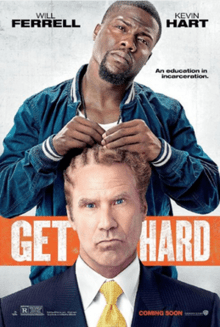
Will Ferrell is funny and Kevin Hart is funny and you would think that putting them together in one movie would be especially funny but … nope.  Get Hard, which I watched on HBO a few weeks ago, is incredibly not funny.  Ferrell plays a hedge fund manager who is convicted of fraud and embezzlement and it’s a sign of how haphazard this film is that I was never really sure whether he was supposed to be guilty or not.  Anyway, Ferrell is terrified of going to prison but fortunately, he runs into Kevin Hart.  Hart is playing the owner of a car wash here, a mild-mannered family man who simply wants to be able to afford to send his daughter to a good school.  However, Ferrell assumes that, since Hart is black, Hart must be an ex-con.

So, Ferrell hires Hart to teach him how to survive in prison and Hart agrees.  And, to be honest, this is not a terrible idea for an edgy satire but the film pulls it punches and never really exposes or challenges the racism that led to Ferrell hiring Hart in the first place.  Instead, it’s more interested in making homophobic jokes about prison rape (there’s a particularly long and unpleasant scene where Ferrell attempts to learn how to give a blow job that feels like it was lifted from a deservedly forgotten 90s film) and eventually, it devolves into a painfully predictable action film.

Paul_Blart_-_Mall_Cop_2_poster

Paul Blart: Mall Cop 2 (dir by Andy Fickman)

I know what someone out there is saying.

“YOU’VE NEVER EVEN SEEN THE FIRST PAUL BLART: MALL COP!!!  WHO THE HELL ARE YOU TO REVIEW THE SEQUEL!?”

Well, listen — it’s true.  I’ve never seen the first film and the only reason I watched the second one (on HBO at a friend’s house, which means that it literally cost me nothing) was because I had heard how terrible it was and I figured that I should see it before making out my list of the worst films of the year.  But, even with that in mind, I think I can still give this film a fair review.

(At the very least, I’ll try.  Dammit, I’ll try.)

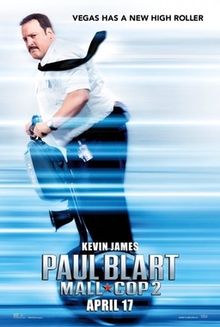
Paul Blart: Mall Cop 2 is one of those films that is so forgettable that you forget about it while you’re watching.  Kevin James plays Paul Blart, a mall security guard who goes to Las Vegas for a security guard convention and ends up getting involved in thwarting a big heist.  It’s a comedy, though I can’t think of a single time I laughed.  Paul Blart: Mall Cop 2 was not quite the abomination that I had been led to expect.  It was, in no way, comparable to Birdemic, April Rain, or Man of Steel.  Instead, it was just an incredibly empty and soulless film.  It was a zombie movie that existed only to eat money.

One thing that is frustrating about a film like Paul Blart: Mall Cop 2 is that Kevin James seems like he could actually survive appearing in a good film, if he could just get a chance to make one.  He’s likable and he’s got an everyman quality about him.  But, for now, he seems to be trapped in films where he either plays Paul Blart or he’s surrounded by talking animals.

PixelsOfficialPoster

Pixels (dir by Chris Columbus)

Speaking of Kevin James, he’s also in Pixels!  He plays William Cooper.  When he was a kid, he was obsessed with playing video games.  Now that he’s an adult, he’s the President of the United States!  And he still keeps in contact with his best friend from childhood, Sam.  Sam, needless to say, will never be President.  When Sam was a kid, he was traumatized when he lost a national video game championship.  Now that he’s an adult, he installs home-theater systems and he’s played by Adam Sandler…

When Earth is invaded, it turns out that the aliens are under the impression that video games are real!  So, they recreate a bunch of classic video game characters and send them off to do havoc.  Who better to stop them than the President and Sam?  And who better to help than a nerdy conspiracy theorist (Josh Gad) and Eddie Planet (Peter Dinklage), the same guy who cheated in order to defeat Sam at the video game championship….

If you’re thinking that sounds like way too much plot for a silly comedy about video games coming to life, you’re right.  Pixels has some cute moments (though, based on the comments and occasional laughter of the middle-aged people in the theater around me, I get the feeling that a lot of the film’s video game-themed humor was a bit too “before my time” for me to fully appreciate) but oh my God, it was such an unnecessarily busy movie.  The idea behind Pixels had some potential but the film refused to take advantage of it.

I’ve said this before and I always get some strange looks but I honestly do think that — if he would actually break out of his comfort zone and stop doing movies that mostly seem to be about finding an excuse to hang out with his friends — Adam Sandler could be an acceptable dramatic actor.  Check out his work in Punch-Drunk Love, Funny People, Reign Over Me, Spanglish, and even the first half of The Cobbler.  (Tarantino even wrote the role of Donny Donowitz in Inglourious Basterds with Sandler in mind.)  The fact that Sandler could be doing good work makes his continual bad work all the more frustrating and annoying.

TheWeddingRingerPoster

The Wedding Ringer (dir by Jeremy Garelick)

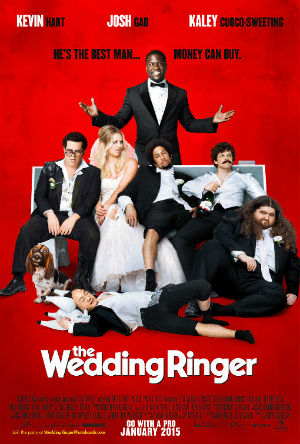
And speaking of Josh Gad…he’s also in The Wedding Ringer!  For that matter, so is Kevin Hart.  Hart plays a guy who, for a sizable fee, will pretend to the lifelong best friend (and best man) for grooms who do not have enough real friends to fill out a wedding party.  Hart refuses to get emotionally involved with his clients but that all changes when, despite himself, he becomes friends with Josh Gad, who is on the verge of getting married to Kaley Cuoco.

The Wedding Ringer got terrible reviews but it also was very popular with audiences and I imagine a lot of that had to do with the relationship between Hart and Gad.  Both of them give very sincere performances that elevate some otherwise unpromising material.  The Wedding Ringer wasn’t good (it’s predictable, it’s portrayal of Kaley Cuoco’s character verges on misogynistic) but, at the same time, it wasn’t as bad as it was made out to be.  In the end, it was pretty much a typical January film.

I'm so excited!  I'm so excited!  I'm so ... wait a minute, am I just here because this is a post about bad movies?

I’m so excited! I’m so excited! I’m so … wait a minute, am I just here because this is a post about bad movies?

Which of these four films will make my list of the worst 16 films of 2015?  The answer shall be revealed soon!


The Last Lifetime Film of 2015: The House Sitter (dir by Jim Issa)


There’s a very simple lesson at the heart of The House Sitter, a thriller which premiered on Lifetime on December 27th of 2015.  That lesson is be careful who you let stay in your house because she might be a psycho who steals your best bra and then has sex with your boyfriend.  It’s an important lesson, one that far too many of us learn too late.

In many ways, The House Sitter is your typical Lifetime obsession film.  An unbalanced young woman moves in with a family, learns their secrets, and then tries to destroy them.  As usual, only the daughter understands what is truly happening but, up until the final 30 minutes or so of the film, she can’t get anyone to believe her.  In fact, the psycho is so cunning that she manages to make the daughter look like she might be the crazy one.

It’s been done a thousand times in the past but, familiar as the plot may have been, The House Sitter was still a lot of fun and it’s largely due to two performances.

Ashley Dulaney plays Rebecca, a perky and almost excessively friendly house sitter who — when the family she is house sitting for returns early — subtly makes sure that everyone knows that she doesn’t have anywhere to go.

“Why not stay with us?” the family suggests.

Rebecca agrees, thanks them profusely, and soon starts to insidiously break up the family.  That Rebecca is a psycho is not a surprise.  What does distinguish her from other Lifetime psychos is just how cheerful she is about it.  Forever clad in pink and always smiling as she makes passive aggressive comments, Rebecca is somehow both totally over-the-top and totally believable at the same time.  Ashley Dulaney does a great job as Rebecca, making her into a marvel of insane efficiency.

However, with all due respect to both Rebecca and Ashley Dulaney, my favorite character in the film — and the one to whom I related — was Amy Marie (Shelby Young), the daughter who is the only member of the family not to be charmed by Rebecca.  I saw a lot of myself in Amy and it wasn’t just because we both share the same totally awesome middle name.  I also related to Amy’s “I don’t have time for this crap” attitude.  From the minute Amy appears in the movie, she’s annoyed.  She’s annoyed with her naive parents, she’s annoyed with Rebecca’s nonstop peppiness, and ultimately, she’s annoyed that someone’s trying to kill her.  Towards the end of the film, whenever Rebecca attempted to attack her, I kept expecting Amy to just roll her eyes and go, “Whatever.”  As played by Shelby Young, Amy was a Lifetime heroine to which even I could relate!

The House Sitter was the final Lifetime film to premiere in 2015!  It’s hard to believe that, starting with Damaged way back in January, I have managed to sit through and review every Lifetime film released last year.  But I did and I’ll be posting my picks for the best of the year later today!

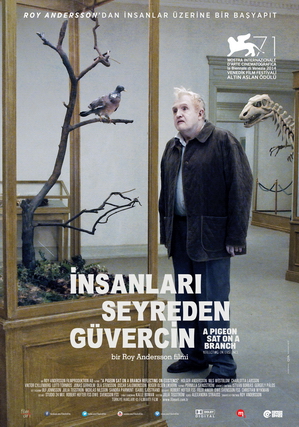
Lisa Plays Catch-Up: A Pigeon Sat On A Branch Reflecting On Existence (dir by Roy Andersson)


With 2015 now over, it’s time for me to both make out my end-of-the-year lists and take a look at the films that I saw last year that I have yet to get around to reviewing.  In other words, it’s time to play catch up!

A-pigeon-sat-on-a-branch-reflecting-on-existence-148-Afis

A Pigeon Sat On A Branch Reflecting On Existence is a Swedish film but, just from the title, you probably guessed that this was a European film.  After all, an American film would never have a title quite that long or passive.  We prefer our titles to be short and punchy and to the point: Taken, Spotlight, Die Hard, Concussion.  A Pigeon Sat On A Branch Reflection On Existence is a title that is full of ennui and existential considerations.

At first glance — and I write this from an American point of view — A Pigeon Sat On A Branch Reflection On Existence seems like almost a parody of an experimental European art film.  The performances are low-key and unemotional.  The humor is often dark, cynical, and deliberately obscure.  The film is full of long takes and medium shots, with the camera never moving.  This is a film that demands more than a little patience from the viewer.  I ended up loving it but I have a feeling that a lot of people will give up on the film after the first 15 minutes or so.

Believe it or not, this is not a film about a pigeon.  Instead, it’s a collection of small and increasingly absurd scenes, some of which are connected and some of which are not.  Some characters appear in more than one scene and some do not.  The two most prominent characters are two dour-faced salesman of novelty items.  “We want to help people have fun,” they repeatedly say in the flattest possible tone.  They sell vampire teeth and a mask that they call Uncle One Tooth.  (Whenever they pull out the Uncle One Tooth mask, it leads to someone screaming in horror.)  They also sell bags of laughter, little bags that laugh when you open them and then keep laughing until they suddenly stop.  One of the salesman is feeling depressed and no longer wants to keep selling novelties.  The other salesman has to continually beg him to leave his apartment.

At one point, the two salesman enter a small diner and you can’t help but notice that, looking out the front windows, the diner appears to be sitting in the middle of an apocalyptic wasteland.  Eventually, a group of 18th century soldiers march by and decide to enter the diner.  They are followed by their leader, a preening martinet on a horse who orders that all women leave the diner.  Later, we return to the diner and so do the soldiers.  They’ve obviously lost whatever battle they were fighting but they still stand at attention when the horse reenters the diner, mounted by their dying (or possibly dead) leader.

And it’s all very odd but yet also very fascinating.  The film is so deadpan and so unashamedly absurd in its humor that it’s impossible not to enjoy.  Or at least, that’s the case up until the final 10 minutes or so, at which point the audience is confronted by a crowd of obviously wealthy people casually watching a group of slaves being horrifically burned alive.

What does all this mean?  I think a better question would be, “Does this mean anything at all?”  That said, A Pigeon Sat On A Branch Reflecting On Existence is a fascinating film for audiences that are willing to take a chance on something different.

It’s also currently available on Netflix!

I watched it so you don’t have to: “My Boyfriend’s Back” (1993)


I watched it so you don’t have to: “My Boyfriend’s Back” (1993)

My boyfriend is back


“He died for me, He came back from the dead for me, He ate somebody for me.”

I’ll get back to that, but let’s get the technicalities out of the way first!

Stars:

Andrew Lowery as Johnny Dingle (Buffy The Vampire Slayer, Nothing, Clerks)

Traci Lind as Missy McCloud (Voyager, Fame, 21 Jump Street)

Minor roles by:

Philip Seymour Hoffman, Cloris Leachman, Matthew McConaughey, Renée Zellweger (You might have heard of them.)

Directed by:

Bob Balaban (Nurse Jackie, The Twilight Zone, plus much more)

Written by:

Dean Lorey (Arrested Development, ‘Til Death)

Plot:

To impress his wanna be girlfriend (Lind), Johnny (Lowery) decides to stage a convenience store robbery. In that staging he is killed and comes back as a zombie. Just before dying, Johnny asked Missy to the prom and she accepts.

As Johnny comes back as a zombie, he tries to integrate back into society. Facing anti-zombie discrimination. Missy finally agrees to got to prom with him in his zombie state. Going to the prom, Johnny finally disitergrates into his un-dead form.

While he made it to Heaven, he was let known that his original death was a mistake and he is given another chance. Put back in the point of the robbery, and knowing he was never meant to die, Johnny dives infront of the bullet. The bullet, caught by a locket he made of Missy and himself in the first grade, he is saved. Missy and Johnny go to the prom and (presumably) live happily ever after.

Review:

Honestly, going in, I really wanted to hate this movie. It has all the cheesy plot lines. Boy loves girl, boy dies for girl, boy comes back for girl, she ends up loving him. But if I am going to be honest, this movie was really cute. And to get back to my original quote, yeah, that worked!

Since “My Boyfriend’s Back” is not in public domain, I can’t give you a link to the entire movie, but here is a trailer if you like! 🙂