Horror Miniseries Review: Crystal Lake (dir by Michael Lennox, Celine Held, and Quyen Tran)


Crystal Lake is a thousand times better than Carrie.

Whoops. Did I say a thousand? I meant to say a million.

I say this despite the fact that Crystal Lake pretty much falls apart during its final two episodes. If the first six episodes constitute an enjoyable and, at times, even loving homage to the Friday the 13th films, the final two episodes go off the rails by giving Jason Voorhees, the epitome of an old-school slasher villain and the symbol of unelevated horror, a very 21st-century, American Horror Story-style origin story. It’s a thoroughly unnecessary addition to the Jason saga, one that exists to plug the plot holes that most Friday the 13th fans have always been happy to ignore. It’s just as bad as Jason Goes to Hell’s insistence that Jason was actually a space slug who could possess people. Personally, I think that we should do what true Friday the 13th fans always do whenever we come across something that doesn’t work and just ignore it.

Even taking that into account, Crystal Lake is still infinitely better than Carrie.

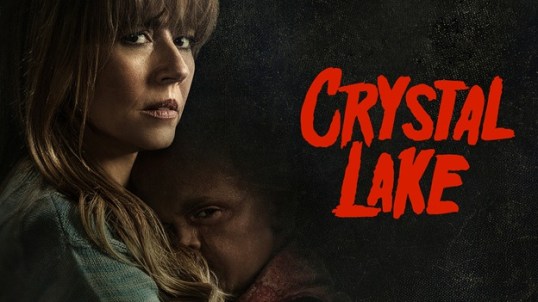
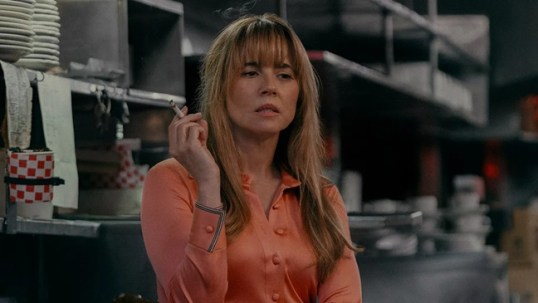
The difference between Crystal Lake and Carrie is that Crystal Lake isn’t trying to be something that it isn’t. Crystal Lake isn’t ashamed of being a pulpy, sordid, and rather bloody horror miniseries. Carrie was made to win Emmys and critical plaudits. Crystal Lake was made to make you put your hands over your eyes whenever Pamela Voorhees (Linda Cardellini) hacks someone’s face off. Crystal Lake fully embraces the horror. Crystal Lake obviously loves the Friday the 13th films, with all of their flaws. Carrie is a series made by and for people who think that they’re better than the horror genre. Crystal Lake is not.

Crystal Lake serves as a prequel to the first Friday the 13th film. Pamela Voorhees is the cook at Camp Crystal Lake and, in the first episode, her son, Jason, disappears while swimming. The camp counselors who were supposed to be watching him were making love. Pamela snaps. She refuses to accept that her son has drowned. She watches angrily as the town moves on. When she hears that the Christys are going to reopen the camp, she is not pleased. That said, she’s snapped long before that. Unlike Carrie, which went out of its way to absolve the character of any sort of responsibility, Crystal Lake does not shy away from presenting Pamela as an unhinged killer. She kills two mysterious men who show up at her house. She kills the abusive mother of Grace (Gwendolyn Sundstrom), who was Jason’s only friend at camp. When a group of Marxist hippies show up and try to convince the now-orphaned Grace to run away with them, Pamela goes after them as well. Pamela kills a lot of people in this miniseries, but she remains a compelling character because of Linda Cardellini’s wonderful performance in the lead role. Her love for Jason is real, and it’s easy to understand why she would feel such rage at a town that is pretending he didn’t exist or why she would have no sympathy for a mother who abuses her child. Cardellini gives such a strong performance that it’s disappointing that the final two episodes let the series down.

As someone who has seen all of the Friday the 13th films, I appreciated how carefully and exactly Crystal Lake recreated the feel and the visuals of the first two entries. Its version of Crystal Lake looks identical to the one that poor Annie discovered during the first film. Even the minor characters are made up to almost exactly resemble the actors who played them in the first film. I immediately knew who was supposed to be Enos. I knew who was supposed to be the waitress with whom Steve Christy would eventually share one of his final conversations. (Steve Christy is seen a few times in Crystal Lake, as a very ’70s teenager.) A wonderful actor named Nick Cordileone played the role of “Crazy” Ralph and, whenever he was on screen, I could immediately see him becoming the character that Walt Gorney played in the first two films. A lot of love and care went into recreating the town of Crystal Lake and the camp. The series does, admittedly, move things up chronologically. In the first film, Jason disappeared in the ’50s. In the series, it happens in the ’70s. That’s no big deal, though. The show has a lot of fun both recreating the ’70s and poking fun at the decade’s unique culture. One need only watch the scene where Pam is dragged to a seminar given by a self-consciously hip self-help guru to understand why the decade gave rise to the unapologetically cynical slasher boom of the ’80s.

Now again, the Jason origin story that is presented in the seventh episode is a problem. And if Crystal Lake returns for a second season, I sincerely hope that it will be ignored in much the same way that the franchise has traditionally ignored its mistakes. If it doesn’t, it’s not going to bode will for the future of this series. Still, flaws and all, Crystal Lake is an enjoyably sordid and bloody show. It makes no apologies for being what it is. Other horror shows could stand to learn from it.
Bonus Horror On The Lens: Not Of This Earth (dir by Roger Corman)


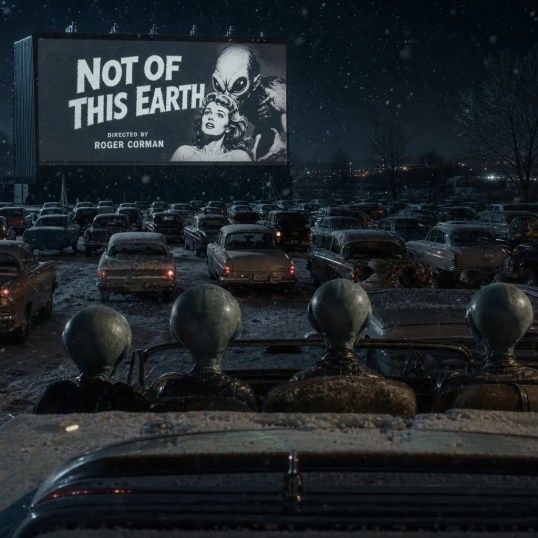
Today, we have a bonus horror on the Lens, the 1957 Roger Corman-directed, sci-fi “epic,” Not of this Earth.

Paul Johnson (Paul Birch) may seems like a strange character, with his stilted way of speaking and his sunglasses and his overdramatic reaction to any and all loud noises.  Paul could us be an eccentric.  Or, he could be …. NOT OF THIS EARTH!  Actually, his habit of draining people of their blood and sending weird, umbrella-like creatures out to attack his enemies would seem to suggest that the latter is probably true.

Listen, it’s not easy being a blood-sucking alien.  I mean, sure, there’s always seems to be people stupid enough to show up at your mansion so that you can drain their bodies.  Paul is lucky that he doesn’t exactly seem to be surrounded by brain surgeons.  But sometimes, things happen.  For instance, someone might show up from your home planet and demand an immediate transfusion!  What is an alien to do?

Watch this low-budget but undeniably entertaining film to find out!  And be sure to especially keep an eye out for the great Dick Miller, who reportedly improvised his role as a vacuum cleaner salesman.  (Before going into acting, Miller actually did sell vacuum cleaners door-to-door.)


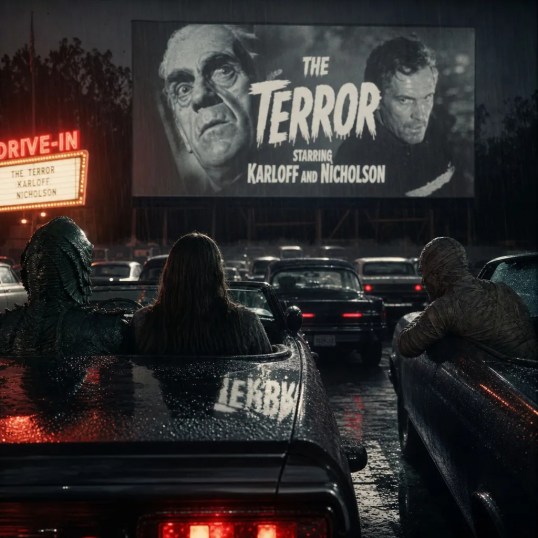
Horror On The Lens: The Terror (dir by Roger Corman, et al)


Today, we’ve got a treat!

Who wouldn’t love to see a movie where a youngish Jack Nicholson played a French soldier who, while searching for a mysterious woman, comes across a castle that’s inhabited by both Dick Miller and Boris Karloff?

In Roger Corman’s 1963 film The Terror, New Jersey-accented Jack Nicholson is the least believable 19th century French soldier ever.  However, it’s still interesting to watch him before he became a cinematic icon.  His performance here is rather earnest, with little of the sarcasm that would later become his trademark.  Boris Karloff is, as usual, great and familiar Corman actor Dick Miller gets a much larger role than usual.  Pay attention to the actress playing the mysterious woman.  That’s Sandra Knight who, at the time of filming, was married to Jack Nicholson.

Reportedly, The Terror was one of those films that Corman made because he still had the sets from his much more acclaimed film version of The Raven.  The script was never finished, the story was made up as filming moved alone, and no less than five directors shot different parts of this 81 minute movie.  Boris Karloff’s scenes were filmed first, with the other actors performing in front of a body double during their scenes.  Among the many directors who filmed bits and pieces of The Terror: Roger Corman, Jack Hill, Monte Hellman, Francis Ford Coppola, Coppola’s roommate Dennis Jakob, and even Jack Nicholson himself!  (Despite this number of directors involved, Corman received the sole directorial credit.)  Perhaps not surprisingly, the final film is a total mess but it does have a definite historical value.

(In typical Corman fashion, scenes from The Terror were later used in the 1968 film, Targets.  In that film, Karloff plays a version of himself, an aging horror actor who watches The Terror and dismisses it as being “terrible.”)

Check out The Terror below!

Live Tweet Alert: Join #FridayNightFlix for Indiana Jones And The Temple of Doom!


As some of our regular readers undoubtedly know, I am involved in a few weekly watch parties.  On Twitter, I host #FridayNightFlix every Friday and I co-host #ScarySocial on Saturday.  On Mastodon, I am one of the five hosts of #MondayActionMovie!  Every week, we get together.  We watch a movie.  We tweet our way through it.

Tonight, at 10 pm et, I will be hosting #FridayNightFlix!  Join us for Indiana Jones and the Temple of Doom!

If you want to join us this Friday, just hop onto twitter, find Indiana Jones and the Temple of Doom on Prime, start the movie at 10 pm et, and use the #FridayNightFlix hashtag!  I’ll be there happily tweeting.  It’s a friendly group and welcoming of newcomers so don’t be shy.

See you there!


Horror Song of the Day: Profondo Rosso by Goblin


Today’s horror song of the day comes from Dario Argento’s Deep Red!

Deep Red features the first collaboration between Argento and Goblin and the score remains a classic and one that I listen to every October.

Here’s Goblin performing Profondo Rosso on Italian television in 1975.

Horror Scenes That I Love: Godzilla vs. Megalon


For today’s Horror Scene That I Love, let’s take a minute or two to show some respect to one of the world’s greatest (and longest-lived) film stars, Godzilla!  Whether he’s attacking humanity as the literal representation of atomic age anxiety or if he’s saving Earth from a bunch of aliens, Godzilla has always been a superstar.

In this scene from 1973’s Godzilla vs. Megalon, Godzilla shows just how much of a star he is by taking a stand against bullying and saving his friend, Jet Jaguar.  In this scene, Godzilla shows that he was an anti-bullying activist even before it was cool.  Megalon and his friend thought they could just taunt poor old Jet Jaguar.  Not as long as Godzilla’s around!

4 Shots From 4 Horror Films: Special Kevin S. Tenney Edition


4 Shots From 4 Films is just what it says it is, 4 shots from 4 of our favorite films. As opposed to the reviews and recaps that we usually post, 4 Shots From 4 Films lets the visuals do the talking!

Today, we wish a happy birthday to Kevin S. Tenney, director of some of most best loved horror films of the 80s and the 90s!  It’s time for….

4 Shots From 4 Kevin S. Tenney Films

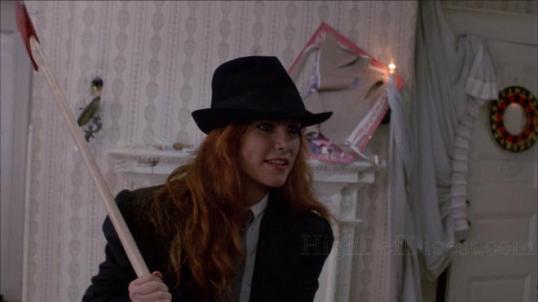
Witchboard (1986, dir by Kevin S. Tenney, DP: Roy Wanger)

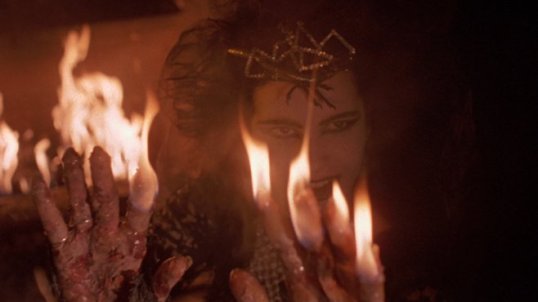
Night of the Demons (1988, dir by Kevin S. Tenney, DP: David Lewis)

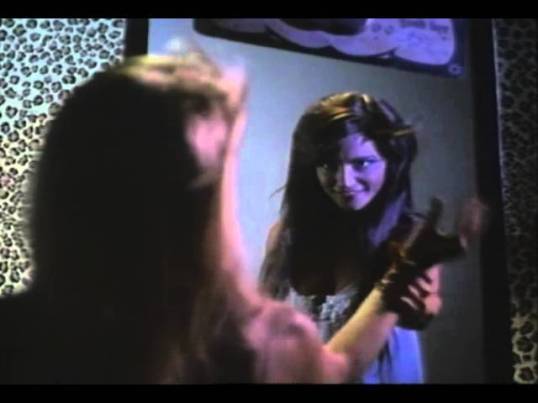
Witchboard 2: The Devil’s Doorway (1993, dir by Kevin S. Tenney, DP: David Lewis)

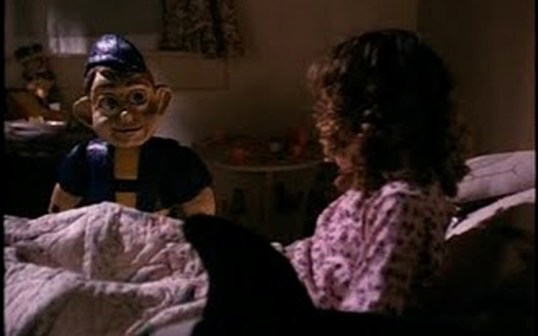
Pinnochio’s Revenge (1996, dir by Kevin S. Tenney, DP: Eric Anderson)

October Positivity: One Nation Under God (dir by Lisa Arnold)


In 2o2o’s One Nation Under God, David Gutierrez (Isaak Presley) is a new student at an exclusive private school.  (He was selected via a lottery of intelligent but economically disadvantaged kids.)  On the first day of school, David makes a point of saying “One nation under God,” while reciting the Pledge of Allegiance.  His classmate, Gordon (Thomas Kasp), corners him outside of class and tells him that he’s not allowed to say that in school.  Since Gordon’s father happens to Headmaster Kingsley (Casper Van Dien), David’s first day is not off to a good start.

However, the debate coach, Mr. Truman (Kevin Sorbo), hears about what David said and decides that David should definitely be on the debate team.  The topic for the semester is whether or not “God should be in schools.”  Gordon is already prepared to argue the negative.  Can David argue the positive?

But first, presidential candidate Sen. Viera (Antonio Sabato, Jr.) stops by the school for an assembly.  He’s a graduate from the school and it’s felt that appearing there will be a good PR move for him.  He’s accompanied by one of his strongest supporters, former football player and U.S. Senate candidate Herschel Walker.  When David stands up and asks Viera about his own beliefs, Viera stumbles over the question and his aides quickly end the assembly.

Stunned by David’s question and ashamed of his own inability to answer it, Sen. Viera decides to make his religious faith the center of his campaign.  His wife is happy but his campaign aides are freaking out.  They’ve got a big debate coming up with Governor Palabra (Summer Selby) and they just know that she’s going to accuse Viera of wanting to legislate morality.

Meanwhile, David has his own debate to prepare for.  Fearful that Gordon will lose the debate and also whatever chance he may have to attend an Ivy League college, the Headmaster plans to bribe David to lose.  David’s single mother could really use the money. Will David sell out or will he stick to his beliefs?

As you can see, there’s a lot going on in this movie but, ultimately, every subplot serves the same purpose, which is to tick off any liberal who happens to watch it.  Sure, there’s a lot of talk about the importance of faith and also the importance of freedom of speech but the main purpose of this movie is to upset liberal viewers.  Judging from some of the reviews of this film that were posted on Letterboxd, the film appears to have accomplished that.  My personal opinion is that, if you spend more than an hour composing an angry review about a relatively obscure film starring Kevin Sorbo, you’ve already lost the war.   I always find the frenzied reaction to these type of films to be a bit amusing because they’re really not any more heavy-handed or one-sided than the typical mainstream film.  It’s just they’re attacking from the right instead of the left.

And make no mistake, One Nation Under God is heavy-handed and one-sided.  Nothing about its portrayal of the inner workings of a major presidential campaign feels authentic and quite a few of its subplots fall flat.  That said, I actually liked some of the songs on the soundtrack and the film itself looked like a real movie, which definitely set this film apart from a lot of other faith-based films.  Kevin Sorbo is properly authoritative as the debate coach.  Casper van Dien is properly villainous as the evil Headmaster.  In the end, though, the main purpose of the film is to annoy liberals and it accomplishes that goal.

Late Night Retro Television Review: Hunter 2.6 “Rape and Revenge: Part 1”


Welcome to Late Night Retro Television Reviews, a feature where we review some of our favorite and least favorite shows of the past!  On Thursdays, I will be reviewing Hunter, which aired on NBC from 1984 to 1991.  The entire show is currently streaming on Tubi and several other services!

This week’s episode is a difficult one.

Episode 2.6 “Rape and Revenge: Part 1”

(Dir by Gary Winter, originally aired on November 2nd, 1985)

I nearly didn’t watch this episode.

When I saw the title of this episode and then read the plot description on the IMDb, my first instinct was to try to find an excuse to get out of having to watch and review it.  The plot description read: McCall is raped by a visiting diplomat and her colleague’s hands are tied when he claims diplomatic immunity.  Nearly every episode of Hunter so far has featured McCall getting into some sort of trouble.  She’s been kidnapped countless times.  She’s been shot at least three times.  She’s been in more than a few fights.  In the past, that didn’t bother me because no one is going to mistake Hunter for a realistic show.  But when I read what was going to happen to her in this week’s episode, I immediately imagined that the show would handle it in the worst and most insensitive way possible.

Still, I watched the episode because I’m a completist.  And you know what?  I was wrong.

This episode opens with Hunter and McCall investigating the discovery of a dead woman at the Curaguayan Consulate in Los Angeles.  (Curaguaya is a fictional country in South America.)  One of the consuls, Raoul Marino (Richard Yniguez), immediately starts hitting on McCall, despite the fact that she’s conducting a police investigation.  Later, Raoul sends three different flower deliveries to McCall’s house.  When Raoul then shows up at McCall’s house, she tells him to leave.  He rapes her and then flees.  McCall calls Hunter, who rushes over to her house and then takes her to the hospital.

Because he has diplomatic immunity, Raoul thinks that he can get away with rape.  He also thinks that he can get away with shooting Hunter in the shoulder when the latter confronts him.   And it turns out that Raoul is correct.  With both McCall and Hunter temporarily out of action, he boards a plane to Curaguaya and returns home.

To the show’s credit, it handles McCall’s rape sensitively.  Stepfanie Kramer gives a strong performance as McCall.  The scenes at the hospital, where the still bruised McCall is examined by doctors and investigators, capture the fact that the trauma of being raped doesn’t just end with the act.  My fear was that this episode would have McCall magically recover at the end of the hour.  It didn’t.  Instead, we watch as McCall goes through therapy and as she slowly reaches the point where she feels that she can return to work.  But even when she does return, the pain and the trauma are still there.  This episode doesn’t simplify rape or use it as just another melodramatic plot twist.  For that, it deserves a lot of credit.

(My only real issue that, during a recovery montage, the scenes of McCall in therapy are mixed with scenes of Hunter recovering from being shot in the shoulder.  I feel like McCall deserved to have that montage to herself.)

This is a two-part episode.  The first hour ended with McCall realizing that Hunter had traveled down to San Pablo, Curaguay to get revenge on Raoul.  (Hunter previously told McCall that he was taking a few days off to go fishing.)  McCall then made a reservation on the next flight to San Pablo.  The story concludes next week!

Bonus Horror on TV: Baywatch Nights 2.12 “Frozen Out Of Time” (dir by Rick Jacobson)


I share this 1997 episode of Baywatch Nights every October because it’s just wonderfully strange.  Two 900 year-old Vikings have been unfrozen and are causing chaos in Los Angeles!  Who can stop them?

David Hasselhoff, of course!

(You can read my review of this beautifully odd episode here.  Valhalla!)