In the late 1960s, television coverage of football is dull and boring. The games are played during the day and the announcers have no personality. An executive at ABC named Roone Arledge (John Heard) changes all of that by convincing the NFL to start scheduling games for Monday night. Arledge launches Monday NightFootball, a broadcast that puts the viewers at home in the stadium. Arledge explains that he wants cameras everywhere. He wants the sidelines and the stands to be mic’d up. And he wants announcers who will make the game interesting. He picks an experienced radio announcer named Keith Jackson (Shuler Hensley), former Dallas quarterback Don Meredith (Brad Beyer), and finally an egocentric, loquacious, and opinionated sports reporter named Howard Cosell (John Turturro). The straight-laced Jackson only lasts a season and finds himself overshadowed by Meredith’s good ol’ boy charisma and Cosell’s eccentricities. Arledge brings in Frank Gifford (Kevin Anderson) as a replacement and changes both sports and television forever. Monday night football becomes huge but so do the egos of the men involved.
Based on a non-fiction book by Bill Carter, MondayNightMayhem is a look at the early days of Monday Night Football, with most of the attention being given to the mercurial Howard Cosell. As a work of history, it’s pretty shallow. There’s a lot of montages set to familiar 70s tunes and there’s plenty of familiar stock footage. Beyer and Anderson do adequate impersonations of Meredith and Gifford without really digging for much under the surface. MondayNightMayhem is dominated by John Turturro’s performance as Howard Cosell. Turturro doesn’t look like Cosell and he really doesn’t sound that much like Cosell but he does capture the mix of arrogance and bitterness that made Howard Cosell such a memorable and controversial announcer. In its breezy manner, the film hits all the well-know points of Cosell’s life and career, from defending Mohammad Ali to considering a run for the Senate to trying to reinvent himself as a variety show host to the controversy when he was though to have uttered a racial slur during one of the games. I wish the film had a bit more depth but John Turturro’s committed but bizarre performance keeps it watchable.
If you grew up in the 80s or 90s, you probably had at least one friend whose father kept a pool table in the garage. This movie was probably the reason why.
Fast Eddie Felson (Paul Newman) was once The Hustler, the legendary pool player who recovered from having his fingers broken with a bowling ball and went on to defeat the legendary Minnesota Fats. That was a long time ago. Now, Fast Eddie is a slick liquor salesman in Chicago. Eddie stills hangs out at the pool halls, despite his bad memories of the game. When he sees a cocky young player named Vincent (Tom Cruise) and his girlfriend Carmen (Mary Elizabeth Mastrantonio), he takes them under his wing and teaches them how to hustle. It’s not always easy because Vincent doesn’t like to lose, even if it means a chance to score an even bigger victory later on. Eddie finds himself being drawn back into the game, even as he starts to wonder who is hustling who.
I always forget that TheColorofMoney is a Martin Scorsese films. It’s a film that Scorsese made at a time when he had a reputation for only being able to make art films that critics loved but audiences stayed away from. After the box office failure of The King of Comedy and his abortive first attempt to make The Last Temptation of Christ, Scorsese took The Color of Money to prove that he could work with a studio. This is a Disney Scorsese film, with his signature camera moves but not much of his religious torment. Even if it’s not one of his personal films, Scorsese makes pool look exciting, a battle that is as much about psychology as physicality. Watching TheColorofMoney, you can smell the chalk on the tip of the pool cue.
Scorsese brings the seedy pool halls to life but it’s Paul Newman’s performance that dominates. TheColorofMoney won Newman his first and only Oscar and he deserved it. Newman had first played Fast Eddie Felson in 1961, in TheHustler. Returning to the role twenty-five years later allowed Newman to show what would eventually happen to the angry young men that he played in the 60s. Eddie has grown up and he’s got a comfortable life but he’s not content. He finally has stability but he misses the game. He needs the thrill of the hustle. Newman is at his best in TheColorofMoney, building on TheHustler but also revealing new sides of Eddie Felson.
Newman is so good that Tom Cruise often gets overlooked but both Cruise and Mastrantonio hold their own against Paul Newman. Cruise especially does a good job as Vincent, playing him as someone who is too cocky for his own good but also not as dumb as he looks. Just when you think you’ve got Vincent figured out, Cruise surprises you. TheColorof Money came out the same year as TopGun and Cruise’s Vincent feels like a commentary on the talented, troubled, but cocky characters that Cruise was playing at that time. Cruise, Scorsese, and Newman make a good team in this more-than-worthy sequel.
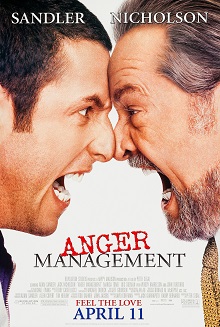
Dave (Adam Sandler), a timid man who has never gotten over being humiliated when he was a teenager, is sentenced to anger management after a slight argument on a plane is blown out of proportion by a taser-wielding shy marshal. His therapist is Dr. Buddy Rydell (Jack Nicholson), whose techniques only seem to exacerbate Dave’s growing anger. Among Dr. Rydell’s methods are giving Dave an unstable “anger buddy” named Chuck (John Turturro), ordering Dave to get revenge on the guy (John C. Reilly) who humiliated on his as a teenager, and also encouraging Dave to cheat on his girlfriend Linda (Maria Tomei) with a woman (Heather Graham) that they meet at bar. Dave goes from timid to angry, Dr. Rydell starts dating Linda, and the whole thing is wrapped up with a totally implausible ending.
The idea of the star of Chinatown and Five Easy Pieces co-starring in an Adam Sandler comedy sounds like it should be exhibit #1 when it comes to talking about the decline of American cinema but I’ve always liked Anger Management. Casting Jack Nicholson as the seemingly insane Dr. Rydell was an inspired choice and Nicholson gives a real performance in the film as opposed to just coasting on his already-established persona. Anger Management came out a year after Adam Sandler’s first dramatic film, Punch-Drunk Love, and, even though Anger Management is a raunchy comedy from the start to finish, Sandler’s performance actually finds the reality in Dave’s situation. Sandler plays Dave as being someone who is sincerely trying his best to get through his court-mandated anger management without losing control. Nicholson and Sandler make for a surprisingly good team.
Of course, it’s an Adam Sandler comedy so it’s not for everyone. The humor is often crude and the film’s final twist is so ridiculous that it can actually leave you feeling like you might need anger management. But Anger Management does show how Jack Nicholson improves anything that he’s involved with and it also shows that Adam Sandler can act when he feels like it. Anger Management also gave us the meme of Jack Nicholson nodding his approval, meaning the film and the performance will live forever.
Some people love money so much that they make their own.
In 1985’s To Live And Die In L.A., Williem DaFoe is magnetically evil as Rick Masters, a genius at counterfeiting who has gotten rich by selling other people fake money. The film features a lengthy sequence showing how Masters makes his money and the viewer really is left feeling as if they’ve just watched an artist at work. Masters has a talent and he’s a professional. He’s good at what he does. Unfortunately, he’s also a sociopath who is willing to kill just about anyone who he comes across. There have been a lot of movies made about sympathetic counterfeiters. They’re often portrayed as being quirky and rather likable individuals. This is not one of those films. DaFoe’s charisma makes it impossible to look away from Rick but he’s still not someone you would ever want to have to deal with for a prolonged period of time. One gets the feeling that Rick eventually kills everyone that he does business with.
Secret Service agents Richard Chance (William Petersen) and John Vukovich (John Pankow) are investigating Masters. They’re a classic crime movie partnership. Vukovich is youngish and, when we first meet him, goes by-the-book. Chance is a veteran member of the Secret Service, an impulsive loose cannon whose last partner was killed by Masters. Chance is now obsessed with taking Masters down and he’s willing to do whatever it takes. If that means threatening his lover and informant, the recently paroled Ruth (Darlanne Fluegel), so be it. If that means defying the lawyers (represented by Dean Stockwell), so be it. If that means committing crimes himself and nearly getting Vukovich killed in the process, so be it. At first, Vukovich is horrified by Chance’s techniques but, as the film progresses, Vukovich comes to embrace Chance’s philosophy of doing whatever it takes.
What sets To Live and Die in L.A. apart from some other films is that, even as it concludes, it leaves us uncertain as to whether or not Chance and Vukovich’s actions were really worth it. This is not a standard cops-vs-robbers film. This is a William Friedkin film and he brings the same moral ambiguity that distinguished The French Connection to this film’s portrait of the Secret Service. (When Chance isn’t chasing after a counterfeiter, he’s foiling an assassination attempt against the president.)
Like The French Connection, To Live and Die In L.A. features an pulse-pounding car chase, one that occurs as Chance and Vukovich make an escape from robbing a man who they believe to be a criminal. (The man turns out to have been an FBI agent.) This chase involves Chance and Vukovich driving the wrong way down a crowded freeway, desperately tying not to crash into any of the cars that are swerving out of the way. It’s such an exciting scene that it’s easy to forget that Chance and Vukovich are actually escaping from committing a crime. In The French Connection, Gene Hackman was chasing the man who tried to assassinate him. In To Love and Die In L.A., Chance is fleeing the consequences of his own actions.
To Live and Die In L.A. holds up well. DaFoe and Petersen both give charismatic performance but, for me, it really is John Pankow who carries the film. Vukovich’s transformation from being a straight-laced member of law enforcement to being a doppelganger of his partner is both exciting and a little disturbing, To Live and Die In L.A. is a crime film that leaves you wondering how far one can go battling the bad guys before becoming one of them.
Welcome to Retro Television Reviews, a feature where we review some of our favorite and least favorite shows of the past! On Mondays, I will be reviewing Miami Vice, which ran on NBC from 1984 to 1989. The entire show is currently streaming on Tubi!
This week, Pam Grier and John Turturro show up in Miami!
Episode 1.16 “Rites of Passage”
(Dir by David Anspaugh, originally aired on February 8th, 1985)
This week’s episode of Miami Vice opens with a 5-minute mini-movie. Before we even get to the opening credits, we have watched as young and innocent Diane Gordon (Terry Ferman) arrives in Miami from New York, takes her first walk on a Florida beach, has a “chance” meeting with a smooth-talking guy named Lile (David Thornton), and ends up at a party being held at a mansion belonging to David Traynor (a young John Turturro). Traynor tells Diane that he runs a modeling agency and that he would love to put her under contract.
It’s a stylish and rather brave opening. For five minutes, we don’t see or even hear about any of the regular characters. Instead, we’re introduced to world where image is everything, from the bodies on the beach to Traynor’s art deco mansion to the beautiful women who have been paid for by considerably less attractive men. In those five minutes, Diane wins our sympathy and we also see how she (and so many others) have fallen into the trap set by the David Traynors of the world. For those five minutes, we are reminded that this is a show about more than Sonny Crockett and Ricardo Tubbs. It’s about more than even Miami. This is a show about America.
After the opening credits, we watch as the police retrieve the body of one of Traynor’s girls from a lagoon. She committed suicide. In the crowd watching is Diane’s sister, Valerie (played by the legendary Pam Grier). Valerie is a New York cop. When she goes to the Vice Squad to ask for Castillio’s help in searching for her sister, we learn that she is also Tubbs’s former (and soon current) lover.
In many ways, the rest of this episode is traditional Miami Vice. Zito and Switek provide some comic relief when they disguise themselves as exterminators and invade one of Traynor’s parties. Crockett and Tubbs once again go undercover as Burnett and Cooper, infiltrating Traynor’s mansion so that they can rescue Diane. Diane has been so brainwashed by Traynor and Lile that, even after she’s been reunited with her sister, she still can’t bring herself to admit that Traynor was using her. She calls Traynor and tells him that she’s decided to go back to New York City. In a montage that is rather creepily scored to Foreigner’s I Want To Know What Love Is, scenes of Valerie and Tubbs making love are mixed with scenes of Lile giving Diane an intentional drug overdose.
Technically, this is a Tubbs episode. For once, of the two main detectives, Tubbs is the one who has a personal reason for wanting to take Traynor down while it falls to Crockett to deal with Castillo’s withering stare of concern. That said, Rites of Passage is Pam Grier’s show all the way. From the minute that Grier shows up, she controls every scene in which she appears. Just as in Coffy, Grier plays an avenging angel. This episode ends, as Miami Vice often did, with a shoot out but this time, it’s Grier who guns down Lile and Traynor. “Read me my rights,” Valerie says to Crockett as the episode ends.
Again, the storyline may have been typical Vice but the performance of Pam Grier and the stylish direction of David Anspaugh elevated the episode. This episode presents Miami as being beautiful but heartless, a place where innocents come to pursue the American dream but instead find themselves being used and abused by sleazy but wealthy men. (At one point, it is mentioned that Traynor specializes in finding women for diplomats, meaning that most of his clients have diplomatic immunity.) Traynor’s mansion is a brilliant combination of the sleek and the tacky and Turturro plays Traynor as being a not particularly clever man who has gotten rich because he understands that everyone ultimately driven by the same desire for power and pleasure without consequences.
Next week …. it’s another Tubbs episode! Can Tubbs defuse a hostage situation, despite not having an ex-lover around to help him? We’ll find out!
First released in 1999, Summer of Sam is Spike Lee’s sprawling, frustrating, flawed, occasionally compelling, and ultimately rather intriguing film about the summer of 1977 in New York City.
As one can guess from the title, it was a summer that was dominated by the reign of terror of the serial killer known as the Son of Sam. While New York suffered one of the hottest summers on record, the Son of Sam shot couples while they sat in their cars. Because all of his victims had been women with long, dark hair, women across the city wore blonde wigs. While the police searched for the killer, the city was also caught up in the World Series. Club 57 was the hottest club in New York but a growing number of rebels, inspired by the news that was coming out of the UK, eschewed the glitz of disco for the gritty and deliberately ugly aesthetic of punk and the Mud Club.
Though the film is centered around the murders of the Son of Sam, he remains a largely shadowy figure in the film. Played by Michael Badalucco, David Berkowitz spends most of his time in his filthy home, yelling at the dog across the street and writing cryptic messages on the walls. He only gets a few minutes of screen time because the film is ultimately less about the Son of Sam’s crimes and more about how one Italian-American neighborhood in New York deals with the atmosphere of fear and paranoia created by those crimes. It’s a neighborhood that’s ruled over by the ruthless but benevolent Luigi (Ben Gazzara). When the two detectives (Anthony LaPaglia and Roger Guevener Smith) come to the neighborhood in search of information, they know that Luigi is the man to see.
Vinny (John Leguizamo) is one of the neighborhood’s citizens, a hairdresser who hasn’t let his marriage to Dionna (Mira Sorvino) stand in the way of his compulsive womanizing. Vinny is the type who cheats on his wife and then goes to Confession to get forgiveness. He’s the type who gets angry whenever Dionna wants to have sex with the lights on or do anything other than a quick three minutes in the missionary position. When he realizes that the Son of Sam was watching him while he was having sex in a car with Dionna’s cousin and that he could have been one of his victims, Vinny starts to spin out of control. Vinny’s childhood friend is Ritchie (Adrien Brody), who shocks everyone when he spikes his hair, puts on a Union Jack t-shirt, and starts speaking with a fake British accent. Ritchie and his girlfriend, Ruby (Jennifer Esposito), embrace the punk lifestyle and even put one the Son of Sam’s letters to music when they perform at the Mud Club.
It’s an ambitious film but it’s also an overlong film, one where the slow spots can truly test the viewer’s patience. With a 142-minute running time, Summer of Sam finds the time to touch on almost every trope of the late 70s. Vinny and Dionna hit the clubs, where the usually quiet Dionna truly comes to life as she dances. (Vinny’s moves are far less impressive. Tony Manero would have laughed at him.) Ritchie not only embraces punk rock but he also makes his money by performing in live sex shows. When a mysterious man offers to give Vinny and Dionna a ride in his limo, it’s hard not to smile when it’s revealed that he’s taking them to the infamous sex club, Plato’s Retreat. One can respect Lee’s ambition while still finding the film itself to be a bit too self-indulgent for it’s own good.
Spike Lee, for all of his other talents, has never been a particularly subtle director. Vinny and his friends spend a lot of time hanging out at the end of street, strategically placed in front of a sign that loudly proclaims, “DEAD END.” At one point, Vinny is inspired to run to his window and start screaming insults at the Son of Sam and Leguizamo’s histrionic delivery of the lines make it impossible to take his anguish seriously. At the same time, there are moments that work brilliantly. I particularly liked the scenes that took place during the blackout of 1977. Luigi automatically knows how to keep control in his neighborhood and he sends his men out with baseball bats, channeling their aggression into a search for the phantom serial killer. For every scene that doesn’t work, there’s a scene like the Baba O’Riley montage or Vinny, Dionna, Ritchie, and Ruby having a candlelit dinner.
“We really dig your vibe.”
John Leguizamo is shrill and miscast as Vinny, though I’m not sure if anyone could have made much of such a one-dimensional characters. I preferred the performances of Mira Sorvino, Adrien Brody, and Jennifer Esposito, who all brought their characters to authentic life. (I especially liked how Brody switched from being tough to being a wounded child at the drop of a hat.) As is so often the case with Lee’s films, it’s the supporting actors who make the strongest impression. I loved Mike Starr’s earthy performance as Ritchie’s father and Ben Gazzara’s sly turn as the neighborhood mobster. Bebe Neuwirth is underused but memorable as Vinny’s boss.
The film is overstuffed and overlong but it effectively portrays a community in the grips of paranoia and anger. In the end, the film is epitomized by a scene in which the neighbor’s dog enter David Berkowtiz’s living room and starts yelling at him in the voice of John Turturro. It’s a scene that’s so ludicrous that it somehow becomes effective. It’s a scene that most directors would have left on the editing room floor but Spike Lee included it. It takes courage to write, film, and keep a scene like that. Summer of Sam is a wreck of a film but it’s also ultimately a compelling portrait of a community coming apart. In the end, just as in real life, Berkowitz is brought to justice and a community is left wondering what to do now.
Summer of Sam features some of Spike Lee’s best work and also some of his worst. The film opens with columnist Jimmy Breslin describing New York as being the city that he both loves and hates and that’s the way that I feel about this film. For all of its flaws, there’s enough strengths to make up for them. It’s a New York story and, appropriately, it’s just as messy as the city that it is about.
Sometimes, you see a film that is just so weird and incoherent that you can’t help but love it.
Of course, it also helps if the film has a once-in-a-lifetime cast of actors who you would never expect to see acting opposite each other.
For me, that’s certainly the case with 1990’s Backtrack. Directed by Dennis Hopper, Backtrack is a film about an artist (Jodie Foster, channeling Jenny Holzer) who witnesses a mob murder committed by Joe Pesci, Dean Stockwell, Tony Sirico, and John Turturro. An FBI agent played by Fred Ward suggests that the artist should go into the witness protection program but she doesn’t want to give up her life as a New York sophisticate who creates challenging LED displays and who can eat Sno Balls whenever she gets the craving for one. (Yes, this is a plot point.) Turturro and Sirico break into the artist’s apartment and kill her boyfriend, who is played by a wide-eyed Charlie Sheen. The artist puts on a blonde wig and goes on the run, eventually getting a job in advertising.
Realizing that his men can’t get the job done, mob boss Vincent Price decides to hire a legendary hitman played by Dennis Hopper (who also directed this film) to track down the artist. However, the hitman becomes fascinating with the artist’s work, finds pictures of her posing in black lingerie, and immediately falls in love with her. Not only does he wants to save her life but he wants her to wear the same lingerie exclusively for him. (Yes, this is a pretty big plot point.) At first, the artist refuses and views the hitman as being some sort of pathetic perv. But then she discovers that he’s covered her bed with Sno Balls….
Meanwhile, a young Catherine Keener shows up as the girlfriend of a trucker who briefly considers giving the artist a ride to Canada.
And then Bob Dylan shows up, handling a chainsaw.
And there’s Helena Kallianiotes, the outspoken hitch-hiker from Five Easy Pieces, yelling at Joe Pesci!
And there’s Dennis Hopper’s The Last Movie co-star, Julie Adams! And there’s Toni Basil! And there’s director Alex Cox!
Dennis Hopper not only starred in Backtrack but he also directed and it’s obvious that he placed a call into just about everyone he knew. In fact, one could argue that the only thing more shocking than Vincent Price showing up as a mob boss is that Peter Fonda, Karen Black, Elliott Gould, Robert Walker Jr., and Kris Kristofferson are nowhere to be found in the film. Hopper’s first cut of Backtrack was reportedly 3 hours long but the studio cut it down to 90 minutes, renamed it Catchfire, and Hopper insisted on being credited as Alan Smithee. Later, Hopper released a two-hour version with the Backtrack title and his directorial credit restored.
Regardless of which version you see, Backtrack is an odd film. It’s hardly the first film to be made about a hit man falling for his target. What distinguishes this film is just how bizarre a performance Dennis Hopper gives in the role of the hitman. It’s as if Hopper gave into every method instinct that he had and the end result was a mix of Blue Velvet‘s Frank Booth and the crazed photojournalist from ApocalypseNow. Jodie Foster’s cool intelligence makes her the ideal choice for a conceptual artist but it also makes it hard to believe that she would fall for a jittery hitman and, in her romantic scenes with Hopper, Foster often seems to be struggling to resist the temptation to roll her eyes. Somehow, their total lack of romantic chemistry becomes rather fascinating to work. They are two talented performers but each appears to be acting in a different movie. What’s interesting is that I think a movie just about Hopper’s spacey hitman would be interesting (and, if you’ve ever seen The American Friend, it’s hard not to feel that such a movie already exists) but I think a movie about just about Foster’s artist and her life in New York would be just as fascinating. Taken as individuals, the artist and the hitman are both compelling characters. Taken as a couple, they don’t belong anywhere near each other.
But let’s be honest. This is a film that most people will watch for the parade of character actors delivering quirky dialogue. Even if one takes Hopper and Foster out of this mix, this is an amazingly talented cast. One need only consider that John Turturro did Do The Right Thing before appearing in this film while Joe Pesci and Tony Sirico did Goodfellas immediately afterwards. This film features a once-in-a-lifetime cast, made up of actors who were apparently told to do whatever they felt like doing. Turturro plays up the comedy. Sirico plays his role with cool menace. Stockwell barely speaks above a whisper. Fred Ward plays the one sane man in a world of lunatics. Vincent Price delivers his line as if he’s appearing in one of Roger Corman’s Poe films and somehow, it makes sense that, in the world of Backfire, an Italian gangster would have a snarky, mid-Atlantic accent.
It’s an odd little film, an example of 80s filmmaking with a 70s sensibility. While it’s not touched with the lunatic genius that distinguished Hopper’s The Last Movie, Backtrack is still something that should be experienced at least once.
As some of our regular readers undoubtedly know, I am involved in a few weekly live tweets on Twitter and Mastodon. I host #FridayNightFlix every Friday, I co-host #ScarySocial on Saturday, and I am one of the five hosts of #MondayActionMovie! Every week, we get together. We watch a movie. We tweet our way through it.
Tonight, at 10 pm et, #FridayNightFlix has got 1990’s Backtrack, an enigmatic thriller starring Jodie Foster, Dean Stockwell, Joe Pesci, John Turturro, Vincent Price, Fred Ward, Charlie Sheen, Tony Sirico, Bob Dylan, and Dennis Hopper (who also directed).
If you want to join us this Friday, just hop onto twitter, start the movie at 10 pm et, and use the #FridayNightFlix hashtag! It’s a friendly group and welcoming of newcomers so don’t be shy.
Backtrack is available on Prime and Tubi! See you there!
With the Cannes Film Festival underway in France, I decided that I would spend the next few days watching and reviewing some of the previous winners of the Palme d’Or. Today, I got things started with the 1991 winner, Barton Fink.
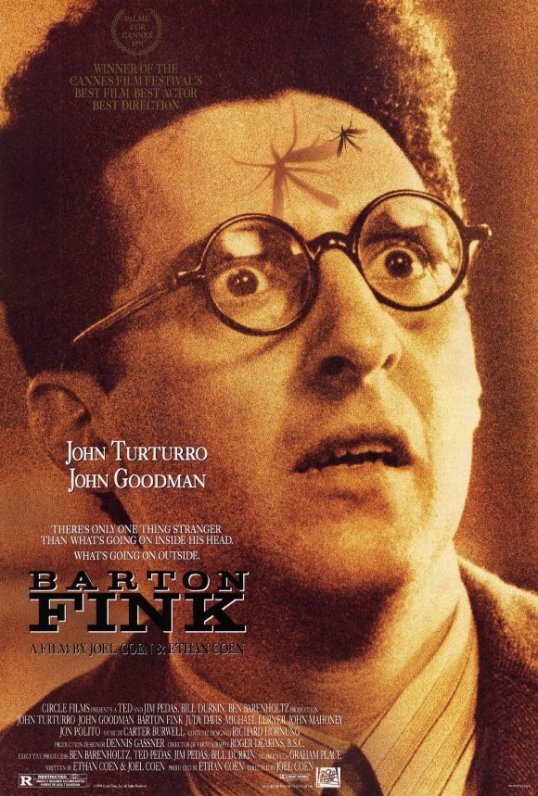
Directed by the Coen Brothers and taking place in the mythological Hollywood of 1941, Barton Fink tells the story of a writer. Played by John Turturro, Barton Fink is a playwright who has just had a big hit on Broadway. We don’t see much of the play. In fact, we only hear the final few lines. “No,” one the actors says, in exaggerated “common man” accent, “it’s early.” From what we hear of the reviews and from Barton himself, it seems obvious that the play is one of those dreary, social realist plays that were apparently all the rage in the late 30s. Think Waiting for Lefty. Think Hand That Rocks The Cradle. Think of the Group Theater and all of the people that Elia Kazan would later name as having been communists. These plays claimed to tell the stories of the people who couldn’t afford to see a Broadway production.
Barton considers himself to be the voice of the common man, an advocate for the working class. He grandly brags that he doesn’t write for the money or the adulation. He writes to give a voice to the voiceless. When his agent tells him that Capitol Pictures wants to put Barton under contract, Barton resists. His agent assures Barton that the common man will still be around when Barton returns from Hollywood. There might even be a few common people in California! “That’s a rationalization,” Barton argues. “Barton,” his agent replies with very real concern, “it was a joke.” Barton, we quickly realize, does not have a sense of humor and that’s always a huge problem for anyone who finds themselves in a Coen Brothers film.
In Hollywood, Barton meets the hilariously crass Jack Lipnik (Oscar-nominated Michael Lerner). Lipnik is the head of Capitol Pictures and he is sure that Barton can bring that “Barton Fink feeling” to a Wallace Beery wrestling picture. Barton has never wrestled. He’s never even seen a film. The great toast of Broadway finds himself sitting in a decrepit hotel room with peeling wallpaper. He stares at his typewriter. He writes three or four lines and then …. nothing. He meets his idol, Faulknerish writer W.P. Mayhew (John Mahoney), and discovers that Mayhew is a violent drunk and that most his recent work was actually written by his “secretary,” Audrey (Judy Davis). He seeks help from producer Ben Geisler (Tony Shalhoub), who cannot understand why Barton is having such a difficult time writing what should be a very simple movie. Barton sits in his hotel room and waits for inspiration that refuses to come.
He also gets to know Charlie Meadow (John Goodman). Charlie is Barton’s neighbor. Charlie explains that he’s an insurance agent but he really sells is “peace of mind.” At first, Barton seems to be annoyed with Charlie but soon, Barton finds himself looking forward to Charlie’s visits. Charlie always brings a little bottle of whiskey and a lot of encouragement. Charlie assures Barton that he’ll get the script written. Barton tells Charlie that he wants to write movies and plays about “people like you.” Charlie shows Barton a wrestling move. Barton tells Charlie to visit his family if he’s ever in New York. Charlie tells Barton, “I could tell you some stories” but he never really gets the chance because Barton is usually too busy talking about his ambitions to listen. Charlie tells Barton, “Where there’s a head, there’s hope,” a phrase that takes on a disturbing double meaning as the film progresses. Just as Barton isn’t quite the class warrior that he believes himself to be, Charlie isn’t quite what he presents himself to be either. Still, in the end, Charlie is far more honest about who he is than Barton could ever hope to be.
When it comes to what Barton Fink is actually about, it’s easy to read too much into it. The Coens themselves have said as much, saying that some of the film’s most debated elements don’t actually have any deeper meaning beyond the fact that they found them to be amusing at the time. At its simplest, Barton Fink is a film about writer’s block. Anyone who has ever found themselves struggling to come up with an opening line will be able to relate to Barton staring at that nearly blank page and they will also understand why Barton comes to look forward to Charlie visiting and giving him an excuse not to write. It’s a film about the search for inspiration and the fear of what that inspiration could lead to. Towards the end of the film, Barton finds himself entrusted with a box that could contain his worst fears or which could cpntain nothing at all. There’s nothing to stop Barton from opening the box but he doesn’t and it’s easy to understand why. To quote another Coen Brothers film, “Embrace the mystery.”
There’s plenty of other theories about what exactly is going on in Barton Fink but, as I said before, I think it’s easy to overthink things. The Coens have always been stylists and sometimes, the style is the point. That said, I do think that it can be argued that Barton Fink’s mistake was that he allowed himself to think that he was important than he actually was. Self-importance is perhaps the one unforgivable sin in the world of the Coen Brothers. Like most Coen films, Barton Fink takes place in a universe that is ruled by chaos and the random whims of fate. Barton’s mistake was thinking that he could understand or tame that chaos through his art or his politics. Barton’s mistake is that he tries to rationalize and understand a universe that is irrational and incapable of being explained. He’s a self-declared storyteller who refuses to listen to the stories around him because those stories might challenge what he considers to be the “life of the mind.”
Barton Fink is a film that people either seem to love or they seem to hate. Barton, himself, is not always a particularly likable character and the Coens seem to take a very definite joy in finding ways to humiliate him. Fortunately, Barton is played by John Turturro, an actor who has the ability to find humanity in even the most obnoxious of characters. (As obnoxious as Barton can be, it’s hard not to want to embrace him when he awkwardly but energetically dances at a USO club.) Turturro has great chemistry with John Goodman, who gives one of his best performances as Charlie. It’s putting it lightly to say that most viewers will have mixed feelings about Charlie but the film makes such great use of Goodman’s natural likability that it’s only on a second or third viewing that you realize that all of Charlie’s secrets were pretty much out in the open from the start. Michael Lerner deserved his Oscar nomination but certainly Goodman deserved one as well. The rest of the cast is full of Coen Brothers regulars, including Jon Polito as Lerner’s obsequies assistant and Steve Buscemi as Chet, the very friendly front deskman. And finally, I have to mention Christopher Murney and Richard Portnow, who play two of the worst cops ever and who deliver their hardboiled dialogue with just the right mix of menace and parody.
Barton Fink won the Palme d’Or at Cannes, defeating such films as Spike Lee’s Jungle Fever and Lars Von Trier’s Europa. It also won awards for the Coens and for John Turturro. It’s perhaps not a film for everyone but it’s one that holds up well and which continues to intiruge. Don’t just watch it once. This isn’t a film that can fully appreciated by just one viewing. This isn’t a Wallace Beery wrestling picture. This is Barton Fink!
I slept on it before writing this, to let the euphoria pass.
Matt Reeves’ The Batman surprised me in a number of ways, some of which can’t be mentioned without throwing spoilers. I’ll perhaps write a second piece on this, but for now, understand that this film has effectively pushed The Dark Knight to the side as my favorite live-action Batman film (The Lego Batman Movie stands on a pedestal all it’s own above all the rest). My favorite Batman stories are the detective tales. Gotham by Gaslight. The Long Halloween. Hush.
On film, the Caped Crusader has moments of investigation, but they often took a backseat either to the action or the resolution came as quickly as a Batcomputer search. For me, The Batman had closer ties to films like David Fincher’s Seven, Alan J. Pakula’s Klute, Bruce Malmuth’s Nighthawks, and even Shane Black’s The Nice Guys to some degree. It does all this legwork while finding a way to avoid giving us the same clip of the Monarch Shooting of the Waynes. That alone is worth it for me. This is Batman. After more than 9 films, you’d be hard pressed to find anyone on the planet younger than maybe six who doesn’t know how he got that way.
Living in NYC, I can relate to Gotham City. On the surface, it’s beautiful. For those who can afford it, there are tons of amenities available to its citizens. Peel back that layer, though, and you’ll always have Crime in a city holding 9 million people. It’s a constant as rain. Gotham City is on the verge of breakdown. Looking at the torn poster filled streets and I was reminded of a cross between Walter Hill’s Streets of Fire and Alex Proyas’ The Crow .and the way most of Manhattan looks now with it’s closed down stores. The city almost serves as a character itself in The Batman. It’s a throwback to some of the classic black and white detective movies my parents grew up on like 1947’s Kiss of Death. For all his gadgets and resources, there’s an argument suggesting the Batman can never really save his beloved city, though we love his efforts.
“Forget it, Bruce. It’s Gotham.” one might as well say.
Visually, the movie is a little dark, but that makes sense given the tone of the film. Cinematographer Greig Fraser (Dune, Zero Dark Thirty) is somewhat new to me, but I’m liking his work, which felt a little like Janusz Kaminski’s Lost Souls. It wasn’t dark to the point where I couldn’t make out elements (and I was sitting in the front row, far left side in my theatre), I’ll say that much. I’ll keep an eye on him in the future.
The Batman takes place in our hero’s second to third year, according to an early narration (much like Blade Runner). Batman has a good rapport with Lt. James Gordon (Jeffrey Wright, No Time to Die) and his butler, Alfred (Andy Serkis, reuniting with Reeves since Dawn of the Planet of the Apes), for the most part, there are some results. Criminals flee when the bat symbol shines in the night sky, because no one really knows where The Dark Knight will strike. A new murder brings both Gordon and the Batman into play, as his opponent leaves various riddles for them to solve. The mystery brings Batman into various circles, including those of Selina Kyle (Zoe Kravitz, Kimi), crime boss Carmine Falcone (John Turturro, The Big Lebowski) and Oz (Colin Farrell, The Gentlemen). They all bring in great performances, including Peter Sarsgaard (Green Lantern), but it’s Paul Dano (Ruby Sparks, There Will Be Blood) who really runs away with things as The Riddler. I’ve never considered The Riddler to be a creepy villain, but this was quite dark, even for DC’s standards. I can’t imagine how it would have turned out if this was a Rated R film. I’m really curious to know.
Lt. James Gordon (Jeffrey Wright) and The Batman (Robert Pattinson) do some Detective work in Matt Reeves’ The Batman
Bruce Wayne has never been an easy character to handle on screen.
There are whole books written on the Psychology of the Batman. Here you have an individual who witnessed his parents being murdered as a kid and grows up in a near empty mansion with butlers and maids. The individual decides to dedicate his life (and vast resources) to studying criminal investigation techniques, martial arts and even Ninjitsu for a singular focus: To rid Gotham City of Crime. Add to this the concept of instilling fear in one’s enemies, and dressing up like a Bat to pummel thugs with fists and gadgets just adds to Wayne’s madness. Pattinson honed in on this and turns Bruce Wayne into a pretty isolated and brooding individual. For someone with nearly unlimited resources, he doesn’t seem happy with any of it at all. At least Keaton pretended to party and Clooney’s Wayne truly did party. Bale’s Wayne let Fox focus on research and development. Hell, even Affleck’s Wayne recognized he was rich and flaunted it like a superpower all its own. Pattinson’s Batman is lean and really looks like the kind of guy you might find stepping out of the shadows just past Wall Street late at night. No offense to Affleck’s Batman, who for some is the pinnacle of what the character should be, but I’ve always associated that look with the older, fresh out of retirement Batman of Frank Miller’s The Dark Knight Returns.
Together, Pattinson and Kravitz’ chemistry was really nice on screen. I’ll admit, I enjoyed the romance between the two. Both characters accept tha they’re Creatures of the Night, and there’s this sweet give and take between the two as they nudge each other. Selina doesn’t have to do crime, and Batman doesn’t have to be the spirit of Vengeance, but they’re caught up in what works best for them. I enjoyed that aspect.
At first listen (about a week ago), I thought Michael Giacchino’s theme needed something outside of the four note motif it had. Hearing the music with the movie is a different beast, and I have to say, it works really well here. In some places, it’s as minimalistic as Hans Zimmer’s Nolan scores.
Now, a little Devil’s Advocate. The main problem I had with The Batman was the same I had with Spider-Man: No Way Home. I understand DC & Warner Bros. want to draw people into the theatre, but in this age where every element of a trailer is scanned and studied, I’d argue that 40% of the action you watched on screen were already somewhat spoiled by the trailer (or trailers, if you watched every one the Warners released). I’m not saying one should refrain from watching trailers – I only watched the teaser and the main trailer – but I would have liked if they held some scenes back. One might also argue The Batman was lighter on action than the other films, but it’s the detective work and the character performances that make up for it.
There’s also a lot of rain. Almost too much. Remember the sequence in Jurassic Park with the first appearance of the T-Rex? I would say that most of The Batman is set under somewhat similar conditions. It felt like it either just rained, was about to, or you were in the middle of a downpour. Then again, so did The Crow. Perhaps that’s just a nitpick on my part.
Also, clocking in at 2 hours and 56 minutes, it’s a long film. You might not really notice it, but I’d go so far to say that the time didn’t feel wasted. I noticed 3 or 4 people who left for the restroom in my showing, if that’s any indication.
Overall, The Batman was a wonderful surprise from the DC side of things, and I’m liking the direction it’s going. It might not be a completely connected universe like Marvel’s lineup, but they’re proving they can still weave some amazing stories with the characters they have.
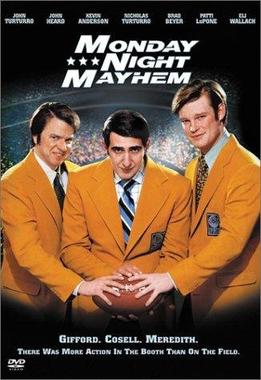 In the late 1960s, television coverage of football is dull and boring. The games are played during the day and the announcers have no personality. An executive at ABC named Roone Arledge (John Heard) changes all of that by convincing the NFL to start scheduling games for Monday night. Arledge launches Monday Night Football, a broadcast that puts the viewers at home in the stadium. Arledge explains that he wants cameras everywhere. He wants the sidelines and the stands to be mic’d up. And he wants announcers who will make the game interesting. He picks an experienced radio announcer named Keith Jackson (Shuler Hensley), former Dallas quarterback Don Meredith (Brad Beyer), and finally an egocentric, loquacious, and opinionated sports reporter named Howard Cosell (John Turturro). The straight-laced Jackson only lasts a season and finds himself overshadowed by Meredith’s good ol’ boy charisma and Cosell’s eccentricities. Arledge brings in Frank Gifford (Kevin Anderson) as a replacement and changes both sports and television forever. Monday night football becomes huge but so do the egos of the men involved.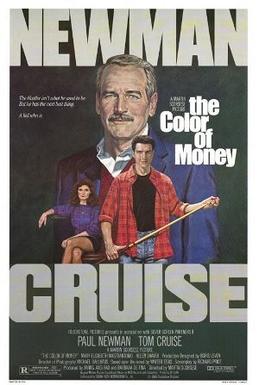



 Through the Shattered Lens