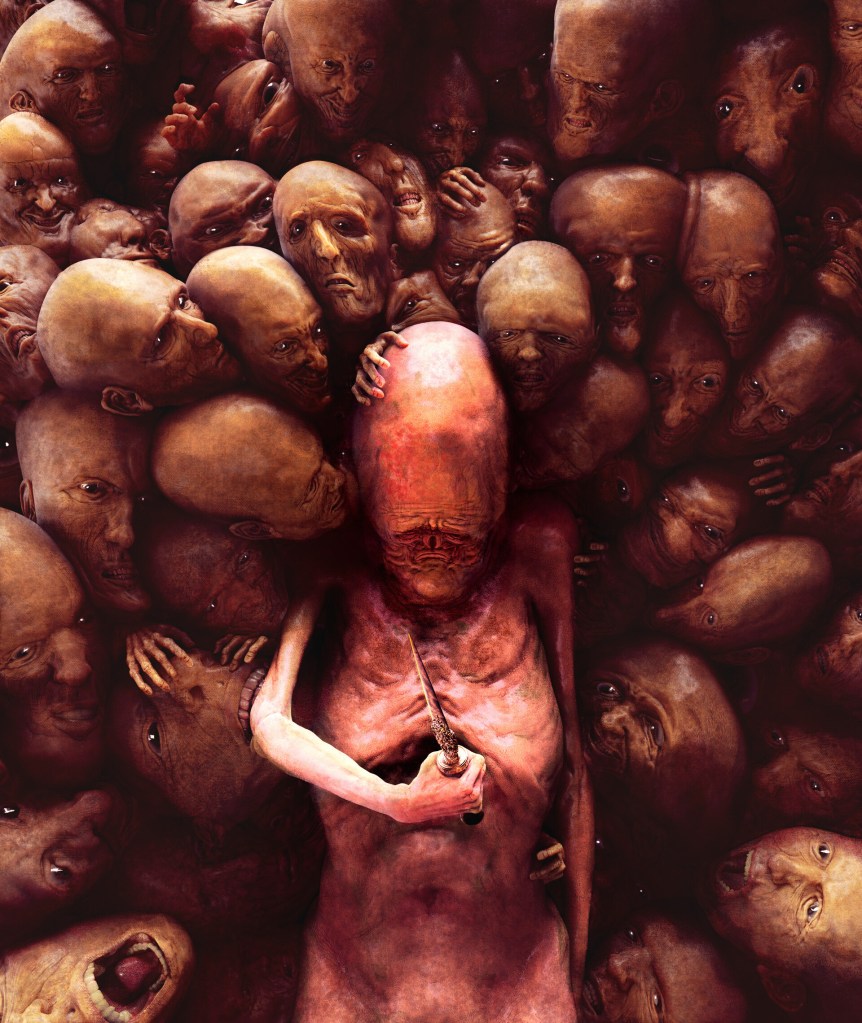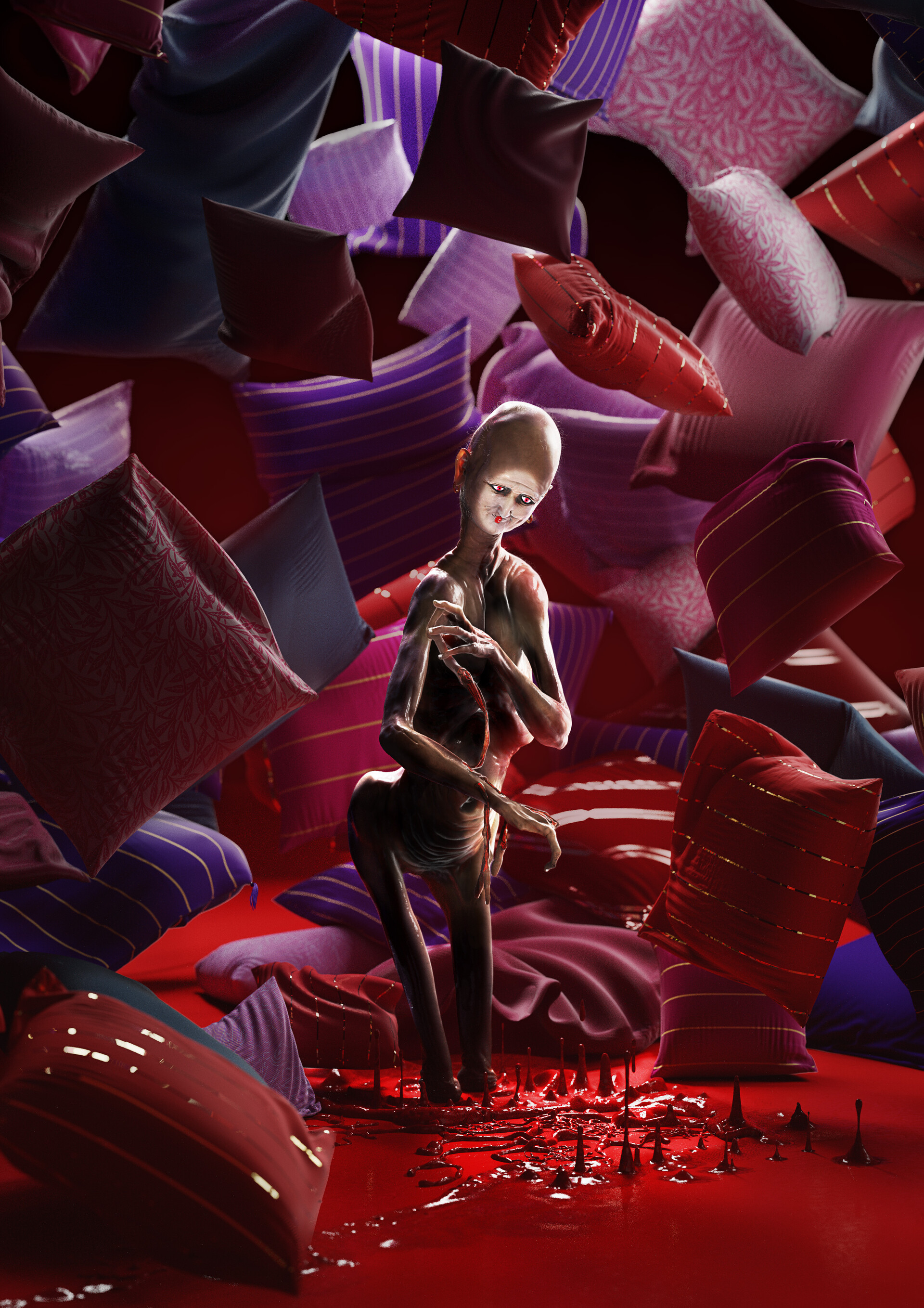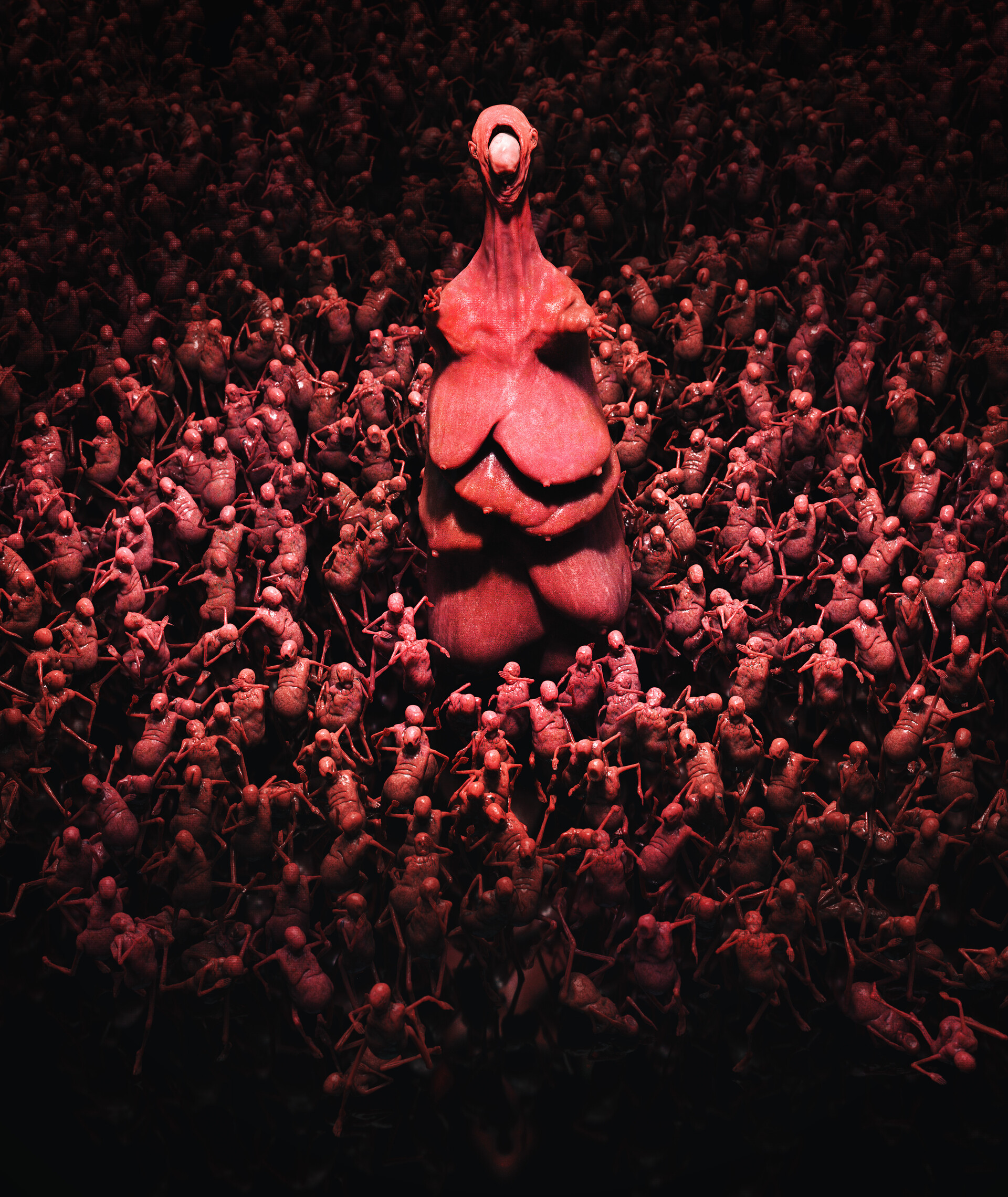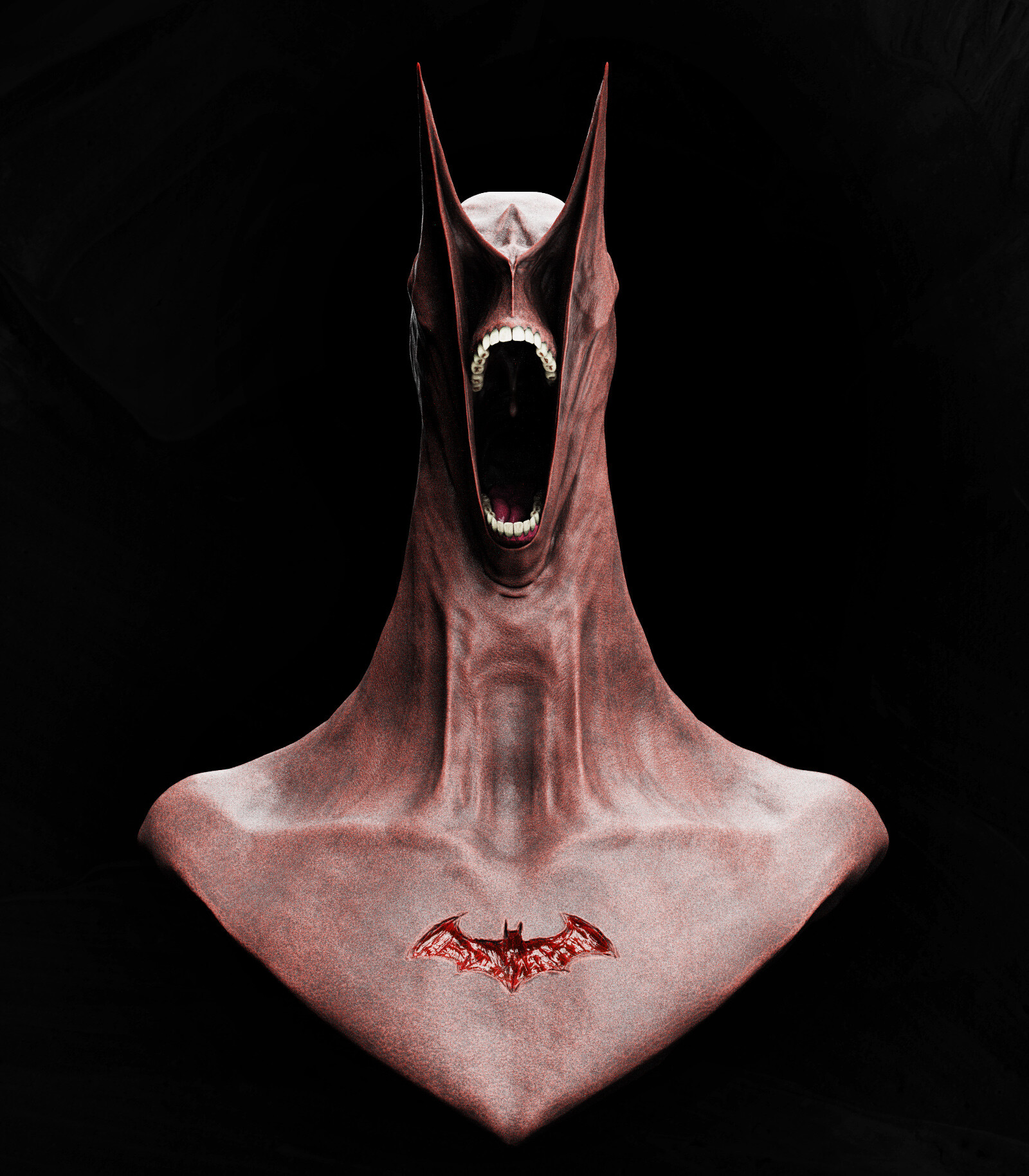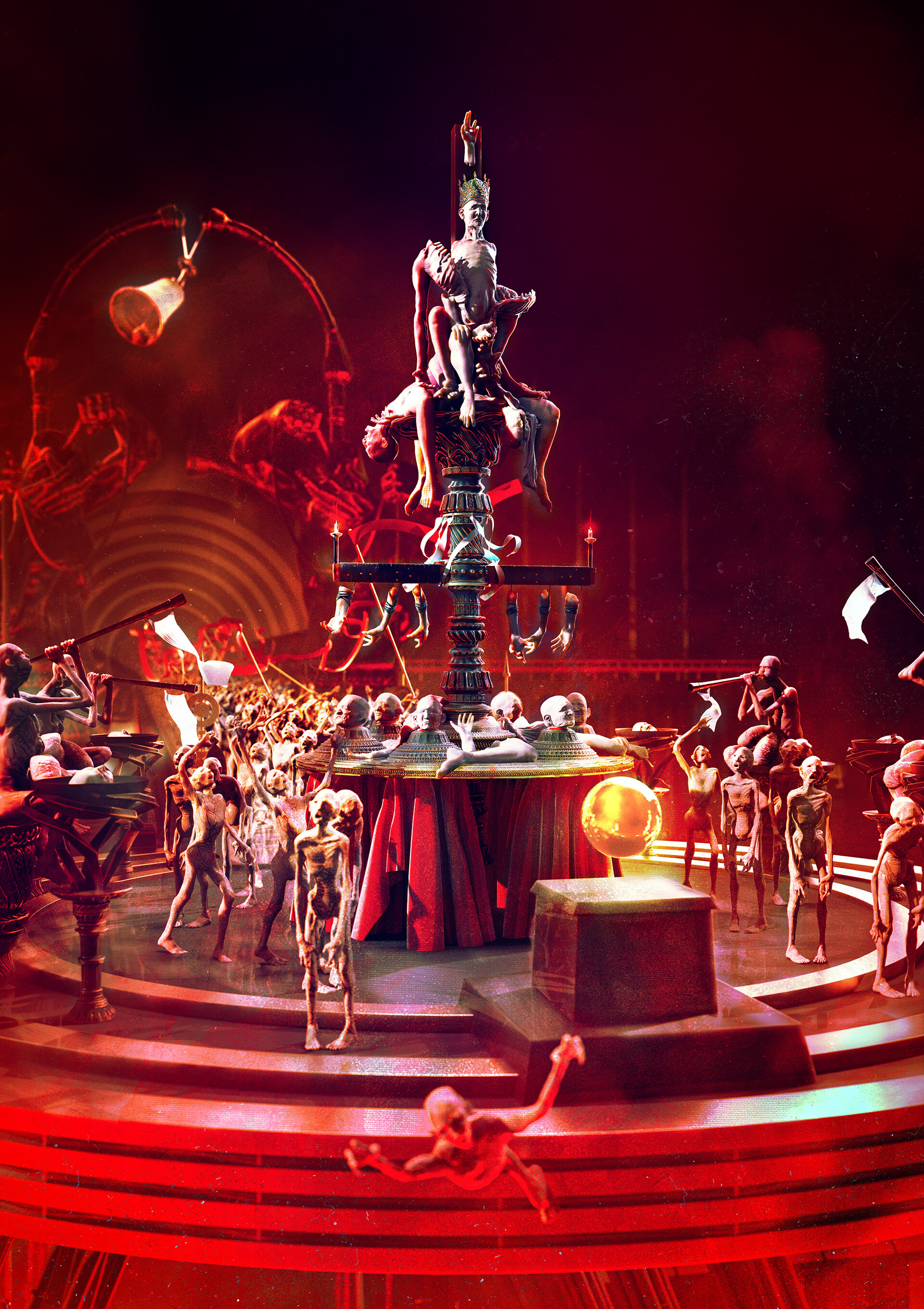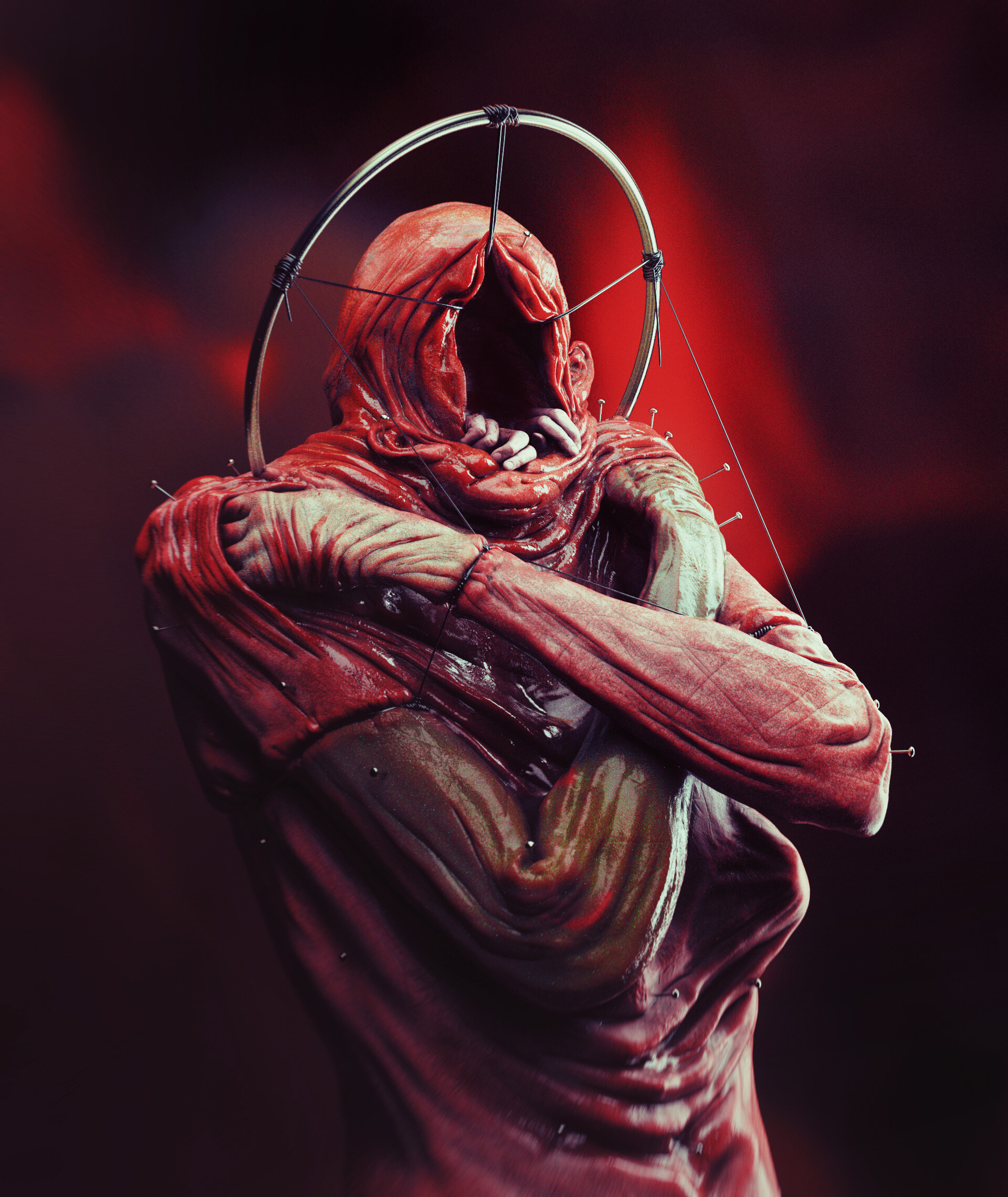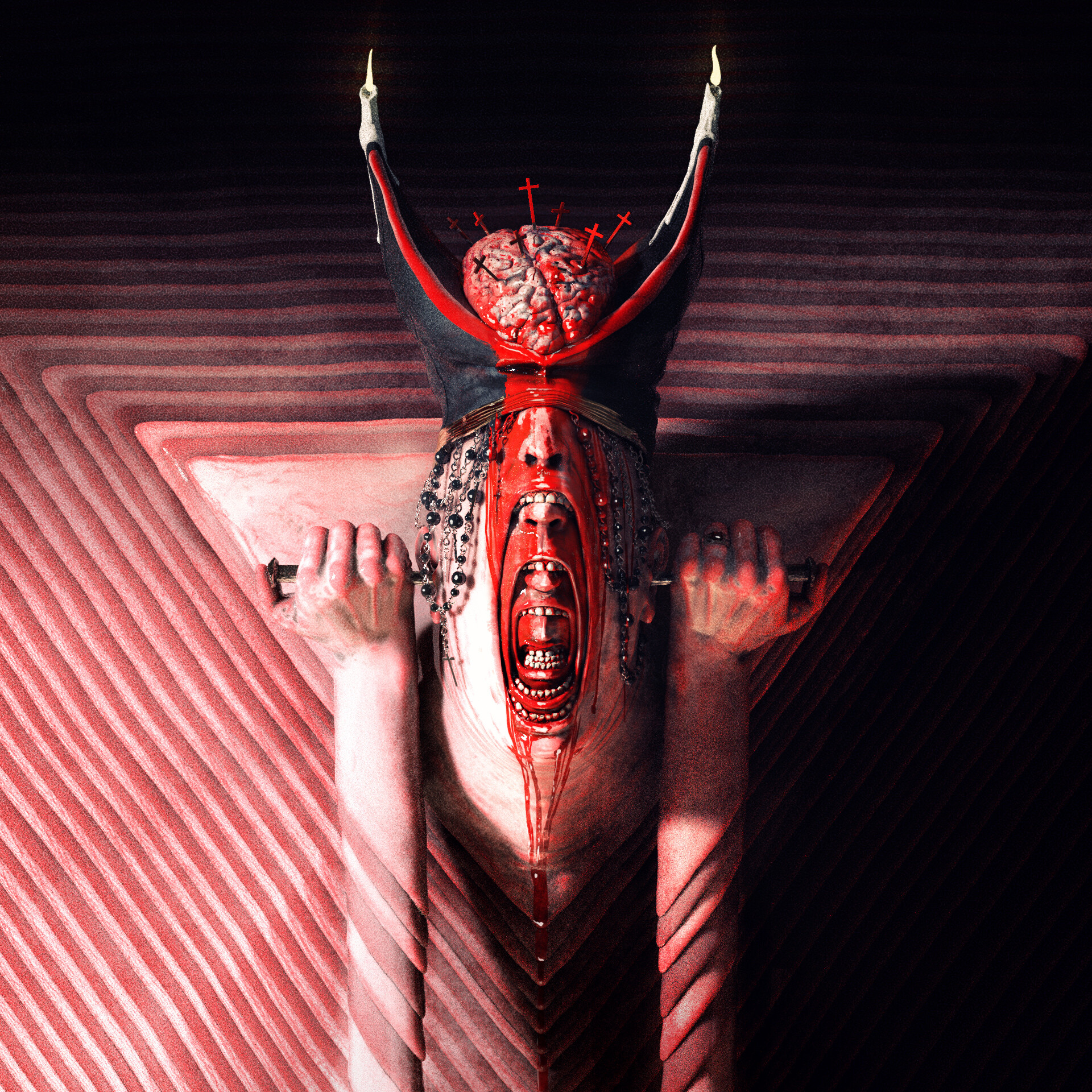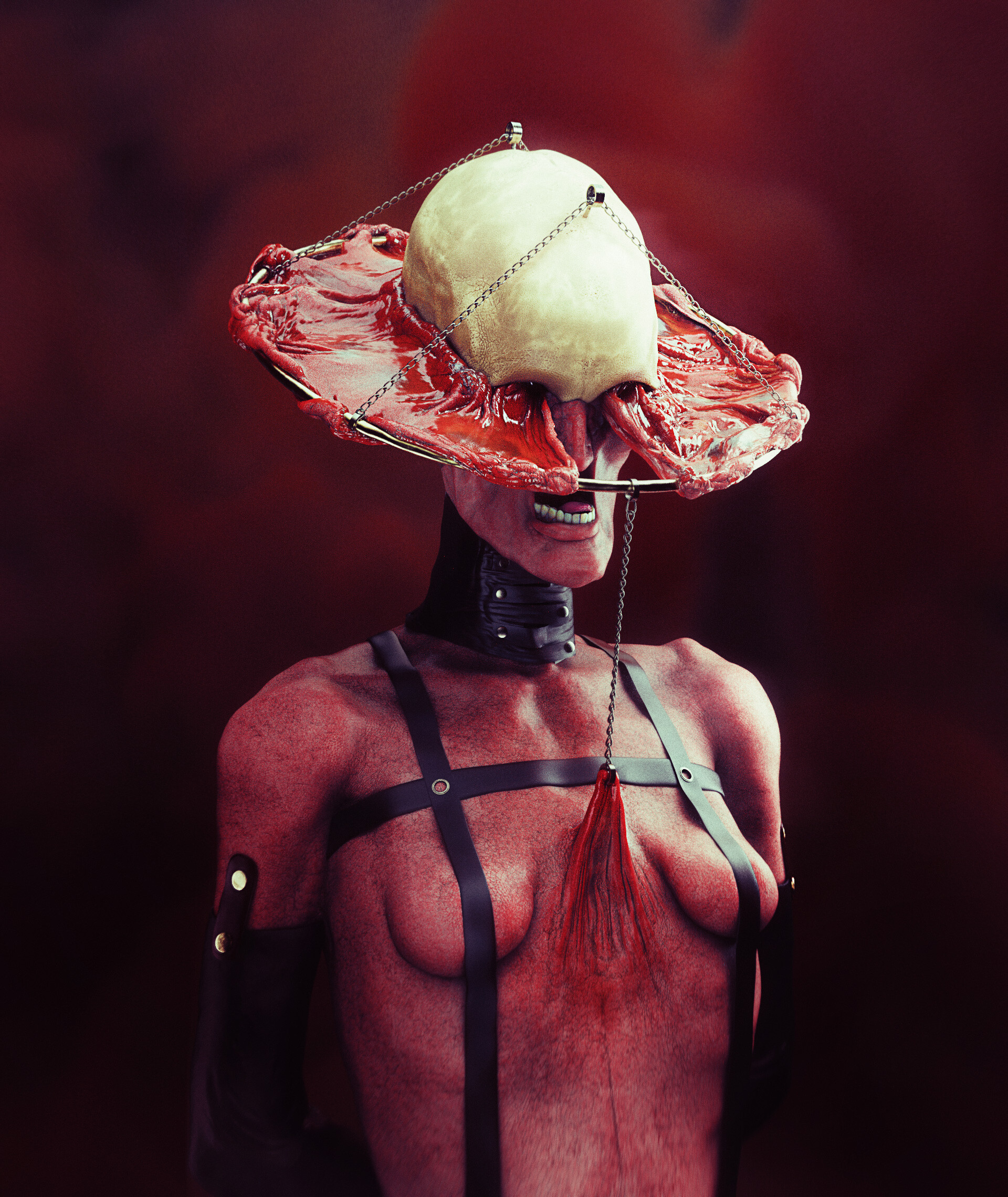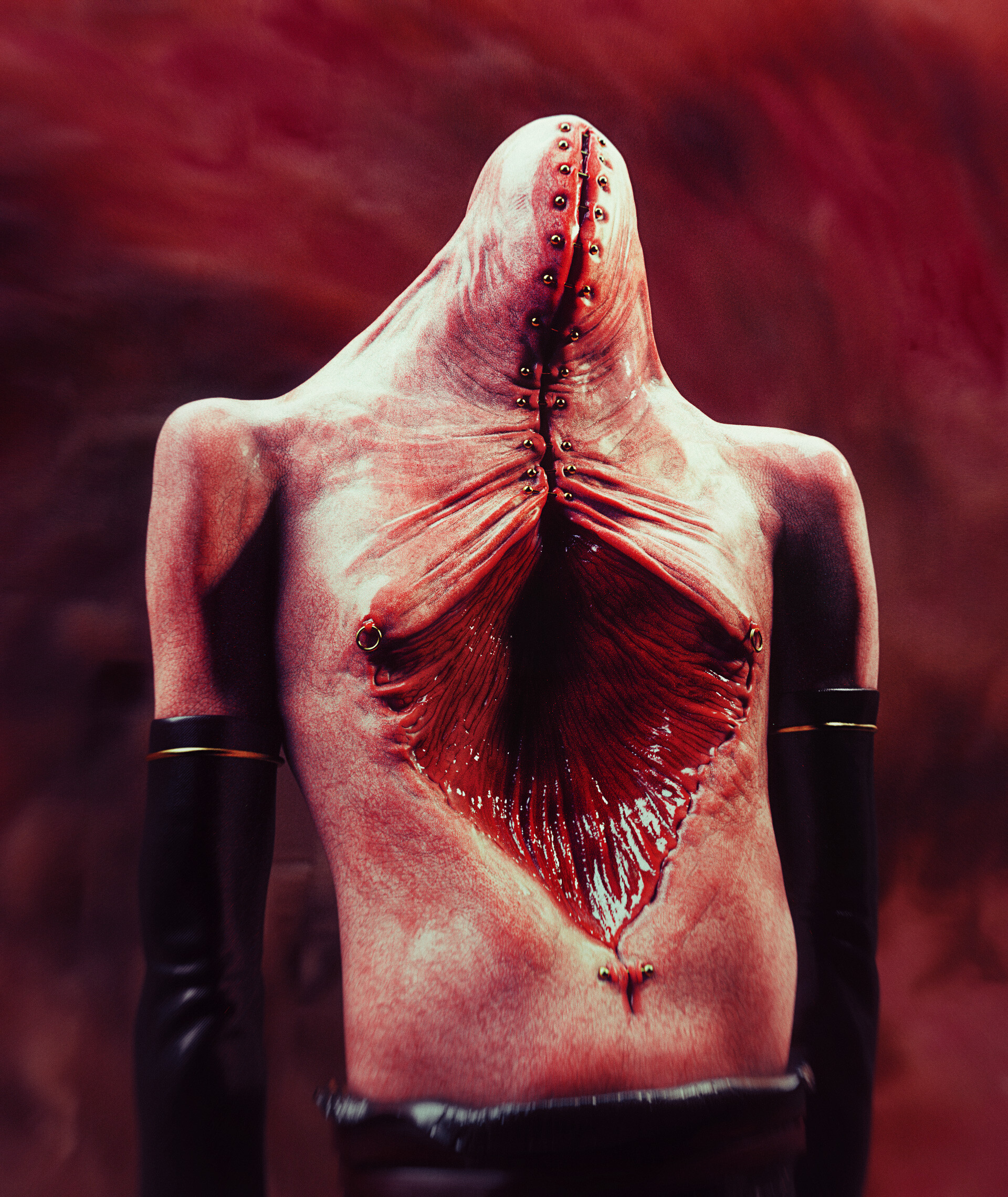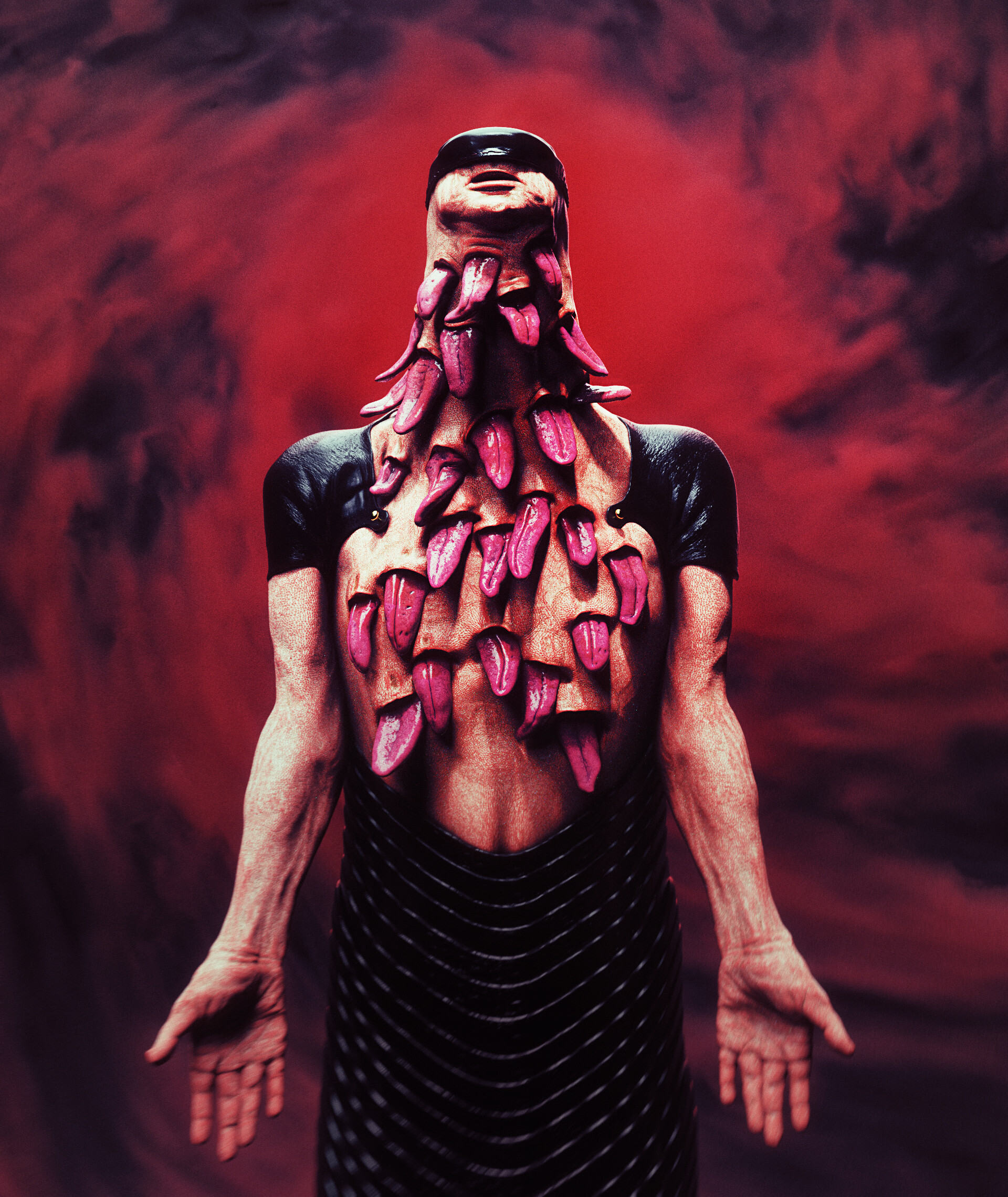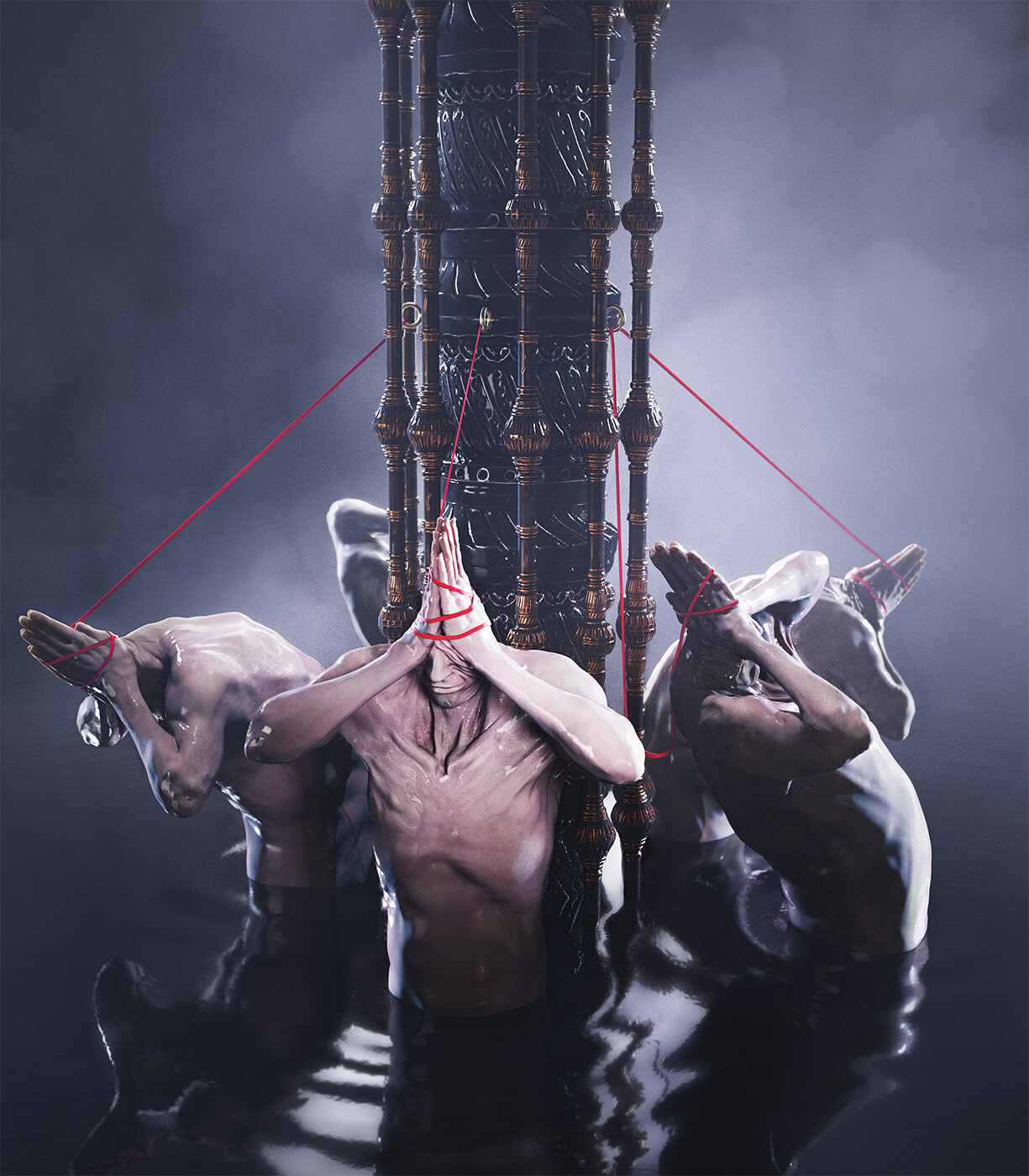
Franck Besançon creates a strain of surrealist horror in which the human body becomes a site of mutation, ritual, and nightmare. His figures feel less like ordinary monsters than damaged saints or fallen mythic beings—at once grotesque, strangely elegant, and charged with a sense of forbidden ceremony. The images draw their unease from that collision between beauty and corruption: intricate forms invite the viewer closer, while their distortions make looking feel almost intrusive.
What makes Besançon’s art memorable is its atmosphere of dark mythology. His work suggests entire unseen worlds governed by pagan rites, flesh-bound transformations, and ancient forces that have remade their subjects into living relics. Rather than relying on shock alone, he gives body horror a mournful grandeur; his creatures often seem tragic, ceremonial, and even regal in their deformity. That combination makes the art feel like a visual cousin to cosmic horror and dark fantasy as much as conventional monster design.
Besançon’s sensibility is a particularly fitting match for Clive Barker’s imagination. He is set to provide the cover artwork for Library of the Dead, Barker’s Kickstarter-funded horror and dark-fantasy trilogy comprising Fear Eternal, Pyres of Bedlam, and Dark Descents. His ability to make the grotesque feel mythic and visually luxurious should give the books a suitably unsettling physical identity.
Source: Franck Besançon