This trailer dropped last week but, somehow, I missed it until today.
Leave No Trace appears to be yet another film about an irresponsible and/or unconventional father raising his daughter in the woods. On the negative side, this is literally my least favorite genre of film. After sitting through both Captain Fantastic and The Glass Castle, I’ve pretty much reached my limit as far as screwed-up cinematic fathers are concerned.
On the plus side, however, is the fact that the father is played by Ben Foster and he seems like the type of actor who could actually do something interesting with the role. Also, the film is directed by Debra Granik, who did such a great job with Winter’s Bone.
So, perhaps against my better judgment, I will give this one a shot.
The Sundance Film Festival is currently taking place in Utah so, for this week, I’m reviewing films that either premiered, won awards at, or otherwise made a splash at Sundance! Today, I take a look at 2006’s Alpha Dog, which premiered, out of competition, at Sundance.
Sometimes, I suspect that I may be the only person who actually likes this movie.
Alpha Dog is a film about a group of stupid people who end up doing a terrible thing. Johnny Truelove (Emile Hirsch) is a 20 year-old living in Los Angeles. His father, Sonny (Bruce Willis) and his godfather, Cosmo (Harry Dean Stanton), are both mob-connected and keep Johnny supplied with the drugs that Johnny then sells to his friends. It’s a pretty good deal for Johnny. He’s got a nice house and a group of friends who are willing to literally do anything for him. Johnny, after all, is the one who has the money.
When Johnny’s former best friend, Jake Mazursky (Ben Foster), fails to pay a drug debt, things quickly escalate. When Johnny refuses to accept even a partial payment, Jake responds by breaking into Johnny’s house and vandalizing the place. (Just what exactly Jake does, I’m not going to go into because it’s nasty. Seriously, burn that house down…) Johnny decides that the best way to force Jake to pay up is to kidnap Jake’s younger brother, Zack (Anton Yelchin, who is heartbreakingly good in this film).
It quickly turns out that Zack doesn’t mind being kidnapped. Everyone tells Zack not to worry about anything and that he’ll be set free as soon as Jake pays his debt. Zack decides to just enjoy his weekend. Since Johnny is better at ordering people to commit crimes than committing them himself, he tells his friend, Frankie (Justin Timberlake), to keep an eye on Zack.
And so it goes from there. While Johnny leaves town, Frankie introduces Zack to all of his friends. Everyone laughs about how Zack is “stolen boy.” Zack’s going to parties and having a good time. However, Johnny returns and reveals that he’s been doing some thinking, as well as talking to his lawyer. Regardless of whether Zack’s enjoying himself, both Johnny and Frankie could go to prison for kidnapping him. Frankie argues that Zack won’t tell anyone about what happened. Maybe they could just pay him off. Johnny thinks it might be easier to just have him killed. Frankie’s not a murderer but what about Elvis Schmidt (Shawn Hatosy)? Elvis is a loser who desperately wants to be a part of Johnny’s crew and he owes Johnny almost as much money as Jake does. How far would Elvis be willing to go?
(While this plays out, the film keeps a running tally of everyone who witnesses Zack not only being kidnapped but also held hostage. In the end, there were at least 32 witnesses but none of them said a word.)
Alpha Dog is based on the true story of Jesse James Hollywood and the murder of 15 year-old Nicholas Markowitz. Hollywood spent five years as a fugitive from justice, hiding out in Brazil and reportedly being protected by his wealthy family. He was arrested shortly before the Sundance premiere of Alpha Dog. Since it was filmed before Hollywood’s arrest and subsequent conviction, Alpha Dog changed his name to Johnny Truelove. Johnny Truelove is a good name but it’s nowhere near as memorable as Jesse James Hollywood.
Alpha Dog sticks close to the facts of the case, providing a disturbing portrait of a group of aimless wannabe gangsters who, insulated by money and privilege, ended up getting in over their heads and committing a terrible crime. Emile Hirsch gives one of his best performances as the sociopathic Johnny Truelove while Ben Foster is both frightening and, at times, sympathetic as Jake. Justin Timberlake is compelling as he wrestles with his conscience while Shawn Hatosy is properly loathsome as the type of idiot that everyone knows but wish they didn’t. The dearly missed Anton Yelchin is heartbreaking and poignant as Zack. And finally, there’s Harry Dean Stanton. Stanton doesn’t say a lot in this movie. Often times, he’s just hovering in the background. The moment when he reveals his true self is one of the best in the movie.
As I said, I sometimes feel as if I’m the only person who likes this movie. It got mixed reviews when it was released and, in the years since, it rarely seems to ever get mentioned in a positive context. Personally, I think it’s a well-done portrait of privilege, stupidity, and the lengths to which people will go to avoid taking a stand. In the end, no one escapes punishment but it’s the rich guy who, at the very least, gets to spend at least a few years enjoying his freedom in Brazil.
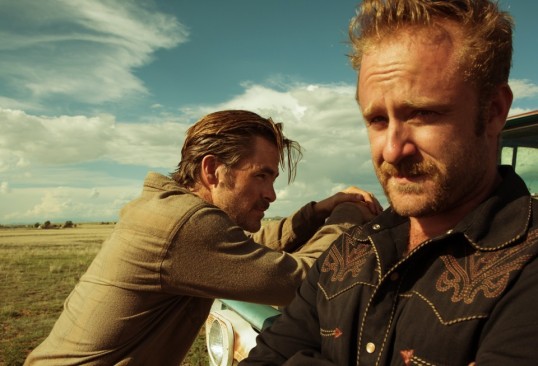
The Texas-set film Hell or High Water features four excellent lead performances. There’s Chris Pine and Ben Foster, playing brothers and robbing banks. And then there’s Jeff Bridges and Gil Birmingham, as the two Texas Rangers who are attempting to hunt the brothers down.
But for me, my favorite character was the waitress who, during the latter half of the film, serves lunch to the two Texas Rangers. When Bridges asks her how she’s doing, she replies, “Hot and not in the good way.” When the two Rangers start to order their food, she stops them and tells them that everyone who comes in the diner orders the same thing except for one “asshole from New York” who tried to order a trout. “We ain’t got no goddamn trout!” It’s a short scene but it’s one of my favorites because, if you’ve ever spent any time in West Texas, you know that this scene is probably the most realistic in the entire film.
My second favorite character was a banker teller played by the great Dale Dickey. When the Rangers ask her if the men who robbed her bank were black, she replies, “Their skin or their souls?” You just have to hear the way that she delivers it. In theory, that should be an awkward line but Dale Dickey makes it sound totally natural.
In fact, everything about Hell or High Water seems totally natural. For a film about bank robbers, it’s actually a deceptively low-key film, one that is as memorable for its quiet moments as its shoot outs. When the violence does come, it’s all the more jarring because the movie has spent so much time focusing on the tranquil stillness of the West Texas landscape.
(That said, I should point out that the film was actually shot in New Mexico. But, quite frankly, New Mexico is pretty much just West Texas with more Democrats.)
Hell or High Water is a film that’s all about the little details. The film opens with a bank robbery and, as the camera gracefully circles the bank, we catch a glimpse of graffiti announcing that the artist did 4 tours in Iraq and that “bailouts (are) for banks, not for me.” At its heart, Hell or HighWater is about the many people who have been left out of this so-called “economic recovery,” in which we’re all supposed to have such faith despite having seen little evidence of its existence. While the rich get richer, the struggle of the people in Hell or High Water is ignored by everyone but them. And so, the people do what they can to survive. For some, that means robbing banks. For others — like a wonderfully snarky group of witnesses in a diner — that means refusing to admit that they saw anything happen. If you want to see a realistic portrait of economic uncertainty and populist revoltuon, don’t waste your time with the cutesy bullshit and bourgeois Marxism of The Big Short. Watch Hell or High Water.
Of course, not everyone is willing to turn a blind eye to the bank robbing brothers. Hell or High Water is not just about economic anxiety. It’s also about the unique struggle of being a bank robber in a part of the country where literally everyone has a gun. (During one robbery, Pine asks an old customer if he has a gun on him. “Damn right I got a gun on me!” the old man snaps back.) As opposed to so many other films, Hell or High Water gets West Texas right.
(It’s probably not a coincidence that we’re told the brothers robbed a bank in Archer City, the home of legendary Texas writer, Larry McMurtry.)
As for the film’s cast, Jeff Bridges and Ben Foster get the two “showiest” roles. Jeff Bridges plays a Texas Ranger who is only a few days away from retirement and who enjoys needling his partner. (One of the main delights of the film is the comedic interaction between Bridges and Gil Birmingham.) Ben Foster is the more reckless of the two brothers, an ex-con who declares that everyone is his enemy but, at the same time, shows himself to be willing to do anything to protect his brother. Both Bridges and Foster give excellent performances and Foster, in particular, reminds us that he’s one of the most exciting actors working today.
And yet, for me, the true anchor of the film is Chris Pine. Chris Pine, of course, is best known for starring in the last three Star Trek films. And while he was always an adequate lead in those films and he gave a wonderfully self-aware performance in Into The Woods, none of his past films prepared me for just how good a job he does in Hell or High Water. Pine gives a quiet and rather subtle performance and, when we first see him, we automatically assume that he’s been dragged into the criminal life by his more flamboyant brother. But as the film progresses, we start to realize that there’s more to both the character and to Chris Pine as an actor. By the end of the film, we’re forced to reconsider everything that we previously assumed about everyone.
Speaking of end of the film — let’s just say that Hell or High Water has one of the best final scenes of 2016. Like the film itself, it’s deceptively low-key but it leaves you reeling.
It took me a while to see Hell or High Water but I’m glad I did. Come Hell or high water, you should see it too.
BEST FOREIGN LANGUAGE FILM Elle The Handmaiden A Man Called Ove Toni Erdmann Things to Come
BEST DIRECTOR
Damien Chazelle — La La Land
Barry Jenkins — Moonlight
Kenneth Lonergan — Manchester by the Sea
David Mackenzie — Hell or High Water
Chan-woo Park — The Handmaiden
BEST CINEMATOGRAPHY
Chung-hoo Chung — The Handmaiden
James Laxton — Moonlight
Giles Nuttgens — Hell or High Water
Linus Sandgren — La La Land
Bradford Young — Arrival
BEST ACTOR
Casey Affleck — Manchester by the Sea
Joel Edgerton — Loving
Ryan Gosling — La La Land
Viggo Mortensen — Captain Fantastic
Denzel Washington — Fences
BEST SUPPORTING ACTOR
Mahershala Ali — Moonlight
Jeff Bridges — Hell or High Water
Ben Foster — Hell or High Water
Lucas Hedges — Manchester by the Sea
Sam Neill — Hunt for the Wilderpeople
BEST ACTRESS
Annette Bening — 20th Century Women
Kate Beckinsale — Love & Friendship
Ruth Negga — Loving
Natalie Portman — Jackie
Emma Stone — La La Land
BEST SUPPORTING ACTRESS
Viola Davis — Fences
Greta Gerwig — 20th Century Women
Naomie Harris — Moonlight
Nicole Kidman — Lion
Michelle Williams — Manchester by the Sea
BEST ORIGINAL SCREENPLAY
Damien Chazelle — La La Land
Barry Jenkins — Moonlight
Kenneth Lonergan — Manchester by the Sea
Mike Mills — 20th Century Women
Taylor Sheridan — Hell or High Water
BEST ADAPTED SCREENPLAY
Tom Ford — Nocturnal Animals
Eric Heisserer — Arrival
Seo-kyeong Jeong and Chan-wook Park — The Handmaiden
Whit Stillman — Love & Friendship
Taika Waititi — Hunt for the Wilderpeople
KEN HANKE MEMORIAL TAR HEEL AWARD
(To an artist or film with a special connection to North Carolina.)
Anthony Mackie
Jeff Nichols Starving the Beast
Last night, my cousin and I watched Warcraft, which is a film that has been called “the worst of 2016” by several critics.
Personally, I don’t think it’s the worst film of 2016. It didn’t make me physically ill, like Hardcore Henry did. My cousin — who, unlike me, has actually played all of the Warcraft games and therefore came into the film already knowing who and what everything was — says that he enjoyed it. On the basis of both Moon and The Source Code, I think Duncan Jones is a genius who will eventually emerge as one of the most important directors working right now. Dominic Cooper is in Warcraft and so is Ben Foster. They’re both fairly unrecognizable (thought not as unrecognizable as Clancy Brown!) but they’re also two excellent actors and I’m always happy to see them listed in the credits. Visually, the film was well-designed though it was impossible for me not to think about the Make Love, Not Warcraft episode of South Park.
But I have to say that no film has ever left as totally confused as Warcraft. I got that the film was about a war between Orcs and humans. And I appreciated the fact that the film attempted to give all of the Orcs their own individual personalities and culture. If I wanted to, I could probably spend a few 100 words talking about how the war in Warcraft can serve as a metaphor for every war currently being fought in the real world.
But seriously, I spent nearly the entire film trying to keep straight who was who. The cast was huge and the dialogue was full of people and creatures talking about magic and honor and history and tradition and sacrifice and why so-and-so had to do this to such-and-such because of something that happened to someone else centuries ago and it made my head hurt trying to keep up with it all. I eventually gave up. My cousin was enjoying the film and, in the end, that’s all that mattered.
Plus, there was a cute little orc baby! I liked him and his story reminded me of the story of Moses floating away in that basket.
Anyway, Warcraft was slaughtered by critics and, because it cost a ton of money to make, it didn’t make any money back. So, the film probably won’t get the sequel that the ending was obviously designed to set up. However, I get the feeling that, next year, Warcraft will be a popular film to live tweet whenever it shows up on SyFy.
It may have been the most incoherent film of 2016 but it wasn’t necessarily the worst.
The Alliance of Women Film Journalists (of which I am not a member and what’s up with that!?) announced their picks for the best of 2016 earlier this week.
And here they are:
AWFJ BEST OF AWARDS
These awards are presented to women and/or men without gender consideration. Best Film
Arrival Hell or High Water La La Land
Manchester by the Sea Moonlight
Best Screenplay, Adapted
Arrival – Eric Heisserer
Lion – Luke Davies
Love & Friendship – Whit Stillman Moonlight – Barry Jenkins
Nocturnal Animals –Tom Ford
Best Documentary 13th – Ava DuVernay
Gleason – Clay Tweel
I Am Not Your Negro – Raoul Peck
OJ Made in America – Ezra Edelman Weiner – Elyse Steinberg and Josh Kriegma
Best Actress
Amy Adams – Arrival
Isabelle Huppert – Elle Ruth Negga – Loving
Natalie Portman – Jackie Emma Stone – La La Land
Best Actress in a Supporting Role Viola Davis – Fences
Greta Gerwig – 20th Century Women
Naomie Harris – Moonlight
Octavia Spencer – Hidden Figures
Michelle Williams – Manchester by the Sea
Best Non-English-Language Film
Elle – Paul Verhoeven, France
Fire At Sea – Gianfranco Rossi, Italy The Handmaiden – Chan-Wook Park, South Korea
Julieta – Pedro Almodovar. Spain
Toni Erdmann – Maren Ede, Germany
EDA FEMALE FOCUS AWARDS
These awards honor WOMEN only
Best Woman Director Andrea Arnold – American Honey Ava DuVernay -13TH
Rebecca Miller – Maggie’s Plan
Mira Nair – Queen of Katwe
Kelly Reichardt – Certain Women
Best Woman Screenwriter Andrea Arnold – American Honey
Rebecca Miller – Maggie’s Plan Kelly Reichardt – Certain Women
Lorene Scafaria – The Meddler
Laura Terruso – Hello, My Name is Doris
Best Breakthrough Performance Sasha Lane – American Honey
Janelle Monáe – Moonlight and Hidden Figures
Madina Nalwanga – Queen of Katwe Ruth Negga – Loving
Outstanding Achievement by A Woman in The Film Industry Ava DuVernay – For 13TH and raising awareness about the need for diversity and gender equality in Hollywood
Anne Hubbell and Amy Hobby for establishing Tangerine Entertainment’s Juice Fund to support female filmmakers
Mynette Louie, President of Gamechanger Films, which finances narrative films directed by women
April Reign for creating and mobilizing the #OscarsSoWhite campaign
EDA SPECIAL MENTION AWARDS
Actress Defying Age and Ageism Annette Bening – 20th Century Women
Viola Davis – Fences
Sally Field – Hello, My Name is Doris Isabelle Huppert – Elle and Things to Come
Helen Mirren – Eye in the Sky
Actress Most in Need Of A New Agent Jennifer Aniston – Mother’s Day and Office Christmas Party
Melissa McCarthy – The Boss and Ghostbusters
Margot Robbie – Suicide Squad and Tarzan
Julia Roberts – Mother’s Day
Shailene Woodley – Divergent Series
AWFJ Hall of Shame Award Sharon Maguire and Renee Zellweger for Bridget Jones’s Baby
Nicholas Winding Refn and Elle Fanning for The Neon Demon
David Ayer and Margot Robbie for Suicide Squad
David E. Talbert and Mo’Nique for Almost Christmas
Best Actress Emma Stone – La La Land
Natalie Portman – Jackie
Taraji P. Henson – Hidden Figures
Amy Adams – Arrival
Annette Bening – 20th Century Women
Best Supporting Actress
Octavia Spencer – Hidden Figures Naomie Harris – Moonlight
Viola Davis – Fences
Greta Gerwig – 20th Century Women
Michelle Williams – Manchester by the Sea
Best Director
Garth Davis – Lion
Theodore Melfi – Hidden Figures Barry Jenkins – Moonlight
J.A. Bayona – A Monster Calls
Tom Ford – Nocturnal Animals
Best Score
Jackie
Nocturnal Animals
Arrival
Lion La La Land
Best Song “City of Stars” (La La Land)
“How Far Will I Go” (Moana)
“I See Victory” (Hidden Figures)
“The Great Beyond” (Sausage Party)
“Finest Girl (Bin Laden Song) (Popstar: Never Stop Never Stopping)
Breakout Filmmaker Barry Jenkins – Moonlight
Robert Eggers – The Witch
Kelly Fremon Craig – Edge of Seventeen
Daniel Kwan & Daniel Scheinert – Swiss Army Man
Nate Parker – Birth of a Nation
Youth in Film
Madina Nalwanga – Queen of Katwe
Lewis MacDougall – A Monster Calls
Lucas Hedges – Manchester by the Sea
Hailee Steinfeld – Edge of Seventeen Alex B. Hibbert – Moonlight
The members of the Phoenix Film Critics Circle challenge their rival in the Phoenix Film Critics Society.
Here are the nominees of the Phoenix Critics Circle, who should not be mistaken for the Phoenix Film Critics Society. Do the Circle and the Society have regular rumbles, like the Sharks and the Jets? I’d like to think that they do.
BEST SUPPORTING ACTRESS
Viola Davis, Fences
Greta Gerwig, 20th Century Women
Naomie Harris, Moonlight
Helen Mirren, Eye in the Sky
Michelle Williams, Manchester by the Sea






 Through the Shattered Lens