4 Shots From 4 Films is just what it says it is, 4 shots from 4 of our favorite films. As opposed to the reviews and recaps that we usually post, 4 Shots From 4 Films is all about letting the visuals do the talking.
“Oh, nice guy, I hope. Everybody’s trying to kill me lately.” — Nick Parker
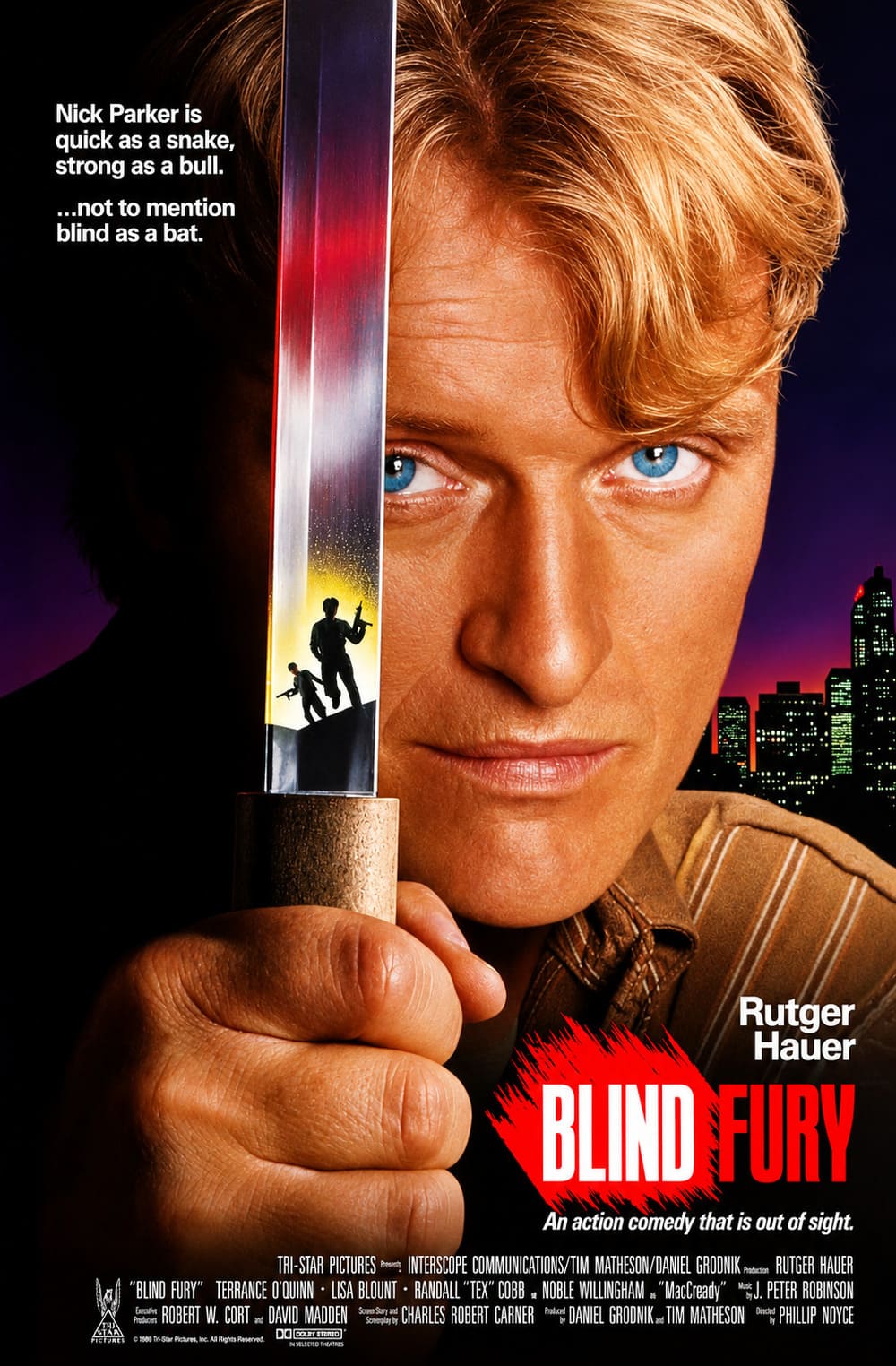
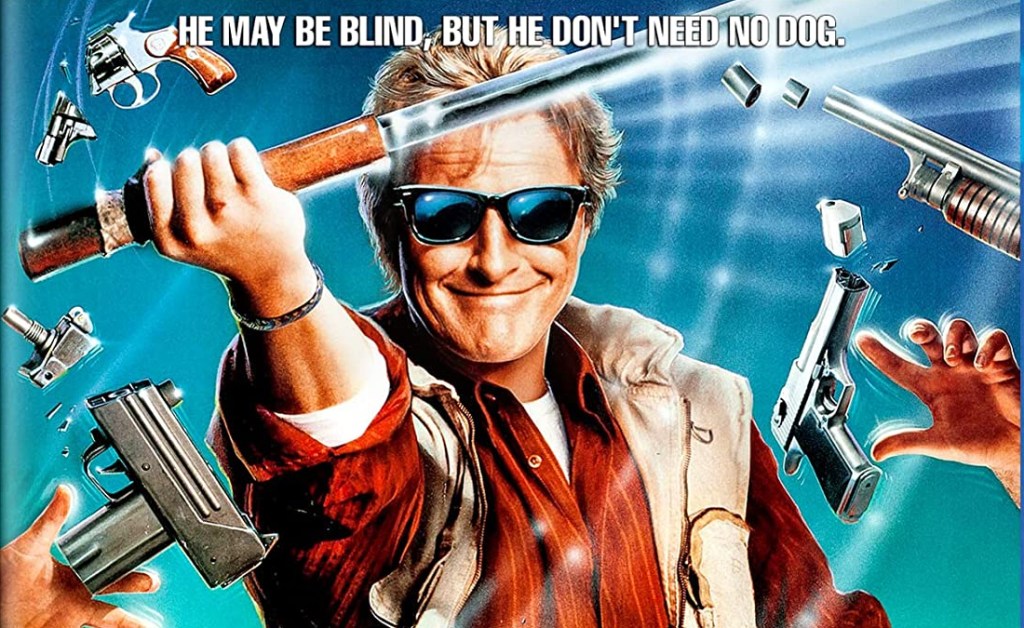
Rutger Hauer’s smile does almost as much work as his sword in Blind Fury (1989). It gives this cheerfully far-fetched action movie something that an elaborate fight sequence cannot supply on its own: a reason to enjoy hanging around its hero. Directed by Phillip Noyce, the film mixes bloody confrontations, broad comedy, and an unlikely friendship without always finding a comfortable balance. Yet Hauer moves through it with such relaxed charisma that the rough patches rarely become deal breakers. The story may be about getting a child out of danger, but the movie’s real attraction is watching an unconventional action star make an outrageous character feel strangely approachable.
Hauer plays Nick Parker, a Vietnam veteran blinded during the war and rescued by villagers who teach him to fight using his remaining senses. Years later, he sets out to find his old army buddy Frank Deveraux, played by Terry O’Quinn. Instead of a happy reunion, Nick discovers that Frank is mixed up with criminals and that his son Billy, played by Brandon Call, is in danger. After Billy’s mother is killed, Nick takes the boy under his protection. Their journey supplies the film with its basic rhythm: uneasy bonding, trouble, swordplay, and another stretch of uneasy bonding.
The film is an English-language remake of Zatoichi Challenged, the 17th entry in the long-running Japanese film series about the blind swordsman. Rather than simply borrowing a distinctive fighting gimmick, Blind Fury carries over the appeal of a capable outsider whom people consistently misjudge. Nick’s walking stick conceals a sword, but his friendly manner disguises his abilities just as effectively. Putting that figure into an American crime adventure creates an entertaining clash of styles. The gangsters belong to a familiar world of threats and brute force; Nick seems to have wandered in from a different kind of movie altogether.
Hauer makes that difference work by resisting the obvious tough-guy approach. Nick does not spend every quiet moment looking tortured or every confrontation trying to sound intimidating. He jokes, listens, and occasionally seems genuinely amused by the people around him. There is sadness beneath that warmth, but Hauer lets it register without demanding that the whole film stop and acknowledge it. His performance gives Nick a life beyond his usefulness in a fight. That matters because a character built entirely around extraordinary abilities can become dull surprisingly quickly. Here, the abilities are entertaining, but the person using them is usually more interesting.
The action follows the same principle: personality matters more than plausibility. Nick’s awareness of his surroundings is precise enough to make the premise work, and the film does not invite much scrutiny of the mechanics. Instead, Noyce builds sequences around timing, misplaced confidence, and sudden reversals. Someone decides Nick is helpless, moves in too close, and receives an unpleasant correction. The fights are often structured like physical punch lines, with a brief pause before the payoff. That playful quality keeps the swordplay from becoming monotonous, even when the outcome is obvious. We know Nick will handle the situation; the fun lies in how.
The villains give him plenty to handle, although they are more colorful obstacles than fully developed characters. Noble Willingham brings blustering nastiness to crime boss MacCready, while Randall “Tex” Cobb gives Slag an imposing presence. Their broadness suits a film that has little interest in subtle criminal psychology. They threaten, scheme, and underestimate their opponent, giving Hauer room to remain comparatively understated. The contrast is useful: Nick does not need to compete with their volume to control a scene. Still, the criminal plot itself is not especially compelling, and whenever the film spends too long explaining its machinery, the energy starts to sag.
The relationship with Billy is more important and more uneven. Their partnership brings out Nick’s patience and gives the journey something warmer than a string of violent encounters. But Billy’s resistance can feel like a screenplay requirement rather than a fresh observation about a frightened child. The movie needs them to clash before they connect, and sometimes you can see that calculation too clearly. Its handling of grief is similarly hurried. A devastating event becomes the starting point for an adventure that frequently wants to be breezy. Hauer helps bridge those gaps, though he cannot entirely erase the awkwardness.
That uneven tone is the film’s biggest limitation. Blind Fury wants its violence to sting, its jokes to land lightly, and its central relationship to carry genuine feeling, sometimes within the same scene. Not every transition works. Its fantasy of blindness also belongs firmly to action-movie invention rather than a grounded portrayal of disability. But the film remains enjoyable because it rarely becomes self-important about any of this. Noyce generally keeps the story moving, and Hauer gives its competing moods a common center. Even when the writing shifts gears abruptly, Nick still feels like the same person.
For a movie built around a concealed weapon, Blind Fury is surprisingly dependent on what its leading man leaves out in the open. Hauer’s humor, gentleness, and easy confidence make the familiar plot worth following and the ridiculous action worth accepting. A more generic performance might have left nothing but a novelty premise and a pile of defeated henchmen. Instead, there is a character whose company makes the journey enjoyable. The film is scruffy, sometimes clumsy, and never particularly deep, but it has the good sense to trust its star. Long after the plot details fade, that smile still does the trick.
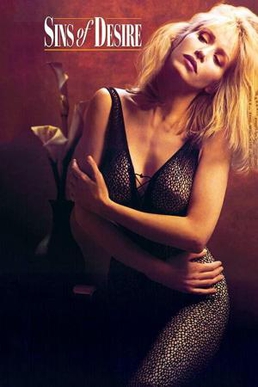
Kay Egan (Tanya Roberts) goes undercover as a nurse at a sex clinic because she thinks that Dr. Scott Callister (John Henry Robertson) and his wife, Jessica (Delia Sheppard), are responsible for the suicide of her sister. Working undercover leads to Jessica meeting private detective Barry Mitchum (Nick Cassavetes), whose partner Monica (Gail Harris) died under mysterious circumstances while she was working undercover at the clinic. Is there anyone working at the clinic who isn’t undercover?
This is a Jim Wynorski film, which means the plot is mostly just an excuse for the female members of the cast to disrobe. Like many of Jim Wynorski’s films, it’s trashy but entertaining. It’s a sex clinic where therapy comes in the way of hallucinations, strobe lights, and choreographed stripping. Kay falls in love with Barry but, when she realizes that Jessica is into her, she used that to her advantage and buys Barry some extra time for his investigation. Jan-Michael Vincent plays Warren Robillard, a twitchy associate of the Callisters. It’s a Wynorski film all the way.
Jim Wynorski later said that he had a difficult time working with Tanya Roberts, who brings little of her old Charlie’s Angel spice to her role. But John Henry Robertson and Delia Sheppard are a blast as the evil sex clinic owners. Adult film actress Gail Harris is so sexy and likable as Monica that it’s a shame that she’s only has a few minutes of screentime.
Sins of Desire is a perfect example of why you couldn’t have late night Cinemax without Jim Wynorski.
In director Todd Phillips’ THE HANGOVER PART II, the night before his wedding, groom-to-be Stu (Ed Helms), his two best friends, Phil and Doug (Bradley Cooper and Justin Bartha), Stu’s soon-to-be brother-in-law Teddy (Mason Lee) and Doug’s brother-in-law Alan (Zach Galifianakis), sit on a beach in Thailand for a toast to the bride and groom. After cracking open sealed bottles of beer in the beautiful setting, the movie screen goes black, and soon we see Phil, Stu and Alan wake up in a seedy room in Bangkok with absolutely no memory of what happened the previous night. The room is trashed, there’s a monkey wearing a denim Rolling Stones jacket, a naked Chow (Ken Jeong) is sleeping under a pile of blankets, Alan’s head is completely shaved, Stu has a face tattoo, and both Doug and Teddy are nowhere to be found! Doug calls and he’s back at the resort, but the only trace of Teddy is his severed finger, which is now in possession of the monkey. With the wedding just hours away, the three friends follow any clues they can find in a frantic search for Teddy. The search leads to the surprise discovery that Stu had intimate relations with a transsexual stripper, a tattoo parlor run by Nick Cassavetes, a dangerous and duplicitous American gangster named Kingsley (Paul Giamatti), and an arrested, ancient Buddhist monk who’s taken a vow of silence and who’s also confused for the 16-year-old, Teddy. Hell, at one point Mike Tyson shows up and sings the classic Murray Head single, “One Night in Bangkok.” Most importantly though, will the friends find Teddy alive and still have time to get back to the resort in time for Stu’s wedding?!!
A massive box office hit in the summer of 2011, THE HANGOVER PART II became the highest grossing R-rated comedy up to that time, with a worldwide gross of $586 million, against an $80 million budget. It was also the highest grossing R-Rated film to have opened over Memorial Day weekend, raking in over $118 million in its first four days. The story went to the well again with its still clever, but not quite as unique premise, comprised of a mystery-driven plot line where we follow the investigative adventures of Phil, Stu, and Alan and discover what happened the night before at the same time that they do. This allows for another series of outrageous, raunchy, surprising, and funny moments that escalate in absurdity over the course of the film’s 102-minute running time, culminating with another secret roll of pictures on Teddy’s camera that fill in the crazy events from their wild night in Bangkok. Based on the familiarity with the characters and the types of situations, I didn’t laugh out loud quite as frequently this time around, but the film still has its share of amusing moments, and I enjoyed revisiting the film again after a number of years. One of the things that I noticed about THE HANGOVER PART II is that it does not have the re-quotability factor going for it like the first film does. Alan and Chow have some funny lines, but honestly, I don’t think I’ve ever re-quoted a single one of them. I will agree with Alan on one point though, “When a monkey nibbles on a penis, it’s funny in any language.” I’d say that this film is more about mining comedy out of the extreme and absurd situations that our heroes are put in and less about clever, quotable quips.
THE HANGOVER PART II works because of the outrageous situational comedy, as well as the exceptional chemistry between Bradley Cooper, Ed Helms, and Zach Galifianakis. Ken Jeong has a bigger part this time around as Mr. Chow, and of course he’s hilarious. I did get some solid laughs from its combination of shock-value, sight gags and character interplay. The Bangkok we see here also makes for a seedy, raunchy and dangerous background to the crazy action. Of course the biggest negative of the film, as is the case with many sequels, is the fact that it’s practically a remake of the first HANGOVER, just set in Bangkok instead of Vegas. Think Charles Bronson’s DEATH WISH (New York) versus DEATH WISH II (Los Angeles). Also like the first two DEATH WISH films, THE HANGOVER PART II pushes the boundaries even farther, with even more graphic nudity and just overall harder material in general. Sequels always up the ante, but lose a little of what makes them so special in the process, and that’s definitely going on here.
Ultimately, while THE HANGOVER PART II was even more financially successful than the original, it’s not quite as fun because we’ve seen it before in the first film. But I loved the first film, so I enjoyed this one as well, just not quite as much.
Since Sunday is a day of rest for a lot of people, I’m introducing #SundayShorts, a weekly mini review about a movie I’ve recently watched.
In BLIND FURY, Rutger Hauer does his best Zatoichi impersonation in a loose remake of a 1967 Japanese film called ZATOICHI CHALLENGED. The movie’s strongest quality is its ability to be both a kickass action film and a comic action film. That’s a fine line to walk and BLIND FURY does it exceedingly well.
Fast Facts:
Star Rutger Hauer is probably the greatest Dutch actor of all time where he often starred in the films of director Paul Verhoeven. My favorite of Hauer’s foreign movies is SOLDIER OF ORANGE.
ZATOICHI CHALLENGED, the inspiration for BLIND FURY, stars legendary Japanese actor Shintaro Katsu as a blind masseuse named Zatoichi. Katsu would play this amazing character in 26 films and 100 TV episodes between 1962 and 1989. You owe it to yourself to search out these films.
Former heavyweight boxer Randall “Tex” Cobb plays a heavy in BLIND FURY. In his time, he beat Leon Spinx and went the distance with Larry Holmes.
Australian director Phillip Noyce directed BLIND FURY. He’s an underrated director whose other credits include DEAD CALM, PATRIOT GAMES, and THE BONE COLLECTOR.
As some of our regular readers undoubtedly know, I am involved in a few weekly live tweets on twitter and I hope to continue to be until the site finally becomes unusable. (It’s going to happen eventually so enjoy it while you can!) I host #FridayNightFlix every Friday, I co-host #ScarySocial on Saturday, and I am one of the five hosts of #MondayActionMovie! Every week, we get together. We watch a movie. We tweet our way through it.
Tonight, at 10 pm et, #FridayNightFlix has got 1986’s The Wraith! This film stars Charlie Sheen, Sherilyn Fenn, Nick Cassavetes, Randy Quaid, and Clint Howard! Remember …. “if you lose the race, you lose your car!”
If you want to join us this Friday, just hop onto twitter, start the movie at 10 pm et, and use the #FridayNightFlix hashtag! It’s a friendly group and welcoming of newcomers so don’t be shy.
The Wraith is available on Prime and Tubi! See you there!
There’s a new substitute teacher at a local high school in Oregon and he’s not going to put up with any disrespectful punks. John Bolen (Sasha Mitchell) can educate minds and change lives but only when he’s not busy killing any student with a bad attitude and trying to protect his fellow teacher, Jenna McKenzie (Caitlin Dulany). Jenna is scheduled to testify against the local gang leader so every punk at school is trying to intimidate her and her boyfriend, Emmett (Nick Cassavetes!). It takes Jenna and Emmett a while to realize that John is killing all of their students but soon, a mysterious man named G.D. Ash (Rick Hill) shows up and insinuates that John might be connected to the robot teachers that, two years earlier, terrorized a high school in Seattle.
This sequel to The Class of 1999 is mostly more of the same, with the main difference being that the focus is not on the students being hunted but instead on the teachers being “protected.” If the first Class of 1999 was about the dangers of a no tolerance discipline policy, the sequel is all for it and suggests that maybe the world really would be better off if teachers could just kill some of their more disruptive students. The first film’s director, Mark L. Lester, did not return for the sequel and directing duties were given to stunt coordinator to Spiro Razatos who, not surprisingly, emphasized action and stunts over characterization. Fortunately, Sasha Mitchell was a champion kickboxer so he’s believable in the action scenes and he’s such a stiff actor that you could believe that he might be an android. There’s a good and unexpected twist towards the end of the movie but, ultimately, the victims are too interchangeable and the direction is too flat for this sequel to duplicate the demented pleasures of either Class of 1999 or Class of 1984.
The Sundance Film Festival is currently taking place in Utah so, for this week, I’m reviewing films that either premiered, won awards at, or otherwise made a splash at Sundance! Today, I take a look at 2006’s Alpha Dog, which premiered, out of competition, at Sundance.
Sometimes, I suspect that I may be the only person who actually likes this movie.
Alpha Dog is a film about a group of stupid people who end up doing a terrible thing. Johnny Truelove (Emile Hirsch) is a 20 year-old living in Los Angeles. His father, Sonny (Bruce Willis) and his godfather, Cosmo (Harry Dean Stanton), are both mob-connected and keep Johnny supplied with the drugs that Johnny then sells to his friends. It’s a pretty good deal for Johnny. He’s got a nice house and a group of friends who are willing to literally do anything for him. Johnny, after all, is the one who has the money.
When Johnny’s former best friend, Jake Mazursky (Ben Foster), fails to pay a drug debt, things quickly escalate. When Johnny refuses to accept even a partial payment, Jake responds by breaking into Johnny’s house and vandalizing the place. (Just what exactly Jake does, I’m not going to go into because it’s nasty. Seriously, burn that house down…) Johnny decides that the best way to force Jake to pay up is to kidnap Jake’s younger brother, Zack (Anton Yelchin, who is heartbreakingly good in this film).
It quickly turns out that Zack doesn’t mind being kidnapped. Everyone tells Zack not to worry about anything and that he’ll be set free as soon as Jake pays his debt. Zack decides to just enjoy his weekend. Since Johnny is better at ordering people to commit crimes than committing them himself, he tells his friend, Frankie (Justin Timberlake), to keep an eye on Zack.
And so it goes from there. While Johnny leaves town, Frankie introduces Zack to all of his friends. Everyone laughs about how Zack is “stolen boy.” Zack’s going to parties and having a good time. However, Johnny returns and reveals that he’s been doing some thinking, as well as talking to his lawyer. Regardless of whether Zack’s enjoying himself, both Johnny and Frankie could go to prison for kidnapping him. Frankie argues that Zack won’t tell anyone about what happened. Maybe they could just pay him off. Johnny thinks it might be easier to just have him killed. Frankie’s not a murderer but what about Elvis Schmidt (Shawn Hatosy)? Elvis is a loser who desperately wants to be a part of Johnny’s crew and he owes Johnny almost as much money as Jake does. How far would Elvis be willing to go?
(While this plays out, the film keeps a running tally of everyone who witnesses Zack not only being kidnapped but also held hostage. In the end, there were at least 32 witnesses but none of them said a word.)
Alpha Dog is based on the true story of Jesse James Hollywood and the murder of 15 year-old Nicholas Markowitz. Hollywood spent five years as a fugitive from justice, hiding out in Brazil and reportedly being protected by his wealthy family. He was arrested shortly before the Sundance premiere of Alpha Dog. Since it was filmed before Hollywood’s arrest and subsequent conviction, Alpha Dog changed his name to Johnny Truelove. Johnny Truelove is a good name but it’s nowhere near as memorable as Jesse James Hollywood.
Alpha Dog sticks close to the facts of the case, providing a disturbing portrait of a group of aimless wannabe gangsters who, insulated by money and privilege, ended up getting in over their heads and committing a terrible crime. Emile Hirsch gives one of his best performances as the sociopathic Johnny Truelove while Ben Foster is both frightening and, at times, sympathetic as Jake. Justin Timberlake is compelling as he wrestles with his conscience while Shawn Hatosy is properly loathsome as the type of idiot that everyone knows but wish they didn’t. The dearly missed Anton Yelchin is heartbreaking and poignant as Zack. And finally, there’s Harry Dean Stanton. Stanton doesn’t say a lot in this movie. Often times, he’s just hovering in the background. The moment when he reveals his true self is one of the best in the movie.
As I said, I sometimes feel as if I’m the only person who likes this movie. It got mixed reviews when it was released and, in the years since, it rarely seems to ever get mentioned in a positive context. Personally, I think it’s a well-done portrait of privilege, stupidity, and the lengths to which people will go to avoid taking a stand. In the end, no one escapes punishment but it’s the rich guy who, at the very least, gets to spend at least a few years enjoying his freedom in Brazil.
4 Shots From 4 Films is just what it says it is, 4 shots from 4 of our favorite films. As opposed to the reviews and recaps that we usually post, 4 Shots From 4 Films is all about letting the visuals do the talking.
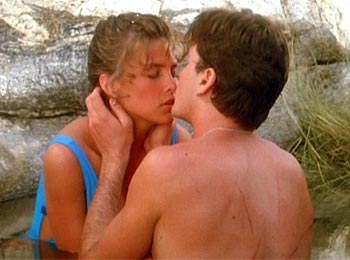
Packard Walsh (Nick Cassavetes) has a pretty good business going. He and his gang of “road pirates” patrol the Arizona desert. Whenever they spot a car that they want, they demand that the driver race for pink slips and they cheat to win. Through fear and intimidation, Packard rules the town of Brooks and not even Sheriff Loomis (Randy Quaid) can stop him.
Packard is obsessed with Keri Johnson (Sherilyn Fenn), who works as a carhop at Big Kay’s Burger. Packard considers Keri to be his property and even demands that she drink his blood so that they will be forever linked. Earlier, Packard and his gang killed Keri’s boyfriend, Jamie. When a new kid named Jake (played by Charlie Sheen) shows up in town, both Keri and Jamie’s brother (Matthew Barry) feel as if they know him from somewhere. Jake also has scars on his back the match Jamie’s wounds.
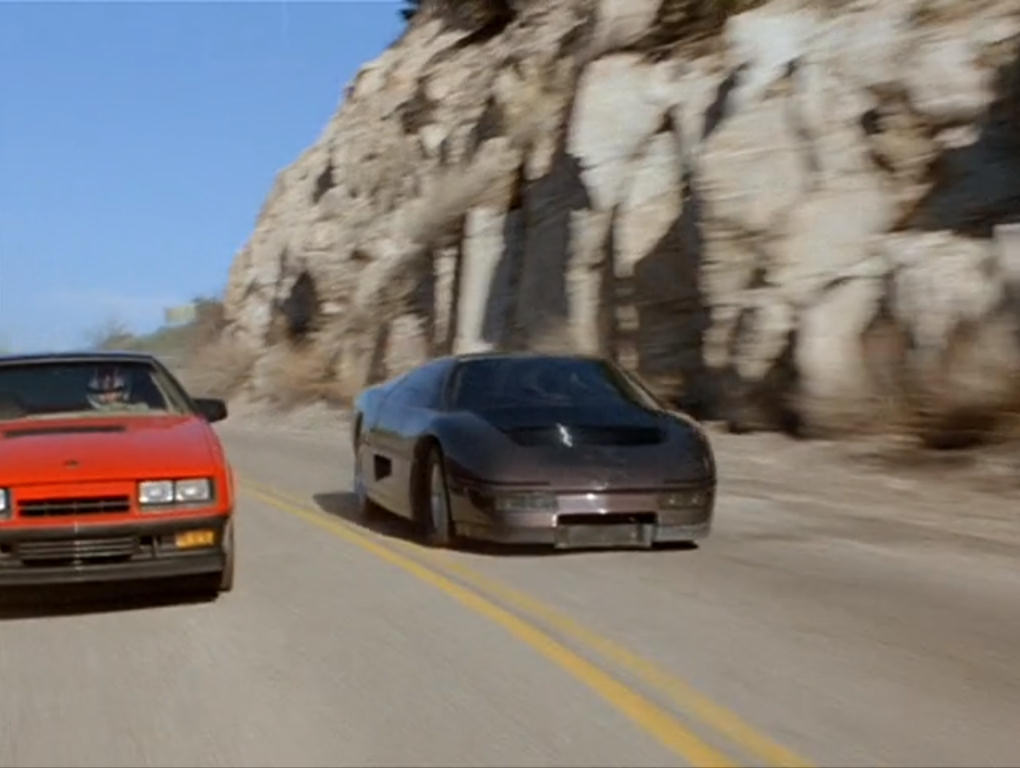
Shortly after Jake’s arrival, a mysterious black Turbo Interceptor appears on the roads. The unseen driver challenges each member of Packard’s gang to a race and then purposefully crashes into them. Whenever the Turbo explodes, it rematerializes somewhere nearby. When the driver does finally get out of the Turbo, it turns out that he’s covered in black leather armor and his face is hidden behind a black helmet.
According to Rughead (Clint Howard), the only member of Packard’s gang who did not take part in Jamie’s murder, the driver is “a wraith, man! A ghost, an evil spirit — and it ain’t cool!”
The Wraith is one of those films that always used to show up on TV when I was a kid. Thought it was often advertised as being a horror film, it’s actually an uncredited remake of High Plans Drifter with Clint Eastwood replaced by Charlie Sheen. Seen today, The Wraith is a major nostalgia trip. One of the fun things about watching the movie is ticking off all of the clichés that make this a definite 80s film, from the cars to the slang to the soundtrack. (It does not get more 80s than a soundtrack featuring both Billy Idol and Robert Palmer.) Packard’s gang is all made up of generic punk types. My favorite was Skank (David Sherrill), who had a mohawk and drank brake fluid.
Of course, the cars are the main appeal of The Wraith. All of the, are cool (even Rughead’s pickup truck) but the obvious star of the film is that black Turbo Interceptor. At its best, it rivals even Marty McFly’s DeLorean as the coolest car to show up in an 80s sci-fi film.
The Wraith may not be the greatest movie ever made but if you are into fast cars and Sherilyn Fenn at her loveliest, you should enjoy it.




 There’s a new substitute teacher at a local high school in Oregon and he’s not going to put up with any disrespectful punks. John Bolen (Sasha Mitchell) can educate minds and change lives but only when he’s not busy killing any student with a bad attitude and trying to protect his fellow teacher, Jenna McKenzie (Caitlin Dulany). Jenna is scheduled to testify against the local gang leader so every punk at school is trying to intimidate her and her boyfriend, Emmett (Nick Cassavetes!). It takes Jenna and Emmett a while to realize that John is killing all of their students but soon, a mysterious man named G.D. Ash (Rick Hill) shows up and insinuates that John might be connected to the robot teachers that, two years earlier, terrorized a high school in Seattle.