Timur Bekmambetov is not the director of this upcoming alien invasion film The Darkest Hour. The director is actually one Chris Gorak, but the trailer is definitely pushing Bekmambetov’s name as if he is the director. Then again I think the film does seem to have Bekmambetov’s stylistic flourishes written all over it.
The Darkest Hour looks to be set in Russia from beginning to end as we follow a group of young Americans on vacation and hitting up all the party night spots in Moscow. This makes for an interesting premise in that we see an alien invasion from a wholly different perspective. It’s an alien invasion seen through the Russian perspective even if half the cast are American tourists.
I hadn’t heard much about this film until now, but after seeing the trailer I’m definitely going to run out and see it when it comes out.
The Darkest Hour is set for a December 23, 2011 release date.
Last night, as I struggled to get some sleep, I ended up turning on the television to HBO and watching a truly infamous film — 1970’s Myra Breckenridge. Based on a novel by Gore Vidal (a writer that I generally have little use for), Myra Breckinridge is infamous for being one of two X-rated film released by 20th Century Fox in 1970. (The other one was Russ Meyer’s Beyond The Valley of the Dolls.)
Why Was I Watching It?
Because I’ve read a lot of books devoted to “the worst films ever made.” And all of them mention 1970’s Myra Breckinridge as being one of the worst ever made. And having seen the film, I can say that they’re right.
What’s It About?
Well, that’s a good question. Okay, there’s a bisexual film critic named Myron Breckinridge (played by an actual film critic named Red Reed). Myron gets a sex change operation from a pot-smoking doctor played by John Carradine. “It won’t grow back,” Carradine warns him.
Next thing you know, Myron is Myra and is now being played by Raquel Welch. Pretending to be Myron’s window, Myra goes to the acting school that is run by Myron’s uncle Buck (John Huston) and ends up falling in love with an acting student (played, pretty badly in her film debut, by Farrah Fawcett). Unfortunately, Fawcett’s in love with a cowboy from Oklahoma so Myra ends up anally raping the cowboy with a big dildo.
Oh, and a 70 year-old Mae West in the film for some reason. She plays a talent agent.
It all sounds a lot more interesting than it actually is.
What Worked?
Nothing. Just in case I’m not being clear, allow me to clarify: Nothing. Seriously, this may indeed be the worst movie I have ever actually sat through. What’s said is that it didn’t even work on a “so-bad-its-good” level. I love trashy film but Myra Breckinridge isn’t really interesting enough to be trashy. It’s just an amazingly boring film that thinks it’s about sex.
I’ve also read some who have claimed that this film, bad as it is, has a certain camp appeal. And, if you’ve never actually seen a campy film, you might think that Myra Breckinridge is camp. However, camp is not boring. Myra Breckinridge is.
Actually, there is one scene that has an odd, “you’ve-got-to-see-this-crap” appeal to it and here it is. Mae West sings “Hard to Handle.”
What Doesn’t Work:
The entire freaking film. Seriously. I mean, I don’t even know where to begin or what specifically to point out because, if you simply take this film’s failings on a problem-by-problem basis, it creates the false impression that the film is somewhat watchable.
Okay, here’s a few things that I simply will not be able to live with myself if I don’t take a few moments to be a bitch about:
1) There’s a lot of bad movies that are distinguished by interesting or, at the very least, watchable performances. It’s as if the actors realize that they’re going to go down with the ship unless they bring something new to the film. (Meanwhile, so-called great films feature some of the worst performances this side of Avatar…) Unfortunately, Myra Breckinridge is not one of those films. The cast alternates beyond going insanely overboard (like John Huston and Rex Reed) to delivering their lines with a dull contempt that seems to be directed as much at us as at themselves (like Raquel Welch.)
By the way, Raquel Welch is actually one of my favorite of the old school film stars. For me, she’s a bit of a role model, a strong Latina who never felt the need to apologize for being both a sex symbol and an intelligent, succesful woman. But Welch really does give a pretty bad performance here. Then again, I would argue that she gives the material exactly the amount of effort it deserves.
2) As bad as the cast is, no one is as terrible as Mae West. The 70 year-old West came out of retirement to play her role here. Anyway, it’s hard to understand why she’s in this film. At one point, when she meets a 6’7 actor, she says she’s only concerned with the seven inches. Now, imagine this being said by your great-great-great-grandma and you have some idea what it’s like to watch her performance here.
3) This film was made in 1970 and it attempts to be all counter-cultural by having “hippies” wandering around in the background. As well, we get a lot of hard-hitting political satire. By that, I mean that various fat men in cowboy hats pop up and complain about “smut” and “nudity” in the movies. I guess the audience is supposed to go, “Oh my God, they’re talking about movies like this!” It’s for this reason that I think that Myra Breckinridge is actually secretly meant to be a piece of right-wing propaganda.
4) Finally, for no real reason, clips from old 20th Century Fox films are littered throughout the film, popping up randomly to…well, I was going to say “comment on the action,” but few of them manage to do that. Basically, it works like this: you see Raquel Welch anally raping a man with a dildo. And then you see a clip of Stan Laurel for a few seconds. Then, you’re back to Raquel anally raping the man. Suddenly, there’s a clip of Claudette Colbert smiling. Suddenly, Raquel’s back and she’s still anally raping the man. And by the way, I’m not just making this up so I’ll have an example. This is what actually happens in the film.
5) And again, allow me to clarify that this film — which features Raquel Welch using a dildo to anally rape a man — is still one of the most boring things ever made.
6) “Okay,” you’re saying, “if you hated it so much then why did you sit through the entire freaking movie, Lisa?” I did it because, once I start watching a movie, I can’t stop watching until it ends. That’s my addiction. That’s my curse. That’s a duty that I’ve proudly accepted as a film lover. And not even Myra Breckenridge is going to keep me from doing my duty.
“Oh my God! Just like me!” Moments:
Yes, I know that this is where I traditionally offer up some sort of teasingly vague comment about my first year at college or where I admit that I’m scared of dogs, heights, swimming, and the area directly behind the television. And you would be justified in thinking that a film that claims to celebrate sexual freedom and bisexuality would give me the perfect excuse to be all sorts of TMI.
But you know what? There were absolutely no “Oh my God! Just like me!” TMI moments in Myra Breckenridge because there was not one single moment that, in any way, rang true or seemed to possess any sort of insight about…well, about anything. For an X-rated film that was specifically about sexuality, Myra Breckinridge left me as dry as the Sahara.
So, sorry — for the first time, I can say that I watched something that had absolutely no “OMG! Just like me!” moments.
The name Matthew Vaughn should be familiar with comic book fans everywhere. In 2005, Vaughn was introduced as the director to replace Bryan SInger for the third film in the X-Men franchise. The news was met with some cautious optimism. This was a filmmaker who had quite the loyal and growing following for his work on Stardust and Layer Cake. Months after he was picked my 20th Century Fox news came down that he was backing out of the project due to personal reasons and the film scrambled for a replacement which ended up being Brett Ratner. History was made that day as the beginning of the franchise’s decline began and steep plummet which recently reached it’s nadir with 2009’s Wolverine: Origins.
It’s has now been five years since X-Men: The Last Stand made it to the big-screen and now we have a new film in the franchise. X-Men: First Class has a familiar name behind the director’s seat and it looks like Matthew Vaughn stayed this time around (after directing a smaller superhero film in Kick-Ass for 2010) to craft what could become the best film in the X-Men/Wolverine film franchise. This film is a prequel/reboot of sorts (more on that later) and brings a fresh set of eyes and take on the origin story of this franchise.
X-Men: Last Stand actually begins the film exactly how the first X-Men film began with the 1944 World War II concentration camp setting where a young Erik Lensherr (later to become Magneto) finally manifests his power over magnetic fields as he watches his parents torn from his side. The first film ended that sequence once Erik was knocked out, but this time around it continues with a mysterious man named Schmidt (aka Sebastian Shaw and played with James Bond villainous-flair by Kevin Bacon) taking great interest in Erik and his ability which Erik could only use during bouts of pain and anger. The film continues this slight change in the series’ origins by switching over to Westchester County and into the expansive home of a young Charles Xavier who finds a certain young, blue-skinned shapeshifter named Raven who he invites to stay and become his friend once he realized he wasn’t the only one who was different and with abilities.
These two sequences continue to move the film forward as the we see these two “leaders in the making” adults and trying to find their place in the world of the free-swinging lifestyle and the Cold War culture of the 1960’s. Charles Xavier (played like a well-meaning cad and good-natured naivete about the world by James McAvoy) is a student working on his doctorate in Oxford on genetic theories while his “sister” Raven (Jennifer Lawrence) accompanies him. This is a Xavier who still hasn’t found the patient benevelonce of Patrick Stewart’s Professor X and uses his considerable telepathic abilities to help him pick up on beautiful coeds instead. It’s during such a scene where we see Raven show just a hint of jealousy as Xavier tries his lines and moves on a beautiful British lass. It would seem Raven’s feelings for her ‘brother” may go beyond sibling affection though Xavier doesn’t see her as anything other than a sister for him to protect.
Erik Lensherr’s time as an adult was shown as having become a life of obsession over his treatment at the hands of the Nazi’s and those of Schmidt’s as he travels the world in search of escaped Nazi war criminals. Erik takes him throughout South America as he finds the trail of Nazis hiding out in that region since the end of the war. We see this adult Erik hardened by his anger and single-minded need for revenge on Schmidt and those he worked for. He’s not above using his abilities to kill in order to get the information he requires and there’s a hint of satisfaction when he does kill those he sees as responsible for his tragic upbringing with his magnetic abilities. These two adult sequences continues the film’s theme of the ideological difference between Xavier and Erik being formed through nature and nurture as their lives moved down diverging paths from an early beginning until it convergence for a small, brief period around the time of the Cuban Missile Crisis.
The film’s second act begins with Moira McTaggart (Rose Byrne), now a covert CIA Agent, investigating a certain Col. Hendry who she suspects as having betrayed the nation to the Soviets, but instead finds out that the true nature of Hendry’s associations were much more insidious and dangerous. The iconic Hellfire Club of the comics finally make their appearance with Schmidt who actually happens to be Sebastian Shaw (whose powers grant him the ability to absorb all kinetic energy which he uses to keep himself young and can release with explosive results), Emma Frost (January Jones) who’s a telepath with the ability to turn body in a sort of diamond-form, Riptide who can create tornado-like abilities and finally the demonic-looking Azazel whose ability to teleport might give people not well-versed in the “X-Men Universe” a clue as to one-half of parents who may be responsible for Nightcrawler in the second film.
X-Men: First Class spends much of this second act like it was Ocean’s 11 as Xavier and Erik get recruited by the CIA to find other mutants and create their own mutant team to counter Sebastian Shaw’s Hellfire Club and his goal of initiating World War III between the US and the USSR and thus destroy all of humanity and leave the planet for the mutants to rule over. Yeah, it is this part of the film’s plot which may strain the suspension of disbelief for some audiences who never grew up reading the comics, but it shouldn’t. Ian Fleming’s James Bond series used scenarios just as ludicrous with villains just as Machiavellian in the form of SPECTRE so X-Men: First Class and it’s world domination plans shouldn’t be too farfetched to fans of that British superspy and his adventures.
This middle section of the film is where X-Men: First Class actually begins to lag after a strong first act. I don’t know if the sequences of the new recruits training, bonding and learning how to use their powers could’ve been written to move much faster without losing some of the character building scenes. From how this second act played it seemed to look like scenes were actually cut out to try and keep the film from being too long (it’s final cut being just a tad over two hours already upon release), but I wouldn’t be surprised if the DVD/Blu-Ray release actually has a director’s or uncut version that actually expands this middle section to really give life to it instead of having it play out like a perfunctory training montage with a dash of character beats.
The film hits it’s action-film stride with the third and final act as Xavier and Erik’s team of young mutants must now use their abilities to stop Shaw and his Hellfire Club and at the same time prevent World War III from beginning and not freaking out the humans who are still unaware of their existence as a whole. It’s this third section which we see too much of it in the trailers and tv spots that one might say we’ve seen it all before we even see the film as a whole, but it still kept back a lot from those ads to make the whole final twenty minutes of the film thrilling and action-packed.
All of this could just mean that X-Men: First Class was just your run-of-the-mill superhero action film that we get on a yearly basis come summertime, but it’s a testament to Matthew Vaughn’s direction and the strength of the script by Vaughn, longtime collaborator Jane Goldman and Thor scribes Ashley Edward Miller and Zack Stentz that the film goes beyond being just an action film with all it’s sturm und drang coupled with fancy special effects. The previous films in the series always explored important cultural and moral themes that’s always been the bread-and-butter of the X-Men stories in the comic books. We just don’t see the film explore the ideological difference between Xavier’s peaceful co-existence between humans and mutants alike, but also we get more detail on why Magneto finally comes to the conclusion that war between humans and mutants was an inevitability and why his stance doesn’t fall under the aegis of being evil, but something that anyone could understand and even support whether one was human or mutant.
The story also doesn’t just pay lip-service to the idea of how mutants view themselves and how even within the mutant community there’s a visible rift between those whose abilities are invisible to the general population and those whose abilities and genetic mutation physically manifest themselves in such ways that to many might not look to appealing. This idea really gets a major exploration in the subplot involving Raven (soon to be Mystique), Hank McCoy and, to a certain degree, Xavier and Erik. We see how those like Xavier whose abilities don’t show in a physical manner have a sort of “don’t ask, don’t show” about those like Raven when it comes to their power when in public.
Raven (played beautifully by Jennifer Lawrence) is caught between Xavier who wants her to remain incognito so as not to shock the world too soon in realizing that mutants exists and that of Erik who sees Raven’s original blue-skinned form as beauty and perfection and how she should never hide who she truly is. This tug and pull between her two mentors makes for a convincing subplot in how Raven comes to the conclusion which would take her to the side of Magneto in later films, but also highlight how the two sides in later films have so much intertwining bonds of friendship and relationship that seeing them against each other becomes a tragedy on its own. Civil wars are not just a thing of humans but those who sees themselves apart from them.
The great performances by most of the leads add to the film’s strength. McAvoy and Fassbender, at first, look to be unconvincing in terms of their appearance as the younger versions of Patrick Stewart and Ian McKellen, respectively. This becomes a non-issue once they’ve established themselves through their performances which gives new layers to the personalities of Professor X and Magneto. Many people always saw these two as the comic book version of Martin Luther King, Jr and Malcolm X, but that’s an oversimplification. The film and the performances by McAvoy and Fassbender digs deeper into both their characters’ motivations and ideologies and how their past experiences and upbringing couple with their time together as brothers-in-arms and friends show more about these two than just being mutant-proxies of MLK and Malcolm X. The other young mutants do an adequate enough job that they don’t seem lost in the film. Nicholas Hoult as the young Hank McCoy and how he plays off Lawrence’s Raven during their little subplot in the film is one stand-out that I hope gets explore even more in any follow-up sequel.
There’s a nice burgeoning young love chemistry between him and Lawrence as Beast and Raven that doesn’t seem too tacked on to create a the prerequisite love couple in any film. Their common trait of having physical mutations and how they seem to both feel apart even from their fellow mutants develop their characters in ways the previous films in the series never did. They never want to rid themselves of their mutant powers. They just want to look normal and still keep their abilities. It’s a having your cake and eat it too mentality that has some surprising results for both Raven and Hank.
X-Men: First Class has had some fans of the series put in a very difficult situation. The film definitely is a prequel to the previous films, but it also does a major time in rewriting continuity in the series. I was one of those fans and thought it would ruin the film in the context of the franchise. I’m surprised that in the end I didn’t really care and actually hope that this film actually is a reboot of the franchise. I see this film and forget the previous three as being part of it. This film was just too good and fun in it the end for continuity issues to become the major flaw that sinks it. I liken this film as similar to Christopher Nolan rebooting the Batman film franchise. That film honored the contributions to the character, but went on it’s own way to tell that character’s tale. I see Vaughn doing the same with this film. He has done something which many thought was a near-impossible task and that’s make the X-Men franchise relevant once more in a pop-culture landscape that seems to have left the franchise behind after the disastrous Wolverine: Origins of 2009.
This film delivered on the ideas that made the comic books so beloved by millions of fans for almost a half-century. It made great use of the 1960’s time and setting to tell a story of these characters beginnings as heroes and villains (though the latter shouldn’t be seen as them being truly just evil bad guys). Even the inclusion of real-world historical event like the Cuban Missile Crisis was a nice touch which gave the film a foundation in realism. Again, this film played off like a superhero, Marvel version of an Iam Fleming James Bond story. For those who are huge fans of the previous films there’s even two brief cameos of those films two favorite characters that appear in this film. They don’t come off as cheesy and unnecessary and actually come off as great additions. I won’t mention who these cameos were but the audience’s reaction to them was very vocal and very positive. I say the same should be said for X-Men: First Class as a film that resuscitates the franchise.
Today we saw the release of the second official trailer for the upcoming X-Men prequel/reboot helmed by British director Matthew Vaughn.
X-Men: First Class looks to show the early days when Professor X and Magneto were still friends and allies instead of the adversarial relationship they had in the first three films in the franchise. This new trailer shows more of the characters who will be involved in this film. It also shows the mutants and their powers in action. I must admit that I wasn’t too thrilled with the previous trailers shown about this film, but this latest shows more action and finally reveals it’s summer blockbuster pedigree. The sequence with Magneto lifting the submarine out of the water was really cool.
It’s still not the superhero film this summer that tops my must-see list, but this trailer has put this film in the running as one of the films I must-see.
X-Men: First Class is still slated to have a June 3, 2011 release.
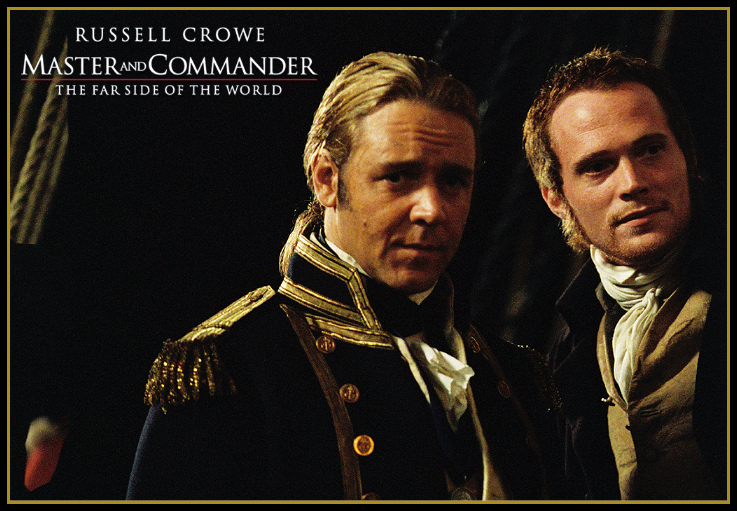
If there was a film which deserved better when it first came out in 2003 it would be Peter Weir’s epic adaptation of the Patrick O’Brian seafaring novels starring the character of Capt. Jack Aubrey. It was just bad luck on the part of Weir’s film that it came out the same year and month as the juggernaut that would sweep through not just the box-office for the 2003 holiday season, but all through the award-season. If Master and Commander: The Far Side of the World had only come out a year later there’s a great chance it would’ve been the frontrunner for 2005 Academy Awards for Best Picture, Best Director, Best Adapted Screenplay and many more. But the juggernaut that was Peter Jackson’s Lord of the Rings: The Return of the King would not be denied after two previous years when Jackson and his magnum opus were passed over.
To say that Peter Weir was at the top of his game with Master and Commander would be an understatement. Working from a script written by Weir himself and John Collee, the film would take several episodes from the Patrick O’Brian Aubrey-Maturin novels and combine them to make a coherent and thrilling period piece that rarely ever get made anymore. This was epic filmmaking at its finest with Weir’s direction keeping the long-running time of the film from becoming too tedious. Yet, he was also able to keep the film from becoming one battle setpiece following another. There was enough of a balance between the quiet storytelling, especially between the characters of Capt. “Lucky” Jack Aubrey (played by Russell Crowe in what had to be his best role ever) and his close friend and ship’s doctor Stephen Maturin (Paul Bettany matching Crowe scene for scene) to keep the film grounded in reality.
Master and Commander is set during the Napoleonic Wars when France and England battle it out on land and in the high seas. On one side is the HMS Surprize captained by Jack Aubrey which patrols the sea lanes from French privateers looking to attack and loot the rich English whaling ships to help fund Napoleon’s ambitions. The film is actually a cat-and-mouse thriller wrapped around a character piece as Aubrey’s ship and crew, outgunned and less armored than the French frigate Acheron it has come across during its patrol, must not just try and survive but find a way to beat it’s larger opponent. It’s during the quiter scenes in-between sea engagements that the film actually becomes stronger. We see life onboard the HMS Surprize as being quite harsh and primitive and not so glamourous as past films about sailing life would have audiences believe. The film shows how this harsh life for volunteers and press-ganged crew ratings creates a strong bond of fellowship amongst the crew members that when they believe someone is jeopardizing their lives they quickly turn on that individual. But it’s through the near-dictatorial handling of his crew which keeps both ship and crew from devolving into mutiny. Crowe does a great job of giving Jack Aubrey that balance of ruthless taskmaster whose word is law onboard, but also gives his captain that bon vivant flair which when used accordingly makes Aubrey a hero to the very men he has to lord over.
This benevolent dictator was balanced out by Bettany’s Dr. Maturin who acts not just as the scientific counter to Aubrey’s militaristic personality, but also as the conscience of the ship who looks first to the crew’s well-being. This dynamic between Crowe and Bettany kept the film anchored and stabilized as we see the long-standing friendship between these two get tested not just by the crisis they find themselves in but also the vast ideological differences between the military man and the scientist. Yet, despite all their problems and difference when things became rough the two would settle it amicably and concentrate on their shared task with their bond of friendship intact and much stronger after.
The film doesn’t shirk it’s thrills as Master and Commander provides audiences with some of the most thrilling and accurate portrayal of naval combat during the Napoleonic era. There are no steel-hulls or rapid-fire guns. The engagements between the HMS Surprize and the Acheron were all brutal affairs from the first time the latter ambushes Aubrey’s ship early in the film to the final battle which sees not just ship-to-ship fighting but boarding actions as the crew of the Surprize attempt a desperate gamble to take the fight to the bigger French privateer. It’s a testament to Weir’s direction that even through the chaotic nature of each battle he’s able to keep each scene easy to follow and allow for main characters to stand out for audiences to recognize.
It’s a shame that the film didn’t succeed in the box-office more than it did. Master and Commander: The Far Side of the World showed that there was still old-school epic filmmaking left in Hollywood with filmmakers willing to tell a grand story with bigger-than-life characters on a broad canvas. The fact that it took an even more epic film to surpass Peter Weir’s film shouldn’t detract from this film’s accomplishments.
The franchise which seemed to have been left for dead by Tim Burton’s attempt to reboot it in 2001 looks to try and make another go at it again ten years later. Tim Burton will not be anywhere near this reboot and instead will be in the hands of British newcomer Rupert Wyatt.
Rise of the Planet of the Apes (originally called Rise of the Apes which I actually prefer) looks to reboot the franchise by taking the origjnal Conquest of the Planet of the Apes ffrom 1972 and using that as the foundation for this reboot’s plot. It will star his Highness himself, James Franco, with Peter Jackson-regular Andy Serkis playing the role of ape leader, Caesar.
This film seems to have the full backing of Jackson’s WETA Digital to create all the apes in the film digitally. There won’t be any prosthetics and make-up work with this film unlike the previous ones. While some may think this is a bad idea I actually think WETA Digital’s work in creating total CG-characters in the past pretty much heads above other FX-shops (and I include Industrial Light & Magic). From the trailer the apes look quite realistic and even Caesar himself look very real.
Time and the film’s release will tell if this reboot will have a better reception than Tim Burton’s film. I, myself, am looking forward to it since of all the Apes film of the past it was always Conquest that remained my favorite of all of them.
Rise of the Planet of the Apes is set for an August 5, 2011 release.
Of all the Marvel Comic book films coming out this summer it is the one not being made by Marvel themselves which seems to be getting the biggest amount of negative press and buzz from the fans. The last couple weeks has seen pictures from the set either leaked by accident or on purpose to gauge fan reaction. To say that reaction has been underwhelming would be an understatement.
The film is 20th Century Fox Studios latest film on the X-Men franchise. A franchise which is now batting 2-for-4. The first two films in the franchise were thought of as being very good to great and the last two seen as a major mess or just plain awful. Now the fifth film has just released it’s first official trailer and from the look of things it looks to be retconning all the vents which occurred in the first four films. The scenes used for the trailer looked very good and the looks of the many (people complaining about the amount of characters in the third Nolan/Batman film will be apoplectic once they see First Class) characters gives me some hope.
The film has Matthew Vaughn just fresh off of Kick-Ass and it will be up to him to create a gem out of the rough stone people seem to be judging the film at the moment. X-Men: First Class is set for a June 3, 2011 release.
What is there to say about Dodgeball – A True Underdog Story other than it’s a no-brainer of a hilarious movie that doesn’t aspire to lofty heights. What it does do is come out firing with some of the funniest physical comedy and one-liners since The Farrelly Brothers’ Something About Mary. First time director Rawson Marshall Thurber does a good enough job to keep the laughs coming one right after the another to keep Dodgeball from becoming too repetitive.
The movie is a riff from the stock underdog sports genre with a Peter La Fleur (played by Vince Vaughn with his usual sardonic wit) having to find a way to save his Average Joe’s Gym from being foreclosed by his bank and turned by a rival hi-tech gym next door into a parking lot. Who else would be the perfect foil for Vince Vaughn’s Peter La Fleur but none other than Ben Stiller as the former-fatty turned workout fitness Nazi, White Goodman. Goodman’s Globo Gym is a state-of-the art, sterile and BALCO-like gym where insults and making its members feel ugly, fat and useless is the way to clean health and the perfect bod.
Already, within the first fifteen minutes, we know who to root for and who to boo. In one corner we have the Average Joe’s guys played with comedic timing by Justin Long, Stephen Root, Chris Williams, Alan Tudyk and Joel Moore. Stiller’s Goodman and his consigliere Me’Shell (Jamal Duff channeling Barry White) with a hand-picked ringer of a dodgeball team he calls the Purple Cobras. With the two sides set the dodgeball carnage begins as Average Joe’s must win the Las Vegas Dodgeball Invitational to earn the $50,000 needed to save the gym. To round out the Average Joe’s team will be the bank accountant who ends up sympathizing with the Joe’s, Kate Veatch (played by Stiller’s real-life wife, Christine Taylor) and Patches O’Houlihan (Rip Torn in a scene-stealing role).
Rip Torn is hilarious as the acerbic and insane former dodgeball great Patches O’Houlihan. He pretty much gets all the best one-liners in the movie the moment he appears on the screen. He coaches the Average Joe’s team by browbeating them, insulting them and, failing that, throwing wrenches at them to help them in learning the 5 D’s of dodgeball: Dodge, duck, dip, dive, dodge. In fact, I would say that if it wasn’t for Rip Torn’s character dominating the middle part of the movie, I think Dodgeball‘s constant ball to the groin shots would’ve gotten old. Instead Patches O’Houlihan constantly gave people watching a reason to laugh out loud.
Dodgeball – A True Underdog Story is a movie that the Academy voters will not go about showering with praises and awards, but I’m sure most of them will be watching it and laughing out loud like the rest of the general public. Dodgeball is one hilarious, one-liner after one-liner ball to the nuts funny and it doesn’t aspire to be anything else but that. This movie will never get old with each viewing and will continue to make people laugh out loud.
A little over five years ago Warner Brothers made the decision to reboot the Batman film franchise. Several names of filmmakers were mentioned as candidates to helm this reboot. One of them was director Darren Aronofsky. He has made a name for himself helming very dark (and for some very depressing) films about very damaged personalities and their struggles. The Batman/Bruce Wayne duality was perfect for Aronofsky and he had begun to do early treatments to adapt Frank Miller’s classic Batman origin tale, Batman: Year One. In the end, this Aronofsky project fell through and the reboot ended up being handled by Christopher Nolan (not a slouch of a filmmaker himself).
Aronofsky has made a couple of original and very personal films since then (The Fountain, The Wrestler, Black Swan), but with 20th Century Fox scrambling to put another one of their Marvel-licensed properties into production in order to keep the rights to them, they’ve decided to give the reins of the next Wolverine film to Aronofsky. Rumors of Aronofsky close to signing the deal to helm this Logan sequel was finally confirmed by none other than Hugh Jackman himself aka Wolverine in an interview for Vulture.
The first film in this character’s franchise was lackluster at best and horrible to most. The fact that a sequel has been greenlit even after the less-than-stellar box office returns of the first film was headscratching to many. Will Aronofsky’s involvement in this sequel actually erase the bad taste that Wolverine: Origins left in fans’ mouths. If there was anyone who can actually get a handle in the troubled and damaged psyche of one of Marvel’s most iconic characters it would be Darren Aronofsky.
There’s still little details as to what sort of storyline this Aronofsky sequel will take or will he just decide to reboot the franchise and start fresh. The reaction I’ve been reading has been mostly tepid with some guarded excitement from those who thinks Aronofsky will end up working his dark magic on this character on the big-screen. We’ll learn more once filming starts in early 2011.
Here’s to hoping that Aronofsky can do for Wolverine what Nolan was able to do for Batman.
In 2009 a little film coming out of France gained a buzz from on-line film bloggers. The film wasn’t the latest arthouse attempt to relive the glory days of French New Wave. It wasn’t a film that’s become part of the extreme French horror that’s becme all the rage in the horror circles in the past decade or so. This film was an action-thriller starring Irish actor Liam Neeson with an ensemble cast of actors from the US, UK, France and Albania. The film I am talking about is Taken by French filmmaker Pierre Morel (his previous film, District 13 with it’s parkour action scenes would make it a cult hit) and produced by his mentor Luc Besson.
Taken at its most basic core is a film about a father’s love for his daughter who has gotten herself kidnapped by Albanian sex-traffickers while on vacation in Paris, France. Liam Neeson’s character gets introduced as a retired government worker and divorcee whose attempt to reconnect with Kim his teenage daughter (played by Maggie Grace of Lost). His attempts to impress his daughter and make her happy gets upstaged by his ex-wife’s richer husband and stepfather to his daughter. It doesn’t help that Neeson’s character Bryan Mills has skillsets not easily translated to the civilian sector. He’d take an offer of a bodyguard gig from one of his former co-workers and it’s during this security job that we get a clue as to what sort of government employee Bryan Mills was before his decision to retire.
Moving forward we finally get past the introductions of the characters (Famke Janssen as Mills’ ex-wife really comes across as a major harridan who seems intent on punishing Mills for selfish reasons). Mills learns of a trip Kim will be taking with her friend Amanda (Katie Cassidy) to follow U2’s European concert tour. Mills, the clearheaded parent, doesn’t like this plan to have his daughter galavanting across Europe without adult supervision, but his guilt for having neglected Kim while he was working for the government plus his ex-wife’s insistence that Kim take the trip makes him relent, but not without giving her some advice to stay safe.
To say that Kim and Amanda get into a heap of trouble right as soon as they arrive in Paris would be an understatement. The two get kidnapped while staying at the luxury apartment of Amanda’s cousin. Before Kim is taken by the masked intruders (who’ve already taken Amanda) she’s able to make a desperate phone call to her father. Calm, collected and knowing that her daughter’s abduction was an inevitability, Mills instructs his daughter to relay to him as much information as possible about those abducting her. With that information in hand Mills heads to Paris to find his daughter (and to punish those who dare kidnap her).
From then on Taken becomes an action-thriller which barely gives the audience a chance to take a breather. Mills knows his time frame when it comes to finding his daughter gets shorter and shorter thus goes about his job searching for her in a deadly efficient manner. Mills becomes Jack Bauer and Jason Bourne rolled into one. There’s no witty, debonair Bond in this character. Mills goes about his business of interrogating, killing and gathering information with cold, calculating efficiency which leaves no room for Bondesque dialogue. The story moving forward once Mills arrive in Paris becomes almost an extension of Mills’ character. Writers Besson and fellow collaborator Robert Mark Kamen keep the dialogue to the barest minimum. We learn more about Neeson’s character through his actions more than we do during character interactions with other players in the film.
The film hinges on the audience buying Liam Neeson as a deadly, ex-CIA operative who manages to survive every violent encounter throughout the film (some by his own doing and others just trying to survive through it). From how people have reacted to this film and Neeson’s character I would say that it’s a big definitive yes that we buy Neeson as someone akin to Bauer and Bourne. In fact, I would say that Neeson’s Bryan Mills would be the more dangerous of the three. He has no compunction about using torture to gather information and barely breaks a sweat when killing those involved in some way in his daughter’s abduction. He has no bouts of guilt about what he has done in the past (probably killing as a secret agent) , what he’s doing in the present (killing to find his daughter) and what he’ll be doing in the future (probably thinking killing thoughts about anyone who will look at his daughter funny). Neeson’s Bryan Mills is a cold, efficient killing machine who doesn’t use fancy moves to take out his opponents and willing to shoot them in the back if it ends the fight in his favor.
The action sequences in Taken has some parkour influences, but not enough to make it distracting. There were no Michael Bay-style skewed camera angles, slo-mo shots and ADHD-style editing. Morel actually keeps the frenetic editing that made the Jason Bourne fight scenes so dynamic to a minimum. There’s just enough of it to make the fight scenes look brutal and painful, but not enough to make people nauseous. The climactic action sequence on the yacht of a rich buyer of sex-slaves goes by so quickly yet was more entertaining than half the prolonged action scenes from Bay’s Transformers sequel.
The rest of the cast barely keep up with Neeson in the film. They become tertiary characters whose job were to give Neeson’s character the motivations he needs to get the job done. I will say that Maggie Grace as Kim was believable as a teenager even down to the spoiled teen she starts off in the beginning. But again her character was just there to motivate Neeson’s character to go back to doing what he did well and that’s kick ass (he’d probably do it just as well while chewing bubble gum).
In the end, Taken was an action-thriller which more than surprised many people. It cemented Liam Neeson as one badass dude in the same league as Kiefer Sutherland’s Bauer and Matt Damon’s Jason Bourne. The film became a showcase for people to witness Neeson kickass and do it believably while Morel does just enough to keep the film from becoming too ridiculous. While Taken won’t herald the coming of another era of French New Wave, it does succeed in doing what it set out to do and that’s entertain, thrill and just give the audience some kickass escapist fare that some big-budgeted Hollywood studio titles never seem to do.