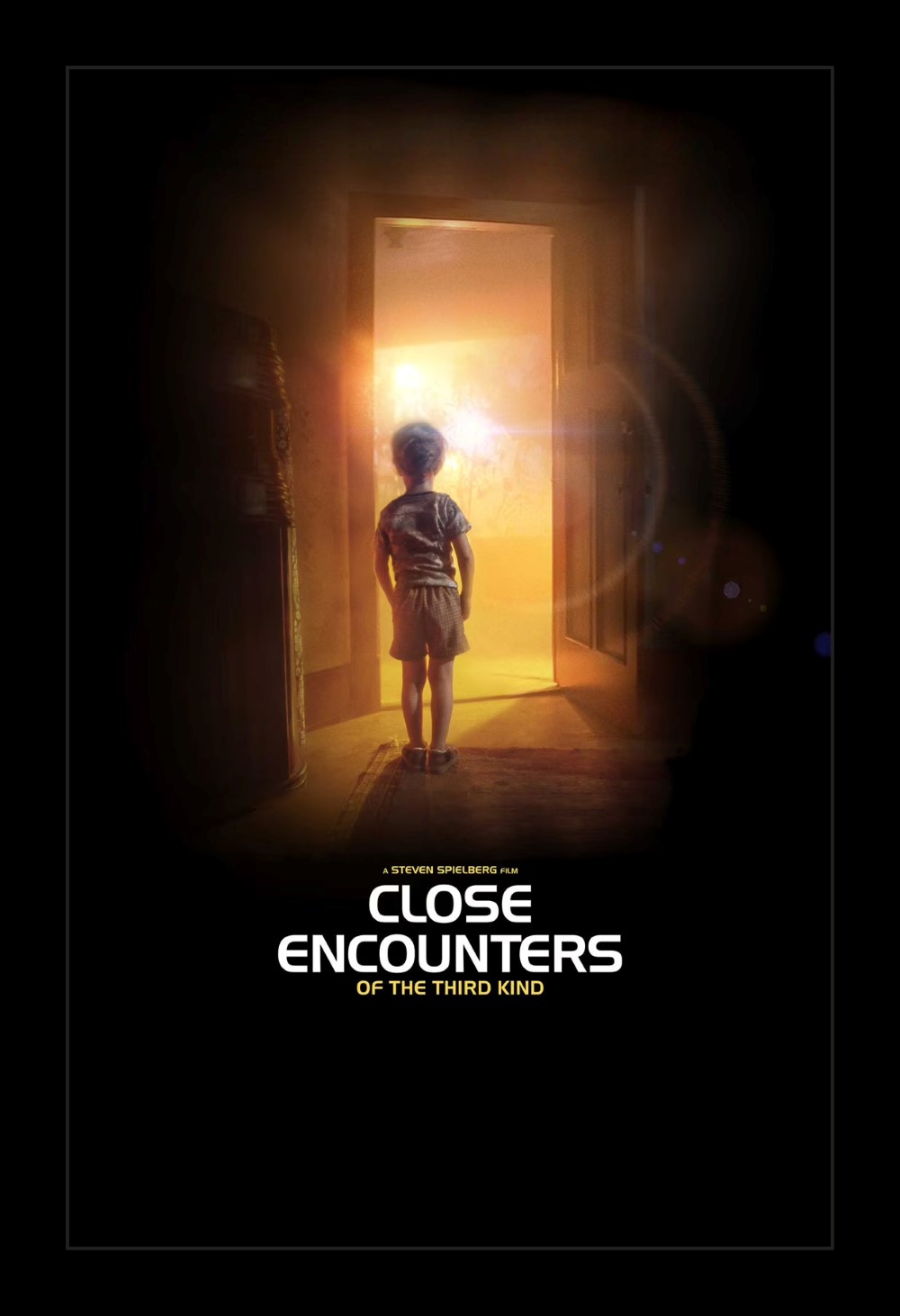
Review: Close Encounters of the Third Kind (dir. by Steven Spielberg)


“Monsieur Neary, I envy you.” — Claude Lacombe

When we look back at the historic cinematic landscape of 1977, it is almost impossible not to view it through the lens of a seismic cultural shift. That was the year a young George Lucas unleashed Star Wars upon the collective consciousness, fundamentally reshaping the Hollywood studio system and redirecting the trajectory of science fiction toward space opera, galactic dogfights, and mythic hero journeys. Yet, just a few months later, Steven Spielberg quietly delivered his own counter-argument to the stars with Close Encounters of the Third Kind. While Lucas looked outward toward far-away galaxies, Spielberg looked upward from our own suburban backyards. The result remains one of the most singular, agonizingly beautiful, and intensely personal science fiction films ever made, a masterclass in atmospheric tension that manages to balance deep blue-collar anxieties with a profound, almost spiritual sense of cosmic wonder. Watching it today, stripped of the immediate historical noise of the late seventies, the film stands out not merely as a technical milestone of visual effects, but as a fascinatingly messy character study about the terrifying, disruptive nature of inspiration and obsession.

The story follows Roy Neary, a blue-collar electrician in Indiana who, during a late-night power outage, sees something inexplicable in the sky. He’s not alone—across the state, a young mother named Jillian Guiler also witnesses strange lights, and her toddler son Barry becomes eerily fascinated by them. What Roy and Jillian don’t know is that similar sightings are happening worldwide, from the Gobi Desert to the air traffic control towers of Indianapolis. The film then does something unusual: instead of cutting to a military briefing or a scientist’s whiteboard, it stays with Roy as his ordinary life starts to fracture. He becomes obsessed with a shape he can’t quite remember—a mountain, maybe, or a tower—that he begins sculpting out of mashed potatoes, shaving cream, and whatever else is at hand. His wife and kids, understandably, think he’s losing his mind. Jillian, meanwhile, faces a more immediate and terrifying version of the same mystery.

What’s remarkable is how Spielberg handles characterization. Roy isn’t a hero in any traditional sense. He’s a loud, slightly goofy family man who loves model trains and bad jokes. Richard Dreyfuss plays him with a permanent crease of confusion between his eyebrows, as if his brain is trying to process a frequency nobody else can hear. The film never explains why Roy is chosen or why the visions hit him so hard—it just shows the consequences: lost jobs, a crumbling marriage, a man who starts seeing his living room as a prison. Jillian, played with fierce tenderness by Melinda Dillon, is the emotional anchor. Where Roy’s obsession feels almost euphoric, Jillian’s is rooted in primal fear and love. She doesn’t want to meet the unknown; she wants her son back. The film wisely never pits them against each other. Instead, they become accidental allies, two people dragged toward the same inexplicable destination for very different reasons.

Then there’s the other side of the coin: the government. François Truffaut (one of the founders of the French New Wave film movement), in a wonderfully offbeat piece of casting, plays Claude Lacombe, a French scientist leading a secret U.N. team that’s been tracking the phenomena for years. We see them discover something astonishing in the Mongolian desert—a lost ship from World War II, returned without its crew, in pristine condition. Later, they find an entire tanker ship deposited in the Gobi, miles from any ocean. These scenes are brief but crucial, because they establish that whatever is happening has been happening for a long time. Lacombe and his team aren’t villains; they’re just as baffled as Roy, but with better funding. Their method of communication—a simple five-note musical phrase—becomes the film’s quiet heartbeat. Spielberg trusts you to understand that this isn’t a code or a weapon. It’s a greeting.

The film’s middle section is where most blockbusters would insert a chase or a battle. Instead, Close Encounters gives us a slow-burn portrait of obsession as a kind of grace. Roy drives his family crazy. Jillian chases rumors. Hundreds of other ordinary people—the film calls them the “paranoids”—start showing up at rural crossroads, drawn by the same psychic pull. Spielberg shoots these scenes with a documentary-like patience: a traffic jam of confused believers, a midnight roadblock, a man who just knows he has to go to Wyoming. You start to feel the pull yourself. By the time Roy finally understands what the mashed-potato mountain is—Devil’s Tower, a real volcanic plug in northeastern Wyoming—the movie has earned every ounce of that revelation. It’s not a twist. It’s a release.

The final forty minutes of Close Encounters are best experienced with as little prior knowledge as possible, so I’ll stay vague. What I will say is that Spielberg stages the arrival of the unknown as a religious event, not an invasion. There are no laser cannons, no ultimatums, no speeches about humanity’s destiny. Instead, there’s light and sound, a symphony of colored orbs and humming engines, and a sequence of hand gestures that communicates more than any dialogue could. The aliens, when they finally appear, are small and pale and oddly childlike—not scary, not angelic, just other. And a choice that Roy faces, involving whether to stay or go, lands with the weight of a moral question, not a happy ending. Spielberg doesn’t tell you if it’s right. He just shows you a man’s face, lit by unearthly glow, and leaves the rest to your own compass.

Technically, the film is a marvel of analog craft. The UFOs aren’t digital—they’re models, lights, and smoke, shot with such loving care that they feel tangible. Douglas Trumbull’s visual effects prioritize scale and mystery over menace. John Williams’s score, anchored by that five-note motif, does the emotional heavy lifting without ever feeling manipulative. And Spielberg’s direction is all about waiting—holding on a character’s face as they process something impossible, letting a shot of the night sky breathe for an extra five seconds. That patience is the film’s secret weapon. In an era of quick cuts and louder-is-better spectacle, Close Encounters dares you to sit in the dark and listen.

Does it hold up? Almost entirely, though with small caveats. The pacing is glacial by modern standards, and Roy’s family is written as shrill obstacles—Teri Garr does her best with a thankless role. Some viewers may find Roy’s eventual choices hard to forgive. But those complaints miss the point. Close Encounters isn’t about good fathers or responsible citizens. It’s about the ache of the ineffable—the feeling that something is out there, just past the treeline, and it knows your name. Spielberg made bigger hits, but he never made anything more personal. If you’ve never seen it, or haven’t since you were a kid, watch it in the dark. Turn your phone off. Let the tones wash over you. You might find yourself humming that five-note song for days. And honestly, that’s the whole point.


4 Shots From 4 Films: Special Jeremy Saulnier Edition


4 Shots From 4 Films is just what it says it is, 4 shots from 4 of our favorite films. As opposed to the reviews and recaps that we usually post, 4 Shots From 4 Films is all about letting the visuals do the talking.

Today, we wish a happy birthday to director Jeremy Saulnier!  It’s time for….

4 Shots From 4 Jeremy Saulnier Films

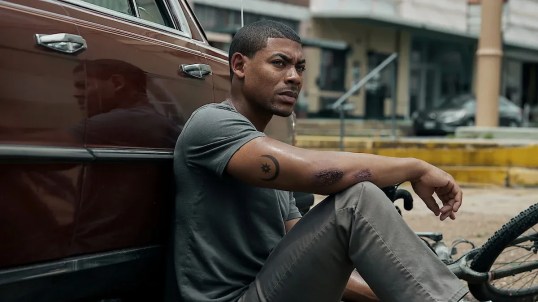
Blue Ruin (2013, dir by Jeremy Saulnier)

Green Room (2015, dir by Jeremy Saulnier)

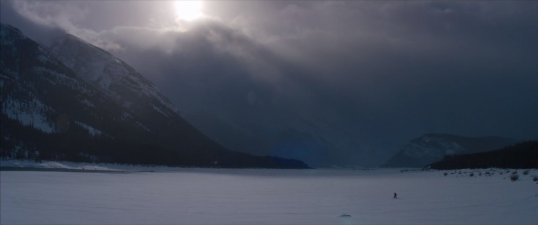
Hold the Dark (2018, dir by Jeremy Saulnier)

Rebel Ridge (2024, dir by Jeremy Saulnier)

Music Video of the Day: Burning Like A Flame by Dokken (1987, directed by James Yukich)


In the 80s, a lot of so-called “hair metal” bands had videos that revolved around flames and firefighters.  That is the risk you take with all of that hairspray.

This video was directed by James Yukich, who was one of the busiest video directors around.  Yukich pretty much directed at least video for everyone who was anyone.

Enjoy!

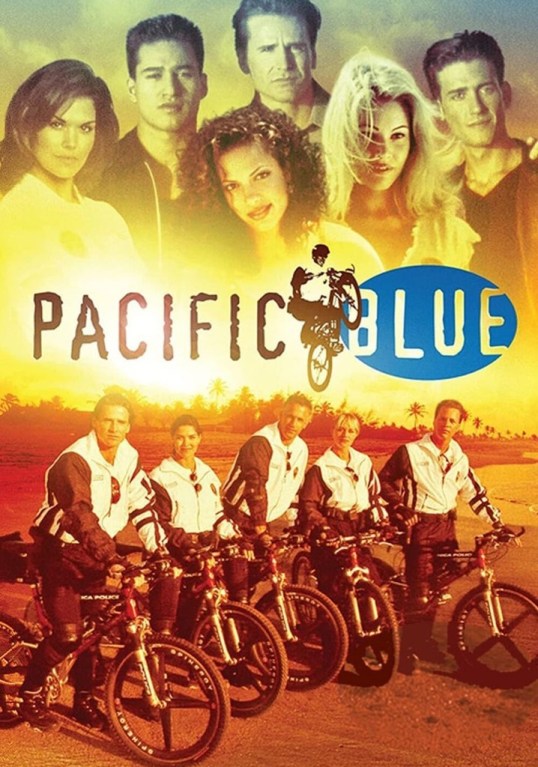
Late Night Retro Television Review: Pacific Blue 4.6 “Silver Dollar”


Welcome to Late Night Retro Television Reviews, a feature where we review some of our favorite and least favorite shows of the past! On Tuesdays, I will be reviewing Pacific Blue, a cop show that aired from 1996 to 2000 on the USA Network!  It’s currently streaming everywhere, though I’m watching it on Tubi.

This week, gamblers are causing trouble on campus! It’s time to send in an undercover bike cop!

Episode 4.6 “Silver Dollar”

(Dir by Scott Lautanen, originally aired on August 30th, 1998)

At the local college, a bookie is trying to fix games and having his henchwoman beat up the students and the teachers who owe him money. The funny thing about the bookie’s enforcer is that she wears all black and a translucent top and she is constantly kicking people in the face but no one ever seems to notice her. I mean, I can still remember how, during the fourth season of The Wire, Wee-Bey Bice got angry at his son Namond for having a different haircut from all the other members of his crew. Wee-Bey said that you never want to give the police an easy way to spot you in a lineup and that really does make sense. I get the feeling that Pacific Blue might not be as realistic as The Wire was.

Anyway, this is yet another episode where a bike cop goes undercover. This time, recovering gambler Russ is sent undercover to take down the bookies and he’s given $500 of the department’s money to play with. This seems like a terrible idea. Cory eventually figures out that it’s a terrible idea and she spends the entire episode randomly showing up and yelling at Russ about his attitude. Eventually, Cory gets so mad that she beats Russ up. “That was so badass!” Russ says and it was kind of. That said, I do have to wonder about the fact that all of the members of Pacific Blue really do seem to hate each other. They’re always getting into fights or yelling at each other. It takes a lot of charisma to pull off the whole “renegade who does things his way” schtick and, as a character, Russ really doesn’t have it. Unfortunately, Cory doesn’t really have the charisma to pull off the “boss who demands results” thing eitehr.

My point is that this was a boring episode, Russ is a boring character. His roommate, Jamie, is even more boring. The whole subplot about Russ having a lucky silver dollar felt idiotic. For all the time that was spent on Russ trying not to blow his cover, it’s debatable whether or not his police work really had that much to do with taking down the bad guys. Instead, Cory just showed up and beat everyone up. That’s one way to get results. And it actually makes a lot more sense than assigning a bike cop to work undercover.

Why are bike cops going undercover? Aren’t they just supposed to be handing out tickets? On a good day, it appears that there are only seven members of the bike patrol so can they really afford for one of them to go a week without riding his bike? Seriously, is this any way to keep Los Angeles safe?

None of this would happen if Spencer Pratt was mayor.

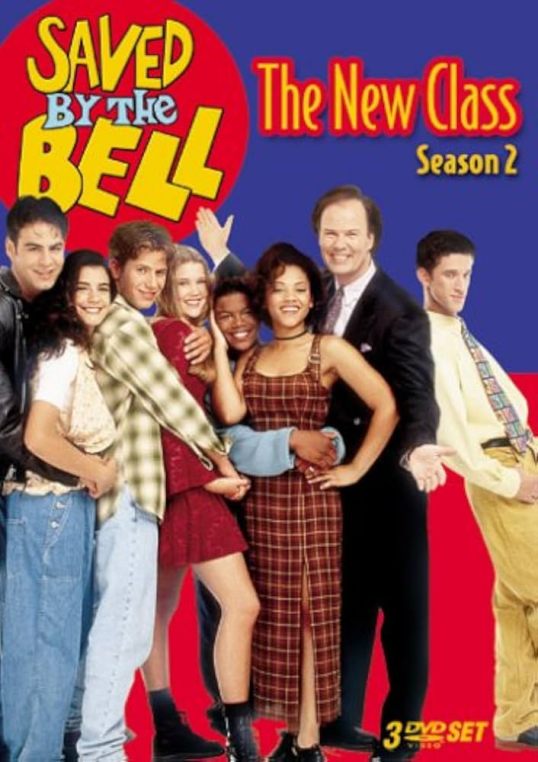
Retro Television Review: Saved By The Bell: The New Class 2.5 “Squash It”


Welcome to Retro Television Reviews, a feature where we review some of our favorite and least favorite shows of the past!  On Tuesdays, I will be reviewing Saved By The Bell: The New Class, which ran on NBC from 1993 to 2o00.  The show is currently on Prime.

Hey, it’s time for yet another school carnival!

Episode 2.5 “Squash It”

(Dir by Don Barnhart, originally aired on September 25th, 1994)

Because no one at this school actually has to go to class or anything, it’s time for the annual Bayside carnival!  Who will win the prize for best booth?

Will it be Tommy and Lindsay’s kissing booth?  Neither Tommy nor Lindsay are happy about the idea of either one of them kissing anyone else.  So why did they agree to a kissing booth in the first place?

Will it be Rachel and Brian’s dunk tank?  When Belding comes down with a cold, Brian takes Belding’s place as the dunkee.  Everyone wants to dunk Brian because he’s spent a week deliberately insulting everyone.  However, Brian has rigged the tank so he won’t fall in the water.  “You forgot to release the safety!”  Belding says, not realizing that there’s a reason for that.  Uh-oh.  Soon, Brian is soaked and the audience is saying, “Woooo!”

Will it be Megan and Bobby’s mind-reading booth?  Let’s hope not because that’s really dumb.  Bobby also has to remove his mind-reading turban so he can fight a bully.  Fortunately, Screech has taught him karate!

I know this all sounds terrible but this is actually a pretty cute episode.  Instead of being Screech-centered, this episode actually allows every member of the cast to have at least one moment to shine.  (I hate to keep pointing this out but the season 2 cast has a far more appealing chemistry than the season 1 cast.)  Even Screech teaching Bobby karate is amusing.  There’s nothing subtle about Dustin Diamond’s performance but, for once, the broad humor actually works.  Add to that, Bobby learns how to fight but then he chooses not to.  Hey, that’s actually a good lesson, even if it is a bit anticlimatic.

We never learn who wins the Best Booth prize.  I would have given it to Brian and Rachel.  They’re a cute couple, even if they’re not technically dating.  (It also helps if you don’t think about the fact that there was a 8 year age-difference between the actors.)

All in all, this was a good episode.  I’m as shocked as anyone.

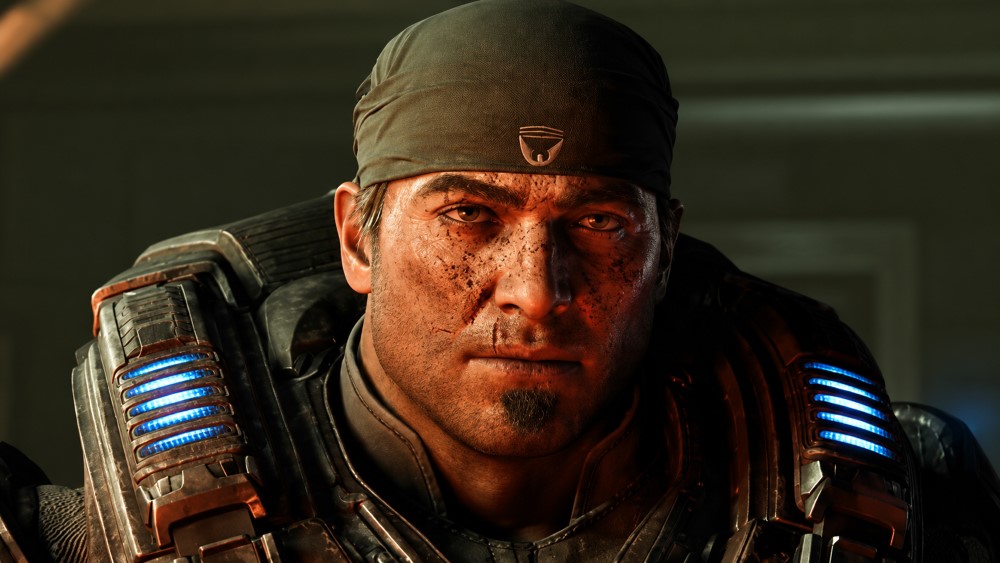
Hero of the Day: Marcus Fenix (Gears of War)


“With all due respect, fuck you, sir.” — Marcus Fenix

Few video game protagonists carry the weight of a dying world on their shoulders quite like Marcus Fenix, the granite-jawed soldier of Gears of War. At first glance, he seems deliberately unremarkable: a muscled, armor-plated space marine who speaks in growls and commands with grunts. Yet this surface-level stoicism is precisely what makes him so compelling. Marcus rejects the quippy, one-liner-spouting action hero archetype popularized by the early 2000s. Instead, he embodies a weary, bone-deep authenticity. He is a man who has lost everything—his father, his freedom, and his faith in authority—and his silence speaks louder than any monologue. That authenticity is the bedrock of his charisma; he does not perform heroism, he simply endures.

What elevates Marcus beyond a simple “tough guy” is his profound, unspoken loyalty. His defining act before the first game even begins—abandoning his post to rescue his father, which lands him in a military prison—immediately establishes his moral code: duty to family over duty to order. Throughout the trilogy, this loyalty extends to his squad, particularly his best friend, Dominic Santiago. The chemistry between Marcus and Dom is never overstated; it lives in shared glances, battlefield tactics, and the quiet understanding of two men who have bled together for over a decade. When Dom sacrifices himself in Gears of War 3, Marcus’s single, devastated howl is one of the most emotionally raw moments in gaming history. That grief is charismatic because it is earned—it shows that beneath the armor is a heart capable of being shattered.

Marcus also subverts the typical “chosen one” narrative. He is not a prophesied savior or a supernatural being; he is a skilled, broken soldier who keeps fighting because stopping means admitting that everyone who died did so for nothing. His charisma stems from his everyman fatalism, magnified by a world of grotesque monsters. While other heroes might inspire with rousing speeches, Marcus inspires by example. He is always the first through the breach, the last to retreat, and he never asks his men to do anything he wouldn’t do himself. This quiet, grindstone leadership is deeply appealing in an era saturated with narcissistic antiheroes. He earns respect not through charm, but through competence and sacrifice.

Moreover, the game’s design reinforces his character. The Lancer rifle with its chainsaw bayonet is an extension of Marcus’s personality: brutal, efficient, and unwilling to pretend war is clean. His heavy, lumbering movement in the early games conveys exhaustion, as if every step is a battle against despair. The “active reload” mechanic, which rewards precise timing, mirrors Marcus’s own discipline—a man who cannot afford to waste a single bullet or moment. Even his trademark bandana and scruff are practical, not stylish. Every element of his visual and mechanical design supports a man who has long abandoned vanity. This cohesion between gameplay and character makes his rare moments of dry humor—like his deadpan “Nice” after a brutal execution—feel like earned releases of tension rather than forced wit.

In the end, Marcus Fenix is charismatic because he respects the gravity of his world. He doesn’t crack jokes while Locusts tear his comrades apart; he doesn’t pause for dramatic monologues as cities fall. Instead, he offers something rarer: the quiet dignity of a man who keeps moving forward when hope is a luxury. In the later games, including Gears 5, we see him as an older, scarred father figure to JD Fenix, still struggling with the same burdens of command and love. That continuity of pain and perseverance is what solidifies him as an icon. Marcus Fenix reminds us that heroism is not about flash or wit—it is about being the rock others can hold onto when the world is flooding, even if that rock is too tired to speak.

Hero of the Day

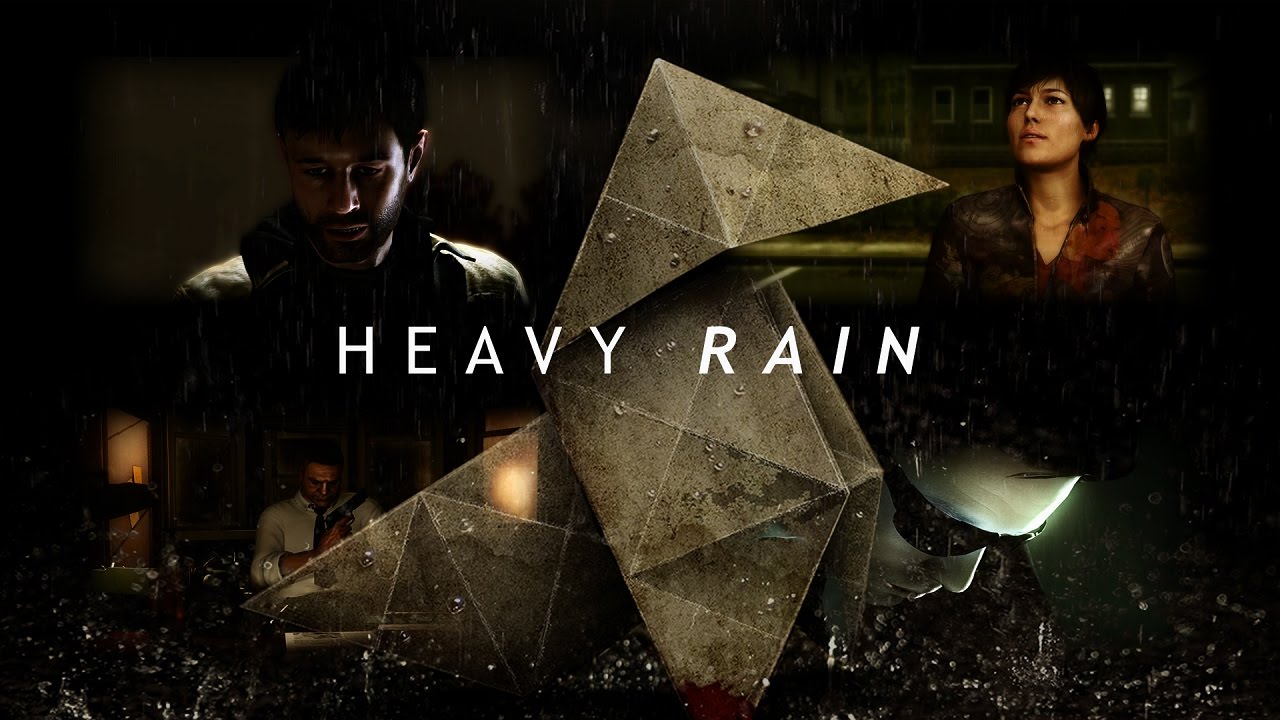
Song of the Day: Last Breath (from Heavy Rain) by Normand Corbeil


This is from the haunting soundtrack to the Quantic Dream video game, Heavy Rain.  This short piece of music captures the sad feel of the game and the madness of the Origami Killer.  This score was compared by the late Normand Corbeil, who also worked in film and television.  He’s probably best remembered for scoring the 2009 reboot of V.

I’ve lost track of how many times I’ve played Heavy Rain.  I’ve gotten the good ending but really, it’s the bad endings that stick with you.