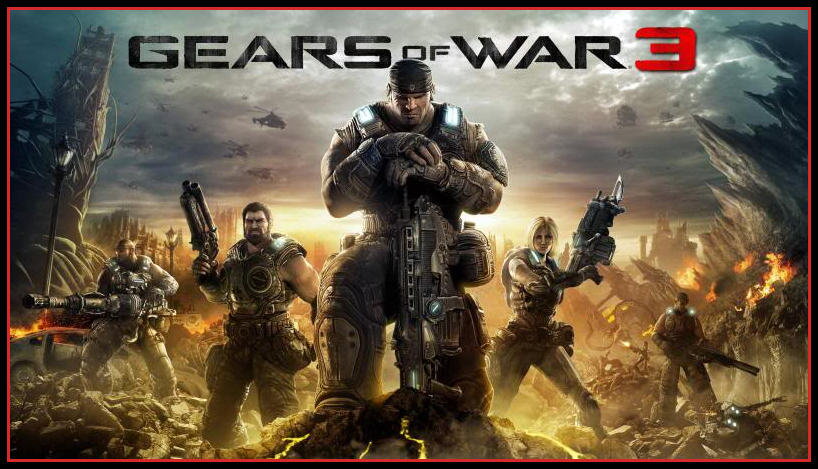
Hero of the Day: Marcus Fenix (Gears of War)


“With all due respect, fuck you, sir.” — Marcus Fenix

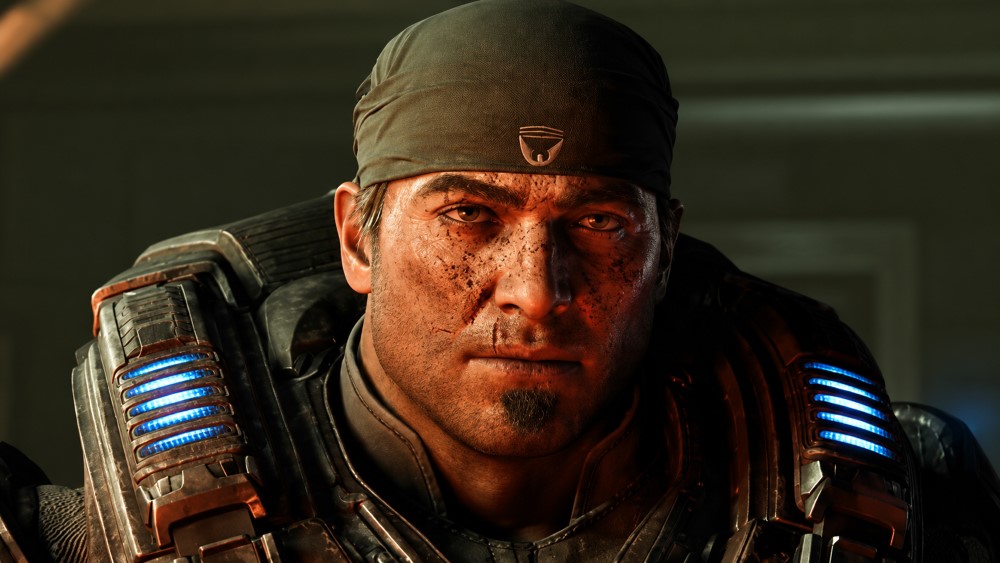
Few video game protagonists carry the weight of a dying world on their shoulders quite like Marcus Fenix, the granite-jawed soldier of Gears of War. At first glance, he seems deliberately unremarkable: a muscled, armor-plated space marine who speaks in growls and commands with grunts. Yet this surface-level stoicism is precisely what makes him so compelling. Marcus rejects the quippy, one-liner-spouting action hero archetype popularized by the early 2000s. Instead, he embodies a weary, bone-deep authenticity. He is a man who has lost everything—his father, his freedom, and his faith in authority—and his silence speaks louder than any monologue. That authenticity is the bedrock of his charisma; he does not perform heroism, he simply endures.

What elevates Marcus beyond a simple “tough guy” is his profound, unspoken loyalty. His defining act before the first game even begins—abandoning his post to rescue his father, which lands him in a military prison—immediately establishes his moral code: duty to family over duty to order. Throughout the trilogy, this loyalty extends to his squad, particularly his best friend, Dominic Santiago. The chemistry between Marcus and Dom is never overstated; it lives in shared glances, battlefield tactics, and the quiet understanding of two men who have bled together for over a decade. When Dom sacrifices himself in Gears of War 3, Marcus’s single, devastated howl is one of the most emotionally raw moments in gaming history. That grief is charismatic because it is earned—it shows that beneath the armor is a heart capable of being shattered.

Marcus also subverts the typical “chosen one” narrative. He is not a prophesied savior or a supernatural being; he is a skilled, broken soldier who keeps fighting because stopping means admitting that everyone who died did so for nothing. His charisma stems from his everyman fatalism, magnified by a world of grotesque monsters. While other heroes might inspire with rousing speeches, Marcus inspires by example. He is always the first through the breach, the last to retreat, and he never asks his men to do anything he wouldn’t do himself. This quiet, grindstone leadership is deeply appealing in an era saturated with narcissistic antiheroes. He earns respect not through charm, but through competence and sacrifice.

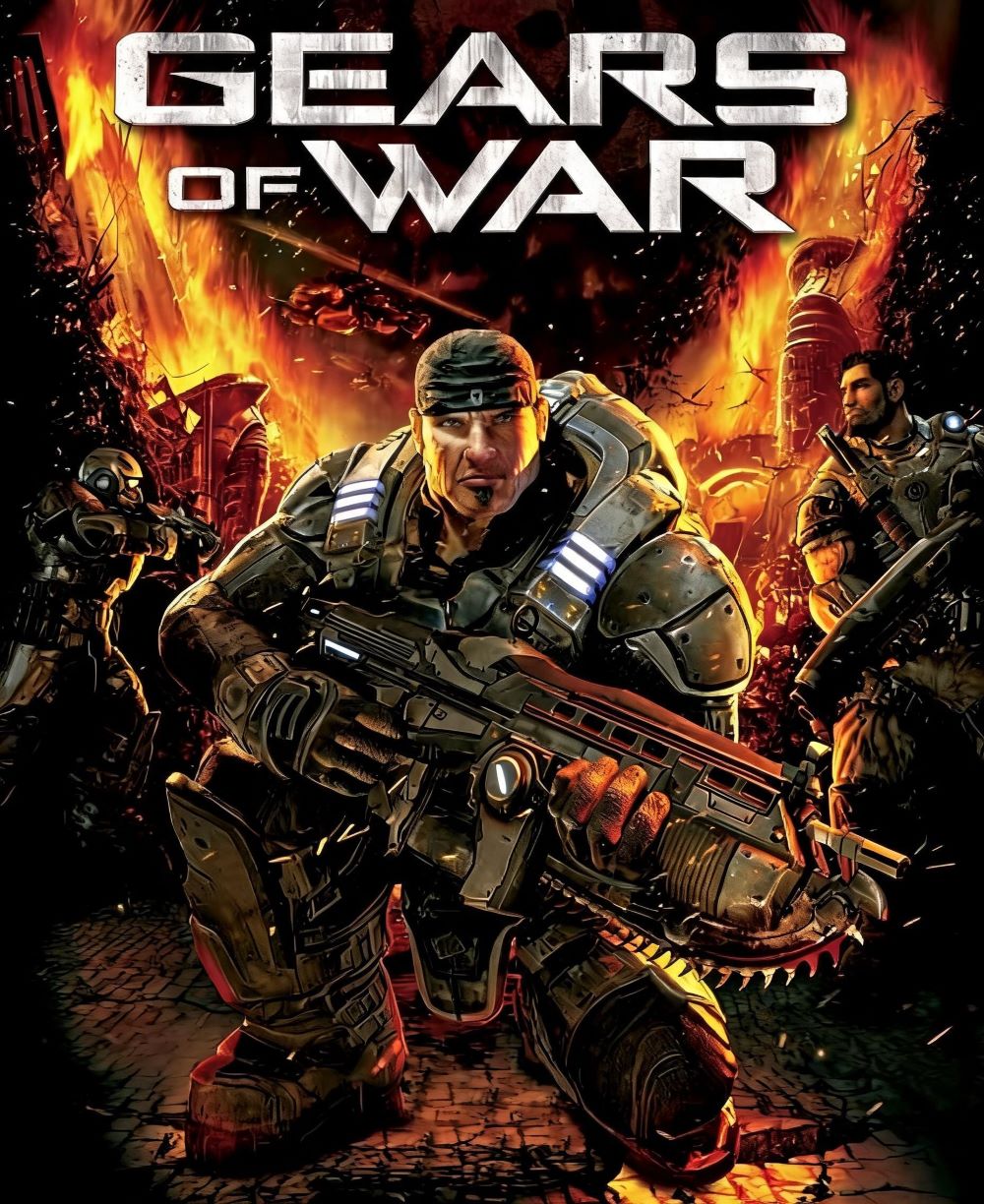
Moreover, the game’s design reinforces his character. The Lancer rifle with its chainsaw bayonet is an extension of Marcus’s personality: brutal, efficient, and unwilling to pretend war is clean. His heavy, lumbering movement in the early games conveys exhaustion, as if every step is a battle against despair. The “active reload” mechanic, which rewards precise timing, mirrors Marcus’s own discipline—a man who cannot afford to waste a single bullet or moment. Even his trademark bandana and scruff are practical, not stylish. Every element of his visual and mechanical design supports a man who has long abandoned vanity. This cohesion between gameplay and character makes his rare moments of dry humor—like his deadpan “Nice” after a brutal execution—feel like earned releases of tension rather than forced wit.

In the end, Marcus Fenix is charismatic because he respects the gravity of his world. He doesn’t crack jokes while Locusts tear his comrades apart; he doesn’t pause for dramatic monologues as cities fall. Instead, he offers something rarer: the quiet dignity of a man who keeps moving forward when hope is a luxury. In the later games, including Gears 5, we see him as an older, scarred father figure to JD Fenix, still struggling with the same burdens of command and love. That continuity of pain and perseverance is what solidifies him as an icon. Marcus Fenix reminds us that heroism is not about flash or wit—it is about being the rock others can hold onto when the world is flooding, even if that rock is too tired to speak.

Hero of the Day

Review: Gears of War


“We’re not saints. But we are gonna win this fucking war and I’d rather have you on the winning side.” — Marcus Fenix

Let’s be real for a second: trying to play Gears of War from 2006 right after a session of Fortnite or Call of Duty: Modern Warfare III is a genuine shock to the system. You forget how heavy games used to feel. In an era where every shooter has slide-canceling, wall-running, and zero sprint-out times, going back to Marcus Fenix is like trying to run a marathon in steel-toed boots. The Xbox 360 classic, now almost two decades old, exists in this weird purgatory of retro gaming. It’s too young to be nostalgic pixel art, but it’s definitely too old to feel modern. And yet, here’s the thing: Gears of War still matters. Not in spite of its clunkiness, but because of it. When you revisit the ruined planet of Sera today, you realize that the “slowness” we now criticize was actually a specific design philosophy that current games have largely abandoned. It’s a fascinating time capsule—a game that feels like a rusty chainsaw, awkward to start, but terrifyingly effective once you get it going.

The first thing a modern player will notice is the speed—or total lack of it. In 2024, if your character takes a full second to slide into cover, players call it “input lag.” Back in 2006, we called it “weight.” The A-button roadie run is iconic, but compared to the fluidity of something like The Last of Us Part II or Gears 5 itself, the original feels like wading through molasses. You can’t vault over cover while shooting. You can’t cancel out of an animation. When you rev that Lancer chainsaw, you are committed to that animation, and if a Locust sneezes on you, you stagger. This should feel archaic. And honestly, sometimes it does. The middle third of the campaign, dragging through the same gray-brown mine shafts, feels repetitive by 2006 standards, but by today’s standards, it’s almost meditative in its simplicity. There’s no open world checklist. No battle pass. No weapon skins to grind for. You just shoot, move up, and shoot again. For a retro palate cleanser, that linear focus is weirdly refreshing.

Visually, Gears of War is a museum piece for a very specific era of game design: the “Real is Brown” movement. When it launched, Unreal Engine 3 was a miracle. Today, those same textures look like wet concrete. The color palette is aggressively desaturated—mixing grays, browns, and the occasional blood splatter. Current games like Ratchet & Clank: Rift Apart or Horizon Forbidden West are explosions of neon and particle effects. Going back to Gears feels like turning off HDR and watching a DVD on a 4K TV. But here’s the retro magic: the art direction survives the technical decay. The ruined architecture, the massive Locust fortresses, the silhouette of a Berserker breaking through a wall—those aren’t reliant on high polygon counts. They’re reliant on good composition. Jerry O’Flaherty’s vision of “destroyed beauty” still holds up because modern horror-shooters like Scorn or Remnant II are essentially borrowing that same heavy, bio-mechanical aesthetic. You can see the pixelation, sure, but you can also see the blueprint for an entire decade of gaming.

Gameplay is where the retro vs. modern debate gets interesting. The cover system—sticky, magnetic, and automatic—was revolutionary in 2006. By 2024, it’s considered “sticky” in a bad way. Modern shooters prefer contextual cover or manual crouch systems because we hate being glued to walls. Yet, playing Gears today reveals that its combat rhythm is actually more tactical than most modern cover shooters. In The Division 2 or Outriders, you can tank a few hits, heal, and move. In retro Gears on Hardcore difficulty, three bullets kill you. You have to respect the geometry. You have to wait for the Locust to reload. That “stop-and-pop” gameplay feels slow, but it also feels deliberate. Current games are terrified of boring the player, so they constantly throw movement abilities at you. Gears forces you to breathe. It’s almost a horror game in disguise—especially the Berserker fight, where you can’t hurt her from the front. A modern game would put a waypoint marker on her head. Gears just lets you panic and run to the next door. That’s retro charm at its finest: trusting the player to figure it out without a glowing UI.

The weapon design remains timeless, even after all these years. The Lancer with the chainsaw bayonet is one of the few mechanics from the 2000s that still feels fresh because no one else has successfully copied it. Pulling off a saw execution in 2024—even with the stiff animation and the camera glitch—is still cathartic in a way that modern “finishing moves” in Warzone aren’t. The Gnasher shotgun, infamous for its inconsistent pellet spread, is a retro nightmare. Veterans will argue that “host advantage” and “wall bouncing” were skill gaps. New players will argue it just feels broken. Both are correct. That’s the beauty of this game as a retro artifact: the multiplayer is janky, unbalanced, and ruled by veteran roadies who never stopped playing. The active reload mini-game—pressing R to stop a moving bar for a damage boost—remains a tiny stroke of genius that modern games like State of Decay borrowed but never improved.

Now, let’s talk about something that happened outside the actual game but became just as legendary as anything Marcus Fenix did with a shotgun. Before Gears of War even launched, Microsoft and Epic set out to make a commercial that would break every rule of game advertising. They initially approached legendary director David Fincher (Fight ClubZodiacSe7en) to helm the project—a massive get for a video game tie-in. But when Fincher had to bow out due to a scheduling conflict, a relatively unknown young director named Joseph Kosinski stepped in. You know Kosinski now as the guy who directed Top Gun: Maverick, the $1.5 billion sequel that made the world fall in love with fighter jets again, as well as Tron: Legacy and the Formula One film F1. But back in 2006, he was a visual effects artist and commercial director taking his first big swing. And boy, did he connect. The resulting sixty-second spot fundamentally rewrote the rules of game advertising. Instead of loud rock and explosion montages—the tired template of every shooter ad before 2006—Kosinski showed Marcus Fenix walking alone through a ruined city in the rain, set to Gary Jules’ haunting, melancholy cover of “Mad World.” The ad barely showed coherent gameplay, yet it sold grief, loneliness, and the weight of a lost world. A commercial for a rated-M shooter about chainsaw guns had no catchphrase, no high-fives, no announcer yelling “Are you ready?” Just a broken man trudging through the rain while a piano played.

It was a gamble that paid off so massively that it broke the industry’s advertising brain. Within a year, Halo 3’s “Believe” diorama ads—also influenced by Kosinski’s work—traded action for elderly veterans remembering a war. Dead Island’s infamous reverse-trailer showed a child’s death set to a mournful song. The Last of Us Part IICyberpunk 2077, and Death Stranding all followed with slow, emotional piano or vocal covers over solitary heroes walking through beautiful desolation. Even today, when a new trailer drops with a slowed-down pop cover and a hero looking sad in the rain, you’re watching the ghost of Joseph Kosinski’s twenty-year-old masterpiece. The actual game itself is full of cheesy banter and over-the-top gore—Cole Train yelling “Wooooo!”—but that ad sold a tone the game only occasionally delivered. And in doing so, it proved that video games could be marketed as art, not just adrenaline. You don’t just remember the headshots. You remember the rain. And you remember the name of the director who made that rain matter.

So, how does Gears of War hold up as a retro recommendation in 2024? You have to adjust your expectations. This is not a pick-up-and-play title. It’s a history lesson. The story is still barebones (Locust bad, blow up resonator, Dom’s wife is in another castle), but the vibe is immaculate. The lack of a mission select screen is annoying by modern standards, and the vehicle sections (yes, the infamous “sitting on a turret while riding a train” finale) feel painfully scripted. But the co-op? That’s the secret sauce. Playing split-screen Gears today with a friend is arguably better than playing most modern co-op shooters because the game isn’t trying to sell you anything. No loot boxes. No battle pass. Just two beefy space marines sharing one box of ammo and a lot of terrible one-liners. The influence this game had—and it’s impossible to overstate—is the DNA you see in UnchartedThe Last of Us, and even God of War (2018)’s over-the-shoulder camera. Every AAA third-person shooter from the last fifteen years owes its cover mechanic to this clunky, brown, brilliant fossil.

In the end, calling Gears of War “retro” isn’t an insult. It’s a badge of honor. It is the perfect representation of the Xbox 360 era: ambitious, janky, gray-brown, and completely unwilling to apologize for its weight. A modern shooter would buff your movement speed, add a grappling hook, and turn the Locust into loot piñatas. Gears doesn’t care. It wants you to struggle against the controls for a minute, then laugh as you chainsaw a Grub in half. And somewhere in the back of your mind, as you do it, you might hear a soft piano cover. That contrast—grief and gore, slowness and spectacle—is what makes revisiting Gears of War in 2024 so weirdly worthwhile. It is a slow, heavy, dated, and utterly essential piece of gaming history. Take cover. Wait for the reload. And for the love of God, remember to pick up the Torque Bow. You’ll be fine. Just don’t expect to sprint.

E3 2011: Gears of War 3 Gameplay Demo


One title that also looks to finish off a trilogy that’s garnered one of the biggest gaming fanbase is Epic Games’ Gears of War 3. This franchise remains exclusive to the Xbox 360 console.

The gameplay demo shown during the Microsoft Press Conference showed some of the new enemies players will end up going against not to mention some of the new weapons deployed by the COG team led by it’s leader Marcus Fenix. Gears of War 3 continues to make great use of Epic Games’ Unreal Engine 3.5 as detail between what’s cutscene cinematic and gameplay continues to blur that it’s hard to notice when the transition occurs.

Gears of War 3 still set for a September 20, 2011 release.

Trailer: Gears of War 3 World Premiere


Well, it’s finally out and that could only mean one thing. The major hype and media blitz that tells every Xbox 360 gamer that the latest Gears of War title is just months from coming out. Well, it would be 4 months still, but with E3 just around the corner sure to release more details on Gears of War 3 the anticipation for the third and final game in this wildly popular Xbox 360 franchise will hit the stratosphere by the time the release date rolls around.

The trailer shows some small detail about the plot of the game. Something about the main character (Marcus Fenix) finding out his father is alive and now must find and save him from the Locust (the bug-looking insect enemy). Other than that it doesn’t show much else other some gloriously cool mayhem on the screen. Some looks to be cutscenes while others look to be gameplay. But knowing Epic Games and the games’ designer Cliff Bleszinski scenes of gameplay and cutscenes always uses the same engine (an upgraded Unreal Engine 3.5) so there’s no weird transition from gameplay to cutscene.

Trailers for the Gears of War titles have always been making great use of licensed songs in the past to give a clue to the tone of the game. This latest trailer doesn’t disappoint as it uses Black Sabbath’s classic “War Pigs” song to highlight the violent and war-footing nature of this final game in the trilogy. Cliffy B. promised that the third game will take the carnage and mayhem in the series to past ridiculous. What better way to say a game has an extreme level of violence, mayhem and carnage than Sabbath’s “War Pigs”.

So, come September 20, 2011 it’s time to lock and load and get that chainblade roaring for some heavy metal Gears of War 3.

Game Review: Bulletstorm


Unfocused Ramblings

I loved Gears of War. I just want to establish that before I begin a rant that no doubt is going to feel very much like some kind of savage attack at the heart of that game. My problem with Gears of Wars is simple. There’s just too much ultra-real-gritty-brown-and-gray in today’s media. It’s not confined to Gears. It’s everywhere. Films have taken a darker ultra-realism tone, video games seem to be obsessed with avoiding an artistic style in favour of an ultra-realistic one. I’m sure this trend was fueled by a hundred different factors – not the least of which being that people expect HD graphics to look like real life – and it’s not even wholly a bad thing. It’s just everywhere.

So imagine my surprise when Epic’s new first person shooter game isn’t gritty or ultra-realistic at all. Here’s the first and strongest thing I can say about Bulletstorm: It’s almost an anti-Gears of War. The setting is shiny and vibrant. There are colours everywhere. I don’t have trouble making out details of the setting because of the lack of contrast between surfaces. And it’s ridiculous over-the-top action. Now, of course, it’s also a traditional first person shooter rather than an over-the-shoulder affair and it isn’t cover-based, so it’s not in quite the same genre as Gears of War… but I’d say there are certainly some strong parallels in places. It’s just that Bulletstorm feels like a much livelier game.

Which is ironic, because the game is about a dwindling group of people trapped on the surface of a hostile alien world which is completely overrun with toxic mutants, carnivorous plant life, and five hundred foot tall monsters with a foul temper.

Bulletstorm is, at its heart, about over-the-top action. Throughout the game, you will acquire points by slaying enemies. The caveat is that the game doesn’t reward precision or efficiency, but creativity. Although a small point bonus is given for shooting an enemy with a devastating headshot, a much bigger one is given for kicking him off the side of a chasm into a swirling tornado which has become charged with lightning and presumably ending his day in a less-than-desireable way. These point bonuses are universally referred to as Skillshots, and there are a couple hundred of them, encompassing virtually every conceivable creative killing. Oh, at this point it might be worth mentioning that this isn’t a game for your young kids. Trust me. The language is strong, the violence is insane, and the themes of bitterness, revenge, and despair aren’t particularly accessible to the under-20 crowd. Of course anyone can appreciate a good action game… and this is definitely one of those, because you’ll be moving non-stop, even while you try to find creative ways to dispatch your hapless foes and occasionally take cover from the devastating fire being flung back at you.

Like Gears of War, Bulletstorm features a quick-switching weapon trio. We haven’t got any grenades, but we do have a supertech gadget called a Leash. This is the game’s outstanding feature, as it allows you to manipulate your environment in many ways, gripping objects, flinging them from place to place, and so on. Of course, it distinguishes itself from other physics-heavy weapons (like Half-Life 2’s famous gravity gun) in that it also directly manipulates your enemies themselves. You’ll use the Leash to draw enemies out from behind cover so they can be kicked onto some metal wreckage (for good bonus points!) or to maneuver an explosive container for a timely detonation. The Leash definitely offers the most potential for manipulation and fun, but of course there are some enemy types which are (mostly) immune to it except in special circumstances by virtue of being either too large or too fast… but you’ll be relieved to know that even at the end of the game’s single player mode most enemies are ready to be tossed around like rag dolls.

In addition to the Leash, Bulletstorm features a variety of weapons. We have the obligatory assault rifle, a high-caliber pistol, a sniper rifle with remote controlled bullets, a gun that launches drills, among other stand-outs. In addition to their basic firing mode, each weapon has an upgraded ‘charge’ mode which can be purchased (with those ever useful score points) that can be used in special circumstances. The ‘Peacemaker’ assault rifle, for example, can use its charge mode to fire a special hundred-shot clip instantly into a foe. This will literally disintegrate one or more opponents if you land it, with the accompanying visual effects. The Leash itself has an upgraded charge mode called the Thumper which will use a wide-area application of force to launch your enemies into the air and crash them into the ground. It has more applications than it sounds like, and can occasionally be used to dramatically clear an entire field of enemies.

The weapons are re-loaded, re-armed, and equipped at the discretion of the player who will use special containers called DropKits which will accept the currency of the player’s score (achieved, again, through killing enemies through the skillshots) in exchange for the player’s choice of weapons, charge ammo, regular ammo, Thumpers, and so on. This interface also features a handy database of skillshots. You know,  just in case there was a weapon effect that you hadn’t considered.

Game Modes

Bulletstorm features a feature-length single player campaign of what to me felt like ‘appropriate length’. I didn’t time my run through it, but I can say that I was neither left wanting more nor lamenting the time spent on it. It tells the story of Grayson Hunt (voiced by Steve Blum, of anime dub fame), a bitter alcoholic space pirate and his squad. In the opening moments, Grayson makes a poor decision amidst an alcohol-induced haze which lands he and his remaining friends on a hostile alien world. Before all is said and done, Grayson is left with only his emergency-rebuilt pal Ishi, who is now half machine and partially in the grips of a psychotic AI. Recognizing that, despite Hunt’s mistakes, their best chance lies in cooperation, Hunt and Ishi take off across the hostile alien terrain. They discover the overgrown remains of what seems to be a giant tourist-friendly resort which has apparently been taken over by inhuman mutants, hostile plant life, and others.

It also features the Echoes mode, which is essentially a series of time trials that take you quickly through sequences from the single player game only without the story bits and dialogue, and with the bonus of a timer. As a result, these levels are completed quickly, and they heavily emphasize using the point-boosting skillshots in order to achieve a high score (in this case, rewarded by Stars, which are essential to completing a number of Achievements/Trophies).

Multiplayer is another outstanding feature as long as you have some fun folks to play with. The game mode, which is called Anarchy, is similar to a Hordes or Firefight mode from other FPS titles. However, the Bulletstorm twist (as you might expect) is that the game is based around racking up a high score through the use of skillshots. The environments in Anarchy mode provide some extra opportunities to earn some skillshots not seen in the single player mode, which is good, because the team’s aggregate score must pass a certain minimum in order to advance out of the current round. A premium higher than survival or the overall massacre of your enemies is on using the terrain features correctly in order to maximize player score. Although it’s certainly a great deal of fun (at least, initially), you may ultimately find that there’s not a ton of variety to be had in the Anarchy mode. The main variation is in the specific details of the maps, but there’s not a PvP aspect to it, and the AI is the same as it would have been in the single player campaign mode.

The Bottom Line

The single key word to Bulletstorm is: fun. It’s not thought-provoking (although the characters are oddly compelling), and it’s not breaking new ground all over the place, but it is a great deal of fun just to sit down and play. It’s worth re-emphasizing that this isn’t a game for younger kids… the characters swear like sailors.

The Big Question

Is it now required by law (as opposed to just by convention) that every game needs to set itself up for its own sequel?

Game-Play

The game plays pretty tightly. Occasionally you’ll find the hit tracking on the melee attack isn’t so good against enemies who are right up in your grill, but this is only a problem when trying to pull off specific skill shots and not an overall problem when playing the game. Despite having quite a few mechanics going for it, Bulletstorm’s control system is simple and intuitive. If you’ve mastered the controls of any first-person shooter in the past you’ll have no trouble with Bulletstorm. Despite its variety of game modes, Bulletstorm is ultimately a bit limited in terms of the variety of experiences that it provides. However, as long as you ration your exposure, you could very well find the game fun forever.

Graphics

As we expect from Epic, the graphics in Bulletstorm are gorgeous. More importantly, we see some varieties in colour, with lush green foliage all over the place and a clear sky above. Now, of course, there are some areas of the game which are more breathtaking than others, but all of the sets were gorgeous in design, and some of the set pieces were very epic, and very cool. You’ll have such encounters as a hydroelectric dam which is coming to pieces around you (including its massive water-turning wheels), and trying to escape not only from enemies but also from terrain pieces aboard a fast-moving train. The character models are also very pretty, although some of the textures will sometimes break down in close-ups. The best character design in the game definitely has to go to Ishi and his newly-installed machine parts. You’ll also be treated to a number of interesting visuals directly tied to how you finish off your enemies, but those I’ll leave you to discover on your own.

Sound

The score is proficiently done and fits the settings pretty well. For the most part, the tracks are forgettable (although I do very much enjoy the main theme which plays on the menu and at places during the single player campaign). The voice acting is all very well done. I particularly like the voice acting for Ishi, which has been digitally modified to have a mechanical edge to it. His banter with Grayson is a little reminiscent of what you get between Dom and Marcus in Gears of War, but with a more genuinely hostile edge to it. The sound for the game’s effects, weapons and other features is tight and complete. Nothing to complain about in the sound department with this title.

Multiplayer

The Anarchy mode is definitely a lot of fun, but it’s not something that most people are going to want to play every day. Given the style of the game it’s not insane that there isn’t a strong PvP multiplayer component to Bulletstorm, but by its nature PvE multiplayer is going to have some limitations that there are no ways to overcome – human enemies will think creatively, and want to hurt you. AI opponents just do whatever they’re programmed to do.
Bulletstorm E3 2010 Demo


Of all the shooters profiled at E3 2010 the one which stood out the most and looked to be most fun was Epic Games and People Can Fly Studio’s upcoming arcade-like shooter Bulletstorm. The game is developed by Polish game developer People Can Fly headed by Adrian Chmielarz. The game looks to follow in the footsteps of another arcade-like shooter which came out in 2009: Borderlands.

Bulletstorm takes a different approach from the more realistic shooters like Modern Warfare 2 and Bad Company 2. The game goes the way of over-the-top action similar to past classic shooters like Duke Nuke ‘Em and Serious Sam. They marry this with the XP mechanics of an rpg which helps levels up the abilities of the player and allow them to upgrade/buy better weapons and gear.

From the demo trailer shown above the game also looks to add some very Rated-R comedic dialogue in addition to the gory action. The game definitely looks fun and looks great. Like all Epic Games published titles it looks like Bulletstorm will be using Epic’s proprietary Unreal Engine 3.

The game has a tentative release date of February 22, 2011 for the platforms Xbox 360, PS3 and Windows PC.