Welcome to Late Night Retro Television Reviews, a feature where we review some of our favorite and least favorite shows of the past! On Tuesdays, I will be reviewing Pacific Blue, a cop show that aired from 1996 to 2000 on the USA Network! It’s currently streaming everywhere, though I’m watching it on Tubi.
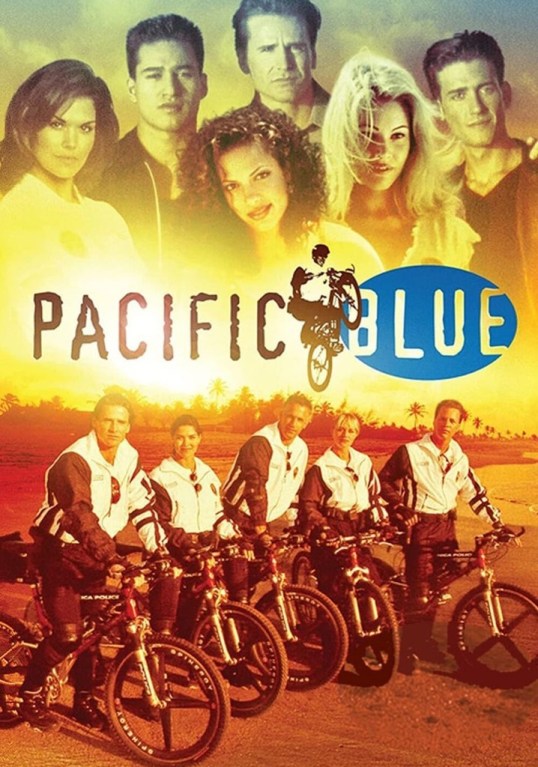
This week, gamblers are causing trouble on campus! It’s time to send in an undercover bike cop!
Episode 4.6 “Silver Dollar”
(Dir by Scott Lautanen, originally aired on August 30th, 1998)
At the local college, a bookie is trying to fix games and having his henchwoman beat up the students and the teachers who owe him money. The funny thing about the bookie’s enforcer is that she wears all black and a translucent top and she is constantly kicking people in the face but no one ever seems to notice her. I mean, I can still remember how, during the fourth season of The Wire, Wee-Bey Bice got angry at his son Namond for having a different haircut from all the other members of his crew. Wee-Bey said that you never want to give the police an easy way to spot you in a lineup and that really does make sense. I get the feeling that Pacific Blue might not be as realistic as The Wire was.
Anyway, this is yet another episode where a bike cop goes undercover. This time, recovering gambler Russ is sent undercover to take down the bookies and he’s given $500 of the department’s money to play with. This seems like a terrible idea. Cory eventually figures out that it’s a terrible idea and she spends the entire episode randomly showing up and yelling at Russ about his attitude. Eventually, Cory gets so mad that she beats Russ up. “That was so badass!” Russ says and it was kind of. That said, I do have to wonder about the fact that all of the members of Pacific Blue really do seem to hate each other. They’re always getting into fights or yelling at each other. It takes a lot of charisma to pull off the whole “renegade who does things his way” schtick and, as a character, Russ really doesn’t have it. Unfortunately, Cory doesn’t really have the charisma to pull off the “boss who demands results” thing eitehr.
My point is that this was a boring episode, Russ is a boring character. His roommate, Jamie, is even more boring. The whole subplot about Russ having a lucky silver dollar felt idiotic. For all the time that was spent on Russ trying not to blow his cover, it’s debatable whether or not his police work really had that much to do with taking down the bad guys. Instead, Cory just showed up and beat everyone up. That’s one way to get results. And it actually makes a lot more sense than assigning a bike cop to work undercover.
Why are bike cops going undercover? Aren’t they just supposed to be handing out tickets? On a good day, it appears that there are only seven members of the bike patrol so can they really afford for one of them to go a week without riding his bike? Seriously, is this any way to keep Los Angeles safe?
None of this would happen if Spencer Pratt was mayor.