“With all due respect, fuck you, sir.” — Marcus Fenix
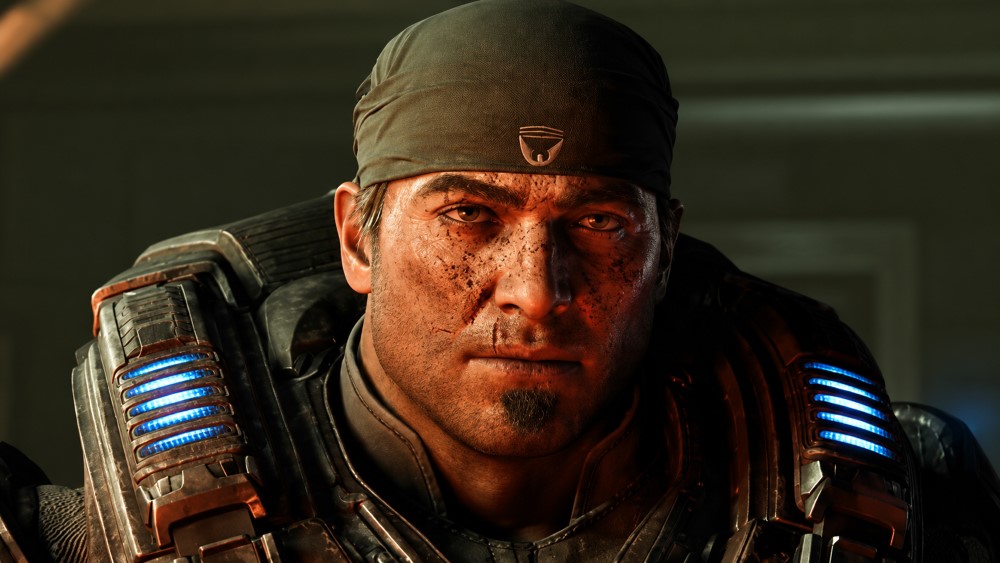
Few video game protagonists carry the weight of a dying world on their shoulders quite like Marcus Fenix, the granite-jawed soldier of Gears of War. At first glance, he seems deliberately unremarkable: a muscled, armor-plated space marine who speaks in growls and commands with grunts. Yet this surface-level stoicism is precisely what makes him so compelling. Marcus rejects the quippy, one-liner-spouting action hero archetype popularized by the early 2000s. Instead, he embodies a weary, bone-deep authenticity. He is a man who has lost everything—his father, his freedom, and his faith in authority—and his silence speaks louder than any monologue. That authenticity is the bedrock of his charisma; he does not perform heroism, he simply endures.
What elevates Marcus beyond a simple “tough guy” is his profound, unspoken loyalty. His defining act before the first game even begins—abandoning his post to rescue his father, which lands him in a military prison—immediately establishes his moral code: duty to family over duty to order. Throughout the trilogy, this loyalty extends to his squad, particularly his best friend, Dominic Santiago. The chemistry between Marcus and Dom is never overstated; it lives in shared glances, battlefield tactics, and the quiet understanding of two men who have bled together for over a decade. When Dom sacrifices himself in Gears of War 3, Marcus’s single, devastated howl is one of the most emotionally raw moments in gaming history. That grief is charismatic because it is earned—it shows that beneath the armor is a heart capable of being shattered.
Marcus also subverts the typical “chosen one” narrative. He is not a prophesied savior or a supernatural being; he is a skilled, broken soldier who keeps fighting because stopping means admitting that everyone who died did so for nothing. His charisma stems from his everyman fatalism, magnified by a world of grotesque monsters. While other heroes might inspire with rousing speeches, Marcus inspires by example. He is always the first through the breach, the last to retreat, and he never asks his men to do anything he wouldn’t do himself. This quiet, grindstone leadership is deeply appealing in an era saturated with narcissistic antiheroes. He earns respect not through charm, but through competence and sacrifice.
Moreover, the game’s design reinforces his character. The Lancer rifle with its chainsaw bayonet is an extension of Marcus’s personality: brutal, efficient, and unwilling to pretend war is clean. His heavy, lumbering movement in the early games conveys exhaustion, as if every step is a battle against despair. The “active reload” mechanic, which rewards precise timing, mirrors Marcus’s own discipline—a man who cannot afford to waste a single bullet or moment. Even his trademark bandana and scruff are practical, not stylish. Every element of his visual and mechanical design supports a man who has long abandoned vanity. This cohesion between gameplay and character makes his rare moments of dry humor—like his deadpan “Nice” after a brutal execution—feel like earned releases of tension rather than forced wit.
In the end, Marcus Fenix is charismatic because he respects the gravity of his world. He doesn’t crack jokes while Locusts tear his comrades apart; he doesn’t pause for dramatic monologues as cities fall. Instead, he offers something rarer: the quiet dignity of a man who keeps moving forward when hope is a luxury. In the later games, including Gears 5, we see him as an older, scarred father figure to JD Fenix, still struggling with the same burdens of command and love. That continuity of pain and perseverance is what solidifies him as an icon. Marcus Fenix reminds us that heroism is not about flash or wit—it is about being the rock others can hold onto when the world is flooding, even if that rock is too tired to speak.
“We’re not saints. But we are gonna win this fucking war and I’d rather have you on the winning side.” — Marcus Fenix
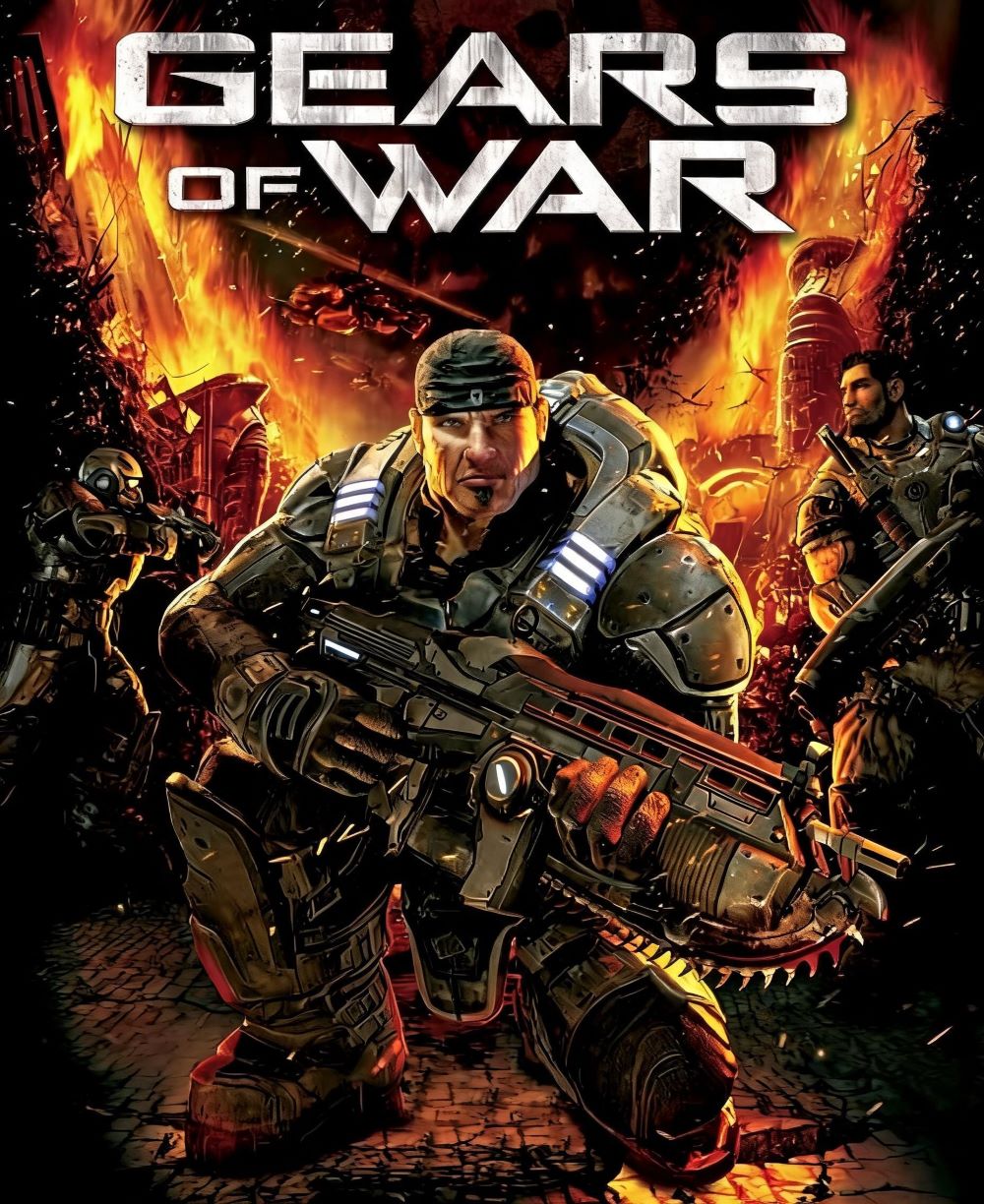
Let’s be real for a second: trying to play Gears of War from 2006 right after a session of Fortnite or Call of Duty: Modern Warfare III is a genuine shock to the system. You forget how heavy games used to feel. In an era where every shooter has slide-canceling, wall-running, and zero sprint-out times, going back to Marcus Fenix is like trying to run a marathon in steel-toed boots. The Xbox 360 classic, now almost two decades old, exists in this weird purgatory of retro gaming. It’s too young to be nostalgic pixel art, but it’s definitely too old to feel modern. And yet, here’s the thing: Gears of War still matters. Not in spite of its clunkiness, but because of it. When you revisit the ruined planet of Sera today, you realize that the “slowness” we now criticize was actually a specific design philosophy that current games have largely abandoned. It’s a fascinating time capsule—a game that feels like a rusty chainsaw, awkward to start, but terrifyingly effective once you get it going.
The first thing a modern player will notice is the speed—or total lack of it. In 2024, if your character takes a full second to slide into cover, players call it “input lag.” Back in 2006, we called it “weight.” The A-button roadie run is iconic, but compared to the fluidity of something like The Last of Us Part II or Gears 5 itself, the original feels like wading through molasses. You can’t vault over cover while shooting. You can’t cancel out of an animation. When you rev that Lancer chainsaw, you are committed to that animation, and if a Locust sneezes on you, you stagger. This should feel archaic. And honestly, sometimes it does. The middle third of the campaign, dragging through the same gray-brown mine shafts, feels repetitive by 2006 standards, but by today’s standards, it’s almost meditative in its simplicity. There’s no open world checklist. No battle pass. No weapon skins to grind for. You just shoot, move up, and shoot again. For a retro palate cleanser, that linear focus is weirdly refreshing.
Visually, Gears of War is a museum piece for a very specific era of game design: the “Real is Brown” movement. When it launched, Unreal Engine 3 was a miracle. Today, those same textures look like wet concrete. The color palette is aggressively desaturated—mixing grays, browns, and the occasional blood splatter. Current games like Ratchet & Clank: Rift Apart or Horizon Forbidden West are explosions of neon and particle effects. Going back to Gears feels like turning off HDR and watching a DVD on a 4K TV. But here’s the retro magic: the art direction survives the technical decay. The ruined architecture, the massive Locust fortresses, the silhouette of a Berserker breaking through a wall—those aren’t reliant on high polygon counts. They’re reliant on good composition. Jerry O’Flaherty’s vision of “destroyed beauty” still holds up because modern horror-shooters like Scorn or Remnant II are essentially borrowing that same heavy, bio-mechanical aesthetic. You can see the pixelation, sure, but you can also see the blueprint for an entire decade of gaming.
Gameplay is where the retro vs. modern debate gets interesting. The cover system—sticky, magnetic, and automatic—was revolutionary in 2006. By 2024, it’s considered “sticky” in a bad way. Modern shooters prefer contextual cover or manual crouch systems because we hate being glued to walls. Yet, playing Gears today reveals that its combat rhythm is actually more tactical than most modern cover shooters. In The Division 2 or Outriders, you can tank a few hits, heal, and move. In retro Gears on Hardcore difficulty, three bullets kill you. You have to respect the geometry. You have to wait for the Locust to reload. That “stop-and-pop” gameplay feels slow, but it also feels deliberate. Current games are terrified of boring the player, so they constantly throw movement abilities at you. Gears forces you to breathe. It’s almost a horror game in disguise—especially the Berserker fight, where you can’t hurt her from the front. A modern game would put a waypoint marker on her head. Gears just lets you panic and run to the next door. That’s retro charm at its finest: trusting the player to figure it out without a glowing UI.
The weapon design remains timeless, even after all these years. The Lancer with the chainsaw bayonet is one of the few mechanics from the 2000s that still feels fresh because no one else has successfully copied it. Pulling off a saw execution in 2024—even with the stiff animation and the camera glitch—is still cathartic in a way that modern “finishing moves” in Warzone aren’t. The Gnasher shotgun, infamous for its inconsistent pellet spread, is a retro nightmare. Veterans will argue that “host advantage” and “wall bouncing” were skill gaps. New players will argue it just feels broken. Both are correct. That’s the beauty of this game as a retro artifact: the multiplayer is janky, unbalanced, and ruled by veteran roadies who never stopped playing. The active reload mini-game—pressing R to stop a moving bar for a damage boost—remains a tiny stroke of genius that modern games like State of Decay borrowed but never improved.
Now, let’s talk about something that happened outside the actual game but became just as legendary as anything Marcus Fenix did with a shotgun. Before Gears of War even launched, Microsoft and Epic set out to make a commercial that would break every rule of game advertising. They initially approached legendary director David Fincher (Fight Club, Zodiac, Se7en) to helm the project—a massive get for a video game tie-in. But when Fincher had to bow out due to a scheduling conflict, a relatively unknown young director named Joseph Kosinski stepped in. You know Kosinski now as the guy who directed Top Gun: Maverick, the $1.5 billion sequel that made the world fall in love with fighter jets again, as well as Tron: Legacy and the Formula One film F1. But back in 2006, he was a visual effects artist and commercial director taking his first big swing. And boy, did he connect. The resulting sixty-second spot fundamentally rewrote the rules of game advertising. Instead of loud rock and explosion montages—the tired template of every shooter ad before 2006—Kosinski showed Marcus Fenix walking alone through a ruined city in the rain, set to Gary Jules’ haunting, melancholy cover of “Mad World.” The ad barely showed coherent gameplay, yet it sold grief, loneliness, and the weight of a lost world. A commercial for a rated-M shooter about chainsaw guns had no catchphrase, no high-fives, no announcer yelling “Are you ready?” Just a broken man trudging through the rain while a piano played.
It was a gamble that paid off so massively that it broke the industry’s advertising brain. Within a year, Halo 3’s “Believe” diorama ads—also influenced by Kosinski’s work—traded action for elderly veterans remembering a war. Dead Island’s infamous reverse-trailer showed a child’s death set to a mournful song. The Last of Us Part II, Cyberpunk 2077, and Death Stranding all followed with slow, emotional piano or vocal covers over solitary heroes walking through beautiful desolation. Even today, when a new trailer drops with a slowed-down pop cover and a hero looking sad in the rain, you’re watching the ghost of Joseph Kosinski’s twenty-year-old masterpiece. The actual game itself is full of cheesy banter and over-the-top gore—Cole Train yelling “Wooooo!”—but that ad sold a tone the game only occasionally delivered. And in doing so, it proved that video games could be marketed as art, not just adrenaline. You don’t just remember the headshots. You remember the rain. And you remember the name of the director who made that rain matter.
So, how does Gears of War hold up as a retro recommendation in 2024? You have to adjust your expectations. This is not a pick-up-and-play title. It’s a history lesson. The story is still barebones (Locust bad, blow up resonator, Dom’s wife is in another castle), but the vibe is immaculate. The lack of a mission select screen is annoying by modern standards, and the vehicle sections (yes, the infamous “sitting on a turret while riding a train” finale) feel painfully scripted. But the co-op? That’s the secret sauce. Playing split-screen Gears today with a friend is arguably better than playing most modern co-op shooters because the game isn’t trying to sell you anything. No loot boxes. No battle pass. Just two beefy space marines sharing one box of ammo and a lot of terrible one-liners. The influence this game had—and it’s impossible to overstate—is the DNA you see in Uncharted, The Last of Us, and even God of War (2018)’s over-the-shoulder camera. Every AAA third-person shooter from the last fifteen years owes its cover mechanic to this clunky, brown, brilliant fossil.
In the end, calling Gears of War “retro” isn’t an insult. It’s a badge of honor. It is the perfect representation of the Xbox 360 era: ambitious, janky, gray-brown, and completely unwilling to apologize for its weight. A modern shooter would buff your movement speed, add a grappling hook, and turn the Locust into loot piñatas. Gears doesn’t care. It wants you to struggle against the controls for a minute, then laugh as you chainsaw a Grub in half. And somewhere in the back of your mind, as you do it, you might hear a soft piano cover. That contrast—grief and gore, slowness and spectacle—is what makes revisiting Gears of War in 2024 so weirdly worthwhile. It is a slow, heavy, dated, and utterly essential piece of gaming history. Take cover. Wait for the reload. And for the love of God, remember to pick up the Torque Bow. You’ll be fine. Just don’t expect to sprint.
“When people die, they just… go away. If there’s any place a soul would go… It’s in your memories. People you remember are with you forever.” – Kaim Argonar
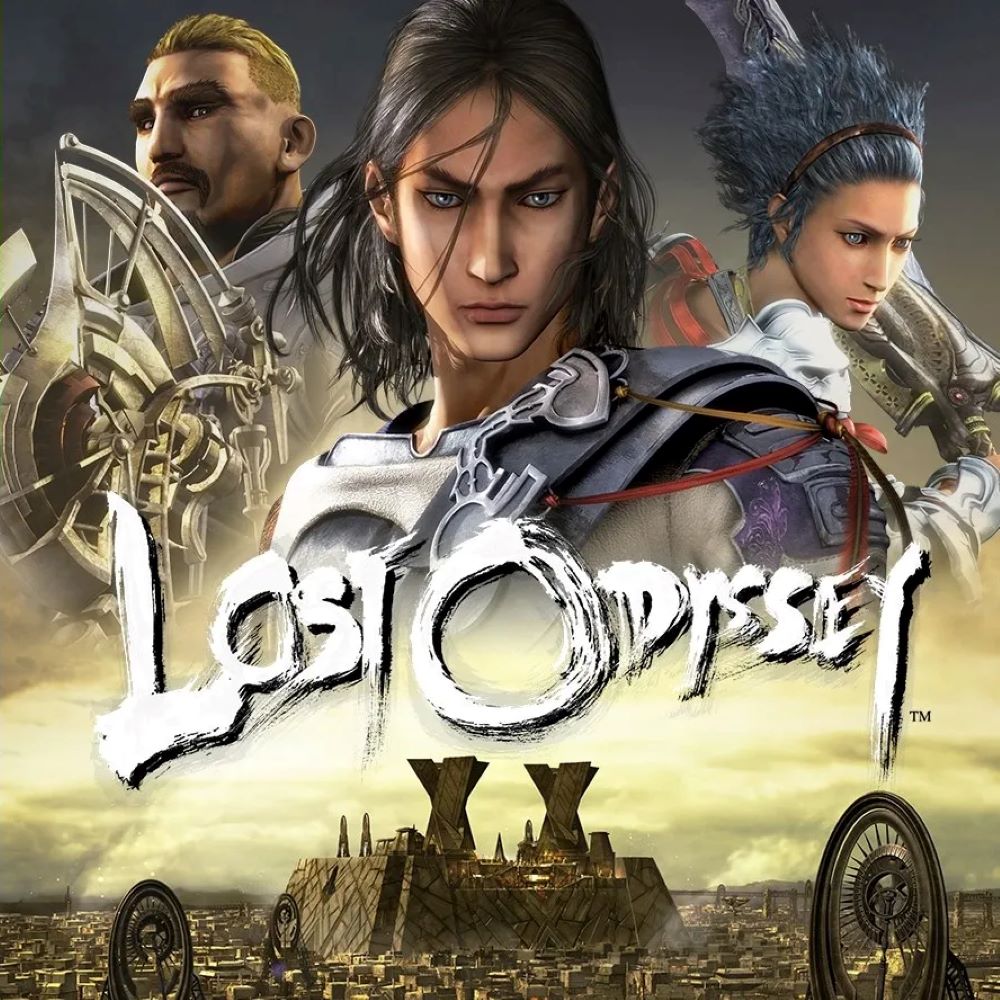
Lost Odyssey stands out as one of those RPGs from the late Xbox 360 era that doesn’t scream for attention with flashy mechanics or boundary-pushing innovations, but instead draws you in through its deeply introspective storytelling and a commitment to emotional depth that feels almost defiant in its restraint. Developed by Mistwalker’s Hironobu Sakaguchi—the mastermind behind the original Final Fantasy games—this title arrived in 2007 as a love letter to classic JRPG traditions, complete with turn-based combat, sprawling world exploration, and a narrative centered on immortality’s quiet horrors. It’s a game that rewards patience, asking players to linger in moments of melancholy rather than rushing toward bombastic climaxes, and in today’s landscape of hybrid action-RPGs like Clair Obscur: Expedition 33, it feels both timeless and a touch nostalgic.
The protagonist, Kaim Argonar, is an immortal wanderer who’s lived for over a thousand years, his memories eroded by time like sand slipping through fingers. This setup immediately sets Lost Odyssey apart, turning what could have been a rote hero’s journey into something far more personal and haunting. Kaim isn’t driven by prophecy or destiny in the typical sense; he’s haunted by fragments of lives long lost, piecing together his past while grappling with the present. Accompanied by a party of fellow immortals and mortals who bring their own baggage—Seth, a fierce queen-turned-revolutionary; Jansen, the wisecracking raconteur and black magic user; Mack, Cooke’s adventurous brother and a spirit magic specialist; Cooke, the earnest white mage sister; and others who evolve from archetypes into fully fleshed-out companions—the story unfolds across a world on the brink of magical and technological upheaval. Wars rage between nations like the Republic of Uhra and the Kingdom of Goht experimenting with dangerous “aether” energy, ancient gaia cults stir forgotten powers from the earth’s core, and a comically over-the-top villain named Gongora pulls strings from the shadows with his dream-manipulating sorcery. But it’s the immortals’ shared curse—living forever while everyone else fades—that grounds everything in raw, relatable humanity, forcing reflections on attachment, regret, and the passage of time.
What truly elevates the narrative are the “Thousand Years of Dreams,” a collection of over thirty short story interludes scattered throughout the game like hidden treasures, all penned by acclaimed Japanese author Kiyoshi Shigematsu. These vignettes replay key moments from Kaim’s (and later other immortals’) pasts: a father’s quiet desperation as his family starves during a harsh winter, a lover’s betrayal amid wartime chaos that shatters trust forever, a child’s innocent wonder abruptly ended by sudden violence in a peaceful village. They’re presented as dream sequences with minimal interactivity—just reading the poignant prose accompanied by subtle animations and ambient sounds—but their impact is profound, blending poetic introspection with raw emotional punches that make loss feel visceral and immediate. Shigematsu, known for his family-centered novels like Naifu and Bitamin F, infuses these tales with his signature themes of everyday struggles, parental love, and quiet resilience, drawing from his own life experiences such as overcoming a childhood stammering disorder. These aren’t mere filler; they mirror and deepen the main plot’s themes of memory, fleeting bonds, and the futility of outliving joy, often landing harder than the epic set pieces like airship chases or gaia temple collapses. In a fair assessment, though, not every dream hits the mark equally—some lean repetitive in their focus on tragedy and separation, and the heavy reliance on text-heavy exposition can test players who prefer more visual or interactive storytelling over contemplative reading.
Comparatively, the core plot treads more familiar JRPG ground, with globe-trotting quests to collect six magic seeds capable of restoring the world’s fading magic, infiltrate enemy strongholds like the White Citadel, and unravel a conspiracy involving dreamless immortals, experimental magic tech, and an impending apocalypse. It’s competently paced for its 40-60 hour runtime (longer for completionists), building to satisfying reveals about Kaim’s origins, the party’s interconnected fates, and the true nature of immortality in a world where magic is dying. Yet it lacks the moral ambiguity that makes contemporaries like Clair Obscur: Expedition 33 so gripping—that game thrives on tough choices where apparent triumphs often sow seeds of future doom, forcing players to question if their “expedition” against the Paintress is true heroism or just delayed hubris. Lost Odyssey flirts with similar existentialism—Kaim repeatedly forms bonds only to anticipate their inevitable fraying—but ultimately resolves in a more optimistic, collective salvation arc centered on hope and reunion. This makes it comforting for fans of straightforward fantasy epics with clear good-vs-evil lines, yet somewhat safe for a tale about eternal life, where deeper philosophical dives into immortality’s ethics, like the morality of intervening in mortal affairs, could have pushed boundaries further without alienating its audience.
The supporting cast shines as a counterbalance, with banter during airship travels and camp rests that humanizes even the most ancient immortals. Take Gongora, the flamboyant antagonist whose Shakespearean monologues, reality-warping sorcery, and personal grudge against his immortal brethren make him a delightfully theatrical foe worth rooting against. Or the mortal siblings Cooke and Mack, whose dynamic starts as lighthearted comic relief—pranks, inventions gone wrong, sibling squabbles—with Mack’s adventurous spirit driving bold escapades while Cooke provides steady white magic support, maturing into poignant growth arcs as they confront loss and responsibility together. Jansen brings levity as the wisecracking raconteur, spinning tales and unleashing black magic with reluctant flair that often steals scenes during downtime. Party chemistry fosters organic moments, like shared reflections on recent dreams or lighthearted ribbing during skill training, that deepen player investment over the long haul. Not all characters resonate equally; some, like the naive inventor Littleton or the initially whiny prince Tolten, lean into tropes without much subversion, leading to occasional eye-rolls amid the stronger portrayals from Seth’s fiery leadership. Still, the innovative “Immortal” skill-sharing system, where immortals permanently absorb abilities from fallen mortals via “Skill Link” beads, ingeniously reinforces the core theme: eternity doesn’t preclude learning, growth, or change through relationships with the temporary.
Combat embodies Lost Odyssey‘s old-school soul, sticking faithfully to turn-based roots with thoughtful layers that demand strategy over button-mashing reflexes. Battles unfold on a grid-like interface where positioning is crucial—front-row tanks like Kaim absorb hits for backline healers like Cooke and her white magic or mages like Jansen with his black magic arsenal, while the signature “Ring” system adds tension to every basic attack or spell: time your button presses precisely to hit colored rings for boosted damage, critical hits, or multi-hit combos. Condition management becomes key, as poison, sleep, paralysis, and weakness can derail even well-planned fights, encouraging thorough prep with items, protective spells, and the flexible “Skill Link” beads that let any character equip enemy-learned abilities like fire immunity or poison breath. Boss encounters ramp up dramatically with multi-phase patterns, status ailment spam, massive HP pools, and environmental hazards, rewarding exploitation of elemental weaknesses (fire vs. ice foes, etc.), party swaps, and layered buffs/debuffs for tense, chess-like victories.
Yet fairness demands noting the system’s notable flaws, which haven’t aged gracefully. Random encounters populate every screen with alarming density, leading to grindy slogs in weaker areas before you unlock enemy visibility via skills or items, and early-game pacing suffers from these constant interruptions amid tutorial-heavy chapters. Load times between battles and zone transitions feel archaic by modern standards—often 10-20 seconds on original hardware—and the lack of auto-battle, speed-up toggles, or robust fast travel exacerbates repetition for completionists chasing ultimate weapons, all 33 dreams, or optional gaia quests. Contrast this with Clair Obscur‘s slick hybrid combat, which fuses turn-based planning with real-time dodges, parries, and QTEs in a fluid “expedition” rhythm inspired partly by Lost Odyssey itself—every fight, from trash mobs to epic bosses, pulses with immediacy and the “dial of fate” mechanic that turns timing into life-or-death dance steps. Lost Odyssey prioritizes cerebral, menu-driven setups—buff-stacking, weakness chains, formation tweaks—over kinetic flair, appealing deeply to tacticians who savor the deliberate pace but alienating those craving Clair-style adrenaline and fluidity. It’s a classic strategic depth versus modern dynamic polish tradeoff, and your mileage will vary sharply based on tolerance for 2007-era JRPG rhythms.
Exploration weaves together standard JRPG fare with moments of quiet wonder—roaming a vast overworld via massive airship (the Nautilus), delving into multi-floor dungeons with hidden chests and switch puzzles, solving environmental riddles involving weight balances, light beams, or wind currents—but injects personality through diverse biomes: mist-shrouded ancient ruins teeming with spectral foes, frozen tundras where blizzards obscure paths, volcanic badlands with lava flows and ash-choked air. Sidequests expand the lore meaningfully, like aiding immortal Seth’s rebel faction in underground networks, delving into sacred gaia shrines for permanent power-ups, or hunting elusive immortal encounters for rare skills, though many lesser ones boil down to repetitive fetch tasks or escort missions. The world map’s sheer scale impresses, hiding optional superbosses like the immortal-hunting Black Knights, treasure troves in hard-to-reach ledges, and secret dream triggers, but frequent backtracking without comprehensive fast travel can drag, especially post-game. Presentation captures the Xbox 360’s graphical peak for its time: cinematic FMV cutscenes rival Hollywood trailers in scope and polish, character models boast fluid animations, expressive facial captures (rare for 2007), and detailed costumes, while environments blend stunning pre-rendered backgrounds with real-time lighting and particle effects for moody, immersive atmospheres. Draw distance limitations, occasional texture pop-in, and lower-res models show their age on HD displays, but the art direction—shadowy, desaturated palettes evoking faded memories and encroaching oblivion—holds up remarkably well.
Nobuo Uematsu’s soundtrack remains the undisputed MVP, a masterclass in emotional orchestration blending sweeping orchestral swells with intimate piano solos and ethnic instrumentation. Battle themes like the pulse-pounding “Battle with Immortal” or tense “Boss Battle” drive adrenaline without overpowering, dream sequences float on delicate harpsichord, strings, and solo vocals for heartbreaking intimacy, and overworld motifs evoke vast, lonely skies over crumbling civilizations. It’s Uematsu post-Final Fantasy at his most evocative and personal, rivaling series highs and clearly influencing modern scores—direct echoes resonate in Clair Obscur‘s painterly OST, where swelling choirs and haunting flutes underscore expedition perils with a similar blend of grandeur, sorrow, and fragile hope. Voice acting offers a mixed bag: highs like Kaim’s gravelly, world-weary delivery from Jeff Kramer or Seth’s commanding fire from Sarah Tancer contrast with occasional stiff accents and wooden line reads in lesser roles. The English localization shines brightest in Shigematsu’s dreams—preserving nuanced melancholy and cultural subtlety—but occasionally clunks in casual banter or expository dumps.
Pacing represents Lost Odyssey‘s biggest double-edged sword, perfectly suiting its themes of slow erosion and reflection but testing modern attention spans. The game’s deliberate rhythm manifests in long linear chapters (Disc 1’s tutorial stretch, Disc 3’s sidequest marathon), mandatory backtracks to missed dreams or seeds, and optional hunts that balloon playtime to 70+ hours without always advancing the central plot. Mid-game lulls, particularly after major reveals like the immortals’ gathering or Gongora’s betrayal, lean heavily on grinding and collection, demanding commitment from players not fully hooked by the dreams. Technical quirks persist too: occasional frame drops in massive battles, finicky ring input timing on controllers, and long save/load cycles remind players of its 2007 origins, though Xbox One/Series backward compatibility smooths some edges with Auto HDR and FPS boosts. The game earned widespread praise for its story depth, Uematsu’s music, and emotional resonance, tempered by critiques of its dated combat pacing, grind, and conservative design in an era shifting toward action hybrids.
Against Clair Obscur: Expedition 33, Lost Odyssey feels like the contemplative grandfather to a bold, innovative successor—Clair‘s tighter 20-30 hour sprint packs nonlinear branching choices, grotesque evolutions of its turn-based system, and a fractured, painterly world where expeditions literally rewrite reality through “painted” fates, with its combat’s “dial of fate” parries making every decision feel consequential and irreversible. Lost Odyssey sprawls longer and commits to strict linearity to pace out Shigematsu’s dreams methodically, trading reactive choice systems for patient, interior reflection on grief. Both excel at probing mortality’s sting—Clair through visceral, grotesque horrors and ambiguous victories, Lost Odyssey via intimate, lived-through tragedies—but Mistwalker’s effort prioritizes small-scale, personal grief over systemic reinvention or high-stakes moral quandaries.
Ultimately, Lost Odyssey endures as a balanced, heartfelt gem for JRPG purists and story enthusiasts: stellar writing from Kiyoshi Shigematsu anchors a solid but unflashy package, with Uematsu’s music, immortal hooks, and dream vignettes lingering longest in the mind. It’s not flawless—grindy encounters, safe plotting, and archaic pacing hold it from undisputed masterpiece status—but its emotional core crafts a rare resonance, blending melancholy fantasy with subtle wisdom about time’s toll. In an era dominated by Clair-like hybrids blending action and choice, it reminds why pure turn-based tales still captivate, offering a somber, patient journey for those willing to dream along with Kaim’s thousand years.
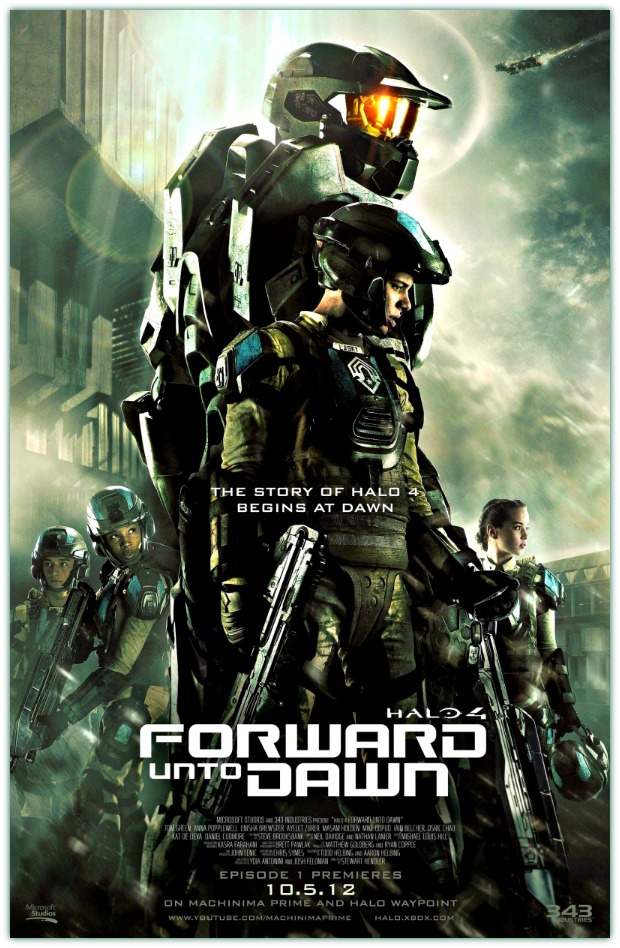
Halo 4looks to be another mega-blockbuster hit for Microsoft and the Xbox 360. Every sequel in this critically-acclaimed video game franchise has always had some very well-made (award-winning as well) live-action tv spots and trailers to help market each title weeks prior to it’s release. For the 4th sequel to the series things haven’t changed and Microsoft looks to expand on their popular live-action shorts by financing a mini-series of live-action shorts that tells the events that will lead up to the story of Halo 4. The mini-series will also introduce a character that will tie-in to the game.
Forward Unto Dawn is the name of this live-action mini-series and will air weeks before the release of the game on both Machinima.com and Halo Waypoint on the Xbox Live.
It’s one thing to create a couple of live-action trailers, but this latest marketing blitz by Microsoft Game Studios looks to take things to a whole new level. Fans of the franchise are still nursing the disappointment over the cancelled attempt to create a Hollywood blockbuster film-adaptation of the Haloseries. A film adaptation that had some major heavy-hitters in its corner from Peter Jackson, Neill Blomkamp and WETA Studios. Forward Unto Dawn (depending on its overall quality and how well the public receives it) may help bring new interest in finally getting the live-action film-adaptation up and running again.