“With all due respect, fuck you, sir.” — Marcus Fenix
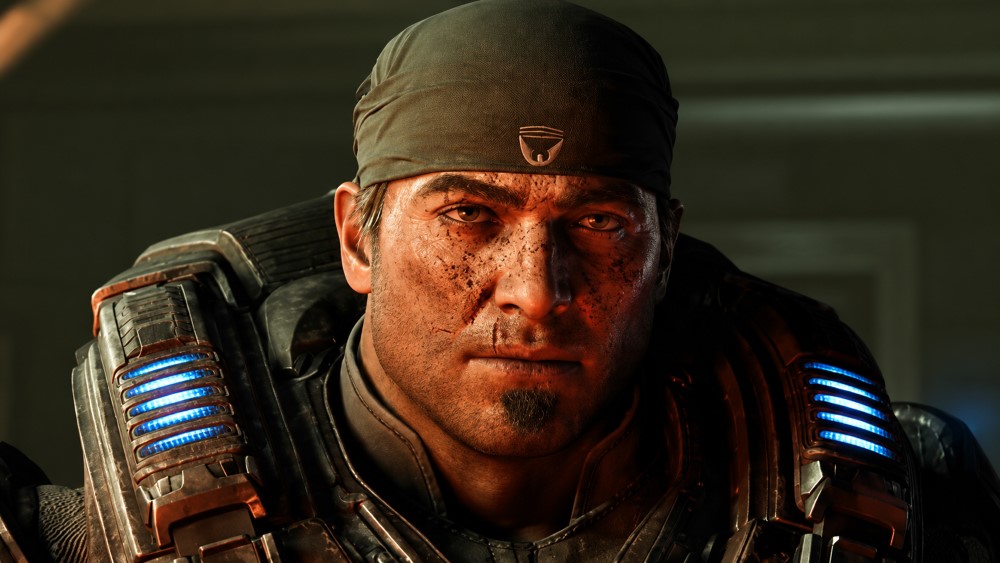
Few video game protagonists carry the weight of a dying world on their shoulders quite like Marcus Fenix, the granite-jawed soldier of Gears of War. At first glance, he seems deliberately unremarkable: a muscled, armor-plated space marine who speaks in growls and commands with grunts. Yet this surface-level stoicism is precisely what makes him so compelling. Marcus rejects the quippy, one-liner-spouting action hero archetype popularized by the early 2000s. Instead, he embodies a weary, bone-deep authenticity. He is a man who has lost everything—his father, his freedom, and his faith in authority—and his silence speaks louder than any monologue. That authenticity is the bedrock of his charisma; he does not perform heroism, he simply endures.
What elevates Marcus beyond a simple “tough guy” is his profound, unspoken loyalty. His defining act before the first game even begins—abandoning his post to rescue his father, which lands him in a military prison—immediately establishes his moral code: duty to family over duty to order. Throughout the trilogy, this loyalty extends to his squad, particularly his best friend, Dominic Santiago. The chemistry between Marcus and Dom is never overstated; it lives in shared glances, battlefield tactics, and the quiet understanding of two men who have bled together for over a decade. When Dom sacrifices himself in Gears of War 3, Marcus’s single, devastated howl is one of the most emotionally raw moments in gaming history. That grief is charismatic because it is earned—it shows that beneath the armor is a heart capable of being shattered.
Marcus also subverts the typical “chosen one” narrative. He is not a prophesied savior or a supernatural being; he is a skilled, broken soldier who keeps fighting because stopping means admitting that everyone who died did so for nothing. His charisma stems from his everyman fatalism, magnified by a world of grotesque monsters. While other heroes might inspire with rousing speeches, Marcus inspires by example. He is always the first through the breach, the last to retreat, and he never asks his men to do anything he wouldn’t do himself. This quiet, grindstone leadership is deeply appealing in an era saturated with narcissistic antiheroes. He earns respect not through charm, but through competence and sacrifice.
Moreover, the game’s design reinforces his character. The Lancer rifle with its chainsaw bayonet is an extension of Marcus’s personality: brutal, efficient, and unwilling to pretend war is clean. His heavy, lumbering movement in the early games conveys exhaustion, as if every step is a battle against despair. The “active reload” mechanic, which rewards precise timing, mirrors Marcus’s own discipline—a man who cannot afford to waste a single bullet or moment. Even his trademark bandana and scruff are practical, not stylish. Every element of his visual and mechanical design supports a man who has long abandoned vanity. This cohesion between gameplay and character makes his rare moments of dry humor—like his deadpan “Nice” after a brutal execution—feel like earned releases of tension rather than forced wit.
In the end, Marcus Fenix is charismatic because he respects the gravity of his world. He doesn’t crack jokes while Locusts tear his comrades apart; he doesn’t pause for dramatic monologues as cities fall. Instead, he offers something rarer: the quiet dignity of a man who keeps moving forward when hope is a luxury. In the later games, including Gears 5, we see him as an older, scarred father figure to JD Fenix, still struggling with the same burdens of command and love. That continuity of pain and perseverance is what solidifies him as an icon. Marcus Fenix reminds us that heroism is not about flash or wit—it is about being the rock others can hold onto when the world is flooding, even if that rock is too tired to speak.
“We’re not saints. But we are gonna win this fucking war and I’d rather have you on the winning side.” — Marcus Fenix
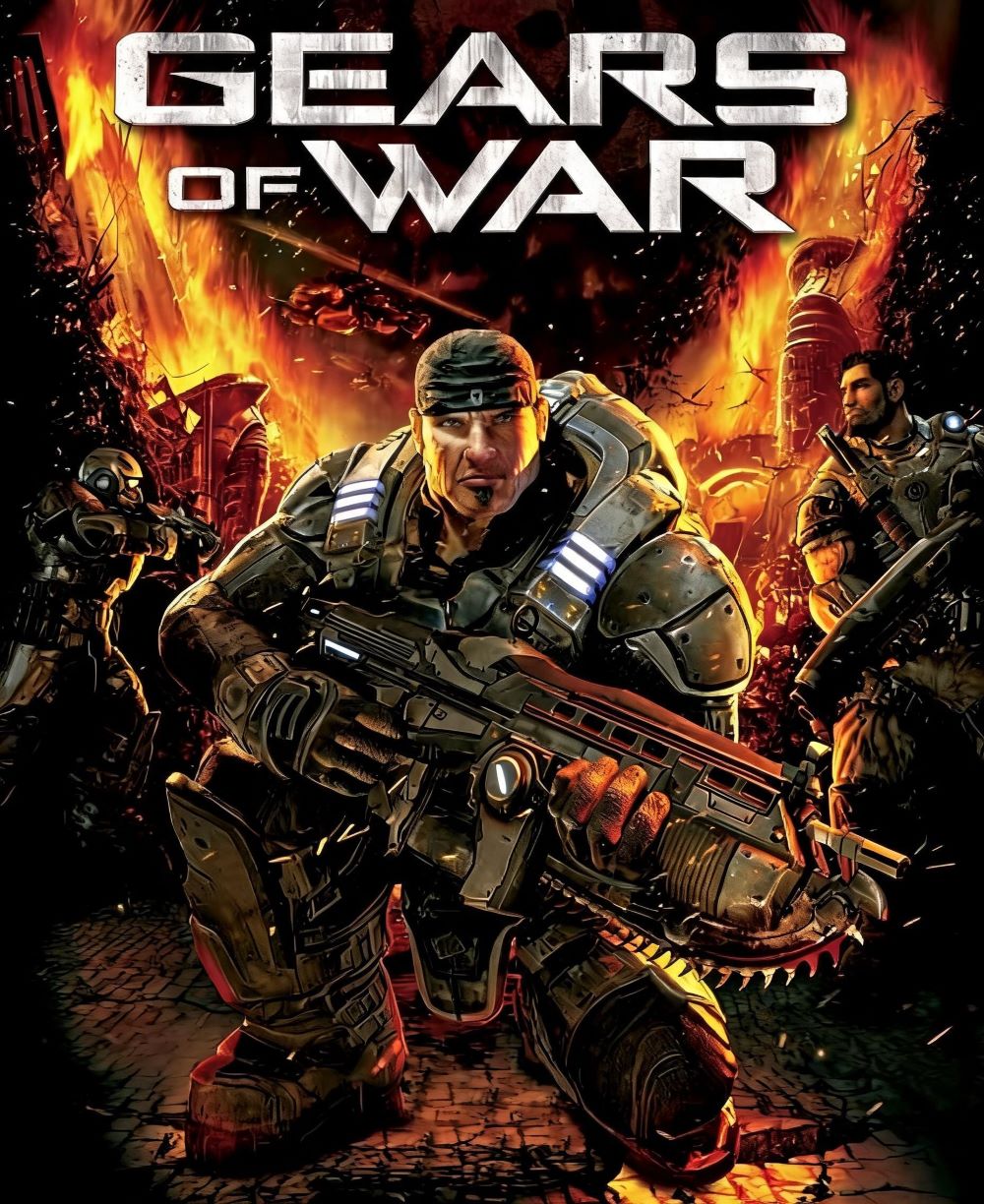
Let’s be real for a second: trying to play Gears of War from 2006 right after a session of Fortnite or Call of Duty: Modern Warfare III is a genuine shock to the system. You forget how heavy games used to feel. In an era where every shooter has slide-canceling, wall-running, and zero sprint-out times, going back to Marcus Fenix is like trying to run a marathon in steel-toed boots. The Xbox 360 classic, now almost two decades old, exists in this weird purgatory of retro gaming. It’s too young to be nostalgic pixel art, but it’s definitely too old to feel modern. And yet, here’s the thing: Gears of War still matters. Not in spite of its clunkiness, but because of it. When you revisit the ruined planet of Sera today, you realize that the “slowness” we now criticize was actually a specific design philosophy that current games have largely abandoned. It’s a fascinating time capsule—a game that feels like a rusty chainsaw, awkward to start, but terrifyingly effective once you get it going.
The first thing a modern player will notice is the speed—or total lack of it. In 2024, if your character takes a full second to slide into cover, players call it “input lag.” Back in 2006, we called it “weight.” The A-button roadie run is iconic, but compared to the fluidity of something like The Last of Us Part II or Gears 5 itself, the original feels like wading through molasses. You can’t vault over cover while shooting. You can’t cancel out of an animation. When you rev that Lancer chainsaw, you are committed to that animation, and if a Locust sneezes on you, you stagger. This should feel archaic. And honestly, sometimes it does. The middle third of the campaign, dragging through the same gray-brown mine shafts, feels repetitive by 2006 standards, but by today’s standards, it’s almost meditative in its simplicity. There’s no open world checklist. No battle pass. No weapon skins to grind for. You just shoot, move up, and shoot again. For a retro palate cleanser, that linear focus is weirdly refreshing.
Visually, Gears of War is a museum piece for a very specific era of game design: the “Real is Brown” movement. When it launched, Unreal Engine 3 was a miracle. Today, those same textures look like wet concrete. The color palette is aggressively desaturated—mixing grays, browns, and the occasional blood splatter. Current games like Ratchet & Clank: Rift Apart or Horizon Forbidden West are explosions of neon and particle effects. Going back to Gears feels like turning off HDR and watching a DVD on a 4K TV. But here’s the retro magic: the art direction survives the technical decay. The ruined architecture, the massive Locust fortresses, the silhouette of a Berserker breaking through a wall—those aren’t reliant on high polygon counts. They’re reliant on good composition. Jerry O’Flaherty’s vision of “destroyed beauty” still holds up because modern horror-shooters like Scorn or Remnant II are essentially borrowing that same heavy, bio-mechanical aesthetic. You can see the pixelation, sure, but you can also see the blueprint for an entire decade of gaming.
Gameplay is where the retro vs. modern debate gets interesting. The cover system—sticky, magnetic, and automatic—was revolutionary in 2006. By 2024, it’s considered “sticky” in a bad way. Modern shooters prefer contextual cover or manual crouch systems because we hate being glued to walls. Yet, playing Gears today reveals that its combat rhythm is actually more tactical than most modern cover shooters. In The Division 2 or Outriders, you can tank a few hits, heal, and move. In retro Gears on Hardcore difficulty, three bullets kill you. You have to respect the geometry. You have to wait for the Locust to reload. That “stop-and-pop” gameplay feels slow, but it also feels deliberate. Current games are terrified of boring the player, so they constantly throw movement abilities at you. Gears forces you to breathe. It’s almost a horror game in disguise—especially the Berserker fight, where you can’t hurt her from the front. A modern game would put a waypoint marker on her head. Gears just lets you panic and run to the next door. That’s retro charm at its finest: trusting the player to figure it out without a glowing UI.
The weapon design remains timeless, even after all these years. The Lancer with the chainsaw bayonet is one of the few mechanics from the 2000s that still feels fresh because no one else has successfully copied it. Pulling off a saw execution in 2024—even with the stiff animation and the camera glitch—is still cathartic in a way that modern “finishing moves” in Warzone aren’t. The Gnasher shotgun, infamous for its inconsistent pellet spread, is a retro nightmare. Veterans will argue that “host advantage” and “wall bouncing” were skill gaps. New players will argue it just feels broken. Both are correct. That’s the beauty of this game as a retro artifact: the multiplayer is janky, unbalanced, and ruled by veteran roadies who never stopped playing. The active reload mini-game—pressing R to stop a moving bar for a damage boost—remains a tiny stroke of genius that modern games like State of Decay borrowed but never improved.
Now, let’s talk about something that happened outside the actual game but became just as legendary as anything Marcus Fenix did with a shotgun. Before Gears of War even launched, Microsoft and Epic set out to make a commercial that would break every rule of game advertising. They initially approached legendary director David Fincher (Fight Club, Zodiac, Se7en) to helm the project—a massive get for a video game tie-in. But when Fincher had to bow out due to a scheduling conflict, a relatively unknown young director named Joseph Kosinski stepped in. You know Kosinski now as the guy who directed Top Gun: Maverick, the $1.5 billion sequel that made the world fall in love with fighter jets again, as well as Tron: Legacy and the Formula One film F1. But back in 2006, he was a visual effects artist and commercial director taking his first big swing. And boy, did he connect. The resulting sixty-second spot fundamentally rewrote the rules of game advertising. Instead of loud rock and explosion montages—the tired template of every shooter ad before 2006—Kosinski showed Marcus Fenix walking alone through a ruined city in the rain, set to Gary Jules’ haunting, melancholy cover of “Mad World.” The ad barely showed coherent gameplay, yet it sold grief, loneliness, and the weight of a lost world. A commercial for a rated-M shooter about chainsaw guns had no catchphrase, no high-fives, no announcer yelling “Are you ready?” Just a broken man trudging through the rain while a piano played.
It was a gamble that paid off so massively that it broke the industry’s advertising brain. Within a year, Halo 3’s “Believe” diorama ads—also influenced by Kosinski’s work—traded action for elderly veterans remembering a war. Dead Island’s infamous reverse-trailer showed a child’s death set to a mournful song. The Last of Us Part II, Cyberpunk 2077, and Death Stranding all followed with slow, emotional piano or vocal covers over solitary heroes walking through beautiful desolation. Even today, when a new trailer drops with a slowed-down pop cover and a hero looking sad in the rain, you’re watching the ghost of Joseph Kosinski’s twenty-year-old masterpiece. The actual game itself is full of cheesy banter and over-the-top gore—Cole Train yelling “Wooooo!”—but that ad sold a tone the game only occasionally delivered. And in doing so, it proved that video games could be marketed as art, not just adrenaline. You don’t just remember the headshots. You remember the rain. And you remember the name of the director who made that rain matter.
So, how does Gears of War hold up as a retro recommendation in 2024? You have to adjust your expectations. This is not a pick-up-and-play title. It’s a history lesson. The story is still barebones (Locust bad, blow up resonator, Dom’s wife is in another castle), but the vibe is immaculate. The lack of a mission select screen is annoying by modern standards, and the vehicle sections (yes, the infamous “sitting on a turret while riding a train” finale) feel painfully scripted. But the co-op? That’s the secret sauce. Playing split-screen Gears today with a friend is arguably better than playing most modern co-op shooters because the game isn’t trying to sell you anything. No loot boxes. No battle pass. Just two beefy space marines sharing one box of ammo and a lot of terrible one-liners. The influence this game had—and it’s impossible to overstate—is the DNA you see in Uncharted, The Last of Us, and even God of War (2018)’s over-the-shoulder camera. Every AAA third-person shooter from the last fifteen years owes its cover mechanic to this clunky, brown, brilliant fossil.
In the end, calling Gears of War “retro” isn’t an insult. It’s a badge of honor. It is the perfect representation of the Xbox 360 era: ambitious, janky, gray-brown, and completely unwilling to apologize for its weight. A modern shooter would buff your movement speed, add a grappling hook, and turn the Locust into loot piñatas. Gears doesn’t care. It wants you to struggle against the controls for a minute, then laugh as you chainsaw a Grub in half. And somewhere in the back of your mind, as you do it, you might hear a soft piano cover. That contrast—grief and gore, slowness and spectacle—is what makes revisiting Gears of War in 2024 so weirdly worthwhile. It is a slow, heavy, dated, and utterly essential piece of gaming history. Take cover. Wait for the reload. And for the love of God, remember to pick up the Torque Bow. You’ll be fine. Just don’t expect to sprint.
I did watch Transformers: The Last Knight. I didn’t see it at the theaters, of course. To date, I’ve only seen one Transformers movie on the big screen. It was the fourth one and not only did I get motion sick but when I left the theater, I discovered that I was having trouble hearing. Even though I watched Transformers: The Last Knight on a small screen, I still made sure to take some Dramamine beforehand. That may have been a mistake because this movie somehow drags things out for 2 hours and 30 minutes. That’s a lot of time to spend trying to stay awake while watching something that doesn’t even try to make sense.
So, yes, I did watch Transformers: The Last Knight but I’m not really sure what I watched. I know that there was a lot of camera movement. There was a lot of stuff blowing up. Robots would fly into space. Robots would return to Earth. Robots turned into cars. All of the robots spoke in these gravelly voices and half the time, I couldn’t really understand what they were saying. Mark Wahlberg was around and he spent the entire movie with this kind of confused look on his face. His Boston accent really came out whenever he had to deliver his dialogue. One thing I’ve noticed about Wahlberg is that the less he cares about a movie, the more likely he is to go full Boston. To be honest, if I just closed my eyes and listened to Wahlberg’s accent and tuned out all of the explosions and robot talk, I probably would have thought I was watching Manchester By The Sea.
Anthony Hopkins was also in the movie, playing a character who might as well have just been named “Esteemed British Person.” It’s always fun to see Hopkins in a bad movie, just because he knows that his deserved reputation for being a great actor isn’t going to suffer no matter how much crap he appears in. He always goes through these movies with a slightly bemused smirk on his face. It’s almost as if he’s looking out at the audience and saying, “Laugh all you want. I’ll still kick anyone’s ass when it comes to Shakespeare…” Anyway, Hopkins is mostly around so that he can reveal that the Transformers have been on Earth since time began. Why, they even saved King Arthur!
The plot has to do with a powerful staff that can be used to bring life back to the Transformers’s home planet. The problem is that using the staff will also destroy all life on Earth or something like that. So, of course, the good Transformers are trying to save Earth and the bad Transformers are like, “Fuck Earth, let’s blow stuff up.” Or something like that. The main good Transformer — Optimus Prime, I guess — gets brainwashed into becoming an evil Transformer. Of course, since Anthony Hopkins is in the movie, the majority of the film takes place in England and that can only mean a trip to Stonehenge!
And…
Look, I’ve exhausted myself. I’m not going to say that Transformers: The Last Knight is a terrible movie because, obviously, someone out there loves this stuff. I mean, they’ve made five of these movies so someone has to be looking forward to them. They’re not for me, though.
Some day, I hope Micheal Bay directs a Fifty Shades of Grey movie. I look forward to watching Christian and Ana discuss consent while the world explodes behind them.
I finally got a chance to watch Zootopia last night and oh my God, what a sweet and wonderful little film it turned out to be!
Zootopia is an animated film from Disney and it started out with a premise that sounds very Disney-like. Zootopia takes place in a world where there are no humans. Instead, animals walk and talk and scheme and plan and joke and dance and … well, basically, do everything that humans do. Except they’re a lot cuter when they do it because they’re talking animals.
Judy Hopps (voiced by Gennifer Goodwin) is a rabbit who happens to be an incurable optimist. (We should all try to be more like Judy.) Even when she was growing up on the farm, Judy knew that she would someday move to the sprawling metropolis of Zootopia and become the first rabbit on the city’s police force. When she finally does graduate from the police academy, Judy gets a lot of attention as a trailblazer. But she quickly discovers that she’s only been hired to be a token, a political tool to help the city’s mayor, a blowhard of a lion named Lionheart (J.K. Simmons, voice the role that he was born to voice), win reelection.
See, Zootopia may look like a wonderful place to live but, as quickly becomes apparent, it’s a city in which the peace is very tenous. Animals that are traditionally prey — like Judy and her fellow rabbits — may live with the predators but they certainly don’t trust them. And the predators may not eat the prey but they certainly don’t respect them. Underneath the cute face of every talking animal, there lies prejudice and resentment. Lionheart is a predator who needs the votes of prey to remain in office. What better way to win their trust then to make Judy Hopps a police officer?
Judy may be a member of the police force but that doesn’t mean that she’s going to be allowed to actually do anything. While every other member of the force gets an exciting assignment, Judy is assigned to traffic duty.
However, an otter has recently vanished. He’s just the latest of 14 predators to vanish in the city. With the help of seemingly sympathetic deputy mayor, Judy gets herself assigned to the case. But there’s a catch. She has 48 hours to find the otter. If she doesn’t find that otter, she’ll resign from the force and go back to the farm.
Luckily, Judy is not working alone. She knows that the last animal known to have seen the otter is a fox named Nick Wilde (Jason Bateman). Nick’s a bit of a con artist and, as a predator, he wants nothing to do with Judy and she doesn’t quite trust him. But, events — which I’m not going to spoil here — force them to work together and uncover the darkest secrets of life in Zootopia…
If Zootopia sounds cute, that’s because it is. It’s perhaps one of the most adorable films that I’ve ever seen, full of wonderful animation and memorable characters. But, at the same time, there’s a very serious theme running through Zootopia. Zootopia is about more than just talking animals. It’s a film about prejudice, racism, sexism, and intolerance. It’s a film that invites us to not only laugh but also to reconsider the world around us.
Zootopia is currently on Netflix and, if you haven’t seen it yet, I highly recommend it. It’s great for children and adults.