Horror on the Lens: The Lodger (dir by Alfred Hitchcock)


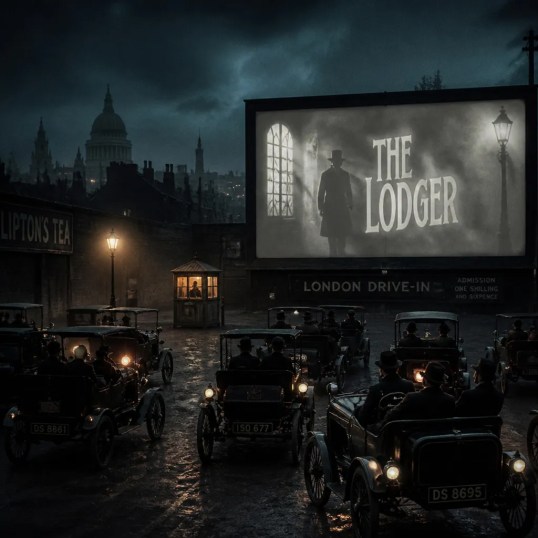
A serial killer known as “The Avenger” is murdering blonde women in London (which, once again, proves that its better to be a redhead).  And while nobody knows the identity of the Avenger, they do know that the enigmatic stranger  (Ivor Novello), who has just recently rented a room at boarding house, happens to fit his description.  They also know that the lodger’s landlord’s daughter happens to be a blonde…

Released in 1927, the silent The Lodger was Alfred Hitchcock’s third film but, according to the director, this was the first true “Hitchcock film.”  Certainly it shows that even at the start of his career, Hitchcock’s famous obsessions were already present — the stranger accused of a crime, the blonde victims, and the link between sex and violence.

Also of note, the credited assistant director — Alma Reville — would become Alma Hitchcock shortly before The Lodger was released.

Peter Medak, RIP


I just saw the news that the British director Peter Medak has passed away at the age of 88.  While he wasn’t a household name, Medak has a very interesting filmography.  He directed Peter O’Toole to an Oscar nomination in 1972’s The Ruling Class.  He directed one of the better films about the Kray Brothers, The Krays.  He worked in television and did a few episodes of Homicide.

He also directed one of my favorite horror films,  1980’s The Changeling.  The Changeling features one the best seance scenes that I’ve ever seen.  Here it is:

Peter Medak, RIP.

Song of the Day: Kiss Me Dracula by Claudio Simonetti, featuring Silvia Specchio


Today’s song of the day comes from Dario Argento’s massively underrated vampire film, Dracula 3D.

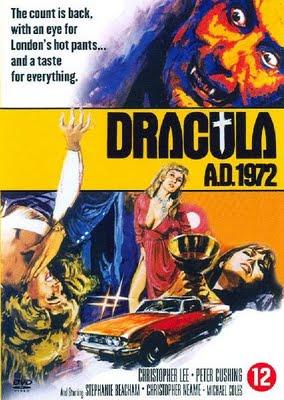
Horror Scenes That I Love: Van Helsing and Dracula Meet in Dracula A.D. 1972


Even in the year 1972, Count Dracula (Christopher Lee) could not escape Prof. Van Helsing (Peter Cushing).  Of course, the Van Helsing here was a descendant of the Van Helsing who gave Dracula such a hard time in the 19th century but still, Dracula was not thrilled to see him.

This scene is from Hammer’s Dracula A.D. 1972.  It’s not generally considered to be one of the better Dracula films but I enjoy any chance to see Peter Cushing and Christopher Lee (who were the closest of friends off-screen) acting opposite each other.

4 Shots From 4 Horror Films: October 28th


4 or more Shots from 4 or more Films is just what it says it is, 4 shots from 4 of our favorite films. As opposed to the reviews and recaps that we usually post, 4 Shots from 4 Films lets the visuals do the talking!

4 Shots From 4 Horror Films

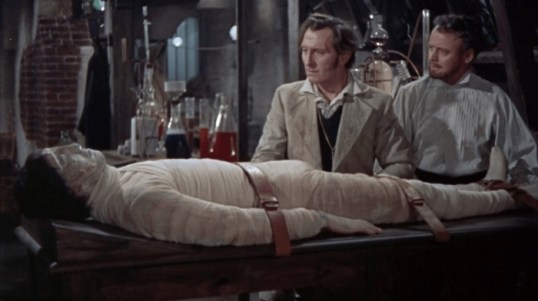
The Curse of Frankenstein (1957, dir by Terence Fisher, DP: Jack Asher)

Horror of Dracula (1958, dir by Terence Fisher, DP: Jack Asher)

The Skull (1965, dir by Freddie Francis, DP: John Wilcox)

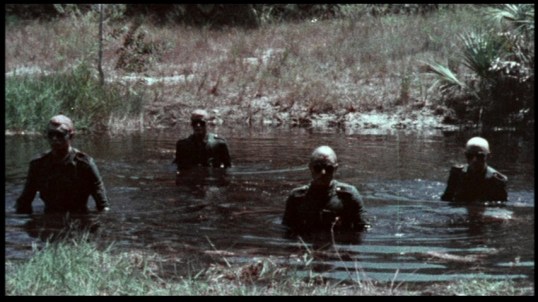
Shock Waves (1977, dir by Ken Wiederhorn, DP: Ruben Trane)

Here Are The 36th Annual Gotham Nominations


Don’t be alarmed but the first of the precursor award nominations were announced yesterday.  The Gothams aren’t exactly the most reliable of the Oscar precursors and a lot of the potential Oscar nominees aren’t even eligible for a Gotham but, if you’re a low-budget indie film looking to score a Best Picture nomination, winning a Gotham is a nice way to start Awards Season.

(Winning seems to be the key here.  As James Gray can attest, just getting a nomination doesn’t do much.)

Here are the 36th Annual Gotham Nominations.

Best Feature

Clarissa

Arie Esiri, Chuko Esiri, directors; Arie Esiri, Chuko Esiri, Theresa Park, Nicholas Weinstock, producers (NEON)

Club Kid

Jordan Firstman, director; Michael Bloom, Alex Coco, Galen Core, Ryan Heller, producers (A24)

The Debut

Jesse Eisenberg, director; Jesse Eisenberg, Ali Herting, Dave McCary, Emma Stone, producers (A24)

Dreams in Nightmares

Shatara Michelle Ford, director; Naima Abed, Shatara Michelle Ford, Pin-Chun Liu, producers (Lunette Films)

The Invite

Olivia Wilde, director; Ben Browning, Megan Ellison, David Permut, producers (A24)

Josephine

Beth de Araújo, director; Beth de Araújo, Josh Beirne-Golden, Gemma Chan, David Kaplan, Josh Peters, Jordan Rapaport, Mark H. Rapaport, Robina Riccitiello, Marina Stabile, Channing Tatum, Crystine Zhang, producers (Sumerian Pictures)

Mouse

Kelly O’Sullivan, Alex Thompson, directors; Bonnie Comley, Pierce Cravens, Steven A. Jones, Ian Keiser, Chelsea Krant, Stewart F. Lane, Abigail Rose Solomon, Alex Thompson, Alex Wilson, producers (Independent Film Company)

Paper Tiger

James Gray, director; Andrea Bucko, Leonardo Maria del Vecchio, Gary Farkas, James Gray, Anthony Katagas, Andrea Leone, Raffaella Leone, Marco Perego, Carlo Salem, Rodrigo Teixeira, producers (NEON)

Primetime

Lance Oppenheim, director; Ari Aster, Fred Berger, William Iannaccone, Brian Kavanaugh-Jones, Lars Knudsen, Brighton McCloskey, Robert Pattinson, producers (A24)

Teenage Sex and Death at Camp Miasma

Jane Schoenbrun, director; Dede Gardner, Jeremy Kleiner, producers (MUBI)

Your Mother Your Mother Your Mother

Bassam Tariq, director; Babak Anvari, Bassam Tariq, Lucan Toh, producers (Amazon MGM Studios)

Best International Feature

All of A Sudden

Ryusuke Hamaguchi, director; Julien Deris, David Gauquié, Kosuke Oshida, Yuji Sadai, producers (NEON)

Ben’Imana

Marie-Clémentine Dusabejambo, director; Samantha Biffot, Pierre-Adrien Ceccaldi, Marie-Clémentine Dusabejambo, Marie Epiphanie Uwayezu, producers (Alexander)

Blue Heron

Sophy Romvari, director; Ryan Bobkin, Sara Wylie, Sophy Romvari, Gábor Osváth, producers (Janus Films)

Everytime

Sandra Wollner, director; David Bohun, Lixi Frank, Viktoria Stolpe, producers (1-2 Special)

Fatherland

Pawel Pawlikowski, director; Edward Berger, Lorenzo Gangarossa, Mario Gianani, Lorenzo Mieli, Ewa Puszczynska, Dimitri Rassam, Jeanne Tremsal, producers (MUBI)

Filipiñana

Rafael Manuel, director; Bianca Balbuena, Jeremy Chua, Omar El Kadi, Bradley Liew, Rafael Manuel, Alex Polunin, Nadia Turincev, producers (Kino Lorber)

La Gradiva

Marine Atlan, director; Inès Daïen Dasi, producer (1-2 Special)

Minotaur

Andrey Zvyagintsev, director; Charles Gillibert, Nathanaël Karmitz, Marco Perego, Andrey Zvyagintsev, producers (MUBI)

Possible Love

Lee Chang-dong, director; Lee Joon-dong, Lee Chang-dong, David Levine, Chadwick Prichard, producers (Netflix)

Tender Loving Care

Mike Leigh, director; Georgina Lowe, producer (Bleecker Street)

Best Documentary Feature

Closure

Michal Marczak, director; Monika Braid, Rémi Grellety, Karolina Marczak, Michal Marczak, Katarzyna Szczerba, producers (1-2 Special)

A Fox Under a Pink Moon

Soraya Akhlaghi, Mehrdad Oskouei, directors; Siavash Jamali, Mehrdad Oskouei, producers (Kino Lorber)

NAZA

Yuval Abraham, Rachel Szor, directors; Harry Davies, Lindsay Poulton, James Wilson, producers (NEON)

Once Upon a Time in Harlem

David Greaves, director; Anne de Mare, Liani Greaves, producers (NEON)

You Can See Everything

Nathan Fielder, Lance Oppenheim, directors; Maggie Ambrose, Tatiana Bears, Jack Davis, Nathan Fielder, Lance Oppenheim, producers (A24)

Best Director

Ryusuke Hamaguchi, All of a Sudden (NEON)

Sandra Wollner, Everytime (1-2 Special)

Andrey Zvyagintsev, Minotaur (MUBI)

Jane Schoenbrun, Teenage Sex and Death at Camp Miasma (MUBI)

Mike Leigh, Tender Loving Care (Bleecker Street)

Breakthrough Director

Sophy Romvari, Blue Heron (Janus Films)

Jordan Firstman, Club Kid (A24)

Aleshea Harris, Is God Is (Amazon MGM Studios)

Marine Atlan, La Gradiva (1-2 Special)

Joel Alfonso Vargas, Mad Bills to Pay (or Destiny, dile que no soy malo) (Oscilloscope Laboratories)

John Early, Maddie’s Secret (Magnolia Pictures)

Best Original Screenplay

Everytime, Sandra Wollner (1-2 Special)

La Gradiva, Marine Atlan, Anne Brouillet (1-2 Special)

Possible Love, Lee Chang-dong, Oh Jung-mi (Netflix)

Tender Loving Care, Mike Leigh (Bleecker Street)

Wild Horse Nine, Martin McDonagh (Searchlight Pictures)

Best Adapted Screenplay

All of a Sudden, Ryusuke Hamaguchi (NEON)

Clarissa, Chuko Esiri (NEON)

The Invite, Rashida Jones, Will McCormack (A24)

Minotaur, Simon Lyashenko, Andrey Zvyagintsev (MUBI)

Primetime, Ajon Singh (A24)

Outstanding Lead Performance

Mahershala Ali, Your Mother Your Mother Your Mother (Amazon MGM Studios)

Gillian Anderson, Teenage Sex and Death at Camp Miasma (MUBI)

Jeon Do-yeon, Possible Love (Netflix)

John Early, Maddie’s Secret (Magnolia Pictures)

John Malkovich, Wild Horse Nine (Searchlight Pictures)

Ian McKellen, The Christophers (NEON)

Julianne Moore, The Debut (A24)

Sophie Okonedo, Clarissa (NEON)

Andrew Scott, Elsinore (Focus Features)

John Turturro, The Only Living Pickpocket in New York (Sony Pictures Classics)

Outstanding Supporting Performance

Tom Courtenay, Queen at Sea (Greenwich Entertainment)

Esmé Creed-Miles, Sense and Sensibility (Focus Features)

Penélope Cruz, The Invite (A24)

Adam Driver, Paper Tiger (NEON)

Andrew Garfield, Artificial (NEON)

Skyler Gisondo, Primetime (A24)

Sandra Hüller, Fatherland (MUBI)

Kate O’Flynn, Tender Loving Care (Bleecker Street)

Tao Okamoto, All of a Sudden (NEON)

Channing Tatum, Josephine (Sumerian Pictures)

Breakthrough Performer

Adia, Your Mother Your Mother Your Mother (Amazon MGM Studios)

India Amarteifio, Clarissa (NEON)

Guitarricadelafuente, La Bola Negra (Netflix)

Colas Quignard, La Gradiva (1-2 Special)

Mason Reeves, Josephine (Sumerian Pictures)

Gotham Audience Award

Backrooms

Kane Parsons, director; Kori Adelson, Michael Clear, Dan Cohen, Chris Ferguson, Dan Levine, Shawn Levy, Roberto Patino, Osgood Perkins, Jenno Topping, James Wan, producers (A24)

La Bola Negra

Javier Ambrossi, Javier Calvo, directors; Javier Ambrossi, Javier Calvo, producers (Netflix)

The Drama

Kristoffer Borgli, director; Ari Aster, Lars Knudsen, Tyler Campellone, producers (A24)

The Invite

Olivia Wilde, director; Ben Browning, Megan Ellison, David Permut, producers (A24)

Michael

Antoine Fuqua, director; John Branca, John McClain, Graham King, producers (Lionsgate)

Obsession

Curry Barker, director; James Harris, Haley Nicole Johnson, Christian Mercuri, Roman Viaris, producers (Focus Features)

Project Hail Mary

Phil Lord, Christopher Miller, directors; Ryan Gosling, Phil Lord, Christopher Miller, Rachel O’Connor, Amy Pascal, Aditya Sood, Andy Weir, producers (Amazon MGM Studios)
You Can See Everything

Nathan Fielder, Lance Oppenheim, directors; Maggie Ambrose, Tatiana Bears, Jack Davis, Nathan Fielder, Lance Oppenheim, producers (A24)

The winners will be revealed on November 30th, 2026.
 

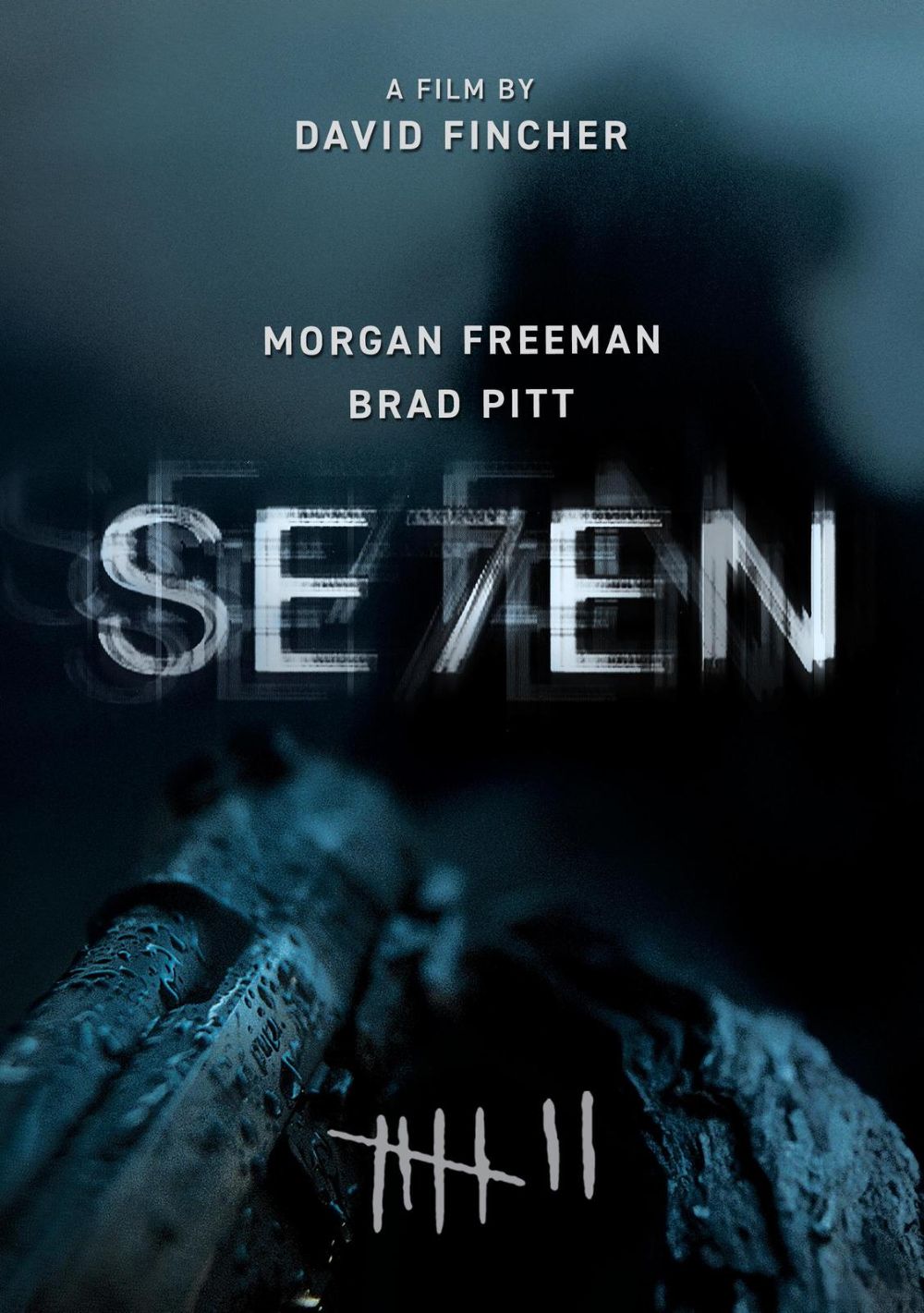
Horror Film Review: Se7en (dir. by David Fincher)


“I just don’t think I can continue to live in a place that embraces and nurtures apathy as if it was virtue.” — William Somerset

The nastiest thing about David Fincher’s Se7en is how quickly its horrors start to feel like part of the landscape. A gruesome murder should bring the world to a halt, but here it’s another room to enter, another report to write, another terrible thing happening while the rain keeps falling. Released in 1995, the film takes a serial-killer investigation and builds an atmosphere so oppressive that simply spending time in its unnamed city becomes uncomfortable. Yet the ugliness never feels entirely like an exercise in shock. Underneath it is a troubling question: what happens when people get used to looking away?

Morgan Freeman’s William Somerset has spent a career fighting that impulse, and he’s tired. Days away from retirement, he gets paired with Brad Pitt’s David Mills, a younger detective whose enthusiasm comes with a generous helping of impatience. Their investigation centers on a murderer arranging killings around the seven deadly sins. It’s a strong hook, but the movie doesn’t coast on the ingenuity of its crimes. Andrew Kevin Walker’s screenplay makes the detectives’ reactions just as important as the evidence. They’re looking at the same awful things while drawing very different conclusions about what their work can accomplish.

Freeman is terrific at suggesting how much effort Somerset’s composure requires. His quietness isn’t an absence of feeling; it’s a way of keeping feeling manageable. He asks questions carefully, studies details other people dismiss, and seems painfully aware of how easily a victim can become an inconvenience to everyone else. The familiar retiring-cop setup could have made him predictable, but Freeman gives his weariness a personal texture. Somerset still cares enough to be hurt by the job. Leaving is less a triumphant escape than an admission that he no longer knows how to keep doing it.

Pitt gives Mills an emotional openness that both challenges Somerset and exposes his own limitations. He’s cocky, easily irritated, and eager to interpret caution as defeatism. Sometimes he’s right to push back; sometimes he clearly needs to stop talking and listen. Pitt lets both sides exist without turning Mills into either a lovable hothead or a complete fool. His belief that police work should make a difference feels genuine. The tension comes from watching that belief encounter situations it can’t easily absorb. Together, the actors make a familiar mismatched partnership feel like an ongoing argument rather than a screenwriting obligation.

Fincher surrounds that argument with a city that seems to encourage surrender. The rain, clutter, cramped rooms, and dirty light create a place where basic comfort feels unavailable. Even spaces that should provide privacy seem invaded by noise or unease. What matters isn’t simply that everything looks miserable. It’s that people move through this misery as though it barely registers anymore. The setting gives Somerset’s exhaustion a believable source while making Mills’s confidence seem increasingly precarious. Neither man is investigating from a position of safety; they’re already living inside the atmosphere the killer exploits.

That’s also why the horror works beyond the immediate disgust of the crime scenes. Se7en often makes us confront what happened after the fact, with the detectives trying to reconstruct suffering from its remains. Fincher understands how disturbing a delayed realization can be. A room initially presents one terrible image, then a detail or explanation makes it worse. The film doesn’t need to show every act of violence because the aftermath supplies enough information for the imagination to take over. The dread comes from knowing that looking more closely will probably reveal something you would rather not understand.

Despite that relentless mood, the investigation stays engaging. There’s satisfaction in watching Somerset and Mills read, argue, follow leads, and gradually assemble a clearer picture. The library sequence is especially effective because it changes the film’s texture without breaking its spell. Somerset finds a measure of calm among books and music, using thought rather than momentum to approach the case. It’s a small reminder that the world contains more than brutality. Those quieter passages also make the shocks hit harder. Fincher knows that an audience needs time to anticipate the next discovery, not just recover from the last one.

Gwyneth Paltrow’s Tracy provides another necessary interruption. As Mills’s wife, she has a different relationship with the city: she isn’t trying to solve it, just work out whether she can live there. Her scenes bring out the personal cost of the detectives’ opposing attitudes. The dinner sequence allows some awkward humor, while her private conversation with Somerset reveals tenderness beneath his guarded manner. Paltrow makes Tracy feel vulnerable without making her helpless. Still, the screenplay gives her less independence than she deserves. She’s emotionally important, but the film is more curious about what she means to its men than about her own life.

John Doe takes that tendency to reduce people to their usefulness and pushes it into monstrous territory. To him, human beings are props in a moral demonstration. His certainty is chilling, but it isn’t the same as wisdom, and the movie works best when that distinction remains clear. There are moments when his elaborate planning feels almost too convenient, as though the screenplay needs him to possess whatever advantage the next development requires. Even so, his vanity keeps him from becoming merely an all-knowing villain. Beneath the preaching is someone desperate to force the world to acknowledge his importance.

Without detailing the final revelations, the closing stretch brings the film’s ideas into brutally personal focus. The shift into daylight feels wrong in a way that’s difficult to shake. After so many shadowy interiors, open space should offer relief, yet there’s nowhere emotionally safe to stand. The suspense becomes less about discovering another clue than watching people recognize what is happening and struggle to respond. That distinction gives the ending its force. Knowledge doesn’t automatically create control, and professional experience doesn’t make anyone immune to being overwhelmed. The case stops being something the detectives can hold at a distance.

What lingers after Se7en isn’t just the memory of its worst images. It’s the uncomfortable distance between noticing suffering and knowing what to do about it. Somerset has experience without much hope; Mills has conviction without enough restraint. Neither can offer a complete answer, but their struggle gives the film something more substantial than stylish despair. Fincher makes looking away seem tempting, even sensible, before leaving us with the cost of that choice. This is a grim, occasionally contrived, remarkably controlled thriller whose deepest horror is also its most recognizable: the fear that the world can wear down our willingness to care.

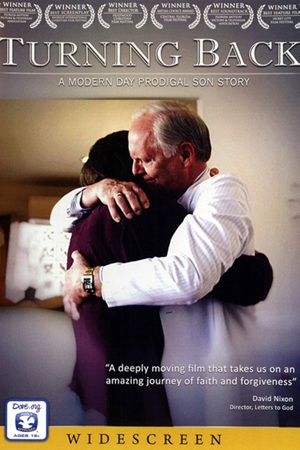
October Positivity: Turning Back (dir by Jaime Velez Soto)


In 2011’s Turning Back (also known as The Whisper Home), Stephen Patterson (played by Jerry Eisinger) is a youth minister and teacher who is surprised when he’s told that his state representative is moving up to the senate and that he’s been selected to run for her old seat. He’s assured that he shouldn’t have any trouble winning either the primary or the election. Sure, there was a city councilwoman who was approached first, but she has no interest in running for the seat… or, at least, she doesn’t until after Stephen has declared his candidacy.

It’s not just city councilwomen that Stephen has to worry about. There’s also his brother, Dave (Randy Vaughn). While Stephen stayed in his hometown and went out of his way to always be the good and responsible son, Dave decided to pursue a career as an actor. He asked for all of the money that had been saved for his college fund and then he hopped on a bus to Los Angeles. Dave didn’t find much success as an actor, but he did manage to develop a heroin addiction. Dave finally managed to clean himself up and he worked up the courage to return home. Of course, he returns on the exact day that Stephen is starting his political campaign…

As you may have guessed, this movie is based on the parable of the prodigal son, with Stephen getting jealous over the big deal that his father is making over Dave’s return. Stephen finds himself growing more and more irritated with Dave, especially after he sees Dave hanging around in the “bad side of town.” When Stephen shames Dave into leaving his father’s house, Stephen is forced to consider the answer to the question, “Am I my brother’s keeper?”

It’s honestly not a bad film. The low budget is obvious and I could have done with a little less of the two criminals who are searching for Dave, but the parable of the prodigal son is definitely good source material and the film does an adequate job retelling the story for modern times. For the most part, the acting is heartfelt and the film’s message sincere.

That said, I have to admit that I found the political element of the film to be the most interesting part of the story. It’s not often that you see movies about people running for the state legislature. In both real life and the movies, the state house tends to get ignored. And yet, some of the most interesting political races are the ones for the state legislature. I remember, back in 2020, all of the Democratic State House candidates in Texas were running ads showing them at protests and calling for police reform. Then, three weeks before the election, all of their commercials suddenly changed and they started bragging about how much they loved the police. The guy running in my district spent months wearing a Defund the Police sweatshirt just to suddenly start mailing out flyers of himself posing with uniformed police officers. Never before had I seen such a blatant case of polling in action. Turning Back captures the feel of running for an office that most people tend to forget about. Stephen is assured that getting elected will be easy, but then, once he starts campaigning, he discovers how few people want to talk about the State House.

Who knows? If I ever get tired of this gig, maybe I’ll run for the State House. Apparently, anyone can get elected!

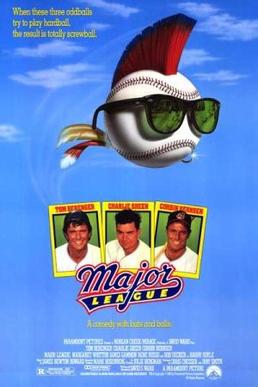
A Scene That Erin Loves From Major League


I know this isn’t Halloween-related but I’m still buzzing over the baseball game that I just watched.  I’m so exited that I’m going to stay up late and watch my favorite baseball movie!  Here’s one of my favorite scenes from Major League.  Listen as Tom Berenger tells you, me, and everyone else what to do whenever anyone says you don’t have a chance at winning!

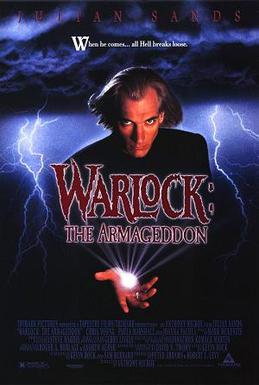
Warlock: The Armageddon (1993, directed by Anthony Hickox)


The Warlock is back!

Or, at least, Julian Sands is back and he’s once again playing someone who is in league with the Devil. The first sequel to Warlock reimagines the character as being the literal son of Satan. Every millennium, Warlock is reborn and sets about trying to find the six stones that, when put together, will allow him to set his father free from Hell. The druids used to do a pretty good job of keeping the Warlock from finding the stones, but eventually they all died out. When Warlock is reborn in 1993, it falls to Kenny Tavis (Chris Young) and Samantha Ellison (Paula Marshall), as the two youngest Druid descendants, to stop him. Unfortunately, neither Kenny nor Samantha knows much about their heritage. Kenny is murdered by his own father, but it’s just so Kenny can be resurrected as a Druid warrior. Kenny uses a baseball to train with, making this one of the least likely baseball movies of the past 30 years.

Warlock: The Armageddon looks and feels like a rush job, complete with CGI that looks bad even for the 90s. Julian Sands is the only person who returns from the surprisingly entertaining first film, and he’s really the only reason to watch the sequel. The Warlock is much more quippy in the sequel, and the kill scenes are more elaborate. (Just watch as Julian Sands uses a finger gun to take out his enemies.) But the only scene that’s really stays with you is the messy moment when the Warlock is reborn and quickly grows up. The movie suffers because the Warlock doesn’t have a worthy opponent. Chris Young may have been good in PCU, but he’s still no Richard E. Grant. Julian Sands is the only member of the cast to deliver his lines with any relish, probably because he was getting paid the most money to appear in the film.

Watching the movie, I was mostly confused as to why the six stones existed in the first place. If Satan’s already locked up, why not throw away the key instead of expecting a bunch of druids to look after it?

The Warlock would return for a third movie. Julian Sands would not.