Lisa Marie picked her favorite scene from Lucio Fulci’s classic Zombie (aka Zombi, Zombie Flesh Eaters) and now I counter with my own favorite scene from this film.
This scene has a simple set-up. The wife of the doctor researching zombification on the island of Matool gets herself in a sort of a pickle. Zombies have laid siege to her island home and most of her servants have either fled into the night or have become zombie chow. She’s barricaded herself in a room as zombie begin to batter down doors to get to her. It’s in the sequence where she has thought herself safe as she’s barricaded the door to her room when the hand and arm of a zombie breaks through the door (for some reason quite flimsy and prone to splintering) and grabs her by the hair and begins to pull her out through the splintered hole in the door.
I could continue to describe the scene, but I think it’s better for people to see why this scene is the one I love from Lucio Fulci’s Zombie.
The time for the final push to hype up the upcoming first-person shooter from EA and DICE has begun.
Battlefield 3 gets a brand-new TV ad spot which touts the title’s actual gameplay and the strength of it’s new graphics engine with Frostbite 2.0. To better give the ad a particular hook it uses Jay-Z’s “99 Problems” track to some great effect. The video shows the three different gameplay choices a player can have during single-player and multiplayer gaming: foot soldier, helicopter gunship and fighter pilot and tank driver.
As the tv spot has pointed out — plus the video below showing some multiplayer gameplay — Battlefield 3 has been the consensus best shooter to be seen by industry people at all the gaming shows and conventions this year. Whether the title will knock Activision’s Call of Duty franchise off it’s lofty perch still has to be seen, but if there’s a game that could begin the process of doing it then Battlefield 3 may just be it.
Battlefield 3 slated for an October 25, 2011 release date for the Xbox 360, Windows PC and PS3.
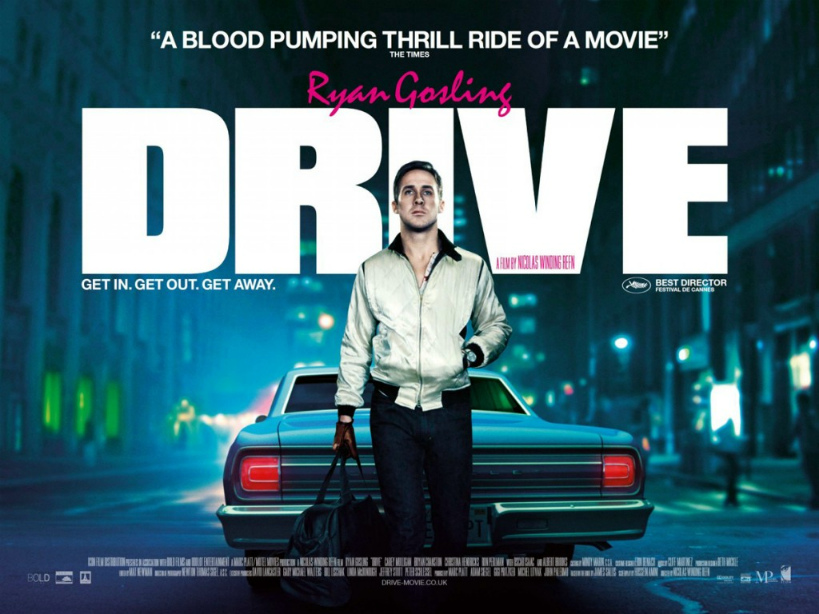
Danish filmmaker Nicolas Winding Refn has made just a handful of films with most staying under the radar of most of the general film-going public. He first caught the attention of indie film fans with his Pusher Trilogy over in Denmark, but he really caught the attention of these fans with his explosive collaboration with Tom Hardy on the Bronson biopic. He would follow that film with the violent existentialist Viking film Valhalla Rising. It would take another major collaboration with another rising star in Ryan Gosling for Winding Refn to finally have his major breakout film which has caught the attention of not just the indie film fans and cineaste crowd, but the general public at-large.
Drive was first screened over at this year’s 2011 Cannes Film Festival where it premiered “in competition” for the Palme d’Or. While the film didn’t win the top prize for best film at Cannes it didn’t garner Nicolas Winding Refn “Best Director” award and his work on this film more than merits such an accolade. The film would begin to screen at other major film festivals before landing at the Toronto International Film Festival before making it’s major public release in North America. Everywhere the film went the consensus reaction to the film has ranged from positive to calls for the film as one of 2011’s best.
So, it would seem most everyone has been quite positive with their reaction to Refn’s Drive. Is this film just another indie arthouse title which the elitist film fans have begun to hype up to levels that would border on cosmic? Or is this film actually as good as it has been talked up to be by such film fans and those of the general public who have seen it? I think the answer lies somewhere in-between.
Drive has been called an action-drama to crime-thriller to film noir and even an existentialist meditation of the film variety. Some have even called it a modern urban fairy tale from the many traditional tropes and themes inherent in fairy tales. The film actually seems to defy genre labels as it’s all those and even more. Nicolas Winding Refn has made a film with so much variety in its cinematic DNA from other classic films and storytelling styles that watching the film once is not enough to find them all.
The film makes a strong statement with it’s introduction of the character who remains nameless but could be called “The Driver” or “The Kid”. Ryan Gosling’s performance in this opening sequence will set the foundation for his character from beginning to end. His driver role is not much for chit-chat and unnecessary talking with those who have hired him to be their expert getaway driver. He’s meticulous with his equipment and intractable when it comes to the rules he has set down for his clients. He would be theirs for the five minutes they need him to drive them away from their criminal acts. Whatever they do before or after those five minutes doesn’t matter to him and he sticks to this rule explicitly. Another rule which he lays down is that he will not be carrying a firearm. These rules have had some audiences bring to mind Jason Statham’s Transporter character and they would not be totally wrong to say so. What Gosling’s driver has over Statham’s is the air of realism to the role. It’s a realism that borders on hyper-reality as the film moves on to it’s climactic conclusion, but real nonetheless. Gosling’s “driver” will not do extensive and elaborate fighting skills the way Statham’s would.
The film would move from it’s powerful introduction and into a much more calm and somewhat serene section as the nameless driver gradually gets to know his next door neighbor in the form of Irene as played by Carey Mulligan. Their relationship will form the core of the film’s narrative and it’s the driver’s growing affection not just for Irene but her young son that would dictate some of the decisions he would make right up to the end of the film. It’s a relationship built not on extensive dialogue banter but mostly on meaningful glances and silent understanding between two characters who seem to have found a kindred kinship between them. It’s this growing relationship between the two and Irene’s son which almost look like a familial unit forming until the return of Irene’s incarcerated and newly-released husband Standard. This is a character played by Oscar Isaac as a man desperate to take full advantage of his last chance at normalcy and redemption, but ultimately doomed to fail.
Standard doesn’t just become the only wrench in the happy life Gosling’s character seems to want to have with Irene and her son. Into the picture also happens to come in is his mentor and business partner Shannon (Bryan Cranston doing a great job as the good-natured, but opportunistic fool character many Shakespearean tragedies always seem to have) and Shannon’s even seedier acquaintances in Hollywood mogul-turned-mob boss Bernie Rose (Albert Brooks in a chilling performance) and his more boisterous, but not as smart partner in Nino (Ron Perlman).
The film seems to settle on the low gears for the first hour of the film, but it’s during a botched robbery attempt where the driver becomes embroiled in that Drive finally moves into the high gears and stays there until the very end. Refn’s decision to use the first hour to round out and build the characters in this film definitely pays off in the end. The audience becomes quite clear as to who the players are and what motivates them to do what they do the rest of the film. Even the most secondary and tertiary roles in this film has a part to play. Even Christina Hendricks in the role of a low-level moll to a gang of criminals gets to have her time to shine if just briefly.
Once the narrative shifts from character study to an almost Cronenbergian exercise in violence and brutality does the film finally able to hook in the last few audiences who may have still been iffy about Drive. Not to say that the final 45-minutes of the film was a non-stop action film, but it does move at a consistently higher gear pace than the first hour. We see the driver having to show to the audience that he’s not just an expert wheelman for Hollywood (stunt driver by day) and the criminal underground (getaway driver by night). It serves the film well that Gosling’s character has the barest minimum of lines of dialogue. We see all we need to know about this character through his behavior that brings to mind roles played by such past luminaries as Steve McQueen and Clint Eastwood.
Most likely it would be in the second half of the film that should satisfy the action junkies. While the action scenes are not of the Michael Bay-type they do show that Refn has a fine grasp of what makes an action scene thrilling. Whether the scene calls for some of the most well-done car chase on film since Frankenheimer showed everyone how to properly do it in Ronin or scenes of sudden brutal violence which calls to mind similar scenes from Cronenberg’s last two films (A History of Violence and Eastern Promises). Both types of action were done efficiently with little to no glamour to gloss over things. The burst of violence actually adds to the mystique of Gosling’s “Man With No Name” role. One particular scene in the apartment elevator where Gosling, Mulligan and a goon sent by the mob makes for one of the best scenes in the film and of 2011.
As much as these scenes of action and violence will be the ones to get the most attention from the general film-going public in the end it’s the excellent screenplay by Hossein Amini of the James Sallis’ novel of the same name which really holds everything together in conjunction with some top-notch performances from everyone involved. The film makes or breaks itself on Gosling’s performance as the driver and he delivers on all cylinders. His performance was quite reminiscent of past performances such as James Caan as Frank in Michael Mann’s Thief, Steve McQueen also as Frank in Bullitt, but in my opinion Gosling’s work in this film brings to mind young Clint Eastwood as “The Man With No Name” in Sergio Leone’s spaghetti western trilogy. Both characters were the type to let their actions speak for them and were both full of quiet confidence not to mention restrained violence which would erupt when needed.
Much has been said about Albert Brooks’ turn as the mob boss Bernie Rose. how the role was quite the 180-degrees from people’s perception of the actor who usually did comedic roles. I say that Albert Brooks always had a dark side to his comedic talent. I mean he was and is megamaniacal villain Hank Scorpio from The Simpsons. In all seriousness, Brooks’ as the mob boss was the other pillar which held all the other performances focused. In fact, Gosling’s character and Brook’s Bernie Rose could almost be considered mirror-images of each other. They were characters who had found their place in the world and the role they would play and didn’t struggle against it. Everyone else in the film struggled against their lot in life. It was also these characters who had the bulk of the film’s dialogue.
Drive has been hyped (for some overhyped) since it first premiered at this year’s Cannes Film Festival, but it’s one of those rare films which has more than earned and surpassed the hype which has preceded it’s general release to the general public. It’s a film which bucks traditional genre labels by combining the themes, ideas and foundations from many different film and storytelling genres. For fans of action there’s enough thrilling action to sate them. For those who are fans of film noir this film definitely carries within it the DNA set down by the film noir of the 40’s, 50’s and 60’s. For some who wish to watch a film which explore existential themes then Refn’s film has that too. In the end, Drive manages to be a film which caters to so many different audiences without ever pandering to them or dumbing the story down. It’s a film made by a filmmaker who continues to impress and who has made his best film to date.
Drive is a film that is not for everyone, but it’s also a film that everyone should see and experience at least once. It is also one of the year’s best films and, so far, my top film of 2011.
The latest “Song of the Day” is old-school for many. Seems anything that was released and played after the year 2000 people consider old-school now. For me this song is a more recent old-school. It’s only 13 years since it first played the radio waves. My choice is the ballad “Angel of Mine” by R&B singer Monica.
While this song was released in 1998 as one of the singles for Monica’s This Boy Is Mine album it definitely sounds like a much older R&B ballad from the late 80’s and early 90’s which I consider the true old-school. While it does have some of the more technical gloss which R&B albums began to show in the late 90’s and onward (which in my opinion hasn’t been to its benefit) the singing by Monica and the sweet-natured romantic lyrics brings to mind R&B acts like En Vogue from my high school days.
This song also happens to be the bridge for me and probably many others of my generation when young romance began to give way to mature romance as we all entered out late 20’s and with the big 3-0 just around the corner. The lyrics speaks of finding true love but it also didn’t have that juvenile, puppy love feel to it.
“Angel of Mine” marked one of the last few true R&B ballads which focused on love and romance instead of physical love (looking at you Chris Brown and Ne-Yo). They sure don’t make them like this anymore.
Angel of Mine
When I first saw you I already knew There was something inside of you Something I thought that I would never find Angel of mine
I looked at you, lookin’ at me Now I know why they say the best things are free I’m gonna love you boy you are so fine Angel of mine
How you changed my world, you’ll never know I’m different now, you helped me grow You came into my life sent from above When I lost all hope you showed me love I’m checkin’ for you boy you’re right on time Angel of mine
Nothing means more to me than what we share No one in this whole world can ever compare Last night the way you moved is still on my mind Angel of mine
What you mean to me, you’ll never know Deep inside I need to show You came into my life sent from above (Sent from above)
I’ll never knew I could feel each moment As if it were new Every breath that I take, the love that we make I only share it with you (You, you, you, you)
When I first saw you I already knew There was something inside of you Something I thought that I would never find Angel of mine
You came into my life sent from above (Came into my life) When I lost all hope you showed me love (Boy you showed me love) I’m shakin’ for you, boy you’re right on time (But boy your right on time) Angel of mine (Angel of mine, oh mine)
How you changed my world, you’ll never know I’m different now, you helped me grow
I look at you, lookin’ at me Now I know why they say the best things are free I’m checkin’ for you, boy you’re right on time Angel of mine
Time for a new “AMV of the Day” and this time it was the AMV that was the consensus hit of this past summer’s Anime Expo 2011.
“Death Romance” is the creation of youtube user KaitoKid99 and from the reaction I’ve read about his entry at the AMV contest at Anime Expo 2011 this anime music video was something to have seen with a huge crowd reacting to it. The video took two so very different things and actually ended up quite funny and well-done: Death Note anime and Lady Gaga’s song “Bad Romance”.
Just watching the video I could very well imagine how well this video would’ve gone over. The fact that it won not just Best In Show at Anime Expo 2011, but also Best Comedy should put this video as one of the top one’s for 2011. KaitoKid99 didn’t use too much effects trickery and gimmicks. This video just was edited and synched quite well with a minimum of fuss and in the end those tend to be the best ones since there’s not too much to distract from the video.
I really regret not being able attend Anime Expo 2011 now if just to have seen this AMV on the theater screen at the Nokia Theater with a crowd of a couple thousand otaku.
The latest “Song of the Day” choice is the other song used in the film Drive which made quite an impression on while I watched the film. It’s the 2010 electro house track “Nightcall” from a similarly titled EP from electro house artist Kavinsky.
“Nightcall” was the song chosen by Drive filmmaker Nicolas Winding Refn and it’s film composer Cliff Martinez to begin the film. The choice of this song was pretty much a perfect one as it made for a great intro to the film. The song plays as the film introduces us to the lead character (played by Ryan Gosling) as he drives down the late-night streets and alleys of Los Angeles. The song’s 80’s sound gives the film an almost old-school drama feel to it. For anyone who grew up in the 1980’s this song definitely would sound familiar as it style was used many times over to score many action-dramas.
With “A Real Hero” this song helps bookend song-wise one of the more interesting and, in my opinion, one of the best films of 2011.
Nightcall
I’m giving you a night call to tell you how I feel I want to drive you through the night, down the hills I’m gonna tell you something you don’t want to hear I’m gonna show you where it’s dark, but have no fear
There something inside you It’s hard to explain They’re talking about you boy But you’re still the same
There something inside you Its hard to explain They’re talking about you boy But you’re still the same
I’m giving you a night call to tell you how I feel I want to drive you through the night, down the hills I’m gonna tell you something you don’t want to hear I’m gonna show you where it’s dark, but have no fear
There something inside you It’s hard to explain They’re talking about you boy But you’re still the same
There something inside you It’s hard to explain They’re talking about you boy But you’re still the same
There something inside you (there something inside you) It’s hard to explain (it’s hard to explain ) They’re talking about you boy (they’re talking about you boy) But you’re still the same
One of the films which I’m looking forward to with some trepidation, but also some excitement is the prequel to John Carpenter’s The Thing that was released in 1982. This prequel will show the initial unearthing of the “Thing” from the Antarctic ice by Norwegian researchers from the 1982 film (shown only as video recordings) and how it got loose and destroyed the Norwegian Camp.
Dutch filmmaker Matthijs van Heijningen Jr. was the one picked to direct the film with Mary Elizabeth Winstead (known by many as Ramona from Edgar Wright’s Scott Pilgrim vs. The World) taking the lead role. Many fans of the Carpenter film feel this prequel should never have been made. As a hardcore of the Carpenter film I can’t say that I agree with the decision to create this prequel, but I also won’t say that I’m not looking forward to it.
There had always been noise to create a sequel to Carpenter’s classic and at times even the master himself was involved in trying to get it done. This prequel became the final stab at continuing the story first started by Carpenter and I’m interested in how this new cast and crew will tell a story only hinted at in the original film.
The Thing is set for an October 14, 2011 release date.
Every year since he retired from acting we seem to get one film from Clint Eastwood and this year it’s going to be one major prestige picture due this November. The film is J. Edgar and it’s a biopic detailing the life of the FBI’s founder and first director, J. Edgar Hoover.
This film will be the first time Leonardo DiCaprio and Eastwood will be working together. From the look of the cast assembled Eastwood has surrounded DiCaprio with some talented performers from Dame Judi Dench, Naomi Watts right up to Jeffrey Donovan, Geoff Pierson and Stephen Root.
The trailer shows just how much the film just screens “Awards Picture” from beginning to end. It’s not a suprise that J. Edgar has become one of the films this coming fall/winter to be a major frontrunner for the many film circles awards and, most likely, for the next Academy Awards. Here’s to hoping that this film will be a major bounce back for Eastwood after 2010’s very uneven and dull Hereafter.
J. Edgar is set for a limited release this November 9, 2011 before going worldwide a couple days later on November 11.
For the latest “Song of the Day” I only had one choice in mind. No other song has wormed it’s way into my waking consciousness than the song I chose. It’s the 80’s-like synth-pop song “A Real Hero” by the band College feat. Electric Youth.
To say that Nicolas Winding Refn’s first Hollywood film (though still quite modestly budgeted) was something that stuck to me would be an understatement. One of the factors which just made the film one of the best films of 2011 has to be the 80’s retro synthpop soundtrack by Cliff Martinez and some perfectly chosen licensed songs. The one song which definitely has become a favorite and also one which has stuck itself in my mind since I saw the film is “A Real Hero” which we fully hear in the end of the film and into the end credits (the song get a brief appearance in the middle of the film).
This song perfectly encapsulates the restrained love story between the characters played by Ryan Gosling and Carey Mulligan. It explores the dynamic between The Kid (Gosling’s role) and Irene the young mother (Mulligan’s role) as heard through the song’s sparse lyrics which intersperse itself between the electronic synth keyboard play. It’s inclusion in two spots in the film adds different meanings to the song. The first time we hear it the song adds a soft layer of old-school romanticism to Gosling and Mulligan’s characters, but when we finally hear it in full in the end that romanticism takes on an ambiguous tone with just a tinge of bittersweet to the romance.
There’s another song from the Drive soundtrack which also made quite an impact not just in the film’s overall quality but in me as a listener and an audience. That would be explored in a day or so.
Well, we’ve finally reached the end of the 33-day marathon which saw 32 dream-memories penned by renowned Japanese author Shigematsu Kiyoshi for the rpg title Lost Odyssey. For Day 33 (despite what the video may say it’s the 33rd dream and not 32nd) we have quite an appropriate memory from Kaim, the immortal warrior, who has seen 1000-plus years of war and experiences both good and bad. “An Old Soldier’s Legacy” speaks very much to the times we’re having now.
The memory ends this series on a down note. We see through Kaim’s reminiscing eyes how war creates a cycle of hate that never seems to end. Victor will punish the defeated. The defeated will rise up generations later to bring down their oppressors and begin the cycle of hate and violence anew.
It’s always the young men who have seen war strip them of their humanity and the men who led from safety who never seem to get the lesson needed to finally bring peace after years of war. It’s always the old soldier’s who have survived countless battles and have learned the lesson of compassion for one’s enemies who know how to stop the cycle. But in the end no one ever listens to these old warriors who only want peace.
As we look at the wars happening now across the globe are we just sowing the seeds for future generations who will rise up and do the same to their enemies or will the leaders and young men now fighting learn the lesson the old soldiers before them have learned through blood and tears: when the fighting ends let peace rule and not vengeance.
An Old Soldier’s Legacy
Kaim spent the entire summer surrounded by a fence that towered over him.
He was trapped in a prisoner of war camp.
It was a terrible mistake – not his but the dimwitted, cowardly commander’s. Kaim was a mercenary attached to the man’s regiment. They were invading the enemy’s main port city when the officer miscalculated at the end and the unit’s line of retreat was cut off. While the troops were prepared for an all-or-nothing charge, the commander almost casually opted for surrender.
“Don’t worry,” he had said to his men before they were locked up.
“Whatever happens now, the ultimate victory in this war will be ours. Instead of making a stand and dying for nothing, we’ll be much better off if we just quietly let them take us as prisoners of war. We’ll be liberated right away in any case.”
This made perfect sense.
But the officer completely misread the feelings of an enemy on the brink of defeat.
Having survived hundreds of battles, Kaim knew better than anyone how people felt towards prisoners of war after the hated enemy had taken the lives of their friends and loved ones and torched their hometowns.
To the members of his platoon at least, as they were preparing to enter the camp, he whispered,
“You’d better forget about any rosy pictures. This could be worse than the battlefield.”
His words proved all too accurate.
Life in the POW camp was bitterly harsh. Day after day, the men were forced to do backbreaking labor on a diet of scraps. The sick and injured went untreated and were not even allowed to rest. To collapse on the job was to die. Indeed, several of the prisoners died not by collapsing on the job but from brutal beatings for minor infractions.
Everyone with access to the camp – both the soldiers assigned to guard duty and ordinary citizens with business there – looked upon the prisoners with hatred in their eyes. Some guards would wave swords at them and boast, “I can kill you bastards any time I like,” and certain officers slaughtered one prisoner after another, disguising the killings as accidents.
Even as they tormented the prisoners, such men were suffering the deaths of their families and friends in the war, and spending their days in fear of the coming invasion. The camp was a place ruled by hatred and revenge, but also a place shrouded in uncertainty and fear of the day when the captives would become their captors. This tense, complicated atmosphere ate away at the spirits of all, friend and foe alike.
The horror of war lay not only in the mutual killing of enemies clashing on the battlefield but even more so in places such as this that were far from the front lines.
Kaim knew this with every bone in his body.
A month passed after the platoon entered the POW camp.
The enemy troops were thoroughly exhausted.
The fall of the capital was said to be imminent.
In spite or because of that, life in the camp was worse than ever.
The tasks assigned the prisoners were even crueler than before, and their diet, which was meager enough to begin with, fell below the level needed to sustain life.
The military guards bullied the prisoners as if for their own amusement, wounding them, and mistreating them with fatal consequences. All kinds of civilians did their part, too, hurling human waste over the fence into the camp. And even if secret stashes of food might be left for them, none of the prisoners dared eat them for fear they might be poisoned.
Hatred climbed to unseen heights.
To one prisoner who moaned “Why are you doing this to us?”
A guard spat out the answer, “It’s just what your country is doing to us.”
And it was true.
All the young men of the enemy country were being sent into battle, where most of them were being killed. Whole towns had been burned down and transformed into rubble.
While the soldiers assigned to guard duty knew that defeat in the war itself was certain, they continued to be victors where the POWs were concerned.
And while the captured soldiers believed in the victory of their fatherland and waited for the day when their comrades would resuce them, they continued to be vanquished among victors.
The moans of the POWs could be heard throughout the camp:
“When is the war going to end?”
“The war doesn’t have to end. Just let them get us out of here!”
“Have we been abandoned by the fatherland?”
Kaim kept offering the same advice to them again and again:
“Be patient,” he would say, “Don’t give up hope.”
Kaim knew everything there was to know about war, and so he realized what was happening now. The fatherland’s supreme commanders were trying to bring down the capital first and leaving the fall of this military port city for later. The POWs had, in fact, been abandoned.
The commander in chief would no doubts say, “For the sake of a great victory, we cannot let ourselves be concerned by a small set back.”
And he would be right.
But precisely because he would be right, Kaim could not convey this to the prisoners, who firmly believed that their side was trying their best to rescue them.
One POW after another made plans to escape, and for every one of those there was an informant who exposed his plan to the guards.
Both types of prisoner had the same thing in mind: to save himself alone. No one could be trusted. THere were even some “informants” who made up phony escape stories about perfectly innocent men just to put themselves in a little better position with the guards. The only thing awaiting such traitors when the war finally ended would be the revenge of their comrades. As much as they understood this, all they could do was ingratiate themselves with the guards so as to secure their momentary safety.
The fence was not the only thing surrounding the POWs. It was not just their bodies but their minds that had been taken captive. In addition to the ones who died from illness and injury were increasing numbers of those who ended their own lives after a period of mental suffering.
Be patient.
Don’t give up hope.
Kaim’s word gradually ceased to make an impression on anyone.
After the men had been prisoners of war for two months, a new guard took charge of Kaim’s barrack.
In place of the young warrior who had been guarding them came an old soldier.
His name was Jemii.
When he introduced himself to the men, he remarked with a grim smile,
“Things must be getting pretty desperate if they’re calling up an old goat like me.”
The young guard had been sent to the front lines. This probably meant that the battle for the capital had entered its final phase.
“I tell you, this war is almost over. In another month, you young fellows will be on the other side of the fence, and we’ll be locked in here. Our positions will be completely reversed.”
Jemii needed no prompting from the POWs, and his vocie contained none of the hate-filled agitation of the young guard’s.
“All you fellows have to do is hang in there a little longer, be patient, and not give up hope.”
His words were almost identical to Kaim’s, which meant that Jemii, like Kaim, had experienced many a battle over the years.
“We may be in different positions, but deep down we’re the same. You men are unarmed prisoners, and we’ll be under your control as soon as you come to occupy the country. I’m what you will be tomorrow, and you’re what I will be tomorrow. I don’t know how long we’re going to go on like this, but if you stop and think about it, isn’t it stupid for us to keep hating each other and snarling at each other? Let’s at least try to get along.”
He twisted his wrinkled face into a big grin and laughed aloud.
His smile deeply affect the mentally and physically exhausted men.
Before they knew it, they were smiling, too. THis was the first carefree smile that any of them had managed since their capture, or, rather, since their time on the battlefield.
Jemii’s kindness was not limited to words. Of course, the change of a single guard was not enough to substantially improve the prisoners’ treatment. The hard labor and meager food were the same as before. But Jemii would speak to them with real feeling.
“Sorry for working you so hard, but there aren’t any young men left in this town to do the muscle work. We’re not making you do these jobs to punish or discipline you but because the town needs your help with these constructing projects.”
“I’m sorry we can’t give you anything decent to eat. I really am. But everybody outside the fence is starving, too. We’re all in this together, so try to put up with it.”
Jemii would try to order somewhat easier jobs for prisoners who had taken ill, and he would sneak them extra food. THat is the kind of guard he was.
The prisoners started calling him “Uncle Jemii,” and would even joke around with him sometimes.
“We’d be way better off if the other guards were like you, Uncle Jemii,” said one prisoner, to which Jemii nodded sadly.
“I’ll tell you what, Uncle Jemii,” said another prisoner. “If I had known that there were people like you in this country, I never would have volunteered. I’m not forgetting my place as a POW, but let me shake your hand once.”
Jemii allowed himself the faintest of smiles at this and gave the man his hand.
“You know something, Kaim…” Jemii said, sitting down beside Kaim during a break in the heavy lifting.
It was a clear, beautiful day, but the sunlight pouring down on them had lost its midsummer glare. The season was shifting to autumn.
“I’d say you’re a little different from these other young prisoners.”
“Am I?”
“I know you’ve seen your share of battles. I can smell it on you.”
Kaim’s only reply to Jemii was a strained smile. Jemii seemed to have known what Kaim’s response to his remark would be, and he wore the same kind of smile as he carried on the conversation.
“Why haven’t you escaped?” It would be easy for a man like you to break through the flimsy security they have here.”
“You give me too much credit.”
“You could make it by yourself, but taking everybody with you would be tough. Is that why you stayed?”
Kaim gave him another strained smile, saying nothing.
Jemii was right. If he decided to escape on his own, it would be easy for him to climb over the fence. If, however, he manged to gain his freedom, the prisoners he left behind would be punished or, at the very least, would have to live with increasingly harsh security measures. The young soldiers abandoned in the camp would feel only despair.
If he was going to escape, it would have to mean getting everyone over the fence. Most of the others, however, were so wasted away that they were beginning to lose even the strength to go on living. Men like that could only be a drag on his own flight to freedom.
“You’re a kind-hearted fellow, aren’t you?” Jemii said.
“And you’re a smart one, too, I’ll bet.”
“What do you mean by that?”
“Any soldier with as much experience as you has already seen the handwriting on the wall. The war is over. Another three days, maybe a week, and our side is going to announce a total surrender. Right now, we’re just making our last stand out of sheer stubbornness. The second the war ends, you prisoners will go free, and we’ll take your place.”
“Yes. And?”
“It’ll just be a little longer. Really, all you have to do is hold on a little longer. You must know that as well as I do. So you’re probably not even thinking of making the effort to escape.”
When Kaim nodded, Jemii smiled and said, “That’s fine. I’m just as fed up as you are with all the pointless fighting and hatred.”
He looked up at the autumn sky, his profile marked by a number of deep wrinkles. On closer inspection, Kaim realized that some of those wrinkles were scars left by sword cuts.
“Let me tell you something, Kaim.”
“All right.”
“Our country doesn’t have the strength left to make it through another hard winter. I knew that when summer was still here.”
“I see…”
“I just wish we had given up sooner. Then there wouldn’t have been so many young men killed in battle, and so many towns burned.”
Jemii released a deep sigh and added, “When this war is over, we’re going to have to do whatever your country tells us to do. We can’t complain if we’re enslaved or tortured to death by the young men who are now our prisoners of war.”
Kaim could not assure him that would never happen.
As a mercenary, he would just go off seeking new employment when this war ended, but this was not true of the other prisoners of war. As the conquerors, they would now have peace. They would return to the lives they led before. But how many among them would be able to treat the vanquished people with kindness and respect?
“I think you’ll know what I mean, Kaim, when I say you can be as cruel as you like to us old folks when the fighting ends, but please, I’m begging you, be decent to the young men and to the women and to the children. Don’t do anything to them that will make them hate your country. Otherwise, there’ll just be another war sometime in the future. Ten years, twenty years, thirty years, maybe even a hundred years from now. I don’t want any more of this. Countries fighting each other, people hating each other…”
It happened that very moment.
The violent ringing of a bell began to echo throughout the camp. It was the bell in the watchtower, signaling an emergency meeting of the guards.
“Oh, well, gotta go,” Jemii said, standing up. “Don’t bother going back to work right away. Tell the other fellows everybody can have a little break.”
He took a few steps before turning to say to Kaim with a smile, “You know, if we weren’t enemies, I would’ve liked to have a drink with you sometime.”
That was the last Kaim saw of Jemii as a guard.
The sun was overhead when Jemii left, but he did not come back even after it had begun sinking in the west.
The next time someone came into the enclosure it was to the cheers of the POWs welcoming the arrival of their countrymen.
“You’re going to be all right now, men! The war is over! It’s a huge victory for our side!”
Jemii’s country had agreed to a total surrender.
The guards assembled in the tower were stripped of their weapons, and anyone who resisted was killed on the spot.
“Get a move on there! Hurry up!”
The soldiers who, until a short time ago, had ruled the camp were herded into the enclosure with whips and under the threat of drawn swords.
The POWs, who until only moments ago had been under their rule, now lined up to stare at their former guards, and before anyone knew it, the guards were being cursed and stoned.
Hands tied, the soldiers could not ward off the stones, and before long they were drenched in blood.
Jemii was among them.
He started at Kaim, blood gushing from his forehead. His eyes showed no hatred or resentment. He simply gave Kaim a little nod, looking straight at him as if to say, “Remember what I asked you to do.”
Kaim shouted to the men surrounding these new prisoners,
“Stop it! Stop it! They’ve surrendered! Leave them alone!”
But, liberated from the fear of death and from days of humiliation, his young comrades, wild-eyed and screaming like animals, went on stoning their former guards.
“Can’t you see who this is? It’s Uncle Jemii! Stop it!”
One of the soldiers gave him a contemptuous snort and all but spit out the words, “The old bastard was just sucking up to us for when our side won.”
Another soldier – the young man who had asked to shake Jemii’s hand that day – shouted, “He might act like a good guy, but an enemy’s an enemy! And besides, he’s just some old geezer from a country we pounded into the dirt.” He threw another stone at Jemii.
Kaim’s shouts did no good. He started grabbing hands that were readying to hurl stones and smashing people in the face, but no one would listen to him.
The commander of the troops that had galloped to the rescue just grinned and said, “Good! Good! Get it out of your system!” and he handed swords to the unarmed men.
“Kill them all, and raise some victory cries while you’re at it! Think of the humilation you endured as prisoners. Now’s the time to get even!”
“No, stop it!” Kaim shouted. “The war is over!”
“Wait, I know you. You’re a mercenary.
You’re just spouting a lot of nonsense. A few good sword thrusts could shut that mouth of yours!”
The commander’s aides took this as a signal to surround Kaim.
“Don’t waste your time on him, men! Warriors of our beloved fatherland! Kill these soldiers first, and then we can attack the town. Set fires! Take the women! We won this war! This town, this country, everything belongs to us now!”
The commander laughed aloud, but in the next moment, his smile turned into a grimace. His aides were falling to the ground. Kaim had grabbed a sword from one of them, and now it flashed in his hand.
“Traitor! Somebody take him down!”
Kaim swung around and started for Jemii.
But it was too late.
The soldiers were already slashing wildly at the former guards, who had no means to defend themselves.
Standing amid the hellish scene of human butchery, Kaim saw it happen.
The old soldier, who had been kind because he knew all too well the link between war and hatred, fell to the ground without uttering a word, a hateful blade thrust into his back.
Kaim made a break for the camp gate.
He ran for all he was worth, a soundless roar reverberating inside him.
Why did people have to hate each other so?
Why did people have to fight each other so?
And why was it impossible for people to stop fighting and stop hating?
He did not know the answers to these questions.
Saddened and frustrated by his own incomprehension, Kaim ran at full speed through the rubble of the town.
A hundred years pass by.
“This is it, Kaim,” the commander says with a smile. “I am enormously grateful for the magnificent job you’ve done. You can name your own reward when this war is over.”
The last great offensive is about to begin.
This should bring the war to a close.
It has taken a hundred years.
After all these long, long years as a vassal state, the country that lost the war the year Kaim was a prisoner has raised its banner against the ruling power under which it endured such suffering in the last war.
The defeated country has spent a hundred years nurturing its hatred for the ruling power, passing the hatred down from parent to child to grandchild. The country that won the war a hundred years ago was too filled with a ruler’s arrogance and insensitivity to notice what was happening. The only things that it has handed down from parent to child to grandchild are the scorn and contempt for the “inferior country” under its sway.
This war ends with almost disappointing ease.
The results are the exact opposite of the war a hundred years earlier.
No one knows on which side the goddess of victory will smile if yet another war occurs a hundred years from now.
“All right, Kaim, name your reward.”
Kaim answers the commander’s question softly: “I don’t need a thing.”
“Why not? It’s true that you’re a mercenary, but you far outdid the regular troops. Our country wants to show its appreciation for your efforts.”
“If that’s how you really feel, I’d like you to promise me one thing.”
“What’s that?”
“Don’t make your enemy hate you.”
“What are you talking about?”
“I’m talking about treating the people of the defeated country with kindness and respect.”
A shocked expression on his face, the commander laughs and says, “Aren’t you the softhearted one!”
Kaim, however, is deadly serious.
“This is the legacy an old man from your own country left me a hundred years ago.”
“Enough,” says the commander, still looking shocked. “Dismissed.”
Kaim himself has no hope that Jemii’s legacy will be fulfilled. The hundred-year journey he has taken since that fateful day in the camp has shown him only the selfishness and stupidity of the human race. It will be the same from here on out as well. Indeed, nothing has changed since long before he met Jemii.
And yet.
Back at his post, Kaim grips his sword and holds his breath.
It will change someday.
They will see someday.
I want to believe that.
Unless I believe it, I can’t go on with my endless journey.
You know what I mean, don’t you, Uncle Jemii?
Eyes closed, he can see Jemii’s face smiling sadly.
The order goes out to the entire assembled force: “Charge!”
Within the rising clouds of dust, Kaim grips his sword and starts to run.