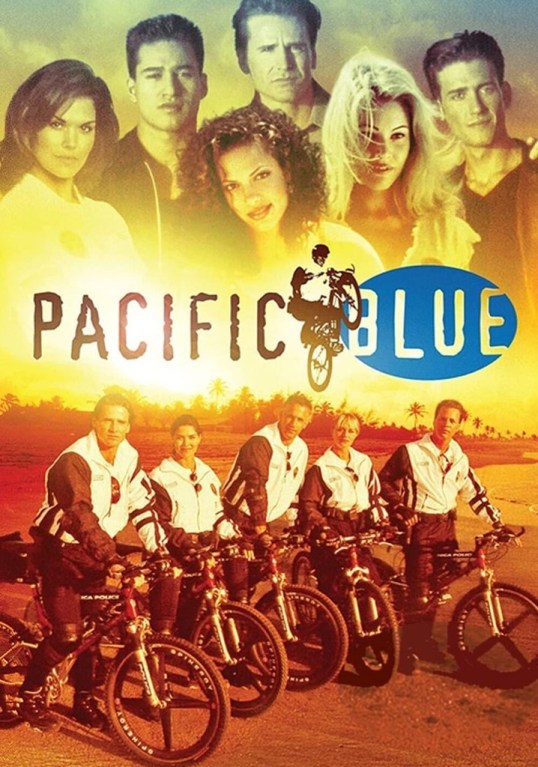
Welcome to Late Night Retro Television Reviews, a feature where we review some of our favorite and least favorite shows of the past! On Tuesdays, I will be reviewing Pacific Blue, a cop show that aired from 1996 to 2000 on the USA Network! It’s currently streaming everywhere, though I’m watching it on Tubi.
This week, Cruz and Granger are given a special assignment.
Episode 6.5 “Hostile Witness”
(Dir by Michael Levine, originally aired on August 22nd, 1999)
Cruz and Granger are looking forward to spending their weekend on a boat heading to Catalina with two young blonde women, but Cory has a job for them first. All they have to do is drive down to Ventura County, pick up Alice Brown (Boti Bliss), and bring her back to Santa Monica so she can testify in the murder trial of Tommy X (Courtney McClean). Unfortunately, things get complicated when Alice keeps trying to escape, Cruz and Granger keep losing their vehicles, and two hitmen are sent to keep Alice from ever reaching the courthouse. Plus, Monica takes their boat to Catalina with the blondes and three frat boys.
I can’t believe I’m writing this, but I was actually entertained by this episode of PacificBlue. Maybe it’s because there weren’t any bicycles, or maybe it’s because Cory wasn’t really in much of the episode, but this was a fun hour. Cruz and Granger made for a strong comedic team. This is the first episode in which Granger actually seemed like an actual person instead of a collection of quirks. Mario Lopez, who has usually been required to play Bobby as being grim and very serious, got to show off the comedic timing that made A.C. Slater everyone’s favorite Bayside student. Finally, after seeing Boti Bliss repeatedly cast as either the dutiful wife or the loyal girlfriend in dozens of Lifetime films, it was fun to see her play someone who was totally out of control here.
Hell, I even laughed at the dialogue between the two hitmen.
If only every episode of PacificBlue was as good as this one!
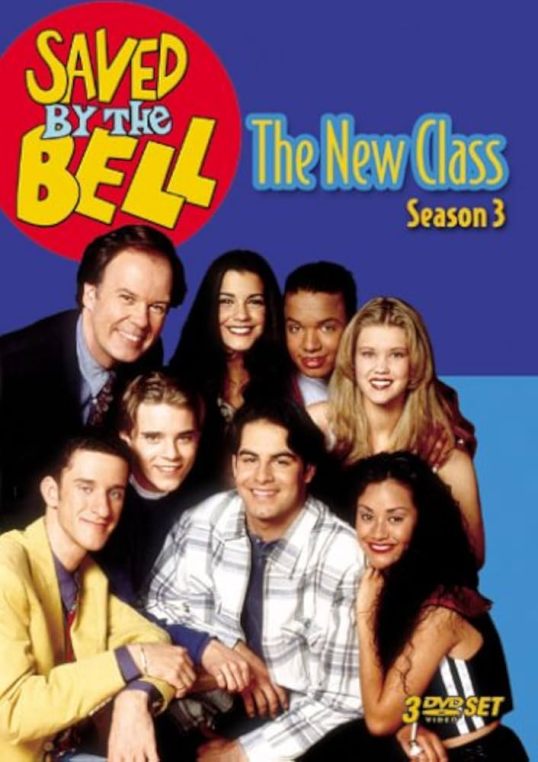
Welcome to Retro Television Reviews, a feature where we review some of our favorite and least favorite shows of the past! On Tuesdays, I will be reviewing Saved By The Bell: The New Class, which ran on NBC from 1993 to 2o00. The show is currently on Prime.
This week, the boys bug a slumber party …. again!
Episode 3.2 “The Love Bug”
(Dir by Don Barnhart, originally aired on September 9th, 1995)
Everyone at Bayside is calling the local radio station in hopes of winning two tickets to Grungefest! No one is more determined to win than Maria Lopez, so imagine Maria’s surprise when Lindsay, on her first try, gets through to the station and wins the tickets. Maria asks if she can have the other ticket, but everyone insists that Lindsay has to give the other ticket to a guy. Will she invite her ex-boyfriend Tommy or will she ask Ryan, the new kid who likes her? Rachel suggests that Lindsay have a slumber party so that she can decide who to ask out…
Wait a minute. This seems familiar.
Meanwhile, Screech has bought some super-powered microphones so that he and Belding can talk to each other no matter where they are in the school. Tommy is amazed at the equipment. Screech mentions that he got the idea from his friend Zack, who once bugged a slumber party…
Oh, that’s why this is so familiar.
Tommy sneaks into Lindsay’s bedroom and hides a microphone in her teddy bear. Then Ryan and RJ sneak in and hide a microphone of their own. After all three of them make a narrow escape, they listen in on the slumber party. Ryan and RJ listen from the Max. Tommy listens from Belding’s office, where he’s discovered by Screech. Screech says that Belding has ordered him to get rid of the surveillance equipment and that Tommy needs to tell Lindsay the truth about bugging her. Hey, it was your idea, Screech!
Back at the slumber party, Lindsay discovers one of the microphones. She also discovers one of the hot sauce packets that Tommy carries with him everywhere. Thinking that Tommy—and only Tommy—has been bugging her, she says that she loves old Hollywood musicals and that the way to her heart is to dress up in a tux and sing to her. She giggles that Tommy will be humiliated, even though we’ve seen that Tommy is actually a really good singer. What Lindsay doesn’t know is that Tommy was no longer listening because the equipment in Belding’s office had shorted out. However, Ryan hears everything.
The next day, Ryan shows up to school in a tux and top hat and sings for Lindsay. Thinking that Ryan—and only Ryan—bugged her, Lindsay asks Tommy to Grungefest. Tommy accepts and doesn’t tell Lindsay the truth about the microphones. But after Tommy walks away, Screech comes over and says that he hopes Lindsay will forgive Tommy.
Later, at the Max, Lindsay shows up wearing a purple fright wig and she tells Ryan and Tommy that she’ll only go to Grungefest with them if they shave their heads and get nose rings. (Apparently, Saved by the Bell‘s writers didn’t know the difference between grunge and punk.) Ryan and Tommy freak out. Lindsay announces that she’s taking Maria to Grungefest.
Screech, meanwhile, has not told Belding the truth about breaking the equipment. He holds a garage sale in the gym, trying to sell everything that was in the Lost and Found. Belding, however, shows up and announces that he fixed the equipment himself. Everyone learns a lesson about surveillance.
This episode… actually, it wasn’t that bad, at least not by the standards of Saved by the Bell: The New Class. Richard Lee Jackson seems to be a lot more confident with the idea of playing a Zack Morris-type character than either of his two predecessors and, as always, Jonathan Angel was likably sincere as the rather dense Tommy. Not even Screech was as bad as he’s going to eventually become. Yes, this was basically just a remake of an old Saved by the Bell episode (and it must be noted that this isn’t the first time that New Class has redone that particular episode), but at least the show acknowledged it. All in all, this wasn’t bad.
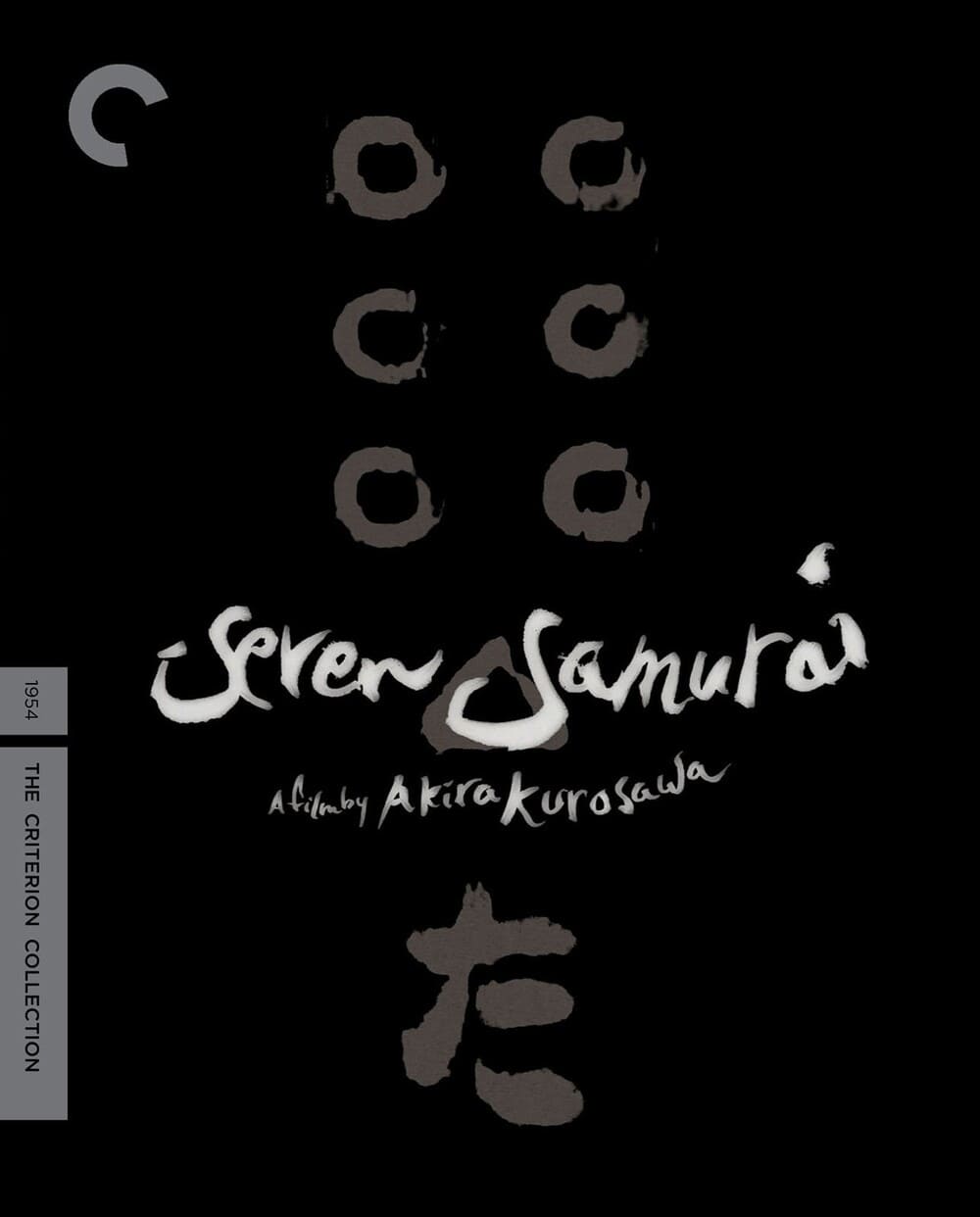
The first thing that stands out about Akira Kurosawa’s Seven Samurai (1954) is how much life it contains. For a film built around an approaching attack, it spends a surprising amount of time watching people size each other up, argue over food, embarrass themselves, and figure out how to work together. Those details are not distractions from the adventure. They are the reason the adventure matters. Kurosawa makes defending a village feel like an enormous undertaking because he first makes that village feel inhabited. Beneath its legendary status and spectacular battles is a movie that understands a simple truth: saving people means dealing with all their complications.
There is a worthwhile debate to be had about whether Rashomon or Seven Samurai is Kurosawa’s greater achievement, and honestly, there is no wrong answer. Both demonstrate how an apparently straightforward situation can open into something morally and emotionally complicated. For me, though, Seven Samurai has the edge. It possesses the excellent storytelling and emotional impact that make Rashomon so powerful, but it also has an infectious physical energy. Its ambition is not limited to making us think about human behavior. It wants us to laugh, worry, feel the exhaustion of a fight, and care about the person who might not survive the next attack. Its greatness feels both intellectually satisfying and immediately accessible.
The story begins with a farming community facing another raid by bandits who intend to return after the harvest. Unable to protect themselves, the villagers seek samurai willing to fight in exchange for meals. It is a desperate offer, and the film never lets us forget the desperation behind it. Food determines who has power, who goes hungry, and what anyone can afford to sacrifice. Before the swords start swinging, Kurosawa establishes the stakes through something more basic than honor: people need to eat, and someone stronger intends to take what they have.
From that premise, the film develops an unusually rich adventure about the relationship between people who need protection and warriors whose abilities have not necessarily brought them security. Neither side approaches the arrangement comfortably. The villagers fear the samurai almost as much as they need them, while the samurai must decide whether an unrewarding, dangerous job is worth accepting. The shared enemy gives them a reason to cooperate, but it does not automatically produce trust. That distinction becomes essential to the film’s emotional weight.
Much of the opening stretch follows the recruitment of the defenders, and it remains one of the movie’s greatest pleasures. Kurosawa allows personalities to emerge through choices rather than lengthy explanations. We see who seeks recognition, who recognizes talent, and who understands the risks involved. The pleasure lies partly in watching the group take shape, but also in realizing how differently these men understand the same undertaking. Their individual skills matter, yet their temperaments matter just as much. A team is not simply a collection of capable people; it is a collection of people who must somehow become capable together.
At the center is Takashi Shimura as Kambei, the experienced samurai who takes responsibility for organizing the defense. Shimura, a longtime Kurosawa collaborator, gives a beautifully restrained performance. His authority comes from observation rather than intimidation. He watches, listens, and makes decisions without seeming interested in impressing anyone. Even his stillness suggests experience: this is someone who knows that unnecessary gestures waste energy. There is fatigue behind his composure, and his willingness to help matters because he appears fully aware of what the job could cost. Shimura makes goodness feel practical, demanding, and occasionally weary rather than saintly.
Toshiro Mifune, another of Kurosawa’s longtime collaborators, supplies almost the opposite energy as Kikuchiyo. Loud, restless, and constantly performing his own toughness, he initially seems ready to knock the movie off balance. Mifune makes that disruption irresistible. His movements are loose and unpredictable, his expressions enormous, and his comic timing wonderfully aggressive. Yet he is not merely providing relief from the more serious characters. Kikuchiyo wants recognition so badly that his behavior becomes both funny and uncomfortable. Beneath every boast is the possibility that someone will expose him as a man who does not belong among the warriors he desperately wants to join.
As Kikuchiyo’s background becomes clearer, Mifune turns that insecurity into the film’s rawest emotional material. A farmer’s son posing as a samurai, he understands both sides of the uneasy alliance. His anger at the villagers carries recognition, while his anger at the samurai comes from understanding the suffering their class can inflict. Mifune shifts between clowning and accusation without making either register feel false. What first looks like uncontrolled behavior gradually reveals a painful internal logic. Kikuchiyo is trying to escape his origins while remaining unable to abandon the people who share them.
The contrast between Mifune and Shimura gives the movie two complementary emotional centers. Kambei understands how to keep people working together; Kikuchiyo keeps exposing everything that threatens to pull them apart. One conserves energy while the other spends it recklessly. Neither performance would have quite the same force without the other. Their differences also prevent the samurai from settling into a single heroic ideal. Courage can look like patience, discipline, anger, or an impulsive decision made before fear has time to intervene.
The surrounding ensemble gives those central performances plenty to work against. Seiji Miyaguchi is especially memorable as Kyuzo, whose extraordinary skill comes with an almost complete absence of showmanship. His economy makes a perfect contrast to Kikuchiyo’s constant commotion. The younger Katsushiro brings idealism and romantic longing into a world governed by harsher calculations. Meanwhile, the farmers are allowed to be frustrating. They hide things, panic, and distrust their defenders. Kurosawa’s sympathy does not require them to behave like grateful supporting characters in somebody else’s heroic story.
That attention to conflicting perspectives keeps the film from becoming a simple fantasy about noble swordsmen rescuing helpless peasants. Cooperation does not erase the history separating these groups. It produces a fragile arrangement in which people must act together despite that history. The movie understands fear without pretending fear always produces admirable behavior. It also recognizes that the luxury of looking honorable is not equally available to everyone. People struggling to survive may make ugly choices, and understanding those choices is different from excusing them.
Kurosawa gives these tensions a physical form through the preparations for battle. We learn the village’s entrances, exposed approaches, houses, and fields alongside its defenders. We understand why a particular position matters because we have watched someone assess it. This is why the long running time feels earned. The film is not postponing excitement while everyone discusses strategy; it is constructing the conditions that make excitement possible. When the attacks begin, movement through the village means something. A breached defense threatens a place whose purpose and vulnerabilities we already understand.
The action filmmaking remains astonishing because it combines that clarity with such restless energy. Kurosawa’s use of multiple cameras, long lenses, dynamic staging, and forceful editing helped develop a new vocabulary for screen combat. Multiple viewpoints allow the action to feel caught in progress, while long lenses crowd bodies and movement together, making danger feel uncomfortably close. He did not invent every tool he used, but he combined and developed them with extraordinary purpose. The result feels immediate without becoming unreadable, a balance that helps explain why his approach would influence filmmakers for decades.
The rain-soaked final battle brings all those choices together. Water pours through the frame, horses struggle through mud, and exhausted bodies collide in spaces that suddenly seem dangerously cramped. Weather becomes a physical obstacle rather than decorative atmosphere. You feel how difficult it is to move, see, and remain standing. Despite the chaos, individual bursts of violence remain connected to the larger defense. The sequence delivers the excitement of great action while refusing to make combat look clean. Survival is not a stylish pose; it is exhausting work performed by vulnerable bodies.
That mixture of strong characterization, communal stakes, and explosive action also helps explain the film’s extraordinary afterlife. Seven Samurai has been remade and reworked so often that its basic arrangement feels almost like a subgenre of its own: a threatened community, an assembled band of specialists, defensive preparations, and a confrontation that tests everyone’s commitment. Not every variation is a direct remake, but the pattern has become a familiar storytelling language. It can function as a trope, a framework, or the entire appeal of a movie.
Watching the original, though, makes clear how much can disappear when that framework becomes a formula. Kurosawa does not simply gather entertaining personalities and send them into battle. He asks what brings them together, what separates them from the people they protect, and what remains after the fighting ends. The recruitment matters because we come to know the recruits. The preparations matter because they change relationships. The losses matter because these people have existed for us outside the moments when they are useful with a sword.
By the end, the battles are not the only things that linger. So do Shimura’s patient attention, Mifune’s wounded bravado, and the uneasy distance between the warriors and the community they defend. That is why Seven Samurai deserves its place among the greatest films of all time, beyond the reach of its influence or the brilliance of its technique. It gives us the pleasures of a tremendous adventure without pretending that courage resolves every division or guarantees anyone a home. The village can survive, ordinary life can resume, and the people who made that possible can still find themselves standing apart. For all its movement and noise, the film leaves its deepest impression in that quiet contradiction.
Today, we continue to celebrate the birthday of Martin Scorsese with a song that has appeared in countless Scorsese films! When Scorsese made his Rolling Stone documentary, nonetheless than Mick Jagger commented on how odd it was that this was the first Scorsese film to not feature Gimme Shelter.
From the Rolling Stones and Merry Clayton, here is today’s song of the day.
4 (or more) Shots From 4 (or more) Films is just what it says it is, 4 (or more) shots from 4 (or more) of our favorite films. As opposed to the reviews and recaps that we usually post, 4 (or more) Shots From 4 (or more) Films lets the visuals do the talking.
Today, the Shattered Lens wishes a happy birthday to the one and only Martin Scorsese! It’s time for….
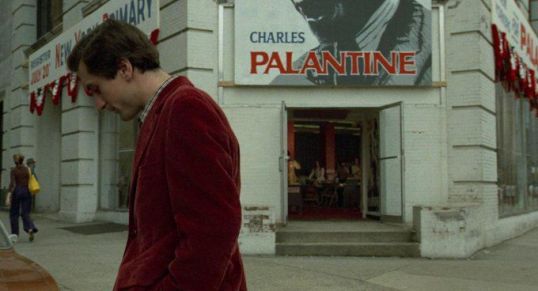
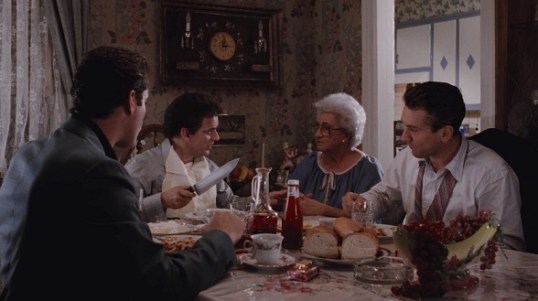
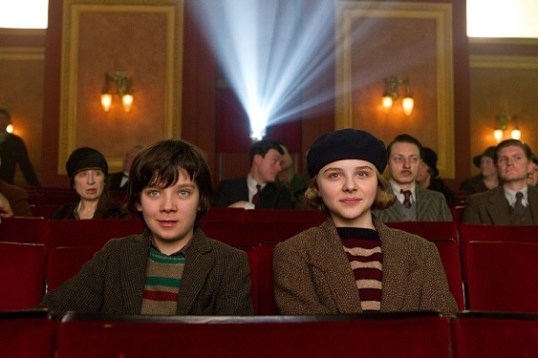
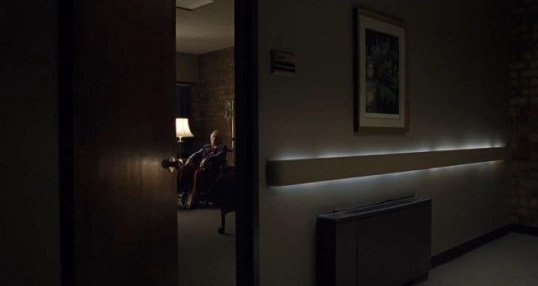
6 Shots From 6 Martin Scorsese Films
Taxi Driver (1976, dir by Martin Scorsese, DP: Michael Chapman)
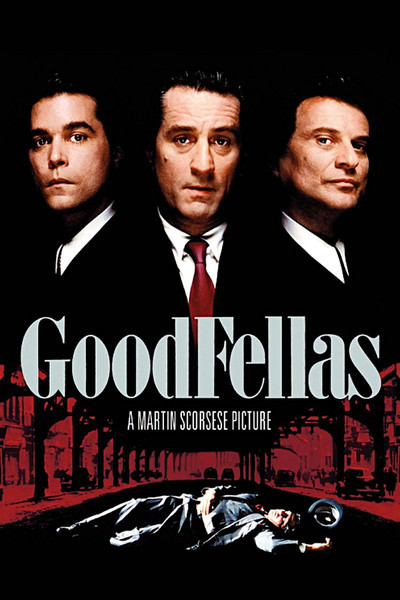
Goodfellas (1990, dir by Martin Scorsese, DP: Michael Ballhaus)
Casino (1995, dir by Martin Scorsese, DP: Robert Richardson)
Shutter Island (2010, dir by Martin Scorsese, DP: Robert Richardson)
Hugo (2011, dir by Martin Scorsese, DP: Robert Richardson)
The Irishman (2019, dir by Martin Scorsese, DP: Rodrigo Prieto)
“If we could only love people the way he did… …without any hate.” — Ayako
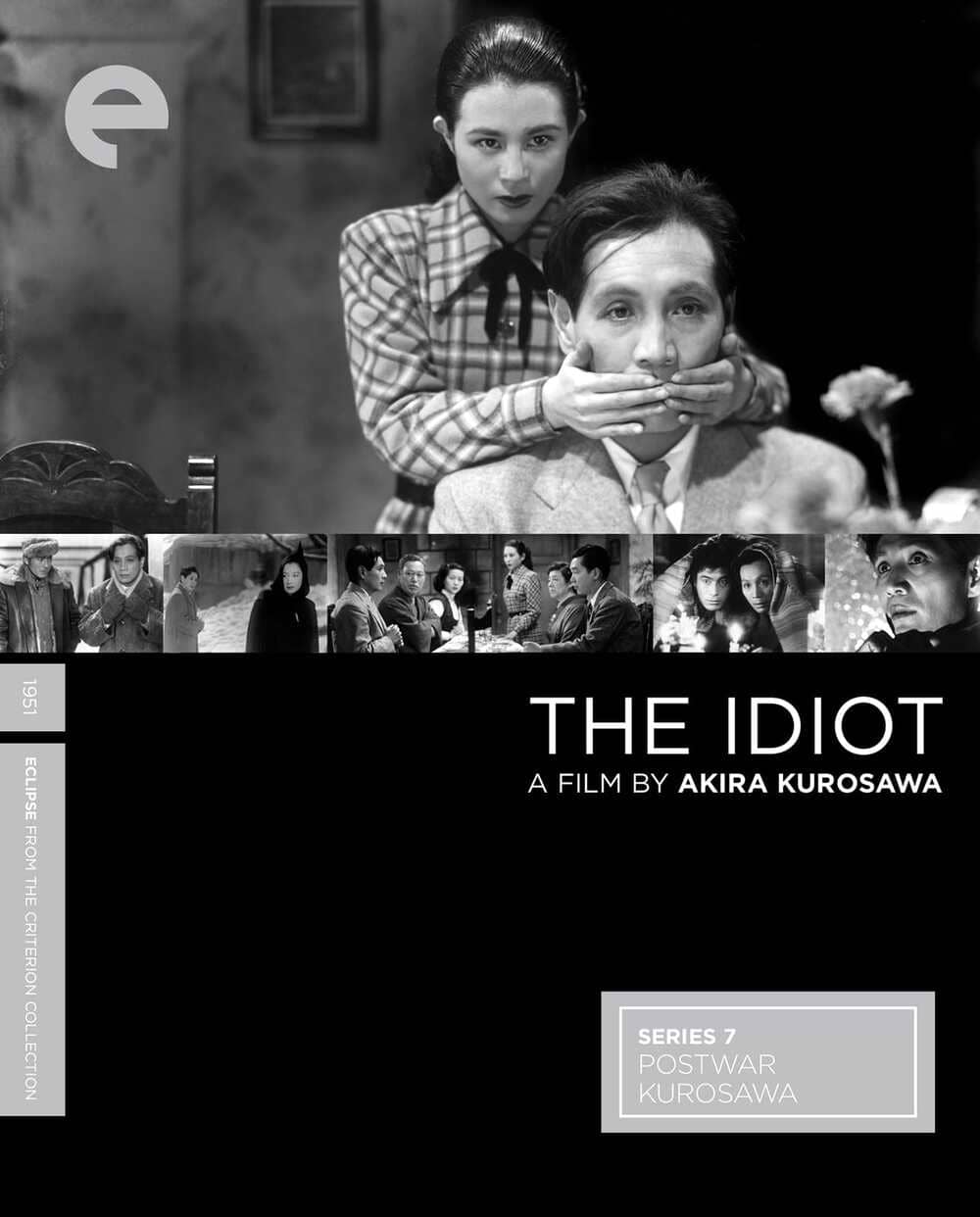
Akira Kurosawa’s The Idiot (1951) is a fascinating, wounded film: sometimes awkward, occasionally overwhelming, and capable of getting under your skin. Adapting Fyodor Dostoevsky’s novel of the same name, Kurosawa approaches its troubled characters with such earnestness that the movie can feel almost defenseless. There is little emotional distance between the filmmaker and the suffering onscreen. That makes for uneven viewing, but also gives the film its peculiar force. Even when the storytelling stumbles, you can sense Kurosawa wrestling with a question worth the struggle: what happens when genuine goodness enters a world that has forgotten how to recognize it?
Before getting into the drama, there is the unavoidable matter of what survives. The version known today runs 166 minutes, nearly three hours, but Kurosawa’s original cut lasted 265 minutes. Conceived as an expansive, closely faithful engagement with Dostoevsky’s novel, despite its relocated setting, that longer version was drastically shortened under pressure from Shochiku. The missing footage has never resurfaced. Its absence places The Idiot alongside such mythical lost cinematic objects as the original cut of Orson Welles’s The Magnificent Ambersons: films whose surviving forms are forever shadowed by the possibility of something richer. That possibility is tantalizing, although it cannot prove that the longer film solved every problem.
Kurosawa moves the story from nineteenth-century Russia to postwar Hokkaido, and the change feels more thoughtful than a simple exchange of names and costumes. The snowy landscape gives the film an atmosphere of emotional suspension, as though everyone is waiting for a thaw that might never arrive. His central figure, Kinji Kameda, is a psychologically shattered veteran whose experience of narrowly escaping execution has left him profoundly vulnerable. This transforms Dostoevsky’s inquiry into innocence and suffering into something connected to Japan’s recent catastrophe. Kameda’s gentleness does not float above history; it seems to have emerged, improbably, from its wreckage.
Masayuki Mori plays Kameda with an openness that can initially seem too plainly signposted. His anxious expressions and hesitant manner leave little doubt that this man is unequipped for ordinary social combat. Yet that very lack of armor becomes affecting. Kameda listens to people without immediately calculating what they can offer him, and he takes their pain seriously when everyone else prefers gossip or judgment. Mori makes goodness look less like serene wisdom than an exhausting condition of exposure. Kameda cannot stop receiving other people’s distress, and the performance gradually suggests how unbearable that receptiveness might become.
The story gathers around Kameda’s relationships with the volatile Akama, the socially stigmatized Taeko, and the proud, conflicted Ayako. Love moves through this group in several incompatible forms: tenderness, possession, pity, fantasy. Kameda’s emotional bond with Taeko unsettles Akama, while his attachment to Ayako offers the possibility of a different future without freeing him from Taeko’s suffering. The trouble is not simply that everyone loves the wrong person. They cannot agree on what love should do. Should it rescue, forgive, claim, or leave someone alone? The film finds its tragedy in the distance between these competing answers.
Toshiro Mifune’s Akama supplies the rough counterweight to Mori’s fragile sincerity. Where Kameda seems unable to conceal a feeling, Akama appears almost physically burdened by feelings he cannot manage. Mifune gives jealousy a bodily presence: intensity gathers in his face and posture until affection begins to resemble a threat. The contrast could have become a tidy opposition between saint and brute, but the relationship is more troubling than that. Kameda’s compassion reaches toward Akama too. He recognizes suffering in someone whose possessiveness makes him dangerous, refusing the comforting idea that understanding another person necessarily makes them harmless.
Setsuko Hara’s Taeko is the film’s most compelling mixture of defiance and self-punishment. Having been treated as a compromised woman, she alternately challenges that judgment and behaves as though she deserves it. Hara makes those impulses feel painfully connected. Taeko’s pride is not evidence that the wounds have healed; it is one of the ways she keeps them covered. Kameda’s refusal to condemn her therefore becomes almost frightening. Accepting his kindness would mean entertaining the possibility that the identity imposed on her is false, and that happiness might be something she is allowed to want.
Yoshiko Kuga’s Ayako brings a different friction. Her uncertainty about Kameda is understandable: it is difficult to build a romantic future with someone whose compassion seems to make unlimited demands on him. She wants to be loved, not merely included in a universal embrace of wounded humanity. This is where the adaptation becomes especially interesting as literary interpretation. Compassion may be morally beautiful, but it does not automatically clarify desire or make intimacy workable. Kurosawa allows Kameda’s goodness to expose the cruelty around him without pretending that it provides an easy arrangement for everyone involved.
As filmmaking, The Idiot is strongest when space and atmosphere carry what the dialogue cannot. The snowbound setting gives the emotional turmoil a stark visual enclosure, while the faces seem to demand scrutiny even when the narrative grows difficult to follow. Unfortunately, the surviving cut often moves in fits and starts. Explanatory passages and abrupt transitions make some developments feel reported rather than fully experienced. Oddly, this nearly three-hour film can feel both protracted and rushed: individual confrontations linger, but the connective tissue that might give them a more persuasive rhythm is missing. The studio cuts offer a substantial explanation, though not a blanket exemption from criticism.
Ultimately, The Idiot is easier to admire wholeheartedly than to recommend without qualifications. Its emotional pitch can become wearying, and its fractured storytelling asks for patience. Still, calling it merely a damaged curiosity misses the disturbing life that remains. Kurosawa makes innocence look neither comfortably inspirational nor safely foolish; it becomes a challenge that the surrounding world cannot absorb. The lost 265-minute version will keep inviting speculation, but the surviving film deserves more than mourning for what it is not. Uneven, anguished, and deeply sympathetic, it leaves behind the unsettling possibility that the person everyone calls an idiot may be the one seeing others most clearly.
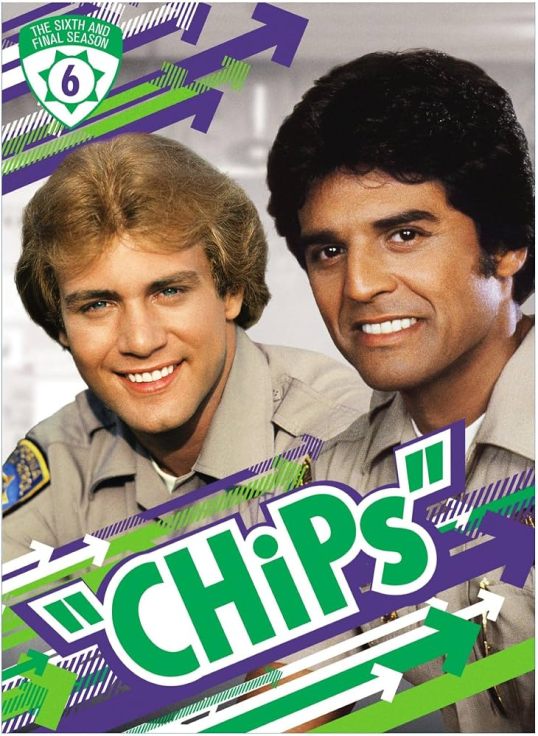
Welcome to Late Night Retro Television Reviews, a feature where we review some of our favorite and least favorite shows of the past! On Mondays, I will be reviewing CHiPs, which ran on NBC from 1977 to 1983. The entire show is currently streaming on Prime!
This week, Ponch is on light duty.
Episode 6.17 “Brat Patrol”
(Dir by John Astin, originally aired on February 27th, 1983)
Ponch is injured during a car chase. Fortunately, he survives and even gets yet another new girlfriend out of it. Nurse Cindy (Kathy Shower) thinks Ponch is super hot with his broken wrist. However, Ponch soon starts to go stir-crazy as he waits for his wrist to fully heal. Getraer assigns Ponch to look after the CHP Explorers, a group of kids and teenagers whom the CHP is trying to prevent from becoming a bunch of juvenile delinquents. Can Ponch teach the Explorers how to work together as a team and support one another?
This was obviously a backdoor pilot for a show about the CHP Explorers. We meet each member of the Explorers and get some hints as to what type of storylines they would have to deal with on a weekly basis. For instance, one of them is trying to avoid being drawn into the gang lifestyle. Another one is overweight and lacks confidence. There are two girls, one of whom is giggly and the other an aspiring activist. It really doesn’t seem like it would have been much of a show. Sorry, Ponch.
“It’s cool. None of them have got my smile.”
While Ponch is teaching the kids the value of teamwork, cadet Bruce Nelson (Bruce Penhall) works with Kathy Linehan (Tina Gayle) to capture a drug dealer. Good for them!
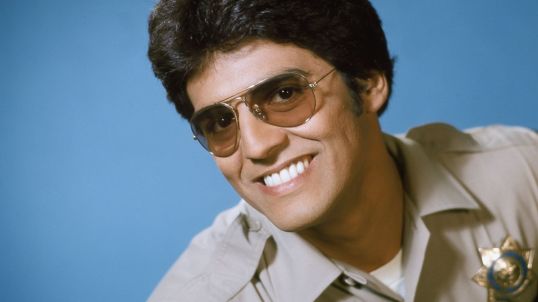
Actually, you know what’s interesting about this otherwise forgettable episode? Bobby Nelson is barely in it! From what I’ve read, it appears that Erik Estrada didn’t get along any better with Tom Reilly than he did with Larry Wilcox. As well, Reilly was busted by the real California Highway Patrol for driving under the influence. Needless to say, the real CHP was not amused and threatened to pull their sponsorship of CHiPs, which would have meant the show would no longer be allowed to use real CHP uniforms or shoot in CHP headquarters. Apparently, if CHiPs had been renewed for another season, Reilly would have been replaced by Bruce Penhall as Ponch’s newest partner. However, CHiPs was canceled at the end of this season.
Speaking of which, we only have five more episodes to go before I have to find something new to review on Mondays!