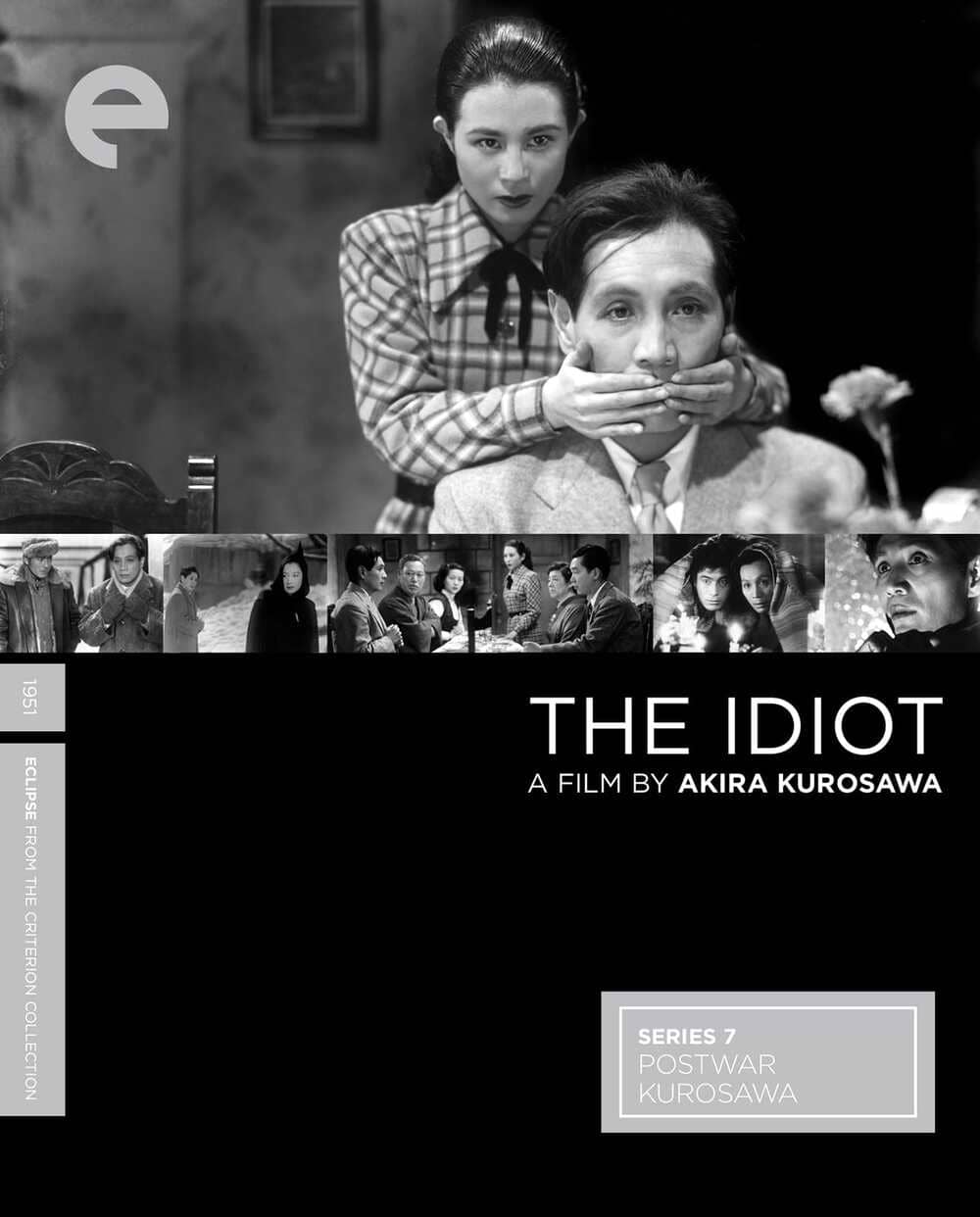
Film Review: The Idiot (dir. by Akira Kurosawa)


“If we could only love people the way he did… …without any hate.” — Ayako

Akira Kurosawa’s The Idiot (1951) is a fascinating, wounded film: sometimes awkward, occasionally overwhelming, and capable of getting under your skin. Adapting Fyodor Dostoevsky’s novel of the same name, Kurosawa approaches its troubled characters with such earnestness that the movie can feel almost defenseless. There is little emotional distance between the filmmaker and the suffering onscreen. That makes for uneven viewing, but also gives the film its peculiar force. Even when the storytelling stumbles, you can sense Kurosawa wrestling with a question worth the struggle: what happens when genuine goodness enters a world that has forgotten how to recognize it?

Before getting into the drama, there is the unavoidable matter of what survives. The version known today runs 166 minutes, nearly three hours, but Kurosawa’s original cut lasted 265 minutes. Conceived as an expansive, closely faithful engagement with Dostoevsky’s novel, despite its relocated setting, that longer version was drastically shortened under pressure from Shochiku. The missing footage has never resurfaced. Its absence places The Idiot alongside such mythical lost cinematic objects as the original cut of Orson Welles’s The Magnificent Ambersons: films whose surviving forms are forever shadowed by the possibility of something richer. That possibility is tantalizing, although it cannot prove that the longer film solved every problem.

Kurosawa moves the story from nineteenth-century Russia to postwar Hokkaido, and the change feels more thoughtful than a simple exchange of names and costumes. The snowy landscape gives the film an atmosphere of emotional suspension, as though everyone is waiting for a thaw that might never arrive. His central figure, Kinji Kameda, is a psychologically shattered veteran whose experience of narrowly escaping execution has left him profoundly vulnerable. This transforms Dostoevsky’s inquiry into innocence and suffering into something connected to Japan’s recent catastrophe. Kameda’s gentleness does not float above history; it seems to have emerged, improbably, from its wreckage.

Masayuki Mori plays Kameda with an openness that can initially seem too plainly signposted. His anxious expressions and hesitant manner leave little doubt that this man is unequipped for ordinary social combat. Yet that very lack of armor becomes affecting. Kameda listens to people without immediately calculating what they can offer him, and he takes their pain seriously when everyone else prefers gossip or judgment. Mori makes goodness look less like serene wisdom than an exhausting condition of exposure. Kameda cannot stop receiving other people’s distress, and the performance gradually suggests how unbearable that receptiveness might become.

The story gathers around Kameda’s relationships with the volatile Akama, the socially stigmatized Taeko, and the proud, conflicted Ayako. Love moves through this group in several incompatible forms: tenderness, possession, pity, fantasy. Kameda’s emotional bond with Taeko unsettles Akama, while his attachment to Ayako offers the possibility of a different future without freeing him from Taeko’s suffering. The trouble is not simply that everyone loves the wrong person. They cannot agree on what love should do. Should it rescue, forgive, claim, or leave someone alone? The film finds its tragedy in the distance between these competing answers.

Toshiro Mifune’s Akama supplies the rough counterweight to Mori’s fragile sincerity. Where Kameda seems unable to conceal a feeling, Akama appears almost physically burdened by feelings he cannot manage. Mifune gives jealousy a bodily presence: intensity gathers in his face and posture until affection begins to resemble a threat. The contrast could have become a tidy opposition between saint and brute, but the relationship is more troubling than that. Kameda’s compassion reaches toward Akama too. He recognizes suffering in someone whose possessiveness makes him dangerous, refusing the comforting idea that understanding another person necessarily makes them harmless.

Setsuko Hara’s Taeko is the film’s most compelling mixture of defiance and self-punishment. Having been treated as a compromised woman, she alternately challenges that judgment and behaves as though she deserves it. Hara makes those impulses feel painfully connected. Taeko’s pride is not evidence that the wounds have healed; it is one of the ways she keeps them covered. Kameda’s refusal to condemn her therefore becomes almost frightening. Accepting his kindness would mean entertaining the possibility that the identity imposed on her is false, and that happiness might be something she is allowed to want.

Yoshiko Kuga’s Ayako brings a different friction. Her uncertainty about Kameda is understandable: it is difficult to build a romantic future with someone whose compassion seems to make unlimited demands on him. She wants to be loved, not merely included in a universal embrace of wounded humanity. This is where the adaptation becomes especially interesting as literary interpretation. Compassion may be morally beautiful, but it does not automatically clarify desire or make intimacy workable. Kurosawa allows Kameda’s goodness to expose the cruelty around him without pretending that it provides an easy arrangement for everyone involved.

As filmmaking, The Idiot is strongest when space and atmosphere carry what the dialogue cannot. The snowbound setting gives the emotional turmoil a stark visual enclosure, while the faces seem to demand scrutiny even when the narrative grows difficult to follow. Unfortunately, the surviving cut often moves in fits and starts. Explanatory passages and abrupt transitions make some developments feel reported rather than fully experienced. Oddly, this nearly three-hour film can feel both protracted and rushed: individual confrontations linger, but the connective tissue that might give them a more persuasive rhythm is missing. The studio cuts offer a substantial explanation, though not a blanket exemption from criticism.

Ultimately, The Idiot is easier to admire wholeheartedly than to recommend without qualifications. Its emotional pitch can become wearying, and its fractured storytelling asks for patience. Still, calling it merely a damaged curiosity misses the disturbing life that remains. Kurosawa makes innocence look neither comfortably inspirational nor safely foolish; it becomes a challenge that the surrounding world cannot absorb. The lost 265-minute version will keep inviting speculation, but the surviving film deserves more than mourning for what it is not. Uneven, anguished, and deeply sympathetic, it leaves behind the unsettling possibility that the person everyone calls an idiot may be the one seeing others most clearly.

Kurosawa-Mifune Collaborations
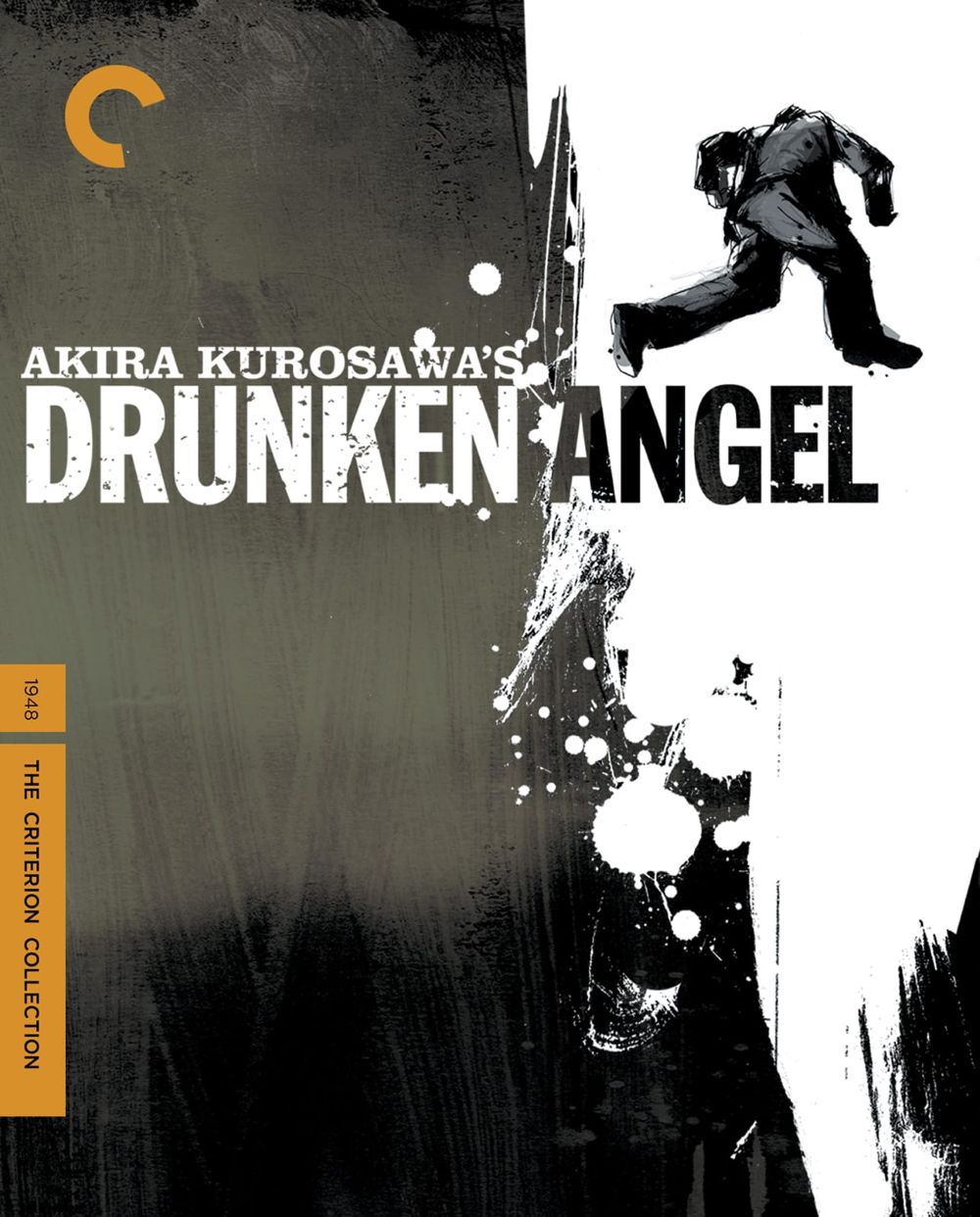
Film Review: Drunken Angel (dir. by Akira Kurosawa)


There’s nothing particularly angelic about the world of Drunken Angel. The streets are filthy, the nightlife feels desperate, and even the local doctor seems more interested in picking a fight than offering comfort. That roughness makes Akira Kurosawa’s film so compelling: it finds compassion somewhere you wouldn’t expect to find much of anything worth saving. Released in 1948, rather than 1947, it also marks the first of sixteen collaborations between Kurosawa and Toshiro Mifune. That partnership would become legendary, but this isn’t just an interesting starting point. It’s a tough, moving film that stands on its own.

The story begins with a transaction that should be simple. Matsunaga, a young gangster played by Mifune, visits a neighborhood doctor to have a bullet removed from his hand. The doctor, Sanada, played by Takashi Shimura, recognizes that his patient has a more serious problem: tuberculosis. Matsunaga doesn’t welcome the diagnosis, especially when accepting it would mean admitting that his intimidating exterior hides a vulnerable body. Sanada, meanwhile, refuses to let the matter drop. What develops is less a conventional friendship than an ongoing argument between two men who have very different ideas about what it means to stay alive.

Mifune is the immediate attraction, and it’s easy to understand why Kurosawa kept working with him. His Matsunaga makes being noticed look like a full-time occupation. The swagger, the sharp clothes, the sudden bursts of aggression: everything suggests someone performing toughness for an audience. Yet Mifune makes the performance within the performance visible. There’s fear underneath all that attitude, and his physical acting gradually exposes it. As Matsunaga’s health deteriorates, the gap between how powerful he wants to appear and how weak he actually feels becomes painful. His body starts contradicting every claim his personality makes. It’s a magnetic performance without being an especially comfortable one.

Just as important, though, is Shimura. It would be easy to describe Sanada as the decent man trying to rescue the delinquent, but that makes him sound considerably tidier than he is. He drinks heavily, loses his temper, and has little patience for the people who need his help. His compassion doesn’t come wrapped in reassuring bedside manners. That’s what makes it persuasive. Shimura gives the impression of someone who has seen enough suffering to become cynical but hasn’t managed to stop caring. Sanada’s anger often feels like the exhausted expression of a responsibility he cannot put down. He’s abrasive because the stakes matter to him.

Together, the actors give the film its unsettled rhythm. Their scenes have the energy of a fight in which neither participant will admit what the fight is really about. Sanada wants Matsunaga to accept treatment, but he also wants him to recognize that the gangster code he follows offers no meaningful protection. Matsunaga wants to dismiss the doctor, yet keeps being pulled back toward someone willing to confront him honestly. What makes their relationship interesting is that affection never quite replaces antagonism. Kurosawa lets concern emerge through irritation, stubbornness, and repeated disappointment rather than a convenient emotional breakthrough.

The setting gives that struggle a larger dimension. This is postwar Tokyo viewed from a neighborhood where recovery feels distant and survival has become an everyday negotiation. A stagnant, polluted pool sits at the center of the community, making the environment seem physically sick before anyone mentions tuberculosis. The symbolism isn’t subtle, but subtlety isn’t always the point. Kurosawa wants the connection between bodily illness and social damage to be impossible to miss. Matsunaga’s condition belongs to him, but the world around him seems to encourage the same habits of denial and neglect. The neighborhood isn’t just a backdrop; it keeps pressing into the drama.

That atmosphere also complicates the film’s gangster appeal. Matsunaga initially has the surface attractions associated with movie criminals: style, confidence, access to nightlife, and the ability to frighten people. But Drunken Angel steadily dismantles the idea that these things amount to security. His standing depends on remaining useful and looking strong, which leaves little room for illness or dependence. The return of another gangster, Okada, exposes how fragile Matsunaga’s position really is. What he treats as loyalty starts looking like an arrangement that can be canceled the moment he becomes inconvenient. His tragedy involves discovering how little the organization values him beneath the swagger.

Kurosawa’s direction keeps that downward movement from becoming visually monotonous. The film moves between cramped medical encounters and the restless energy of the surrounding entertainment district, allowing private suffering and public distraction to rub against each other. Mifune’s nightclub dancing is especially revealing: movement becomes another way for Matsunaga to insist on his vitality, even as the story makes that insistence increasingly desperate. The contrast gives the film an uneasy pulse. Pleasure never quite feels separate from danger, and stillness rarely brings relief. Even when the characters try to escape themselves, the filmmaking keeps their vulnerability close to the surface.

The film does occasionally push its ideas harder than necessary. Sanada’s moral arguments can become speeches, and the repeated connections between sickness, corruption, and personal responsibility leave relatively little interpretive breathing room. Anyone expecting the emotional restraint sometimes associated with older Japanese cinema may be surprised by how forceful this is. Still, the bluntness mostly suits the material. These are people living under pressure, not quietly arranging their feelings into elegant observations. More importantly, the performances keep the argument human. Matsunaga isn’t merely a warning about bad choices, and Sanada isn’t a flawless representative of the right ones. Their contradictions give the film room to breathe.

What ultimately makes Drunken Angel linger is its refusal to confuse caring with control. Sanada can recognize the danger, offer treatment, and argue himself hoarse, but he cannot simply make another person choose differently. That limitation gives the film its sadness without draining away its humanity. Kurosawa finds something worthwhile in the effort to help, even when the effort is ugly, exhausting, and uncertain. Mifune supplies the volatility, Shimura supplies the battered conscience, and neither lets the other settle into an easy role. As the beginning of a major filmmaking partnership, it’s fascinating. As a bruising drama about pride and the difficulty of accepting help, it remains powerful.

Horror Film Review: Godzilla vs Biollante (dir by Kazuki Omori)


In 1989’s Godzilla vs Biollante, Godzilla returns and gets into a fight with a giant plant named Biollante.  Created by mixing plant cells with Godzilla cells and the cells of one human who was killed in a terrorist attack, Biollante has the body of a monster, the head of a giant rose, and the soul of a human.  In fact, because her cells were used to help create Biollante, the late Erika Shiragami (Yusko Sawaguchi) can telepathically communicate from inside of Billante.

Now, you might be tempted to laugh at all of that but, silly origin story aside, Biollante is actually a wonderful creation and a fierce competitor to Godzilla.  As Biollante was created using DNA that Godzilla left behind during his previous rampage of Tokyo, Godzilla and Biollante have a bit of a mental connection.  One could even argue that this film features Godzilla fighting a mutated version of himself.  (This was a theme to which many of the future Godzilla films would return.)  Biollante is not only capable of wrapping monsters, things, and people in its tendrils but it’s also implied to literally be immortal.  Damaging Biollante just causes it to release spores that presumably will lead to the creation of a new Biollante.

How did Biollante come into existence?  As usual, it’s all the fault of the government and the corporations.  Following Godzilla’s previous rampage in Japan, the government of the Middle Eastern nation of Saradia demanded some of Godzilla’s cells so that they could experiment with creating plant life that could survive in the desert.  Meanwhile, an American company called Bio-Major decided that it wanted the cells for itself and they even sent over terrorists to blow up a Saradian lab, leading to the death of Erika and the apparent madness of her father, Dr. Genichiro Shiragami (Koji Takahashi).  Dr. Shiragami fused Erika’s cells with the cells of one of the Godzilla plants and Biollatne was created….

Yeah, it doesn’t always make a lot of sense.  That’s to be expected of a Godzilla film, though.  The important thing is that, no matter how ludicrous the plot, the cast delivers their lines with enough skill and conviction that the viewer is willing to accept what’s being said without worrying too much about the logic behind it.  There’s definitely a political subtext here for those who want to find it.  Japan once again finds itself saving the world from the mistakes made by America and, this time, the Middle East.  For Japan, every Godzilla rampage is a tragedy.  For America and the rest of the world, it’s an economic opportunity.  Just as the rest of the world reacted to the bombings of Hiroshima and Nagasaki by saying, “Cool, we’ve got to figure out how to do that!,” the world reacts to over 30 years of Godzilla-led death and destruction by trying to figure out how to create their own Godzilla.

There’s a lot going on in Godzilla vs Biollante.  Psychic Miki Saegusa (Megumi Odaka) makes her first appearance in the Godzilla franchise.  There’s a fear assassin named SSS9 (Majot Bedi) who pops up throughout the movie so that he can shoot people.  There are scenes of corporate espionage and car chases and action sequences featuring a lot of gunfire.  This is one of the more violent and fast-paced Godzilla films that I’ve watched.  In the end, though, the main attraction is watching Godzilla battle a giant plant and both Godzilla and Biollante acquit themselves well.  It makes for an exciting film, one that feels worthy of starring the King of the Monsters.

Previous Godzilla Reviews:

  1. Godzilla, King of the Monsters (1958)
  2. Godzilla Raids Again (1958)
  3. King Kong vs Godzilla (1962)
  4. Mothra vs. Godzilla (1964)
  5. Ghidorah: The Three-Headed Monster (1964)
  6. Invasion of the Astro-Monster (1965)
  7. Godzilla vs. The Sea Monster (1966)
  8. Son of Godzilla (1967)
  9. Destroy All Monsters (1968)
  10. All Monsters Attack (1969)
  11. Godzilla vs Hedorah (1971)
  12. Godzilla vs Gigan (1972)
  13. Godzilla vs Megalon (1973)
  14. Godzilla vs Mechagodzilla (1974)
  15. The Terror of Mechagodzilla (1975)
  16. Cozilla (1977)
  17. Godzilla 1985 (1985)
  18. Godzilla vs. Mothra (1992)
  19. Godzilla vs. Destoroyah (1995)
  20. Godzilla, Mothra, and King Ghidorah: Giant Monsters All-Out Attack (2001)
  21. Godzilla (2014)
  22. Godzilla: Planet of the Monsters (2017)
  23. Godzilla, King of the Monsters (2019)
  24. Godzilla vs Kong (2021)
  25. Godzilla Minus One (2023)