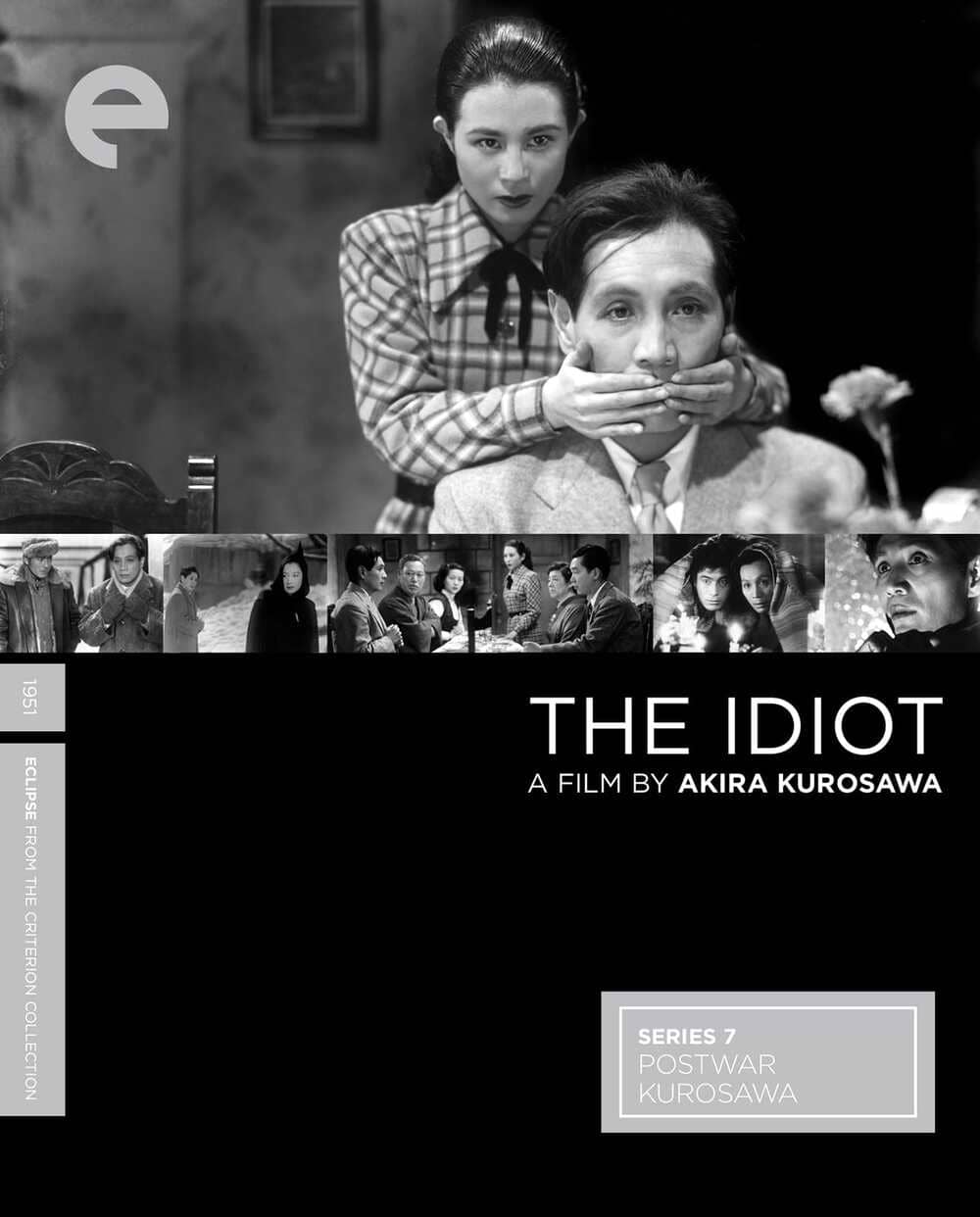
“If we could only love people the way he did… …without any hate.” — Ayako
Akira Kurosawa’s The Idiot (1951) is a fascinating, wounded film: sometimes awkward, occasionally overwhelming, and capable of getting under your skin. Adapting Fyodor Dostoevsky’s novel of the same name, Kurosawa approaches its troubled characters with such earnestness that the movie can feel almost defenseless. There is little emotional distance between the filmmaker and the suffering onscreen. That makes for uneven viewing, but also gives the film its peculiar force. Even when the storytelling stumbles, you can sense Kurosawa wrestling with a question worth the struggle: what happens when genuine goodness enters a world that has forgotten how to recognize it?
Before getting into the drama, there is the unavoidable matter of what survives. The version known today runs 166 minutes, nearly three hours, but Kurosawa’s original cut lasted 265 minutes. Conceived as an expansive, closely faithful engagement with Dostoevsky’s novel, despite its relocated setting, that longer version was drastically shortened under pressure from Shochiku. The missing footage has never resurfaced. Its absence places The Idiot alongside such mythical lost cinematic objects as the original cut of Orson Welles’s The Magnificent Ambersons: films whose surviving forms are forever shadowed by the possibility of something richer. That possibility is tantalizing, although it cannot prove that the longer film solved every problem.
Kurosawa moves the story from nineteenth-century Russia to postwar Hokkaido, and the change feels more thoughtful than a simple exchange of names and costumes. The snowy landscape gives the film an atmosphere of emotional suspension, as though everyone is waiting for a thaw that might never arrive. His central figure, Kinji Kameda, is a psychologically shattered veteran whose experience of narrowly escaping execution has left him profoundly vulnerable. This transforms Dostoevsky’s inquiry into innocence and suffering into something connected to Japan’s recent catastrophe. Kameda’s gentleness does not float above history; it seems to have emerged, improbably, from its wreckage.
Masayuki Mori plays Kameda with an openness that can initially seem too plainly signposted. His anxious expressions and hesitant manner leave little doubt that this man is unequipped for ordinary social combat. Yet that very lack of armor becomes affecting. Kameda listens to people without immediately calculating what they can offer him, and he takes their pain seriously when everyone else prefers gossip or judgment. Mori makes goodness look less like serene wisdom than an exhausting condition of exposure. Kameda cannot stop receiving other people’s distress, and the performance gradually suggests how unbearable that receptiveness might become.
The story gathers around Kameda’s relationships with the volatile Akama, the socially stigmatized Taeko, and the proud, conflicted Ayako. Love moves through this group in several incompatible forms: tenderness, possession, pity, fantasy. Kameda’s emotional bond with Taeko unsettles Akama, while his attachment to Ayako offers the possibility of a different future without freeing him from Taeko’s suffering. The trouble is not simply that everyone loves the wrong person. They cannot agree on what love should do. Should it rescue, forgive, claim, or leave someone alone? The film finds its tragedy in the distance between these competing answers.
Toshiro Mifune’s Akama supplies the rough counterweight to Mori’s fragile sincerity. Where Kameda seems unable to conceal a feeling, Akama appears almost physically burdened by feelings he cannot manage. Mifune gives jealousy a bodily presence: intensity gathers in his face and posture until affection begins to resemble a threat. The contrast could have become a tidy opposition between saint and brute, but the relationship is more troubling than that. Kameda’s compassion reaches toward Akama too. He recognizes suffering in someone whose possessiveness makes him dangerous, refusing the comforting idea that understanding another person necessarily makes them harmless.
Setsuko Hara’s Taeko is the film’s most compelling mixture of defiance and self-punishment. Having been treated as a compromised woman, she alternately challenges that judgment and behaves as though she deserves it. Hara makes those impulses feel painfully connected. Taeko’s pride is not evidence that the wounds have healed; it is one of the ways she keeps them covered. Kameda’s refusal to condemn her therefore becomes almost frightening. Accepting his kindness would mean entertaining the possibility that the identity imposed on her is false, and that happiness might be something she is allowed to want.
Yoshiko Kuga’s Ayako brings a different friction. Her uncertainty about Kameda is understandable: it is difficult to build a romantic future with someone whose compassion seems to make unlimited demands on him. She wants to be loved, not merely included in a universal embrace of wounded humanity. This is where the adaptation becomes especially interesting as literary interpretation. Compassion may be morally beautiful, but it does not automatically clarify desire or make intimacy workable. Kurosawa allows Kameda’s goodness to expose the cruelty around him without pretending that it provides an easy arrangement for everyone involved.
As filmmaking, The Idiot is strongest when space and atmosphere carry what the dialogue cannot. The snowbound setting gives the emotional turmoil a stark visual enclosure, while the faces seem to demand scrutiny even when the narrative grows difficult to follow. Unfortunately, the surviving cut often moves in fits and starts. Explanatory passages and abrupt transitions make some developments feel reported rather than fully experienced. Oddly, this nearly three-hour film can feel both protracted and rushed: individual confrontations linger, but the connective tissue that might give them a more persuasive rhythm is missing. The studio cuts offer a substantial explanation, though not a blanket exemption from criticism.
Ultimately, The Idiot is easier to admire wholeheartedly than to recommend without qualifications. Its emotional pitch can become wearying, and its fractured storytelling asks for patience. Still, calling it merely a damaged curiosity misses the disturbing life that remains. Kurosawa makes innocence look neither comfortably inspirational nor safely foolish; it becomes a challenge that the surrounding world cannot absorb. The lost 265-minute version will keep inviting speculation, but the surviving film deserves more than mourning for what it is not. Uneven, anguished, and deeply sympathetic, it leaves behind the unsettling possibility that the person everyone calls an idiot may be the one seeing others most clearly.
Kurosawa-Mifune Collaborations

