Still don’t know what I was waiting for And my time was running wild, a million dead-end streets and Every time I thought I’d got it made It seemed the taste was not so sweet
So I turned myself to face me But I’ve never caught a glimpse Of how the others must see the faker I’m much too fast to take that test
Ch-ch-changes (Turn and face the strain) Ch-ch-changes (Don’t want to be a richer man)
Ch-ch-changes (Turn and face the strain) Ch-ch-changes (Just gonna have to be a different man)
Time may change me But I can’t trace time
I watch the ripples change their size But never leave the stream of warm impermanence and So the days float through my eyes But still the days seem the same
And these children that you spit on As they try to change their worlds Are immune to your consultations They’re quite aware of what they’re going through
Ch-ch-changes (Turn and face the strain) Ch-ch-changes (Don’t tell them to grow up and out of it)
Ch-ch-changes (Turn and face the strain) Ch-ch-changes (Where’s your shame, you’ve left us up to our necks in it)
Time may change me But you can’t trace time
Strange fascination, fascinating me Ah changes are taking the pace I’m going through
Ch-ch-changes (Turn and face the strain) Ch-ch-changes (Oh, look out you rock ‘n rollers)
Ch-ch-changes (Turn and face the strain) Ch-ch-changes (Pretty soon now you’re gonna get older)
Time may change me But I can’t trace time
I said that time may change me But I can’t trace time
4 Or More Shots From 4 Or More Films is just what it says it is, 4 shots from 4 of our favorite films. As opposed to the reviews and recaps that we usually post, 4 Shots From 4 Films lets the visuals do the talking!
We’re jus two days away from the birthday of the legendary Italian director, Enzo G. Castellari! Here are….
4 Shots From 4 Enzo G. Castellari Films
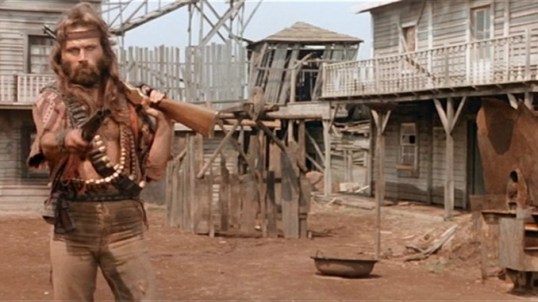
Keoma (1976, dir by Enzo G. Castellari, DP: Aaice Parolin)
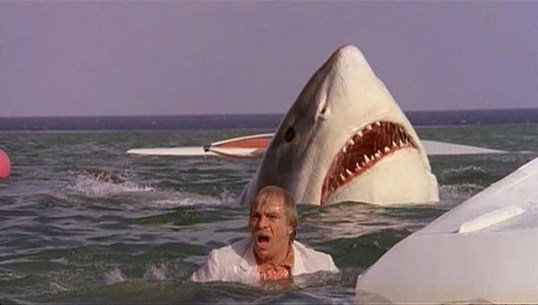
The Last Shark (1981, dir by Enzo G. Castellari, P: Alberto Spagnoli)
1990: Bronx Warriors (1982, dir by Enzo G. Castellari, DP: Sergio Salvati)
Escape From The Bronx (1983, dir by Enzo G. Castellari, DP: Blasco Giurato)
As some of our regular readers undoubtedly know, I am involved in hosting a few weekly live tweets on twitter and occasionally Mastodon. I host #FridayNightFlix every Friday, I co-host #ScarySocial on Saturday, and I am one of the five hosts of Mastodon’s #MondayActionMovie! Every week, we get together. We watch a movie. We snark our way through it.
Tonight, for #MondayActionMovie, the film will be 1997’s Laserhawk!
It should make for a night of fun viewing and I invite all of you to join in. If you want to join the live tweets, just hop onto Mastodon, find the movie on YouTube and hit play at 8 pm et, and use the #MondayActionMovie hashtag! The watch party community is a friendly group and welcoming of newcomers so don’t be shy.
Ship of Fools was the second single to be released from Robert Plant’s fourth solo album, Now and Zen. Now and Zen was the most financially and critically successful of all of Planet’s solo albums, though Plant himself has said that he feels that the album’s music “got lost in the technology of the time.” I would be disappointed if Robert Plant didn’t decry “the technology of the time” but, in this case, he’s being too hard on himself. Now and Zen is a very good album.
This song is mood piece, a love song. In the video, Plant appears to be singing in the rain and it works. The song was later used in “Freefall,” the final episode of Miami Vice, the show that epitomized the 80s and the technology of the time like no other.
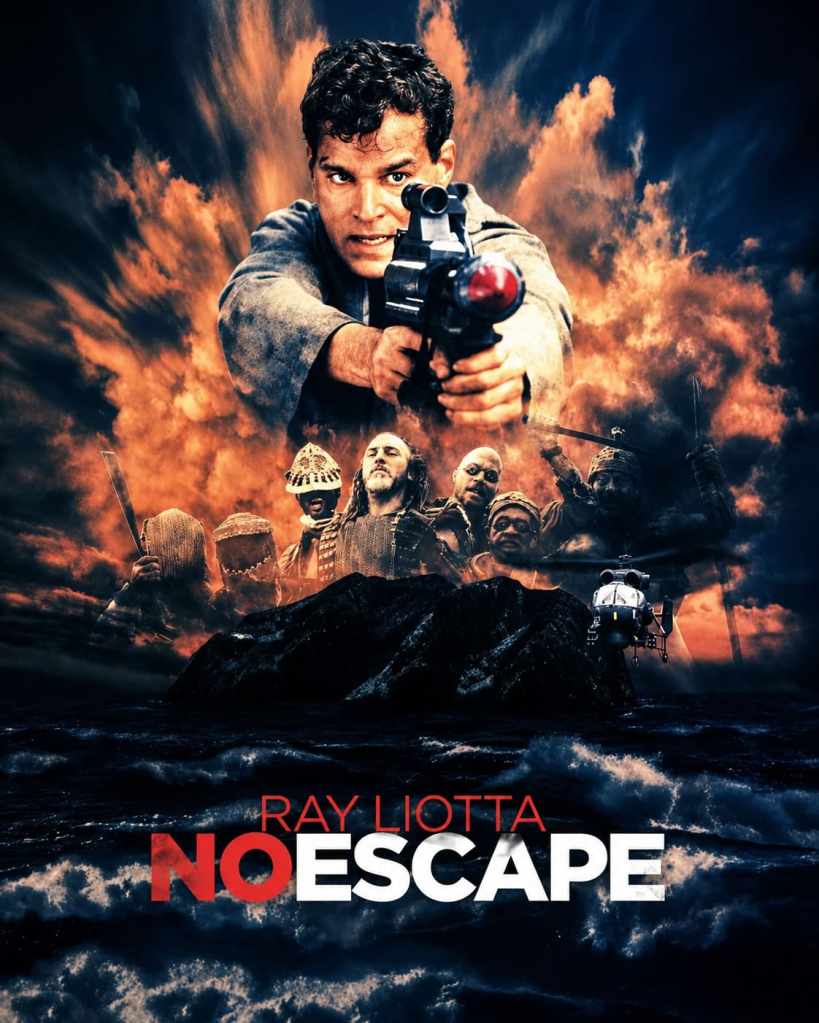
So, No Escape is a movie that, if you’re a fan of mid-90s action flicks, you’ve probably stumbled across on late-night cable at some point. Directed by Martin Campbell, a guy who would go on to resurrect James Bond with GoldenEye, this 1994 sci-fi romp is a strange, almost forgotten artifact from a time when every action movie seemed to be set in a grim, corporate-run future. It’s a movie that borrows so heavily from its predecessors that you could make a drinking game out of spotting the references, yet it does it all with such earnest, sweaty commitment that it’s hard to completely hate. It’s a film that, in a perfect world, should have been a genre classic, but its own bloat and inconsistent rhythm drag it down to the level of a solid, slightly-defective guilty pleasure.
The setup is pure B-movie gold. It’s the year 2022, which felt super futuristic back then, and the world has privatized its prison system. Ray Liotta stars as Captain Robbins, a man sentenced to life on the brutal island prison of Absolom after he kills his commanding officer. The premise of a super-max prison on a remote island, a “civilized” versus “savage” faction of inmates, and a hero who just wants to escape is a greatest-hits medley of Escape from New York, Mad Max 2: The Road Warrior, and Papillon. The film’s villain, Marek, played by a gloriously over-the-top Stuart Wilson, leads a tribe of leather-clad maniacs called the Outsiders, while Lance Henriksen’s Father leads the peaceful, agrarian community of Insiders. Our hero is thrust between them, forced to navigate tribal politics while plotting his getaway. It’s as familiar as an old pair of boots, but there’s a comfort in that familiarity, a sense that you know the beats and can just enjoy the ride.
And for a while, the ride is genuinely fun. Campbell, who clearly has an eye for widescreen spectacle, makes the lush Australian location look both beautiful and hostile. The production design is actually one of the film’s strongest assets; the Outsiders’ camp is a junkyard nightmare, while the Insiders’ village is a quaint, shanty-town paradise built from salvaged scrap. It gives the film a distinct, tactile feel that a lot of sterile sci-fi movies lack. Liotta is perfectly cast as the tough, morally ambiguous soldier. He brings a rough, cerebral quality to the role, making Robbins feel like a guy who’s seen too much and is just plain tired. Stuart Wilson, meanwhile, hams it up as the villain Marek, delivering a performance so broad and gleefully evil that he borders on self-parody, but in a way that’s weirdly compelling and provides some much-needed comic relief. The film feels like it’s building to something great, a tense and explosive showdown between these two drastically different tribes.
The problem is that No Escape simply does not know when to stop. This is a movie with a lean, mean premise that somehow stretches itself out to nearly two hours, and you feel every single minute of the back half. The pacing is wildly inconsistent, lurching between tense survivalist stuff, full-blown action set pieces, and stretches of world-building exposition that just sit there and deflate the momentum the film worked hard to build. There are entire sequences that feel like they exist purely to pad the runtime, and by the time the third act rolls around and Robbins is organizing his prison-break uprising, you’re less excited by the payoff and more just relieved that the movie is finally getting somewhere. A tighter edit, trimming maybe twenty to thirty minutes of the connective tissue, would’ve turned this into a genuinely great B-movie instead of a good one hamstrung by its own indulgence.
That’s really the frustrating thing about No Escape. Everything that makes prison-island and dystopian-exile movies fun is present and accounted for here: a charismatic antihero, a nasty villain, a societal allegory bubbling under the surface, brutal action, and a satisfying underdog uprising. Campbell clearly understood the assignment and delivered those elements competently, sometimes even excitingly. But competent execution of familiar beats can only carry a movie so far when the film refuses to trim the fat, and the sluggish, uneven pacing keeps dragging you out of scenes that should be gripping. It’s the kind of movie that probably could’ve stood shoulder to shoulder with its genre influences if someone in the editing room had been a little more ruthless.
As it stands, No Escape lands squarely in guilty-pleasure territory. It’s not a film you’d necessarily recommend to someone as an essential genre entry, but if you’re already the type who loves this stuff, the dystopian island prisons, the tribal factions, the gruff antihero clawing his way toward freedom, there’s a lot here to enjoy despite the flab. It wears its influences on its sleeve, executes them with more skill than it probably gets credit for, and then undercuts itself by overstaying its welcome. Somewhere in this movie is a tight, mean ninety-minute action flick that could’ve been a minor classic. Instead we got a longer, baggier version that’s still worth a watch on a lazy afternoon, just with the fast-forward button within easy reach for the slower stretches.
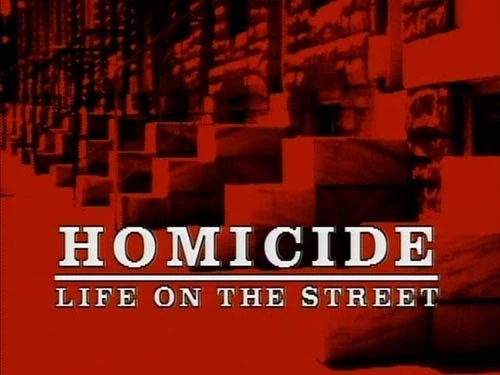
Welcome to Retro Television Reviews, a feature where we review some of our favorite and least favorite shows of the past! On Sundays, I will be reviewing Homicide: Life On The Street, which aired from 1993 to 1999, on NBC! It can be viewed on Peacock.
This week, Bayliss and Pembleton are partners again and again, they find themselves on two different sides of the same case.
Episode 5.18 “Double Blind”
(Dir by Uli Edel, originally aired on April 11th, 1997)
Where do I put my hate? Tim Bayliss asks his Uncle George (Robert Bornarth) at the end of this week’s episode.
Uncle George is the man who abused Bayliss when he was younger. The final few minutes of this episode features Bayliss tracking down George to the decrepit house that George calls home. Stepping aside, Bayliss sees that George is now an old man with a persistent cough. The messy house is full of empty liquor bottles. George is a pathetic, frightened old man and it’s obvious that he doesn’t have much longer to live.
Bayliss has just finished investigating the case of a chef who was found shot to death in his home. It quickly became obvious that the chef was abusive and that he was shot and killed by his teenage daughter (Monica Keena). Pembleton sees it as justifiable homicide but Bayliss says that it doesn’t matter that the victim was a terrible person. The fact that he was shot three times (twice after he was already on the ground) proves that it was a deliberate execution. For once, Bayliss is the one saying that the law is the law while Pembleton is the one worried about the human cost of their investigation. It’s such a reversal in their usual pattern that Pembleton has to laugh. And yet, it works. Having found his previously lost faith, Pembleton now believes that there is more to existence than the letter of the law. Pembleton also realizes that Bayliss wants to call it a murder because, deep down, he wishes he had done the same thing to his uncle. The victim’s daughter did what Bayliss could never bring himself to do.
It’s an interesting storyline, featuring great work from Andre Braugher and especially Kyle Secor. Unfortunately, this episode had a few other plotlines that weren’t quite as interesting. Kellerman and Cox continued their tentative, emotionally-damaged romance, with Kellerman finally confessing that he was suicidal when Cox last visited him on his boat. Meanwhile, Lewis supported former patrolman Chris Thormann (Lee Tergesen) when the man who blinded him came up for parole. The Lewis storyline was a sequel to a first season episode and I appreciated that the show made an effort to maintain continuity. That said, it just wasn’t that interesting of a story.
Still, that final scene with Bayliss and his uncle was undeniably powerful. Seriously, what is Bayliss going to do with all of his hate? There are no easy answers.
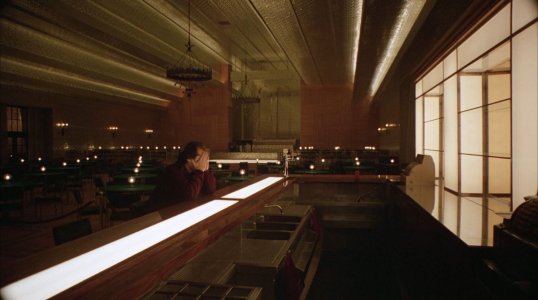
Today’s scene that I love comes from Stanley Kubrick’s The Shining.
Stephen King can whine about this film all that he wants. It’s one of the few adaptations of his novels that can still scare the view even after numerous rewatches.
4 Or More Shots From 4 Or More Films is just what it says it is, 4 shots from 4 of our favorite films. As opposed to the reviews and recaps that we usually post, 4 Shots From 4 Films lets the visuals do the talking!
On this date, 97 years ago, Stanley Kubrick was born in New York City. The rest, as they say, is history.
In honor of one of the world’s greatest directors, here are….
6 Shots From 6 Stanley Kubrick Films
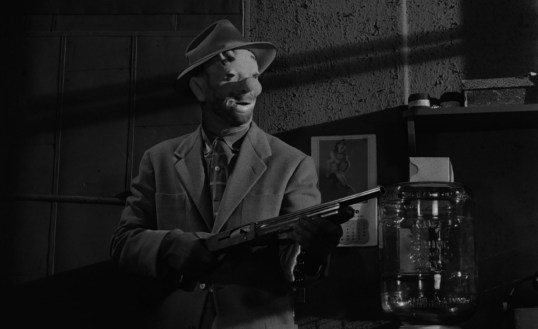
The Killing (1956, dir by Stanley Kubrick, DP: Lucien Ballard)
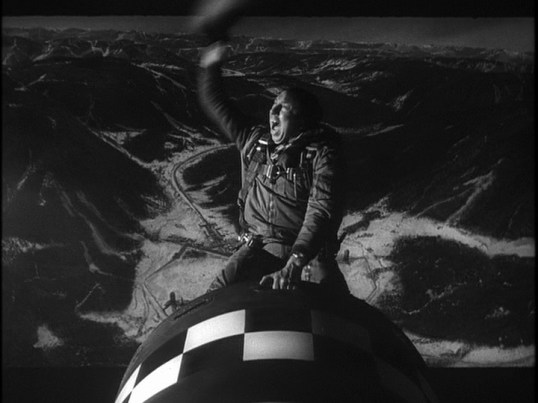
Dr. Strangelove or: How I Learned to Stop Worrying and Love the Bomb (1964, dir. Stanley Kubrick, DP: Gilbert Taylor)
2001: A Space Odyssey (1968, dir by Stanley Kubrick, DP: Geoffrey Unsworth)
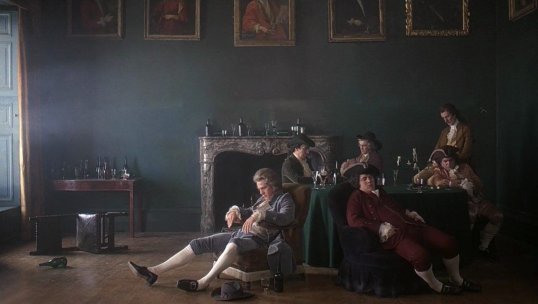
Barry Lyndon (1975, dir by Stanley Kubrick, DP: John Alcott)
The Shining (1980, dir by Stanley Kubrick, DP: John Alcott)
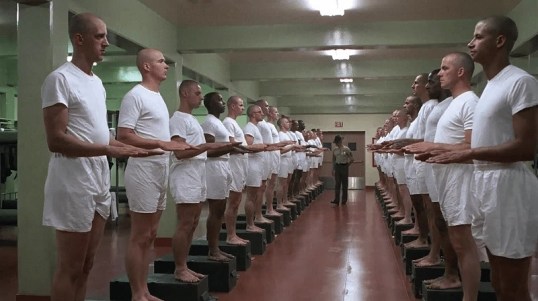
Full Metal Jacket (1987, dir by Stanley Kubrick, DP: Douglas Milsome)