With the 250th birthday of America approaching, here’s a rather odd but charming blast from the past (1948, to be exact) called Make Mine Freedom. It’s a cartoon about why America rules and the rest of the world sucks.
This cartoon was produced by Arkansas’s Harding College and there is some debate over who actually directed it. Some sources claim that this was one of the first projects on which Joseph Barbera and William Hanna ever worked. Others insist that this film should be properly credited to either Fritz Freling or Fred Moore.
The important thing is that the film did a good job of exposing Dr. Utopia and his empty promises….
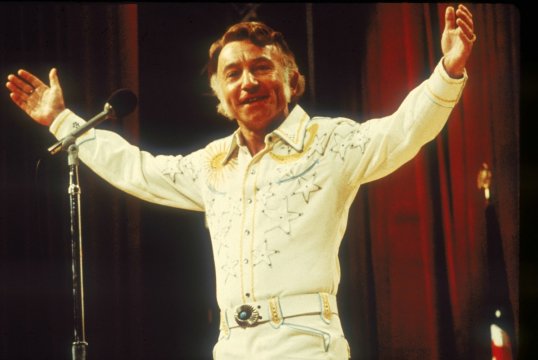
A lot of people might not automatically think of Haven Hamilton as being one of the heroes of Robert Altman’s 1975 masterpiece, Nashville. In fact, one could argue that there really aren’t any true heroes to be found in Nashville. No one in the film lives a perfect life. Everyone has their selfish moments. Even an otherwise sympathetic character like Lily Tomlin’s Linnea Reese still cheats on her husband. That said, I would argue that, at the end of the film, Haven Hamilton proves himself to be a far better person than anyone was expecting.
Played by Henry Gibson, Haven Hamilton is first seen recording a patriotic song about “how we must be doing something right” to last 200 years. He’s one of the elder statesmen of Nashville, an obviously vain man who is instantly identifiable due to his white suits and his sideburns. He’s a figure who represents what the majority of the film’s viewers would consider to be the past. He sings about and sells a vision of an idealized life. He sings a song about how he can’t leave his wife because he loves his children too much. Meanwhile, in reality, he’s carrying on an open affair with Lady Pearl (Barbara Baxley) and barely seems to acknowledge his loyal son, Bud (Dave Peel). Bud has a nice singing voice but Haven has made it clear that the Hamilton family only has room for one singer. Instead, Haven sent his son to Harvard and then put him in charge of his business affairs. It’s easy to dismissive of Haven. He’s vain. He’s old-fashioned. He looks down on the younger talent that’s coming into Nashville. He’s a celebrity but he’s only a Nashville celebrity. An awkward scene in which he meets Elliott Gould and Julie Christie (both playing themselves) captures the contrast between Nashville and Hollywood.
And yet, at the film’s conclusion, when the gunshots ring out and Barbara Jean (Ronee Blakely) collapses on stage, Haven is the one who tries to shield her. Even after he takes a bullet to the arm, Haven is the one who shouts that “This isn’t Dallas, it’s Nashville!” Haven Hamilton is the one who cries out for someone to sing and, when Albuquerque (Baraba Harris) does so, it unites the panicked crowd and prevents a riot. While everyone was too stunned to act, Haven Hamilton took charge and he said exactly the right thing. After spending the film being viewed as an out-of-touch blowhard, Haven Hamilton is the one who risked his life in an unsuccessful attempt to save Barbara Jean. And, in the end, Haven is the one character who truly understands the power of music to bring people together. “This isn’t Dallas!” Haven shouts, a demand that his city, his kingdom, will not give into the madness that seems to be afflicting the rest of the country. At that moment, the viewer sees that, regardless of what the film may want us to think about the character, Haven Hamilton was right. We must be doing something right to have lasted 200 (or 250) years.
And, for that reason, Haven Hamilton — for all of his flaws — is today’s Hero of the Day.
Today, it’s best-remembered for the fact that Richard Nixon carried 49 states and won 60.7% of the popular vote. Nixon’s victory came after the Democratic nominee, George McGovern, dropped his running mate, Thomas Eagleton, from the ticket after it was revealed that Eagleton had undergone electroshock treatment for depression. McGovern was also, at that point, one of the most liberal candidates to ever be nominated by a major political party. Much as with the earlier Barry Goldwater campaign, many of McGovern’s campaign volunteers and aides went on to have long careers in politics but their enthusiasm did not translate into votes for McGovern. Today, Nixon’s victory is seen as being such a foregone conclusion that people still wonder why a group of campaign operatives and White House aides even felt like they needed to break into the Watergate hotel to win.
1972 was a bit before my time but, if you look at the number of candidates who ran for the Democratic nomination, it’s obvious that, despite how thing ultimately turned out, quite a few people originally thought Nixon was vulnerable in 1972. Over 20 Democratic office holders competed for the right to run against Nixon. Sen. Edmund Muskie was the early favorite but, in the end, George McGovern won the nomination as the result of a largely grassroots effort. McGovern became the first Democrat to win the nomination through the primary system as opposed to making deals with political and labor bosses. McGovern’s campaign was fueled by opposition to the Vietnam War and an earnest idealism that got on the nerves of just about everyone outside of the campaign. One of McGovern’s rivals, Sen. Henry Jackson, said that McGovern was the candidate of “abortion, amnesty, and acid.”
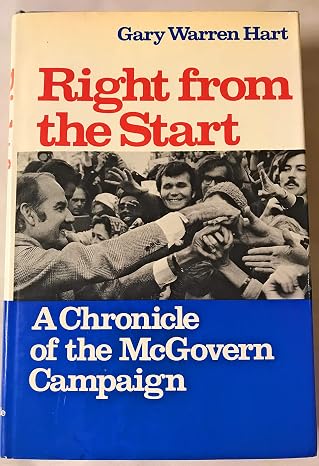
McGovern’s campaign manager was a Colorado lawyer named Gary Hart. Hart would later be elected to the U.S. Senate and would twice run for president himself. (Hugh Jackman played Hart in the rather forgettable film, The Front Runner.) However, before Hart first ran for the Senate, he took the time to write a book about the McGovern campaign. That book was called Right From The Start. I ordered a used copy off of Amazon about ten years ago. It cost me about twenty dollars. If I ordered the book today, it would only cost me $16.00.
The book is an interesting historical document. Hart writes about the day-to-day operations of the McGovern campaign. He does a very good job of showing how McGovern came from behind to win the Democratic nomination. Hart writes about how the campaign recruited people who were new to politics but who were passionate about the issues. He writes about how Morris Dees (yes, the Southern Poverty Law Center guy) spearheaded the campaign’s fundraising. He writes about the day that Governor George Wallace was shot in Maryland. He shows how a group of committed activists were able to bypass the party bosses and win their candidate the nomination. Where Hart struggles is with explaining why McGovern lost the general election. Hart puts a lot of the blame on Thomas Eagleton and perhaps that’s justified. But McGovern still lost 49 states. To me, that would indicate there were even bigger problems then picking a bad running mate. But, because Hart was on the same side of McGovern, it’s perhaps understandable that he would struggle to admit that the electorate simply didn’t respond to what McGovern was selling.
(Ironically, in 1984, Hart and McGovern would both run for the Democratic presidential nomination.)
The chapter where Hart discusses the process that led to Thomas Eagleton becoming, albeit temporarily, McGovern’s running mate is the book’s highlight. As Hart explains it, he and the rest of McGovern’s aides had been so busy winning McGovern the nomination that none of them had really bothered to consider who McGovern should run with. McGovern had his own preferences but they all declined to join the ticket. A bunch of exhausted men ended up sitting around and tossing out names like CBS anchorman Walter Cronkite and Boston Mayor Kevin White. Someone suggested that, since the convention was being held in Miami, the second spot should go to New Orleans Mayor Moon Landrieu just so the next day’s paper would read “MOON OVER MIAMI.” In the end, Thomas Eagleton was picked not because anyone feels strongly about him but instead because he was the only one that nobody felt any passion about whatsoever. He was serviceable and inoffensive and, when he was asked if there was anything in his past that might embarrass the campaign, he replied that they’re wasn’t. A few weeks later, Eagleton’s psychiatric history was leaked to the press and the McGovern campaign imploded. Maybe they should have just asked Cronkite.
Right From The Start is an compulsively readable and interesting campaign memoir, perfect for history nerds like you and me.
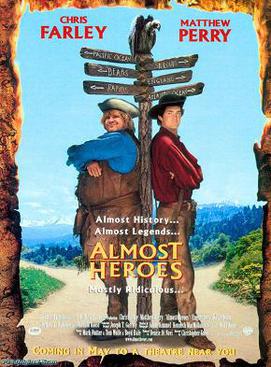
Harry Shearer narrates the story of Leslie Edwards (Matthew Perry) and Bathowlemew Hunt (Chris Farley), the leaders of an expedition that competed with the more famous Lewis & Clark expedition to see who could first to reach the Pacific Ocean. Edwards is foppish and naive. Hunt is illiterate and loud. Included in their expediton is French pirate Fontenot (Eugene Levy) and Fontenot’s Indian wife, Shaquinna (Lisa Barbuscia). The journey leads the expidition to multiple whorehouses, an angry Eagle, and a group of arrogant conquistadors led by Hidalgo (Kevin Dunn). Edwards tries to teach Hunt how to read but Hunt gives up after learning “A.” Hunt, however, gets a chance to not only prove his worth but also to get a haircut from a taxidermist.
Given the talent involved, it’s too bad that this is neither a good comedy nor a good movie. Christopher Guest directs with none of the wit that had made his improvised films so memorable. Apparently, the film was originally envisioned as being an ensemble piece but, once filming began, the studio insisted on just focusing on Farley and, to a lesser extent, Perry. This was also Farley’s last leading role, with the film itself being released several months after his death. Today, if the film is remembered for anything, it’s for featuring two comedic actors who struggled with similar demons and who both died too young. Unfortunately, neither Farley nor Perry are really at their best in this film. Farley yells but with little of the energy that made Tommy Boy a hit. Matthew Perry resorts to playing Chandler Bing in the 1700s. For that matter, this film also features what may be Eugene Levy’s worst performance. It’s a disappointing effort all around. (Would the film have worked better with Farley’s usual foil, David Spade, in the role of Edwards? Probably not. I don’t think any combination of actors could have saved the script.)
What is unfotunate is that the premise had promise. The early years of the United States was full of eccentric characters, quite a few of which were involved in exploring the still-largely uknown continet. Christopher Guest really does seem like he should have been the ideal director for a project liket this but instead, Almost Heroes is overly broad and features its two leading actors giving performanes that fill more appropriate for a sitcom than a motion picture. Almost Heroes was a misfire all the way around.
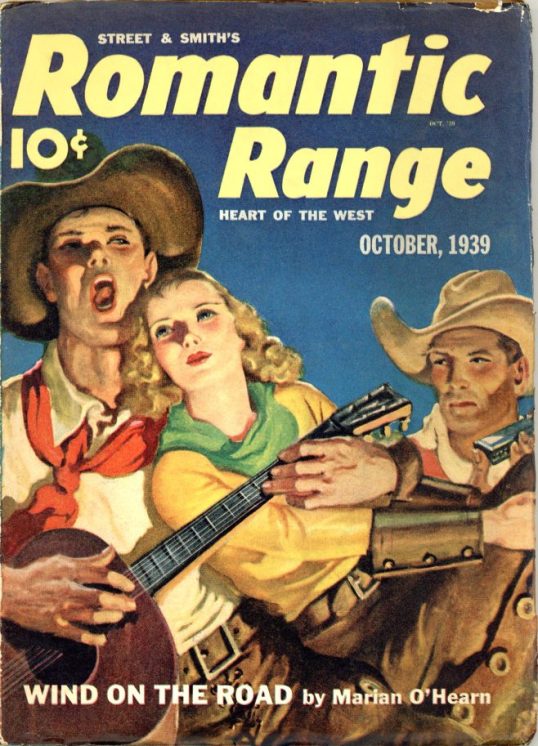
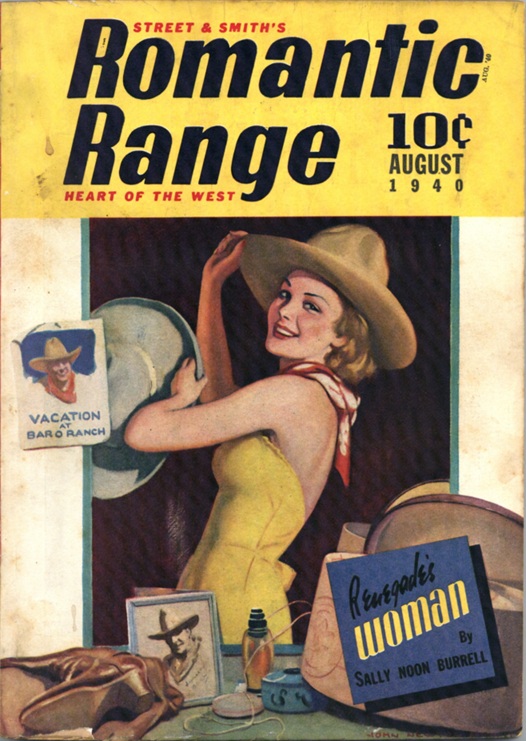
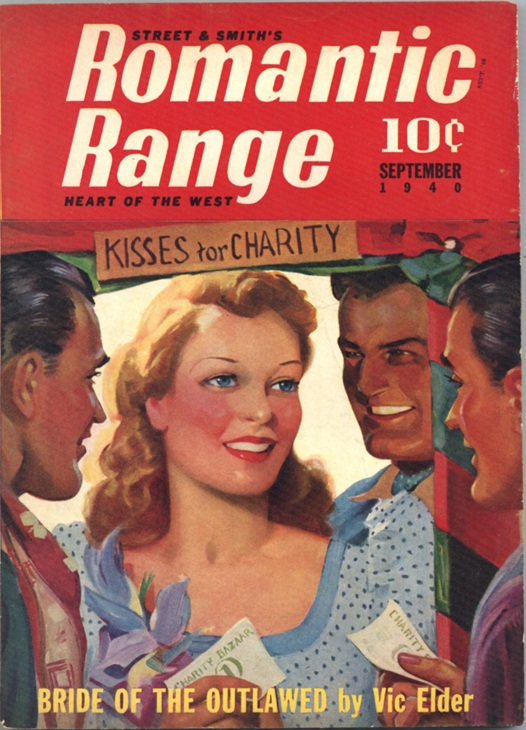
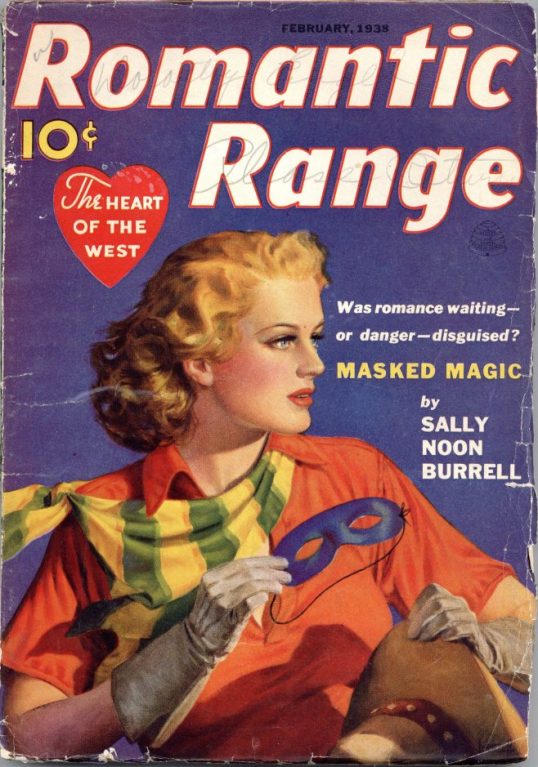
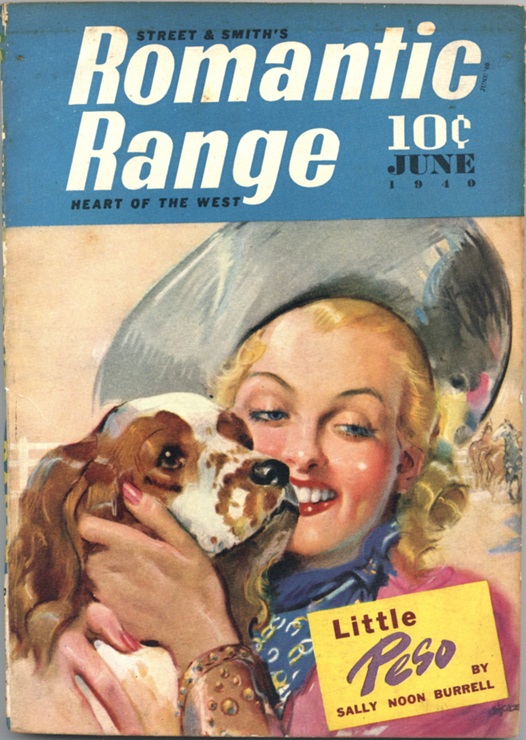
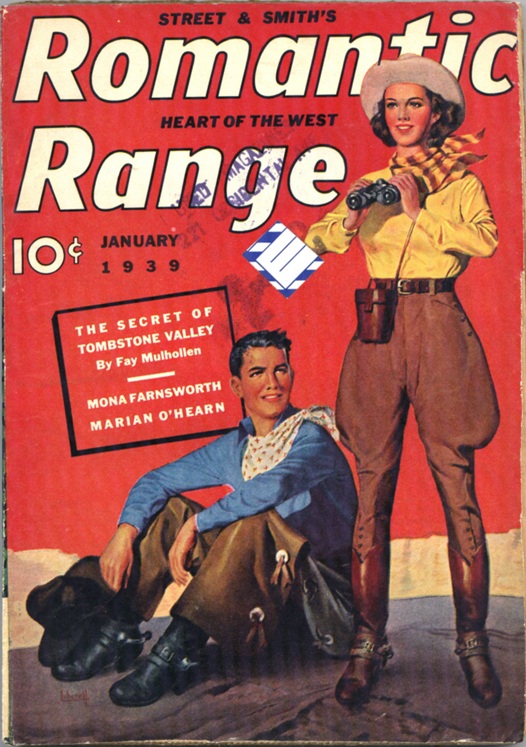
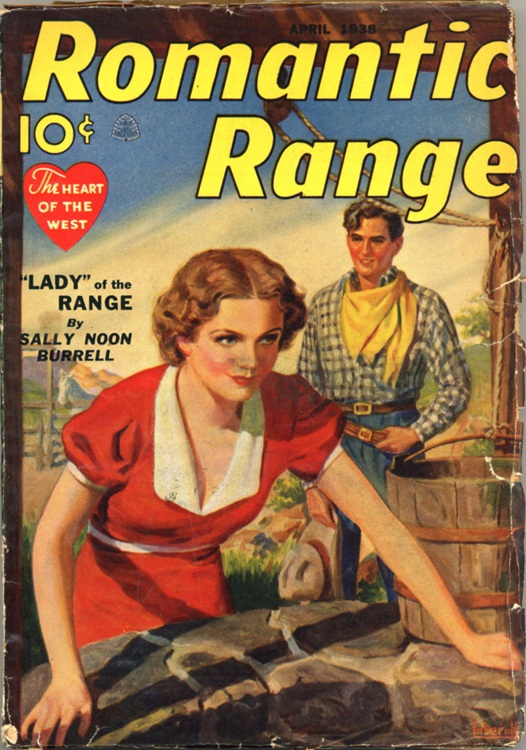
With the 4th approaching, let’s celebrate the romance of the American frontier with these covers from Romantic Range. Romantic Range was a pulp magazine that ran from 1935 throughout the 1940s. The magazine featured love stories that took place on the range and the covers provided a break from the gunplay and deadly rattlesnakes that dominated most western magazines of the era. The covers are notable today for being romantic but surprisingly chaste, especially by the standards of the pulps.
Here’s a small sampling of some of the most innocent covers in the history of ranch romance.
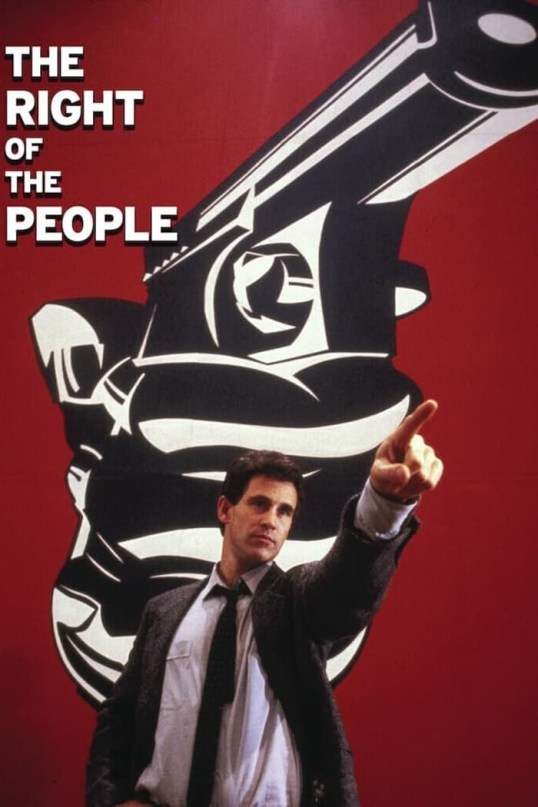
1986’s The Right of the People takes place in the small town of St. Lawrence, Kansas. It seems like a nice enough town, perhaps the ideal place to start a family. The people are friendly. The streets appear to be safe. It’s about as mid as Middle America can get.
Or, at least, that’s the case until a group of armed gunmen attempt to hold up a restaurant. They enter with their guns drawn and their masks pulled over their faces and they demand that everyone give them their money. When one person in the restaurant makes a sudden move, one of the thieves open fire. Soon, all of the thieves are firing and everyone in the restaurant is dead. Among the victims is the family of District Attorney Christopher Wells (Michael Ontkean).
Wells was a liberal on most law-and-order issues until it was his family that was victimized. He leads an effort to legalize open carry in the small town of St. Lawrence. At first, the mayor (M. Emmett Walsh) opposes the effort but, when it becomes apparent that Proposition G (G for Guns!) is going to pass, the mayor switches over and becomes an advocate for the Second Amendment.
The majority of the citizens are happy that they can now carry guns pretty much anywhere. Less enthused are a handful of cranky liberals who insist that everyone carrying a gun will make the streets less safe. When a man uses his gun to thwart a robbery at a grocery store, he is hailed as a hero. However, nobody talks about the poor cashier who was shot when he tried to use his own gun or any of the innocent people caught in the crossfire.
The Right of the People is an interesting artifact. On the one hand, it doesn’t hide its own position when it comes to gun control. The pro-gun rallies and the posters that decorate them are meant to be ominous and reminiscent of various fascist moments throughout history. At the same time, Christopher Wells is a sympathetic character. He’s someone who lost his entire family because no one was able to stop the criminals who randomly selected a restaurant to rob. One would have to have a heart made of stone to not understand how Wells would go from being a bleeding heart liberal to someone who isn’t exactly concerned about the rights of criminals. (At the same time, Wells is a bit like the fundamentalist who has no problem believing in God when bad things happen to other people but who turns into a rabid atheist as soon as something bad happens to him.) Michael Ontkean gives a strong performance and he gets good support from M. Emmet Walsh and Billy Dee Williams. The film starts out strong but, unfortunately, it falters a bit once everyone in town turns into a caricature of a gun nut. The even hand is tossed out for a heavy hand and the entire film suddenly starts to condescend to the character that it previously treated with such fairness.
What makes this film interesting to me is that I live in an open carry state. The film’s argument that open carry would lead to people eagerly looking for any excuse to start shooting feels rather false after you’ve spent a lifetime surrounded by responsible gun owners. The film was obviously made at a time when open carry wasn’t as common as it is today and it’s vision of a trigger-happy town ultimately becomes so over-the-top that it stops being effective. Fortunately, the film’s vision of the future did not come true.
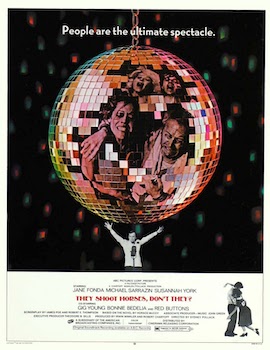
1969’s They Shoot Horses, Don’t They? is a film about many different things.
On its simplest level, it’s a film about a group of people who, during the Great Depression, take part in a brutal dance marathon in hopes of winning a $1,500 cash prize and maybe the chance to be spotted by a Hollywood talent scout. It’s a film about the desperation of being poor and forgotten, and it’s all the more effective because it was based on a novel that was actually written during the Great Depression. There’s an authenticity to the characters in They Shoot Horses, Don’t They? The original 1935 novel, which I read a few years ago, was written by Horace McCoy, a hard-living Dallas journalist who sometimes supplemented his income by working as a bouncer. McCoy knew the world about which he was writing.
The film is also about the power and allure of fame. The dancers may be exhausted, but they have fans who sit in the stands and who, in return for a smile and a kind word, will sometimes buy them new shoes or a decent meal. At one point, Hollywood director Mervyn LeRoy appears in the audience, and all of the dancers make a point of smiling as they pass in front of him. Meanwhile, the grueling derbies, in which the dancers tandem race in circles around the dance hall, predict the humiliation rituals of reality television. In its way, They Shoot Horses, Don’t They? is just as prophetic a film as Network.
The film is also about memory. The film is full of flashbacks and flash-forwards, giving us a portrait of the life of Robert Syverten (Michael Sarrazin), a homeless man who wandered into a dance marathon in Santa Monica. In a flashback, young Robert watches as his grandfather euthanizes a horse that has broken its leg. In a flash-forward, we watch as Robert talks to the police about a crime. And, in what we assume is the story’s “present,” we watch as Robert is partnered up with Gloria Beatty (Jane Fonda), a weary woman who continues to dance even though she no longer believes any of the hype that emcee Rocky Gravo (Gig Young) spouts about how the marathon can be the start of a brand new life.
It took me a while to get used to the flashbacks and the flash-forwards. At first, I thought they were a mistake. They seemed like a gimmicky addition to an otherwise straightforward story. But as the story played out, I came to appreciate the film’s nonlinear structure. Ultimately, the film is about Robert trying to come to terms not only with his actions but also with the actions of everyone involved with the marathon. I also came to realize that the film’s present was actually Robert in the police station and that the scenes of Robert at the dance marathon were his own memories of the vent. The film becomes less about the Depression and more about one person, a lost soul in a cold world, trying to figure out how his life eventually led to him sitting in an interrogation room, accused of a terrible crime.
The entire cast does a good job. Susannah York, who plays an aspiring actress, has an intense scene in which she breaks down when she can’t find the dress she wants to wear. Bruce Dern and Bonnie Bedelia are sympathetic as a young couple. Veteran tough guy Michael Conrad rolls around on roller skates and barks at everyone to keep moving. When Red Buttons shows up as a kind-hearted veteran dancer, your immediate response is to smile because, as a lover of classic films, you immediately associate Buttons with comedy and optimism. In The Poseidon Adventure, he was the one passenger who never gave up hope. But even his character is soon dwarfed and consumed by the ominous atmosphere inside the dance hall. At first, I thought Michael Sarrazin was a bit too stiff as Robert and Jane Fonda was too brittle as Gloria, but as the film progressed, I warmed to both of their performances. Say what you will about Jane Fonda’s political activism (and I personally think that many of her actions during the Vietnam War and her subsequent claims that American POWs were lying about being tortured were and are unforgivable), she was one of the best actresses of her generation.
Though Robert and Gloria may be at the center of the film, the narrative’s diseased heart belongs to Rocky Gravo. Rocky is the emcee and the promoter, the one who implores the crowd to applaud as their favorite dancers attempt to keep moving on the dance floor after weeks of little sleep or food. “Yowzah, yowzah!” Rocky exclaims, hyping up the audience and promising everyone that good times are right around the corner. Of course, since Rocky is also the event’s promoter, the longer the dancers suffer, the more money he makes. Whenever Rocky is on screen, the viewer can almost smell the gin and the cigars and the flop sweat. Gig Young won an Oscar for playing Rocky Gravo, and he undoubtedly deserved it. At times, it seems less like a performance and more like Young trying to exorcise his own demons. Ten years later, he would murder his fifth wife and then shoot himself.
They Shoot Horses, Don’t They? received a total of nine Oscar nominations. Sydney Pollack received his first nomination for Best Director, and Jane Fonda her first for Best Actress. Susannah York was nominated for Supporting Actress. The film received nominations for its screenplay, its editing, its art direction, and its score. The only winner was Gig Young. At the time, the film set a record for receiving the most Oscar nominations without also receiving a nomination for Best Picture. It’s tempting to say that the film was too dark and too depressing for the Academy, but then you have to consider that the Academy’s pick for Best Picture for that year was Midnight Cowboy.
(Interestingly enough, Michael Sarrazin was also a top contender for the role of Joe Buck in that film.)
It’s not a happy film or a particularly subtle film. But it remains a powerful film, one that truly sticks with you. The film haunts the viewer, as surely as Gloria will always haunt Robert.
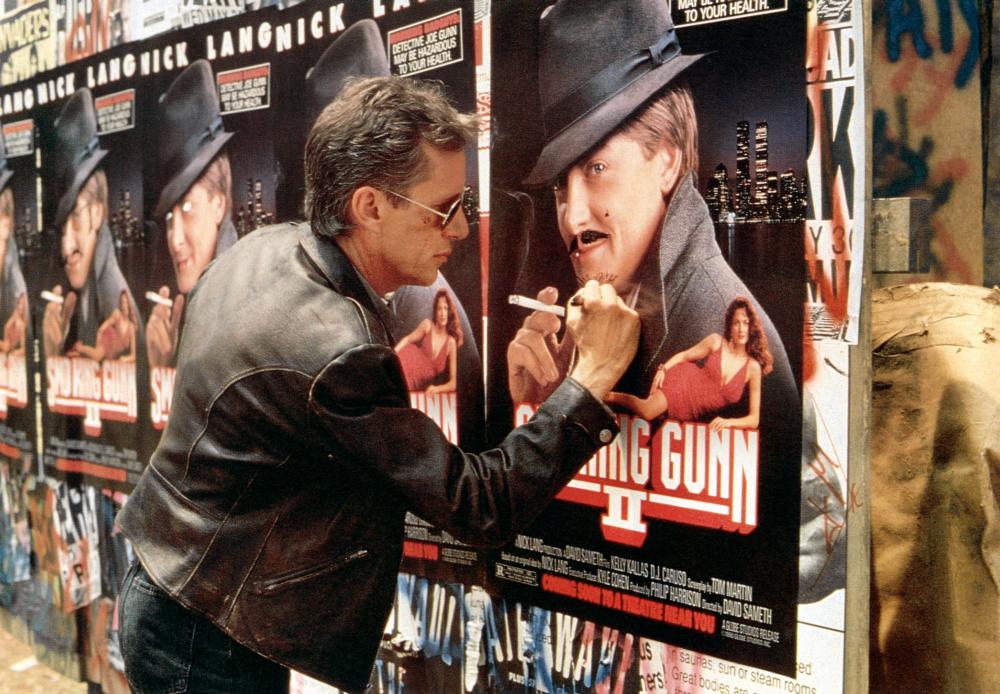
There was a time in the ’80s and ’90s when seeing either Michael J. Fox or James Woods on the cover of a VHS box at my local video store would guarantee a rental from me. Fox had been my favorite television star throughout the ’80s thanks to his performance as Alex P. Keaton on “Family Ties,” and I loved him in TEEN WOLF and the BACK TO THE FUTURE films. James Woods had become one of my favorite actors beginning in the latter half of the ‘80’s after I discovered his run of intense performances in films like COP, BEST SELLER, and TRUE BELIEVER. So, when THE HARD WAY paired these two favorites together in a “buddy-cop” film, it felt like a movie that had been made specifically for me. I recently upgraded my old DVD by purchasing the Kino Lorber blu-ray, so it was the perfect time for a revisit.
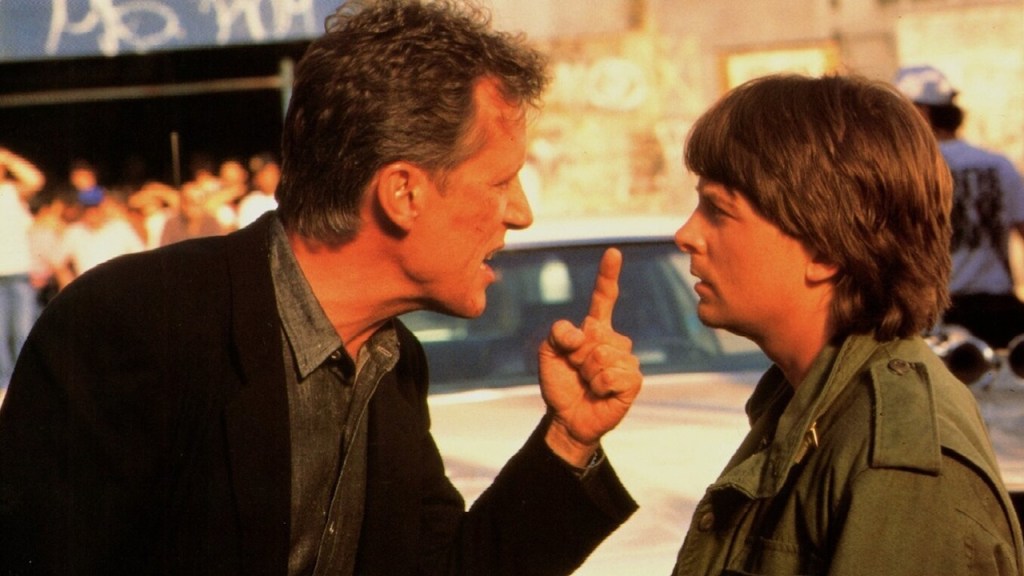
THE HARD WAY follows Nick Lang (Fox), a pampered Hollywood movie star who wants to prepare for a gritty new cop role by shadowing a real detective in New York City. Much to the frustration of badass Supercop John Moss (Woods), he’s forced by his starstruck Captain (Delroy Lindo) to show Lang around town and keep him out of any trouble. Even though he’s supposed to be protecting the megastar, Moss is also tracking a psychopathic killer known as “The Party Crasher” (Stephen Lang), and soon Nick Lang ends up smack dab in the middle of real danger.
By 1991, the buddy-cop formula had been going strong for a while, but director John Badham found a clever angle by pairing Michael J. Fox’s fantasyland “action star” with James Woods’ tough, no-nonsense New York detective. It sounds like a gimmick, and it is, but both the action and comedic elements somehow work.
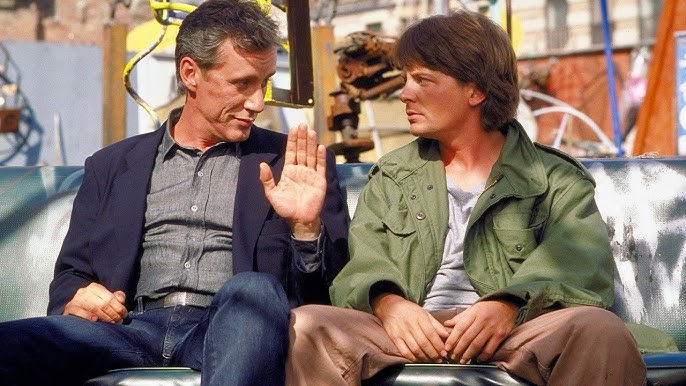
The performance of James Woods keeps the movie moving forward from start to finish. His John Moss is perpetually angry, sarcastic to a fault, and always seems one minute away from completely losing it. He’s also exceedingly tough when he has to be. Woods plays the character with so much energy that it’s impossible to look away, and nobody gets on his nerves like the Hollywood golden boy. Michael J. Fox is perfect as the shallow movie star, because he could be completely insufferable, but he ultimately brings enough charm and self-awareness to the role to make the character likable. There’s a particularly funny, running joke where different people keep telling his “undercover” character that he looks kinda like Nick Lang… only shorter, or in one case, whiter. At the end of the day, it’s the chemistry between Woods and Fox that makes THE HARD WAY such an enjoyable action comedy!
I did want to shoutout Stephen Lang as well. His “Party Crasher” is a memorable and crazy villain. For a film that leans heavily into the comedy, Lang’s unhinged performance actually feels dangerous, giving the movie some grit and edge when he’s on the screen. I love watching movies from this time period to see the parade of recognizable actors that always seem to show up. This one doesn’t disappoint as Annabella Sciorra, Luis Guzman, LL Cool J, Delroy Lindo, Christina Ricci, and even Penny Marshall appear, to name a few.
One of the best things about THE HARD WAY is that it never sits still for long, which does keep you from focusing too much on a couple of glaring plot holes. The filmmakers smartly keep things moving back and forth between the jokes and the big action scenes, and most of the time it all works. It doesn’t reinvent the buddy-cop film, and it’s not necessarily the first movie you think of in the genre, but I consider it an underrated gem, and I feel like it may have fallen through the cracks over the years. If you’re a fan of peak James Woods, or if you fondly remember just what a big deal Michael J. Fox was in the 80’s, this one is a must watch.
The lesson of this movie is always be nice because you never know when some rich person might suddenly give you a dream job.
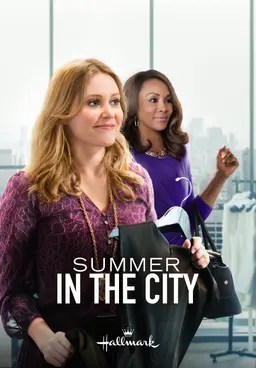
Taylor (Julianna Guill) owns a boutqiue in Ohio and is always honest with her customers, even if it means missing out on an easy sale. Rich New York fashion maven Alyssa (Vivica A. Fox) just happens to be in town and, when Taylor helps her pick out the perfect outfit for a meeting, she hired Taylor on the spot to come to Manhattan and manage her new store.
At first, Taylor is a fish out of water in Manhattan and she struggles to fit in with Alysssa’s high-powered style of business. Alyssa’s stores have to make a profit or she’ll lose all of her investors. Can Taylor bring in the money while being honest with her clients? Will a sidewalk sale appeal to Manhattan socialites? Will Taylor be able to bring hats back and also convince her salespeople to switch from all lack to knit dresses? Taylor also needs to find an apartment but then she meets a hunky realtor named Philip (Marc Bendavid) and they fall in love. Philip comes from a rich family and has a good job but what he really wants to do is open up a food truck. But before he can do that, he has to help Taylor adjust to living in the big city.
Think of it as being The Devil Wears Prada, just without the fashion sense or the wicked humor. Everyone raves about Taylor’s ability to match customers up with the right clothes but none of the outfits that she wears or picks out are really that spectacular or flattering. It’s a Hallmark movie, through and through. In real life, no one would hire someone they met two minutes ago to run their flagship star in Manhattan but this is Hallmaker, where everyone’s dreams come true!
I liked the performances of Marla Sokoloff and Natasha Henstridge. Marla is someone who was passed over when Alyssa hired Taylor and who now has to work under her at the store. Nastaha Henstridge is a rich customer. They were both believable and had some good moments. There were a few good shots of Manhattan, though the majority of the film was obviously shot somewhere cheaper.
It’s an okay movie if you’re in the mood for a Hallmark version of the Big Apple. Do you think it’s a smart idea to quit a high-paying job to open up a food truck? Really?