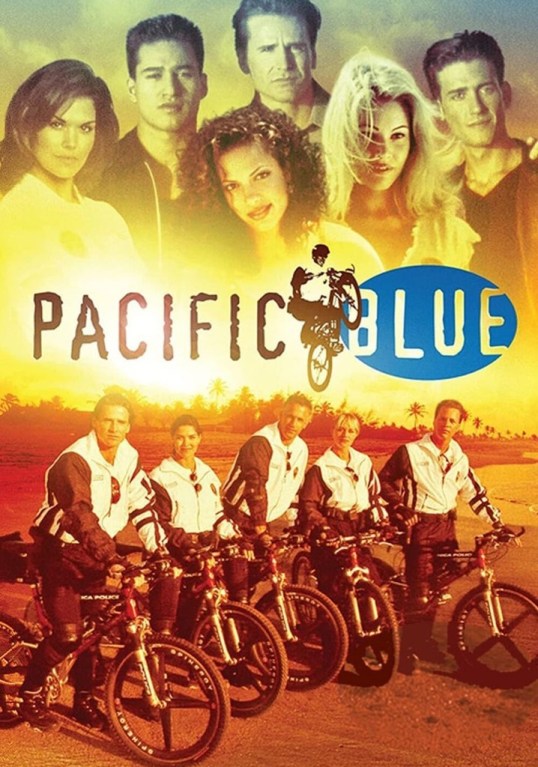
Welcome to Late Night Retro Television Reviews, a feature where we review some of our favorite and least favorite shows of the past! On Tuesdays, I will be reviewing Pacific Blue, a cop show that aired from 1996 to 2000 on the USA Network! It’s currently streaming everywhere, though I’m watching it on Tubi.
This week, the entire police force is worthless.
Episode 4.11 “Broken Dreams”
(Dir by Scott Lautanen, originally aired on December 6th, 1988)
While pursuing a pure snatcher, Cory accidentally runs over the victim on her bicycle. I know that probably sounds like a joke but that’s actually how this episode begins. It turns out that the victim is deaf and couldn’t hear Cory screeching at her to get out of the way. It turns out that Monica knows sign language. When Cory demands to know why Monica knows how to sign, Monica refuses to tell her.
(And really, it’s none of Cory’s business.)
Cory and a reluctant Monica investigate a series of robberies that have targeted deaf beggars on the pier. Cory learns that there is an entire deaf community that simply wants the hearing world to leave them alone. (Cory apparently doesn’t get out much.) Monica eventually admits that her mother is deaf and Cory eventually admits that Monica can be a good cop when she tries. That’s nice of Cory to finally since that was already established during Monica’s first episode. One gets the feeling that the show’s writers weren’t really sure what to do with Monica as a character. She started out as a badass undercover cop and then was quickly transformed into an emotionally unstable, selfish bicycle cop.
While Cory and Monica learn to work together, Bobby finds himself temporarily transferred to the horse patrol. (A member of the horse patrol is also reassigned to ride a bicycle.) Why exactly anyone thought this was a good idea, I don’t know. It turns out that Bobby can’t ride a horse to save his life. His supervisor thinks that’s hilarious but you have to wonder how many crimes are being committed while all the cops are standing around and laughing at Bobby?
Bobby and TC spend most of this episode trying to catch two kids who keep shooting off a potato cannon. They never really catch them, largely because Bobby can’t control his horses. Instead, the kids knock themselves out when they blow up a watermelon. Their reign of terror is ended but it’s not really because of anything done by the members of Pacific Blue. The kids themselves just go too ambitious.
The theme of this episode was that every cop was extremely incompetent. I’ve never been a “defund the police” person but, in this case, I doubt it would make much difference. Defund Pacific Blue!
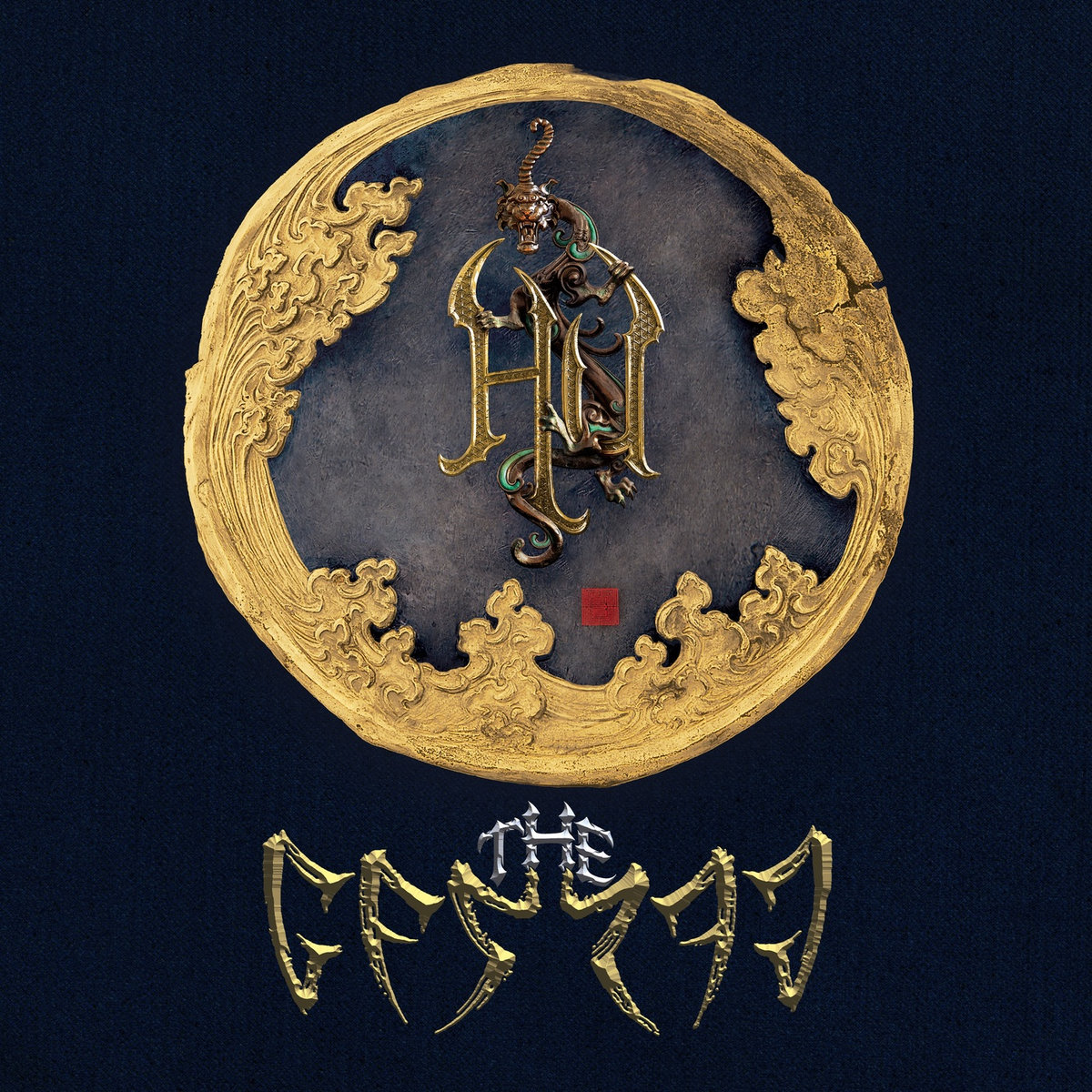
When you first hear about a band that mixes traditional Mongolian instrumentation with heavy metal, it sounds a bit like a novelty act. You might expect something that leans heavily into gimmickry, maybe a folk band that slapped some distortion on a track just for laughs. But then you actually press play on The Gereg, the 2019 debut album from The Hu, and you realize almost immediately that this is dead serious, incredibly heavy, and completely mind-blowing. The Gereg is a deeply emotional, fierce, and historic introduction to a band that has essentially invented a new subgenre they call “hunnu rock.” Instead of feeling like a patchwork quilt of mismatched ideas, the album flows with the kind of natural, organic power that makes you think these instruments were always meant to be played this loud.
Right from the opening track, The Gereg, you’re dropped into a world of thundering drums, droning strings, and that signature growling vocal style that immediately grabs your attention. The title track sets the tone perfectly: it’s epic, almost cinematic, with a sense of forward motion like you’re riding across steppes on horseback while a stadium-sized rock band backs you up. It’s not overly complicated in structure, but it doesn’t need to be—the power comes from the sheer force of the performance and the uniqueness of the sound palette. Those horse-head fiddles (morin khuur) and jaw harps (tumur khuur) might be ancient instruments, but in the hands of The Hu they sound like they were made for heavy rock all along.
Then comes Wolf Totem, arguably the song that broke The Hu internationally and the closest thing to an anthem on the record. The original version is a masterclass in building tension: it starts almost meditative, with throat singing and sparse instrumentation, then erupts into a massive, chant-driven chorus that feels like it could rally an entire army. There’s a reason this track racked up tens of millions of views on YouTube—it’s catchy, powerful, and utterly distinctive. The deluxe edition also includes a version featuring Jacoby Shaddix from Papa Roach, which leans more into a pop-punk/nu-metal vibe, but honestly, the original is the one that really captures the band’s essence. It’s the kind of song that makes you want to throw your fists in the air even if you have no idea what the lyrics mean (which, for most listeners, is probably the case).
The Great Chinggis Khaan slows things down just a touch but keeps the epic scale intact, sounding like something that could’ve fit on an early-’80s Iron Maiden record if Bruce Dickinson had studied khoomei throat singing. It’s semi-acoustic, more atmospheric, and carries a sort of reverence that matches its subject—the legendary Mongol leader Genghis Khan. There’s a dignity to this track that keeps it from feeling like a gimmick; it’s clear The Hu aren’t just playing with their heritage, they’re honoring it.
On the flip side, The Legend of Mother Swan brings a more folk-forward, almost Pogues-like energy, with a storytelling vibe that’s both haunting and melodic. It’s one of the more accessible tracks for listeners coming from a purely rock or folk background, with a structure that feels more like a traditional ballad. Meanwhile, Shoog Shoog is where the band really leans into the groove, built around a riff that wouldn’t sound out of place in an AC/DC or even a Neil Young jam. It’s fun, driving, and ridiculously catchy, with that throbbing bass and pounding drum work locking in perfectly with the twang of the tovshuur (Mongolian guitar).
Probably the most recognizable track after Wolf Totem is Yuve Yuve Yu, the song that essentially launched The Hu into viral fame back in 2018. It’s a full-throttle hunnu rock anthem with a chorus that’s impossible not to chant along to, even on first listen. Stripped of the throat singing and traditional instruments, it could easily pass as a Rammstein track—all stomping rhythm, industrial-tinged heaviness, and theatrical delivery. The deluxe version adds a remix featuring From Ashes to New that pushes it closer to nu-metal territory, but again, the original is the standout.
The Same and Shireg Shireg keep the momentum going, with the former offering a more introspective, almost bluesy take on the band’s sound and the latter doubling down on the rhythmic, almost trance-like quality that runs through much of the album. Shireg Shireg in particular has this hypnotic, circling riff that feels like it’s pulling you deeper into the album’s world. The acoustic version of this track on the deluxe edition is a nice touch, showing that these songs hold up even when stripped back to their core melodies.
Closing out the standard edition is Song of Women, a track that trades some of the aggression for a more melodic, art-rock feel that’s been compared to Peter Gabriel’s later work. It’s a bit of a curveball, with its swinging triplet rhythms and more sophisticated arrangement, but it works as a winding-down moment before the bonus tracks kick in. The deluxe version includes a remix featuring Lzzy Hale of Halestorm, which pushes it closer to modern metal, but the original’s subtlety is kind of refreshing after the bombast of the earlier tracks.
What makes The Gereg so compelling isn’t just the novelty of the fusion—it’s how well it actually works. The Hu aren’t just slapping throat singing over rock riffs and calling it a day; they’re writing genuinely strong songs that happen to feature ancient instruments and techniques. The production is clean but not over-polished, letting the raw energy of the performances shine through. And while the album is only about 40 minutes long (not counting the bonus tracks), it feels like a complete journey, moving from high-energy anthems to more reflective moments without ever losing its identity.
If I have one gripe, it’s that the album does start to blur together in the back half. Tracks like Upright Destined Mongol and Bii Biyelgee are solid, but they don’t hit with the same immediate impact as the first five songs. The formula—big riff, throat-sing verse, chant-along chorus, fiddle solo—starts to feel a little predictable by the time you reach the closing Tatar Warrior. That said, even a weaker The Hu song is still more interesting than 90% of the generic metalcore out there, and Tatar Warrior ends the album on a high note with a galloping, cinematic flourish that circles back to the opener. It’s a cohesive journey, even if it lags in the middle.
If you’re into rock, metal, folk, or just music that sounds like nothing else you’ve heard before, The Gereg is an absolute must-listen. It’s the kind of record that makes you reconsider what rock music can be, and it does it with a level of sincerity and power that’s hard to ignore. The Hu didn’t just make a debut album—they made a statement, and The Gereg still holds up as one of the most exciting and original rock records of the last few years.
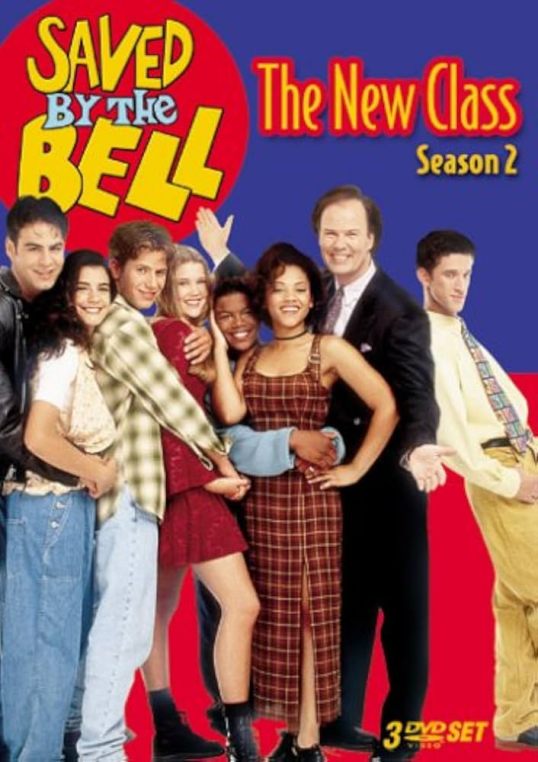
Welcome to Retro Television Reviews, a feature where we review some of our favorite and least favorite shows of the past! On Tuesdays, I will be reviewing Saved By The Bell: The New Class, which ran on NBC from 1993 to 2o00. The show is currently on Prime.
This week, it’s all for charity!
Episode 2.10 “A Matter of Trust”
(Dir by Don Barnhart, originally aired on October 8th, 1994)
Oh crap, it’s another country club episode.
It’s time for the annual charity event! The male employees of the club are auctioned off to various women bidders so that they can compete together in a contest. The winning team gets a hot air balloon ride. Mr. Belding makes it sound like a big deal but it’s hard not to notice that hardly anyone outside of the main group seems to take part. Apparently, this is a charity being funded exclusively by teenagers with summer jobs.
Bobby asks Megan to bid on him because he thinks it’ll make him more attractive to the woman who he hopes will buy him. Instead, Megan bids too much and she wins Bobby.
Lindsay wins her boyfriend, Tommy D. Lindsay is excited but Tommy is worried because he’s scared of heights.
Because Mr. Belding says that Screech has too many responsibilities to be auctioned off, Screech can only watch as his girlfriend, Alison, purchases Brian.
Brian’s girlfriend, Rachel, buys Hubert Dweebly (Mark David) because she feels sorry for him. That’s something that I would definitely do. Hubert then turns out to be a total perv who spends the entire competition pawing Rachel and trying to get her to kiss him. This would perhaps have been funnier if Sarah Lancaster had been older than 14 when she played Rachel.
Anyway, Screech gets jealous and tries to get Brian in trouble so that he can take Brian’s place. And Tommy doesn’t want to win so he tires to help Bobby cheat but everything gets screwed up and Tommy and Lindsay win anyways. It’s a typical Saved By The Bell episode, you can probably already guess everything that happens. Allison turns out to be very forgiving. Allison might not be that smart.
The main problem with this episode is that it asks us to believe that Allison would find needy, uberemotional, shrill-voiced Screech to be in any way attractive. During the second season, Dustin Diamond’s performance was nowhere near as obnoxious as it would eventually get. But his version of Screech was still too cartoonish to be taken seriously. His performance in this episode is …. well, it’s just bad. There’s no other way to put it. You really do find yourself thinking, “Allison and Brian actually make a lot more sense than Allison and Screech.”
It’s funny to me that the first Country Club episode was all about the importance of working hard when you have a job and we haven’t actually seen anyone doing their job since.
In honor of the late Norman Jewison, today’s scene that I love comes from my favorite film to have been directed by him.
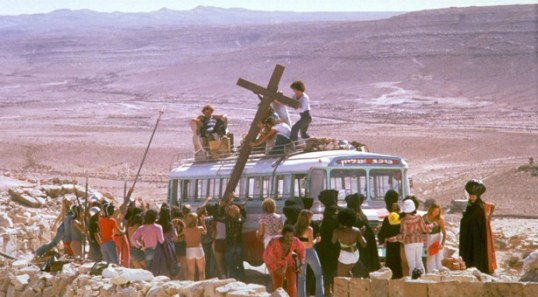
In this scene from 1973’sJesus Christ Superstar, Mary Magdalene (Yvonne Elliman) attempts to comfort Jesus (Ted Neeley) while Judas (Carl Anderson) tries to pull Jesus away from her. This scene showcases both Elliman’s angelic voice and Anderson’s ferocious intensity as Mary and Judas present two very different sides of a spiritual journey.
4 (or more) Shots From 4 (or more) Films is just what it says it is, 4 (or more) shots from 4 (or more) of our favorite films. As opposed to the reviews and recaps that we usually post, 4 (or more) Shots From 4 (or more) Films lets the visuals do the talking.
Today would have been Norman Jewison’s birthday. It’s time for….
4 Shots From 4 Norman Jewison Films
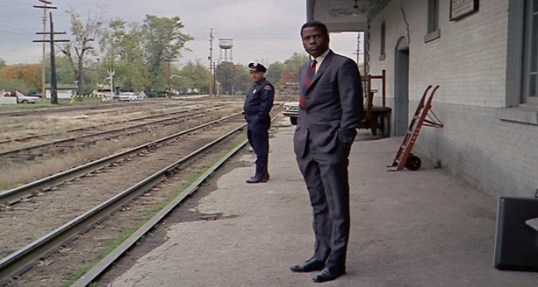
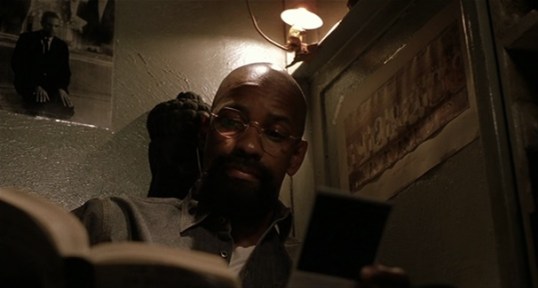
In The Heat of the Night (1967, dir by Norman Jewison, DP: Haskell Wexler)
Fiddler on the Roof (1971, dir by Norman Jewison, DP: Oswald Morris)
Jesus Christ Superstar (1973, dir by Norman Jewison, DP; Douglas Slocombe)
The Hurricane (1999. dir by Norman Jewison, DP: Roger Deakins)
This lengthy music video finds Phil Collins playing a drummer-turned-singer in the 1930s. With the help of his friend, a guitar player named Eric (and played, of course, by Eric Clapton), Collins auditions for a demanding theater owner (Jeffrey Tambor). While he auditions, he imagines what his life would be like if he becomes a success. He might even win an Oscar, probably for writing a song for a Disney film.
In the scenes in which Collins is acting opposite of Humphrey Bogart, Bogart is played by Robert Sacchi. Sacchi built an entire career out of his resemblance to Humphrey Bogart. Whenever a sitcom in the 80s or the 90s needed Humphrey Bogart to appear in a dream sequence, the call went out to Sacchi.
This video was directed by Jim Yukich, who directed several videos for Collins. Yukich’s name can be spotted on a clapboard when Collins is imagining what it would be like to be a film star.
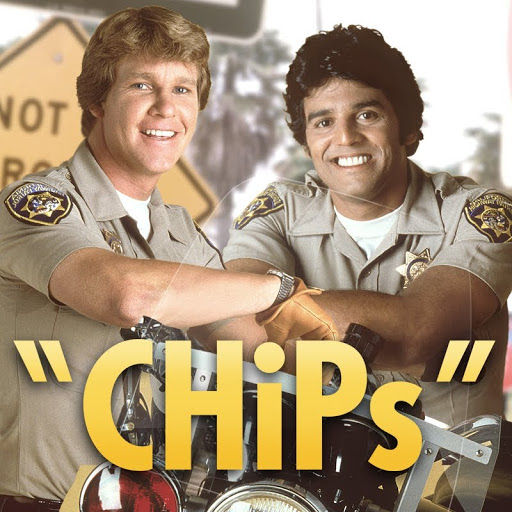
Welcome to Late Night Retro Television Reviews, a feature where we review some of our favorite and least favorite shows of the past! On Mondays, I will be reviewing CHiPs, which ran on NBC from 1977 to 1983. The entire show is currently streaming on Prime!
This week, the fifth season comes to an end.
Episode 5.27 “Force Seven”
(Dir by Leslie H. Martinson, originally aired on May 23rd, 1982)
When evil rich guy Nakura (John Rhys-Davies) steals a short-range missile from a military convoy, he informs the Mayor of Los Angeles that he will fire that missile at the city unless he’s paid a healthy ransom. The Mayor wants to send in the SWAT Team but one-eyed Lt. John Legarre (an eyepatch wearing Fred Dryer — yes, the star of Hunter) objects. Guns won’t do the job, Legarre explains. Why not send in Force Seven?
Led by Legarre, Force Seven is a secret division of the LAPD. Including Legarre, there’s only four of them. (So, why aren’t they Force Four?) Sly (Tony Longo — hey, Mad Dog from 1st & Ten) is tough and strong and also a ventriloquist. Cindy (Dona Kei Benz) is small but fast and doesn’t have a sense of humor. Rick Nichols (Tom Reilly) is a rebel cop who does things …. HIS WAY! What do they all have in common? They all know karate!
This doesn’t sound like an episode of CHiPs, does it?
Well, technically, it’s not. It’s a backdoor pilot. Ponch and Baker appear at the start of the episode, arresting an engineer who is carrying the schematics for the stolen missile. And they also appear at the very end of the episode, in which Getraer asks them if they remember that engineer they pulled over. However, neither Ponch nor Baker interact with anyone from Force Seven. I get the feeling that the Force Seven pilot was shot and then someone decided, “Why don’t we add Erik Estrada and Larry Wilcox and disguise this as an episode of CHiPs?”
Imagine if you were a CHiPs fan in 1982. It’s the night of the season finale. You turn on the TV because you want to watch motorcycle chases and car crashes. Instead, you find yourself watching Fred Dryer wearing an eye patch and Tony Longo using a puppet to discuss elements of Eastern philosophy. That’s one reason why backdoor pilots have never made sense to me. They always seem like they would have just ticked off anyone who was watching.
Force Seven did not become a show. From watching this episode, I think it probably would have been enjoyably dumb if it had led to a series. As I already mentioned, Fred Dryer wears an eye patch. Tony Longo is made up to look like Sylvester Stallone. (His character is even named Sly!) There’s something kind of amusing about two guys who are so big that they could obviously just take anyone out with one punch instead choosing to drag out every fight with karate.
(Amusingly enough, in Force Seven, the mayor of Los Angeles was played by former real-life mayor Sam Yorty, who ran for President in 1972. The police commissioner was played by Ed Davis, the real life former chief of the LAPD who was serving in the California State Senate at the time and who later ran for the U.S. Senate in 1986.)
It is a little sad that this was Larry Wilcox’s final episode of CHiPs. Fed up with Estrada getting all of the good storylines, Wilcox did not return for Season 6. (His replacement would be played by Force Seven‘s Tom Reilly, though as a different character.) For the first two seasons, Wilcox was the main character while Erik Estrada was the comedic sidekick. However, by the time season 5 rolled around, it was clear that the producers were far more interested in Estrada than Wilcox. As an actor, Wilcox wasn’t a showy as Estrada but he was more believable a cop. In his final episode, Wilcox gets not a grand goodbye but instead appears only in two brief scenes.
Next week, we’ll start the sixth and final season!
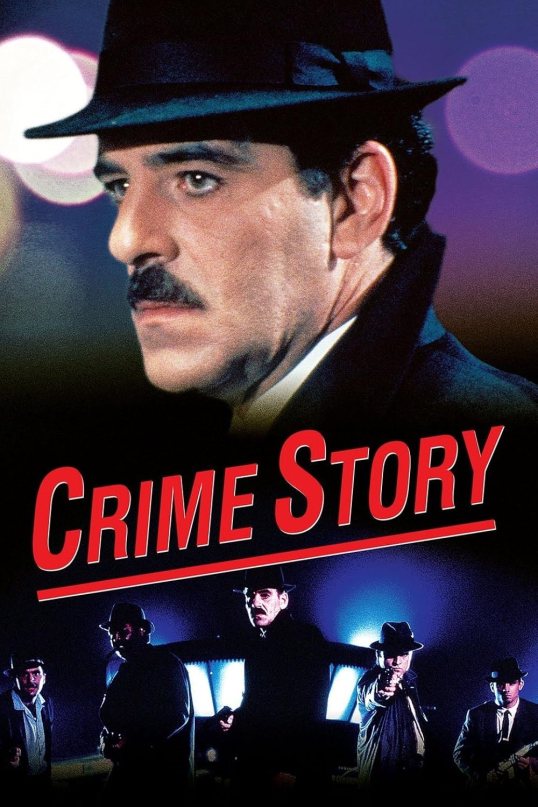
Welcome to Retro Television Reviews, a feature where we review some of our favorite and least favorite shows of the past! On Mondays, I will be reviewing Crime Story, which ran on NBC from 1986 to 1988. The entire show can be found on Tubi!
Our story so far….
Episode 1.11 “Crime Pays”
(Originally aired on December 5th, 1986)
This week’s show will be easy to review because it’s a clip show. It’s a bit more honest than most television clip shows. It doesn’t feature the character sitting around saying stuff like, “I’ll never forget that time we gunned down half of Luca’s crew.” Instead, the show’s narrator (Jack Angel) tells us that we’re going to see the story so far and then we see just that. The best thing about this episode is Angel’s tough guy voice.
It’s not bad for a clip show. It’s basically all of the Torello and Luca scenes without any of the filler. If nothing else, it lets us know which of the past plotlines we should remember and which ones we can safely forget. (Remember that Torello is obsessed with Luca. Remember that Luca is determined to become a big man in the mob. Don’t necessarily forget about David Arbams’s storylines but, at the same time, don’t worry if your memory’s a little fuzzy.) But it’s still a clip show, nonetheless.