Lisa’s Too Early Oscar Predictions For March


2013 oscars

It’s that time of month!  Here are my Oscar predictions from March.  As you can tell by comparing this month’s predictions to my predictions for January and February, I’ve learned a bit more about the films that will be coming out over the next few months and I’ve changed my mind on quite a few of the early contenders.

That said, at this time last year, no one had even heard of Moonlight.  At this point, almost all of these predictions are the result of wishful thinking, random guesses, and gut instinct.

Best Picture

Battles of the Sexes

Call Me By Your Name

Darkest Hour

Downsizing

Dunkirk

The Glass Castle

The Leisure Seeker

Logan

Mudbound

Wonderstruck

I went back and forth on whether or not to include Logan in my predictions.  On the one hand, I think it could be nominated.  On the other hand, regardless of how acclaimed it may be, it is also a comic book movie that came out in March.  In the end, since these predictions are mostly just for fun at this point, I decided to imagine a situation where — like Mad Max: Fury Road two years ago — the film’s box office carries it through the summer and it gets some needed support from the precursors in December.

(For the record, if I had decided not to include Logan, I would have replaced it with Blade Runner 2049.)


Best Director

James Mangold for Logan

Luca Guadagnino for Call Me By Your Name

Alexander Payne for Downsizing

Dee Rees for Mudbound

Joe Wright for Darkest Hour

If Logan were to get a best picture nomination, I imagine that James Mangold would get a nomination along with it.


Best Actor

Chadwick Boseman in Marshall

Tom Cruise in American Made

Gary Oldman in Darkest Hour

Miles Teller in Thank You For Your Service

Donald Sutherland in The Leisure Seeker

The two additions here are Teller and Sutherland.  Teller seems destined to be nominated some day, assuming that he spends more time making films like Whiplash and less time on stuff like Fantastic Four.  Despite a long and distinguished career, Sutherland has never been nominated.  In The Leisure Seeker, he plays a man suffering from Alzheimer’s.  It sounds like a role for which he could not only be nominated but for which he could also win.


Best Actress

Judi Dench in Victoria and Abdul

Brie Larson in The Glass Castle

Helen Mirren in The Leisure Seeker

Carey Mulligan in Mudbound

Emma Stone in Battle of the Sexes

The two new contenders here are Mirren and Larson.  Mirren always has to be considered to be a contender and Larson’s upcoming film, The Glass Castle, sounds like pure Oscar bait.


Best Supporting Actor

James Franco in The Masterpiece

Armie Hammer in Call Me By Your Name

Woody Harrelson in The Glass Castle

John Hurt in Darkest Hour

Patrick Stewart in Logan

Yes, I’m still predicting that James Franco will be nominated for playing Tommy Wiseau.  It may be wishful thinking on my part but so be it.  Every year, Armie Hammer seems to be on the verge of being nominated for something.  Harrelson is included as a part of The Glass Castle package.  Stewart is overdue for a nomination.  As for John Hurt, he was nominated but never won an Oscar during his lifetime.  Darkest Hour could provide the Academy with a chance to honor the man’s distinguished career, in much the same way that The Dark Knight allowed them to honor Heath Ledger.


Best Supporting Actress

Holly Hunter in The Big Sick

Melissa Leo in Novitiate

Julianne Moore in Wonderstruck

Kristin Scott Thomas in Darkest Hour

Naomi Watts in The Glass Castle

I don’t know much about Moore’s role in Wonderstruck but the film is directed by Todd Haynes, a filmmaker who previously directed Moore in her finest performance in Safe.

Oscar1

Sci-Fi Film Review: The Hunger Games: Mockingjay — Part 2 (dir by Francis Lawrence)


Mj

It’s finally over!

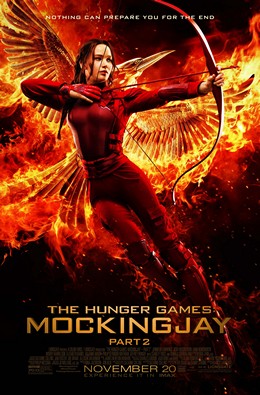
It probably sounds like I’m really excited that the final Hunger Games adaptation has been released.  It may sound like I’m happy that the saga of Katniss Everdeen and her life in Panem has finally come to an end.  And, to a certain extent, I am.  After everything that Katniss has been through, she deserves some peace and, fortunately, the series has ended before Jennifer Lawrence got bored with playing the role.  (To see what happens when actor gets bored with an iconic role, check out Daniel Craig in Spectre.)  Even though I think it can be argued that Mockingjay Part Two is the weakest of all the Hunger Games films, it still allows both Katniss and the actress who brought her to life to go out on a high note.

There’s a part of me that cringes a little when I think about all of the films that were released as a direct result of the success of The Hunger Games.  The Giver, The Maze Runner, Divergent, Tomorrowland, the list goes on and on.  I’ve reached the point where I can now say that I am officially sick of sitting through adaptations of Young Adult dystopian fiction.  And yet, I was still excited to see The Hunger Games: Mockingjay Part Two (even if that title is way too long and unwieldy).  Regardless of the number of mediocre films that it may have inspired, The Hunger Games franchise has always remained compelling.

So, how was Mockingjay Part Two?  Obviously, it doesn’t work as a stand-alone film.  The pacing is totally off, characters appear and disappear almost at random, and it’s all rather confusing.  If you haven’t seen the film that came before Mockingjay Part Two, I imagine that you would be totally confused by this film.  But, when viewed as the fourth part of one gigantic epic story, the whole thing is rather brilliant.

When the film opens, Katniss is still being used a prop in Alma Coin’s (Julianne Moore) revolution.  The majority of the film deals with her journey into and through the capital.  She wants to track down and assassinate President Snow (the wonderfully evil Donald Sutherland) whereas Coin just wants to use her as a symbol to solidify her authority.  As Katniss quickly realizes, there’s not much difference between Snow and Coin.  However, it takes one great tragedy for Katniss to truly understand the truth about the Alma Coin and her revolution.  If you’ve read the book, you’ll already know about and be prepared for that tragedy but it’s still a heart-breaking moment.

It’s also the most important moment in the franchise, one that reminds us that The Hunger Games has always been far more politically sophisticated (and thematically darker) than all of the films, books, and fan fic that has been inspired by it.  This is a seriously dark and, some would say, cynical movie and, as a student of history, I appreciated that.  I appreciated that Mockingjay didn’t try to force a happy ending on us and I also appreciated the fact that Mockingjay didn’t buy into the simplistic Manichaen worldview that is currently ruining worlds both real and cinematic.  The film’s final scene may be hopeful but it’s never naive.

It’s a bit unfortunate that Mockingjay had to be split into two separate films.  Mockingjay Part Two is full of exciting moments but there’s also a lot of scenes that feel like filler.  You get the feeling they were included to make sure that Mockingjay Part Two’s running team was equal to the other films in the franchise.  This is a film that features a lot of genuinely exciting action and some truly emotional moments.  It’s also a film that features a lot of speeches.  If only both parts of Mockingjay could have been released as one six hour film.  I would have watched it!

The film also features the final performance of Philip Seymour Hoffman, playing the rule of Plutarch.  Hoffman is not in many scenes and reportedly, he died before filming two of his biggest scenes.  Those scenes were rewritten and his dialogue given to other actors.  At one point, Woody Harrelson starts to read a letter that was written by Plutarch and it’s a sad scene because you’re aware that, originally, Hoffman was meant to deliver those lines in his trademark style.  As it is, Hoffman only appears in a few minutes of Mockingjay Part Two and he doesn’t do much.  But, when the film briefly features his bemused smile, you’re reminded of what a great actor the world lost when Philip Seymour Hoffman died.

Of course, the entire Hunger Games franchise has been full of great actors.  Jennifer Lawrence brought Katniss to wonderful and empowering life and one of the joys of Mockingjay Part Two is getting to see her bring the character’s story to a close.  But even beyond Jennifer Lawrence’s rightly acclaimed work, the entire cast of the franchise deserves a lot of credit.  I’ve always loved Donald Sutherland’s interpretation of President Snow and he’s at his best here.

For that matter, if there ever is another Hunger Games film or a Hunger Games spin-off, why not make it about Jena Malone’s Johanna Mason?  The way that Malone delivered her angry and frequently sarcastic dialogue was definitely one of the film’s highlights.

Regardless of whether there are any future films, The Hunger Games: Mockingjay Part Two is a worthy conclusion to a great story.

(By the way, as you may have guessed from the title of this post, December is science fiction month here at the Shattered Lens!  We hope you enjoy it!)

Previous Hunger Games Reviews:

  1. Quick Review: The Hunger Games (dir by Gary Ross)
  2. Review: The Hunger Games
  3. 44 Days of Paranoia: The Hunger Games: Catching Fire
  4. For Your Consideration: Jennifer Lawrence in The Hunger Games Mockingjay Part One

Embracing the Melodrama Part II #107: No Country For Old Men (dir by the Coen Brothers)


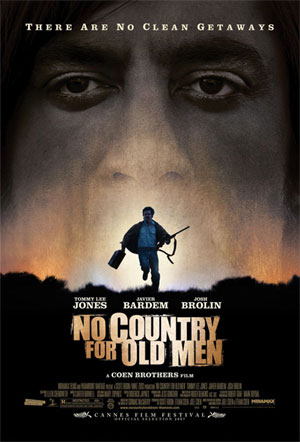
No_Country_for_Old_Men_posterI love my home state of Texas and I love movies. Therefore, it has always upset me that most movies set in Texas get the state totally wrong.  That’s not exactly shocking.  Unlike the rest of the states, there’s actually a lot of variety to Texas.  We’re a big state and we’re home to a lot of people.  Unlike some place like Vermont, Texas is a world all its own and it’s not surprising that most outsiders are incapable of getting their mind around that and instead find themselves embracing simple-minded clichés and stereotypes.  That’s perhaps why the best films about Texas tend to be ones that were actually made by Texans.  If you want to see the real Texas — flaws and all — than I suggest watching the films of Richard Linklater or perhaps Wes Anderson’s Rushmore.

And yet, it took two outsiders to write, produce, and direct one of the best films ever made about Texas.  The 2007 best picture winner No Country For Old Men was largely the work of two brothers from Minnesota, Joel and Ethan Coen.  It’s not only one of the best films about my home state but it’s also one of the best films of the past decade.

Based on a novel by Cormac McCarthy, No Country For Old Men tells the story of three determined men in South Texas whose lives are interconnected despite the fact that three of them spend almost the entire movie one step behind each other.  In fact, despite a few brief encounters where their paths meet, it can be argued that, at no point, do any of them truly interact with each other face-to-face.

Llewelyn Moss (Josh Brolin) is the type of person that anyone who has ever lived in Texas will have met.  He’s a hard-working, plain-spoken man, the type who drives a pickup, owns a gun, and likes to begin and end the day with a beer.  He lives in a trailer with his wife, Carla Jean (Kelly MacDonald, who may be Scottish but speaks here with an almost flawless Texas accent).  Llewelyn’s not a bad guy but he’s not as smart as he thinks and, like a lot of folks down here, he doesn’t like the idea of being told what to do.  In fact, he’d almost rather die for his trouble than admit to making a mistake.  When Llewleyn comes across the aftermath of a drug deal turned violent, he takes off with a suitcase that contains $2,000,000.  After barely escaping the remaining drug dealers (and the scene where Llewelyn is chased by a pit bull is a classic), Llewelyn sends Carla Jeans to stay with her sick mother and then he grabs the suitcase and heads over to the next county.  It quickly becomes apparent, to the viewers at least, that Llewelyn has absolutely no idea how to get out of the mess that he’s found himself in.

And it’s quite a mess because Anton Chigurh (Javier Bardem) has been hired to track down the money.  Perhaps one of the greatest movie villains of all time, Chigurh is an almost unstoppable force of death and destruction.  Chigurh pursues Llewelyn across Texas, killing almost everyone who he meets along the way.  Interestingly enough, just as Llewelyn continually makes excuses for his own greed, Chigurh also makes excuses for his murderous activities, seeming to obsess over the role of fate and chance.  Whereas Llewelyn refuses to give up the suitcase, even though it means that he’s putting his own wife in danger, because he insists that he can figure out a way to keep the money, Chigurh occasionally dodges responsibility for his own actions by flipping a coin and putting the blame on fate.

And finally, there’s Sheriff Ed Tom Bell (Tommy Lee Jones), who is both the most decent and the most ineffectual male character to be found in the film.  He’s an old-fashioned lawman, the type who, had this film been made in the 50s or the 60s, would have been played by Gary Cooper and would have both vanquished Chigurh and given Llewelyn and Carla Jean marriage advice as well.  In the world of No Country For Old Men, however, Ed is almost always one step behind both Chigurh and Llewelyn.  Instead of saving the day, Ed spends most of the movie shocked and saddened by the violence around him.  As the film draws to its conclusion, he’s left to wonder whether any one man can make a difference.  He’s left to literally wonder whether his area of South Texas has truly become no country for old men.

I recently rewatched No Country For Old Men on TCM and I was surprised to discover just how well this film holds up, even after repeat viewings.  If anything, the film actually improves on repeat viewings.  Once you know how the story is going to end (and, in a fashion typical of both the Coens and Cormac McCarthy, No Country For Old Men does not have a traditional ending), it’s easier to see all of the things that you may have been too overwhelmed to appreciate the first time, like Kelley McDonald’s performance as Carla Jean and Stephen Root’s cameo as Chigurh’s shady employer.

However, for me, the main reason that I appreciate No Country For Old Men is because it is one of the few films that actually manages to get South Texas right.  My mom was born and grew up in South Texas, in the town of Benavides to be exact.  I’ve spent a lot of time down there.  The portrait that No Country For Old Man paints of South Texas is not always flattering but it is largely accurate.  No County For Old Men captures both the region’s terrifying violence and its natural beauty.  It’s honest about the fact that there are men like Anton Chigurh but, at the same time, you occasionally meet an Ed Tom Bell as well.  And, of course, there’s a Llewelyn Moss in every town.  He’s the one who you meet and you hope — often against your better instincts — that he won’t get in over his head.

The Academy named No Country For Old Men the best film of 2007.  For once, the Academy was right.

For Your Consideration #6: Jennifer Lawrence in The Hunger Games: Mockingjay Part One


Mockingjay

Of the three The Hunger Games films released so far, Mockingjay Part One is definitely the weakest.  That does not, however, mean that it’s a bad film.  It’s just that it doesn’t quite reach the grandeur of the first film, nor does it have the same political immediacy as the second one.  However, there’s a lot of good things to be said about Mockingjay.  Julianne Moore is perfectly cast as the charismatic but faintly sinister Alma Coin.  Philip Seymour Hoffman’s performance reminds us of what a towering talent we lost earlier this year.  Donald Sutherland continues to transform President Snow into a villain for the ages.  Even though he’s only in the film for a few minutes, Stanley Tucci is perfectly vapid as Caesar Flickerman.

In fact, the only real problem with Mockingjay is that it’s so obviously a prologue to something bigger.  Much as with The Maze Runner, we watch Mockingjay with the knowledge that it’s only part one and that the majority of the issues raised by the film will not be settled until next year.  The film itself knows this as well and, as such, it lacks the immediacy and much of the excitement of the first two Hunger Games films.

But yet, with all those flaws in mind, Mockingjay still works and it’s largely because of Jennifer Lawrence’s performance as Katniss Everdeen.  Whereas the first two Hunger Games films featured a Katniss who was always at the center of the action and always taking charge of any situation that she found herself in, Mockingjay features a Katniss who has far less control over her fate.  (One of the neater ironies of the series is that Katniss was actually more independent as a prisoner of President Snow than as a “guest” of Alma Coin.)  In Mockingjay, Katniss finds herself forced — with more than a little reluctance — to become the figurehead for the entire revolution and the film’s best moments are the ones in which others debate how to best “market” her.  These scenes are all about how Katniss — who is now not only a celebrity but a political icon as well — deals with losing control over her own public image.  Considering that Jennifer Lawrence’s rise to fame and acclaim occurred just as abruptly as Katniss’s, it’s probable that — even more so than in the previous films — the actress brought a lot of herself to the character.

So, yes, I would argue that Jennifer Lawrence does perhaps deserve some awards consideration for her performance in Mockingjay.  However, she truly deserves it for the consistent quality of her performance throughout the entire Hunger Games franchise.  From the very first film, Jennifer Lawrence’s performance has been iconic.  Fiercely independent without giving into the usual cinematic clichés that come with that, Katniss Everdeen has provided an alternative role model for a generation of girls who, otherwise, might have only had the likes of Bella Swan to look up to.

If that’s not worthy of being honored, then I don’t know what is.

Embracing the Melodrama #42: Indecent Proposal (dir by Adrian Lyne)


This one is just dumb.

First released in 1993 and something of a perennial on AMC, Indecent Proposal tells the story of David (Woody Harrelson) and Diane (Demi Moore), two kids who meet in high school, get married, and end up living what, in Hollywood, passes for an average, middle class lifestyle — which is to say, Diane is a successful real estate broker, David is an architect, and they’re in the process of building their dream house on the beach.  (Just like everyone else you know, right?)  However, the economy goes bad, David loses his job, and they find themselves deep in debt.

Desperately, they decide to take a gamble.  Literally.  They go to Las Vegas and, at first, it seems like everything’s going to be alright.  David has a run of luck and makes a lot of money.  They make so much money that David and Diane end up having sex on top of it.  Now, I have to admit, if I ever won $25,000 dollars in Vegas, I would probably spread it on a bed and roll around naked on it as well.  But only if it was paper money.  Coins would probably be uncomfortable and I’d hate to end up with a hundred little impressions of George Washington’s profile running up and down my body.

But anyway, David and Diane make the mistake of sticking around in Vegas for a second day and they end up losing all of the money that they previously won and you better believe that when the chips are pulled away, Diane is shown trying grab them in slow motion while going, “Noooooo!”  Soon, David and Diane are sitting in an all-night diner and trying to figure out what to do next.  A waitress overhears them and sadly shakes her head.  Obviously, she’s seen a lot of movies about Las Vegas.

Anyway, this movie is too dumb to waste this many words on its plot so let’s just get to the point.  David and Diane meets John Gage (Robert Redford), a millionaire who offers to give David a million dollars in exchange for having one (and only one) commitment-free night with Diane.  David and Diane agree and then spend the rest of the movie agonizing over their decision.  Eventually, this leads to Diane and David splitting up, John Gage reentering the picture and proving himself to be not such a bad guy, and David eventually buying a hippo.

It’s all really dumb.

Anyway, I was planning on making quite a few points about this set-up but, quite frankly, this film is so dumb that I’m getting annoyed just writing this review.  So, instead of breaking this all down scene-by-scene, I’m just going to point out a few things and then move on to better melodramas.

1) Every character in the movie has a scene where they eventually ask what we (the viewing audience) would do if we were in a similar situation.  “Would you have sex for a million dollars?”  Well, let’s see.  Basically, the deal seems to be that you have safe, non-kinky, missionary position sex with a millionaire who you will never have to see again after you get paid.  And you’re getting a million dollars in return.  Would I do it?  OF COURSE, I’D DO IT!  It’s a million dollars, it’s just one night, and it’s not like you’re being asked to fuck Vladimer Putin or something.  If the film wanted to create a true moral dilemma, they should have cast someone other than Robert Redford as John Gage and they should have had Gage propose something more than just one night.  If Gage had been played by an unappealing actor (or perhaps if the film were made today with Redford looking as craggly as he did in Capt. America or All Is Lost) or if it had been a million dollars for Diane to serve as a member of Gage’s harem for a year, the film would have been far different and perhaps not any better but at least all of the subsequent angst would have made sense.

2) What really annoyed me is that, after Diane returns from her night with Gage, neither she nor her husband ever cash that million dollar check.  If you’re going to agree to the stupid deal, at least take advantage of it.

3) Finally, why would you accept a check for something like that?  Did Gage write, “For letting me fuck your wife” in the memo line?  Why not get paid in cash so, at the very least, you don’t have to deal with IRS?

Seriously, this movie is just dumb.

Original Cinema Quad Poster - Movie Film Posters


44 Days of Paranoia #31: The Hunger Games: Catching Fire (dir by Francis Lawrence)


For our latest entry in the 44 Days of Paranoia, we take a look at a film that might, at first, seem out-of-place in this series — The Hunger Games: Catching Fire.

Why is Catching Fire included in a series of films about conspiracy and paranoia?  Because, even more than the first film, Catching Fire is a film with a political subtext.  Beneath its franchise surface, Catching Fire is about how the government and media establishment manipulates its citizens and how, occasionally, the citizens are smart enough to manipulate them.

When reviewing Catching Fire, probably the first and most important question is how it compares to The Hunger Games.  Is it that film’s equal, is it better, or is it worst?  That’s not necessarily an easy question to answer because Catching Fire is a very different film from The Hunger Games.

One of the main reasons that I loved The Hunger Games is because, after a countless number of Twilight-style films that all featured teenage girls willingly sacrificing their independence for a boyfriend, The Hunger Games finally gave us a female protagonist who kicked ass and made no apologies for doing so.  Katniss Everdeen was defined by her mind and her soul and not her relationship status.  I loved The Hunger Games because, like Brave, it celebrated female strength and independence.  While I have always been willing to defend the Twilight films for what they are, I would not want my niece or my future daughter to grow up to be Bella Swan.  Katniss Everdeen, however, is a role model for both our times and our future.  The Hunger Games was all about celebrating girl power and, for that reason, I loved it.

Katniss Everdeen is still a worthy and independent role model in Catching Fire but the film itself is far more political than The Hunger Games.  Whereas The Hunger Games was all about establishing Katniss as a strong woman, Catching Fire is about how that strength can be used to challenge the status quo.

As the film opens, Katniss (played, of course, by Jennifer Lawrence, who I have such a girl crush on) and Peeta (Josh Hutcherson) have returned to District 12 after having “won” the 74th Hunger Games.  Realizing that their act of defiance could lead to a full-scale revolution, President Snow (Donald Sutherland) attempts to co-opt their rebel image.  He orders that Katniss and Peeta continue to pretend to be in love so that, during their Victory Tour, the citizens of the other districts will be convinced that Katniss’s actions were the result of love and not of defiance.

This is actually a very interesting premise and definitely that shows a lot more sophistication than what we, as filmgoers, have been conditioned to expect from a movie based on YA fiction.  While thousands of films have depicted love as a form of political rebellion, Catching Fire is unique in suggesting that love (or the appearance of love) can also be used to maintain political suppression.

During the Victory Tour, both Katniss and Peeta balk at having to play the roles that Snow has assigned them.  While at District 11, Katniss pays tribute to Rue and then watches in horror as Snow’s “peacekeepers” executes a man who dared to hold up the three-finger salute.  Trying to avoid further violence, Katniss agrees to become engaged to Peeta.

Snow, however, realizes that, as long as Katniss is alive, she’ll be a threat to him.  He announces a special all-star edition of The Hunger Games, in which all the tributes will be past winners.  Since Katniss is the only female tribute from District 12 to have ever survived the Hunger Games, she knows that she’s going to have to compete for a second time. When Haymitch (Woody Harrelson) is selected to be the male tribue, Peeta immediately volunteers to go in his place.

The first hour of Catching Fire, which deals with the media and political manipulation surrounding the Victory Tour, is brilliant.  The second half, which features Katniss and Peeta competing in their second Hunger Games, feels a bit familiar and rushed.  It’s not that the second half of the film isn’t good.  It’s just far more predictable.

But here’s what’s important — everything that worked about The Hunger Games works for Catching Fire.  Josh Hutcherson seems a lot more confident here than he did in the first film, Donald Sutherland makes for a great villain, Stanly Tucci is a lot of fun as Caesar Flickerman (what a great name!), and the film is a visual feast.  Among the new cast members, Jena Malone is perfectly cast as tribune Johanna Mason while Philip Seymour Hoffman is properly Philip Seymour Hoffmanish as the new director of the Hunger Games.

However, the film belongs to and works because of Jennifer Lawrence.  Whether she’s playing Katniss or Mystique or Ree Dolly or Tiffany Maxwell or Rosalyn Rosenfeld, Jennifer Lawrence kicks ass.

Yes, that is my official review as a film critic.

Jennifer Lawrence kicks ass.

Other Entries In The 44 Days of Paranoia 

  1. Clonus
  2. Executive Action
  3. Winter Kills
  4. Interview With The Assassin
  5. The Trial of Lee Harvey Oswald
  6. JFK
  7. Beyond The Doors
  8. Three Days of the Condor
  9. They Saved Hitler’s Brain
  10. The Intruder
  11. Police, Adjective
  12. Burn After Reading
  13. Quiz Show
  14. Flying Blind
  15. God Told Me To
  16. Wag the Dog
  17. Cheaters
  18. Scream and Scream Again
  19. Capricorn One
  20. Seven Days In May
  21. Broken City
  22. Suddenly
  23. Pickup on South Street
  24. The Informer
  25. Chinatown
  26. Compliance
  27. The Lives of Others
  28. The Departed
  29. A Face In The Crowd
  30. Nixon

Trash Film Guru Vs. The Summer Blockbusters : “Now You See Me”


now_you_see_me_xlg

Maybe it’s unfair to saddle director Louis (Transporter) Leterrier’s new-ish “caper” drama Now You See Me with the “blockbuster” label, since it obviously doesn’t have the budget (or hype machine surrounding it) of an Iron Man 3 or a  Man Of Steel, but its surprisingly healthy take at the box office in recent weeks has it hedging into “blockbuster” territory in terms of its gross ticket receipts, it’s got a “blockbuster”-caliber cast, and it definitely falls into the category of lightweight, fun, summer entertainment, so — let’s just roll with it.

And let’s not take that “lightweight, fun, summer entertainment” statement as a jab, either, please, because Now You See Me is a solid little piece of film-making that anyone associated with it can (and should) be damn proud of. It’s just not particularly “deep” in any thematic sense.

But so what? It’s been awhile since Hollywood served us up a good “caper”-style thriller — the last genuinely superb one that comes to mind is Roger Donaldson’s criminally-underappreciated The Bank Job, and that’s getting to be a good few years ago now — and even though this is a film that doesn’t aim for the same level of “ooh”s and “aah”s of the latest Marvel or DC celluloid comic-book adaptation, it’s got more genuine heroics than most of them, and is every bit as finely-calculated a crowd-pleaser as anything they’ve sent down the pipeline in recent years, as well.

The all-star cast definitely helps to elevate a script that at times belabors its points with admittedly necessary but occasionally clumsy “info-dump” scenes and features a smattering of dialogue that can best be described as “clunky,” and while none of the actors involved are exactly stretching their abilities into new and unexplored territory, there’s something to be said for knowing what the folks you hire are best at doing and then getting out of the way and letting them do it.

To that end, Jesse Eisenberg tackles his role as fast-talking, arrogant illusionist J. Daniel Atlas with aplomb; Woody Harrelson delivers a solid, workman-like piece of acting as mentalist Merritt McKinney; Isla Fisher gives us a nice turn as former-magician’s-assistant-turned-headliner Henley Reeves; Dave Franco projects cool confidence as safe-cracker/lock-picker/con artist extraordinaire Jack Wilder; Mark Ruffalo gives another “believable everyman” performance as Special Agent Dylan Rhodes, the man tasked with somehow getting some charges to stick on our intrepid foursome, who have come together and billed themselves as “The Four Horsemen,” after they apparently rob a bank in front of a Las Vegas show audience (or do they?); Michael Caine gives it his usual grade-A “go” as the group’s  multi-millionaire benefactor/promoter/future victim; Morgan Freeman essentially plays himself in his guise as Through The Wormhole host, albeit with quantum physics being replaced with magic trick “debunking” as his gig; Melanie Laurent cuts a satisfying European-woman-of-mystery figure as Alma Dray, Ruffalo’s reluctant Interpol partner/potential love interest — heck, there are even notable minor performances here from Michael Kelly and Common as two of the cops who are down a few rungs on the investigative totem pole.

It’s not like the film doesn’t have any sort of statement to make about the general state of the world, either — to the contrary, “The Four Horsemen” take great pride in ripping off those who have ripped off society, and represent the kind of folk heroes the world could surely use in the wake of the mortgage crisis and the atrocious Wall Street bailout it gave birth to. Think of them as modern-day Robin Hoods with a flair for the dramatic and plenty of  flat-out amazing tricks up their sleeves.

Still, the art of deception being the constant theme here, don’t be shocked if the reasons for our protagonists’ “crimes” turn out to be a lot more personal than they first appear to be (hey, I did say this movie wasn’t particularly “deep,” remember? Not even when it looks like it might be.) . I think I’ll just leave it at that, which might even be saying a little too much already.

Leterrier, as we’ve come to expect, keeps things moving at a fairly expert clip, throws in some nifty little visual tricks along the way, and most definitely delivers the goods in the film’s more action-heavy scenes, and while he handles the script’s quasi-trippy/metaphysical conclusion quite nicely in my view, I think a lot of folks will still find it a bridge too far, and frankly, for a movie that’s all about sleight of hand, you’ll still most likely see the “surprise character revelation” at the end coming from a mile off.

But ya know what?  This is such an expertly-crafted piece of populist entertainment that I don’t think you’ll mind its admittedly-glaring weaknesses, simply because you’ll be too busy smiling from ear to ear. And that, perhaps, is its greatest trick of all.

There will surely be better films than Now You See Me released in 2013. Heck, there already have been. But I doubt there will be any that are more fun.

Trailer: The Hunger Games: Catching Fire (Exclusive Teaser)


CatchingFire

The next installment in The Hunger Games series, Catching Fire, looks to return later this year with a new director taking over the reins. Gary Ross began the series as director of the first film and the film enjoyed massive success and very positive reception from the critics-at-large. So, it was surprising news that Ross wouldn’t be returning to continue the series and instead Lionsgate replacing him with Francis Lawrence (Constantine, I Am Legend).

This sequel brings back everyone who survived the first film and adds some new faces in the cast such as Philip Seymour Hoffman, Toby Jones, Jena Malone and Jeffrey Wright.

The Hunger Games: Catching Fire is set for a November 22, 2013 release date.

Quick Review: The Hunger Games (dir. by Gary Ross)


The Hunger Games is something of an event film, which means that this may not be the only review for the movie. Especially since I haven’t seen Battle Royale, which many say The Hunger Games is very similar to, there’ll probably be a number of viewpoints to this movie.

Update: leon3duke has added his own in-depth review of The Hunger Games. Definitely worth reading.

I consider myself fortunate that I knew next to nothing about the movie adaptation to Suzanne Collins “The Hunger Games” or the novel itself. When I purchased my ticket for a midnight showing, there were only about 10 people around, many of them wearing T-Shirts with the logo. However, when the movie house started asking for the tickets, that 10 turned into 30. By the time the movie started, the 30 became about 50 or so. Not exactly a packed spectacle for where I reside, but I know the ones in Manhattan were.

If any comparisons can be made, I guess it could be to 1987’s The Running Man, with maybe a dash of The Truman Show, but The Hunger Games stands on it’s own because it’s protagonist, Katniss Everdeen, comes across as being in danger every step of the way. That’s enough to keep the audience enthralled. Arnold, not so much.

So, what are the Hunger Games? It’s overall a really great film with a strong female lead in Jennifer Lawrence.

In the future, the nation goes through a number of changes. Wars, famine and poverty ravage the land and eventually, a sense of peace is found. Panem, as the country is called, is divided into 12 Districts. Much like Joss Whedon’s Firefly, the land is broken between the rich who live in the Capitol and the Districts, which live off of a bartering system and are extremely poor. At one time, a 13th Division challenged the rule of the Capitol and had to be taken down. As punishment and to remind the other districts of how great the Capitol is, each District picks one boy and girl between the ages of 12 and 18 to participate in a last one to the death event known as the Hunger Games.

Lawrence (X-Men First Class, Winter’s Bone) easily carries the film as Katniss Everdeen, a resident of District 12, who is great at Archery and uses her skills to hunt for food for her family. When her sister, Prim (Willow Shields) is chosen as a Hunger Games Tribute, she volunteers to take her place. Leaving behind her mother, sister and best friend (Liam Helmsworth), Katniss is taken to the Capitol to participate. Joining her is another member of her District, Peeta (Josh Hutcherson).

Katniss and Peeta are then introduced to their team, lead by Haymitch Abernathy (Woody Harrelson), Effie Trinket (a nearly unrecognizable Elizabeth Banks), and Cinna (Lenny Kravitz). Harrelson pretty much nails every scene he’s in, something I’ve noticed lately with a lot of his roles. I found it interesting as well to see Lawrence play opposite Lenny, considering she only recently acted alongside his daughter Zoe in X-Men: First Class last year. He actually does well with the time he has on-screen.

That there is the core of the film. Can Katniss survive The Hunger Games? There’s much more to that, but in originally writing this, I ended up explaining most of the film.

The movie does get bloody. It doesn’t try to make light of any of the situations the characters are in, but being a PG-13 film, it doesn’t turn into anything on the lines of a Saw film (which makes me wonder how that would have turned out).

Can I take the kids to this one? 

You can, yes, but note that even though this based on a story written for young audiences, it does have its share of blood and violence. Then again, considering that you can get the same kind of violence from video games these days, I’d say only the really young may be bothered. If there’s any problem regarding kids, it could be a patience factor. Kids expecting non stop action may get a little bored, but if they already read the book, they probably won’t have any problems with it at all and know what to expect. In terms of sexual situations, there aren’t any.

How long is the film? Am I going to yawn? 

The Hunger Games clocks in at about 142 minutes (2 hours and 22 minutes). The first half of the film needs to set up for the second half (The Games themselves), and while it doesn’t move slow, it takes it’s time in letting the audience know what the stakes are for them and to show the contrasts between the districts and the Capitol. Think of it like Batman Begins. Before we get to see Batman, we had to be able to see Bruce Wayne go through his training. There’s not action all the way through the movie, which actually works in it’s favor. The same kind of applies for The Hunger Games. If that made you yawn, then that first half of this film may have the same effect. I loved it, myself, because a lot of that information felt necessary to me, but what works for me may not work for everyone else.

Overall, The Hunger Games was definitely worth it, at least for an initial viewing. I hope that if they go with a sequel (given the success of this one, that’s pretty much guaranteed), they expand more on Panem and some of the events that brought things to where they are now.

Quickie Review: 2012 (dir. by Roland Emmerich)


[guilty pleasure]

When one sees the name Roland Emmerich attached as the director to a film on any given year one almost has to audibly groan. He’s not on the level of Uwe Boll in terms of awful films, but he does give Michael Bay a run for the title of worst blockbuster filmmaker. It’s quite a shame to see Emmerich’s films one after the other get worse and worse. This was a filmmaker who showed some talent in the scifi-action genre with such cult classics as Universal Soldier and Stargate. He would reach his apex with the popcorn-friendly and thoroughly enjoyable Will Smith alien-invasion flick, Independence Day. Since reaching those lofty heights each successive film has been more groan-inducing and worse than the previous one. For a brief moment in 2009 this would change as he finally succeeded in destroying the world that he had only hinted at with previous films such as ID4, Godzilla and The Day After Tomorrow. The film 2012 was released in late-2009 and, while it was universally lambasted by critics and a large portion of the public, I thought it was his most fun film since ID4.

2012 literally has the world greet it’s apocalypse according to the Mayan Calendar in the year 2012. The first forty or so minutes has Emmerich explaining the details of how the world will end in 2012 either through the film’s lead scientist (played by Chiwetel Ejiofor) or through a conspiracy-theorist played with manic glee by Woody Harrelson. The bulk of this film is almost like disaster porn for film lovers who are into disaster flicks. We have earthquakes which sends the whole California coast sliding into the Pacific. Supervolcanoes erupting in what is the Yellowstone National Forest right up to mega-tsunamis that dwarf the highest mountain ranges.

The cast might be called an all-star one, but I rather think it’s more a B-list with such names as John Cusack playing a goofy everyman who must save his ex-wife and two young children right up to Danny Glover playing the lame duck of lame duck presidents (I guess Morgan Freeman was unavailable or already done with disaster films after doing Deep Impact). The performance by this cast ranged from alright to laughable, but even with the latter the sense of fun never wavered. This was a flick about the world ending and Emmerich delivered everything promised.

It’s the scenes of world devastation which made this film so enjoyable for me and has become one of my latest guilty pleasures. No matter how bad the dialogue got or how wooden some of the acting came off the sense of wonder from Emmerich destroying the world on the big-screen and on my TV made this film fun to watch. Maybe those who hated it or thought it was trash were aiming to high. I will admit that the film is trash, but in a good way that past enjoyable disaster flicks of the 70’s were fun. It took the premise serious enough, but the filmmakers involved didn’t skimp on over-the-top destruction. I mean this film’s premise means we get to see in high-definition billions of people die as the planet decides to suddenly switch things around to get a better feng shui vibe to the planet.

Scenes such as the mega-tsunamis topping over the Himalayan mountain range was awesome. But even that scene couldn’t top the super-quake which destroys Los Angeles around Cusack’s character who tries to outdrive the quake and the resulting chasms which appear to chase his limo with is family inside. Seeing Los Angeles and the bedrock it’s on upheave and slide into the Pacific was one of the best disaster porn sequences I’ve ever seen and I don’t see anything topping it in the near future.

2012 as a Roland Emmerich production already has a black mark on it because of his reputation as a filmmaker, but for once he actually made a film that was able to surpass all the glaring flaws from it’s one-note, stereotypical characters to it’s wooden dialogue. He did this by making a film with disaster scenes of such epic spectacle that one had no choice but to just sit back and enjoy the ride. It’s a bad film, but it sure was a fun ride. This is why I decided on a fan-made trailer which best exemplifies this film and not the one made by the studio.

I eagerly await the sequel I fully expect from Hollywood: 2013: Disaster Strikes Back.