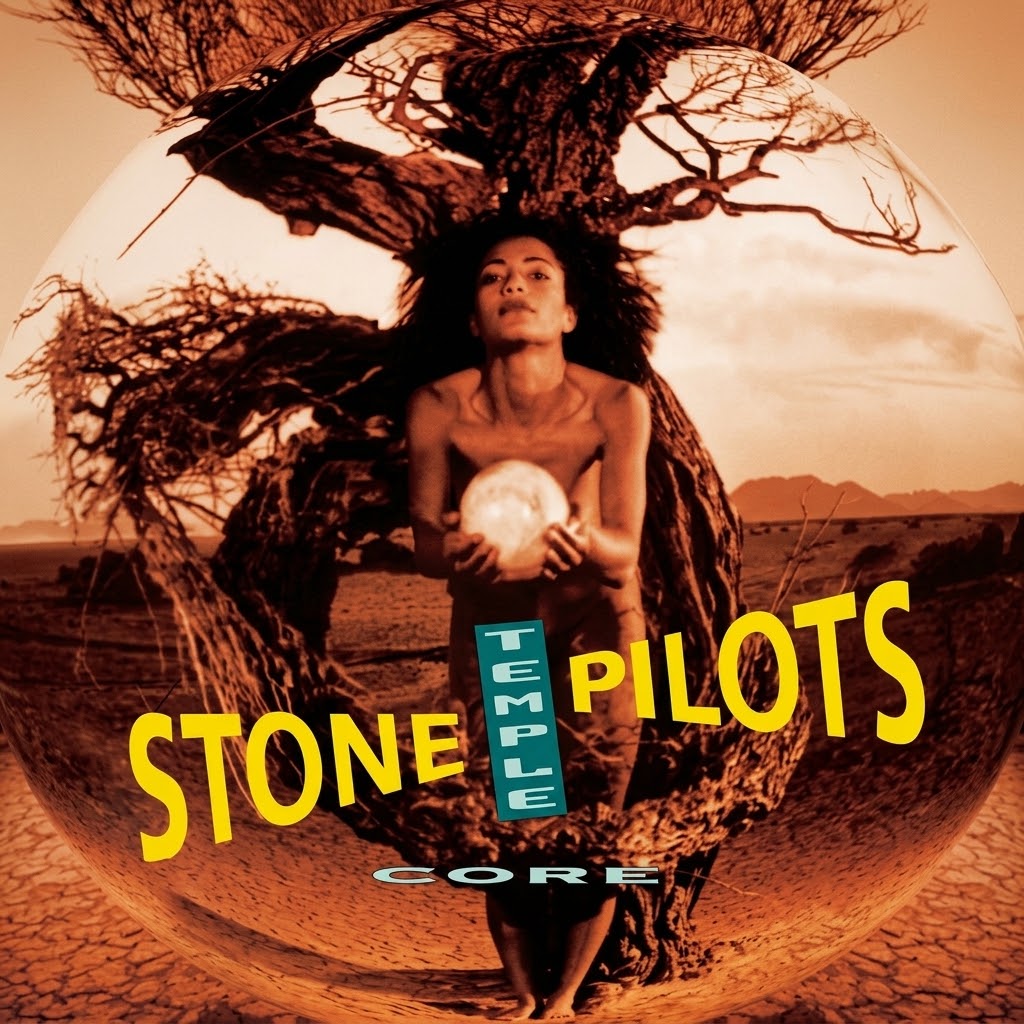
Core is one of those debut albums that has spent decades being celebrated, dismissed, rediscovered, and reassessed. Released in 1992, Stone Temple Pilots’ first full-length album arrived at the exact moment alternative rock stopped being a subcultural phenomenon and became the dominant sound on rock radio, MTV, and mainstream youth culture. Nirvana had already detonated the commercial landscape with Nevermind, while Soundgarden were about to reach even greater heights with Superunknown. Along with those records, Core became part of the broad grunge trifecta that dominated the airwaves in the early 1990s: Nirvana’s Nevermind, Soundgarden’s Superunknown, and Stone Temple Pilots’ Core. The comparison was never perfectly tidy—Stone Temple Pilots came from Southern California, not Seattle—but these albums were all central to the era’s hard-rock mainstream.
That success also made Stone Temple Pilots an easy target. A number of critics at the time treated the band as grunge followers rather than innovators, accusing them of chasing the sound popularized by Pearl Jam, Alice in Chains, Nirvana, and Soundgarden. On a superficial level, it is easy to see why. Core has the huge distorted riffs, brooding low end, emotionally damaged lyrics, and intense vocals that became closely associated with early-1990s alternative rock. But that criticism overlooks what the record actually does. Stone Temple Pilots were never just a watered-down version of one Seattle band. They drew from classic blues-based hard rock, psychedelic rock, punk, glam, funk, and metal, then pushed those influences through the darker, heavier sensibility of the grunge era.
The opening track, Dead & Bloated, immediately establishes that mixture. Dean DeLeo’s guitar entrance has a bluesy, muscular character, but its heaviness gives the song a sinister edge. Scott Weiland comes in sounding low, theatrical, and almost predatory, stretching out phrases as if he is trying to make every line uncomfortable. It is a grimy introduction, but the song also has a groove that prevents it from becoming merely blunt-force aggression. Robert DeLeo’s bass is especially important here. Rather than simply following the guitar, it moves around the riff and gives the track an elastic, almost funky pulse. Eric Kretz’s drumming locks the entire thing together with a direct, powerful attack.
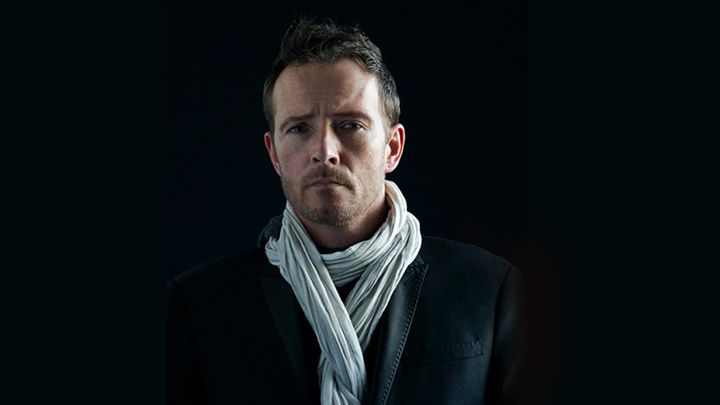
That chemistry is one of the best things about Core. Scott Weiland was a magnetic frontman, but Stone Temple Pilots were not a band built around one personality. The DeLeo brothers and Kretz give the album its body. Robert DeLeo’s bass lines are melodic, active, and frequently more adventurous than the average early-1990s hard-rock bass part. Dean DeLeo’s guitar playing is equally crucial. He had a knack for writing riffs that were heavy without being generic and melodic without becoming soft. His parts tend to have little twists in their chord voicings, transitions, and lead flourishes, making even the album’s most familiar songs sound more carefully constructed than they first appear.
Wicked Garden is an early showcase for those strengths. Its riff is dark, heavy, and dirty, but the arrangement has a memorable swing rather than the mechanical stomp of conventional metal. Weiland’s vocal melody is catchy even when the lyrics feel vague and unsettling, and that contrast is a big part of the song’s appeal. Stone Temple Pilots could make music that sounded menacing while still understanding the value of a hook. Wicked Garden has enough weight to satisfy listeners looking for something aggressive, but it also has the kind of melodic shape that made the band a natural fit for radio.
Then comes Plush, the song that turned Stone Temple Pilots into a major rock band. Its opening guitar figure remains one of the defining sounds of the decade, and the song’s slow-burning verse-to-chorus escalation is nearly flawless. Plush was played so constantly in the 1990s that it can be easy to forget just how strong it is as a piece of songwriting. The track is built with real patience: the verses maintain a tense, shadowy mood, then the chorus opens up without feeling like a cheap attempt at a sing-along payoff. Weiland’s vocal is wounded, seductive, ragged, and emotionally distant all at once. It feels personal without being overly specific, which helped give the song its strange staying power.
Plush captures much of what made Core commercially successful. It has the heaviness of grunge, the accessibility of classic hard rock, and a melodic sophistication that suggested Stone Temple Pilots were capable of more than simply riding a trend. Still, Core is more interesting when it moves away from the songs that became permanent radio staples. Creep, for example, offers a softer and more vulnerable side of the band. Its acoustic-led arrangement, restrained rhythm, and melancholy vocal give the song room to breathe. It is less immediate than Plush, but it reveals that Stone Temple Pilots could create atmosphere without relying on volume or distortion.
Sex Type Thing is the album’s most confrontational track and remains one of its most complicated. Musically, it is built around a massive, stomping riff and an aggressive rhythm section that makes it feel almost physically hostile. Weiland’s voice is harsh, snarling, and deliberately ugly. The song was often misunderstood as a celebration of sexual aggression, but its perspective is more accurately read as an embodiment of predatory entitlement. The narrator is not meant to come across as admirable; he is meant to sound grotesque. That distinction did not always register in the way the song was marketed or consumed, especially when it became a rock-radio staple, but the ugliness in the performance is central to its effect.
While many listeners understandably gravitated toward the popular tracks—Plush, Creep, and Sex Type Thing—the best song on Core, to my ears, is Where the River Goes. Those singles each represent an essential piece of the album’s appeal: Plush is the enormous melodic breakthrough, Creep is its most reflective and vulnerable moment, and Sex Type Thing is its rawest burst of aggression. But Where the River Goes feels like the point where Stone Temple Pilots’ full musical identity comes into focus. It is less obviously designed for radio, more ambitious in shape, and more revealing of the different traditions the band could pull together.
What makes Where the River Goes so effective is how naturally it meshes the bluesy hard-rock language of the 1970s with a slowed-down, heavier form of late-1970s and early-1980s punk influence, then adds the metallic force of the mid-to-late 1980s. Its punk element is not expressed through the kind of frantic speed or high-energy attack usually associated with punk. Instead, the song takes punk’s tension, stripped-down bluntness, and confrontational edge, then slows it into a thick, stalking groove. The result has classic-rock swagger, but it never settles into a simple blues-rock pattern. It moves with a deliberate, coiled sense of pressure, as though it is always preparing to lunge rather than simply racing ahead.
That slowed-down punk influence gives the track much of its personality. Dean DeLeo’s guitar work has the weight and tonal density associated with heavier 1980s metal, but the arrangement retains punk’s refusal to become too polished or self-indulgent. The song is forceful without drifting into flashy excess. Robert DeLeo and Eric Kretz keep the groove grounded, creating a push-and-pull between the track’s lumbering heaviness and its underlying nervous energy. Weiland’s vocal performance fits that mood perfectly. Rather than singing it as a conventional hard-rock anthem, he moves through the song with restraint, weariness, and mounting desperation, making the shifts in the music feel emotionally connected rather than merely technical.
This is also where Core most clearly distinguishes itself from Nevermind and Superunknown. All three records were enormously important in defining what rock music sounded like in the early 1990s, but their strengths came from different places. Nevermind is driven by punk directness, explosive loud-quiet dynamics, and Kurt Cobain’s raw emotional immediacy. Superunknown is defined by Soundgarden’s colossal riffs, psychedelic unease, unconventional rhythms, and Chris Cornell’s larger-than-life vocal performances. Core shares some of the heaviness, alienation, and darkness of those albums, but Where the River Goes highlights Stone Temple Pilots’ ability to draw from several generations of rock music without sounding locked into any one of them.
The song does not make Core better than Nevermind or Superunknown, nor does it need to. What it does is show why Stone Temple Pilots deserved to be considered more than an imitation of the bands surrounding them. Where the River Goes feels like a mission statement hidden near the end of the record. It contains 1970s hard-rock blues, a slower, more menacing version of punk’s attitude and stripped-down attack, and 1980s metal weight, all filtered through the DeLeo brothers’ melodic instincts and Weiland’s unpredictable vocal presence. It is a song that makes the band’s supposed “grunge” identity feel much too narrow.
The rest of the album reinforces that point. Piece of Pie is noisy, sarcastic, and built around a riff that sounds like a reaction to the music-business machinery Stone Temple Pilots were suddenly becoming part of. Naked Sunday has a lurching rhythm and an odd, slightly off-balance quality that makes it more interesting than a standard deep cut. Sin brings back the darker, abrasive energy of the first half, while Crackerman combines a punchy hard-rock structure with a sense of creeping unease. Even when the band lean into familiar grunge-era textures, they rarely sound entirely comfortable staying in one lane.
Core is big and polished, but it does not feel sterile. The guitars are thick, the bass has real presence, the drums hit hard, and Weiland’s vocals sit clearly at the center without overwhelming the rest of the band. It is an album designed to sound powerful on loud speakers, whether it is blasting from an old car stereo, playing at a packed party, or coming through a pair of headphones decades later. The production gives the songs enough punch for radio, but it also lets the small details in the arrangements survive.
In retrospect, Core may not have been as disruptive as Nevermind or as expansive and bizarre as Superunknown, but it absolutely belongs in the conversation around the albums that defined early-1990s rock. Nirvana brought punk volatility and exposed emotional rawness into the mainstream. Soundgarden brought heaviness, psychedelic ambition, and complexity. Stone Temple Pilots brought a bruised but stylish blend of hard-rock muscle, melodic craft, and damaged glamour. Their sound fit the grunge moment, but it also carried the DNA of older rock traditions and hinted at the stylistic range they would explore on later albums.
That is why Core has outlived the old accusations that it was merely derivative. There are certainly echoes of its era throughout the record, and nobody should pretend otherwise. But the album’s best material endures because of the band’s chemistry: Dean DeLeo’s sharp, inventive riffs, Robert DeLeo’s constantly moving bass, Eric Kretz’s sturdy but responsive drumming, and Scott Weiland’s ability to make every song feel like a damaged little drama. Core is rough around the edges, occasionally blunt, and unmistakably rooted in 1992. It is also loud, catchy, moody, and packed with the musical personality that made Stone Temple Pilots more than a footnote to the grunge boom.