Celebrate National Trivia Day With The Actors Who Could Have Been James Bond!


Today is National Trivia Day so I thought why not share some trivia?  I love film trivia.  I especially love trivia about who was considered for certain films.  Hell, one of my most popular posts on the Shattered Lens dealt with all of the actors who were considered for the Godfather!

(I even came up with an alternative cast for The Godfather, even though I consider the actual film to be the best cast film in history.)

I also happen to love the James Bond films.  (Well, not so much the recent Bond films.  I’ve made my feelings on SPECTRE clear.)  As a franchise, I absolutely love them.  So, with all that in mind, here is a look at the actors who could have been Bond.  I’ve compiled this article from many sources.  And yes, you could probably just find a lot of the information on Wikipedia but then you’d miss out on my editorial commentary.

Hoagy Carmichael

Ian Fleming himself always said that his pick for Bond would have been the musician, Hoagy Carmichael.  He even made a point, in Casino Royale, of having Vesper Lynd exclaim that Bond looked like Hoagy Carmichael.  Of course, the first actor to actually play Bond was Barry Nelson in a 1954 television adaptation of Casino Royale.  Nelson is probably best remembered for playing Mr. Ullman in Stanley Kubrick’s The Shining.

Barry Nelson, the first James Bond

When Dr. No went into production in 1961, many actors were considered for the role before Sean Connery was eventually cast.  Many of them were very well-known actors and, had they been cast, Dr. No would not have been remembered as a Bond movie.  Instead, it would be remembered as a star vehicle for … well, let’s take a look at some of the better-known possibilities:

Among the famous actors who were mentioned for Bond in 1961: Cary Grant, Richard Burton, James Mason, Trevor Howard, Stanley Baker, George Baker, Jimmy Stewart, Rex Harrison, and David Niven.  (Of that list, I think Burton would have made for an interesting Bond.  If the Bond films had been made in the 1940s, Grant would have been my first choice.  Trying to imagine Jimmy Stewart as a British secret agent is … interesting.)

Once it became obvious that a star was not going to play Bond, the role was offered to Patrick McGoohan and Rod Taylor.  McGoohan had moral objections to the character.  Rod Taylor reportedly felt that the film would flop.  Steve Reeves, the American body builder who became famous for playing Hercules in Italy, was reportedly strongly considered.  At one point, director Terrence Young wanted to offer the role to Richard Johnson, who later played Dr. Menard in Lucio Fulci’s Zombi 2.

Of course, the role went to Sean Connery and made Connery a huge star.  In 1967, after Connery announced that he would no longer play the world’s most famous secret agent, there was a huge and widely publicized search for his replacement.  Some of the names that were considered are intriguing.  Others are just bizarre.

Oliver Reed

To me, perhaps the most intriguing name mentioned was that of Oliver Reed.  Reed definitely would have brought a rougher edge of the role than some of the other actors considered.  However, that’s one reason why Reed wasn’t picked.  Apparently, it was felt that he did not have the right public image to play the suave Mr. Bond.

Somewhat inevitably, Michael Caine was sought out for the role.  Caine, however, refused to consider it because he had already starred in three back-to-back spy thrillers and didn’t want to get typecast.  Caine’s former roommate, Terrence Stamp, was another possibility but wanted too much control over the future direction of the Bond films.  Future Bond Timothy Dalton was considered to be too young.  Another future Bond, Roger Moore, didn’t want to give up his television career.  Eric Braeden has the right look for Bond but was German.  Rumor has it that producer Cubby Broccoli even considered Dick Van Dyke for the role, though I find that hard to believe.  An even more surprising possibility was the nobleman Lord Lucan, who was offered a screen test in 1967 and who, ten years later, would vanish after being accused of murdering his children’s nanny.

Lord Lucan

Among the actors who auditioned before George Lazenby was cast in On Her Majesty’s Secret Service: Michael Billington, Jeremy Brett, Peter Purves, Robert Campbell, Patrick Mower, Daniel Pilon, John Richardson, Anthony Rogers, Hans De Vries, and Peter Snow.

After the mixed reception of both Lazenby’s performance and On Her Majesty’s Secret Service, Lazenby was soon out as James Bond.  Even today, there’s a lot of controversy about what led to Lazenby being dismissed from the role.  Some say Lazenby demanded too much money.  Some say that Lazenby was merely used a pawn to try to get Sean Connery to return to the role.  Regardless, Lazenby only made one film as Bond.  (Of course, On Her Majesty’s Secret Service has retroactively been recognized as being one of the best of the series.)

With Connery still claiming that he would never return to the role, the film’s producers went through the motions of looking for a new Bond.  Once again, Roger Moore and Timothy Dalton were considered.  Connery suggested that a talk show host named Simon Dee should play the role.  An actor named Roger Green auditioned.  So did Michael Gambon, though he later said he was turned down because, in his own words, he “had tits like a woman.”  Interestingly, several Americans were mentioned.  Clint Eastwood as James Bond?  Burt Reynolds?  Adam “Batman” West? The mind boggles but their names were mentioned.

John Gavin

And interestingly enough, an American was cast.  John Gavin is best known for playing Sam Loomis in Psycho but he was also, briefly, James Bond.  After Gavin accepted he role and signed a contract, Sean Connery announced that he would be willing to return to the role.  Gavin was paid off and Connery went on to star in Diamonds are Forever.

After Diamonds, Connery left the role for a second time and, once again, Bond was recast.  This time, Roger Moore would finally accept the role.  However, before Moore was cast, several other actors were considered.  Some of the regular possibilities were mentioned again: John Gavin, Simon Oates, Timothy Dalton, and Michael Billington.  Others considered included Jon Finch, Ranulph Fiennes, Peter Laughton, and Guy Peters.  Some of those names are probably as unknown to you as they are to me but it’s intriguing to think that Guy Peters may not be a well-known name but, at one time, there was a possibility that he could suddenly become one of the biggest stars in the world.

Looking over the history of the Bond franchise, it’s interesting to see the number of times that Moore tried to leave the role, just to be talked into returning.  Every time that Moore considered quitting, a new group of actors would be considered for the role of Bond.  In 1979, when Moore said he might not return after Moonraker, Timothy Dalton, Michael Jayston, Patrick Mower (who was also considered for On Her Majesty’s Secret Service), and Michael Billington were all considered as replacements.  So was Julian Glover.  Ironically, when Moore did agree to return to the role, Glover was cast as the villain in For Your Eyes Only.

David Warbeck

To me, the most intriguing actor mentioned as a replacement for Roger Moore was David Warbeck.  Warbeck was a television actor and model who subsequently had a nearly legendary film career in Italy.  Not only did he play a key role in Sergio Leone’s Duck You Sucker!, but he also starred in Lucio Fulci’s The Black Cat and The Beyond.  He also appeared in the best of Italian Apocalypse Now rip-offs, The Last Hunter.  In interviews, Warbeck claimed that he was under contract to Cubby Broccoli to step into the role in case Roger Moore ever walked off the set.  The likable and rugged Warbeck would have been an interesting Bond.

In 1983, when Moore again said he might not return to the role, Michael Billington (who actually did appear in a Bond film when he played a KGB agent killed at the start of The Spy Who Loved Me) would be once more considered as a replacement.  British TV actors Lewis Collins and Ian Ogilvy were also considered for the role.  In a repeat of what happened with John Gavin in Diamonds are Forever, American actor James Brolin was actually put under contract until Moore agreed to play the role in Octopussy.

James Brolin, in a screen test for Octopussy

After A View To A Kill, Moore left the role for the final time.  Famously, future Bond Pierce Brosnan was actually cast as his replacement until the surge of interest created by his casting led to the renewal of Remington Steele, the American television show in which Brosnan was starring.  Once the show was renewed, Brosnan could no longer work the Bond films into his schedule.

Among the other names mentioned: Sean Bean, Simon MacCorkindale, Andrew Clarke, Finlay Light, Mark Greenstreet, Neil Dickson, Christopher Lambert, Mel Gibson, and Antony Hamilton.  Sam Neill was another possibility and reportedly came very close to getting the role.  Watch any of the films that Neill made when he was younger and you can definitely see hints of Bond.

Sam Neill

In the end, Timothy Dalton finally accepted the role.  Ironically, for an actor who spent 20 years being courted for the role, Dalton turned out to be a bit of a flop as Bond.  He made two movies (both of which were considered to be disappointing when compared to the previous Bond films) and then left the role.

Looking over the contemporary reviews of Dalton as Bond, one thing that comes through clearly is that a lot of people resented him for taking a role that they felt should have gone to Pierce Brosnan.  When the Bond films resumed production with Goldeneye in 1994, Brosnan finally stepped into the role.  Reportedly, if Brosnan had turned down the role, the second choice was Sean Bean.  Much like Julian Glover, Bean may have lost out on 007 but he did end up playing the villain.

Sean Bean

Among the other actors who were reportedly considered before Brosnan accepted the role: Mark Frankel, Paul McGann, Liam Neeson, Russell Crowe, and Lambert Wilson.  Ralph Fiennes, who has been M since Skyfall, was also considered.

As opposed to his predecessors, Brosnan seemed to be very comfortable with the idea of playing Bond and never threatened to leave the role.  Looking over the Bond-related articles that were published from 1995 to 2004, I found the occasional speculation about whether Rupert Everett would be the first gay James Bond or if Sharon Stone would be the first female James Bond but I found very little speculation about Brosnan actually leaving the role.  Indeed, when Brosnan officially retired as Bond in 2004, it was less his decision and more at the prodding of the franchise’s producers, who felt that the series needed to be rejuvenated with a new (and younger) actor.  After Brosnan left, the series was rebooted and Daniel Craig played the role in Casino Royale.

In the past, I’ve made it clear that Daniel Craig is hardly my favorite Bond.  I loved Skyfall (and I consider it to the 2nd best Bond film, after From Russia With Love) but, even in that case, I felt that the film succeeded despite Craig instead of because of him.  With Casino Royale, we were supposed to be seeing a young and inexperienced Bond.  That’s never come through to me, probably because Craig looked like he was nearly 50 years old when he made Casino Royale.

Among the actors who were mentioned for the role before Craig received the role: Ralph Fiennes (again), Colin Salmon, Ewan McGregor, Henry Cavill, Rupert Friend, Julian McMahon, Alex O’Laughlin, Clive Owen, Dougray Scott, and Goran Visjnic.  Dominic West, who I think would have been great in the role, reportedly ruled himself out because he heard a rumor that Brosnan would be returning to the role.

Dominic West

Daniel Craig, of course, has been talking about leaving the role ever since he was first cast.  I think Skyfall would have been a perfect movie for him to leave on.  (It would have saved the world from SPECTRE.)  However, Craig has apparently agreed to do at least one more Bond film.  Maybe two.

When Craig does leave, who will replace him?  Idris Elba, of course, is probably the most widely discussed possibility.  James Norton has also been named as a possibility.  Others that I’ve seen mentioned: Tom Hardy, Jack Huston, Aidan Turner, Tom Hiddleston, Michael Fassbender, Jamie Bell, and Henry Cavill (again).

My personal choice?  Dominic Cooper.  He’d be an off-center Bond but I think it would still be an intriguing pick.

Dominic Cooper

Who knows what the future may hold for 007?  All I know is that I look forward to the speculation.

Happy National Trivia Day, everyone!

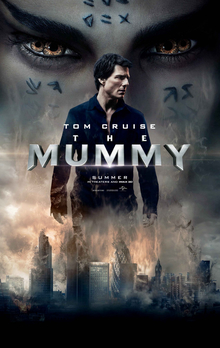
Horror Film Review: The Mummy (dir by Alex Kurtzman)


Oh, where to start?

The Mummy was promoted as being the first entry in Universal’s new Dark Universe, a shared cinematic universe that would supposedly do for the classic monsters what the MCU did for super heroes.  (Of course, horror fans with a good memory remember that Dracula Untold was originally supposed to be the first part of the Dark Universe franchise but, after that film bombed with both critics and audiences, Universal announced, “We were just kidding.  The Dark Universe starts with The Mummy.”)  The Mummy was released in June and it got absolutely decimated by critics.  That wasn’t too surprising.  One could tell from the commercials that, even with 2017 being a good year from horror, The Mummy was not going to be a critical favorite.  But then, audiences rejected it as well, throwing the whole future of the Dark Universe franchise into limbo.

To be honest, I think The Mummy could have been a fun little movie if it had only been 90 minutes long and hadn’t gotten bogged down with all that Dark Universe nonsense.  There are a few moments that actually do work, though they are few and far between.  The film stars Tom Cruise, who is a veteran at handling nonsense and who gives a somewhat lighter version of his standard Mission Impossible performance.  Jake Johnson shows up as a talking corpse and he has a way with a sarcastic line.  Some of the special effects are effective, though The Mummy is often far too dependent upon them.

The plot is damn near incoherent and it didn’t take long for me to give up on trying to follow it.  The film started with a bunch of crusaders moving in slow motion and then it jumped forward to modern-day Iraq, where Sgt. Nick (Cruise) and Cpl. Chris (Johnson) uncovered an ancient tomb.  Apparently, opening the tomb unleashes Princess Ahmanet (Sofia Boutella), who is thousands of years old and is still alive because she was cursed to be both immortal and buried alive.  So, now, she’s free and apparently, she wants Nick to merge with Set, the Egyptian god of all things evil.  But Nick doesn’t want to be evil.  He just wants to save the lives of Chris and Jenny (Annabelle Wallis), an archeologist who basically has the same role that Natalie Portman had in the first Thor film.

Meanwhile, Russell Crowe is wandering around as Dr. Jekyll.  This is where the whole Dark Universe things kicks.  Dr. Jekyll is in charge of this secret organization that keeps tabs on all the paranormal stuff that’s happening in the world.  However, if Dr. Jekyll doesn’t regularly get his injection, he turns into evil Mr. Hyde.  In this movie, that means that Crowe suddenly starts talking with a cockney accent.  I’m assuming that, much like Samuel L. Jackson did for the MCU, Russell Crowe is meant to link all of the Dark Universe films together.  Of course, the difference is that the early MCU films usually only had Jackson show up at the end of the movie, often in a post-credits scene.  Crowe, on the other hand, pops up out of nowhere, takes over a huge chunk of the film, and then vanishes.  I was already having enough trouble trying to keep up with the Mummy’s schemes without having to deal with a random Mr. Hyde sighting.

The Mummy is a mess.  When it starts, it’s a likable mess, with Cruise and Johnson exchanging silly lines.  But then the movie gets caught up in trying to launch a franchise and it all goes downhill from there.  There’s even a scene where Ahmanet stands in the middle of a London streets and starts throwing cars around.  It’s such an MCU scene that I was surprised Robert Downey, Jr. didn’t come flying by.  If The Mummy had just been a content to be a silly monster movie, it could have been fun.  But instead, The Mummy tried to launch an entire universe and it just wasn’t up to the task.

Playing Catch-Up: The Nice Guys (dir by Shane Black)


the-nice-guys

Last night, along with seeing Trainspotting at the Alamo Drafthouse and watching The BFG at home, I also rewatched The Nice Guys.

Now, I saw The Nice Guys when it was first released last May and I absolutely loved it.  However, before I started rewatching it, I was a little worried .  I remembered that The Nice Guys was a stylish and often hilarious action film, one that featured a great comedic turn from Ryan Gosling and a performance from Russell Crowe that showed why he deserves to make a comeback as a leading man.  I also remembered that, for all of its graphic violence and often profane dialogue, The Nice Guys was also an unexpectedly sweet-natured movie.  I loved not only the rapport shared between Gosling and Crowe but also the relationship between Gosling and Angourie Rice, the actress playing his daughter.  In fact, I remembered enjoying The Nice Guys so much that I was worried that it wouldn’t hold up to a second viewing.

It often happens when you love a film the first time that you see it.  On a second viewing, you start to notice all the little flaws that you didn’t notice the first time.  Lines that you remembered as being brilliant are no longer impressive, largely because you know they’re coming.  All too often, the films that blow you away fail to hold up over time.

(Anyone tried to rewatch Inherent Vice lately?)

But you know what?

The Nice Guys is not one of those films.  I watched the film for a second time and I loved it even more than the first time.

The Nice Guys takes place in Los Angeles in 1977.  It’s a time of wide lapels, leisure suits, tacky interior design, porno chic, and concerns that the L.A. air is so full of smog that not even bumble bees are willing to fly around in it.  Ryan Gosling is Holland March, a well-meaning if somewhat sleazy private investigator who has been hired to track down a porn star named Misty Mountains.  Of course, Holland know that Misty is dead.  Everyone knows that she’s dead.  She died in a car crash, one that made all the headlines.  But Misty’s aunt swears that she saw Misty after Misty’s supposed death.

Holland thinks that Misty’s aunt may have mistaken her niece for Amelia Kutner (Margaret Qualley), the daughter of Judith Kutner (Kim Basinger, whose presence is meant to remind audiences of L.A. Confidential), an official at the Justice Department who has been leading a crusade against pornography.  Holland starts to search for Amelia which leads to Amelia paying Jackson Healy (Russell Crowe) to intimidate Holland.

Who is Jackson Healy?  Well, he’s not a licensed private investigator, though he’d certainly like to be.  Instead, he’s a professional enforcer.  If you pay him enough money, he’ll beat people up for you.  Usually, he beats up stalkers and ex-boyfriends.  When he discovers that Holland is a private investigator, Jackson is intrigued.  Jackson would like to be a private investigator.  Of course, that doesn’t stop Jackson from breaking Holland’s arm.  Jackson’s a professional, after all.  As Jackson leaves Holland’s house, he runs into Holly (Angourie Rice), Holland’s twelve year-old daughter.  She gives him a bottle of Yoohoo.

Later, Jackson is confronted by two men.  Keith David plays Older Guy and he’s intimidating because he’s Keith David.  His partner is a giggly sociopath played by Beau Knapp.  For reasons that are too much fun for me to spoil, he is known as Blue Face.  The two men demand to know where Amelia is.  After Jackson manages to chase them off with a shotgun, he teams up with Holland to try to track down Amelia and find out what’s going on…

Got all that?

The mystery — which eventually expands to involve everything from porn to political protest to the Detroit auto industry — is deliberately and overly complex but at the same time, it’s actually rather clever.  And, as I can now say after rewatching the film, it actually holds up quite well.  But, to be honest, the mystery is not as important as the whip smart dialogue, the frequently over the top action, and the chemistry between Gosling, Crowe, and Rice.  As good as the action may be, the film’s best scenes are simply the ones that feature the three leads talking to each other.

(Upon discovering that Jackson both broke her father’s arm and that he beats people up for a living, Holly immediately asks how much it would cost to have one of her friends beat up.)

And you know what?  As played by Gosling and Crowe, they really are the nice guys.  Holland tries to be cynical but, for the most part, he’s just an overprotective father.  Jackson may beat people up for a living but he’s not a sadist.  He’s a lot like the film, violent but with a good heart.

The Nice Guys is full of wonderful set pieces, like when Gosling, Crowe, and Rice infiltrate a sleazy 70s party or the film’s explosive finale.  For me though, I love the little details and the quieter moments.  I love the fact that even one of the worst people in the movie responds postively to having someone innocently hold his hand.

(I also love that Matt Bomer shows up, playing a totally terrifying hitman.  It’s a small role but Bomer does so much with it.)

It’s a shame that The Nice Guys came out as early in the year as it did.  It’s also a shame that it didn’t do better at the box office.  The Oscars could use a little action and a little comedy this year, don’t you think?

Here’s Two Trailers For The Nice Guys!


How have I not shared a trailer for The Nice Guys yet?

Every time I see a movie at the Alamo Drafthouse, they show The Nice Guys trailer and I can just feel the excitement growing in the theater.  Below, you can find both the red band trailer and the safe for work trailer!

The Nice Guys stars Russell Crowe and Ryan Gosling and was directed by Shane Black.

Full disclosure: Yes, there was an earlier version of this post where, for some reason, I referred to this movie as being The New Guys, instead of The Nice Guys.  What can I say?  It’s late, I haven’t had much sleep, and I’ve been celebrating Cinco de Mayo.

Still, it kind of reminds me of how, when the Alamo Drafthouse first opened down here in Richardson, the very first movie they screened was We Are The Millers.  The Mayor of Richardson attended and, after the movie, she got on Facebook and wrote about how much she enjoyed “going to the Alamo and watching The Miller Family.”

Literally hundreds of Richardson film lovers left comments, all letting her know that she had lost their vote because she got the title of the film wrong.

Two years later, the mayor resigned.

Coincidence?

I think not!

Here Are The Winners of The 2015 Hollywood Film Awards, Whatever The Hell Those Are.


The_Martian_film_poster

Oh my God, y’all — the Hollywood Film Awards were held on Sunday and a bunch of potential Oscar contenders were honored!  Which all leads to one very important question:

What the Hell are the Hollywood Film Awards?

As I pondered that question, I realized that I had vague memories of sitting through the Hollywood Film Awards last year.  The ceremony was broadcast on CBS and it was distinguished from other awards shows in that there were no nominees.  Instead, only the winners were announced.  It was so amazingly dull and I can remember watching it and thinking, “Awards season has finally jumped the shark.”

(And this was even before Sasha Stone and Jeff Wells had their annual breakdowns…)

Anyway, the Hollywood Film Awards for 2015 were given out on Sunday and I’m assuming they weren’t televised.  (I was busy watching A Student’s Obsession anyway…)  You can find the winners below.  For the most part, it’s a pretty boring list (and why give out awards in November?) but it does allow us an early glimpse into some of the films and performers that are contending for Oscar gold.

Here’s the list.  Along with a gif of a kitty showing just how excited he is over Awards Season…

YAY! AWARDS! I'M SO EXCITED..I'M SO EXCITING...I'M SO ... SCARED!"

“YAY! AWARDS! I’M SO EXCITED..I’M SO EXCITED… I’M SO … SCARED!”

Career Achievement Award presented to Robert De Niro by David O. Russell.

Producer Award presented to Ridley Scott (“The Martian) by Russell Crowe.

Director Award presented to Tom Hooper (“The Danish Girl”) by Amber Heard.

Actor Award presented to Will Smith (“Concussion”) by Jamie Foxx.

Actress Award presented to Carey Mulligan (“Suffragette”) by Jake Gyllenhaal.

Supporting Actor Award presented to Benicio Del Toro (“Sicario”) by Reese Witherspoon.

Supporting Actress Award presented to Jane Fonda (“Youth”) by Laura Dern.

Breakout Actor Award presented to Joel Edgerton (“Black Mass”) by Johnny Depp, Dakota Johnson.

Breakout Actress Award presented to Alicia Vikander (“The Danish Girl”) by Armie Hammer.

New Hollywood Award presented to Saoirse Ronan (“Brooklyn”) by Ryan Gosling.

Ensemble Award presented to “The Hateful Eight” by Quentin Tarantino.

Breakout Ensemble Award presented to “Straight Outta Compton” by Ice Cube.

Comedy Award presented to Amy Schumer (“Trainwreck”) by Selena Gomez.

Breakthrough Director Award presented to Adam McKay (“The Big Short”) by Steve Carell.

Screenwriter Award presented to Tom McCarthy, Josh Singer (“Spotlight”) by Mark Ruffalo.

Blockbuster Award presented to “Furious 7” by Kurt Russell.

Song Award presented to “Furious 7” (“See You Again”) by Vin Diesel.

Animation Award presented to Pete Docter (“Inside Out”) by Amy Poehler.

Cinematography Award presented to Janusz Kaminski (“Bridge of Spies”).

Composer Award presented to Alexandre Desplat (“The Danish Girl,” “Suffragette”).

Documentary Award presented to Asif Kapadia (“Amy”).

Editor Award presented to David Rosenbloom (“Black Mass”).

Visual Effects Award presented to Tim Alexander (“Jurassic World”).

Sound Award presented to Gary Rydstrom (“Bridge of Spies”).

Costume Design Award presented to Sandy Powell (“Cinderella”).

Make-Up and Hair Styling Award presented to Lesley Vanderwalt (“Mad Max: Fury Road”).

Production Design Award presented to Colin Gibson (“Mad Max: Fury Road“).

"Yawn. These awards are boring..."

“Yawn. These awards are predictable and boring.  You disappoint me…”

Scenes I Love: Gladiator


GladiatorBattle

“ROMA VICTOR!”

While Lisa Marie watches Ben-Hur on TCM I decided to revisit one of my favorite films to start of the new millenium. This was a film that helped resurrect sword and sandals epic that had burnt out during the late 60’s. From the late 50’s and throughout most of the 1960’s we had such classic epics as Spartacus, Quo Vadis and Ben-Hur. Then we have the Italian-produced peplum films which ranged from memorable to awful.

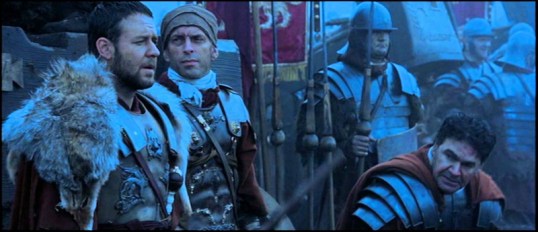
In 2000, Ridley Scott released the film that would finally win Russell Crowe an Oscar for Best Actor (one he should’ve won for The Insider in the previous year). Gladiator was a return to the old-school epic-scale filmmaking that we hadn’t seen in decades and audiences ate it all up as it won in the box-office and charmed critics.

I wasn’t sure about Gladiator leading up to it’s release, but I was always up for some hacking and slashing in my entertainment. What changed my mind from just being interested to buying fully into the film was when I first saw it and the opening scene which I dub the Battle of Germania. This opening sequence appealed to my sense of adventure as a viewer and also as a student of history (especially military history). While the scene itself wasn’t as accurate as I would’ve liked it got enough of how the Roman Legions fought as an army correct that I was able to forgive Sir Ridley for some dramatic flourishes that wasn’t historically accurate.

In this scene we see the Legions form up in square ranks with their recognizable scutum (Roman shield) into their typical shield wall formation. There are also the auxiliries acting as long-range support such as archers, catapults and ballista (though the last two were rarely, if ever used outside of sieges). Then there were the Roman cavalry led by Maximus himself (a unit seen less as an elite formation as we see later in the Medieval era). Scott was able to combine all these elements and create a scene that probably was as close as we’d get to seeing how war was waged between the Roman Empire and the so-called barbarian hordes of Germania.

I think this scene would’ve been perfect if the Roman Legion formations remained cohesive and just meat-grinded their enemy in front instead of breaking apart and turning the fight into a free-for-all. Other than that misstep this scene was what I loved about Gladiator.

So, was Noah good or not?


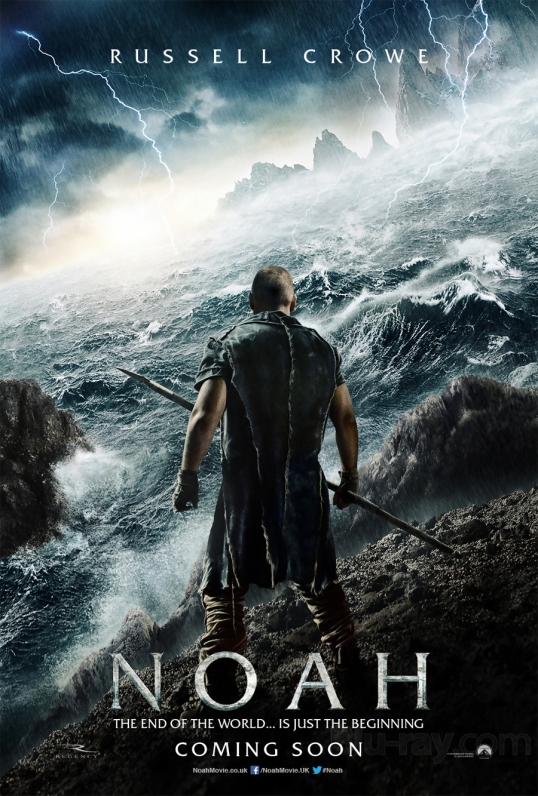
Poster-Noah-Aronofsky

Was Noah a good movie or not?

That’s a question that was first asked way back in March.  At the time, the answer depended on who you asked.  For instance, Noah is one of Arleigh’s favorite films of the year.  My reaction, however, was far more mixed.  Noah was one of those movies that I thought I would review as soon as I watched it but that proved to be a lot more difficult than I expected.  As I found myself wondering what I should say in my review, it became very apparent to me that I wasn’t sure whether I liked the film or not.

By the time that I finally decided that I was, overall, disappointed by Darren Aronofsky’s controversial and spiritual-but-not-quite-biblical version of the Deluge, over a month had passed and we had all moved on to different movies.

And so that review remained unwritten.  And, at first, I thought it wouldn’t matter.  As much as I try to review every single movie that I see, I know that the world is not going to end if I miss a film or two.  After all, I’ve never specifically written down just how much I hated the latest Transformers movie and the world has yet to plunge into the sun…

And yet, for all of its flaws and the fact that it left me feeling underwhelmed, Noah has stuck in my mind in a way that many of the films that I saw this year have not.  It would be a struggle for me to remember much of anything about Dracula Untold but Noah Noah has stayed with me.

Thinking back, it’s easy for me to say what did not work about Noah.

As opposed to Aronofsky’s best films (Requiem for A Dream, The Wrestler, and my beloved Black Swan), Noah felt oddly paced with certain scenes ending too quickly while other scenes seemed to drag on forever.

The film’s environmental message was delivered with such a heavy hand that it ultimately did not make much of a difference whether you agreed or not.  For a film that went out of its way to establish itself as not being a traditional biblical film, Noah was certainly preachy.

While the film deserves credit for not flinching in its portrait of a surly and self-righteous Noah, it still doesn’t change the fact that the movie was essentially 138 minutes spent with a very unlikable character.

Anthony Hopkins gave perhaps the worst performance of his career as Methuselah.  In the role of Tubal-Cain, Ray Winstone was such a one-dimensional villain that I half expected him to invent trains just so he could tie Emma Watson to the tracks.

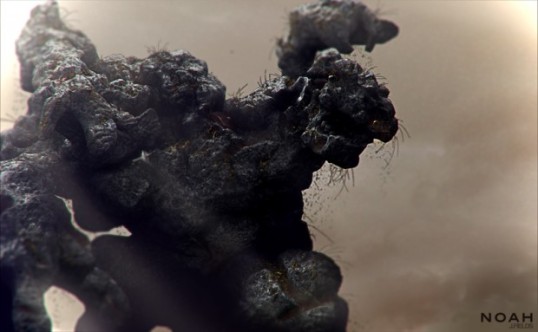
And, of course, there were the Watchers — fallen angels who had been turned into sentient piles of stone by a vengeful God.  I know that some people loved the Watchers but to me, they looked ludicrous…

NoahWatchers

And yet, that’s the reason why we love Darren Aronofsky, isn’t it?

Obviously, it was a risk to portray the fallen angels as being a bunch of talking rocks.  It was also a risk to take a character who is mentioned only once in the book of Genesis — in this case, Tubal-Cain — and then use that character as a representation of everything that’s wrong with the human race.  It was a risk to make a “biblical” film that openly questioned both the existence and wisdom of God.  We expect and demand that directors take risks but, at the same time, we also want to ridicule and judge when those risks don’t work out.  That’s the issue that we, as film lovers, often face.  Do we celebrate and perhaps excuse a director for his intentions or do we solely judge him based on the results?

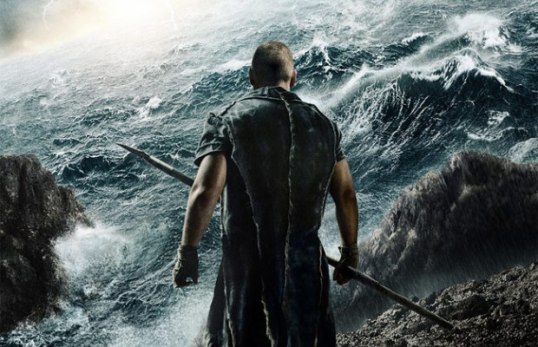
And the thing with Noah is that, as much as the movie did not work for me, it also did work for me.  For all of those flaws that I listed above, Noah is full of images that are so beautiful and so memorable that I can still visualize them as if I saw them yesterday:

Noah and his sons walk across a gray and blasted landscape, stopping just long enough to stare at a foreboding city in the distance.

Noah walks through a decadent settlement and briefly, this somber film is so full of bright colors and flamboyant characters that the viewer is almost as overwhelmed as Noah.

That Ark, looking small and isolated, floating across an endless blue ocean.

And finally, Noah talking about the horrors of humanity and briefly, we see that the shadows that he’s visualizing are dressed in modern clothing.

For all of my issues with Noah, it’s such a visually impressive film and takes so many risks that I can’t help but respect it.  I don’t consider it to be a great film but, after all this time, I can say that it’s a film that only a true artist could make.

And, considering the current state of American film, that’s one of the best compliments that one can give.

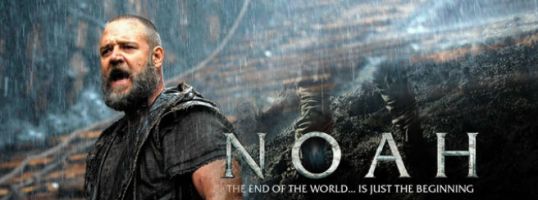
noah-banner222

A Late Film Review: Winter’s Tale (dir by Akiva Goldsman)


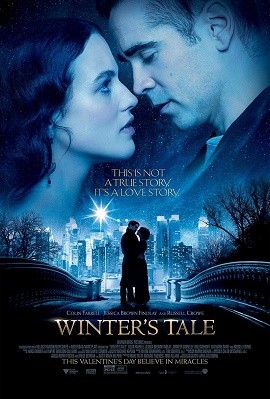
Winter's_tale_(film)

I liked Winter’s Tale.

And I don’t care what anybody else says!

And that’s a good thing too because, critically, Winter’s Tale has been one of the most maligned movies of 2014.  It came out on Valentine’s Day, at the same time as Endless Love.  And the critics absolutely hated it!  For a while there, the online film community was taking bets on which one of the two Valentine’s Day releases would end up with the lowest score on Rotten Tomatoes.  And, though it was a close race, Winter’s Tale actually ended up with the lower score, coming in at 13% as opposed to Endless Love‘s 15%.

That’s right — according to most mainstream film critics, Winter’s Tale was actually worse than Endless Love.

Well, those critics were wrong.  That’s how I felt when I first saw Winter’s Tale and, after watching it a second time on HBO, that’s still how I feel.  Winter’s Tale is not a bad movie!

(Incidentally, Winter’s Tale has a 6.2 rating over at the imdb, which would seem to indicate that I’m not the only person who knows better than Peter Travers.)

Admittedly, the plot of Winter’s Tale does not make much logical sense but that’s kind of the point.  It’s a tale and tales are not about being realistic.  Tales are about emotion and the whole point of listening to or telling a tale is to inspire feelings. To truly appreciate Winter’s Tale, you have to understand that this is a fairy tale that happens to be set in the most mythical of American cities, New York.

Opening in 1895 and ending in 2014, Winter’s Tale tells the story of Peter Lake (Colin Farrell).  When Peter was an infant, his immigrant parents were refused entry into Manhattan because they both had tuberculosis.  So, they put Peter in a toy boat and dropped him into ocean and watched as the boat slowly floated towards America.

Jump forward 21 years and Peter has grown up to be a thief, working for a gangster named Pearly Soames (Russell Crowe).  What few people know is that Pearly is actually a demon who regularly visits his boss, Luicfer (played by Will “Yes, that Will Smith” Smith).  Pearly is immortal as long as he stays in New York City.

When Peter decides that he wants to leave Pearly’s gang, Pearly orders that Peter be killed.  However, while fleeing from the rest of the gang, Peter is rescued by a flying white horse.  While Peter’s first instinct is to fly the horse out of New York and spend the winter in Florida, he instead decides to rob one more mansion.  (It helps that the horse literally takes him to the mansion.)

While robbing the mansion, Peter meets Beverly Penn (Jessica Brown Findlay), a passionate and talented pianist who is dying of tuberculosis.  In what is literally a case of love at first sight, Peter forgets about robbing the mansion and instead has a cup of tea with Beverly.  They discuss their lives and Beverly tells Peter that everyone has a miracle inside of them and that everyone becomes a star after dying.

Soon, Peter and Beverly are a couple and Peter even manages to win over Beverly’s suspicious father, Isaac (William Hurt).  Peter and Beverly spend the winter at her family’s summer home.  Peter believes that his miracle is to save Beverly.  Meanwhile, an angry Pearly waits for his chance to get revenge…

Now, I will admit that there are some obvious flaws with Winter’s Tale.  Russell Crowe goes totally overboard, with his accent wildly going from Australian to New Yorkish to Scottish and back again.  Meanwhile, Will Smith is not necessarily a bad choice to play the devil and he actually gives a pretty good performance but it doesn’t chance the fact that, whenever he’s on screen, all you can think about is that he’s Will Smith and he’s playing the devil.

But, honestly, who cares?  This is an amazingly romantic film and Farrell and Findlay have a lot of chemistry.  When you see them together, you have no doubt that Peter and Beverly are meant to be together.  You care about them as a characters, even if you don’t always understand everything that’s happening around them.  Their love feels real and, when it comes to telling a love story, isn’t that the most important thing?

(Add to that, does any actor fall in love as convincingly as Colin Farrell?)

And the film itself is gorgeous!  From the costumes to the set design to Caleb Deschanel’s cinematography, the film is just beautiful to look at.  Undoubtedly, cynics would argue that the film is almost too glossy in its appearance but Winter’s Tale is not a film for cynics.  It’s a film for romantics.

So, yes,  I did like Winter’s Tale and I am not ashamed to admit it.

Scenes I Love: Noah


Poster-Noah-Aronofsky

One of the best films (at least in this blogger’s honest opinion) of the year also happens to be one of it’s most controversial. It’s Darren Aronofsky’s follow-up to his equally critically-acclaimed and just as controversial Black Swan. I am speaking of his Biblical epic Noah and the story of the Flood.

It’s a film that doesn’t feel religious yet full of spirituality. It’s a film that dares to take a look at text seen as hallowed by billions in a way that doesn’t take a stand on the debate of science versus religion (though some feel that Aronofsky’s atheist background paints the film on the side of science). Noah has a scene in the beginning of it’s third act (one that some have called the dealbreaker for how they thought of the film in the end) that best exemplifies the conjoining of science and religion. It’s the best retelling of the Creation Story that I’ve heard and/or seen.

Courtesy of Protozoa Pictures…The Creation scene from Noah.

Super Bowl Trailer: Noah


5204

Noah is Darren Aronofsky’s follow-up to his critically-acclaimed film Black Swan (which was reviewed by Lisa Marie Bowman herself) and he looks to tell the tale of Noah’s Ark from the Book of Genesis.

When news first came out that Aronofsky would follow-up Black Swan with a biblical epic that retold the Flood and Noah’s role in saving those not corrupted according to Heaven was a sort of headscratcher. The teasers and trailers that has come out about the film hasn’t really fired up the masses. Some think it as another sword-and-sandals epic that’s late to that particular subgenre’s resurgence. Some think too much fantasy elements has been added.

One thing I’m sure of is that Aronofsky will not make an uninteresting film.

Noah is set for a March 28, 2014 release date.