AI is not always great. I do use it a lot for patent-related work, legal questions, and drafting legal documents. However, for AI to be a tool- you can’t be one. A guy jogs in casual Friday gear, he gets shot with a tree dart, hallucinates, and is kidnapped by a large bat-crow. I never thought about making something boring. Maybe, my writing is not always great, but I don’t think it’s boring.
If the apocalypse is this boring, I pass. Maybe it’s just crow-related apocalypses that are boring? I’m not sure, but this was 4 minutes of my life that was stolen from me. Just stolen!
One of my favorite things about my lifetime of loving movies has been those times when I’ve discovered the actors who really appeal to me. It all started with Charles Bronson when I was in grade school. I call it going through a phase, and while I’m in that phase, I try to watch everything that actor has done that looks the least bit interesting to me. Of course, my Charles Bronson phase has never ended, but there has always been room for additional phases, whether it be actors like Roy Scheider, James Woods, Toshiro Mifune, Chow Yun-Fat, or yes, Michael Caine. When I went through my initial Caine phase, I focused on movies like THE ITALIAN JOB, GET CARTER, and DRESSED TO KILL. Later in his career, I focused on his movies like A SHOCK TO THE SYSTEM, SECONDHAND LIONS, and HARRY BROWN. I knew about THE HAND, but I never watched it before moving on to the next phase. But this being Horror-Thon, and me looking for interesting movies I’ve never seen before, this seemed like the perfect time to spend a couple of hours with Michael Caine and his hand!
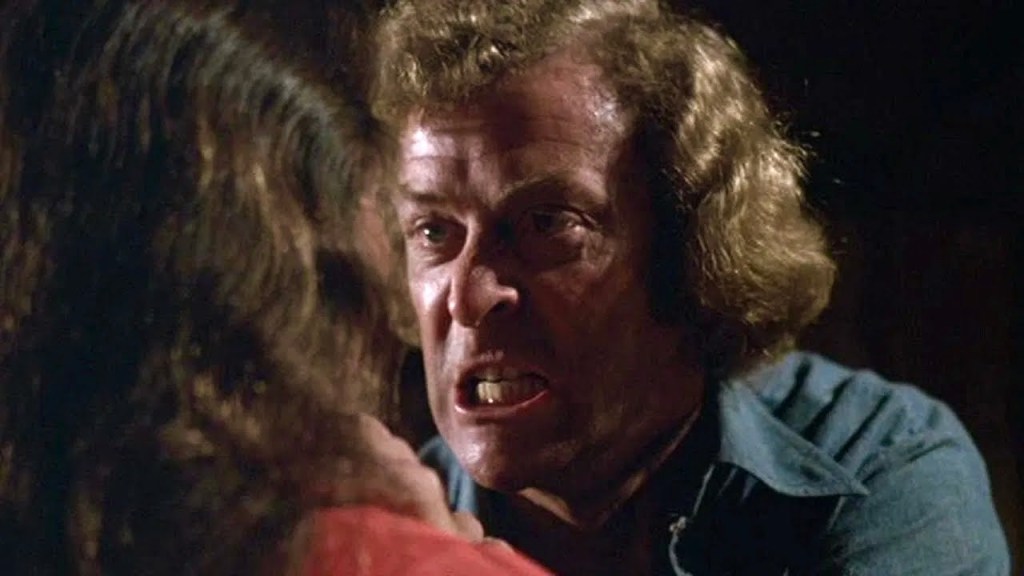
THE HAND finds Caine playing Jonathan Lansdale, a successful comic book artist whose life takes a turn for the worse after a car accident results in the gruesome loss of his right hand. That would be bad enough for anyone, but his newfound situation will no longer allow him to create his beloved comic book, and his struggling marriage only seems to be getting worse. When a series of increasingly disturbing events seem to be taking place around him, we’re left to wonder… is his missing hand somehow responsible for the escalating violence around him, or is he going out of his mind?!
One of the intriguing aspects of THE HAND is that it was directed by Oliver Stone who would go on to win Oscars for directing the films PLATOON and BORN ON THE FOURTH OF JULY. Having just won the Oscar for Best Screenplay for MIDNIGHT EXPRESS, Stone was a hot property at the time so it’s no surprise that he was given another chance to direct. He had written and directed the film SEIZURE back in 1974, but this was his first major studio film. With a man of his acclaim and talent in the director’s chair, and with a legendary actor like Michael Caine in the lead, THE HAND would have to be worth watching, right?
I’m going to definitely say “Yes!” Watching Stone deliver the absurd visuals of a creepy severed hand performing a series of gruesome killings brought a ridiculous smile to my face. I’m actually laughing as I type this and think about them again. Not content with my cheap thrills though, Stone also tries to get deep into his main character’s mind so he can play with the uncertainty between reality and imagination. I’m not saying this attempt at psychological depth always works, but it’s kind of fun seeing him try to turn such silly material into something of more substance.
And then there’s Caine in the lead role, which is my primary reason for watching the film. I always like it when he loses it on screen, and he definitely gets to explore his dark side as Jonathan Lansdale. There’s nothing suave about this guy. Rather, he’s playing a man whose life is falling completely apart. While we can at least superficially understand why he would be so frustrated, Caine’s eyes reveal a man who’s leaving the world of reality, and there’s no scenery that he’s not willing to chew by the end. I’ve read that Caine did this movie for the paycheck, and while that may be true, he definitely seems invested to me. Other solid performances come from Andrea Marcovicci as his wife, Bruce McGill as his friend, and Annie McEnroe as his lover. Unfortunately, no one who gets too close is safe from his hand of death!
I understand that not everyone is going to enjoy THE HAND. I’ve said many times before that I’m a fan of actors, and if a movie stars one of my favorites, I’ll give it a lot of grace. Still, I can’t deny that I had a good time watching it even if it might have overstayed its welcome just a bit. While I won’t give the movie a hearty, full-throated recommendation, if you’re a fan of Stone, Caine, or oddball horror films, you just may find a lot to enjoy about this film like I did.
“Man is a feeling creature, and because of it, the greatest in the universe….”
Hell yeah! You tell ’em, Peter Graves!
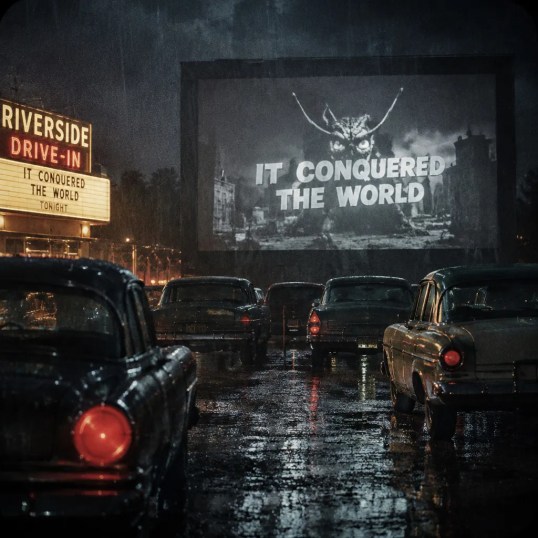
In 1956’s It Conquered The World. Graves plays a scientist who watches in horror as his small town and all of the people who he loves and works with are taken over by an alien. Rival scientist Lee Van Cleef thinks that the alien is going to make the world a better place but Graves understands that a world without individual freedom isn’t one that’s worth living in.
This is one of Corman’s most entertaining films, featuring not only Graves and Van Cleef but also the great Beverly Garland. Like many horror and science fiction films of the 50s, it’s subtext is one of anti-collectivism. Depending on your politics, you could view the film as either a criticism of communism or McCarthyism. Watching the film today, with its scenes of the police and the other towns people hunting anyone who fails to conform or follow orders, it’s hard not to see the excesses of the COVID era.
Of course, there’s also a very persuasive argument to be made that maybe we shouldn’t worry too much about subtext and we should just enjoy the film as a 50s B-movie that was directed with the Corman touch.
Regardless of how interpret the film, I defy anyone not to smile at the sight of ultra-serious Peter Graves riding his bicycle from one location to another.
Here, for your viewing pleasure, is It Conquered The World!
Whenever it’s time to share this film for Horrorthon, I have a little story that I like to tell:
Enter singing.
Little Shop.…Little Shop of Horrors.…Little Shop.…Little Shop of Terrors….
When I was 19 years old, I was in a community theater production of the musical Little Shop of Horrors. Though I think I would have made the perfect Audrey, everybody always snickered whenever I sang so I ended up as a part of “the ensemble.” Being in the ensemble basically meant that I spent a lot of time dancing and showing off lots of cleavage. And you know what? The girl who did play Audrey was screechy, off-key, and annoying and after every show, all the old people in the audience always came back stage and ignored her and went straight over to me. So there.
Anyway, during rehearsals, our director thought it would be so funny if we all watched the original film. Now, I’m sorry to say, much like just about everyone else in the cast, this was my first exposure to the original and I even had to be told that the masochistic dentist patient was being played by Jack Nicholson. However, I’m also very proud to say that — out of that entire cast — I’m the only one who understood that the zero-budget film I was watching was actually better than the big spectacle we were attempting to perform on stage. Certainly, I understood the film better than that screechy little thing that was playing Audrey.
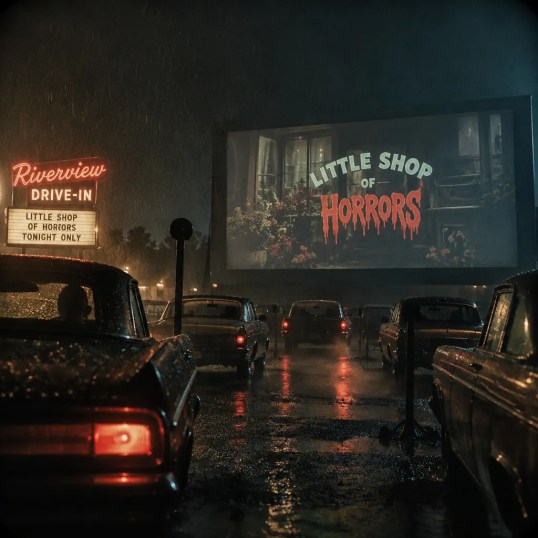
The first Little Shop of Horrors certainly isn’t scary and there’s nobody singing about somewhere that’s green (I always tear up when I hear that song, by the way). However, it is a very, very funny film with the just the right amount of a dark streak to make it perfect Halloween viewing.
So, if you have 72 minutes to kill, check out the original and the best Little Shop of Horrors….
2021’s The Order of Rights tells the story of two teenagers.
Emma Stein (Emma Elle Roberts) is artistic and creative and we know this because she’s working the lights for the current high school theater production. I have to say that I did a lot of high school theater and I always really disliked having to deal with the members of the backstage crew, They were always worried about something. Whenever I was waiting to make my entrance, I always knew some crew person was going to wander up and start talking to me about the lighting cues. And I would just be like, “Just make sure I look good.” Wow, that was mean of me. I feel kind of bad now.
Anyway, back to the movie….
Ethan (Ben Davies) is a jock. When know he’s a jock because he always wears his baseball cap backwards. For Ethan and Emma it’s love at first sight. Ethan is also a Christian and he feels really guilty after he and Emma give into temptation and have sex. He feels even more guilty after Emma informs him that she’s pregnant.
Ethan talks to his parents (Matthew Welling and Julie Silcott). They tell him that, before he was born, they found themselves in a similar situation. They weren’t married at the time so Ethan’s mother decided to have an abortion. They have always felt that they made a mistake. When they learn that Emma’s mother is pressuring Emma to get an abortion, they hire a lawyer (Richard Cutting) to file a civil case against Emma, claiming that Emma is denying her baby its rights under the 14th amendment.
The case becomes national news. We get a montage of real-life conservative podcasters and talk show hosts discussing the case. The second half of the movie takes place almost exclusively in the court room and if you enjoy scenes of people saying, “Objection!” and a judge replying with “Overruled,” rest assured that this film is full of them. Each side is given a chance to make its case. That said, it’s hard not to notice that Ethan’s lawyer is extremely earnest while Emma’s lawyer is extremely smug.
Much like One Nation Under God, this is a film that was largely made to annoy liberals and, judging from the reviews left on Letterboxd, it certainly managed to do that. It’s really not any more heavy-handed than most mainstream movies about abortion. It’s just, in this case, the film comes at things from the pro-life point of view as opposed to the pro-choice point of view. It’s a film that’s full of awkward scenes and there are quite a few performances that don’t work, especially during the film’s first half. The actors playing Emma’s theater friends offer up some of the worst line readings that I’ve ever heard. That said, Emma Elle Roberts probably gives a better performance than the film deserves and, regardless of what else you may want to say about the movie, it doesn’t turn Emma into a cardboard villain. In the end, one feels very sorry for her as both sides are just using her pregnancy to push their own agenda.
This film was released in 2021. A year later, Roe v Wade was overturned, making The Order of Rights feel very dated indeed.
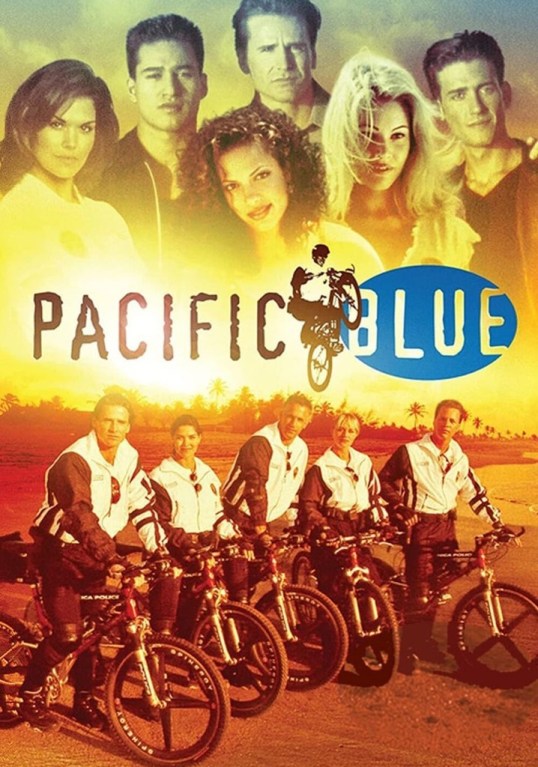
Welcome to Late Night Retro Television Reviews, a feature where we review some of our favorite and least favorite shows of the past! On Tuesdays, I will be reviewing Pacific Blue, a cop show that aired from 1996 to 2000 on the USA Network! It’s currently streaming everywhere, though I’m watching it on Tubi.
This week, everyone’s going undercover!
Episode 5.2 “The Naked Truth”
(Dir by Sara Rose, originally aired on July 25th, 1999)
When a wealthy sorority girl is found dead on the beach with her head caved in, it falls to the bicycle patrol to solve the case. Where are the Homicide detectives? We know that the Santa Monica PD has a homicide division because Chris keeps talking about transferring there. I know I bring this up every episode but it simply doesn’t make sense for the bike cops to be the ones investigating all of these crimes. I mean, essentially, they’re traffic cops. In the real world, they’re job would be to secure the crime scene and wait for the real detectives to show up.
Anyway, when Monica sees that the dead girl was wearing a sequined bikini, she immediately deduces that she was working as a stripper. (I’m not sure that logic would hold hope in court but whatever.) Why would a rich sorority girl be working at a strip club? Monica and Chris go undercover to find out. Chris is the new housemother at the sorority house. Monica is a new pledge. It turns out that working at the strip club started as a hazing ritual but now, all of the girls are being blackmailed (via email, we’re specifically told) into doing it.
Who is the blackmailer? That mystery is solved when Chris catches the local handyman going through her underwear. The handyman explains that he’s not a murderer, he’s just a pervert. He also says that all of the girls have expensive underwear except for one who owns “K-mart panties.” Because that girl is poor and a computer science major, Monica and Chris decide that she’s the blackmailer. (Again, I’m not sure that logic would hope up in court but whatever. I’m too tired to argue with this stupid show.) I guess the lesson here is to spend money on quality panties. Well, don’t worry, Pacific Blue! I buy and wear only the best!
As for the murderer, it turns out to be a cowboy with a country accent who is always hanging out at the strip club and requesting a private dance. It really wasn’t that much of a shock.
Pacific Blue always talks a big game about how women shouldn’t be objectified but then every episode opens with random bikini shots and this episode looked for every possible excuse to put Monica in a school girl outfit. I’d have more respect for Pacific Blue if it was just honest about what it is was doing as opposed to having the characters constantly spouting a lot of cliches about empowerment that the show itself doesn’t seem to take all that seriously.
The good thing about this episode is that it ends with Chris telling TC that they need some time apart. I agree! You can do better, Chris!
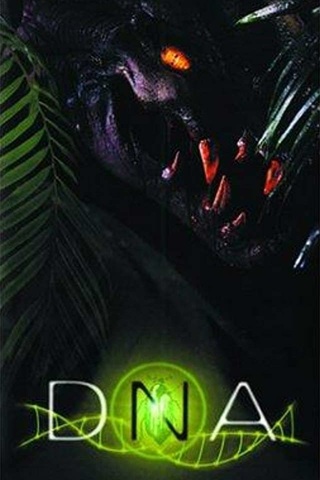
In 1996’s DNA, Mark Dacascos plays Dr. Ash Matteley, an American doctor who works to bring healthcare to the residents of Borneo. When Ash’s former boss, Dr. Carl Wessinger (Jürgen Prochnow), approaches Ash and invites him to take part in a jungle expedition to track down some beetles whose genetic material can cure all known diseases, Ash agrees. However, once Wessinger, Ash, and their native helpers find the beetles in an ancient tomb, it turns out that Wessinger has plans of his own. He shoots Ash in the shoulder and then makes his escape.
Two years later, Ash has long hair and he’s taken to wearing a Hawaiian shirt, but he’s still dedicated to taking care of the poor of Borneo. When CIA agent Claire Sommers (Robin McKee) approaches him and asks him to help lead her through the jungle, Ash says that he’s not interested. But when Sommers reveals that she’s looking for Wessinger, Ash realizes that he has no choice but to help her. For some reason, they take a child named Matzu with them. Why you would recruit a child for a dangerous mission that involves going upriver in a canoe, I’m not sure. Then again, I’m also not sure why Claire would wear a dress while exploring the jungle either, other than the fact that the film needed an excuse to have Ash look away and then sneak a peek while Claire undresses and changes into something more jungle-appropriate.
It probably won’t surprise you to learn that Dr. Wessinger has not been spending his time trying to cure all known diseases. Instead, he’s been splicing genetic material to try to bring an ancient creature back to life. Now, before you say that this sounds like a Jurassic Park rip-off, allow me to point out that Wessinger is not bringing back a dinosaur. Instead, he’s bringing back a big alien creature, one that perhaps crashed on Earth during the prehistoric age. This is not Jurassic Park. At most, it’s Jurassic Alien.
Or maybe it’s just Alien. Once Ash and Claire and the little kid make it inside Dr. Wessinger’s headquarters, there are a lot of scenes of people hiding in offices and nervously walking down hallways and hoping that the monster won’t jump out of nowhere and kill them.
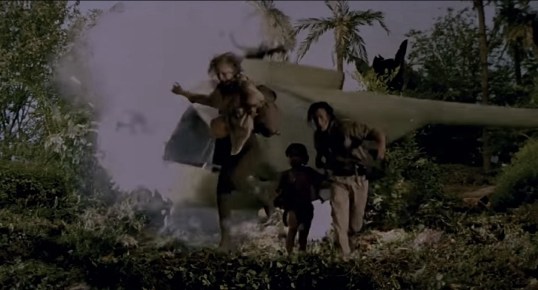
Then again, maybe we should just call this movie Predator because eventually, the action moves back into the jungle and Ash finds himself being stalked by the alien, who is apparently a very good hunter and who lives for the hunt. Ash goes from being a hippie doctor to being a full-blown action hero. There’s even a scene where he and Claire and the kid have to run away from a crashing helicopter. Of course, the helicopter was obviously a model. Still, it was hard not to imagine Mark Dacascos saying, “Get away from da choppah!”
My point is that a lot of different DNA was spliced together to create this movie. Take a little from Indiana Jones and a little from Apocalypse Now and then toss in Alien, Predator, and Jurassic Park and you’ve got DNA. Unfortunately, the film still isn’t as entertaining as it should have been. Mark Dacascos barely gets to show off his martial arts skills while the film can’t even give us one good Jürgen Prochnow freak-out. Even with all of the shameless plagiarism, the film still feels like it’s just going through the motions. Sadly, DNA is never as much fun as it should have been.
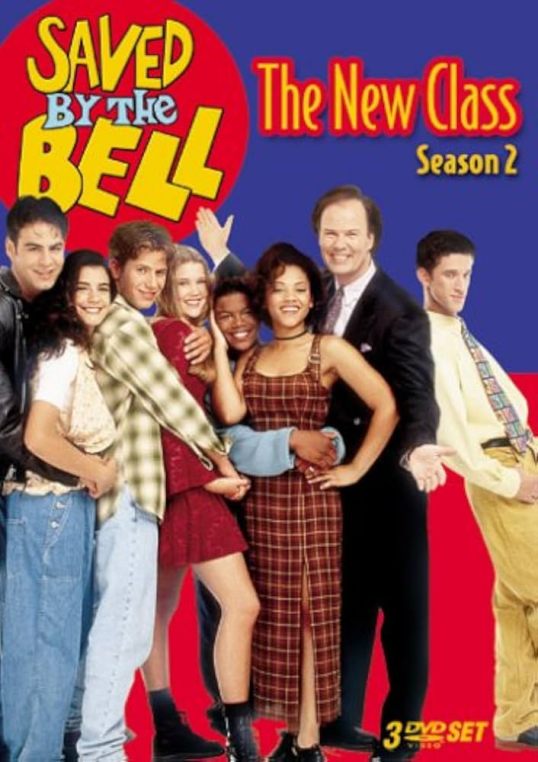
Welcome to Retro Television Reviews, a feature where we review some of our favorite and least favorite shows of the past! On Tuesdays, I will be reviewing Saved By The Bell: The New Class, which ran on NBC from 1993 to 2o00. The show is currently on Prime.
This week, the Gang learns a lesson about not dropping out of school.
Episode 2.23 “The D Stands For Dropout”
(Dir by Don Barnhart, originally aired on December 10th, 1994)
Oh no! Tommy wants to drop out of high school and work full time as an auto mechanic!
Actually …. that might be for the best.
Since the very first episode, Saved By The Bell: The New Class has portrayed Tommy as being an amiable but dumb guy who just happens to have a savant-like ability for fixing cars. It’s been established, in several episodes, that there’s nothing Tommy can’t do with a car. Since Tommy apparently know everything that there is to know about cars and cars are literally the only thing that he cares about and he always seems to be flunking every class that he takes, why shouldn’t Tommy drop out? What’s he going to do in high school or college? He’s already learned everything that there is no to know about how to fix a car and a good auto mechanic will always be in demand. Plus, Tommy’s cute enough that, if he needs to, he can probably find a rich widow in Beverly Hills to pay his bills.
Drop out, Tommy! Drop out!
Still, Mr. Belding and everyone else insists that Tommy is making a mistake when he drops out of school. Belding tells Tommy’s father (Nick Angotti) that he needs to show some tough love so Tommy realizes how difficult it is in the real world. Tommy is kicked out of his house and has to move in with Screech. Tommy is no longer allowed to help his friends with their science project. Tommy has one of those Saved By The Bell fantasy sequences where Screech refuses to hire him because he doesn’t have a high school diploma….
And really, this is when Tommy should say, “But I’m actually already getting paid good money to do the only thing that I care about and the only thing that I’m actually good at so who cares?”
Instead, Tommy reenrolls in high school and helps the Gang win the science fair by building a remote control car. The competition must have been really weak that year.
Poor Tommy. When he’s an adult, he’s going to look and realize he should have just dropped out when he had the chance.