Brad reviews COLD WAR II (2016), with Chow Yun-Fat, Aaron Kwok & Tony Leung Ka-fai!


As soon as I finished watching COLD WAR (2012), I went to the fridge, grabbed myself a refreshing beverage and immediately started up COLD WAR II (2016). The original film ends on a cliffhanger, so I was excited to see what happens next!

COLD WAR II opens right after the events of the first film, resolves its pressing cliffhanger in the first 20 minutes, and then doubles down on the intrigue and political power plays that defined the original. I don’t want to give away too much of the plot, so as not to take away some of the fun surprises. I will say that most sequels go bigger by doubling body counts or explosions, but in this film the conspiracies just get a lot deeper, and the political manipulations start reaching for much broader power. I still found the situations to be interesting thanks to the intense atmosphere of the film and the strong performances of the cast.   

In the roles of Sean Lau and M.B. Lee, Aaron Kwok and Tony Leung Ka-fai continue to excel, but circumstances quickly erode some of the goodwill that was created between their characters at the end of the first film. This temporarily creates the risk that this follow-up could end up feeling like a retread of their heated rivalry in part 1. Higher, even more personal stakes helped alleviate some of that concern.

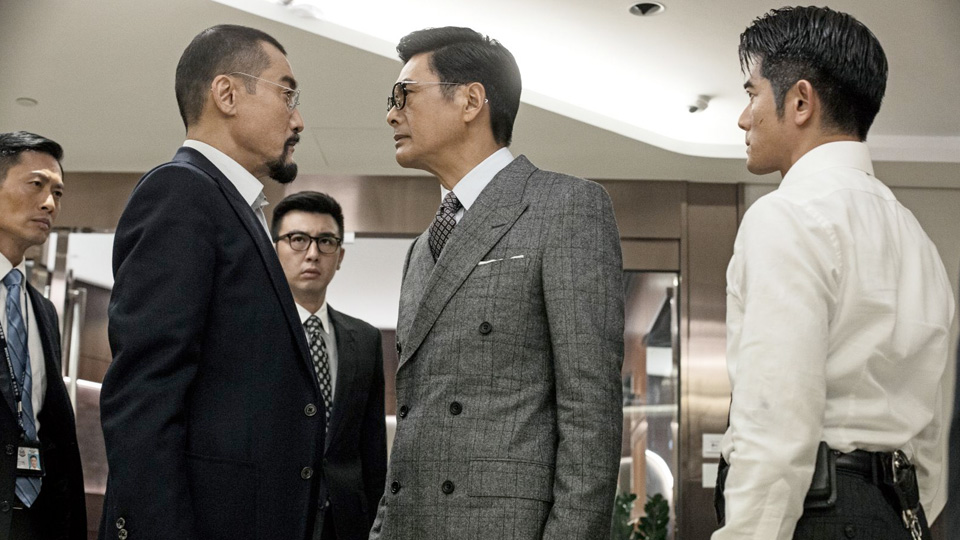
The best thing that happens for COLD WAR II is the addition of Chow Yun-fat to the cast in the important supporting role of Oswald Kan. Kan is a former judge and brilliant legal mind who leads a special committee investigating the fallout from the events of the first film. The middle section of the film features a series of scenes with Chow in intense confrontations with both Tony Leung and Aaron Kwok. It’s especially fun seeing Chow mix it up with Tony as their careers go way back to working with each other in classics like PRISON ON FIRE (1987) and A BETTER TOMORROW III (1989). These scenes freshen up the material, but they also connect us emotionally to Hong Kong cinema of the golden years through one of its biggest, most honorable stars. Chow gives the film a moral center as Oswald Kan seems free from the ethical compromises that our other main characters are having to make. It’s an impressive and charismatic turn from Hong Kong’s all-time greatest leading man.
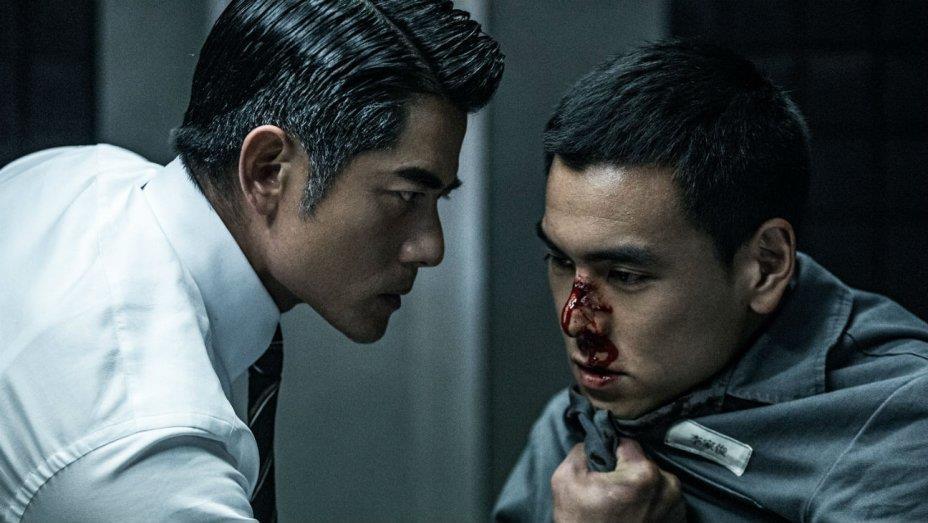
Just as in the first film, there aren’t a lot of action scenes, but the ones we have are bigger and even more impressive. There’s an action sequence in a tunnel about an hour into the film that blew me away with its execution and intensity. Its resolution also surprised me, which is not always easy to do. Still, this incredible scene serves the plot well, providing clear and obvious motivation for the actions of each of the main characters throughout the remainder of the film.

COLD WAR II follows the motto of most sequels to box office smashes… “Go big or go home!” While the plot becomes even more complicated this time around, the continued excellence in the performances, especially with the addition of Chow Yun-Fat, helps to provide the solid emotional payoffs needed to keep the series moving forward. With the excellent action set pieces also adding to the fun, the filmmakers have managed to create a sequel that I rate just as high as the original. Now, bring on COLD WAR 1994!

COLD WAR II is currently streaming on Amazon Prime, Tubi, PlutoTV, Plex, and the Roku Channel!
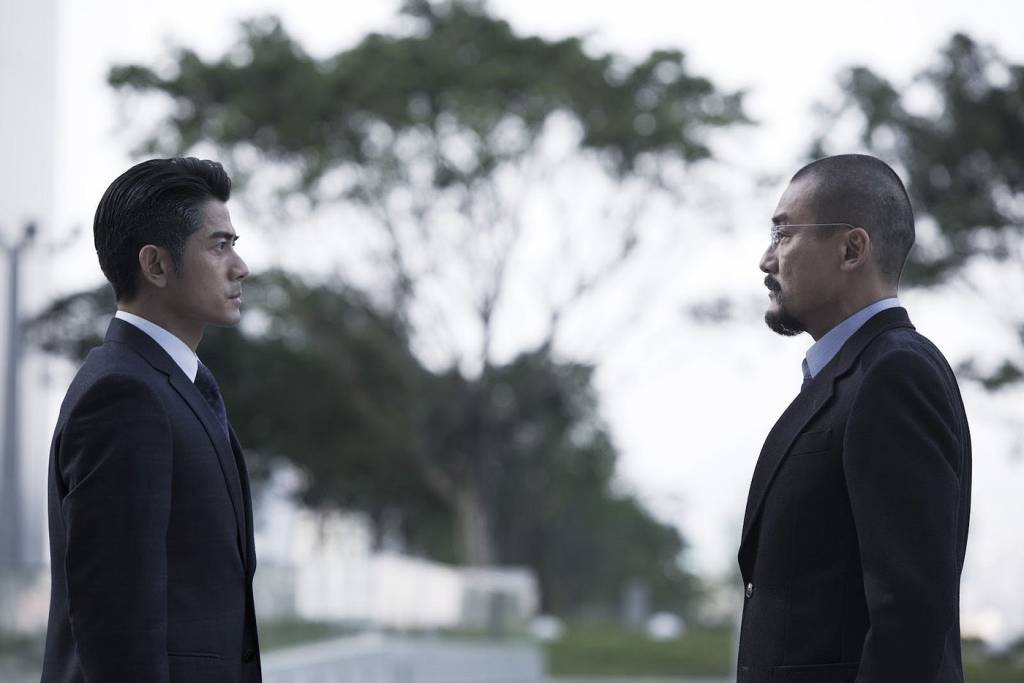
Brad reviews COLD WAR (2012), starring Aaron Kwok & Tony Leung Ka-fai!


As I continue revisiting various movies that feature Chow Yun-Fat during his birthday month of May, I decided I would revisit his work in the COLD WAR franchise, specifically COLD WAR II from 2016. The problem is that I hadn’t watched COLD WAR (2012) since it was released on Blu ray well over a decade ago, so I couldn’t remember much about it. And when you consider that another sequel, COLD WAR 1994 (2026), was released to boffo box office in China just last week, now seemed like a perfect time for another viewing of the original.

Set in Hong Kong, Asia’s “safest big city,” COLD WAR begins with the disappearance of a police emergency response van, as well as all five officers on board. We soon meet deputy commissioners Sean Lau (Aaron Kwok) and M.B. Lee (Tony Leung Ka-fai) who have vastly different ideas of how the situation should be handled. Lau wants to take a calm, measured, and analytical approach that prioritizes public safety, while Lee wants to take a bulldozer to the city and stop at nothing to find the officers and punish those responsible. Admittedly, Lee’s motivation is clouded by the fact that his only son Joe (Eddie Peng) is one of the missing officers. This setup kicks off a battle between dedicated cops, ambitious politicians, and motivated terrorists in a world where saying the wrong thing could cost you your career. Depending on which side you’re on, it could even cost you your life.

Aaron Kwok and Tony Leung Ka-fai are excellent as the rival deputy commissioners trying to manage the crisis while also outmaneuvering each other. Kwok plays the colder and more procedural Sean Lau, who sparingly shows the cracks in his armor. It’s a nicely controlled performance by Kwok, making the scenes where we see his humanity that much stronger. Leung’s M.B. Lee is more old-school, driven by instincts and results. His intense performance provides life to the film, and he was rewarded for his work with that year’s Hong Kong Film Award for Best Actor.

The primary intrigue of the film is provided by the tense meetings and phone calls between these men and their teams, as well as the political fallout of those standoffs. It’s strange for a Hong Kong crime film, but the actual retrieval of the missing cops comes across as secondary, and it still works. First time directors Sunny Luk and Longman Leung really like their dialogue scenes and trust the audience enough to let these moments carry the suspense for large chunks of time. Imagine that happening in a Hollywood action film?!!

Even with all the dialogue and posturing, the action scenes in COLD WAR are exciting when they do come. There’s a freeway shootout where we get to see that agent Lau has some incredible shooting and survival skills to go along with stoic demeanor. The final action sequences hit hard, featuring a step up in the graphic violence in comparison to what we’d seen up to that point in the film. The players and the stakes had been firmly established, so when violence does erupt, I was invested in its outcome, whether it be good or bad.

COLD WAR gets an easy recommendation from me. I thought it was well acted and well directed, with enough meaningful action to remind me why I like Hong Kong movies in the first place. It was also fun to see so many familiar faces in important roles, including cameos from the likes of Andy Lau and Michael Wong. A word of warning though, you will need to pay attention to the film if you want to enjoy it. So much of the fun comes from the tension created by the situations and the dialogue, so this is not a viewing experience designed to co-exist with a lot of other distractions.

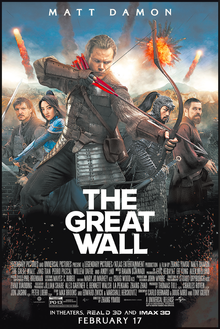
Playing Catch-Up: The Great Wall (dir by Zhang Yimou)


Remember The Great Wall?

The Great Wall came out in February.  Before it was released, I saw the trailer and I thought, “Well, that looks like it might be fun.”  However, I never actually saw the film when it was in theaters.  I think I was still recovering from Fifty Shades Darker when The Great Wall was released so I put off going to see it.  I thought to myself, “That’ll be around for a while.”  Of course, I was wrong.  The Great Wall played for two weeks and then it was gone.

That may not sound like a big deal when you consider the reviews that The Great Wall received.  If not for the fact that Fifty Shades Darker was released a week earlier, The Great Wall would have been the first critical disaster of 2017.  Seriously, the critics hated The Great Wall with a passion that took even me by surprise.  The comments went beyond the usual snarkiness to outright hatred.  Suddenly, The Great Wall — which, to judge from the trailer, looked like a harmless little monster movie — was being held up as an example of everything wrong with modern filmmaking.

The film was even attacked for starring Matt Damon.  As I said before, I thought the trailer looked like fun but, apparently, other critics watched that trailer and found themselves asking, “How dare Matt Damon appear in a movie that’s set in eleventh century China!?” And you know what?  I get it.  Whenever I’m watching a movie about aliens invading the 11th Century, my immediate concern is whether or not the film is historically accurate.  It’s bad enough that Americans are being taught that Matt Damon could survive on Mars.  Do they also have to be told that Matt Damon saved China from the space lizards!?

Even though I missed The Great Wall when it was playing in theaters, I knew that it was a film that I would see eventually.  Whenever a film gets totally slaughtered by the critics, I feel like I have almost a duty to watch the film and judge for myself.  Some of that’s because I don’t trust the majority of critics.  And some of it’s because, as a natural born contrarian, I’m always hopeful for any chance to go against the consensus.  Last month, I finally watched The Great Wall and you know what?

It’s not that bad.

Now, it should be understood that being not that bad doesn’t necessarily mean that The Great Wall is a good movie.   It’s a deeply silly movie and, occasionally, it’s also a profoundly dumb one.  Matt Damon plays a European mercenary who is sneaking around China, searching for gunpowder.  After he is captured by the Chinese and brought to the Great Wall, he is enlisted to help battle a bunch of space lizards.  Apparently, the space lizards attack the wall every 60 years but, this year, they’re arriving early.  Or something like that.  I really couldn’t follow the mythology of the space lizards and that’s probably for the best.  The Great Wall is not a film that demands or benefits from a good deal of deep thought.  This is one of those films where the best plan is to not ask too many questions because the answers probably won’t make any sense anyway.

As dumb as The Great Wall may be, it’s an undeniably entertaining movie.  Under the direction of Zhang Yimou, The Great Wall is a visual feast, full of epic landscapes and swooping cameras.  When a seemingly limitless number of space lizards appear out of nowhere and suddenly charge the wall, it’s impossible not to get caught up in the exciting silliness of it all.  When the Chinese army takes their positions on the Great Wall and prepare to repel the invasion, it doesn’t matter that none of the characters are particularly fleshed out.  Instead, you’re just overwhelmed by the vibrant colors of their armor and the determined fierceness of their expressions.  The Great Wall is shamelessly over the top and nicely self-aware.  This a movie that knows that it is ludicrous and occasionally incoherent and you know what?  The Great Wall is perfectly fine with that.

For all the criticism that he received for appearing in the movie, Matt Damon is ideally cast.  Whenever Damon is on screen, it’s as if he’s entered into a conspiracy with the viewer.  Matt Damon is one of the few actors who can maintain his balance while walking that thin line between drama and parody.  With every arched eyebrow and slightly sarcastic line reading, Damon is saying, “Sure, this is all kind of stupid.  But aren’t we having fun?”

When The Great Wall eventually shows up on the SyFy channel, it’s going to be fun movie to live tweet.  Some films were just meant to be watched and appreciated with a group of your snarkiest friends.  The Great Wall is one such film.